Reviewed · BERLIN TOURS
Kreuzberg Tour – Kriminell und kuschelig
Kreuzberg rewards slow walking. This two-hour tour turns Kotti and Oranienstraße into an open-air history lesson, linking old working-class courtyards with the neighborhood’s political and cultural life. I like the clear focus on walking and the chance to hear local context instead of simply snapping photos. I also like that guides such as Sammy bring humor and personal energy to the stories.
The main point to consider is pace. You need to keep up with the guide across city streets, parks, avenues, and backstreets, so this is not a good fit if major walking problems will limit you. The tour also skips food and drinks, and one review jokingly noted the absence of a typical Berlin schnapps stop.
In This Review
- Five things to know before walking through Kreuzberg
- Starting at Kotti, where Kreuzberg makes its first impression
- Oranienstraße and the world behind the street
- From working-class roots to political Kreuzberg
- Parks, avenues, and backstreets on foot
- Why the guide can make or break this walk
- What $27.27 buys you in Berlin
- Who will get the most from this Kreuzberg walk?
- Timing, meeting points, and the small details that matter
- Should you book the Kreuzberg Tour?
- FAQ
- How long does the Kreuzberg Tour last?
- Where does the tour start?
- Where does the tour end?
- What neighborhood does the tour explore?
- What topics does the guide cover?
- Is food or drink included?
- How many people can join the tour?
- Is there a minimum age?
- Can I cancel for a full refund?
Five things to know before walking through Kreuzberg
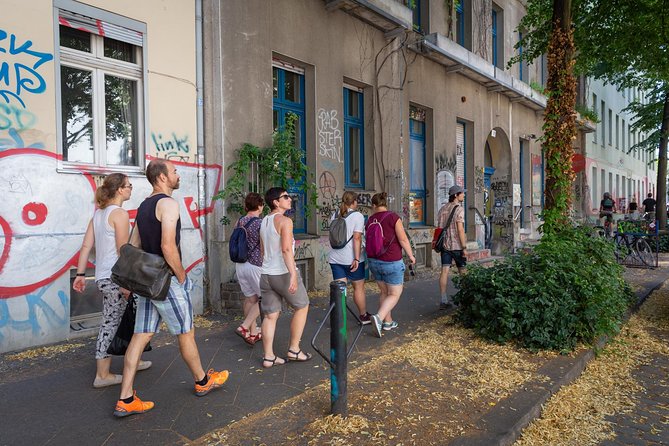
- Kotti is the starting point: The tour begins at Reichenberger Str. 174, near one of Kreuzberg’s central meeting places.
- Oranienstraße reveals the old neighborhood: You explore large building complexes and inner courtyards tied to Kreuzberg’s working-class past.
- The stories go beyond postcard Berlin: Expect discussion of housing, political views, social change, and contemporary Kreuzberg.
- Sammy has earned special praise: His informative, humorous style helped make the two-hour walk feel quick and easy to follow.
- The group is capped at 25 people: That keeps the tour more manageable than a huge city walk, though it is still a public group experience.
- The finish is at Curfew Bar: The route ends at Falckensteinstraße 47, 10997 Berlin.
Starting at Kotti, where Kreuzberg makes its first impression
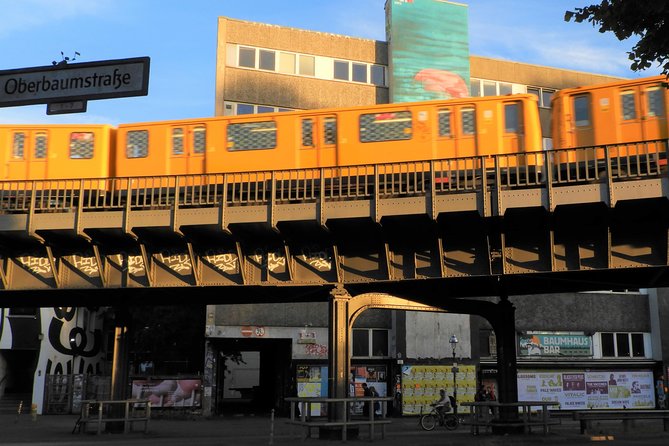
Kreuzberg can feel like several neighborhoods stitched together, and Kotti is a fitting place to begin. The tour starts at Reichenberger Str. 174, near this central Kreuzberg location, with a short introduction to the area’s history, daily life, and culture.
That opening matters because Kreuzberg is easy to misread. You might first notice its busy streets, colorful signs, restaurants, bars, and mixed population. The guide helps connect those present-day sights to the neighborhood’s earlier role as a working-class district.
The introduction is not meant to be a long classroom lecture. It gives you a frame for the walk ahead. You learn why the neighborhood developed as it did, then see how that past remains visible in its buildings and street pattern.
I appreciate this kind of start because it helps you look closely. Instead of treating Kreuzberg as a trendy district to pass through, you begin to ask who lived here, how they lived, and why the area became known for strong political views and social change.
Other Berlin trips people book alongside this one:
- Berlin: Reichstag, Dome and Government District Guided Tour
★ 4.7 · 18,288 reviews - Berlin: 1-Hour City Tour by Boat with Guaranteed Seating
★ 4.3 · 16,993 reviews - Berlin: Boat Tour Along the River Spree
★ 4.4 · 11,252 reviews
Oranienstraße and the world behind the street
The most distinctive part of the route is the look at Oranienstraße and its large building complexes. Kreuzberg grew as a working-class neighborhood in the middle of the 19th century, and many residents lived in crowded blocks with several rear courtyards.
The guide uses these spaces to explain how the neighborhood functioned. Some homes were located in a fifth or sixth backyard, far behind the street frontage. For you, that means the walk is not only about grand buildings or famous landmarks. It is about noticing how ordinary blocks were arranged and how many people were packed into them.
The conditions described are stark. Fresh air was hard to find, and some people did not rent a complete flat or even a room. Instead, they rented an eight-hour stay on a mattress. That detail puts a human scale on the housing story and helps explain the hardship behind the attractive facades.
You may find this section especially useful if you enjoy social history. The guide is not simply pointing out architecture. He is showing you how the design of the buildings reflected class, crowding, and unequal living conditions.
There is also a practical benefit. Once you understand the difference between the street front and the inner courtyards, you start seeing Kreuzberg with more care. The neighborhood’s back passages are not random leftovers. They are part of the story.
From working-class roots to political Kreuzberg
The tour also explains why Kreuzberg became associated with radical left-wing politics. The link is presented through the lives and conditions of working people, rather than as a detached political timeline.
That makes the subject easier to grasp. Political identity here is tied to housing, class, community, and resistance. You hear how the neighborhood’s social makeup helped create a strong culture of opposition and debate.
The route then brings the story toward more recent and contemporary changes. The supplied details do not promise a fixed list of political sites, so you should expect a broad neighborhood reading rather than a museum-style sequence of named exhibits.
This is one reason the guide matters so much. A good guide can make a normal street meaningful, while a weak one can turn the same street into a string of vague claims. Sammy is praised for having a firm grasp of Kreuzberg and Berlin history, and for telling stories in a lively, humorous way.
The tone appears to be one of the tour’s strengths. The feedback describes the walk as informative, engaging, and well paced, without being silly or rushed. That balance is important in a neighborhood tour, where too much seriousness can become tiring and too much comedy can flatten difficult subjects.
Parks, avenues, and backstreets on foot
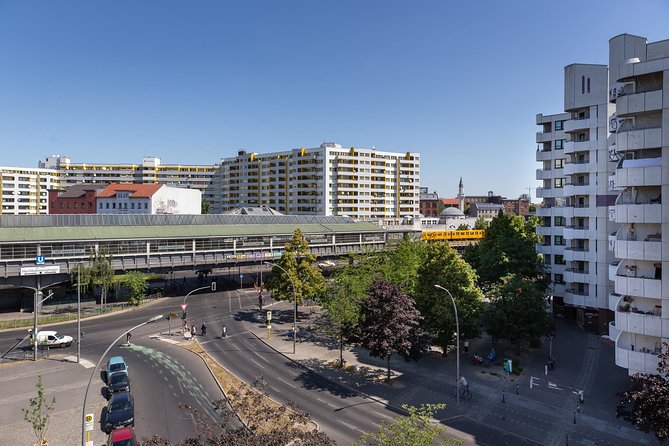
Kreuzberg is best understood at walking speed. The experience is built around parks, major avenues, and smaller backstreets, giving you a wider view than you would get from a single square or attraction.
The format also keeps you moving. You are not standing in one place for two hours while listening to a long speech. You hear a story, walk through the area it relates to, and then continue toward another part of Kreuzberg.
That movement gives the tour a local feel. You get a sense of how the neighborhood connects, rather than seeing isolated points on a map. It also makes the guide’s recommendations more useful, since you can ask about places to return to during the rest of your Berlin stay.
The route ends at Curfew Bar on Falckensteinstraße 47. The finish gives you a clear endpoint in another part of Kreuzberg, rather than returning you to the start. Plan your next stop from there, especially if you have a dinner reservation or another timed activity.
Because the route is a public walking tour, comfortable shoes are a sensible choice. The tour lasts about two hours, and the guide expects the group to keep moving. The experience is not recommended for people with major walking problems.
Something different for another day:
- Discover Berlin Half-Day Walking Tour
★ 5.0 · 9,624 reviews - Berlin: Hop-on Hop-off Bus Tour with Live Commentary
★ 4.3 · 8,579 reviews - Berlin: Government District around the Reichstag Guided Tour
★ 4.7 · 8,447 reviews - Berlin: Reichstag, Plenary Chamber, Cupola & Government Tour
★ 4.6 · 8,422 reviews
Why the guide can make or break this walk
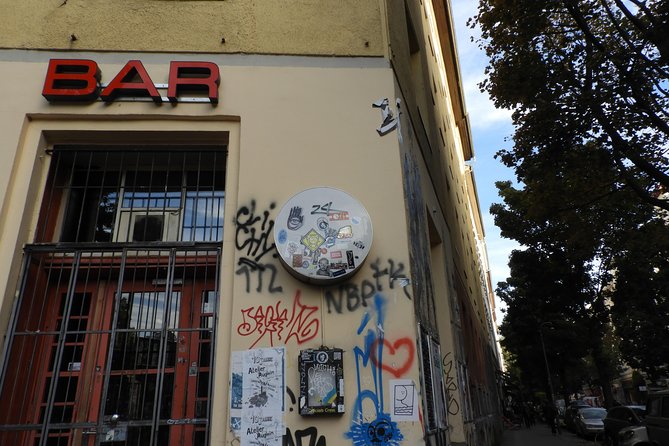
The strongest praise is directed at the guiding. The guide is described as friendly, well informed, and able to explain both older and newer Kreuzberg in an interesting way.
Sammy is named in several especially positive comments. His stories cover the neighborhood’s earlier past and its more recent changes, and his style is described as informative, humorous, and easy to follow.
That combination is valuable. Kreuzberg has plenty of material that could become dry: housing patterns, political movements, working-class life, and social upheaval. A guide who can explain these subjects without racing or turning the tour into a lecture gives you more than a list of dates.
I also like the reported pace. One assessment describes the walk as neither foolish nor rushed, which is exactly what you want from a two-hour city tour. You should have enough time to look around and take in the streets, while still covering a useful stretch of the neighborhood.
There is no promise that every departure will feature Sammy, so do not book solely on the assumption that he will lead your group. Still, the praise for his approach shows what the experience aims to provide: strong local background, clear explanations, and a pleasant human guide.
What $27.27 buys you in Berlin
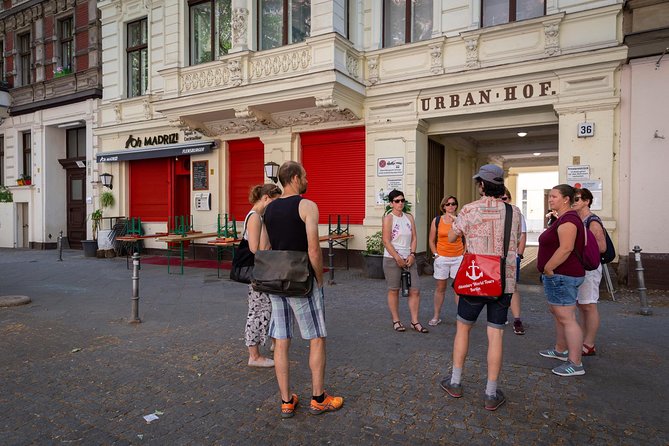
At $27.27 per person, this is a modestly priced guided experience for a two-hour walk. The value comes from interpretation rather than admission tickets. There are no paid attractions listed, but you get a guide, detailed background information, and a planned route through one of Berlin’s most discussed neighborhoods.
I would compare the price with the cost of exploring alone. You can walk through Kreuzberg for free, but you may miss the connections between the courtyards, housing conditions, political identity, and later cultural changes. If those connections interest you, the guide fee is reasonable.
The price is less compelling if you want food, drinks, or a long list of major sights. Nothing to eat or drink is included, and the tour is not designed as a tasting walk. One light criticism specifically wished for a typical Berlin schnapps, so you may want to arrange your own drink after the walk.
The booking pattern also tells you something practical. The tour is booked about 13 days ahead on average, so it is wise to reserve before arriving if your schedule is tight. The group can hold up to 25 people, which is not intimate, but it is still more controlled than a very large city tour.
Who will get the most from this Kreuzberg walk?
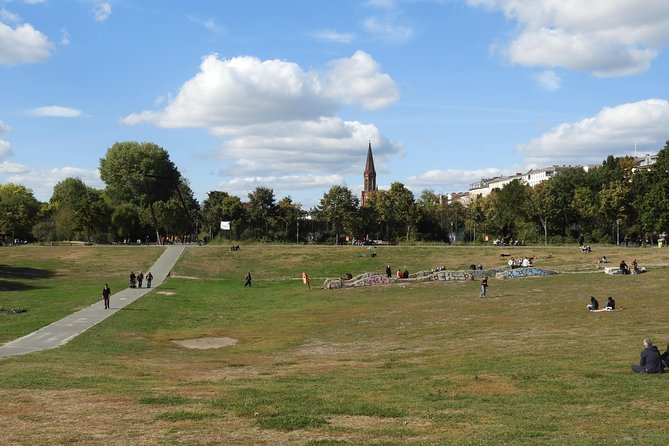
I would recommend this tour to you if you want context for what you see. It suits first-time Berlin visitors who want a local introduction, as well as repeat visitors who have already seen the major historic sights and want a neighborhood-focused afternoon.
It is particularly good for people interested in:
- Working-class urban history
- Housing and inner-city life
- Berlin’s left-wing political culture
- Social and cultural change
- Walking tours with a steady, conversational pace
- Practical recommendations for the rest of a Berlin visit
The tour also suits you if you prefer a guide who explains rather than performs. The strongest comments point to substance, humor, and a friendly manner. That is a better match for curious walkers than for people seeking a fast photo tour.
I would be more cautious if you have major walking limitations. The route uses public streets and requires you to keep up with the group. The tour does not list hotel pickup, so you also need to make your own way to the starting point by public transport or other means.
The minimum age is 18. Most people can participate, but the format is still a shared group walk, not a private route adjusted around your exact interests.
Timing, meeting points, and the small details that matter
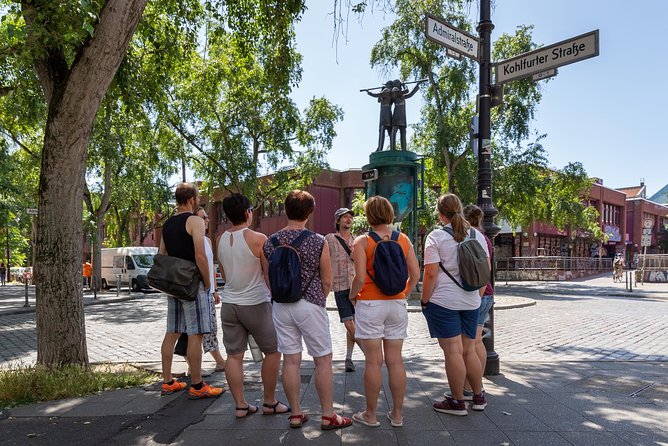
You receive confirmation when you book, and the experience uses a mobile ticket. That makes the arrival process fairly simple, provided you have the meeting address ready on your phone.
The start is at Reichenberger Str. 174, 10999 Berlin. The end is Curfew Bar, Falckensteinstraße 47, 10997 Berlin. Since the tour does not return to its starting point, check your plans for afterward before you set out.
Public transportation is nearby, which helps with both arrival and departure. The exact transport details are not included, so use the addresses rather than assuming the route begins at a famous landmark or station.
Allow a little breathing room before the start. A walking guide cannot easily wait for someone who is searching for the meeting place at the last moment, and the group needs to move together once the tour begins.
If your plans change, free cancellation is available up to 24 hours before the start time for a full refund. Within 24 hours, you do not receive a refund, and changes are not accepted. The operator also requires a minimum number of participants, so a cancellation for that reason results in another date or experience, or a full refund.
Should you book the Kreuzberg Tour?
Book it if you want a grounded introduction to Kreuzberg, with working-class origins, crowded courtyards, political life, and current change explained as you walk. The best reasons to go are the thoughtful route, the useful neighborhood context, and guides such as Sammy, whose humor and strong background make difficult subjects easier to follow.
Skip it if your Berlin plans leave no room for a two-hour walk, if you need a fully accessible route, or if you mainly want food, drinks, or famous monuments. For most curious adults who can walk at a steady pace, $27.27 is a fair price for a neighborhood lesson you would struggle to recreate on your own.
FAQ
How long does the Kreuzberg Tour last?
The tour lasts approximately two hours.
Where does the tour start?
It starts at Reichenberger Str. 174, 10999 Berlin, Germany.
Where does the tour end?
The tour ends at Curfew Bar, Falckensteinstraße 47, 10997 Berlin, Germany.
What neighborhood does the tour explore?
The walk explores Kreuzberg, including Kotti, Oranienstraße, parks, major avenues, and backstreets.
What topics does the guide cover?
The guide covers Kreuzberg’s working-class origins, crowded housing and inner courtyards, political life, culture, and more recent social changes.
Is food or drink included?
No. Food and drinks are not included unless specifically stated. The tour does not include hotel pickup or drop-off.
How many people can join the tour?
The group can include a maximum of 25 participants.
Is there a minimum age?
Yes. The minimum age is 18.
Can I cancel for a full refund?
Yes. You can cancel at least 24 hours before the local start time for a full refund. Cancellations or changes made within 24 hours are not refunded or accepted.
Just added around Berlin
- Berlin: Private Guided Tour of the Main Sights★ 5.0 · 13 reviews
- Private Highlights of Berlin Bike Tour★ 5.0 · 13 reviews
- Modern Berlin Private Walking Tour: Diverse, Vibrant and Exciting German Capital★ 5.0 · 13 reviews
- Tour in Berlin from Warnemünde and Rostock Cruise Port★ 4.1 · 13 reviews
- Berlin: Stasi Museum Private Guided Tour with Entry Ticket★ 4.8 · 13 reviews
- Private Food Tour Experience with a born and bred Berliner★ 5.0 · 14 reviews
- Berlin: Rheinsberg Palace Entrance Ticket★ 4.8 · 14 reviews
- Berlin in one day – day tour with an expert guide★ 5.0 · 14 reviews
Berlin Tours, compared.
Reichstag, Dome and Government District Guided Tour
Read our review →
1-Hour City Tour by Boat with Guaranteed Seating
Read our review →
Government District around the Reichstag Guided Tour
Read our review →
Reichstag, Plenary Chamber, Cupola & Government Tour
Read our review →