Reviewed · BERLIN TOURS
Hitler’s Berlin – the rise and fall (Small Group)
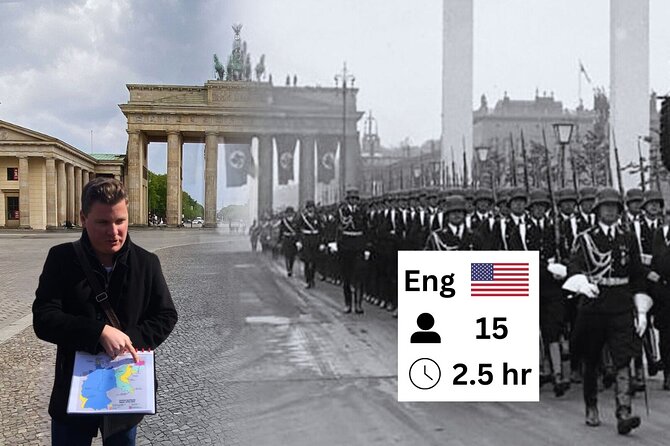
Dark history needs careful guides. This 2.5-hour walk links Berlin’s Nazi-era sites with clear explanations of how Hitler gained power, how the regime operated, and how the war ended. I like the small-group format, capped at 15 people, and the use of historic maps and Then & Now photographs. I also like the serious attention given to victims often left out of a basic Hitler tour, including Sinti and Roma people and homosexual victims.
The main drawback is the amount of information packed into a short walk. Some stops are outdoors, some surfaces are uneven, and one guest found a guide difficult to hear amid city noise. You will need comfortable shoes, warm or weatherproof clothing, and the patience to listen closely.
In This Review
- Key points to know before you book
- A serious walk through Berlin’s darkest chapter
- Brandenburg Gate and the road to dictatorship
- Sinti and Roma victims at a quiet memorial
- The Reichstag and Hitler’s political rise
- The Soviet Memorial and the Battle of Berlin
- The Holocaust Memorial and the meaning of remembrance
- A short stop for homosexual victims of Nazism
- The Führerbunker and Hitler’s final days
- Johann Georg Elser and German resistance
- The former Aviation Ministry and Nazi power
- The Topography of Terror and the end of the walk
- How much walking and information to expect
- Is the $54.44 price fair?
- Who should book this Berlin history walk?
- Should you book Hitler’s Berlin?
- FAQ
- Where does the tour begin?
- Where does the tour end?
- How long does the tour last?
- What language is the tour offered in?
- How many people can join the group?
- Are admission tickets included?
- Is food or drink included?
- What should I wear?
- Can I cancel for a full refund?
Key points to know before you book
- The route covers nine major sites between Brandenburg Gate and the Topography of Terror.
- The focus is wider than Hitler alone, including Nazi persecution, resistance, wartime destruction, and postwar remembrance.
- Scott, Johan, Roshana, Jochen, and Matt are among the guides praised for clear explanations, energy, sensitivity, and discussion.
- All listed stops are free to enter, so most of your $54.44 pays for the guide, organization, and small-group setting.
- The walking area is compact but information-heavy, with much of the route concentrated within a few city blocks.
- The tour runs in all weather, and you can expect roughly 2 hours 30 minutes, sometimes longer if questions lead to a lively discussion.
A serious walk through Berlin’s darkest chapter
This is not a sightseeing stroll with a few Nazi-era facts added for flavor. It is a focused history walk through central Berlin, tracing the Nazi rise to power, the machinery of persecution, the final battle for the city, and Germany’s later effort to remember its crimes.
You begin at Brandenburg Gate, a fitting place to discuss how the Nazi Party moved from a political movement to a dictatorship. From there, the route passes memorials, government buildings, former Nazi offices, and the site of Hitler’s bunker before ending at the Topography of Terror.
I find the route useful because Berlin’s modern streets can hide how concentrated the old centers of power were. A few blocks contain the Reichstag, the former Aviation Ministry, the bunker site, and the former Gestapo headquarters. The walk helps you connect those places instead of seeing each one as an isolated sight.
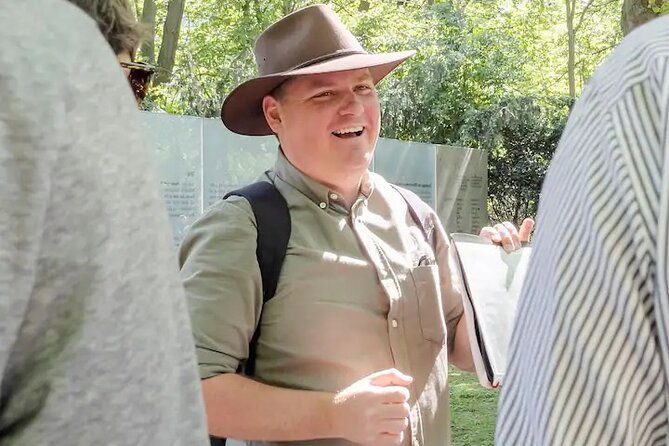
The subject is difficult, and the guide matters a great deal. Scott is praised for his command of the period, friendly manner, and ability to adjust the discussion to the group. Johan, Roshana, Jochen, and Matt are also described as strong guides, each bringing a slightly different style. You should expect a serious, talk-heavy experience rather than a theatrical performance.
Other Berlin trips people book alongside this one:
- Berlin: Reichstag, Dome and Government District Guided Tour
★ 4.7 · 18,288 reviews - Berlin: 1-Hour City Tour by Boat with Guaranteed Seating
★ 4.3 · 16,993 reviews - Berlin: Boat Tour Along the River Spree
★ 4.4 · 11,252 reviews
Brandenburg Gate and the road to dictatorship
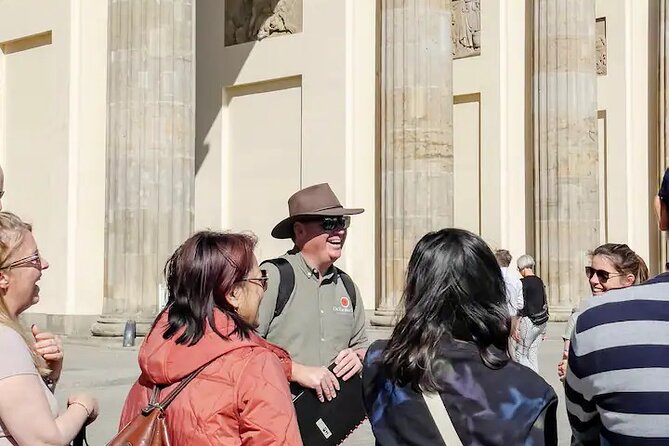
The tour starts at Brandenburg Gate on Pariser Platz. This landmark is usually associated with reunification and modern Berlin, but it also provides a useful opening for the political story.
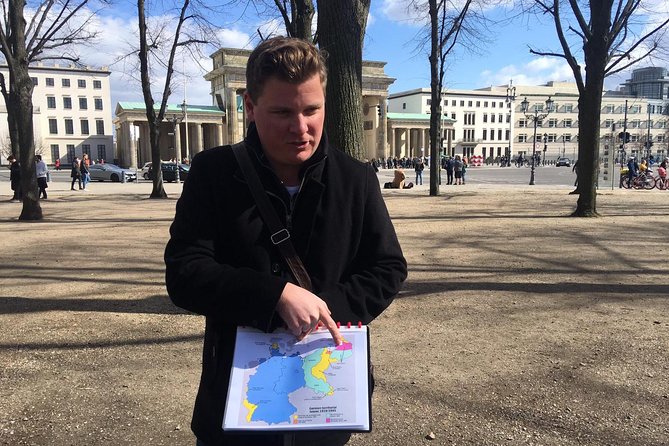
Here, your guide explains how the Nazi Party was elected into power and how Adolf Hitler became Führer. That distinction matters. The walk does not reduce the story to a single dramatic takeover. It examines the political process and the circumstances that allowed Hitler to turn power into dictatorship.
This opening can be especially helpful if you know the broad outline of the Second World War but want a clearer sense of sequence. The guide uses historic photographs and maps to show how Berlin looked during the period, helping you compare the present-day setting with the city Hitler’s government controlled.
The Brandenburg Gate stop lasts about 10 minutes. Since it is an open public area, you are listening outdoors amid normal city activity. Pay close attention at the start because the later stops build on this explanation.
Sinti and Roma victims at a quiet memorial
The Memorial to the Sinti and Roma Victims of National Socialism is one of the most important stops on the route. It gives attention to the Roma and Sinti people targeted by the Third Reich and to the racial theories that supported their persecution.
The stop is scheduled for about 10 minutes, but its importance is larger than its brief timing suggests. A standard Nazi history tour can focus heavily on political leaders and military events. This memorial shifts the attention toward people targeted by Nazi racial policy.
Your guide explains the cruel social ideas that later supported mass murder. That context helps you understand that persecution was not random or improvised. It was tied to a system that classified people, stripped away rights, and treated entire communities as enemies.
The memorial is also a reminder to listen for the parts of the story that are less familiar. The guide’s academic background in Second World War history should be valuable here, particularly if you want more than a list of dates and names.
The Reichstag and Hitler’s political rise
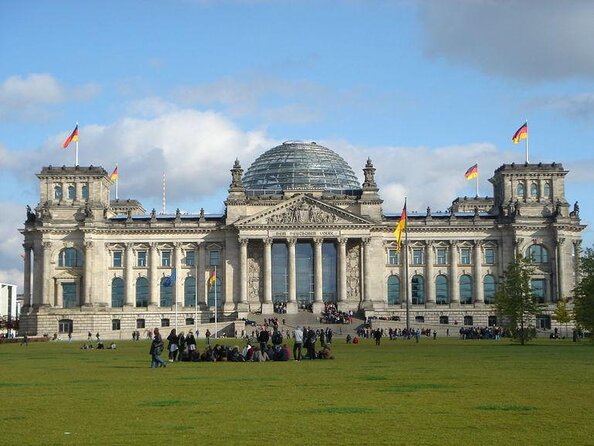
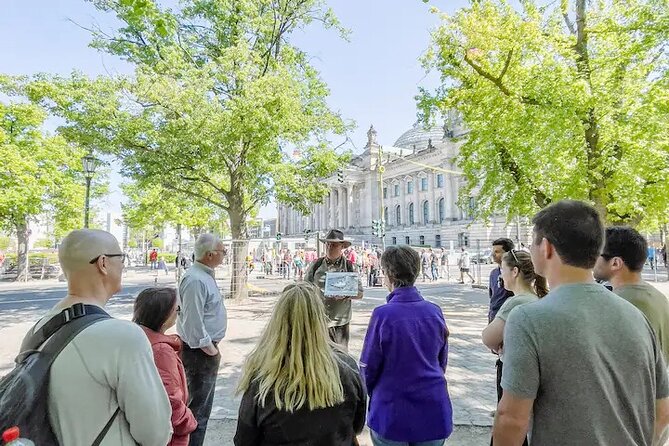
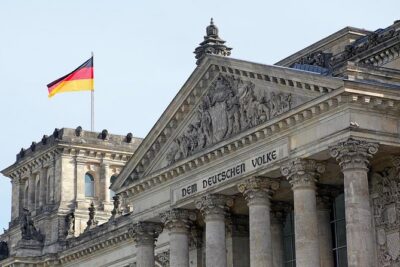
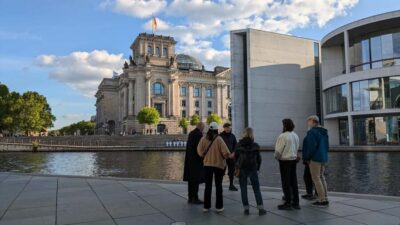
At the Reichstag, Germany’s parliament building, the tour returns to the political story. The guide explains how the Nazi Party gained power and how Hitler moved from elected leader to dictator.
This stop is brief, about 15 minutes, but it helps place the Reichstag in the wider story of the German government. You will not simply hear that Hitler ruled Germany. You will examine the steps that made his rule possible.
The building itself has a complicated symbolic history, and the guide uses it to discuss the collapse of democratic government. Historic images and maps are particularly useful here because the Reichstag and surrounding district changed dramatically during the war and postwar years.
Do not expect entry to the Reichstag dome or interior. The experience is an outdoor guided visit, and the supplied details do not include admission inside the building. The route focuses on the historical meaning of the site.
Something different for another day:
- Discover Berlin Half-Day Walking Tour
★ 5.0 · 9,624 reviews - Berlin: Hop-on Hop-off Bus Tour with Live Commentary
★ 4.3 · 8,579 reviews - Berlin: Government District around the Reichstag Guided Tour
★ 4.7 · 8,447 reviews - Berlin: Reichstag, Plenary Chamber, Cupola & Government Tour
★ 4.6 · 8,422 reviews
The Soviet Memorial and the Battle of Berlin
The Soviet Memorial in Tiergarten brings the war’s final stage into view. Here, the discussion turns to the Battle of Berlin, described as the third bloodiest operation of the Second World War, and to the brutal fighting that destroyed much of the city.
The stop lasts about 15 minutes. It is a useful change of scale. Earlier, you are looking at political control and persecution. Here, you are looking at the military collapse of the Nazi state and the human cost of the final battle.
The memorial also opens a conversation about remembrance. Berlin contains competing layers of memory, and the guide discusses how these events were commemorated after the war. The point is not only what happened in 1945, but also how later generations chose to represent it.
This is an outdoor stop, so weather can affect your concentration. On a cold or wet day, you may appreciate the guide’s pacing and the chance to keep moving between locations.
The Holocaust Memorial and the meaning of remembrance
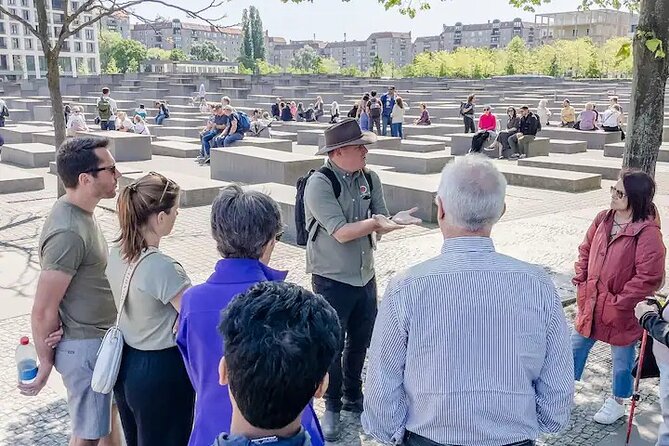
The Memorial to the Murdered Jews of Europe is likely to be one of the most emotionally powerful points on the route. The field of concrete slabs creates a physical experience that changes as you walk through it. The tour gives you time to discuss the memorial’s meaning and the murder of Europe’s Jewish population.
The stop lasts about 15 minutes. That is enough for a guided introduction and discussion, though you should not expect a long independent visit to the underground Information Centre as part of this tour. The supplied details identify the memorial itself, not admission to an interior exhibition.
What I value here is the opportunity to discuss the memorial rather than merely photograph it. Your guide can help you think about the design, the sense of uncertainty it creates, and the difference between remembering individual people and representing a crime carried out against millions.
This is a place where a respectful attitude matters. The tour treats the memorial as a site of mourning and thought, not as a dramatic backdrop.
A short stop for homosexual victims of Nazism
The Monument to Homosexuals Persecuted Under National Socialist Regime receives about five minutes. It is a small stop, but it broadens the account of Nazi persecution.
The monument reminds you that the regime attacked people for reasons beyond Jewish identity. Homosexual men were persecuted, imprisoned, and murdered under Nazi rule, and the memorial gives that history a visible place in central Berlin.
Five minutes is not enough for a long lecture, so this stop works best as part of the wider pattern the guide has already established. It shows how Nazi policy categorized groups and used the state to punish those who did not fit its demands.
If this is a subject you want to study in detail, you will need additional time elsewhere. Within the walk, the stop is a concise but meaningful part of the route.
The Führerbunker and Hitler’s final days
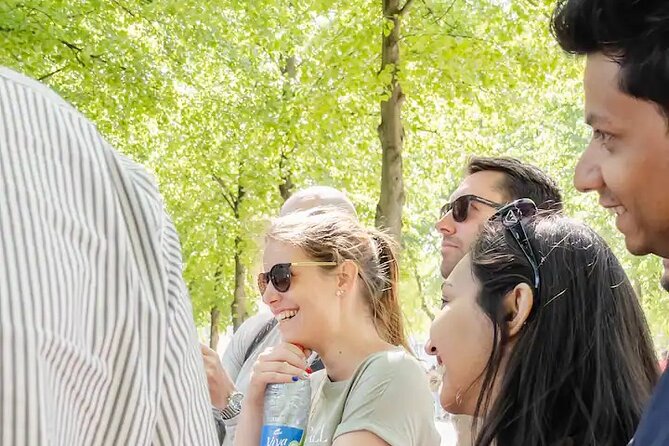
The former Führerbunker is one of the best-known locations on the tour, yet it is also easy to misunderstand. The bunker itself is not presented as a grand preserved attraction. The site is marked in the modern city, and the guide explains that Hitler spent his final days there during the collapse of the regime.
The stop lasts roughly 15 minutes. It deals with the end of the war, Hitler’s last days, and the final breakdown of Nazi power. The absence of a dramatic surviving structure is part of the point. Berlin did not turn the bunker into a shrine.
Your guide’s tone matters here. The goal is to understand the final days without turning Hitler into a fascinating celebrity. The best parts of this stop place the bunker within the military defeat, civilian suffering, and destruction of Berlin.
Because the site is easy to miss when you explore alone, having a guide explain its location and importance adds real value.
Johann Georg Elser and German resistance
The Johann Georg Elser Memorial provides one of the walk’s most important shifts. Instead of focusing on Nazi leaders and institutions, the guide discusses opposition to Hitler and the attempts made to assassinate him.
Elser planned an early assassination attempt against Hitler, and his story helps break the misleading idea that all Germans supported the regime until the very end. The tour also discusses the roles of other people who resisted or tried to remove Hitler.
The stop takes about 15 minutes. It gives you a chance to consider the risks faced by those who opposed the dictatorship. Resistance was not simple, unified, or always successful, but it existed in different forms.
This part may be especially useful for families and teenagers. One family described the guide’s sensitivity and ability to answer questions as a major strength, and the subject gives younger visitors a more complete view of German society under Nazism.
The former Aviation Ministry and Nazi power
The former Aviation Ministry is a striking surviving piece of Nazi-era government architecture. When built, it was the largest office building in Europe, and it housed the German Ministry of Aviation under Hermann Göring.
The visit lasts about five minutes. You will not spend long examining the building, but the guide uses it to explain how the Nazi state operated through large ministries, officials, and bureaucracy.
This stop is valuable because dictatorship was not run by speeches alone. It relied on offices, paperwork, military planning, police agencies, and officials who carried out policy. The building makes that administrative side of the regime easier to picture.
It also adds architectural context to the walk. Berlin’s Nazi past is not limited to memorials and ruins. Some of the structures connected to the regime still serve practical purposes in the modern city.
The Topography of Terror and the end of the walk
The tour ends at the Topography of Terror, built on the former site of the Gestapo headquarters. The final stop lasts about 20 minutes and includes time for a break, tea or coffee, and restroom use.
This is a sensible ending because the site brings together many themes from the route: political repression, police power, persecution, and the workings of the Nazi state. It also gives you a chance to continue learning after the walking tour.
Food and drinks are not included, but the planned break is useful. A 2.5-hour history walk can be demanding, particularly when much of the teaching happens outdoors. Ask your guide for the best public transport connection to your next destination when the tour ends.
The Topography of Terror is also a good place to remain after the tour if you want more detail. The walking experience gives you a framework. Further time at the site can help you examine the institutions and people behind the violence.
How much walking and information to expect
The route is concentrated in central Berlin. One description placed the main activity within roughly four or five city blocks, so this is not an exhausting cross-city march. Still, you will walk between nine stops, listen while standing, and encounter different types of paving and outdoor surfaces.
A moderate level of physical fitness is recommended. Wear comfortable shoes, and do not assume that a short route means an effortless one. One useful piece of advice is simple: dress for the forecast. The tour operates in all weather conditions, and cold wind or rain can make the long explanations harder to absorb.
The advertised duration is approximately 2 hours 30 minutes. A guide may run longer if the group has many questions. That can be a benefit if you want discussion, but it may affect a tight afternoon schedule.
Some guides use a microphone, but amplification is not guaranteed. City noise made one guide difficult to hear at times, so stay close to the guide and position yourself where you can see and hear clearly.
Is the $54.44 price fair?
At $54.44 per person, this is not the cheapest way to see central Berlin. On the other hand, the memorials and outdoor sites themselves have free admission, so the price is paying mainly for the guide’s time, research, route planning, historic images, maps, and group conversation.
The value improves if you want interpretation rather than a self-guided walk. Nine sites in 2.5 hours would be hard to connect on your own, especially when the subject moves from elections and dictatorship to genocide, resistance, war, and remembrance.
The small-group limit of 15 is another part of the value. It is not a private tour, but it is small enough for questions and direct contact with the guide. One group had 11 people, which gives you a realistic idea of how the format may feel, though the maximum is 15.
I would not choose this walk if you only want quick photo stops. I would choose it if you want a serious explanation and are ready to concentrate. The strongest guides tailor the discussion to the group, answer questions, and sometimes continue beyond the scheduled finish.
Who should book this Berlin history walk?
This tour suits you if you are interested in the Second World War, modern European history, political extremism, memorial design, or the way Germany confronts its past. It also works well for families with older children and teenagers who can handle a serious subject and listen for extended periods.
It is a good first step if you have just arrived in Berlin and want to understand why so many central sites matter. It is also useful later in your visit, after you have seen the city and want the historical connections explained.
You may prefer a different activity if you dislike standing outdoors, need frequent seating, or want a relaxed sightseeing pace. The route contains a lot of political and historical detail. You will get more from it if you arrive ready to listen rather than expecting constant movement.
Should you book Hitler’s Berlin?
I would book this tour if you want a compact, serious introduction to Nazi-era Berlin led by a guide who can connect places with events. The strongest features are the small group, the broad treatment of victims and resistance, and the concentration of important sites within a walkable central area.
At $54.44, the price is reasonable for an informed guide and a discussion-based experience, though less attractive if you only want to see the monuments from the outside. Choose a warm day if possible, wear solid shoes, stay close enough to hear, and leave room in your schedule for questions.
The most important decision is whether you want history handled with care. If you do, this is a worthwhile Berlin walk.
FAQ
Where does the tour begin?
The tour begins at Brandenburg Gate, Pariser Platz, 10117 Berlin, Germany.
Where does the tour end?
It ends at the Topography of Terror at Niederkirchnerstraße 8, 10963 Berlin, Germany.
How long does the tour last?
The tour lasts approximately 2 hours 30 minutes. It may run longer if the group has many questions.
What language is the tour offered in?
The tour is offered in English.
How many people can join the group?
The maximum group size is 15 people.
Are admission tickets included?
The listed stops have free admission. The experience includes guided visits to the outdoor sites and memorials described in the route.
Is food or drink included?
No. Food and drinks are not included. A break at the Topography of Terror gives you time to get tea or coffee and use the restrooms.
What should I wear?
Wear comfortable shoes and dress appropriately for the weather. The tour operates in all weather conditions and requires a moderate level of physical fitness.
Can I cancel for a full refund?
Yes. You can cancel at least 24 hours before the experience start time for a full refund. Changes or cancellations made less than 24 hours in advance are not accepted for a refund.
Just added around Berlin
- Berlin: Private Guided Tour of the Main Sights★ 5.0 · 13 reviews
- Private Highlights of Berlin Bike Tour★ 5.0 · 13 reviews
- Tour in Berlin from Warnemünde and Rostock Cruise Port★ 4.1 · 13 reviews
- Modern Berlin Private Walking Tour: Diverse, Vibrant and Exciting German Capital★ 5.0 · 13 reviews
- Berlin: Stasi Museum Private Guided Tour with Entry Ticket★ 4.8 · 13 reviews
- Private Food Tour Experience with a born and bred Berliner★ 5.0 · 14 reviews
- Berlin: Rheinsberg Palace Entrance Ticket★ 4.8 · 14 reviews
- Berlin in one day – day tour with an expert guide★ 5.0 · 14 reviews
Berlin Tours, compared.
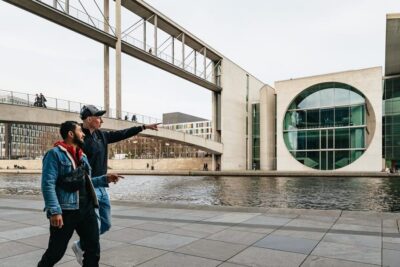
Reichstag, Dome and Government District Guided Tour
Read our review →
1-Hour City Tour by Boat with Guaranteed Seating
Read our review →
Government District around the Reichstag Guided Tour
Read our review →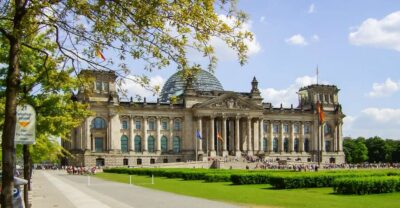
Reichstag, Plenary Chamber, Cupola & Government Tour
Read our review →