Reviewed · BERLIN TOURS
Get In: The Ultimate Berlin Club Tour
Berlin’s clubs tell the city’s story. This small-group tour links queer liberation, punk, techno, migration, and urban politics across nine important sites, giving you far more than a list of places to party. I especially like the 10-person limit and the way guide Jeff uses photos, videos, audio clips, quizzes, and augmented reality to keep the past close at hand. The main drawback is simple: most stops are outside, and the clubs may not be open for a full interior visit.
I also like the tour’s social reach. It treats nightclubs as meeting places for activism and minority communities, not just rooms with loud music. At $81.98, the price is fair for a three-and-a-half-hour experience with an expert guide and extensive visual material, though it makes the most sense if you genuinely want context before going out.
In This Review
- Key points to know before booking
- Why this Berlin club tour is different
- Starting at SchwuZ and the roots of queer nightlife
- SO36, punk, and Kreuzberg’s political edge
- Tresor and the sound of post-wall Berlin
- KitKatClub and freedom of expression
- Club Commission and the politics of keeping clubs open
- Kater Blau, Holzmarkt, and the fight against gentrification
- YAAM and Berlin’s reggae community
- Berghain, anonymity, and the famous door
- RAW-Gelände and the changing club city
- The augmented reality and visual material
- Group size, timing, and physical setup
- Is $81.98 a fair price?
- Who will enjoy this experience most?
- Should you book the Ultimate Berlin Club Tour?
- FAQ
- Where does the tour begin?
- Where does the tour end?
- What time does the tour start?
- How long does the tour last?
- How many people can join the tour?
- Is public transportation included?
- Is admission to the clubs included?
- What does the augmented reality portion include?
- Can I cancel for a full refund?
Key points to know before booking
- Nine stops connect Berlin’s club culture to major social movements, from queer activism and punk to refugee support and anti-gentrification campaigns.
- The group is capped at 10 people, which gives you a better chance to ask questions and follow the guide’s visual material.
- Jeff’s iPad presentation is a major part of the tour, with more than 200 photos, videos, quotes, and audio clips.
- The route begins at SchwuZ in Neukölln and ends at RAW-Gelände, near Warschauer Straße, so you finish in a useful area for continuing your evening.
- A world-famous club may offer behind-the-scenes access, but this depends on availability and should not be treated as guaranteed.
- Bring a public transport ticket, since it is not included and the route covers several parts of Berlin.
Why this Berlin club tour is different
Many nightlife tours focus on where to go tonight. This one asks why Berlin’s clubs matter at all.
You move through places linked to queer life, punk, reggae, techno, cabaret, migration, and political organizing. That broader view helps explain why Berlin’s nightlife feels different from a standard club district. A club can be a dance floor, but it can also be a safer meeting place, a stage for protest, or a home for people pushed aside elsewhere.
The guide, Jeff, is central to the experience. His approach combines research with humor and conversation. Past feedback describes him as warm, personal, and able to keep the group involved without turning the tour into a classroom lecture. That balance matters here, since the subject includes serious topics such as AIDS activism, discrimination, gentrification, and far-right politics.
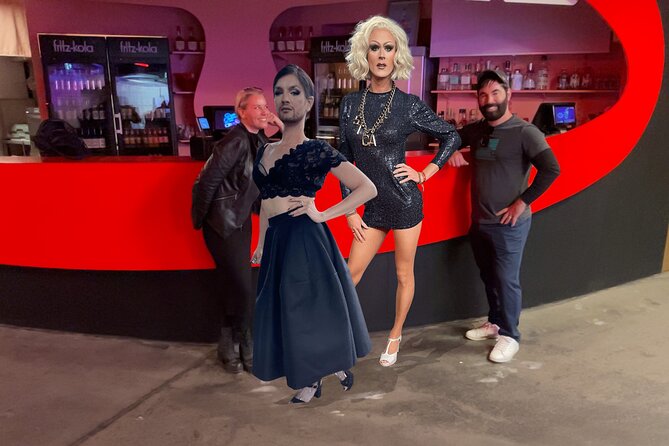
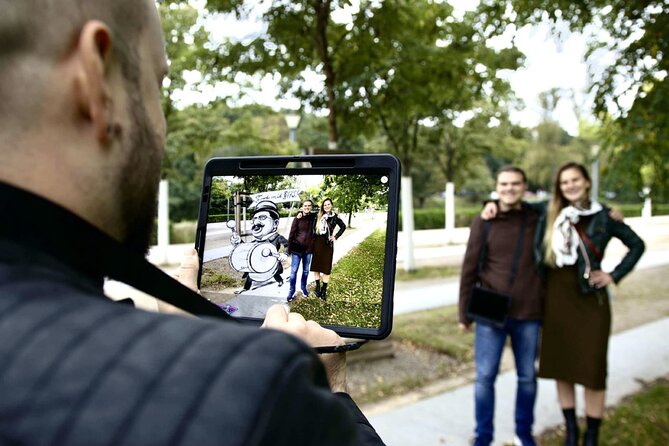
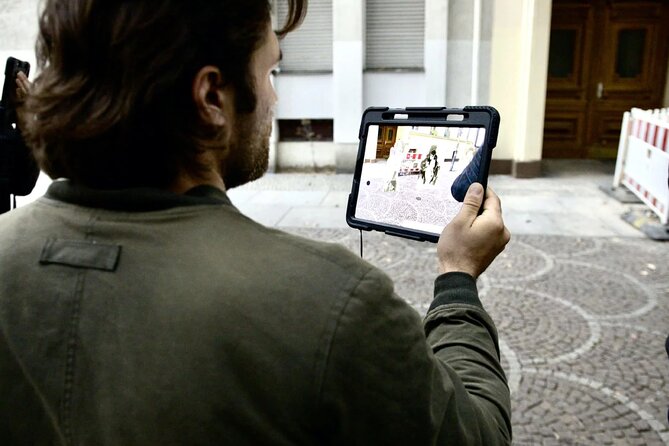
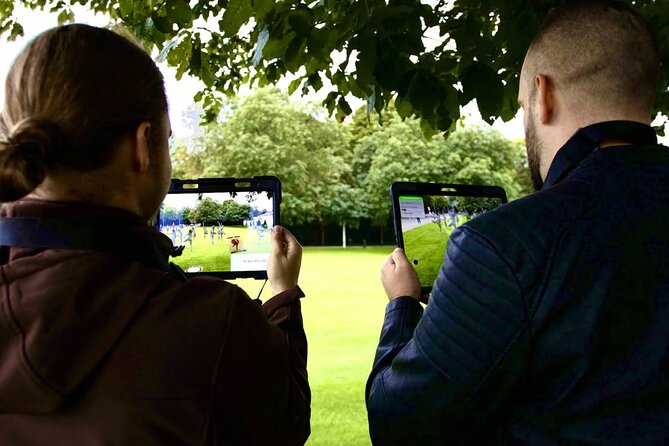
You should also expect a visual presentation. Jeff uses an iPad to show historical footage, photos, short videos, quiz questions, and augmented reality features. I understand why some people might first question an iPad on a walking tour, but it has a clear purpose: clubs change, buildings disappear, and many important moments happened inside spaces you cannot simply enter during the day.
Other Berlin trips people book alongside this one:
- Berlin: Reichstag, Dome and Government District Guided Tour
★ 4.7 · 18,288 reviews - Berlin: 1-Hour City Tour by Boat with Guaranteed Seating
★ 4.3 · 16,993 reviews - Berlin: Boat Tour Along the River Spree
★ 4.4 · 11,252 reviews
Starting at SchwuZ and the roots of queer nightlife
The tour begins at SchwuZ on Rollbergstraße at 11:30 a.m. SchwuZ is one of Berlin’s best-known LGBTQ+ clubs, and it provides a strong opening because the story starts with people rather than music genres.
You hear how the Berlin Wall shaped nightlife on both sides of the divided city. The discussion includes Romy Haag, a trans pioneer whose work helped change Berlin’s nightclub culture in the 1970s. This section also links queer clubs and venues such as Metropol to the later rise of techno.
The stop lasts about 20 minutes, with admission included. Its importance reaches beyond club history. You learn how nightlife spaces supported activism during the AIDS crisis and why SchwuZ remains an important LGBTQ+ cultural center today.
For me, this is one of the most useful parts of the tour because it challenges the easy idea that Berlin’s club culture began with techno after 1989. Queer nightlife had already created networks, styles, and forms of public expression that helped prepare the ground.
SO36, punk, and Kreuzberg’s political edge
At SO36, the subject shifts toward West Berlin in the 1970s. The club grew within a city marked by economic strain, political conflict, and counterculture. You hear about punk, feminism, and the involvement of figures such as David Bowie and Iggy Pop.
SO36 also opens a discussion about Kreuzberg’s Turkish community. That matters because the club was never only a music venue for one narrow crowd. Its story includes cultural exchange, political solidarity, and later events connected with Kreuzberg CSD and Mad & Disabled Pride.
This stop lasts about 20 minutes and has no admission charge. You are mainly learning from the guide outside or around the venue, so do not expect a concert-style visit. The value comes from understanding how a club can reflect the neighborhood around it and change as that neighborhood changes.
If you have already been to SO36, you may still learn something new. One of the tour’s strengths is its ability to connect familiar buildings with developments you might otherwise miss.
Tresor and the sound of post-wall Berlin

Tresor brings the story to techno and reunified Berlin. The club is associated with a former GDR power plant, one of the abandoned industrial settings that became important after the fall of the Berlin Wall.
The guide explains how empty buildings gave Berlin’s new club culture room to grow. The discussion also gives proper credit to Black techno DJs from Detroit, whose music and ideas had a lasting effect on Berlin’s sound.
The stop is short, about 15 minutes, and admission is free. That brevity means you get a focused explanation rather than a full tour of the venue. Still, it is an important link in the route because it shows that Berlin techno was not created in isolation. It came from a meeting of post-Cold War freedom, abandoned buildings, local organizers, and influences from across the Atlantic.
Something different for another day:
- Discover Berlin Half-Day Walking Tour
★ 5.0 · 9,624 reviews - Berlin: Hop-on Hop-off Bus Tour with Live Commentary
★ 4.3 · 8,579 reviews - Berlin: Government District around the Reichstag Guided Tour
★ 4.7 · 8,447 reviews - Berlin: Reichstag, Plenary Chamber, Cupola & Government Tour
★ 4.6 · 8,422 reviews
KitKatClub and freedom of expression
KitKatClub offers a sharp change in mood. Its roots connect to Berlin’s cabaret culture of the 1920s, while its present identity is tied to sexual freedom, identity, and provocative parties.
This is not a stop for everyone. The subject is direct, and the club’s reputation is deliberately unconventional. You learn about the venue as a place where people test social limits and express themselves outside ordinary rules.
The visit lasts around 15 minutes, without an admission charge. It is best understood as cultural context, not a promise of entry or a preview of a specific party. If you are uncomfortable discussing sexuality and gender in an open way, this part may feel less suitable.
For the right audience, though, KitKatClub helps explain why Berlin nightlife attracts people who want more than a conventional evening out. The club’s identity is part of the city’s long habit of making room for cabaret, experimentation, and personal freedom.
Club Commission and the politics of keeping clubs open
The Club Commission stop explains the organized effort to protect Berlin’s club culture. Clubs often face rising land values, complaints about noise, redevelopment plans, and pressure to become more commercial. The Club Commission works to defend their political and cultural role.
You hear how clubs can function as safer spaces for marginalized groups and places for public action. The discussion includes protests against the far-right AfD and support for LGBTQ+ rights.
This stop takes about 10 minutes, so it is concise. Its purpose is to give you the political framework for the rest of the route. Without it, later conversations about gentrification and threatened venues might seem like separate local disputes. With it, you see a larger question: what kind of city does Berlin want to remain?
Kater Blau, Holzmarkt, and the fight against gentrification
Kater Blau and Holzmarkt represent the struggle to keep alternative spaces alive as Berlin becomes more expensive and commercially driven. The stop is brief, around five minutes, but it points to a major issue affecting nearly every club in the city.
You learn how venues try to preserve a less polished, more independent character while dealing with development pressure. This is a useful reminder that the famous Berlin club experience is not fixed. The places people come to see can disappear, move, or change their rules.
Because the stop is short, you will not get a long site visit. Instead, it works as part of a moving story about land, ownership, creative communities, and who gets to use the city after dark.
YAAM and Berlin’s reggae community
At YAAM, the focus turns to Black Caribbean influence and reggae in Berlin. YAAM has served as a place for music, community building, and cultural exchange, while also supporting tolerance, youth programs, and refugees.
This five-minute stop adds an important correction to any club tour focused only on white European techno. Berlin nightlife has many musical roots, and its identity has been shaped by immigrant and Black communities as well as by local counterculture.
The visit is short, but the point is clear. Music venues can offer more than entertainment. They can create connections between communities and give young people a place to take part in something constructive.
Berghain, anonymity, and the famous door
No Berlin club tour can avoid Berghain, and this one uses the venue to discuss much more than the queue.
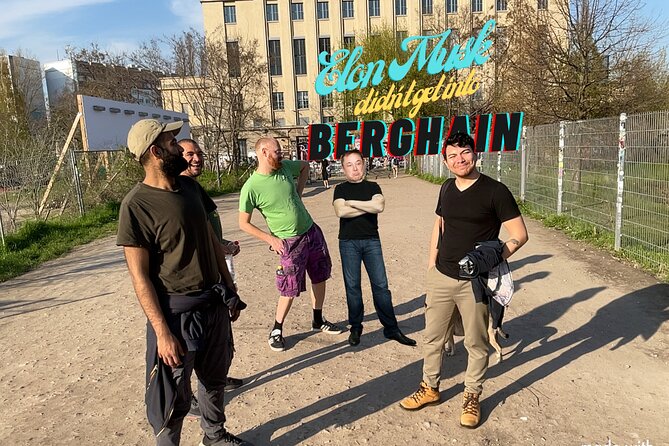
You hear about the club’s development in a former bunker and its place in global techno culture. The guide explains the strict no-photo policy and why anonymity can help people feel free on the dance floor. The conversation also covers sexual exploration, gender expression, and ideas associated with Judith Butler and Michel Foucault.
The stop lasts about 20 minutes and admission is free. You should not confuse this with guaranteed entry to Berghain. It is an explanation of the institution, its ideas, and its reputation from outside.
One practical point from the tour is especially useful: if you hope to try Berghain, Sunday morning may offer a better chance than arriving at a peak Saturday-night hour. No door advice can promise success, but timing and attitude matter, and learning the club’s culture before you go is more useful than treating the entrance like a lottery.
RAW-Gelände and the changing club city
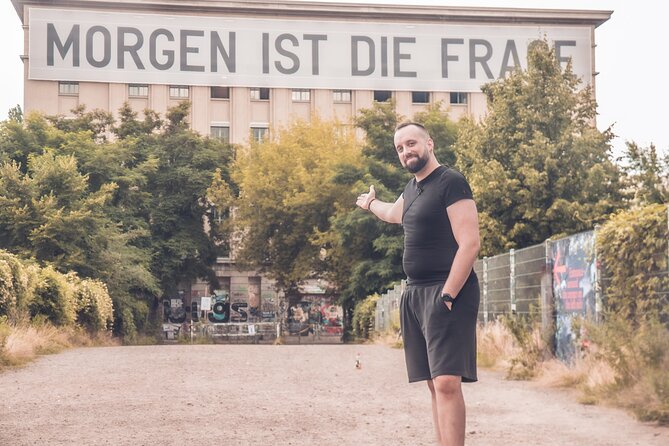
The final stop is RAW-Gelände on Revaler Straße, near Warschauer Straße. This former industrial area contains or has contained venues such as Suicide Circus, Haubentaucher, and Astra Kulturhaus.
The stop lasts about 10 minutes and ties together several themes from the morning. You discuss open-air raves, alternative culture, redevelopment, and the loss of venues such as Watergate and Grießmuehle. You also hear about the pressure on spaces including ://aboutblank.
Ending here makes practical sense. Warschauer Straße is a major transport point, and you finish in an area where you can continue exploring on your own. It also leaves you with a current question rather than a neat historical ending. Berlin’s club culture is still changing, and the places that define it today may not be the places future visitors find.
The augmented reality and visual material
The technology is not just decoration. The tour includes more than 200 photos, videos, quotes, and audio clips, plus augmented reality scenes that can bring celebrities and clubs into the discussion.
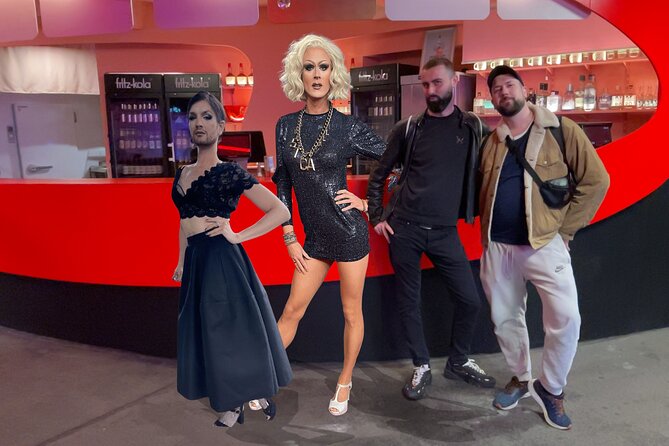
You may also create Mixies, personalized photos with augmented reality elements. These are playful souvenirs, but the larger benefit is visual proof of how much Berlin’s nightlife has changed. A building can look ordinary in daylight while holding decades of music, protest, and personal stories.
The tools also help with clubs that cannot offer a normal interior tour. A behind-the-scenes visit to a famous Berlin club may be available, but it depends on conditions at the time. Treat that as a welcome extra, not the main reason to pay for the tour.
Group size, timing, and physical setup
The tour runs for about three hours and 30 minutes and is limited to 10 people. That is a strong format for this subject. A large group would make it harder to see the iPad screen, ask questions, or discuss sensitive topics without losing the thread.
The itinerary includes nine stops, but the listed stop times add up to less than the full duration. The remaining time is used for moving between areas, explanations, questions, and the visual presentation. You should think of this as a walking and public transport-based city tour, not nine long club visits.
The meeting point is SchwuZ, Rollbergstraße 26, 12053 Berlin. The route ends at RAW-Gelände, Revaler Straße 99, 10245 Berlin, close to Warschauer Straße. Bring a valid public transport ticket because it is not included.
Most people can take part, and service animals are allowed. The experience requires good weather, so plan with that in mind. Free cancellation is available up to 24 hours before the start time, while late cancellations and late changes are not accepted.
Is $81.98 a fair price?
At $81.98 per person, this is not a bargain walking tour. You are paying for a specialist subject, a small group, Jeff’s preparation, visual material, augmented reality features, and possible behind-the-scenes access.
The price makes better sense if you are already curious about Berlin’s nightlife or plan to go clubbing during your stay. The tour can save you from wandering between famous names without knowing what makes each place different. It also gives you background that a regular sightseeing tour will not cover.
It is less valuable if you simply want a quick list of clubs or guaranteed entry somewhere. Admission to most stops is not included because you are visiting them as cultural sites, and the route does not turn into a night out.
Who will enjoy this experience most?
I would recommend it to first-time Berlin visitors who want a social and cultural introduction to club life. It also suits people who have visited several clubs but want to understand the politics and communities behind them.
The tour should appeal especially to anyone interested in LGBTQ+ history, techno, punk, reggae, urban change, migration, or alternative culture. It is also a good choice for people who feel uncertain about Berlin’s club rules and want practical orientation before going out.
You may want to skip it if you dislike walking between outdoor stops, have no interest in nightlife, or prefer traditional monuments and art museums. The subject includes mature themes and frank discussion of sexuality, so consider that before booking.
Should you book the Ultimate Berlin Club Tour?
Book it if you want Berlin’s club scene explained as part of the city’s social story. The best parts are Jeff’s energetic teaching, the small group, the strong visual material, and the links between venues that can otherwise seem unrelated.
Do not book it expecting a full night of club entry. This is a daytime cultural tour with selected access, short stops, and plenty of context. For the right audience, that is precisely its value: you finish with a clearer idea of where to go, what each venue represents, and why protecting Berlin’s clubs matters.
FAQ
Where does the tour begin?
It begins at SchwuZ, Rollbergstraße 26, 12053 Berlin, Germany.
Where does the tour end?
It ends at RAW-Gelände, Revaler Straße 99, near the train stop Warschauer Straße.
What time does the tour start?
The tour starts at 11:30 a.m.
How long does the tour last?
The experience lasts approximately three hours and 30 minutes.
How many people can join the tour?
The group has a maximum of 10 travelers.
Is public transportation included?
No. You need to bring your own public transport ticket.
Is admission to the clubs included?
Admission is included at SchwuZ. Admission is free at the listed stops where no ticket is charged. Behind-the-scenes access to a world-famous Berlin club is subject to availability.
What does the augmented reality portion include?
The experience includes augmented reality segments, more than 200 photos, videos, quotes, and audio clips, plus Mixies, which are personalized photos using augmented reality elements.
Can I cancel for a full refund?
Yes. You can cancel at least 24 hours before the local start time for a full refund. If poor weather or an insufficient minimum number of participants causes cancellation, you will be offered another date or experience, or a full refund.
Just added around Berlin
- Berlin: Private Guided Tour of the Main Sights★ 5.0 · 13 reviews
- Private Highlights of Berlin Bike Tour★ 5.0 · 13 reviews
- Modern Berlin Private Walking Tour: Diverse, Vibrant and Exciting German Capital★ 5.0 · 13 reviews
- Tour in Berlin from Warnemünde and Rostock Cruise Port★ 4.1 · 13 reviews
- Berlin: Stasi Museum Private Guided Tour with Entry Ticket★ 4.8 · 13 reviews
- Private Food Tour Experience with a born and bred Berliner★ 5.0 · 14 reviews
- Berlin: Rheinsberg Palace Entrance Ticket★ 4.8 · 14 reviews
- Berlin in one day – day tour with an expert guide★ 5.0 · 14 reviews
Berlin Tours, compared.
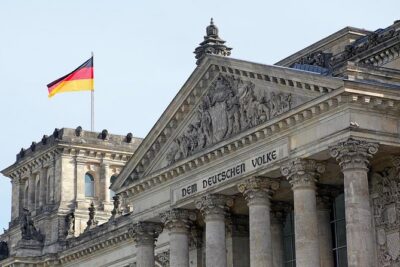
Reichstag, Dome and Government District Guided Tour
Read our review →
1-Hour City Tour by Boat with Guaranteed Seating
Read our review →
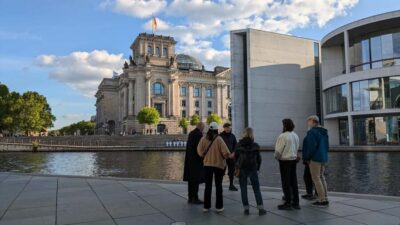
Government District around the Reichstag Guided Tour
Read our review →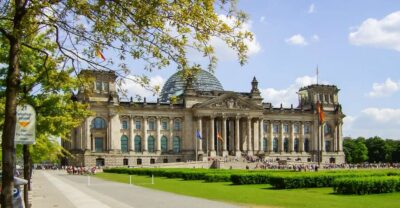
Reichstag, Plenary Chamber, Cupola & Government Tour
Read our review →