Reviewed · HALF-DAY
From Berlin: Potsdam Half-Day Guided Tour
Royal gardens meet strange, human stories. This Potsdam tour gives you a useful mix of grand palaces, quiet gardens, Prussian history, and modern German memories without asking you to plan every train, tram, and walking route yourself. I especially like the story-led approach to history and the chance to see major Potsdam sights in one organized outing.
I also like that the tour ends at Sanssouci Palace, leaving you free to continue on your own. The main drawback is clear: you do not enter any palace, and public transport costs are extra. If you expect a private vehicle or a palace interior visit, this is not the right tour.
In This Review
- Key points to know before booking
- Why Potsdam earns half a day from Berlin
- The public transport start matters
- Potsdam’s historic center and Old Market Square
- The Dutch Quarter adds a welcome change of pace
- Prussia explained through kings, politics, and odd decisions
- Sanssouci Park is the visual reward
- The Church of Peace and its Venetian mosaic
- Wilhelm II, war, and the end of an era
- Why potatoes appear at Frederick the Great’s grave
- How much walking and how fast is the pace?
- Guide quality is the main reason to book
- What the $25 price really gets you
- Who will enjoy this Potsdam tour most?
- Practical tips for a better day
- Should you book the Potsdam half-day tour?
- FAQ
- How long does the Potsdam tour last?
- Does the tour enter Sanssouci Palace?
- Is public transport included in the price?
- Where does the tour meet in Berlin?
- What language is the tour conducted in?
- What should I bring?
Key points to know before booking
- Frederick the Great’s potatoes: Learn why people leave potatoes on the Prussian king’s grave, a small custom with a surprisingly practical origin.
- Sanssouci Park finale: Finish among fountains, flower beds, tree-lined paths, and palace views in the UNESCO-listed park.
- Public transport is part of the day: You need an ABC ticket, with a day pass recommended. The cost is not included.
- A history-heavy route: The guide connects Prussian kings, Wilhelm II, World War I, World War II, and the rise of the German Empire.
- No palace interiors: The tour focuses on outdoor sights and explanations, not entry to Sanssouci or other palaces.
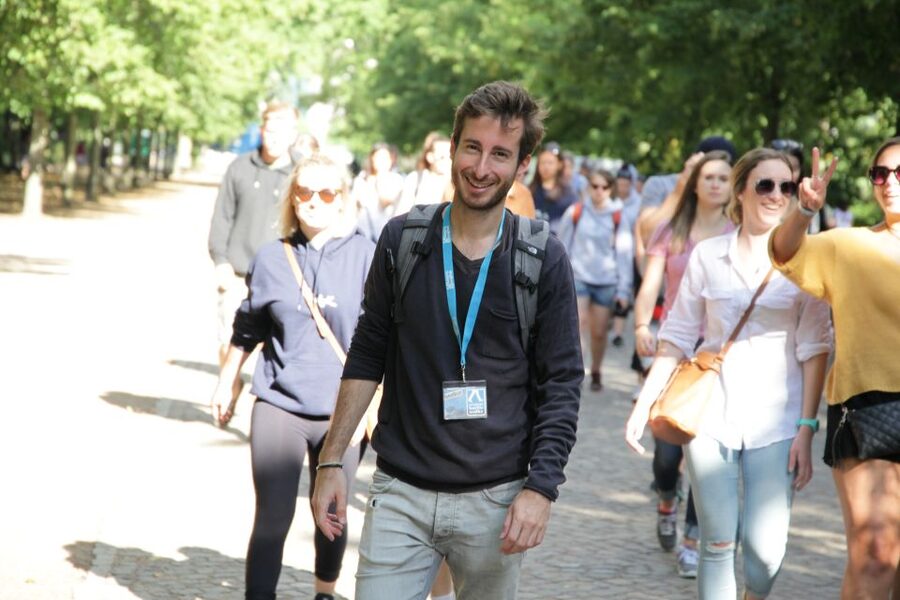
- Strong guide feedback: Guides including Paul, Reuben, Eran, Jenny, Steve, Xavier, Rachel, Kyle, and Sam Z have been praised for clear explanations, humor, patience, and good handling of delays.
Why Potsdam earns half a day from Berlin
Berlin has enough museums, memorials, and neighborhoods to fill several trips. Still, Potsdam adds a different side of German history. It was the royal residence of Prussian rulers, a place of formal gardens and palace architecture, and later an important setting for twentieth-century events.
The comparison with Versailles is easy to understand. Potsdam was not simply a pretty royal suburb. Its buildings and gardens show how Prussia used design, ceremony, and royal power to present itself as a serious European state.
I like this tour because it places those grand claims beside ordinary details. You hear about kings and emperors, but you also learn about potatoes left at a grave. You see formal gardens, but you also hear where Wilhelm II fled at the end of World War I. Those details help the past feel less like a list of dates.
The tour begins outside Starbucks opposite Hackescher Markt S-Bahn station in central Berlin. From there, you travel toward Potsdam using public transport. That means you should arrive ready for a walking day that also includes trains or other local transport.
A few more tours and experiences worth a look
- Discover Berlin Half-Day Walking Tour
★ 5.0 · 9,624 reviews - Berlin Third Reich Sites: Half-Day Walking Tour
★ 5.0 · 835 reviews - Potsdam Half-Day Walking Tour from Berlin
★ 4.5 · 398 reviews
The public transport start matters
The tour does not use a private bus, minivan, or hotel pickup. This point deserves attention because at least one participant expected a vehicle, while another found that using the train helped build confidence with Berlin’s transport system.
You need an ABC transport ticket, since Potsdam lies outside Berlin’s central fare area. A day pass is recommended, and the price is not included in the tour fee. Buy or arrange the correct ticket before setting off so you are not trying to solve the fare system while the group waits.
The transport element can be useful. You get a practical introduction to moving between Berlin and Potsdam, and the guide can help you understand how the city’s public network works. It also means the outing feels more like a real day in Germany than a sealed-off coach excursion.
There is one tradeoff. Public transport brings normal city problems. A past group faced a track accident and had to leave the train, then walk for more than 30 minutes toward the Bridge of Spies. Guide Xavier handled the change calmly, but an unexpected delay can make the route feel tighter.
Potsdam’s historic center and Old Market Square
Once in Potsdam, the tour turns toward the historic center. The Old Market Square is one of the key places to get your bearings. Its architecture reflects the city’s royal ambitions, rebuilding, and changing political life.
The square gives your guide a natural place to explain how Potsdam developed under Prussian rule. Instead of seeing the city as a collection of attractive façades, you begin to understand why the rulers invested so heavily in public buildings and ceremonial spaces.
The Town Hall is another major sight on the city walk. The route also includes the Dutch Quarter, known for its distinctive brick buildings and different feel from the grand royal zones. This change of scale is part of Potsdam’s appeal. One moment you are looking at formal state architecture, and the next you are among streets that feel more domestic and human.
The guide-led format helps here because Potsdam’s sights are spread out. You can see a great deal, but you need to follow directions and keep moving. If you stop for a long coffee or take many photographs at every corner, you may feel pressed for time.
The Dutch Quarter adds a welcome change of pace

The Dutch Quarter is valuable because it breaks up the royal story. Its brick architecture gives you a look at a planned neighborhood rather than another palace façade or garden vista.
I like this part of the outing for its variety. A good guide can explain how the quarter fits into Potsdam’s development, then use the streets to show how royal planning affected everyday life. The route does not stay locked in a single period or style.
That variety also helps families and visitors who are not devoted to military or royal history. Potsdam offers more than kings. Its streets, gates, bridges, churches, and neighborhoods create a fuller picture of the city.
Something different for another day:
- Berlin: Reichstag, Dome and Government District Guided Tour
★ 4.7 · 18,288 reviews - Berlin: 1-Hour City Tour by Boat with Guaranteed Seating
★ 4.3 · 16,993 reviews - Berlin: Boat Tour Along the River Spree
★ 4.4 · 11,252 reviews - Berlin: Hop-on Hop-off Bus Tour with Live Commentary
★ 4.3 · 8,579 reviews
Prussia explained through kings, politics, and odd decisions
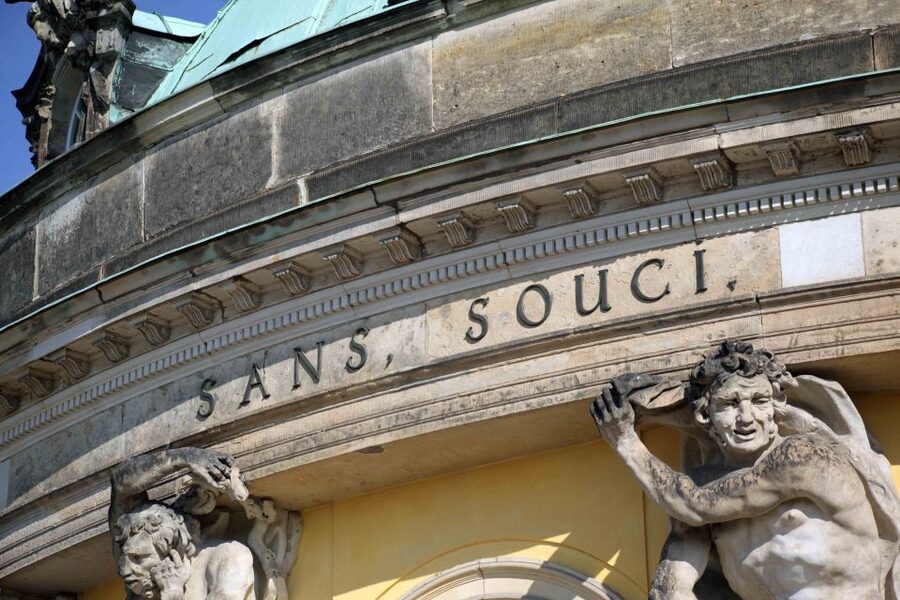
The central subject is the rise and fall of Prussia. The guide traces how a relatively minor European power grew into a force that helped shape the German Empire.
This is where the quality of the guide matters most. The tour covers a lot in four hours, and the subject can become a blur of rulers, wars, titles, and dates. The strongest guides have been praised for making difficult material clear and lively. Paul was singled out for making Prussian history interesting, while Reuben used storytelling and breaks to keep the outing relaxed. Rachel, Jenny, Steve, Xavier, and Kyle also received praise for their clear explanations, humor, patience, and command of the subject.
You can expect stories about kings, emperors, royal ambition, and political failure. The description promises a look at the ridiculous as well as the mighty, which is a welcome approach. Great powers are easier to understand when you see their mistakes and strange habits, not just their victories.
One caution: the tour may lean heavily toward the rulers of Prussia. If you prefer social history or everyday life, you might find the royal focus a little strong. One participant specifically felt there was too much emphasis on kings. That criticism is fair, since the tour’s subject is clearly the monarchy and its political legacy.
Sanssouci Park is the visual reward
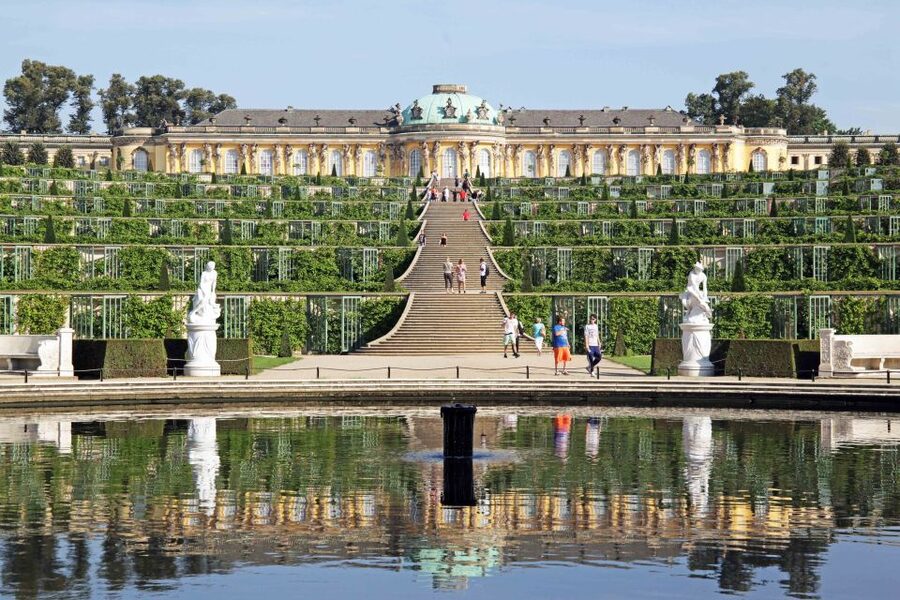
The route continues through Sanssouci Gardens, part of the UNESCO World Heritage site. This is the section most likely to win over anyone who has had enough of dates and dynasties.
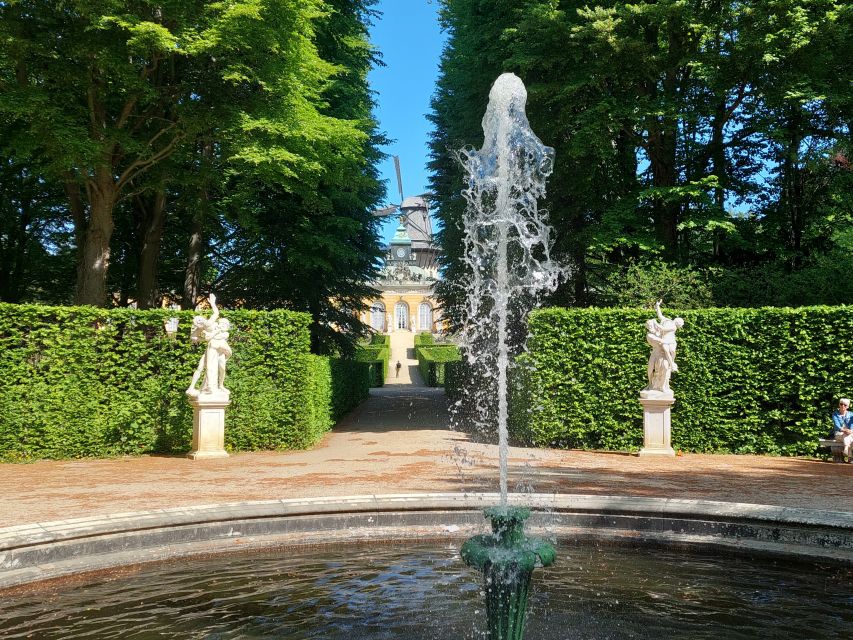
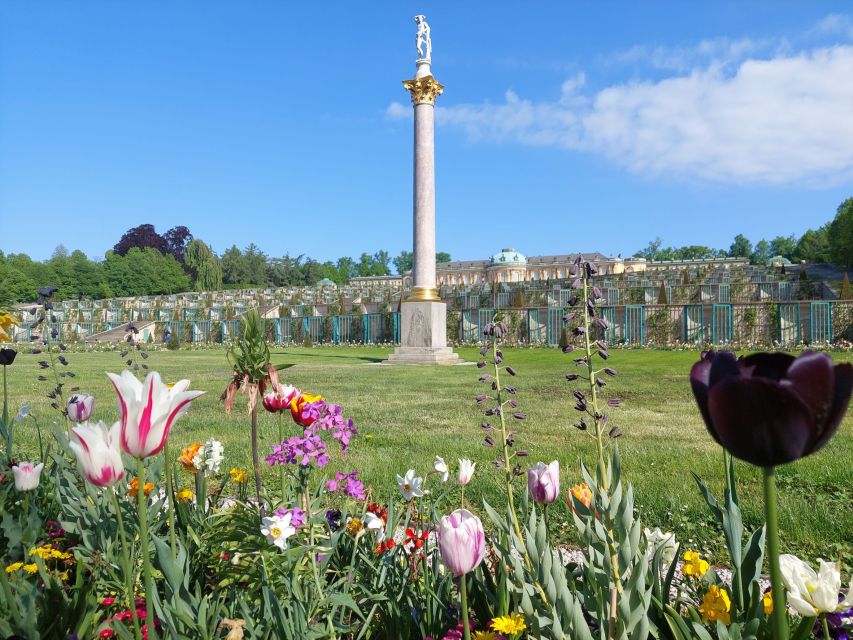
Expect tree-lined avenues, decorative fountains, carefully arranged flower beds, and views toward the palaces. The gardens were designed to please the eye, but they also express royal power. Their order, scale, and ornament tell you that this was a place made for a ruler who wanted beauty close at hand.
The setting can feel playful rather than severe. Potsdam’s royal spaces are not all about fortress-like authority. Sanssouci has a lighter, more relaxed character, which helps explain why the gardens remain such a popular part of the visit.
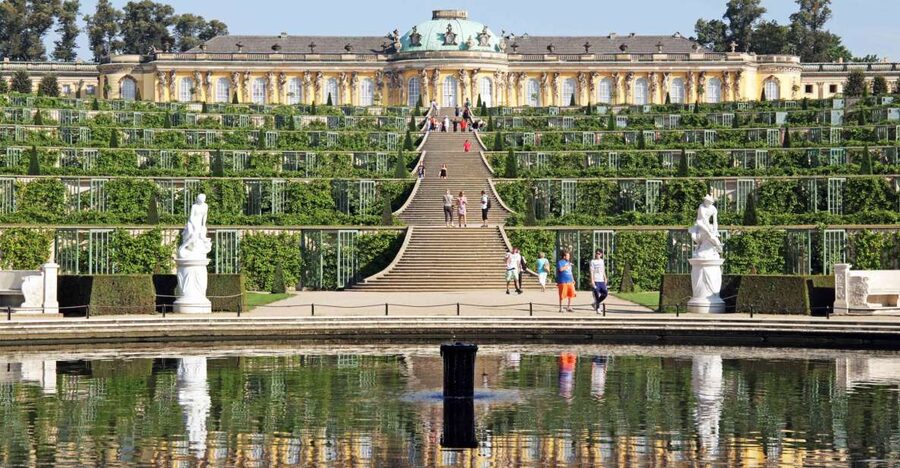
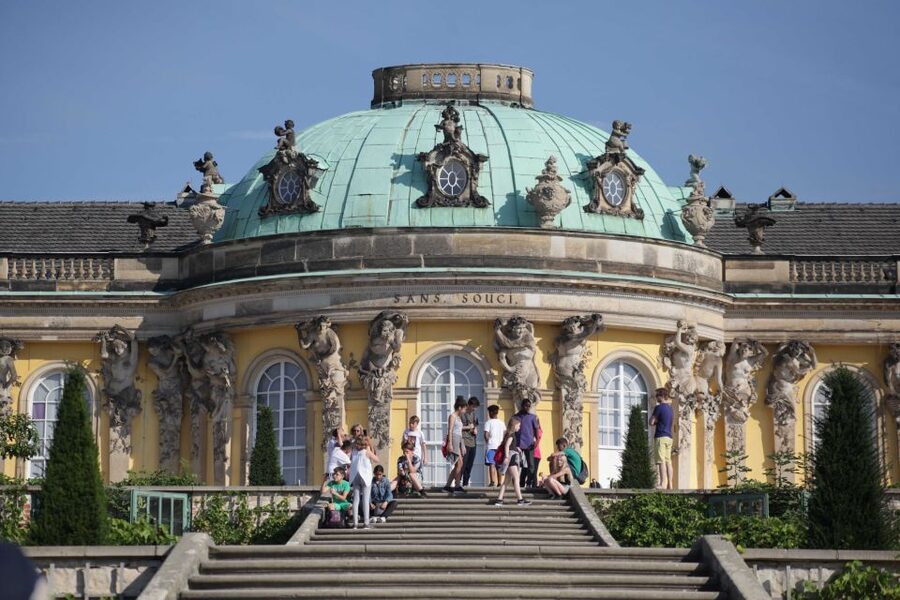
The route ends directly in front of Sanssouci Palace. This is a smart finish. You get the main outdoor setting, then decide if you want to buy palace admission, explore more gardens, or return to Berlin with the guide.
Keep your expectations straight: the tour does not enter the palaces. This is not a guided interior visit to Sanssouci Palace. If you want to see the rooms, artwork, or royal furnishings, you must arrange that separately and check opening hours before booking.
The Church of Peace and its Venetian mosaic
The Church of Peace adds a quieter note to the route. You can see its solemn interior and the impressive Venetian mosaic, a detail that gives the tour more range than a simple palace walk.
Religious buildings often provide a pause from political history, and this church appears to serve that purpose. The atmosphere is more reflective than the open garden paths, while the mosaic gives you something specific to look at rather than another broad historical explanation.
Your guide can connect the church to Potsdam’s royal setting and the wider story of Prussian power. You should not expect a long independent visit here, since the tour covers many stops, but it adds texture to the day.
Wilhelm II, war, and the end of an era
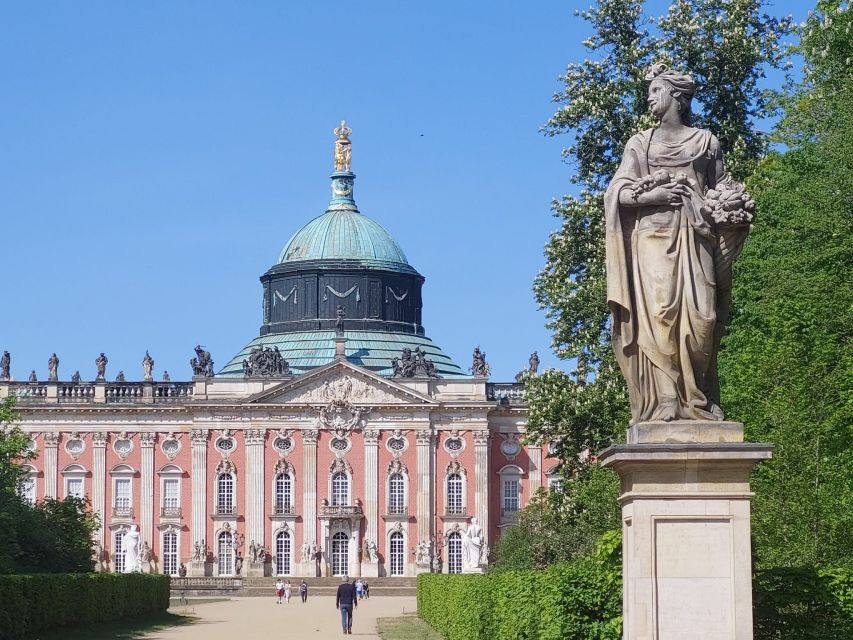
Potsdam’s story does not stop with Frederick the Great. The tour also points to the place where Wilhelm II fled Germany at the end of World War I.
That detail gives the royal story a clear ending. The same monarchy that filled Potsdam with palaces and ceremonies did not survive the political shock of the war. Seeing the location tied to Wilhelm’s departure helps connect the gardens and buildings to the collapse of imperial Germany.
The route also includes discussion of twentieth-century history and World War II. Several guides have been praised for linking the Prussian period with the later history of Germany, rather than treating the palace years as an isolated chapter.
This is one reason I see value in a guide here. On your own, you might admire the gardens and read a few plaques. A strong guide can show how the city’s royal image fits into the much larger story of German politics, war, and national identity.
Why potatoes appear at Frederick the Great’s grave
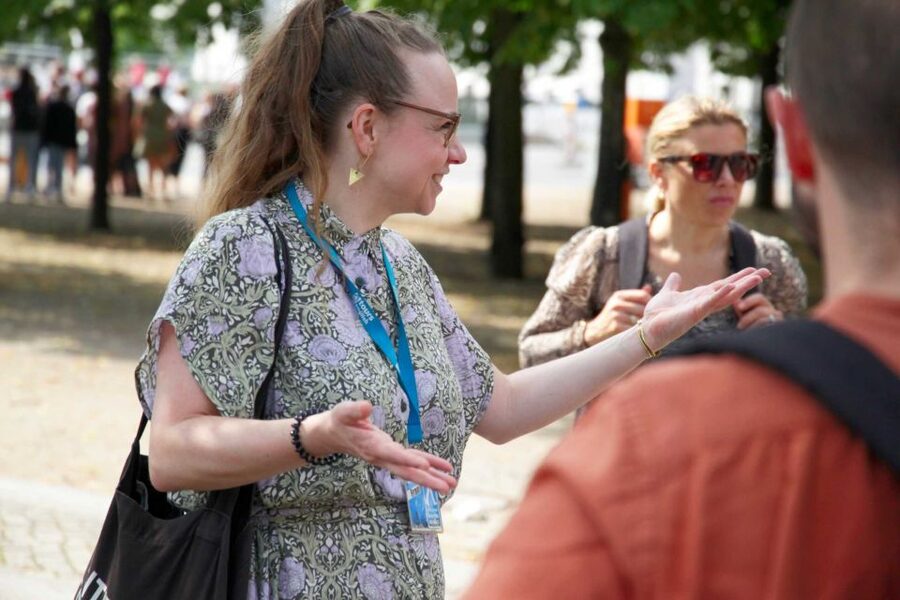
The potato story is one of the tour’s most memorable details. Germans leave potatoes on Frederick the Great’s grave, and you learn why this unusual custom exists.
It is a small example of how a guide can make a historical figure easier to remember. Frederick the Great is not presented only as a king connected to military campaigns and state power. The potato tradition gives you a concrete, everyday link to his reputation and policies.
These are the details I value most on a walking tour. You may forget a precise date, but you are unlikely to forget a royal grave covered with potatoes. The story also gives the group a lighter moment during a subject that can otherwise become quite serious.
How much walking and how fast is the pace?
This is a walking tour with public transport between some locations. You should bring comfortable shoes and expect a fairly active half-day.
The pace has received mixed but mostly positive reactions. Some people found the route manageable because public transport offered regular breaks from walking. Others felt that the tour moved quickly, with several stops handled almost as a drive-by experience.
The current duration is advertised as four hours. Some earlier outings ran longer, in one case more than six hours, and one guide extended the tour after checking with the group. Do not count on that extra time, however. Plan around the stated four hours and treat any extension as a bonus.
Weather matters. Much of the experience takes place outdoors, so rain, cold, or strong sun can change how comfortable you feel. Bring a raincoat or umbrella when needed. In one cold-weather outing, the group still enjoyed the day, but you should dress for standing and walking outside.
Coffee breaks may be possible, depending on the guide and the group’s timing. Reuben was praised for making room for coffee stops, but this should not be treated as a fixed feature.
Guide quality is the main reason to book
The tour’s greatest strength is its guides. Names attached to especially strong feedback include Paul, Reuben, Eran, Jenny, Steve, Xavier, Rachel, Kyle, Sam Z, and others.
The praise is consistent in a few important ways:
- Guides explain complicated history in an accessible way.
- They answer questions rather than simply reciting a speech.
- They use humor and personal stories to keep the group engaged.
- They help when people are late, lost, or confused by transport.
- They wait for photographs and adjust to families when possible.
That last point matters. Kyle was praised for patiently handling a four-year-old’s constant questions, while another guide helped a group recover after getting lost at the meeting point. This suggests the experience can work well for mixed-age groups, provided everyone can keep up with the walking.
Group size is not specified, so you should be prepared for a shared group rather than a private outing. A small group can feel almost personal, while a larger one requires closer attention to meeting points and instructions.
What the $25 price really gets you
At $25 per person, the tour is priced as an affordable introduction to Potsdam. You are paying for an English-speaking guide who organizes the route, explains the sites, and helps you make sense of the city’s history.
You still need to pay for public transport, and palace entry is not included. Lunch is also on your own. The real value depends on what you want from the day.
I think the price works well if you want orientation and historical context. You can see more than you might manage alone, especially because the sights are spread across Potsdam. It also saves you the work of researching connections, deciding which gates and gardens matter, and building a sensible route.
The value is weaker if you only want a vehicle transfer or expect a private tour. This is not a chauffeur service. It is a guided public transport and walking outing, and that should be clear before you pay.
Who will enjoy this Potsdam tour most?
I would recommend it to you if you:
- Have limited time in Berlin but want to see Potsdam.
- Enjoy political, royal, and military history.
- Prefer explanations and stories to silent sightseeing.
- Feel unsure about using Berlin’s public transport.
- Want to see the main outdoor sights before exploring alone.
- Are comfortable walking for several hours.
You might choose another plan if you want a slow garden visit, a private vehicle, or a palace interior tour. The route covers a lot, but it does not offer unlimited time at each stop.
Families can do well here, especially with a guide who welcomes questions. Older visitors or anyone with limited walking stamina should consider the active pace and uneven outdoor setting before booking.
Practical tips for a better day
Buy the correct ABC ticket before the tour begins, with a day pass recommended. Keep it handy because public transport is part of the route.
Wear comfortable shoes and dress for changing weather. A raincoat is more useful than relying on a forecast, since much of the sightseeing happens outside.
Do not assume you will visit Sanssouci Palace inside. Check palace opening days and hours yourself if you hope to continue with an interior visit after the tour. Special events can cause early closures, and one past outing was affected when the palaces closed earlier than expected.
Bring water and allow time for a snack or lunch after the main guided portion. The tour does not include food, though a guide may help point you toward options.
At the end, you can either explore more of Potsdam and its palaces on your own or accompany the guide back to Berlin. That flexibility is useful, especially if you want to turn a half-day outing into a longer visit.
Should you book the Potsdam half-day tour?
Book it if you want a well-organized introduction to Potsdam with strong historical storytelling. The gardens are beautiful, the route covers the city’s main sights, and the Prussian story becomes much easier to follow with a guide.
Do not book it expecting a private bus, hotel pickup, or palace interiors. Bring your own ABC transport ticket, prepare for walking, and accept that the schedule may feel quick.
For $25 plus transport, I think this is a good-value choice for first-time visitors who want to see why Potsdam matters. The best reason to go is not only Sanssouci’s pretty gardens. It is the way the tour connects royal ambition, ordinary potatoes, imperial collapse, and modern German history in one manageable outing.
FAQ
How long does the Potsdam tour last?
The stated duration is four hours. Some earlier outings lasted longer or were extended by the guide, but you should plan around four hours.
Does the tour enter Sanssouci Palace?
No. The tour does not enter Sanssouci Palace or any other palace. It ends in front of Sanssouci Palace, where you can continue independently if the site is open.
Is public transport included in the price?
No. Public transport tickets are not included. You need an ABC transport ticket, and a day pass is recommended.
Where does the tour meet in Berlin?
The meeting point is outside Starbucks opposite Hackescher Markt S-Bahn station.
What language is the tour conducted in?
The tour is conducted in English with a live English-speaking guide.
What should I bring?
Bring comfortable shoes and a valid public transport ticket. An umbrella or raincoat is also sensible because much of the tour takes place outdoors.
Just added around Berlin
- Berlin: Private Guided Tour of the Main Sights★ 5.0 · 13 reviews
- Private Highlights of Berlin Bike Tour★ 5.0 · 13 reviews
- Modern Berlin Private Walking Tour: Diverse, Vibrant and Exciting German Capital★ 5.0 · 13 reviews
- Tour in Berlin from Warnemünde and Rostock Cruise Port★ 4.1 · 13 reviews
- Berlin: Stasi Museum Private Guided Tour with Entry Ticket★ 4.8 · 13 reviews
- Private Food Tour Experience with a born and bred Berliner★ 5.0 · 14 reviews
- Berlin: Rheinsberg Palace Entrance Ticket★ 4.8 · 14 reviews
- Berlin in one day – day tour with an expert guide★ 5.0 · 14 reviews
Half-Day, compared.
Early-Start Dachau Memorial Half-Day Tour from Munich
Read our review →
Berlin Third Reich Sites: Half-Day Walking Tour
Read our review →
Dachau Small-Group Half-Day Tour from Munich By Train
Read our review →
Berlin Private Half-Day Walking Tour: Discover the German Capital’s History
Read our review →