Reviewed · MUNICH TOURS
Executioners, whores, witches with drama
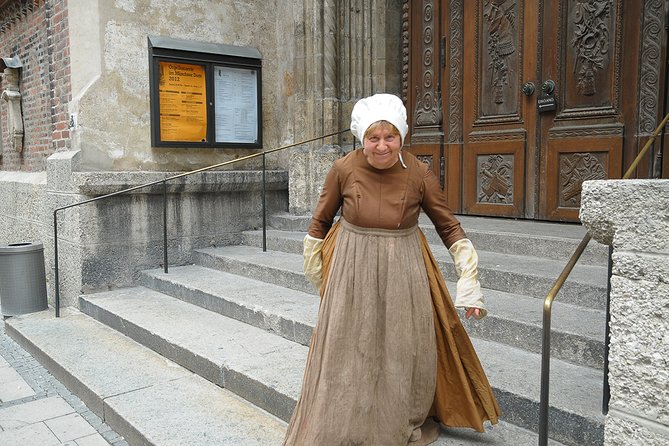
Dark stories make Munich memorable. This evening tour uses costumed actors and researched city history to bring witch hunts, prostitution, and executioners into the streets around Karlstor. I like the lively mix of fact and performance, and I like that the stories reveal an older Munich shaped by fear, punishment, and strict social rules. The main drawback is the late 8 p.m. start, which may not suit younger children or anyone hoping for a quiet sightseeing walk.
The strongest part is the guide’s delivery. A powerful voice matters in central Munich, where city noise can swallow a soft speaker, and this tour has earned praise for clear narration even outdoors and inside churches. At about $33.57 per person, it costs more than a basic walking tour, but the actors add a small theater production to the usual city history.
In This Review
- Key points to know before booking
- Meeting Munich’s darker past at Karlstor
- Why executioners, prostitutes, and witches belong together
- Witch hunts and the Devil’s Pact
- How the acting changes a city walk
- A two-hour route with room for surprises
- What the guide adds to the performance
- Is $33.57 a fair price?
- Who will enjoy this evening tour most?
- Practical details that affect your evening
- How this compares with a standard Munich tour
- Should you book Executioners, Whores, Witches with Drama?
- FAQ
- Where does the tour begin?
- Where does the tour end?
- What time does the tour start?
- How long does the experience last?
- How much does the tour cost?
- What is the maximum group size?
- Can I cancel for a full refund?
Key points to know before booking
- Karlstor is the meeting point: The tour begins at Karlstor on Neuhauser Strasse in central Munich and finishes at the same place.
- The stories are genuinely dark: Expect witch hunts, prostitution, punishment, the Devil’s Pact, and the unusual link between executioners and pimps.
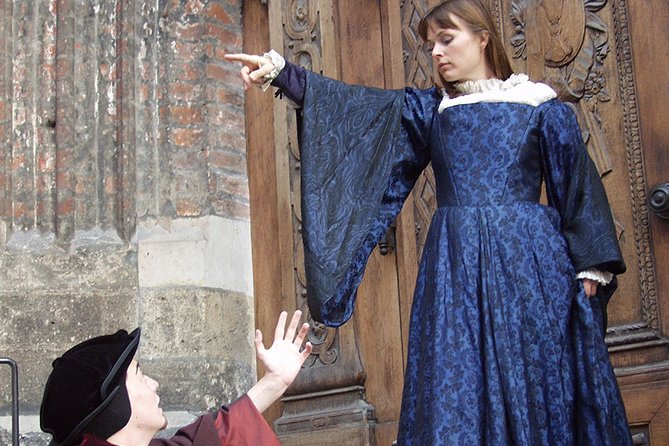
- Actors bring the past forward: Professional performers in historical dress stage scenes rather than leaving you with a standard spoken lecture.
- The guide matters: Clear projection and strong storytelling are especially useful in noisy streets and church settings.
- Plan on two hours: Some outings have run closer to two and a half hours, so avoid booking a tight dinner or train connection afterward.
- Small enough for personal attention: The group limit is 30 people, a useful middle ground between a private walk and a large parade.
Meeting Munich’s darker past at Karlstor
Karlstor is a smart starting point for this kind of walk. It places you in the heart of Munich, near the main pedestrian center, yet the old gate also gives the evening a clear sense of transition. You begin in the modern city and then turn toward stories from a time when public punishment, superstition, and social exclusion shaped daily life.
The meeting address is Karlstor, Neuhauser Strasse, 80331 Munich. The start time is 8 p.m., so darkness is part of the setting rather than a minor detail. That timing helps the actors create a mood, though you should arrive ready for an evening outdoors and remember that the end may be later than the advertised two-hour duration.
The walk returns to Karlstor. That makes the route easy to manage, especially if you are staying near central Munich or want to continue on foot afterward. You do not need to arrange a separate ride back to the starting point.
Other Munich trips people book alongside this one:
- From Munich: Neuschwanstein & Linderhof Castle Full-Day Trip
★ 4.5 · 12,494 reviews - Neuschwanstein & Linderhof Castle-Fairytale Day Tour from Munich
★ 4.5 · 7,275 reviews - Munich: Third Reich & WWII Walking Tour
★ 4.6 · 6,181 reviews
Why executioners, prostitutes, and witches belong together
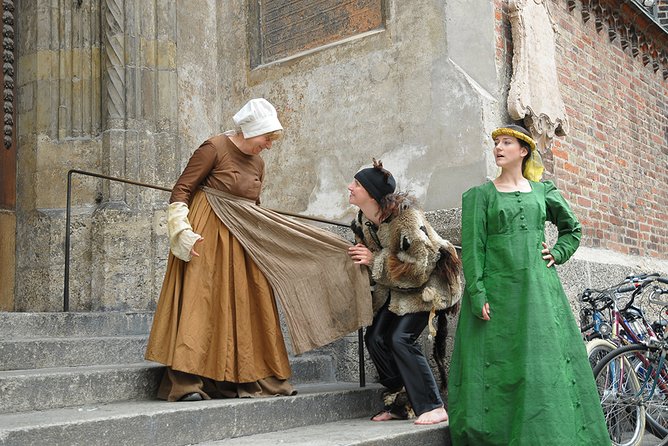
The title sounds like a theatrical joke, but the connection is the heart of the tour. In early Munich, executioners did more than carry out sentences. Their work placed them outside polite society, and the tour explains how they were also connected with prostitution and pimping.
That detail gives you a useful way into medieval and early modern social history. A city’s rules were not only written in laws. They were also reflected in who could touch the dead, carry out punishment, work in prostitution, or live at the edge of respectable society.
The tour’s central question is simple: what did these three groups have in common? The answer leads into social stigma, official punishment, sexual commerce, and the uneasy role of people who performed necessary work that others preferred not to see.
I appreciate this approach because it avoids presenting Munich as only a city of palaces, churches, and grand squares. You get a less polished view of urban life. It is not always comfortable, but it is more revealing than a string of dates and building names.
Witch hunts and the Devil’s Pact
Witchcraft stories give the walk its most dramatic material. The tour explores witch hunts and the beliefs that supported them, showing how fear could turn rumor and suspicion into serious consequences.
The reference to the Devil’s Pact adds a strong theatrical center. Rather than treating old beliefs as silly curiosities, the presentation places them in the mental world of the people who believed in them. That distinction matters. You are not simply hearing that witch hunts happened. You are being asked to consider how ordinary people understood danger, sin, illness, and misfortune.
The performance style helps here. Historical costumes and acted scenes can make an abstract idea easier to picture, especially when the subject involves invisible forces and old religious beliefs. You may find the presentation more memorable than a conventional lecture because the actors give the stories faces, voices, and emotional tension.
Still, the subject is dark. If you prefer light comedy or gentle sightseeing, this is not the right evening walk. The tone is entertaining, but the material includes persecution and punishment. Parents should use their judgment, since no official minimum age is provided.
How the acting changes a city walk
A normal walking tour asks you to imagine the past while a guide describes it. Here, the performers help supply that missing picture. Actors in historical clothing stage scenes along the route, turning the city into a backdrop for personal stories and conflicts.
That format can work very well when the facts are unusual. A detail about an old profession may pass quickly during a standard tour. A staged encounter, however, gives you a moment to remember. The acting also breaks up the spoken portions, so the two hours do not feel like one long explanation.
The balance is important. This is not simply a play performed outdoors, and it is not simply a history lesson with costumes. The guide provides the structure, while the actors add drama and atmosphere. The strongest feedback focuses on that combination, with the performances described as a perfect complement to the historical material.
The quality of an outdoor performance depends on sound and crowd control. One especially useful strength is the guide’s voice. A strong speaker can keep a group together when Munich’s central streets are noisy, and clear delivery also helps when the tour enters or pauses near churches.
Something different for another day:
- Dachau Concentration Camp Memorial Site Tour from Munich by Train
★ 4.5 · 5,637 reviews - Neuschwanstein Castle Tour from Munich
★ 4.5 · 5,117 reviews - Third Reich Walking Tour Munich
★ 4.5 · 4,291 reviews - Munich Hop-On Hop-Off Tour: 1-Day or 2-Day Ticket
★ 4.3 · 4,161 reviews
A two-hour route with room for surprises
The published duration is about two hours, but you should allow extra time. One outing lasted two and a half hours, and a tour with several acted scenes can run long when the guide has plenty to explain or the group pauses for performances.
That is not necessarily a problem. It suggests the company does not rush through its material. Still, I would not schedule a fixed dinner reservation immediately after the walk. Give yourself a little breathing room.
The route begins and ends at Karlstor, but the supplied details do not identify every stop along the way. You should expect a central Munich walking route rather than a coach ride or a single indoor show. The tour takes place in the city streets and includes church settings, so comfortable shoes and a coat suitable for the evening are sensible choices.
The group can include up to 30 people. That is small enough for a strong guide to address the group directly, but it is not a private tour. During an acted scene, you may need to stand where you can see and hear, so arriving a little early is useful.
What the guide adds to the performance
The guide is more than a person who points out buildings. The best parts of this experience depend on a clear explanation of how the stories fit together. The guide must connect the executioner’s social role with prostitution, then move from city rules into witchcraft, belief, and punishment without losing the thread.
The feedback points to a guide who knows the material well and speaks with enough force to cut through city noise. That is a practical advantage, not a small one. A brilliant story is of little use if you miss half of it while standing beside a busy street.
The tour also seems to benefit from guides who enjoy performing the material. A passionate delivery can make grim subjects easier to follow without turning them into a dry lecture. At the same time, the actors share the spotlight, so you get changes of pace throughout the walk.
No guide names are supplied, so you should not book expecting a specific person. The experience appears to depend on the company’s guide and acting team as a whole.
Is $33.57 a fair price?
At $33.57 per person, this is not the cheapest way to see Munich. You can walk around the city on your own for free, and many standard city tours cost less. The question is what you are paying for.
Here, the price covers roughly two hours of guided storytelling, historical research, professional acting, and a themed route. That makes the comparison less like a basic walking tour and more like a small outdoor theater experience with a history lesson built in.
I think the price is reasonable if you enjoy live performance and want a subject beyond Munich’s familiar highlights. You are paying for interpretation and atmosphere, not transport or admission to a museum. If you mainly want an efficient introduction to the city center, a general sightseeing walk may offer better value.
The experience has also been booked about 15 days in advance on average. That suggests you should not assume a last-minute place will be available, especially if your dates are fixed. A mobile ticket keeps the booking simple, but the real value comes from choosing a tour that matches your interests.
Who will enjoy this evening tour most?
This is a good choice for you if you like:
- Dark social history and unusual city stories
- Witch trials, superstition, crime, punishment, and prostitution
- Costumed interpreters and short dramatic scenes
- Tours that teach through stories rather than lists of dates
- Central Munich walks that begin and end at the same point
- A group activity suitable for families with older children or adults
The experience may suit a 14-year-old who already enjoys darker history, as one birthday outing did. But no official age guidance is given, so parents should decide based on the child’s comfort with witch hunts, sexual history, and execution.
It can also work well for groups. The group limit is 30, and the acting gives friends or relatives something to discuss as you walk. Munich residents have even found new material in the route, which suggests the content goes beyond the first facts most people learn about the city.
You may want to skip it if you dislike theatrical tours, need a strict end time, or want a calm overview of architecture. The subject is the point, and it can be intense.
Practical details that affect your evening
The tour begins at 8 p.m. at Karlstor and ends there. Since the meeting point is near public transportation, getting to the start should be straightforward, though the supplied details do not identify specific lines or stops.
A mobile ticket is accepted. Confirmation arrives when you book, which is useful if you are arranging several activities during a short Munich visit. Service animals are allowed, and most people can participate, but no detailed accessibility information is provided.
Free cancellation is available until 24 hours before the start time. Cancel later than that and the payment is not refunded. Changes made inside that 24-hour window are not accepted. The company also requires a minimum number of participants, so a cancellation by the operator is possible if that minimum is not met. In that case, you are offered another date or experience, or a full refund.
These rules are fairly flexible, but the 24-hour cut-off is firm. Check the local Munich time before making changes.
How this compares with a standard Munich tour
A general Munich city tour usually helps you get oriented. It may cover famous buildings, major events, and the basic shape of the center. This experience takes a narrower path, but it uses that focus to explore people and beliefs that are often left out.
I like that choice. Cities become more understandable when you hear about people who lived outside the accepted social order. The executioner, the prostitute, and the accused witch reveal how authorities defined respectability and how fear shaped public life.
The trade-off is coverage. You will not get a complete survey of Munich, and the supplied route details do not promise major landmarks beyond the central meeting area. If this is your first hour in the city, you may prefer a general orientation tour first, then use this experience for a second look at Munich after dark.
For a return visit, it makes even more sense. You can spend your daylight hours on museums, churches, and famous squares, then use the evening to hear the less familiar stories behind city life.
Should you book Executioners, Whores, Witches with Drama?
I would book this tour if you want dark history with live performance, not just a walk past buildings. The unusual link between Munich’s executioners and prostitution gives the tour a clear theme, while the witch hunts and Devil’s Pact add drama without losing the historical focus.
The strongest reasons to go are the well-researched storytelling, powerful guide delivery, and professional actors. The 30-person limit, central start, and return to Karlstor also make the outing manageable.
Think twice if the 8 p.m. start is inconvenient, if you need the tour to end at exactly two hours, or if subjects involving witch hunts and sexual history are not your style. For everyone else, $33.57 is a fair price for a lively, unusual look at Munich’s past, especially if you have already seen the city’s standard sights.
FAQ
Where does the tour begin?
The tour begins at Karlstor on Neuhauser Strasse, 80331 Munich, Germany.
Where does the tour end?
The experience ends back at the meeting point at Karlstor.
What time does the tour start?
The tour starts at 8 p.m.
How long does the experience last?
The stated duration is approximately two hours. One outing lasted two and a half hours, so allow extra time.
How much does the tour cost?
The listed price is $33.57 per person.
What is the maximum group size?
The tour accepts a maximum of 30 participants.
Can I cancel for a full refund?
Yes. You can cancel at least 24 hours before the start time for a full refund. Cancellations or changes made less than 24 hours before the start are not accepted for a refund.
Just added around Munich
- Munich WWII and Dachau Concentration Camp Private Tour with Licensed Guide★ 5.0 · 3 reviews
- Munich Photoshoot: A Must-Have Holiday Experience!★ 5.0 · 3 reviews
- München: Braukurs mit Führung und Verkostung★ 4.2 · 4 reviews
- Mozart and German Composers Private Tour in Munich★ 4.8 · 4 reviews
- CITY QUEST Munich: reveal the secrets of this city!★ 4.0 · 4 reviews
- Private audio book city rally in Munich city centre★ 4.0 · 4 reviews
- Culinary Haidhausen – The Food Tour★ 4.3 · 4 reviews
- Private Munich History and Beer Culture Walking Tour★ 5.0 · 4 reviews
Munich Tours, compared.


Neuschwanstein & Linderhof Castle-Fairytale Day Tour from Munich
Read our review →
Dachau Concentration Camp Memorial Site Tour from Munich by Train
Read our review →

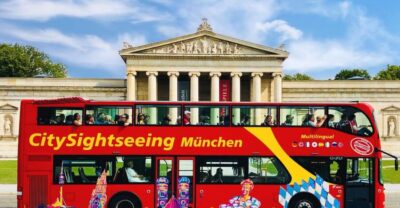
Munich Hop-On Hop-Off Tour: 1-Day or 2-Day Ticket
Read our review →