Reviewed · BERLIN TOURS
Discover Berlin Express Tour: 2hr Highlights
Berlin’s past is packed into a short walk. This two-hour guided tour links the Brandenburg Gate, Reichstag, Holocaust memorials, Hitler’s bunker site, the Berlin Wall, and Checkpoint Charlie in one clear route through the city’s most important 20th-century places. I like the smart use of time and the serious historical focus, especially for a first visit or a tight schedule.
I also like that an academic English-speaking guide leads the walk rather than leaving you to decode plaques on your own. The main tradeoff is pace: two hours is enough for an overview, but not enough for long visits, quiet reflection at every memorial, or entry into any building. You remain outdoors throughout.
In This Review
- The essential points at a glance
- Why this two-hour format works
- Starting at Pariser Platz and the Brandenburg Gate
- The Sinti and Roma Memorial
- The Reichstag and the politicians’ memorial
- The Soviet War Memorial in the Tiergarten
- The Memorial of the Murdered Jews of Europe
- The site of Hitler’s bunker
- The Finance Ministry and Berlin’s layers of power
- The Berlin Wall and Topography of Terror
- Finishing at Checkpoint Charlie
- Price, pace, and what you really receive
- Who should book this Berlin walk?
- My verdict: a useful first look at Berlin
- FAQ
- How long is the Discover Berlin Express Tour?
- What language is the tour conducted in?
- Where does the tour start?
- Where does the tour finish?
- Which major sights are included?
- Do you enter any buildings?
- Is the tour wheelchair accessible?
- What should I bring?
The essential points at a glance
- A compact route through Berlin’s central history: You connect the Brandenburg Gate, Reichstag, Nazi-era sites, Holocaust memorials, the Berlin Wall, and Checkpoint Charlie without spending half your day on transport.
- A serious focus on the 20th century: The walk centers on Nazi Germany, the Holocaust, the Battle of Berlin, and the Cold War division of Berlin.
- The tour begins at Pariser Platz: Meet in front of the Tourist Information Office, close to the Brandenburg Gate.
- No indoor admissions: You see the exteriors and sites from the street, but you do not enter the Reichstag, museums, or other buildings.
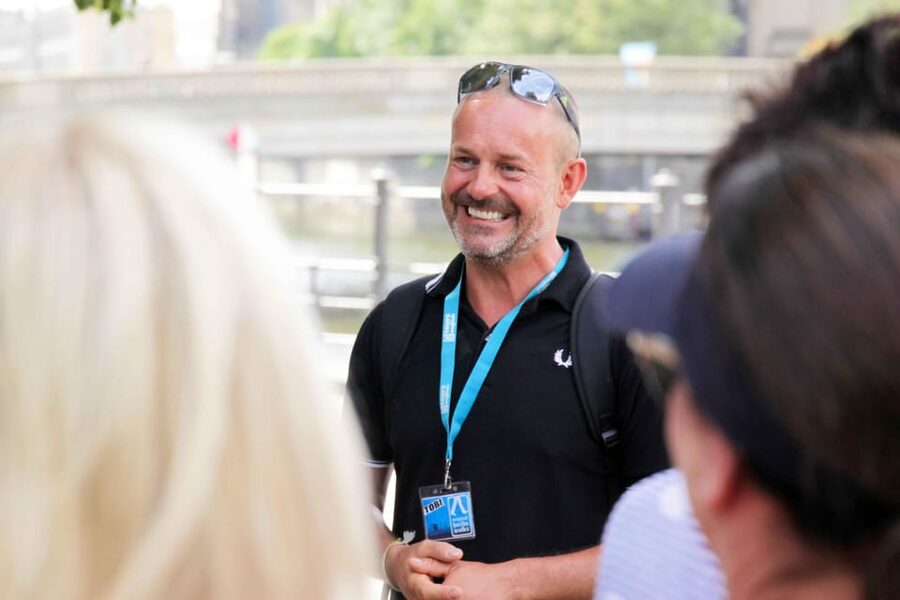
- A guide who keeps the pace useful: Dylan has been praised for balancing information with walking and answering questions clearly.
- Good value at $23: At roughly $11.50 per hour, the tour offers an inexpensive way to get your bearings before exploring Berlin on your own.
Why this two-hour format works
Berlin can be hard to read at street level. A grand gate, a plain office block, a strip of pavement, and a field of concrete slabs may look unrelated until someone explains how they fit into the city’s political story. This walk gives you that connecting thread.
The route is not designed as a slow architectural tour. It is a brisk historical introduction. You move from imperial Berlin to the Nazi period, then to the end of World War II, the Holocaust, the Cold War, and the divided city. I find that progression useful because it gives you a framework for later museum visits.
The short length is the main selling point. You can fit it into a morning before a museum, an afternoon between other plans, or an arrival day when you want to understand central Berlin without committing to a four-hour walk. The tradeoff is that each stop receives limited time. You should expect explanation and orientation, not extended personal contemplation.
The tour has a rating of 4.9 from 27 ratings. That is a strong result, though the sample is not large. The most useful detail is the praise for the balance between walking and information. A two-hour history walk can easily become either a lecture with too many stops or a rushed checklist. The available feedback suggests the guide keeps the two parts in reasonable proportion.
Other Berlin trips people book alongside this one:
- Berlin: Reichstag, Dome and Government District Guided Tour
★ 4.7 · 18,288 reviews - Berlin: 1-Hour City Tour by Boat with Guaranteed Seating
★ 4.3 · 16,993 reviews - Berlin: Boat Tour Along the River Spree
★ 4.4 · 11,252 reviews
Starting at Pariser Platz and the Brandenburg Gate
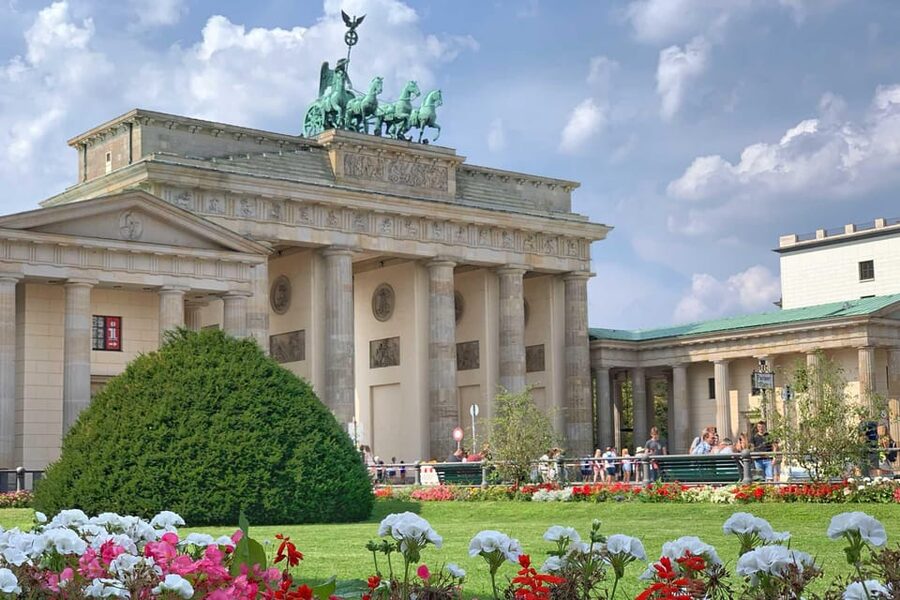
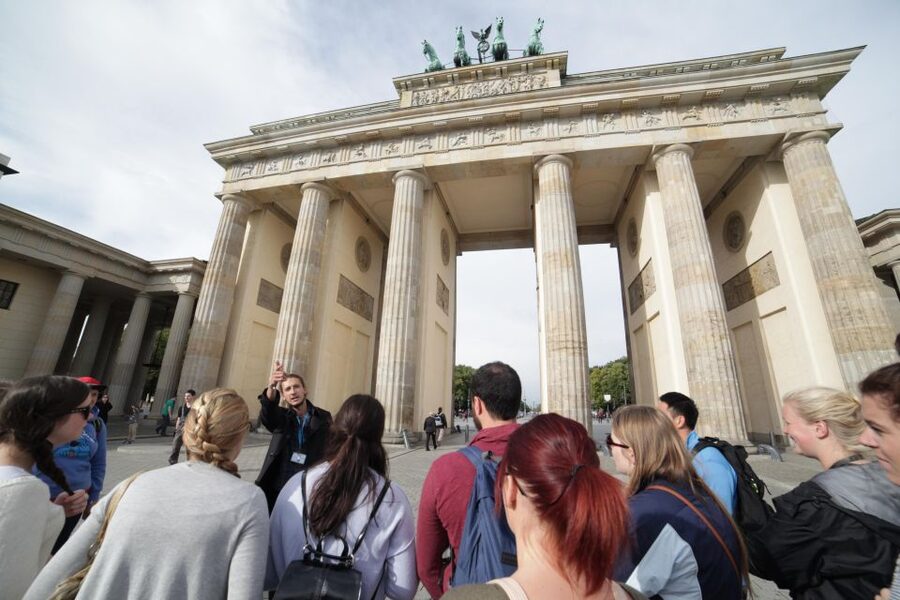
You meet in front of the Tourist Information Office at Pariser Platz. This is a practical starting point because the Brandenburg Gate is one of Berlin’s easiest landmarks to find, and the square gives you an immediate sense of the city’s ceremonial center.
The Brandenburg Gate is presented as a symbol of unity and peace, but it also carries a more complicated past. Its meaning changed with Berlin’s political fortunes, and its location near the former division of the city makes it a natural opening for a tour about power and reunification.
Pariser Platz is surrounded by neoclassical buildings and has a formal, open character. Your guide uses the square to set the scene before the walk moves into more difficult subjects. I like this opening because you begin with a clear visual landmark rather than an anonymous street corner.
Do not expect a long architectural study here. The guided portion at Pariser Platz is listed as about 10 minutes, so you get the key context and then move on. If the Brandenburg Gate is high on your personal list, you may want to return later for your own photographs and a slower look.
The Sinti and Roma Memorial
The route then turns to the memorial for the Sinti and Roma people murdered during the Holocaust. This is an important inclusion. Berlin has several major memorials, but the history of Nazi persecution is broader than the best-known sites often suggest.
Your guide explains why the memorial exists and draws attention to the people represented by it. The stop adds needed range to the tour’s treatment of World War II. You are not only hearing about political leaders and military events, but also about communities targeted by Nazi racial persecution.
Because the tour is short, the time here will be focused. You might find the stop especially valuable if you have not previously learned about the persecution of Sinti and Roma people. It is also a reminder that Berlin’s memorial culture asks you to remember many different groups, not just one central narrative.
The Reichstag and the politicians’ memorial
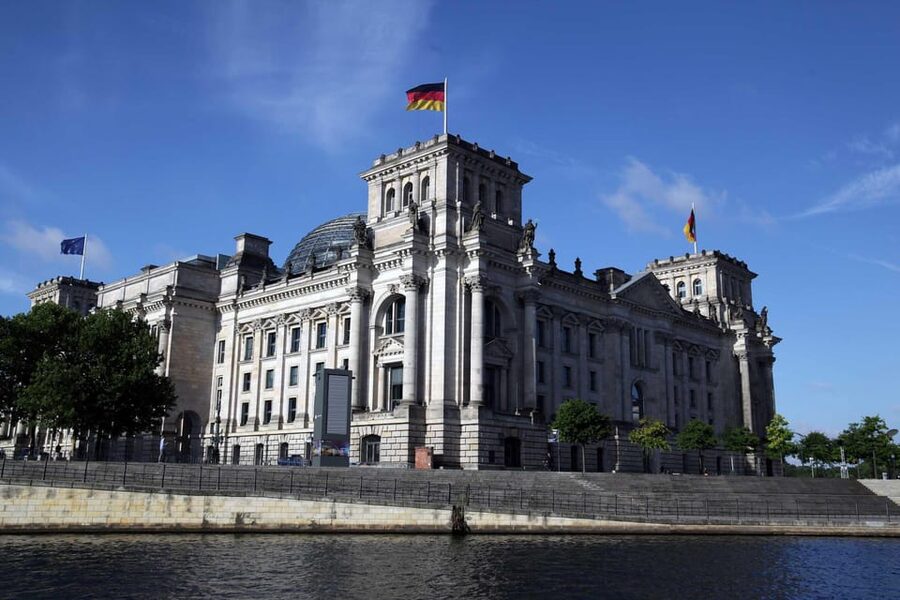
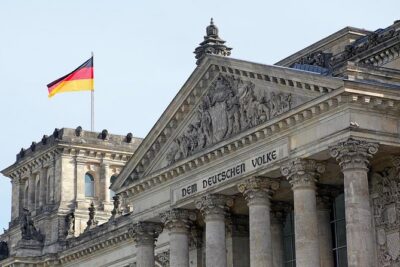
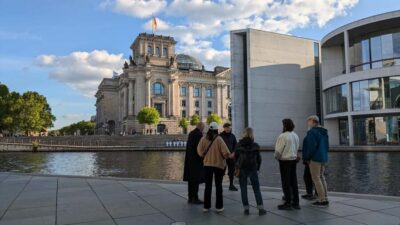
The walk continues to the Reichstag, Germany’s parliamentary building. Its exterior is a major part of the Berlin experience, and the guide explains its role across several political periods, including the Weimar Republic and modern Germany.
The building helps you understand how Berlin’s political center changed over time. It is not simply a handsome government building. Its story connects democracy, dictatorship, war, division, and the rebuilt German state.
Nearby, the politicians’ memorial honors political figures who faced persecution during troubled periods of German history. This stop shifts the focus from institutions to people who suffered for political activity or democratic principles.
I appreciate the pairing of these two locations. The Reichstag represents the public structure of government, while the politicians’ memorial points to the personal cost of defending political beliefs. Together, they make the idea of democracy feel less abstract.
You should keep expectations realistic. The tour does not include entry into the Reichstag, and there is no mention of a dome visit or interior access. You see the building from outside and hear its story. If you want to visit inside, that requires a separate plan.
Something different for another day:
- Discover Berlin Half-Day Walking Tour
★ 5.0 · 9,624 reviews - Berlin: Hop-on Hop-off Bus Tour with Live Commentary
★ 4.3 · 8,579 reviews - Berlin: Government District around the Reichstag Guided Tour
★ 4.7 · 8,447 reviews - Berlin: Reichstag, Plenary Chamber, Cupola & Government Tour
★ 4.6 · 8,422 reviews
The Soviet War Memorial in the Tiergarten
From the parliamentary quarter, you enter the Tiergarten to see the Soviet War Memorial. The memorial honors Soviet soldiers who died in the Battle of Berlin during World War II.
The setting gives the route a brief change of pace. After the formal squares and government buildings, the Tiergarten provides an open area for a memorial with a strong military presence. The guide explains the role of the battle and the memorial’s place in the story of Berlin’s defeat in 1945.
This stop is useful because it adds the Soviet perspective to a route otherwise centered on German institutions and memorials to victims of Nazi persecution. Berlin’s end-of-war story cannot be understood without the Red Army and the battle for the city.
The memorial’s size and design make it easy to remember, but a guide helps you avoid treating it as a simple monument to victory. The larger lesson is how Berlin carries several layers of memory in a relatively small area.
The Memorial of the Murdered Jews of Europe
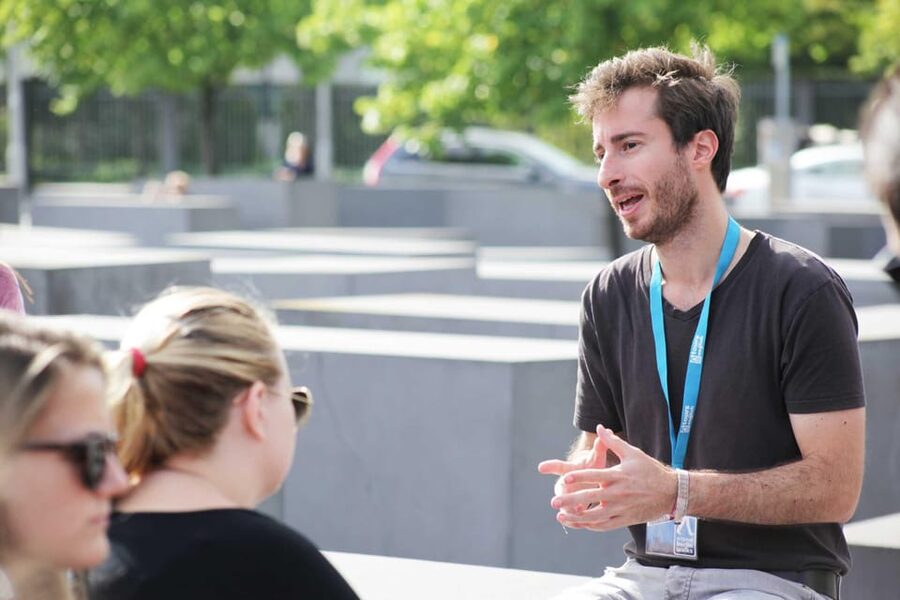
The route then reaches the Memorial of the Murdered Jews of Europe. Its field of concrete slabs creates a setting that feels different from a traditional statue or plaque. You can walk among the blocks and consider the scale and weight of the Holocaust.
This is one of the tour’s most emotionally powerful stops, but the limited schedule matters. The walk allows time for an introduction and some personal reflection, yet it is not a substitute for a longer visit or the underground Information Centre. The information provided does not include entry into that centre, and the tour does not enter buildings.
I recommend treating this stop with patience, even within a fast itinerary. Listen to the guide, look carefully, and avoid expecting a tidy explanation. The memorial is designed to raise questions as much as provide answers.
For many people, this is the place where the tour shifts from general Berlin history to a more direct encounter with memory and responsibility. It can be difficult, and that is part of its purpose.
The site of Hitler’s bunker

Near the memorial, the route reaches the site of Hitler’s bunker. Today, the location is not presented as a dramatic preserved attraction. Its importance comes from what happened beneath the ground and from the way the site has been handled in modern Berlin.
Your guide explains the final days of the Third Reich and the bunker’s role at the end of the war. This is a useful stop because it strips away the mythology that can surround famous historical figures. You are not touring an intact room or viewing grand displays. You are standing at a place whose meaning comes through explanation.
I think this is one of the better examples of why a walking guide helps in Berlin. Without context, the site can look almost ordinary. With context, its connection to the collapse of Nazi Germany becomes clear.
Do not expect a visible bunker interior or a museum-style presentation. The experience is about location and historical interpretation. If you prefer physical exhibits, you will need to add a separate museum visit.
The Finance Ministry and Berlin’s layers of power
The route passes the Finance Ministry, another building that links present-day government with the city’s difficult past. The stop offers a modern contrast to the memorials and wartime sites around it.
The value here is not a famous viewpoint. It is the chance to see how Berlin’s buildings are reused and reinterpreted as governments change. A present-day ministry can occupy a site with earlier political meaning, and the guide helps you notice that continuity.
This part may feel less dramatic than the Brandenburg Gate or the Holocaust memorial. That is normal. The tour works best when you see it as a connected story rather than a string of equally spectacular sights.
The Berlin Wall and Topography of Terror
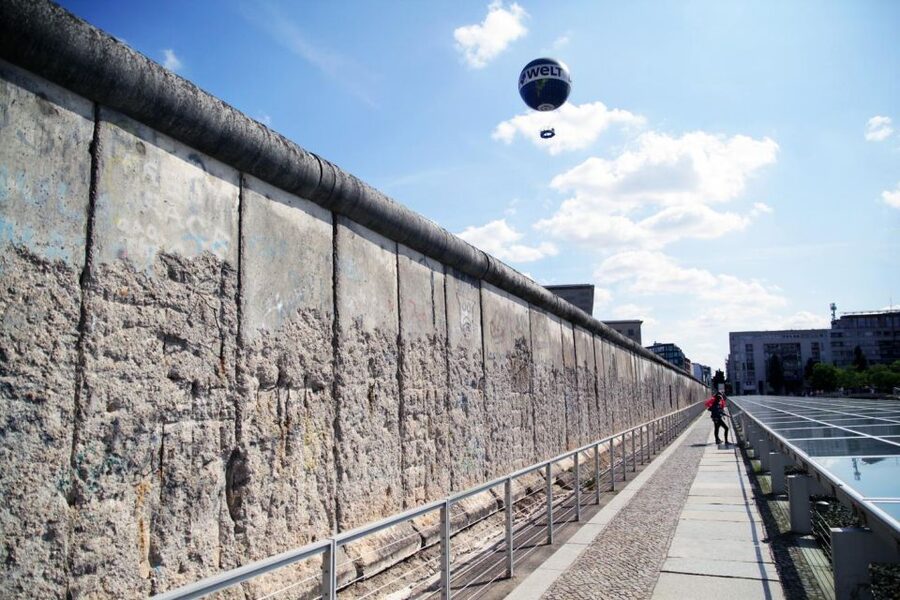
The walk reaches remnants of the Berlin Wall near the Topography of Terror exhibit. This is where the tour turns firmly toward the Cold War and the division of Berlin.
The remaining wall sections help make the city’s former split more tangible. Berlin’s division can seem like a finished chapter when you look at today’s open streets and shared public spaces. A surviving section gives you a physical reminder that movement, families, and political life were once sharply controlled.
The Topography of Terror area also connects the wartime dictatorship to the later history of the divided city. The route does not simply jump from 1945 to the Berlin Wall. It shows how the consequences of Nazi rule shaped the postwar city.
Again, you do not enter buildings during the tour. If the Topography of Terror exhibition is important to you, plan a separate visit. The walking tour gives you orientation, but not the full indoor displays.
Finishing at Checkpoint Charlie
Checkpoint Charlie is the final stop. This former border crossing became one of the best-known symbols of Cold War Berlin, with stories of espionage, escape attempts, and confrontation between East and West.
The location works well as the endpoint because it brings the tour’s themes together. You have moved from the symbols of German unity to the scars of dictatorship, war, and division. Checkpoint Charlie represents the practical reality of a city split by ideology.
The guided portion here lasts about 10 minutes. That is enough for the key story and a clear finish, but not a long exploration of every Cold War detail. The site is also busy with modern commercial activity, so the guide’s context helps separate the historic border crossing from its current tourist setting.
You finish at Checkpoint Charlie rather than returning to Pariser Platz. That is useful for onward sightseeing because you can continue toward other central attractions from there. It also means you should plan your route back if your next appointment is near the starting point.
Price, pace, and what you really receive
At $23 per person, this tour offers solid value if you want a guided introduction rather than a full-day history program. You are paying for an experienced academic guide, a carefully connected route, and explanations at sites that are easy to misunderstand on your own.
The price works out to about $11.50 per hour. That is reasonable for a live English-language walk covering many of Berlin’s central historical markers. The value is strongest for first-time visitors, people with limited time, and anyone who wants a foundation before choosing which museums deserve more attention.
The tour is less suitable if you want to enter buildings, sit for long talks, or focus on one period in great detail. You might also find the pace demanding if you prefer very slow walking or extended time at memorials, although the tour is listed as wheelchair friendly.
Wear comfortable shoes and clothing suited to the weather. This is an outdoor walk from start to finish, with no building entry included. Starting times vary, so you need to check availability when choosing a date.
Cancellation is flexible, with a full refund available when you cancel at least 24 hours ahead. You can also reserve now and pay later, which helps if your Berlin plans are still shifting.
Who should book this Berlin walk?
I would choose this tour if I had only a short window in Berlin and wanted the major historical sights explained in one sweep. It also suits you if you prefer a guide who can answer questions rather than a recorded audio route.
Families with older children and teenagers may appreciate the straightforward format, though the Holocaust memorials and Nazi-era subjects require a mature approach. History-minded visitors will value the range of topics, from Sinti and Roma persecution to the Soviet role in the Battle of Berlin and the Cold War border.
You should consider another format if you want a four-hour experience, museum interiors, or a slower visit to the memorials. This is the express version of a longer Discover Berlin walk, and several locations overlap with that longer route. Booking both would likely repeat much of the same material.
My verdict: a useful first look at Berlin
Book the Discover Berlin Express Tour if you want a clear, serious introduction to central Berlin in two hours. The route covers an impressive number of major sites, and the guide helps you understand the links between them.
I especially like the balance praised by Dylan’s recent feedback: enough information to make the places meaningful, but not so much walking that the tour becomes exhausting. At $23, it is an easy value choice for a short visit.
Just know what you are buying. You will see the sites from outside, move at a purposeful pace, and receive an overview rather than a full study. If that matches your schedule, this compact walk gives you a strong starting point for exploring Berlin on your own.
FAQ
How long is the Discover Berlin Express Tour?
The tour lasts two hours.
What language is the tour conducted in?
The live tour guide speaks English.
Where does the tour start?
It starts at Pariser Platz, in front of the Tourist Information Office.
Where does the tour finish?
The tour finishes at Checkpoint Charlie.
Which major sights are included?
The route includes Pariser Platz, the Brandenburg Gate, the Reichstag, the Sinti and Roma Memorial, the politicians’ memorial, the Soviet War Memorial, the Memorial of the Murdered Jews of Europe, Hitler’s bunker site, the Finance Ministry, the Berlin Wall near the Topography of Terror, and Checkpoint Charlie.
Do you enter any buildings?
No. The tour does not include entry into buildings.
Is the tour wheelchair accessible?
Yes. The tour is listed as wheelchair friendly.
What should I bring?
Bring comfortable shoes and clothing suitable for the weather.
Just added around Berlin
- Berlin: Private Guided Tour of the Main Sights★ 5.0 · 13 reviews
- Private Highlights of Berlin Bike Tour★ 5.0 · 13 reviews
- Modern Berlin Private Walking Tour: Diverse, Vibrant and Exciting German Capital★ 5.0 · 13 reviews
- Tour in Berlin from Warnemünde and Rostock Cruise Port★ 4.1 · 13 reviews
- Berlin: Stasi Museum Private Guided Tour with Entry Ticket★ 4.8 · 13 reviews
- Private Food Tour Experience with a born and bred Berliner★ 5.0 · 14 reviews
- Berlin: Rheinsberg Palace Entrance Ticket★ 4.8 · 14 reviews
- Berlin in one day – day tour with an expert guide★ 5.0 · 14 reviews
Berlin Tours, compared.
Reichstag, Dome and Government District Guided Tour
Read our review →
1-Hour City Tour by Boat with Guaranteed Seating
Read our review →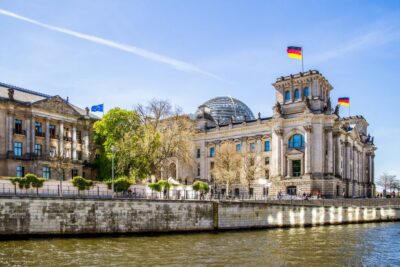
Government District around the Reichstag Guided Tour
Read our review →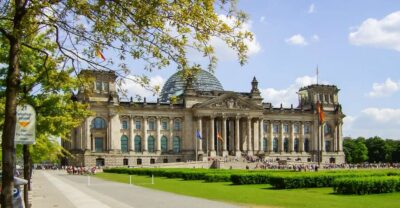
Reichstag, Plenary Chamber, Cupola & Government Tour
Read our review →