
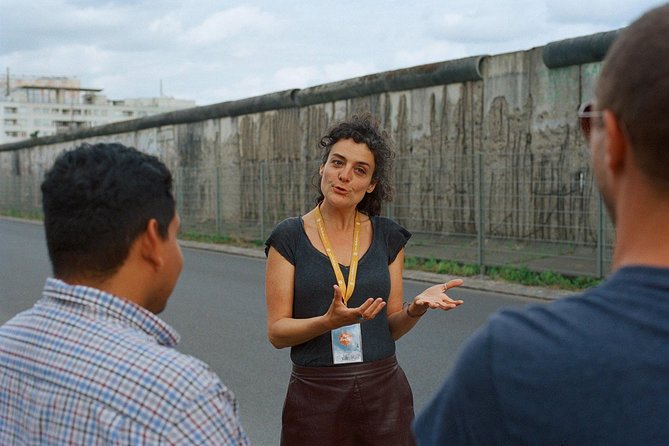
Reviewed · BERLIN WALL TOURS
Cold War and Berlin Wall Tour in Italian
Berlin’s divided past still shapes the city. This 3.5-hour Italian walking tour links the Berlin Wall Memorial, Alexanderplatz, Karl-Marx-Allee, and the East Side Gallery, giving you a clear route through places that can feel scattered on a map. The guide fills in the political drama, daily hardships, and escape attempts that made these sites matter.
I like the way the tour combines major sights with less obvious details, especially the ghost stations at Nordbahnhof and the Stalinist buildings along Karl-Marx-Allee. I also like the strong Italian-language focus. Past guide Antonella, for example, was praised for bringing the emotions of 1989 to life. The main consideration is the pace: transportation is not included, and you spend much of the tour on foot.
In This Review
- Key points to know before you book
- Why this Italian tour works well for Berlin
- Meeting at Potsdamer Platz at 10:00 am
- Nordbahnhof and Berlin’s ghost stations
- The Berlin Wall Memorial gives the tour its weight
- Alexanderplatz and the protest movement of 1989
- The TV Tower shows East Germany’s ambition
- Karl-Marx-Allee reveals the GDR’s grandest architecture
- The East Side Gallery provides a visual ending
- How much walking and transport should you expect?
- The Italian commentary is the main advantage
- Who should book this walk?
- Should you book the Cold War and Berlin Wall Tour?
- FAQ
- Where does the tour start?
- What time does the tour begin?
- How long does the experience last?
- Is transportation included?
- Does the tour visit the inside of the Berlin TV Tower?
- What is the cancellation policy?
Key points to know before you book
- The tour begins at Potsdamer Platz at 10:00 am, beside the blue bicycle marked Vive Berlin Tours.
- Nordbahnhof’s ghost stations offer an unusual look at how Berlin was divided underground.
- The Berlin Wall Memorial gets the most time, with about 50 minutes for escape systems and stories of people killed at the Wall.
- Alexanderplatz and the TV Tower explain East Germany’s public face, including the protest movement that helped bring down the Wall.
- Karl-Marx-Allee shows GDR architecture in grand Stalinist form, a useful contrast to the Wall’s personal stories.
- The tour ends at the East Side Gallery, with its surviving Wall section and murals about freedom.
Why this Italian tour works well for Berlin
Cold War Berlin can be hard to piece together on your own. The Wall did not run through a single museum district, and the remaining sites range from subway platforms to broad avenues and open-air art. I like that this walk gives you a historical thread instead of asking you to connect isolated points by yourself.
The route moves from the mechanics of division to the human cost, then toward the political events that led to reunification. You begin with a meeting point in modern Potsdamer Platz, hear about the hidden border beneath Berlin, study the Wall’s design and escape attempts, then finish with murals that represent freedom after 1989.
The price is $27.87 per person, which is reasonable for three and a half hours with an Italian-speaking guide. You are not paying for museum admission, transport, food, or a private vehicle. You are paying for direction, explanation, and the chance to cover several important sites without spending hours researching how they fit together.
The group can include up to 25 people. That is not a private experience, but it is still a manageable size for a walking tour if everyone stays close to the guide. Since the tour is conducted in Italian, it is especially useful for visitors who want more detail than they would get from reading short English or German signs.
More Berlin Wall walks:
- Skip-the-Line: Berlin Wall Museum at Checkpoint Charlie
★ 4.1 · 2,041 reviews - Berlin: East Side Gallery Spree Cruise in a Solar Catamaran
★ 4.0 · 1,039 reviews - Cold War, Berlin Wall, Spies and the East Side Gallery
★ 5.0 · 1,024 reviews
Meeting at Potsdamer Platz at 10:00 am
The tour starts at Potsdamer Platz 10, near the Potsdamer Platz S-Bahn and U-Bahn station. Look for the blue bicycle and the Vive Berlin Tours flag, which should make the meeting point easy to identify in this busy part of town.
Potsdamer Platz is a fitting place to begin. Today it is known for modern buildings and wide pedestrian spaces, but its location once sat near the divided city. The contrast helps set up the tour’s central idea: Berlin can change dramatically, yet traces of its political past remain close by.
You should arrive with comfortable shoes and enough time to find the meeting point. The tour starts at 10:00 am, and the group then uses public transportation to reach the next part of the route. The cost of those rides is not included, so keep a valid transit ticket or pass ready.
Hotel pickup and drop-off are not offered. That is worth remembering if you are staying outside central Berlin. The guide can advise you about public transport after the walk, but you are responsible for reaching the start and returning from the East Side Gallery.
Nordbahnhof and Berlin’s ghost stations
One of the tour’s most distinctive stops is Berlin-Nordbahnhof. Here, the guide explains the city’s ghost stations, subway stations that trains passed through during the division of Berlin without stopping for passengers in East Berlin.
This is a smart early stop because it shows that the Cold War border was not only a wall above ground. It also cut through the transport system beneath the city. For Berliners, a normal subway journey could include dark, sealed platforms guarded by border authorities. That detail makes the division feel less like an abstract political dispute and more like a daily restriction.
The stop lasts about 10 minutes, so expect a focused explanation rather than a long station visit. The guide’s commentary is the main reason to be here. Without context, Nordbahnhof may look like an ordinary transit point. With the story of the ghost stations, it becomes a sharp introduction to the strange practical problems created by the border.
The Berlin Wall Memorial gives the tour its weight
The Berlin Wall Memorial is the emotional center of the walk, with about 50 minutes devoted to the site. This is where the guide explains how the Wall was built, how the border system worked, and what happened to people who tried to cross it.
I especially value this part because it goes beyond the familiar image of concrete covered in graffiti. You learn about the Wall as a system, including the methods people used to escape. The guide also discusses those who died because of the border, giving the site a human focus that photographs alone cannot provide.
The memorial is a strong place to ask questions about how the border developed and why crossing became so dangerous. The exact amount of time available for individual questions will depend on the group, but the 50-minute stop gives this subject proper attention.
You may find this section sobering. That is not a flaw, but it is part of the point. The tour does not treat the Wall as a colorful backdrop for photographs. It explains the fear, planning, and loss tied to it. If you want only a light city walk, this may feel serious. If you want a clearer understanding of Berlin’s division, it is the most useful stop.
Something different for another day:
- Berlin: Reichstag, Dome and Government District Guided Tour
★ 4.7 · 18,288 reviews - Berlin: 1-Hour City Tour by Boat with Guaranteed Seating
★ 4.3 · 16,993 reviews - Berlin: Boat Tour Along the River Spree
★ 4.4 · 11,252 reviews - Discover Berlin Half-Day Walking Tour
★ 5.0 · 9,624 reviews
Alexanderplatz and the protest movement of 1989
At Alexanderplatz, the focus shifts from border controls to the public life of the German Democratic Republic, or GDR. The guide points out typical East German architecture and explains how the square became linked to the major popular demonstration that helped lead to the Wall’s fall.
The stop is scheduled for about 15 minutes. That is enough for an overview, but not a full architectural tour of the square. I would pay close attention here because Alexanderplatz helps explain how ordinary public space became political. The fall of the Wall was not simply the result of a government announcement. Public pressure and large demonstrations played a major part.
This is also where the tour connects buildings with events. The GDR wanted its central spaces to project order, confidence, and modernity. The demonstrations showed that official images did not match public feeling. That tension is easier to understand when you are standing in the very place associated with the protest.
The TV Tower shows East Germany’s ambition
The Berlin TV Tower is visited from the outside for about 10 minutes. It remains the tallest building in Berlin and was the most impressive structure built by the GDR.
The tower tells a different story from the Wall Memorial. Instead of focusing on escape and repression, it shows how East Germany presented itself to the world. Its scale was a political message as much as an engineering achievement. The tower was designed to signal modernity and confidence, even as the state restricted movement and speech.
Do not expect to go inside or ride to the viewing platform during this tour. The visit is exterior only. That keeps the walk moving and avoids the time and ticket arrangements required for an indoor visit, but anyone hoping for a city panorama will need to book the tower separately.
Karl-Marx-Allee reveals the GDR’s grandest architecture
The route continues to Karl-Marx-Allee, where about 20 minutes are devoted to the broad boulevard and its Stalinist-era buildings. This is one of the best stops for understanding the early visual language of East Germany.
The buildings were designed to look monumental and orderly. Their scale reflects the political ideals of the period, with architecture used to project state power and a planned society. You get a useful contrast here: the Wall was a tool of control at the city’s edge, while Karl-Marx-Allee displayed the state’s preferred image in the heart of East Berlin.
The stop is relatively short, so the guide will provide the main context rather than a building-by-building survey. Still, it adds variety to the walk. Berlin’s Cold War story was not made only of checkpoints and concrete. It was also expressed through housing, boulevards, towers, and carefully planned public spaces.
The East Side Gallery provides a visual ending
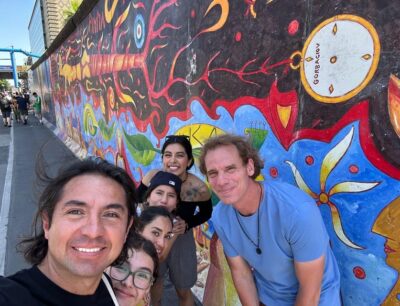
The final stop is the East Side Gallery, where about 20 minutes are set aside for the longest remaining section of the Berlin Wall and its famous murals. The art turned a former instrument of separation into a public display associated with freedom.
This is the most immediately accessible part of the tour. The paintings are easy to appreciate even if you are new to Berlin’s history, and they provide a visual release after the more painful accounts at the Wall Memorial. I like ending here because the route moves from division toward expression and public memory.
The East Side Gallery can also be a busy place, and 20 minutes is enough for an introduction rather than an unhurried look at every mural. If you want to study the artwork in detail or take your time with photographs, plan to return on your own after the tour.
The endpoint is in the East Side Gallery area at 10243 Berlin. The guide can recommend public transportation for your onward journey, but you should not expect a ride back to your hotel.
How much walking and transport should you expect?
The experience lasts about three hours and 30 minutes, and it is built around walking between historical locations. You also use public transportation during the route. Because the exact walking distance is not provided, I would prepare for a substantial morning on your feet rather than a short stroll.
Wear comfortable shoes and carry water. Food and drinks are not included, so eat before the 10:00 am start or plan for a meal afterward. The schedule includes several short stops, one longer 50-minute visit at the Wall Memorial, and commentary while moving through the city.
The group limit is 25 people. That keeps the tour from becoming enormous, though you may still need to stay near the guide to hear clearly. Most people can participate, and service animals are allowed. The tour operates near public transportation, which makes both the start and finish practical for independent visitors.
The Italian commentary is the main advantage
The strongest reason to book this experience is the language. Cold War history includes political terms, official names, escape stories, and complicated changes in policy. Hearing that material in Italian can make it easier to follow and remember.
The guide’s style matters just as much as the route. The Italian guide is expected to explain events as you walk, rather than simply point out buildings. Antonella received particular praise for making the emotions of 1989 feel immediate and personal. That kind of storytelling is valuable at places like Alexanderplatz, where the physical setting alone cannot explain why the demonstrations mattered.
The tour has received a five-star rating from 81 reviews, with 100 percent recommending it. That is a strong signal, especially because the positive comments focus on the guide’s preparation and emotional connection to the subject. Still, ratings cannot remove the practical limits. You have a fixed schedule, shared commentary, no included transport, and limited time at the East Side Gallery.
Who should book this walk?
I would recommend it to Italian-speaking visitors who want a structured introduction to Berlin’s Cold War sites. It suits first-time visitors particularly well because it covers several major places without requiring you to design your own route.
It is also a good fit if you want more than photographs. The Wall Memorial, ghost stations, GDR architecture, and 1989 demonstrations each show a different part of the story. Together, they give you a stronger foundation for later visits to museums or other Berlin landmarks.
You may want to choose another option if you dislike walking, want to visit the TV Tower interior, or prefer to spend a long time at each site. The experience is also not ideal if your schedule is tight around the 10:00 am start, since late changes within 24 hours are not accepted and the tour does not provide hotel pickup.
The $27.87 price makes sense for a half-day guided walk in Italian, particularly if you value explanation and route planning. It is less useful for someone who already knows Berlin’s Cold War story and only wants independent photography time.
Should you book the Cold War and Berlin Wall Tour?
Book it if you want Berlin’s divided past explained in Italian, with a route that covers both famous sights and less obvious details. The best parts are the 50-minute Wall Memorial visit, the ghost station story at Nordbahnhof, and the guide’s account of the 1989 protests at Alexanderplatz.
Before paying, be ready for a walking-heavy morning, separate public transport costs, and an outdoor visit to the TV Tower only. Free cancellation is available up to 24 hours before the start time, which gives you some flexibility. For an Italian-speaking visitor who wants a clear, human explanation of the Cold War rather than a loose collection of Wall photographs, this is a strong-value choice.
FAQ
Where does the tour start?
It starts at Potsdamer Platz 10, 10785 Berlin, near the Potsdamer Platz S-Bahn and U-Bahn station. Look for the blue bicycle and the Vive Berlin Tours flag.
What time does the tour begin?
The start time is 10:00 am.
How long does the experience last?
The tour lasts approximately three hours and 30 minutes.
Is transportation included?
No. Transportation to and from the attractions is not included. The guide can advise you about public transport at the end of the tour.
Does the tour visit the inside of the Berlin TV Tower?
No. The TV Tower is visited from the outside only.
What is the cancellation policy?
You can cancel at least 24 hours before the start time for a full refund. Cancellations or changes made less than 24 hours before the tour are not accepted for a refund.
Just added around Berlin
- Berlin: Private Guided Tour of the Main Sights★ 5.0 · 13 reviews
- Private Highlights of Berlin Bike Tour★ 5.0 · 13 reviews
- Modern Berlin Private Walking Tour: Diverse, Vibrant and Exciting German Capital★ 5.0 · 13 reviews
- Tour in Berlin from Warnemünde and Rostock Cruise Port★ 4.1 · 13 reviews
- Berlin: Stasi Museum Private Guided Tour with Entry Ticket★ 4.8 · 13 reviews
- Private Food Tour Experience with a born and bred Berliner★ 5.0 · 14 reviews
- Berlin: Rheinsberg Palace Entrance Ticket★ 4.8 · 14 reviews
- Berlin in one day – day tour with an expert guide★ 5.0 · 14 reviews
Berlin Wall Tours, compared.
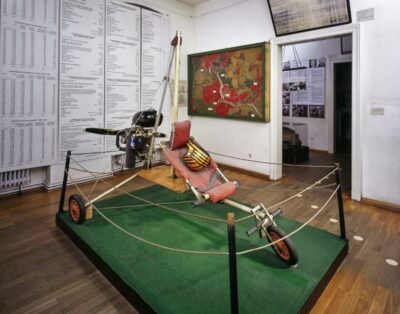
Skip-the-Line: Berlin Wall Museum at Checkpoint Charlie
Read our review →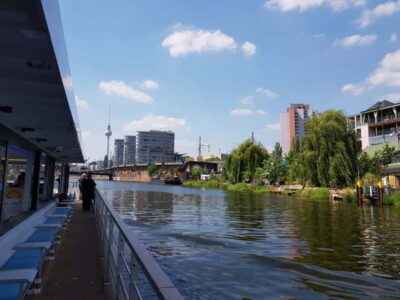
East Side Gallery Spree Cruise in a Solar Catamaran
Read our review →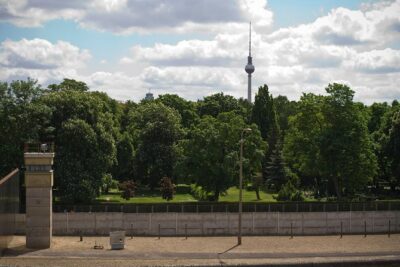
Cold War, Berlin Wall, Spies and the East Side Gallery
Read our review →
Guided Bike Tour of the Berlin Wall and Third Reich
Read our review →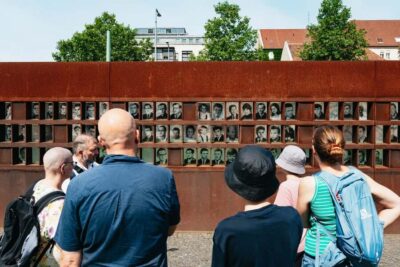
Cold War, Berlin Wall, Spies and the East Side Gallery
Read our review →Browse the lists this tour appears in