Reviewed · BERLIN TOURS
Clash of Titans: Battle for Seelow Heights WW2 tour
History gets real outside Berlin. This seven-hour tour follows the final Soviet assault toward Berlin through museums, forests, trenches, villages, and former command posts. I like the small maximum group of seven, which gives you room to ask questions, and I like the way the route follows the battle itself rather than presenting disconnected monuments. The main drawback is the distance from Berlin and the rough ground, so this is not a casual sightseeing day in comfortable city shoes.
The tour costs $167.74 per person and includes transport in an air-conditioned vehicle, museum admission, Wi-Fi, and a small bottle of water. Lunch is extra. Guides such as Matt and Steve have earned strong praise for their preparation, clear maps, battlefield knowledge, and friendly manner. If your interest in World War II is mild, the long drive and serious subject may feel like a lot. If you want to understand the Eastern Front at ground level, this is a strong use of a day in Berlin.
In This Review
- Key points at a glance
- Why Seelow Heights matters
- The Seelow Heights memorial and museum
- Reitwein and the Soviet starting point
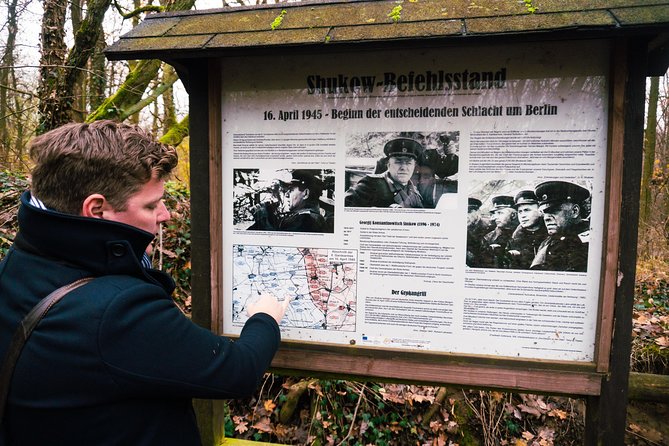
- Forest trenches and Zhukov’s command position
- Dolgelin railway station and the shooting gallery
- Lietzen cemetery and medieval reminders
- Jahnsfelde and the cost of withdrawal
- What the guide adds to the day
- Transport, group size, and the real pace
- Is $167.74 good value?
- Who should book this experience?
- Should you book the Seelow Heights tour?
- FAQ
- Where does the tour begin?
- Where does the tour end?
- How long does the tour last?
- What is included in the price?
- Is lunch included?
- How large is the group?
- Is the museum entrance included?
- Do I need special footwear?
- Can I cancel for a full refund?
- What happens if bad weather cancels the tour?
Key points at a glance
- Follow the 1945 Soviet advance: The route connects Reitwein, Seelow, Lietzen, and Jahnsfelde in the order that makes the battle easier to understand.
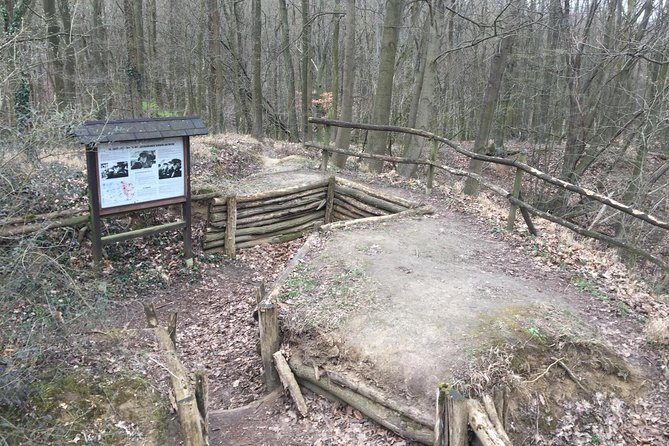
- See surviving field positions: Forest paths lead to remnants of trenches, bunker systems, Marshal Zhukov’s command bunker, and an observation point.
- Start with a useful museum model: A 3D display shows the bunker and trench network before you walk through parts of it.
- Travel in a group of no more than seven: The size allows detailed questions and personal attention, including help for slower walkers.
- Expect a full day outside central Berlin: The tour lasts about seven hours, with several walks on uneven ground and lunch at your own expense.
- Hear the Eastern Front explained clearly: The focus is the Berlin-Seelow offensive, its huge forces, and the cost of breaking the German defenses.
Why Seelow Heights matters
Berlin has plenty of World War II history, but much of it is found in museums, memorials, and urban sites. Seelow Heights gives you a different kind of understanding. You leave the city and see the ground over which the final Soviet attack toward Berlin took place in April 1945.
The battle was part of the Berlin offensive. Soviet and Polish forces attacked heavily prepared German positions east of the Oder River, aiming to break through toward the German capital. The numbers alone are hard to picture: the Soviet 1st Belorussian Front assembled 768,000 infantry, including 78,556 soldiers from the Polish 1st Army, along with 3,059 tanks, 16,934 artillery pieces and mortars, and 3,279 combat aircraft.
Those figures matter because the tour keeps returning you to the physical problem facing the attackers. Roads, slopes, open fields, forests, railway lines, and defensive positions shaped what could happen. From a map, the battle may look like a simple advance west. On the ground, you begin to see why the fighting was slow, costly, and chaotic.
The subject is also less familiar to many English-speaking visitors than the Normandy campaign or the fighting in Italy. That makes a well-prepared guide especially useful. Matt and Steve are praised for explaining the wider Eastern Front while keeping the main story clear, using maps, photographs, timelines, and the actual sites around you.
Other Berlin trips people book alongside this one:
- Berlin: Reichstag, Dome and Government District Guided Tour
★ 4.7 · 18,288 reviews - Berlin: 1-Hour City Tour by Boat with Guaranteed Seating
★ 4.3 · 16,993 reviews - Berlin: Boat Tour Along the River Spree
★ 4.4 · 11,252 reviews
The Seelow Heights memorial and museum
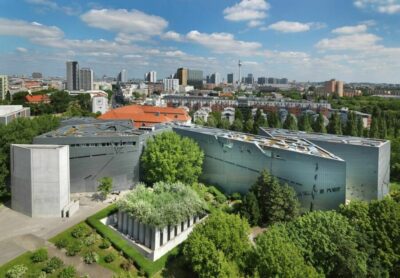
The day begins at the Gedenkstätte Seelower Höhen, the memorial and museum dedicated to the battle. You spend about 40 minutes here, with admission included.
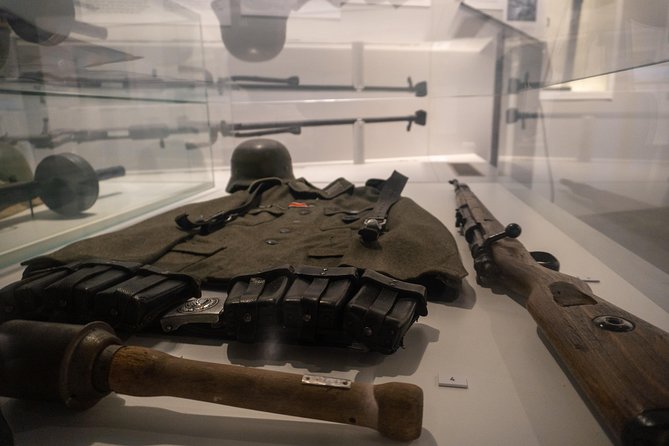
This is not simply a quick stop for a photograph. Your guide first explains the Berlin-Seelow offensive and uses a 3D model to show the Soviet bunker and trench network. That introduction gives you a visual reference for the later walk near Reitwein. Without it, the remains in the forest could be difficult to read.
After the introduction, you have time to explore the museum at your own pace. The museum helps establish the scale and sequence of the fighting before the tour moves into the countryside. I consider this one of the most useful parts of the day because the battlefield itself has no continuous narration or large signs explaining every position.
The visit is fairly short, so anyone wanting a long museum session may find the timing tight. Still, the design works well for a field tour. You receive the basic structure first, then test that understanding outdoors.
Reitwein and the Soviet starting point
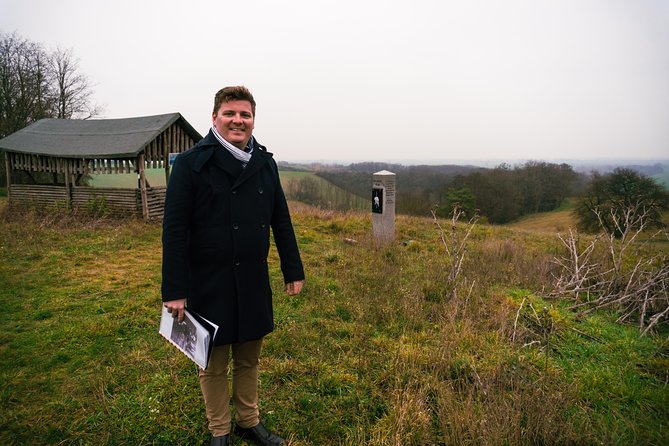
From the museum, the vehicle takes you to Reitwein, a small town that played an important role in the Soviet advance. The first stop lasts about 20 minutes and is free of additional charge.
Reitwein may look ordinary now, but its location made it important in 1945. It served as a starting point for the 1st Belorussian Front assault on Seelow Heights and the later advance toward Berlin. This is where the figures presented earlier begin to feel connected to real roads and villages.
A good guide can make a quiet town more revealing than a famous monument. Here, you learn how the Soviet force was organized and how the attack moved west. The tour does not ask you to admire military power. Instead, it shows how an enormous force still faced serious terrain and defensive obstacles.
The next stop is reached by a short walk through the forest. You should wear sturdy shoes or boots. Several people specifically found the off-road sections worthwhile, but also warned that the route can be muddy or uneven, especially in poor weather.
Forest trenches and Zhukov’s command position
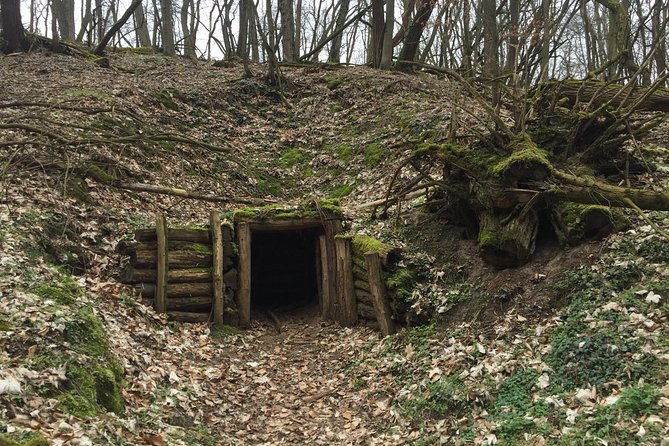
The forest contains remnants of bunker and trench systems, including Marshal Zhukov’s command bunker and an observation point. You spend about 30 minutes here.
This is one of the strongest parts of the tour. Standing among the remaining earthworks gives you a better sense of how commanders viewed the attack and how soldiers used the ground for protection. The structures are not presented as polished attractions. They are fragments, partly hidden in the woods, which means your guide’s explanation does much of the work.
The tour’s small size is valuable here. A group of no more than seven can stop without blocking a large organized visit, and you have a better chance to ask about the maps, the command structure, or the direction of the German defenses. Guides have also been praised for keeping the group moving while making sure slower walkers are not left behind.
Do not expect a long paved trail or a fully restored military site. This is a battlefield walk, not a standard museum outing. You may find the rough footing part of the point, but anyone with mobility concerns should consider the forest section carefully.
Something different for another day:
- Discover Berlin Half-Day Walking Tour
★ 5.0 · 9,624 reviews - Berlin: Hop-on Hop-off Bus Tour with Live Commentary
★ 4.3 · 8,579 reviews - Berlin: Government District around the Reichstag Guided Tour
★ 4.7 · 8,447 reviews - Berlin: Reichstag, Plenary Chamber, Cupola & Government Tour
★ 4.6 · 8,422 reviews
Dolgelin railway station and the shooting gallery
After the forest excursion, the tour continues to Dolgelin Railway station, known here as the place where Colonel Scheunemann, commander of the 303rd Infantry Division, established his defensive command post. The stop lasts about 20 minutes.
The railway station helps explain the German side of the battle. The tour takes stock of the defensive positions and the difficult route faced by Soviet and Polish troops. The phrase shooting gallery is apt because the attackers had to cross exposed ground under fire.
This change of viewpoint is important. A battlefield tour can become one-sided if it only traces the advance of the winning army. Here, you hear about the German defensive system and the obstacles it created, while still confronting the human cost of the defense and the broader context of Germany’s final months of war.
The stop is brief, so you should listen closely. The drive between locations also carries part of the narration, and guides are praised for continuing the timeline while on the road. That makes the vehicle time useful rather than merely a transfer between attractions.
Lietzen cemetery and medieval reminders
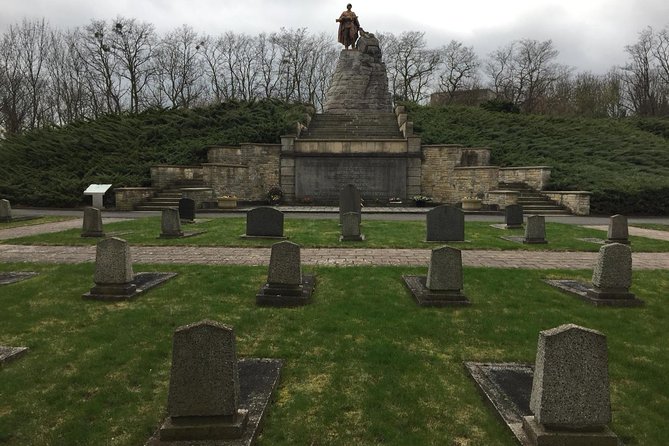
The route back toward Berlin follows the original direction of the Soviet advance and passes through Lietzen. The tour pauses for about 30 minutes at the German field cemetery.
This is a quiet and sobering stop. The cemetery has been extended since German reunification as newly found wartime remains are added to the graves. That detail makes the battle feel unfinished in a human sense. Even decades later, the ground continues to yield evidence of those who died.
Lietzen also adds a layer of older German history. The town has what is said to be Germany’s oldest barn and a manor house built by the Knights Templar, dating to 1252. These features are not the main reason to book the tour, but they prevent the day from becoming a single narrow military narrative.
The cemetery requires a respectful mood. This is not a place for hurried sightseeing or casual jokes. The guide’s role is to connect the graves with the fighting without turning the stop into a dry list of names and dates.
Jahnsfelde and the cost of withdrawal
The final major stop is Jahnsfelde, where the tour examines the brutality and desperation of the retreat. You spend about 20 minutes here.
A sports field occupies the site of a former German field hospital. The hospital was attacked by Soviet aircraft despite its Red Cross markings. The tour also explains the last stand of the 3rd Battalion of Artillery Regiment 18, which was caught at a crossroads by advancing Soviet armor.
The battalion quickly formed defensive positions and is credited with destroying an estimated 100 tanks. The cost was severe: eight officers and more than 163 others were killed, over two-thirds of the battalion were wounded, and every gun was lost.
Numbers like these can become abstract in a book. At Jahnsfelde, the ordinary setting creates a sharp contrast with the violence that once took place there. You are not looking at a grand ruin. You are looking at a modern everyday space and being asked to imagine the pressure of a collapsing front.
This stop also shows that the final weeks of the war were not a clean or easy victory for the advancing Soviet forces. The German army was retreating, but it could still inflict major losses. Civilians, wounded soldiers, medical staff, and units caught between movement and defense all faced terrible conditions.
What the guide adds to the day
The guide can make or break a battlefield tour, and this experience depends heavily on that personal connection. Matt is repeatedly praised for his enthusiasm, humor, preparation, and ability to include each person in the group. Steve is also described as an engaging history enthusiast who answered detailed questions and connected especially well with visitors who already had a strong interest in the subject.
The strongest guiding method here is the combination of maps and ground-level explanation. A guide can point from an observation position toward the direction of attack, then explain how the defenses, artillery, tanks, and terrain affected the next stage. That is far more useful than hearing a long lecture inside a van.
The guides also appear flexible about the practical side of the day. Food stops can be adjusted, and some tours include tea, cake, fruit, or cookies in addition to water. These extras are not listed as formal inclusions, so do not book on the assumption that refreshments will always be provided. Lunch remains your own expense, though the chosen traditional German restaurant has received strong praise.
Transport, group size, and the real pace
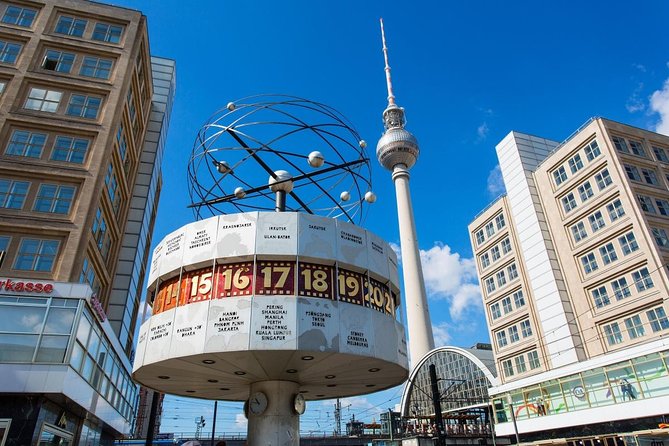
The tour begins at 9:15 a.m. at Alexanderplatz, at Dircksenstraße 2, and ends back at the meeting point or a central location. The tour information also describes hotel transfers, and the route uses an air-conditioned vehicle with Wi-Fi. Because the published meeting details and transfer wording differ slightly, confirm your exact pickup arrangement before the morning of the tour.
A seven-hour day sounds long, but the time is broken into drives, museum viewing, short explanations, forest walking, cemetery visits, and battlefield stops. You are not walking continuously for seven hours. Still, this is a full day away from Berlin, and the subject is demanding.
The group maximum of seven is a major advantage. You get more space in the vehicle, a better chance to hear clearly, and time for personal questions. One-person departures have also taken place, though a minimum number of participants is required for the experience to operate, so that possibility is not guaranteed.
Bring sturdy footwear and clothing suited to the weather. The tour requires good weather and may be canceled if conditions are poor. Free cancellation is available up to 24 hours before the start time, while late cancellations and changes are not refunded.
Is $167.74 good value?
At $167.74 per person, this is not a cheap half-day outing. The price includes transport from Berlin, the museum entrance, Wi-Fi, water, and the services of a specialist guide. Lunch is not included, so budget extra for that.
I think the value is good for anyone who would otherwise struggle to reach Seelow Heights and Reitwein independently. The sites are scattered, the story depends on understanding their order, and public transport would not give you the same battlefield context. You are paying for access, transportation, interpretation, and a carefully connected route.
The value is weaker if you mainly want famous monuments or a quick introduction to Berlin in wartime. Several stops are modest and some traces are easy to miss without explanation. This is a specialist day, not a broad city tour.
The tour is recommended by all 71 published ratings, with a five-star overall score. That level of agreement points to a clear strength: the experience is built around the guide and the battlefield rather than flashy attractions.
Who should book this experience?
I would choose this tour if you have read about the Eastern Front, have a family connection to the war, or want to understand how the final assault on Berlin unfolded. It also works for a history newcomer because the guides explain the timeline from the beginning and use maps to make the military movements easier to follow.
You do not need to be a military expert. One of the most useful features is the guide’s effort to make the subject approachable, even for someone who arrives with little World War II background. The day can also suit couples where only one person is a major history fan, since the villages, cemetery, older buildings, and countryside add variety.
I would think twice if you dislike long drives, uneven paths, serious wartime subjects, or spending most of a day outside the city. Also remember that the battlefield remains are modest. The reward comes from understanding what happened there, not from seeing a large collection of preserved equipment.
Should you book the Seelow Heights tour?
Book it if you want a thoughtful, small-group battlefield day with real ground under your feet. The museum model, Reitwein trenches, Zhukov’s command position, Lietzen cemetery, and Jahnsfelde defensive site form a strong sequence. The guide-led interpretation is the essential part, and Matt or Steve can bring the scattered remains into one understandable story.
Skip it if your Berlin schedule is too tight for seven hours or if your idea of sightseeing requires polished attractions and easy paths. For the right visitor, though, this is one of the more unusual history outings from Berlin, and the $167.74 price is fair for the transport and specialist attention it provides.
FAQ
Where does the tour begin?
The listed meeting point is Alexanderplatz, Dircksenstraße 2, 10179 Berlin, Germany. The start time is 9:15 a.m.
Where does the tour end?
The activity ends back at the meeting point or at a central point of your choosing, according to the tour details.
How long does the tour last?
The tour lasts approximately seven hours. Some descriptions from the day place the duration closer to seven or eight hours, depending on the stops and lunch arrangements.
What is included in the price?
The price includes an air-conditioned vehicle, museum admission, Wi-Fi, and a small bottle of water.
Is lunch included?
No. Lunch is not included in the price. The tour may stop at a traditional German restaurant, but you pay for your own meal.
How large is the group?
The maximum group size is seven travelers.
Is the museum entrance included?
Yes. Admission to the Gedenkstätte Seelower Höhen museum is included.
Do I need special footwear?
Sturdy footwear is recommended because part of the tour follows forest paths and reaches surviving trenches and bunker remains away from paved routes.
Can I cancel for a full refund?
Yes, if you cancel at least 24 hours before the experience start time. Cancellations or changes made less than 24 hours before the start are not refunded.
What happens if bad weather cancels the tour?
If poor weather causes the tour to be canceled, you are offered a different date or a full refund. The experience also requires a minimum number of participants, and a similar option or refund is offered if that minimum is not met.
Just added around Berlin
- Berlin: Private Guided Tour of the Main Sights★ 5.0 · 13 reviews
- Private Highlights of Berlin Bike Tour★ 5.0 · 13 reviews
- Tour in Berlin from Warnemünde and Rostock Cruise Port★ 4.1 · 13 reviews
- Modern Berlin Private Walking Tour: Diverse, Vibrant and Exciting German Capital★ 5.0 · 13 reviews
- Berlin: Stasi Museum Private Guided Tour with Entry Ticket★ 4.8 · 13 reviews
- Private Food Tour Experience with a born and bred Berliner★ 5.0 · 14 reviews
- Berlin: Rheinsberg Palace Entrance Ticket★ 4.8 · 14 reviews
- Berlin in one day – day tour with an expert guide★ 5.0 · 14 reviews
Berlin Tours, compared.
Reichstag, Dome and Government District Guided Tour
Read our review →
1-Hour City Tour by Boat with Guaranteed Seating
Read our review →

Government District around the Reichstag Guided Tour
Read our review →
Reichstag, Plenary Chamber, Cupola & Government Tour
Read our review →