
Reviewed · BERLIN WALL TOURS
Berlin Wall: Small Group Guided Tour
History becomes clearer on foot. This 2.5-hour Berlin Wall walk follows the old border from Bornholmer Straße toward Mauerpark, linking physical traces with stories of families split apart and a city cut in two.
I like the small maximum of 12 people, which leaves room for questions and makes personal storytelling possible. I also like the route’s less obvious details, including the cherry trees along the former death-strip and the Ulbrichtkurve. The main drawback is language: the live tour guide speaks German, so this is not a good choice if you need English commentary.
The tour costs $24 per person, a fair price for a guided walk of this length. Guides such as Marcus, Katrine, Markos, and Steffen have been praised for bringing personal experience and humor to the subject. Katrine, for example, grew up in East Berlin before reunification, while Marcus shared his own memories of life under the Wall.
In This Review
- Key points to know before you book
- Starting where the Wall first opened at Bornholmer Straße
- Reading traces along the former death-strip
- The cherry trees and the Wall’s stranger afterlife
- Understanding the Ulbrichtkurve on foot
- Crossing Schwedter Steg near Mauerpark
- Gleim Tunnel and the everyday city around the Wall
- Finishing near Nordbahnhof and former ghost stations
- What the guide adds to the experience
- Is $24 a fair price for 2.5 hours?
- Who will get the most from this Berlin Wall walk?
- Should you book this tour?
- FAQ
- Where does the Berlin Wall tour start?
- How long does the tour last?
- What language is the tour conducted in?
- What group size should I expect?
- What places are included on the route?
- Does the tour run in the rain?
- Are food and drinks included?
- Can I cancel for a full refund?
Key points to know before you book
- Bornholmer Straße marks the emotional starting point: This former crossing was where East and West Berliners first met and celebrated together when the Wall opened.
- The cherry trees have an unusual story: Their presence along the former death-strip connects Berlin’s Wall history with international gestures of remembrance.
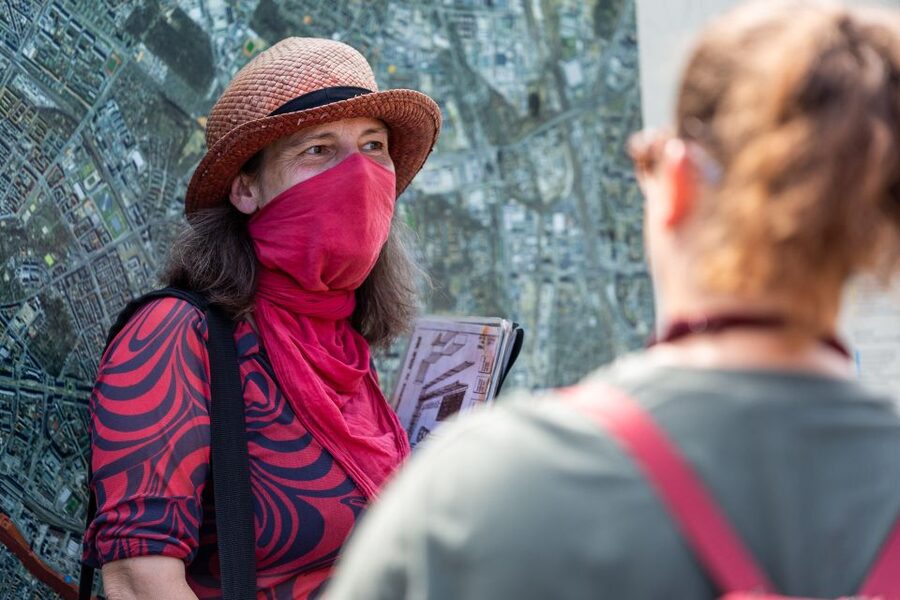
- Small groups make this more than a photo walk: With no more than 12 people, you can ask questions and follow the guide’s stories closely.
- The route includes Ulbrichtkurve and Schwedter Steg: These are useful places to see how the border cut through ordinary streets and public spaces.
- Mauerpark adds modern Berlin to the story: The former border zone is now one of the city’s best-known places for social and cultural life.
- The tour is conducted in German: Confirm that you can follow German comfortably before booking.
Starting where the Wall first opened at Bornholmer Straße
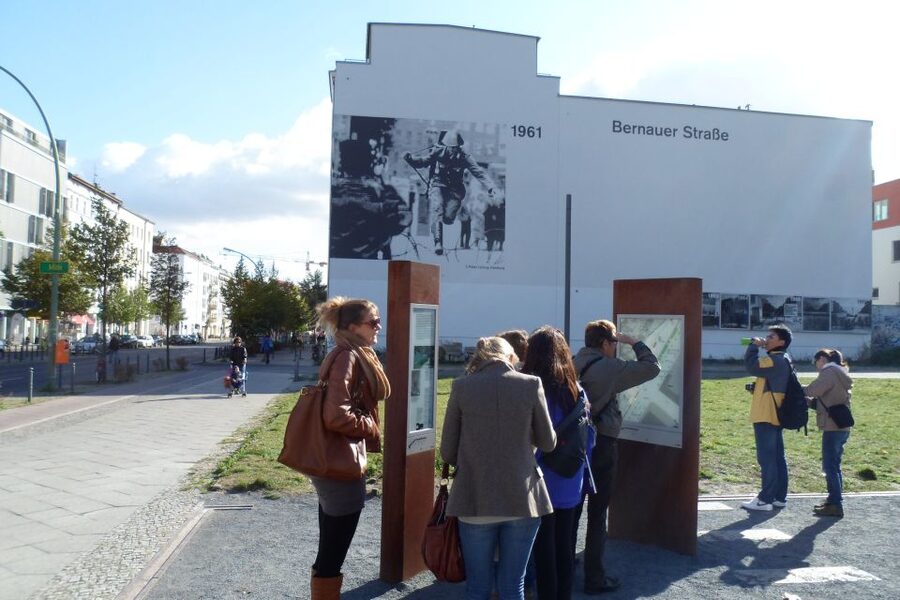
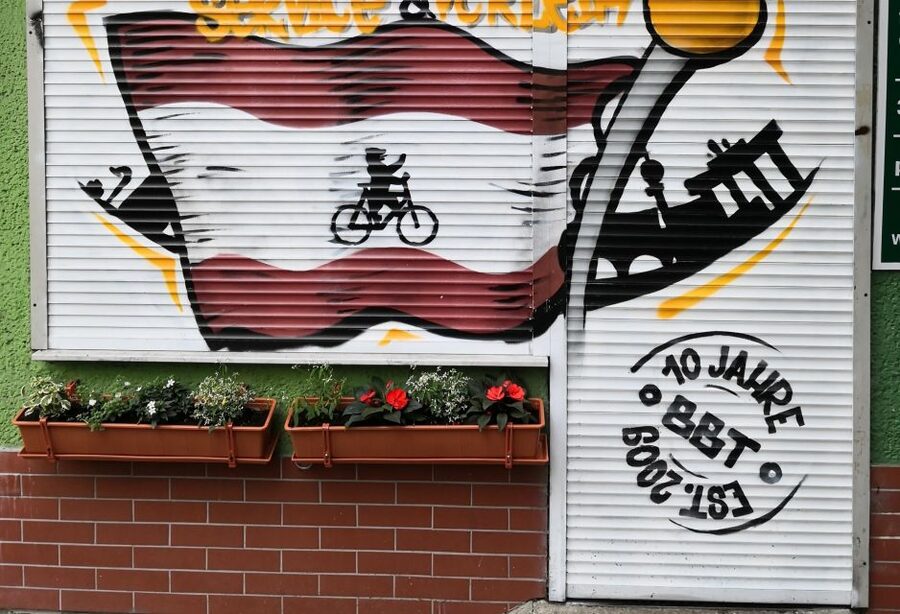
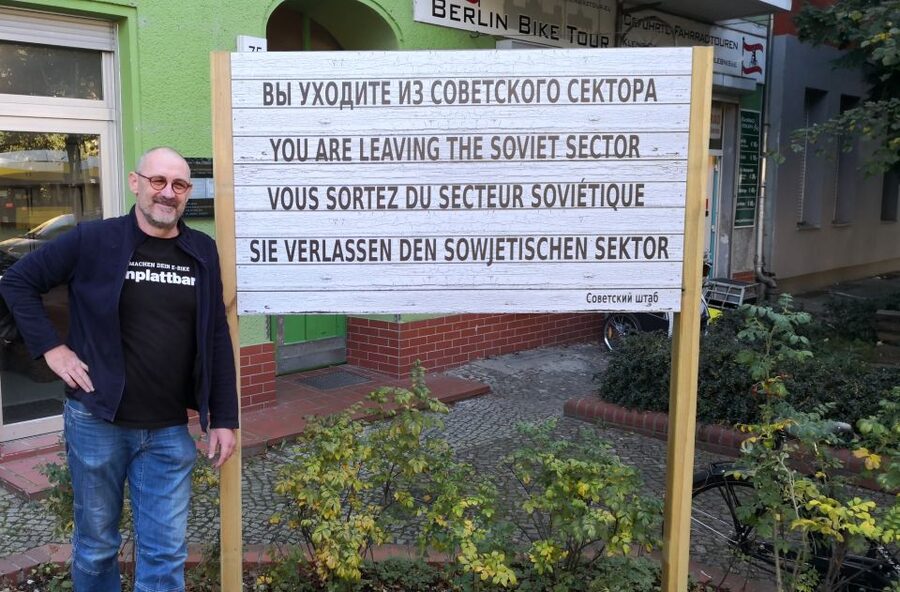
The tour begins at the Berlin Bike Tours office, close to Bornholmer Straße. This is an especially fitting place to start because the former border crossing became one of the key locations on the night the Berlin Wall fell.
On November 9, 1989, East Berliners gathered at the crossing after confusing announcements suggested that travel restrictions had changed. Pressure mounted, guards eventually opened the gates, and people from East and West Berlin met in celebration. The tour uses that setting to explain how a political decision became a sudden, emotional street event.
I like starting here rather than at a broad city-center monument. You begin in a place where ordinary people actually crossed, waited, shouted, and reunited. That gives the day’s history a human scale before you have even started walking.
The meeting point is easy to reach. Björnsonstraße tram stop is about a minute away, served by M1, M13, and M50. Bornholmer Straße S-Bahn station is about two minutes on foot, with S1, S2, S8, S25, and S85 services. Schönhauser Allee, served by S-Bahn, U-Bahn, and additional rail lines, is around 10 minutes away on foot.
More Berlin Wall walks:
- Skip-the-Line: Berlin Wall Museum at Checkpoint Charlie
★ 4.1 · 2,041 reviews - Berlin: East Side Gallery Spree Cruise in a Solar Catamaran
★ 4.0 · 1,039 reviews - Cold War, Berlin Wall, Spies and the East Side Gallery
★ 5.0 · 1,024 reviews
Reading traces along the former death-strip
From Bornholmer Straße, the route follows sections of the former border zone. Much of the Wall itself has gone, so you will not spend the entire walk beside a continuous concrete barrier. Instead, the guide points out marks that can be easy to miss if you do not know where to look.
That is one of the best reasons to take this tour with a guide. Berlin has preserved signs, memorials, fragments, lines in the pavement, and open areas that make sense only when someone explains their former purpose. The guide also discusses how these traces are recorded and documented, an important point in a city where redevelopment can quickly erase physical evidence.
The former death-strip was not simply one wall. It could include multiple barriers, patrol routes, lighting, fences, watch positions, and open ground between East and West Berlin. You will learn to think of the border as a controlled system rather than a single slab of concrete.
This part of the walk can be sobering. Some visitors expect a row of dramatic Wall fragments and may find the scattered remains less visually striking. The value lies in the explanation. Without context, a strip of pavement or a change in ground level can look ordinary. With context, it becomes evidence of how tightly movement was controlled.
The cherry trees and the Wall’s stranger afterlife
One of the more distinctive parts of the route is the line of cherry trees connected with the former Wall. Their story gives the tour a welcome change of pace from checkpoints, fences, and escape attempts.
The trees grew along parts of the former border and became linked with Japanese efforts to express friendship and hope after reunification. They are a reminder that the Wall was not only a German story. Its fall drew attention around the world, and the trees became part of Berlin’s effort to mark a new relationship between former enemies and divided communities.
I appreciate this stop because it shows how memory can take a living form. Concrete fragments preserve a political past, while trees mark time in a different way. They grow, change, and become part of daily life, even as the events they recall become more distant.
The tour’s rain policy is practical. It runs in all weather, and rain ponchos are provided when needed. Still, you should dress for an outdoor walk and expect the experience to feel different on a cold or wet day. There is a coffee break along the way, but food and drinks are not included, so plan to pay for your own refreshment.
Understanding the Ulbrichtkurve on foot
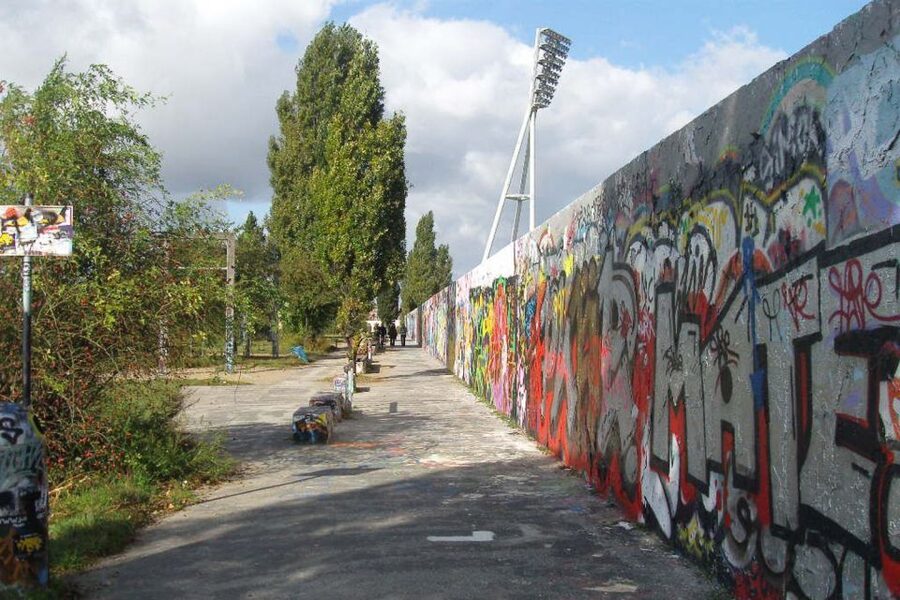
The walk also reaches the well-known Ulbrichtkurve. Its name refers to Walter Ulbricht, the East German leader associated with the construction and strengthening of the Berlin Wall.
This stop helps explain how the border was fitted into the existing city. The Wall did not cut through an empty field. It bent around streets, buildings, rail lines, gardens, and public spaces. Walking the curve gives you a better sense of how the border’s shape responded to the city around it.
The best guides turn this kind of stop into a practical lesson in reading urban space. Steffen, for example, was praised for combining humor with stories while keeping the group engaged over a walk that lasted about three hours. That small difference from the advertised 2.5 hours is worth noting: the pace and amount of discussion may affect the final duration.
The route is not a rushed checklist. You should expect periods of walking between key points, with the guide explaining what happened in each area. Comfortable shoes matter more than anything fashionable. The tour is long enough for tired feet to become a nuisance, especially in winter or wet weather.
A few more tours and experiences worth a look
- Berlin: Reichstag, Dome and Government District Guided Tour
★ 4.7 · 18,288 reviews - Berlin: Government District around the Reichstag Guided Tour
★ 4.7 · 8,447 reviews - Berlin: Hidden Backyards Guided Walking Tour
★ 4.8 · 5,360 reviews - Berlin: 1-Hour Boat Tour with Bilingual Live Guide
★ 4.7 · 3,629 reviews
Crossing Schwedter Steg near Mauerpark
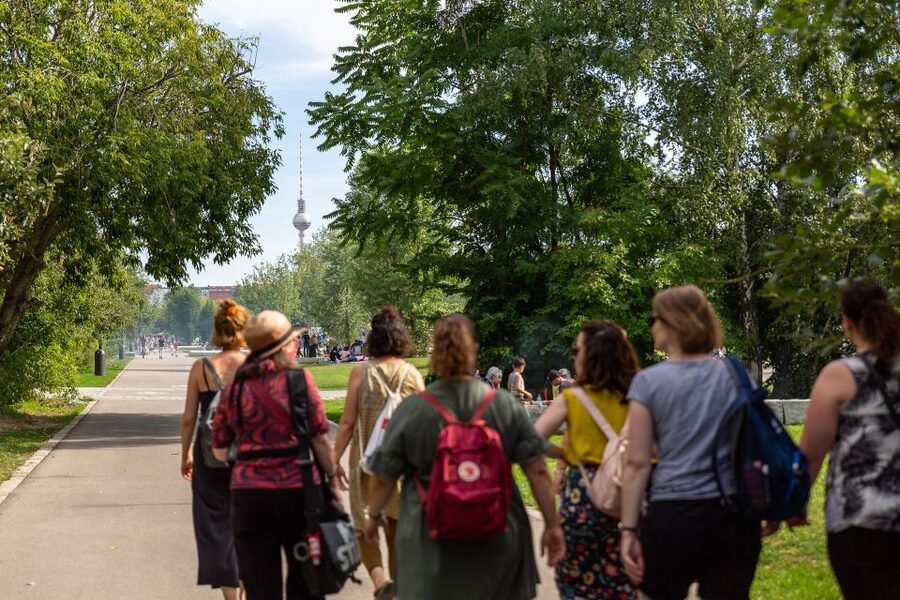
The route continues over the Schwedter Steg Bridge near Mauerpark. This crossing offers another useful view of how the border once divided areas that now feel connected.
Today, it can be hard to picture a city boundary running through a place used for ordinary movement. That contrast is central to the tour. You are not only looking at preserved memorials. You are also seeing spaces where the old division has been folded into modern Berlin.
Mauerpark is one of the liveliest public areas on the route. Its present-day social and cultural life makes a sharp contrast with its former role beside the border. The setting helps you consider what reunification changed, while also showing that memory sites do not exist outside normal city life.
I like this part for visitors who want more than solemn memorials. The Wall story is painful, but Berlin is not a museum frozen in 1989. Mauerpark shows how former border areas can become places for meeting, relaxing, and public culture.
Gleim Tunnel and the everyday city around the Wall
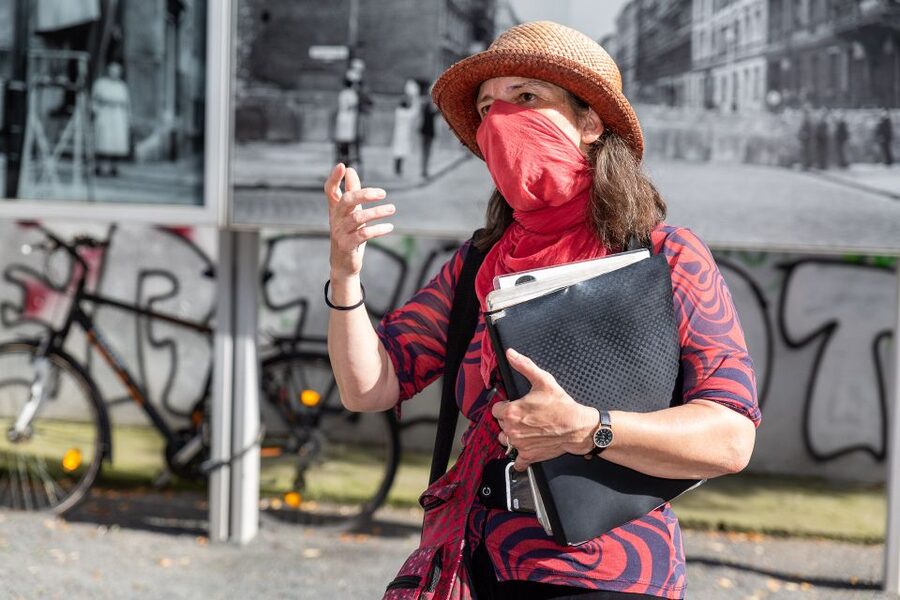
The walk includes the Gleim Tunnel, another place where Berlin’s divided past meets its present-day personality. The tunnel is known for a large party held there every year, giving the stop an unusual connection to the city’s social life.
That detail may sound light beside the history of the Wall, but it is useful. Berlin’s former border sites have not all been preserved as solemn monuments. Some have become ordinary passageways, gathering places, or venues for public events. The tour lets you see that tension directly.
This is also where a guide’s storytelling style can make a major difference. Markos was praised for keeping a 13-year-old engaged throughout the walk and for offering ideas about other things to do in Berlin. That suggests the tour can work for families with older children, provided they understand German and are comfortable walking for several hours.
You should not expect an interactive museum at Gleim Tunnel or a long indoor visit. The attraction is the location, the explanation, and the contrast between its former setting and present use.
Finishing near Nordbahnhof and former ghost stations
The route description places the final part of the walk at Nordbahnhof, a former ghost station. During Berlin’s division, some train lines passing through East Berlin were sealed to Western passengers. Trains could pass through without stopping, while access points were closed and guarded.
That makes Nordbahnhof a strong final stop. It brings the Wall story underground and shows that division affected transport as well as streets, homes, and families. A city can be divided not only by barriers you see, but also by stations you cannot use.
The supplied meeting details also state that the activity ends back at the meeting point, while the route description says the tour ends at Nordbahnhof. I would confirm the exact finish location when booking, especially if you have a train, museum reservation, or restaurant booking afterward.
What the guide adds to the experience
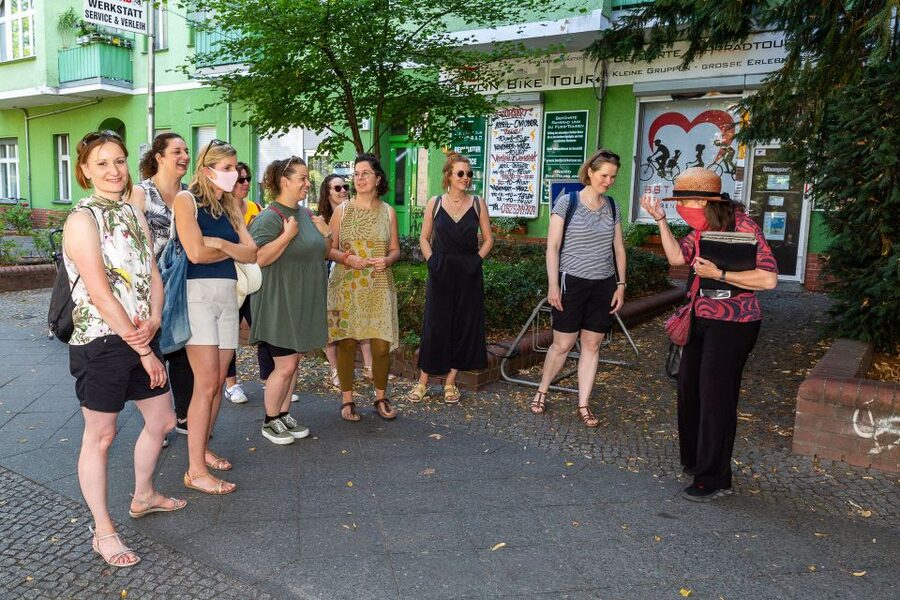
The guide is the main reason to choose this walk over exploring the Wall alone. Berlin’s Wall Memorial and East Side Gallery are easy to find, but a guided route can connect isolated sights into one story.
The strongest praise has gone to guides who combine facts with lived experience. Marcus shared his own memories of life when the Wall was in place. Katrine was born and raised in East Berlin and could discuss the subject from personal experience rather than relying only on dates and official accounts.
That does not mean every tour will have a guide with the same background. Guide quality can vary, and the guide’s language is German. Still, the small group gives you a better chance to ask questions than a large coach tour would.
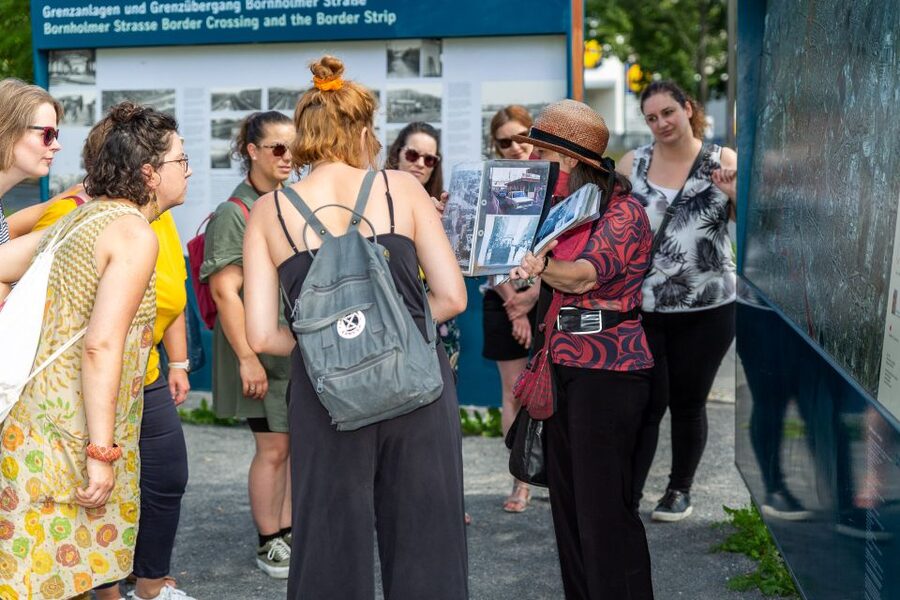
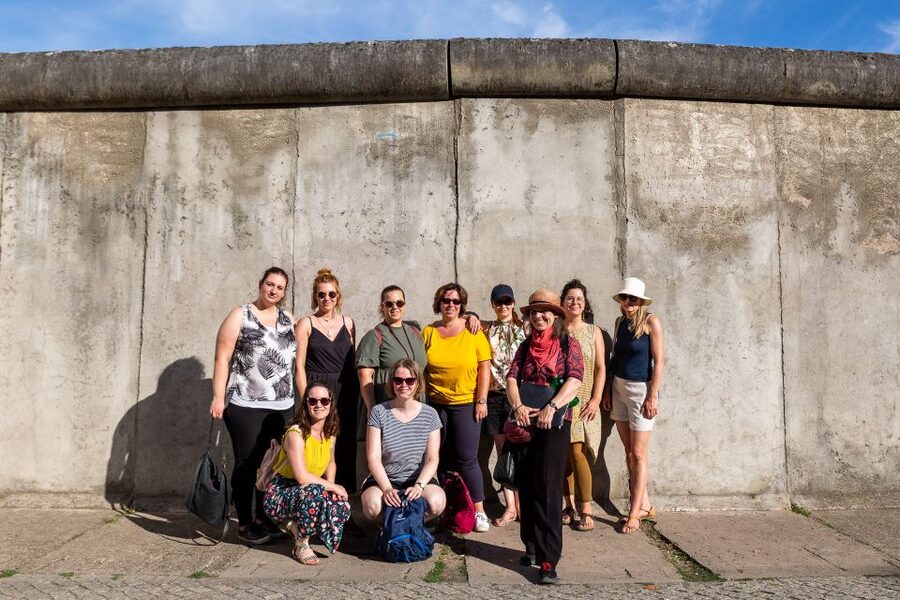
The group limit of 12 also changes the mood. You are less likely to be lost in a crowd, and the guide can respond when a particular topic interests you. If you want a silent walk with only a few famous photo stops, this may feel too detailed. If you want to understand what you are seeing, the format works well.
Is $24 a fair price for 2.5 hours?
At $24 per person, the tour offers solid value if you want guided context rather than a self-guided route. You are paying for a live guide, a carefully linked walking itinerary, and the chance to ask questions in a small group.
The value is strongest for a first visit to Berlin. The Wall story is spread across neighborhoods, memorials, transport routes, and former border spaces. A guide saves you from spending half a day working out what each trace means.
The price does not include food or drinks, and the coffee stop is at your own expense. You should also allow for transport to Bornholmer Straße and possible extra time if the walk runs closer to three hours.
Free cancellation is available up to 24 hours before the tour for a full refund. However, the stated policy also says that groups of three or more must cancel three days before the scheduled tour. If your booking includes three or more people, check which deadline applies before relying on the shorter window. You can reserve now and pay later, which helps if your Berlin plans are still shifting.
Who will get the most from this Berlin Wall walk?
I would recommend this tour to:
- First-time visitors who want a clear introduction to Berlin’s division
- History-minded adults who enjoy walking and asking questions
- Families with older children or teenagers who can follow German
- Visitors who prefer local neighborhoods and memorial sites over a short list of famous monuments
- Anyone interested in East Berlin’s everyday experience before reunification
I would be cautious about booking if you need English commentary, have limited walking stamina, or want a mostly indoor activity. The tour takes place outdoors in all weather and lasts at least 2.5 hours.
The strongest version of the experience is likely to be a small group with a guide who shares personal knowledge of East Berlin. The feedback about Marcus, Katrine, Markos, and Steffen points to the importance of warm, story-based guiding, but you cannot assume which guide will lead your departure.
Should you book this tour?
Book it if you want Berlin’s Wall history explained through real places rather than presented as a list of dates. Bornholmer Straße, the former death-strip, the cherry trees, Ulbrichtkurve, Schwedter Steg, Gleim Tunnel, Mauerpark, and Nordbahnhof form a useful chain of stops.
Skip it if you need an English-language tour or dislike walking in poor weather. For everyone else who can follow German, $24 is a sensible price for a small, personal route that shows how the Wall shaped both the city and the people who lived beside it.
FAQ
Where does the Berlin Wall tour start?
The tour starts at the Berlin Bike Tours office. It is about one minute from the Björnsonstraße tram stop and two minutes from Bornholmer Straße S-Bahn station.
How long does the tour last?
The listed duration is 2.5 hours. One reported tour lasted about three hours, so allow some extra time if the guide spends longer answering questions.
What language is the tour conducted in?
The live tour guide speaks German. The supplied activity details do not list English or any other guide language.
What group size should I expect?
The tour has a maximum of 12 participants. A minimum of two participants is required for the tour to operate.
What places are included on the route?
The route includes Bornholmer Straße, the former death-strip and its cherry trees, the Ulbrichtkurve, Schwedter Steg near Mauerpark, Gleim Tunnel, Mauerpark, and the Nordbahnhof area.
Does the tour run in the rain?
Yes. The tour takes place in all weather. Rain ponchos are provided when necessary.
Are food and drinks included?
No. Food and drinks are not included. You have an opportunity to relax over coffee during the route, but you pay for it separately.
Can I cancel for a full refund?
The stated policy allows full-refund cancellation up to 24 hours before the tour. For groups of three or more, the stated cancellation deadline is three days before the scheduled tour, so check the conditions for your booking.
Just added around Berlin
- Berlin: Private Guided Tour of the Main Sights★ 5.0 · 13 reviews
- Private Highlights of Berlin Bike Tour★ 5.0 · 13 reviews
- Modern Berlin Private Walking Tour: Diverse, Vibrant and Exciting German Capital★ 5.0 · 13 reviews
- Tour in Berlin from Warnemünde and Rostock Cruise Port★ 4.1 · 13 reviews
- Berlin: Stasi Museum Private Guided Tour with Entry Ticket★ 4.8 · 13 reviews
- Private Food Tour Experience with a born and bred Berliner★ 5.0 · 14 reviews
- Berlin: Rheinsberg Palace Entrance Ticket★ 4.8 · 14 reviews
- Berlin in one day – day tour with an expert guide★ 5.0 · 14 reviews
Berlin Wall Tours, compared.
Skip-the-Line: Berlin Wall Museum at Checkpoint Charlie
Read our review →
East Side Gallery Spree Cruise in a Solar Catamaran
Read our review →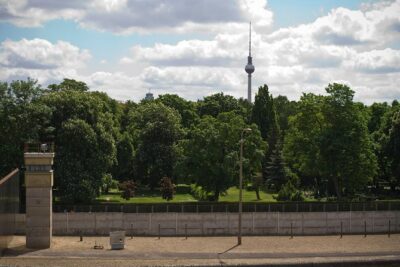
Cold War, Berlin Wall, Spies and the East Side Gallery
Read our review →
Guided Bike Tour of the Berlin Wall and Third Reich
Read our review →
Cold War, Berlin Wall, Spies and the East Side Gallery
Read our review →Browse the lists this tour appears in