
Reviewed · HISTORICAL TOURS
Berlin Uncensored: A History of Sex & Freedom
Sex and freedom shaped Berlin. This 3.5-hour walking tour follows that story from nudism and early sexual science to queer nightlife, Nazi persecution, and today’s clubs. I like the small group of no more than 10, which gives you room to ask direct questions, and I like the use of rare images, videos, and augmented reality to connect today’s streets with the past. The main consideration is that this is an adult subject tour, with frank discussion of sex, prostitution, fetish culture, gender identity, and persecution.
Guide Jeff, a sociologist and certified sex educator, leads the experience in clear English and keeps the tone respectful rather than sensational. I also appreciate that the tour treats sexuality as social history, not simply as a list of notorious clubs. At $82.90, it is not a cheap walk, and some stops are exterior locations with no museum admission, so the value depends on how much you want expert context and conversation.
In This Review
- Key points to know before you book
- Why this Berlin walk is different
- Starting at Nollendorfplatz with FKK culture
- Magnus-Apotheke and the lost Institute for Sexual Science
- The LGBTQ memorial and Nazi persecution
- Kurfürstenstraße and Berlin’s prewar sex trade
- Schwerinstraße and Berlin’s lesbian scene
- Christopher Isherwood’s Berlin addresses
- Eldorado, drag culture, and a city before the crackdown
- East and West Berlin after 1945
- Returning to Nollendorfplatz and modern club culture
- AR images, rare archives, and the group experience
- Is $82.90 a fair price?
- Who should book this experience?
- Should you book Berlin Uncensored?
- FAQ
- Where does the Berlin Uncensored tour start?
- What time does the tour begin?
- How long does the experience last?
- Where does the tour end?
- How many people can join the tour?
- Is the tour offered in English?
- What is included in the price?
- Is the tour suitable for children?
- Can I cancel for a full refund?
Key points to know before you book
- Magnus Hirschfeld’s pioneering institute: Learn about Berlin’s first Institute for Sexual Science and the work destroyed by the Nazis in 1933.
- A tiny group with room for questions: The maximum of 10 people makes this much more personal than a standard city walk.
- History brought onto ordinary streets: Nollendorfplatz, Bülowstrasse, Tiergarten, and nearby addresses become places to discuss nudism, queer life, science, and nightlife.
- A story that crosses political borders: You compare sexual culture in West Berlin and East Berlin, including FKK nudism and the effects of the Wall.
- Modern Berlin nightlife explained: The final section covers Berghain, KitKat Club, Insomnia, Lab.Oratory, and Folsom Europe.
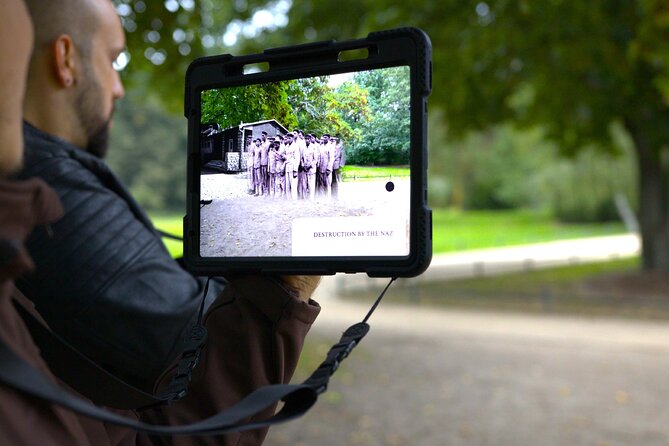
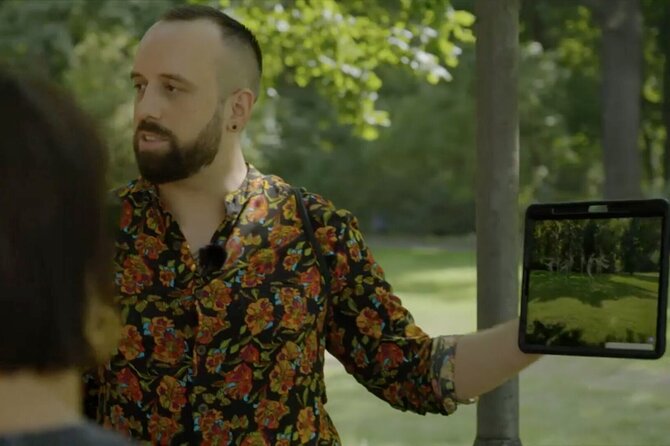
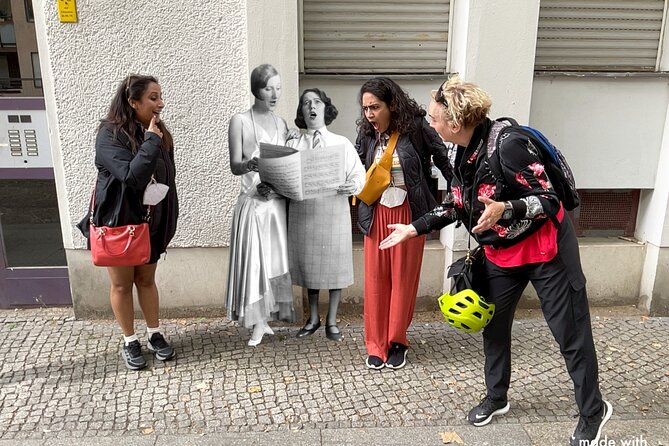
- Useful digital extras: AR images, videos, archival material, and personalized Mixies add visual context, though the technology is not equally useful at every moment.
Why this Berlin walk is different
Many Berlin tours focus on war, dictatorship, or the Wall. This one asks a less usual question: how did ideas about bodies, desire, gender, relationships, and sexual freedom help shape the city?
That wider focus is the tour’s real strength. You are not simply shown former clubs or told colorful stories about the 1920s. You are also introduced to sexual science, public health, censorship, queer communities, the AIDS crisis, and the way different political systems handled private life.
The route is led by Jeff, whose background as a sociologist and certified sex educator matters here. The subject can easily become either too academic or too cheeky. The available feedback points to a guide who keeps it informative, open to questions, and respectful. One especially useful detail is the mention of trauma-informed guiding, which suggests care when the tour reaches Nazi persecution and other painful subjects.
You should expect a walking lecture with visual aids, not a visit inside every historic site. Most stops are free exterior locations. The value lies in the explanation, the archival material, and the chance to ask about subjects that ordinary city tours tend to skip.
More Historical Tours in Berlin
- Berlin: Natural History Museum Entrance Ticket
★ 4.6 · 3,382 reviews - Berlin: World Heritage Cruise to Potsdam
★ 4.5 · 1,435 reviews - Berlin Historical Highlights Walking Tour
★ 4.9 · 657 reviews
Starting at Nollendorfplatz with FKK culture
The tour starts at 2 pm near Alnatura Super Natur Markt at Else-Lasker-Schüler-Straße 18. From there, Jeff introduces Berlin’s long connection with Freikörperkultur, usually shortened to FKK.
FKK means free-body culture, or organized nudism. The tour traces it from the 19th century into modern Berlin, then explains why it remains associated with lakes, parks, and outdoor life in Germany. This opening is useful because it challenges the idea that Berlin’s sexual openness began with the famous clubs of the 1920s or the nightlife of the present day.
You spend about 10 minutes here. It is a short introduction, but it sets up a theme that returns later: freedom of the body can mean different things in different periods. Sometimes it is linked to health and nature. Sometimes it is treated as a threat by authorities. In East Berlin, public nudism became especially popular, even while the state restricted many other forms of personal freedom.
Magnus-Apotheke and the lost Institute for Sexual Science
The stop at Magnus-Apotheke takes about 20 minutes and is one of the intellectual centers of the tour. Berlin was home to the first Institute for Sexual Science, founded by Magnus Hirschfeld, a pioneer in the study of sex and gender.
Here, you learn about work on desire, relationships, contraception, sexual health, and gender identity. The material also covers the invention of the rubber condom, early research connected with Viagra precursors, and the first gender affirmation surgeries involving people such as Dora Richter, Lili Elbe, and Karl M. Baer.
The subject becomes especially powerful when you learn what happened in 1933. The Nazis destroyed the institute and its research because they considered its work a danger to their worldview. The loss was not only physical. Books, records, medical research, and the chance for continued public discussion were wiped out or scattered.
I would pay close attention here to the archival images and AR material. This is the sort of history that is difficult to understand from a present-day street corner alone. The digital tools help put faces, documents, and vanished buildings into the conversation.
One caution: the material covers gender identity and medical history in a direct way. If you want a lighthearted look at Berlin nightlife, this section may feel serious. That seriousness is also why it gives the tour weight.
The LGBTQ memorial and Nazi persecution
At the Monument to Homosexuals Persecuted Under National Socialist Regime, the tour turns from prewar freedom to state violence. The stop lasts about 10 minutes and explains how the Nazis censored sexual expression, closed erotic clubs, and persecuted LGBTQIA+ people, sex workers, and others labeled degenerate.
The story includes Ernst Röhm, a senior Nazi figure known to have been homosexual, and the Night of the Long Knives, when Röhm was executed. This is a difficult part of the tour because it shows how the Nazi regime could use, tolerate, and then destroy people connected with sexual minorities when political power demanded it.
You also learn about the pink triangle used to mark many gay prisoners in concentration camps. The symbol was later reclaimed by LGBTQIA+ rights movements. That shift, from a badge of persecution to a sign of resistance, is the kind of detail that makes the memorial more than a quick photo stop.
The tour handles this part in a historical and responsible way. Still, expect a change in mood. The route does not treat Berlin’s sexual past as one long party. It shows how quickly legal and social freedom can disappear.
Something different for another day:
- Berlin: Reichstag, Dome and Government District Guided Tour
★ 4.7 · 18,288 reviews - Berlin: 1-Hour City Tour by Boat with Guaranteed Seating
★ 4.3 · 16,993 reviews - Berlin: Boat Tour Along the River Spree
★ 4.4 · 11,252 reviews - Discover Berlin Half-Day Walking Tour
★ 5.0 · 9,624 reviews
Kurfürstenstraße and Berlin’s prewar sex trade
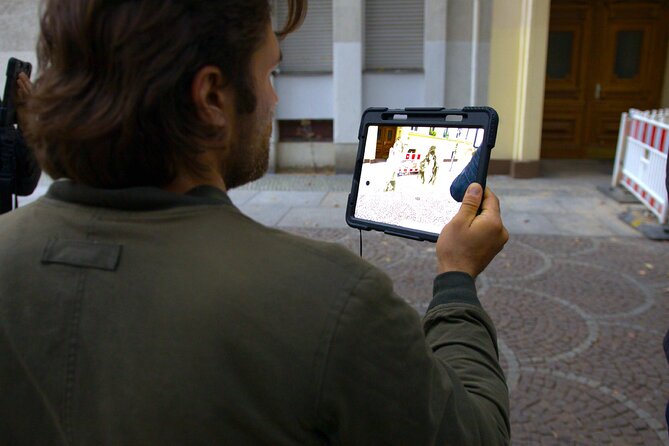
At Kurfürstenstraße, you explore Berlin’s pre-Nazi sex trade and nightlife. This stop takes about 15 minutes and looks at prostitution, brothels, fetish interests, and forms of kink that existed long before they became more visible in popular culture.
The appeal here is the contrast between the ordinary street you see now and the city described by the tour. Berlin’s reputation for sexual experimentation was not invented by modern club promoters. It grew from a mix of permissive attitudes, urban anonymity, cabaret, commerce, and communities that found ways to meet.
The guide also discusses how some venues catered to very specific desires. That information is presented as part of the city’s social and economic history, rather than as an invitation to visit a particular business.
Because the stop is outdoors, you will not tour historic interiors or former brothels. You are using the street as a prompt for stories. That works best if you enjoy placing history onto present-day neighborhoods instead of expecting a preserved attraction.
Schwerinstraße and Berlin’s lesbian scene
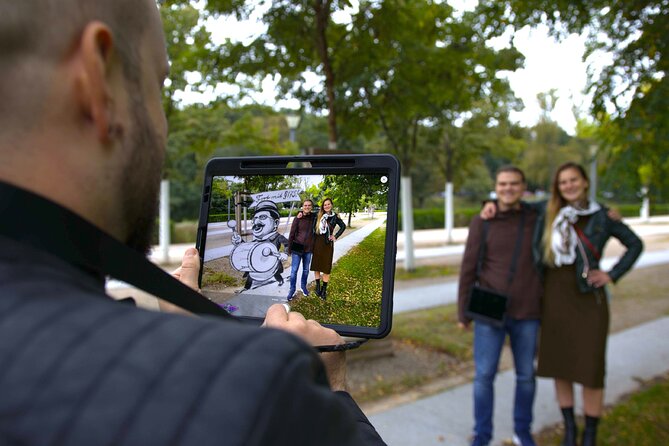
The 10-minute stop at Schwerinstraße 9 turns attention to women who created their own social networks in early 20th-century Berlin. The city had one of the world’s strongest lesbian communities during this period, with meeting places such as the Toppkeller.
The discussion includes Claire Waldoff, a cabaret singer associated with lesbian identity, and the Lavender Song, which linked music and nightlife with queer life. You also hear about Josephine Baker, whose popularity in Berlin existed alongside racial discrimination.
That last point is important. Berlin’s reputation for openness did not mean everyone received the same welcome. Race, gender, class, and sexuality affected how people could move through clubs and public life. Baker’s story prevents the tour from presenting the 1920s as a simple golden age.
This section is also a reminder that lesbian history can disappear easily when nightlife stories focus mainly on famous gay male writers and clubs. The inclusion of the Toppkeller, Waldoff, and Baker broadens the picture.
Christopher Isherwood’s Berlin addresses
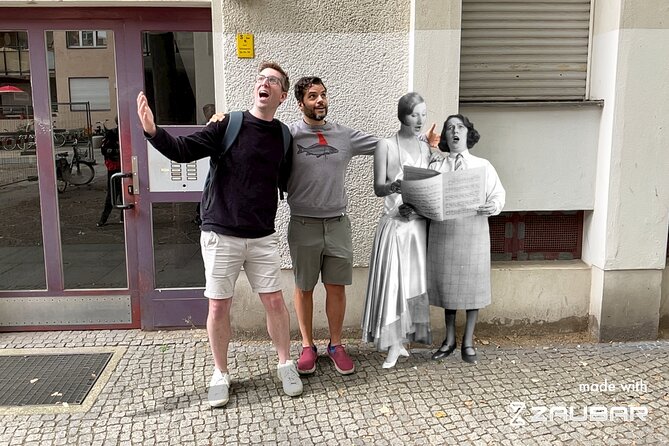
At the residential building connected with Christopher Isherwood, the tour looks at the gay male world of Berlin in the 1920s and early 1930s. Isherwood’s experiences later influenced his writing and the works adapted into Cabaret.
You will hear how Berlin drew gay men from across Europe and how Isherwood recorded its nightlife, relationships, and shifting sense of personal freedom. This is a good place to consider the difference between an author’s personal view and the full history of a city. Isherwood gave many readers a vivid window into one part of Berlin, but his account does not represent every person who lived there.
The stop lasts about 10 minutes. Fans of Cabaret will find a direct connection to familiar stories, while readers who know little about Isherwood will still get useful context. The guide’s visual material can help show how the literary Berlin of the page relates to the physical streets around you.
Eldorado, drag culture, and a city before the crackdown
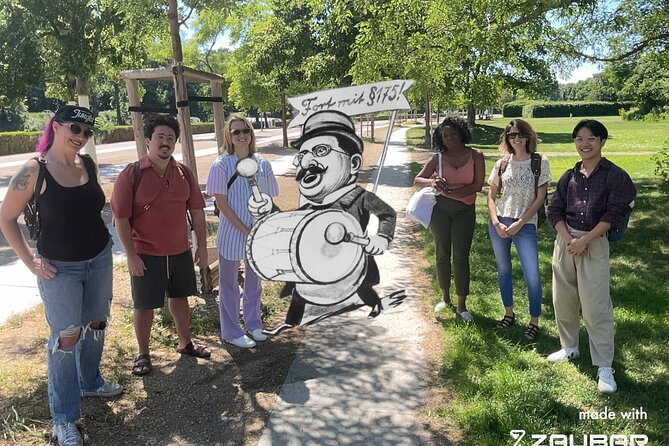
Near the former Eldorado Club, now identified by the meeting location at Denns BioMarkt, the tour returns to nightlife. Eldorado was one of 1920s Berlin’s best-known meeting places for drag performers and sexually open people.
The club’s history also shows the contradictions of the period. Ernst Röhm was said to frequent the club before the Nazis attacked the very culture it represented. A journalist from the American edition of Vogue once visited and called a drag performer the most beautiful woman in Berlin.
Stories like this explain why the club became a symbol of pre-Nazi openness. They also show that public fascination and genuine acceptance are not the same thing. A drag performer might be celebrated in a nightlife setting while still facing danger outside it.
This is another exterior stop, so expect storytelling rather than a preserved club interior. The tour is strongest when you picture the vanished venue through the images and descriptions rather than expecting the modern site to look historic.
East and West Berlin after 1945
At the Internationale Stele Gegen das Vergessen, the story moves into the postwar period. After 1945, Berlin was split politically and physically, and its approach to sex developed along different lines.
In West Berlin, the sexual revolution encouraged more open attitudes toward relationships, pornography, and alternative lifestyles. In East Berlin, the state restricted freedom in many areas, but FKK nudism became highly popular. The tour uses this contrast to show that sexual policy does not always fit neatly into a simple free-versus-repressive model.
You also learn why the Berlin Wall was nicknamed the condom of the GDR and hear about a conservative politician who helped save thousands of lives during the AIDS crisis. These details connect political history with health, humor, public policy, and human behavior.
The stop lasts about 15 minutes. It is one of the most useful parts for anyone who knows Berlin mainly through the Wall and Cold War. You see how the same city could develop two different public cultures within a short distance of each other.
Returning to Nollendorfplatz and modern club culture
The route ends back at Nollendorfplatz with a 15-minute look at modern Berlin. The discussion includes Berghain, famous for its no-photo rule and hedonistic parties, along with KitKat Club, Insomnia, and Lab.Oratory.
You also hear about Folsom Europe, described as the world’s largest fetish festival, which brings thousands of people to Berlin. These examples show that the city’s modern sex-positive identity is not limited to one club or one neighborhood. It includes music, dress, consent, performance, fetish communities, and the freedom to create spaces outside the mainstream.
Do not expect entry to any club. The tour gives historical and practical context, plus insider tips about modern nightlife and events. That can be useful if you want to continue exploring on your own, but the advice is not a substitute for checking current entry rules, schedules, or event details separately.
AR images, rare archives, and the group experience
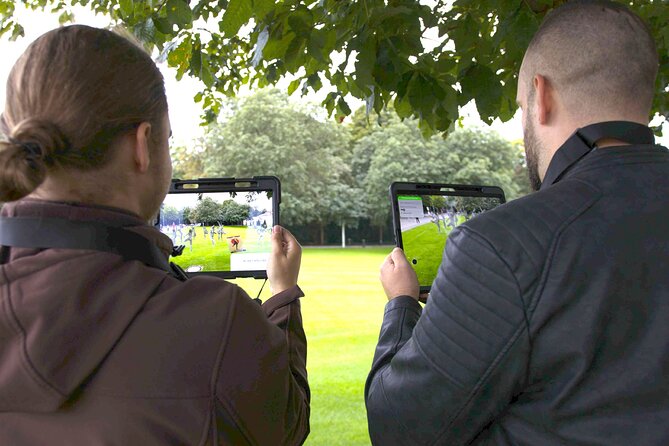
The tour includes more than 200 rare historical photographs, videos, and archival materials. AR elements let you use your phone to see added images or historical content, while Mixies create personalized photos with AR features.
The technology received particularly strong praise for making lost places easier to picture. One useful caveat is that the AR additions may occasionally feel unnecessary. The guide’s explanation remains the main event, and the digital layer works best when it answers a clear question or shows something no longer visible.
The group limit of 10 is a real benefit. Sex and gender can raise personal or sensitive questions, and a small group makes it easier to ask without shouting across a crowd. It also allows Jeff to respond to the interests of the people present instead of delivering a fixed speech with no room for discussion.
The tour is offered in English. The available feedback specifically praises Jeff’s clear English and his ability to explain difficult material in an approachable way.
Is $82.90 a fair price?
At $82.90 per person, this costs more than a basic free walking tour. But you are paying for a 3.5-hour experience, a specialist guide, a maximum group of 10, visual archives, AR content, and modern nightlife advice.
The price makes the most sense if you want analysis and conversation. You are not paying admission to a collection of buildings, since the listed stops have free entry and are mainly outdoor locations. If you prefer museums, physical artifacts, or a tour with a low price and many conventional landmarks, this may not be the best match.
Group discounts are available, which could help if you are arranging a conference outing or traveling with friends. The experience has also been used for several groups at once, while keeping the tour format engaging and dynamic.
Plan for outdoor walking and choose sensible clothing for the weather. A café break may be possible, but coffee or tea is not included. The tour can be canceled in extreme weather such as heavy rain or storms, with a full refund offered in that case.
Who should book this experience?
I would recommend it to adults who want a different way to understand Berlin. It suits you particularly well if you are interested in:
- LGBTQIA+ history and queer communities
- Sexual science and the work of Magnus Hirschfeld
- Cabaret, drag, and 1920s nightlife
- The social effects of Nazism and the divided city
- Modern sex-positive clubs and fetish events
- Open discussion in a small English-language group
The minimum age is 18. The subject matter is frank, so it is not a suitable choice for anyone looking for a family-oriented city walk or a quick introduction to Berlin’s major monuments.
You should also be comfortable with a tour that mixes serious persecution history with lighter nightlife stories. That change in tone is part of the point, but it can feel abrupt if you expect a single mood from start to finish.
Should you book Berlin Uncensored?
Book it if you want Berlin explained through bodies, desire, science, politics, and nightlife rather than only through palaces and battlefields. Jeff’s sociological background, clear English, and willingness to answer questions give the tour a strong human element, while the small group keeps it personal.
I especially value the route’s balance. You get FKK culture, Hirschfeld’s research, lesbian and gay communities, Nazi persecution, East and West Berlin, and current clubs in one connected story. The main limitation is the price for a walking tour with no included attraction entry.
For an adult who wants thoughtful, unusual history and practical nightlife context, $82.90 can be good value. If you only want to see famous sights or you dislike frank discussions of sex and gender, spend your budget elsewhere.
FAQ
Where does the Berlin Uncensored tour start?
The tour starts at Alnatura Super Natur Markt, Else-Lasker-Schüler-Straße 18, 10783 Berlin, Germany.
What time does the tour begin?
The scheduled start time is 2 pm.
How long does the experience last?
The walking tour lasts approximately 3 hours and 30 minutes.
Where does the tour end?
The activity ends back at the meeting point at Nollendorfplatz.
How many people can join the tour?
The group has a maximum of 10 participants.
Is the tour offered in English?
Yes. The tour is offered in English.
What is included in the price?
The price includes a guided walking tour with a sociologist and certified sex educator, AR elements, Mixies, more than 200 historical photos, videos and archival materials, plus insider tips on modern sex-positive nightlife and events.
Is the tour suitable for children?
No. The minimum age is 18, and the tour discusses sex, prostitution, fetish culture, gender identity, sexual science, and persecution.
Can I cancel for a full refund?
Yes. You can cancel at least 24 hours before the local start time for a full refund. Cancellations or changes made less than 24 hours before the start time are not refunded. If extreme weather or an insufficient minimum group size cancels the experience, you will be offered another date or experience, or a full refund.
Just added around Berlin
- Berlin: Private Guided Tour of the Main Sights★ 5.0 · 13 reviews
- Private Highlights of Berlin Bike Tour★ 5.0 · 13 reviews
- Modern Berlin Private Walking Tour: Diverse, Vibrant and Exciting German Capital★ 5.0 · 13 reviews
- Tour in Berlin from Warnemünde and Rostock Cruise Port★ 4.1 · 13 reviews
- Berlin: Stasi Museum Private Guided Tour with Entry Ticket★ 4.8 · 13 reviews
- Private Food Tour Experience with a born and bred Berliner★ 5.0 · 14 reviews
- Berlin: Rheinsberg Palace Entrance Ticket★ 4.8 · 14 reviews
- Berlin in one day – day tour with an expert guide★ 5.0 · 14 reviews
Historical Tours, compared.
City History Canal Sightseeing Tour on a Motorboat
Read our review →
Bamberg: Guided Beer History Tour with Optional Tasting
Read our review →Browse the lists this tour appears in