Reviewed · PRIVATE
Berlin: Private Sightseeing Tour in an E-Rickshaw
Berlin looks different from an e-rickshaw. See more with less walking as your guide rolls from Alexanderplatz through old Berlin, Museum Island, Bebelplatz, and Checkpoint Charlie. The ride is quiet, private, and easy to adjust around your interests.
I like the personal route and the clear historical storytelling, especially the focus on Berlin’s divided past and reunification. I also like the small comforts reported by guests, including blankets, pillows, hot packs, and speakers that make the guide easy to hear. The main consideration is space: the rickshaw is built for a small private group, and taller or larger passengers may find the ride restrictive.
In This Review
- Key details that shape the experience
- Alexanderplatz is a practical place to begin
- Nikolaiviertel brings you into old Berlin
- Humboldt Forum shows Berlin’s newer center
- Museum Island is best for orientation and photos
- Bebelplatz carries serious historical weight
- Checkpoint Charlie explains divided Berlin
- Parochialkirche offers a quieter pause
- Brandenburg Gate and Potsdamer Platz make useful endings
- The history works best when you guide the conversation
- Why the private price can make sense
- Who will enjoy this Berlin ride most
- Practical ways to get more from the ride
- Should you book this private e-rickshaw tour?
- FAQ
- Where does the Berlin e-rickshaw tour begin?
- How long does the tour last?
- How many people can join the private ride?
- Can I request hotel pickup?
- Where can the tour finish?
- Which languages are available?
- Are museum tickets included?
- Is the ride suitable for wheelchair users and young children?
Key details that shape the experience
- A private ride for up to two people: You get the rickshaw and guide to yourselves, rather than joining a large sightseeing group.
- A flexible central Berlin route: The suggested stops include Nikolaiviertel, Museum Island, Bebelplatz, Checkpoint Charlie, and several possible drop-off points.
- History from Alexanderplatz to reunification: The commentary covers Berlin’s old and new city centers, the East-West conflict, the events of 1989 to 1990, and the capital after reunification.
- Photo stops built into the ride: You can pause for pictures at major sights and ask for stops that match your interests.
- Useful for short visits or limited walking: A ride of roughly 50 minutes to 2.5 hours can give you a broad look at central Berlin without a long march between sights.
- A guide who helps beyond the route: Mathias can suggest local events and cultural activities, and he offers advice about Berlin nightlife.
Alexanderplatz is a practical place to begin
The meeting point is the World Time Clock on Alexanderplatz, one of Berlin’s easiest landmarks to find. You meet your guide there, then settle into the rickshaw for a compact tour through the city center.
Alexanderplatz is a useful starting point because it puts you near several layers of Berlin at once. The square has its East German planning, modern commercial buildings, and access to the older quarter near the Spree. From here, the tour can quickly shift between imperial Berlin, wartime memory, Cold War division, and today’s capital.
The ride is private, so the opening conversation matters. You can tell the guide what interests you most, such as architecture, the Berlin Wall era, museums, photographs, restaurants, or nightlife. The proposed route is not fixed, which is one of the best reasons to book this instead of a standard sightseeing circuit.
You should contact the guide before the ride if you want pickup somewhere other than the World Time Clock. Hotel pickup is available on request for a small extra charge. The end point can be the World Time Clock, Brandenburg Gate, or Potsdamer Platz, and another city-center drop-off may be arranged if the route is adjusted.
A few more tours and experiences worth a look
- Berlin: Private Reichstag and Glass Dome Tour
★ 4.8 · 2,226 reviews - Berlin Private Complete History All Day Walking Tour
★ 5.0 · 474 reviews - Private Walking Tour Berlin Third Reich Hitler and World War II
★ 5.0 · 360 reviews
Nikolaiviertel brings you into old Berlin
The first listed stop is Nikolaiviertel, where you have about 20 minutes for a guided visit, sightseeing, and photographs. This area offers a change of pace from the broad avenues and open spaces around Alexanderplatz.
The quarter is closely tied to Berlin’s medieval center. Its church, narrow streets, and reconstructed historic appearance give you a sense of the city before the modern capital spread outward. It is a good place to ask how Berlin developed around the Spree and why the old center does not look like one continuous medieval town.
Do not expect a huge museum visit here. The value is in the guide’s explanation and in seeing a compact historic district from the seat of the rickshaw. If you want time for a long meal or detailed indoor visits, the 20-minute pause will feel short.
Humboldt Forum shows Berlin’s newer center
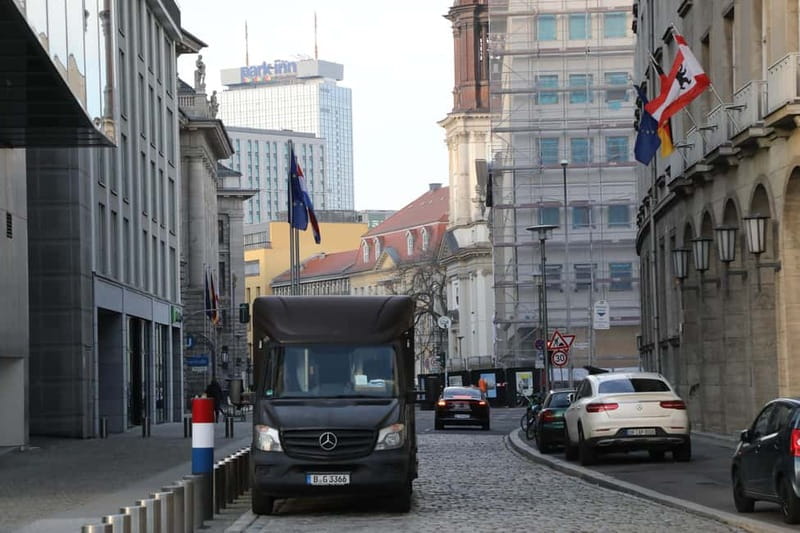
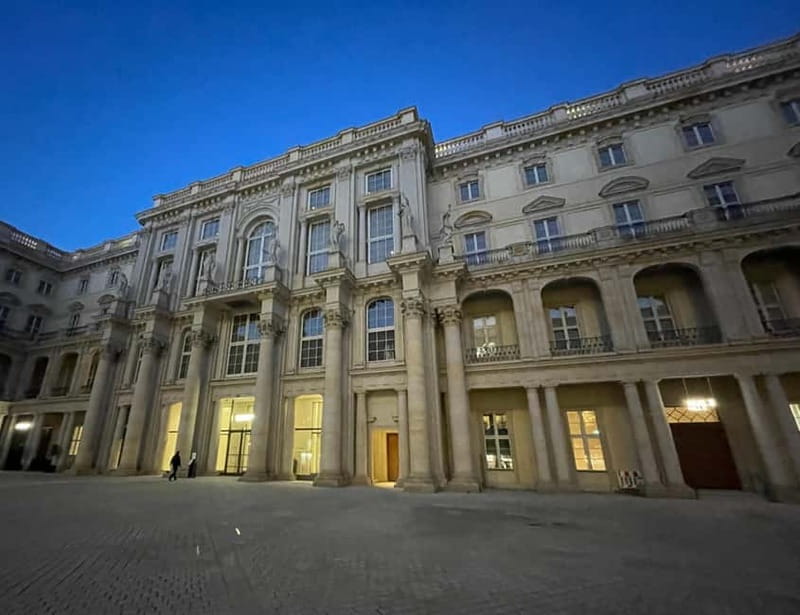
The route then moves toward the Humboldt Forum, with another suggested 20-minute photo and sightseeing stop. The building occupies a major site beside Museum Island and presents a striking contrast between reconstructed historic facades and modern interior spaces.
This is one of the better places to discuss Berlin’s changing identity. The surrounding area has been reshaped over many years, and the Humboldt Forum sits within a capital that is still deciding how to present its past. Your guide can connect the building, the old palace site, and the post-reunification rebuilding of central Berlin.
The tour passes by rather than promising a full museum visit. Museum admission is not included, so you should plan a separate visit if you want to see the collections inside. The ride gives you orientation, exterior views, and context, which can help you choose where to return on foot.
Museum Island is best for orientation and photos
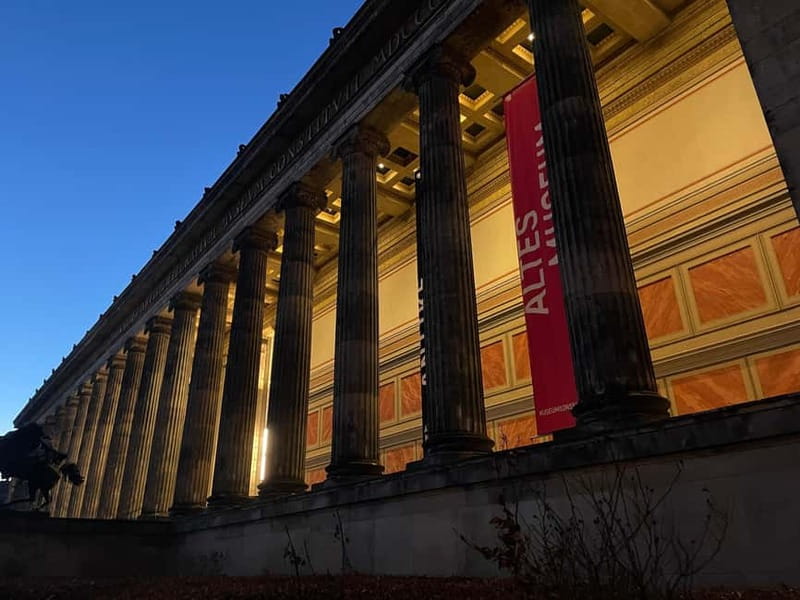
Museum Island follows as a sightseeing and photo stop. The area is one of Berlin’s most important cultural centers, with several major museums gathered beside the Spree.
From the rickshaw, you get an efficient introduction to the setting and its architecture. The guide can point out how the museums relate to one another and explain why this part of Berlin matters to the city’s cultural life. You can also take photographs without spending the time and energy required for a full museum visit.
The limitation is clear: this is not a substitute for entering the museums. Food and museum tickets are not included, and the scheduled stop is part of a moving city tour. I would use this portion to mark the museums you want to return to later, especially if your trip allows another half day in central Berlin.
Something different for another day:
- Berlin: Reichstag, Dome and Government District Guided Tour
★ 4.7 · 18,288 reviews - Berlin: 1-Hour City Tour by Boat with Guaranteed Seating
★ 4.3 · 16,993 reviews - Berlin: Boat Tour Along the River Spree
★ 4.4 · 11,252 reviews - Discover Berlin Half-Day Walking Tour
★ 5.0 · 9,624 reviews
Bebelplatz carries serious historical weight
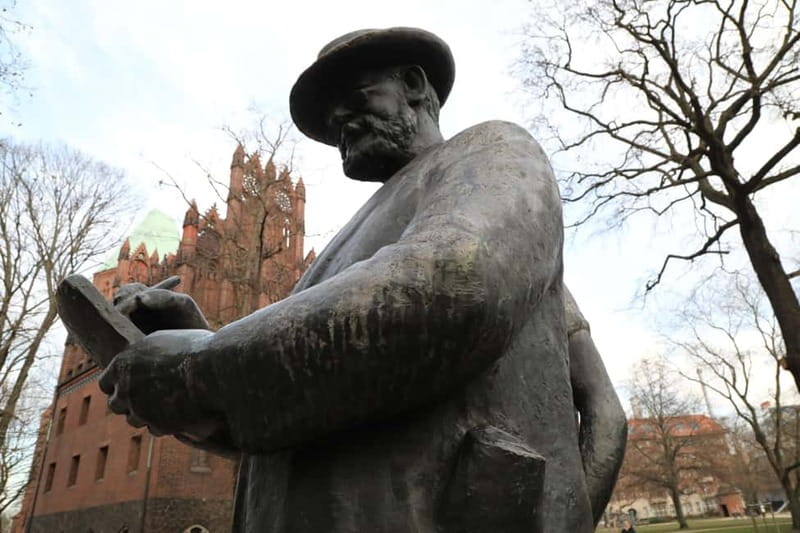
The suggested 10-minute stop at Bebelplatz is shorter, but it can be one of the most affecting. This square is associated with the Nazi book burning of 1933, and its open design makes a quiet contrast with the surrounding grand buildings.
A short pause works here because the site is about reflection and explanation rather than a long activity. The guide’s historical context is important. You can ask about the square’s role in Berlin’s political life and how public spaces preserve difficult memories.
Because the stop is brief, tell the guide if this subject matters to you and you want more time. The flexible itinerary may allow a change, but the exact ride depends on the route you agree on.
Checkpoint Charlie explains divided Berlin
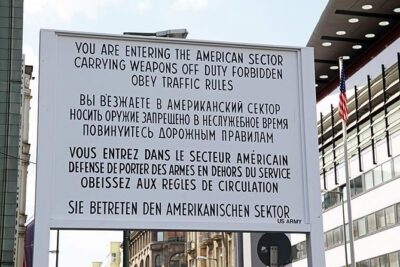
Checkpoint Charlie is given about 20 minutes for photographs and sightseeing. It is one of Berlin’s most familiar Cold War locations, and it offers a natural point for the guide to explain the East-West conflict during the second half of the 20th century.
The site is useful, but you should keep your expectations in check. The famous checkpoint setting is now surrounded by commercial activity, and the original border crossing has not been preserved as a complete working border post. Its value comes from the story, the location, and the way it fits into the wider history of divided Berlin.
This is where a private guide can improve the visit. You can ask how the border operated, why this crossing became famous, and what changed after the Wall opened in 1989. The tour also covers reunification in 1989 and 1990, then connects those events to Berlin’s role as Germany’s new capital.
Parochialkirche offers a quieter pause
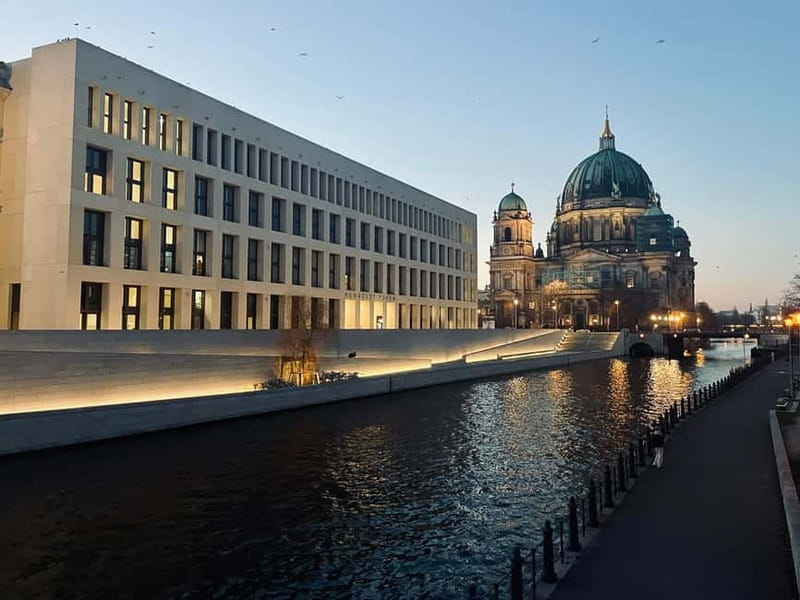
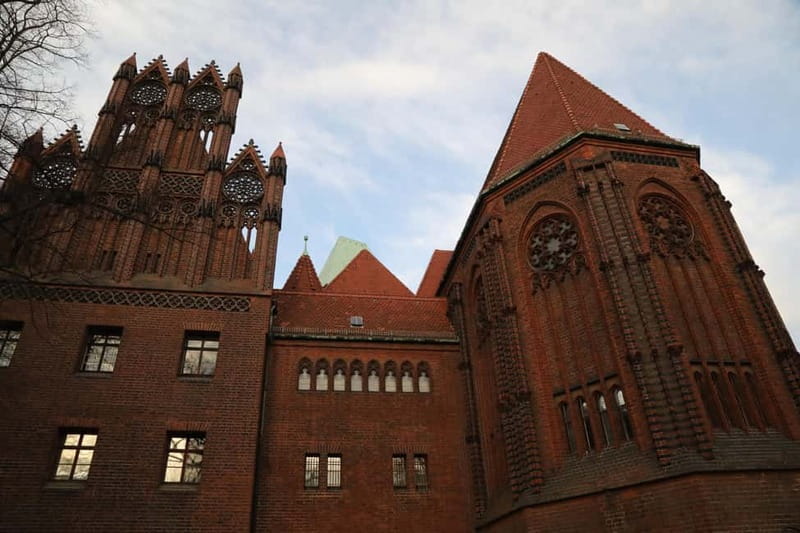
Parochialkirche is another suggested photo and sightseeing stop, with about 20 minutes for a visit. It is less obvious than Brandenburg Gate or Checkpoint Charlie, so it adds variety to a route built around headline sights.
The church helps show a different side of central Berlin. Instead of moving only between major monuments, you get a smaller architectural and historical stop where the guide can point out details you might otherwise pass without noticing.
The information provided does not promise a full church tour or special interior access. Think of it as a flexible stop rather than a guaranteed long visit. If churches and older city buildings interest you, tell the guide in advance so the route can give this part the attention it deserves.
Brandenburg Gate and Potsdamer Platz make useful endings
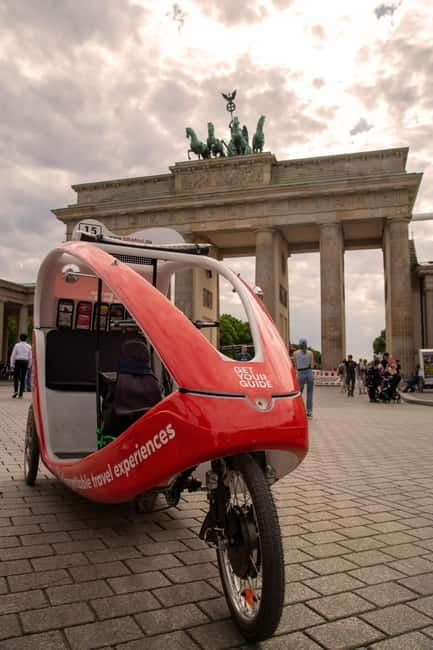
The tour can finish at Brandenburg Gate, the World Time Clock, or Potsdamer Platz. Each ending suits a different plan.
Brandenburg Gate is the classic choice if you want to continue among Berlin’s best-known landmarks. It also fits the tour’s story of division and reunification, since the gate sat near the Berlin Wall and later became a powerful symbol of a reunited city.
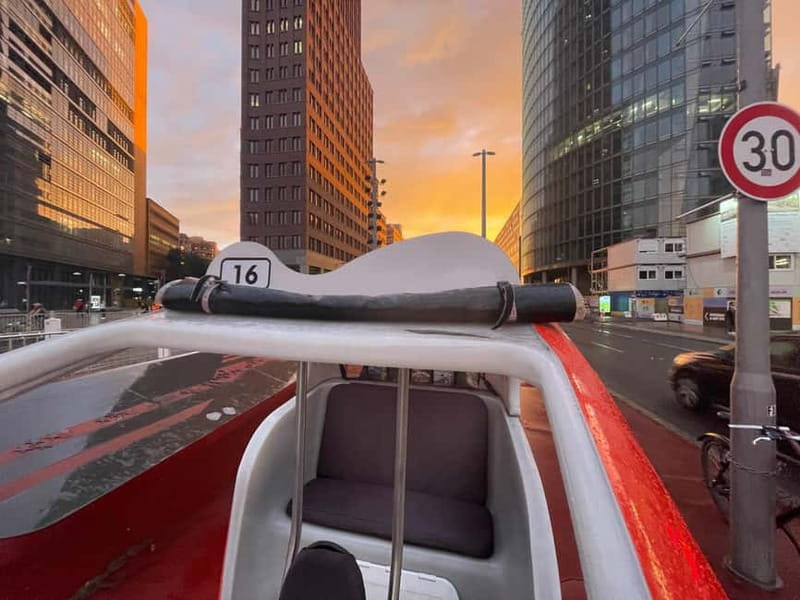
Potsdamer Platz gives you a different view of the rebuilt capital. Its modern architecture and large public spaces make it a useful place to continue toward other central sights. If you are heading to dinner, a museum, or a hotel, ask about a different drop-off before the ride begins.
Returning to the World Time Clock is simplest if you have left luggage, another meeting, or a train connection to manage. A custom drop-off may be possible, but the guide needs to adjust the route, so do not leave that request until the final minutes.
The history works best when you guide the conversation
The stated themes cover a lot of ground: Berlin’s scale, architecture, old town, new town, the East-West conflict, reunification, and the modern capital. That is a useful range for a first look, but it also means the quality of the experience depends on the conversation.
I would arrive with two or three questions. Ask for the story of a building you are passing, request more detail about the Wall, or say that you want architecture rather than political history. The ride is described as individual, and the guide aims to match your interests, so active participation should produce a better tour.
Mathias is praised for being personable and clear, and one particularly practical detail is the speaker system in the rickshaw. That matters in city traffic, where a soft voice can easily disappear. The guide also provided a blanket, pillow, and hot pack, which may be welcome on a cool Berlin day.
The service includes German, English, French, and Turkish. You can also ask for suggestions about local events, cultural activities, and nightlife. That advice may be especially useful after the ride, when you have a better sense of which part of the city you want to explore next.
Why the private price can make sense
The listed price is $63 per group of up to two people. For one person, that is not the cheapest way to see Berlin. For two people sharing the private ride, the cost works out to about $31.50 each before any extra hotel pickup charge.
The real value is not simply the vehicle. You are paying for a private guide, a route that can change around your interests, photo stops, and a broad introduction to central Berlin. If you have only a short time in the city, or if long walks are difficult, that combination can be worthwhile.
The duration ranges from about 50 minutes to 2.5 hours, depending on the option you select. A shorter ride makes sense for a quick orientation. The longer version gives you more room for photographs, questions, and the major stops listed above.
I would not choose this as the only sightseeing activity for a multi-day Berlin visit. You will pass museums and important sites without entering them, and you will need separate time for interiors. I would use it on your first day, then return to the places that caught your attention.
Who will enjoy this Berlin ride most
This experience suits you best if you want a private overview without committing to a long walking tour. It is also a good fit for couples, friends traveling together, older visitors, and anyone with limited time.
The ride can be helpful for people who want to conserve energy for museums and neighborhoods later. It also gives you a chance to ask questions without feeling rushed by a large group or a fixed public-tour script.
Families should note that children under four are not accepted. The vehicle is not suitable for a wheelchair larger than a standard folding model, although a standard foldable chair can be carried when folded. The stated height limit is around 1.95 to 2 meters, with a weight limit of 136 kilograms, or 300 pounds.
Those limits are worth taking seriously. An e-rickshaw is a compact vehicle, not an open sightseeing bus with generous legroom. If you are close to the height or weight limits, contact the provider before booking.
Practical ways to get more from the ride
- Wear layers: Blankets and a hot pack may be available, but Berlin weather can change quickly.
- Ask for your preferred emphasis: Say if you care most about Cold War history, architecture, photography, museums, or nightlife.
- Plan the ending: Brandenburg Gate, Potsdamer Platz, and Alexanderplatz place you near different parts of central Berlin.
- Request pickup early: Hotel pickup costs extra and needs advance coordination.
- Use the ride as a first look: Mark museums and sites you want to revisit on foot.
- Check the time carefully: A 50-minute ride and a 2.5-hour ride offer very different levels of detail.
The tour has free cancellation up to 24 hours before departure, and you can reserve now and pay later. Starting times vary, so check availability for the date you want.
Should you book this private e-rickshaw tour?
I would book it if you want a comfortable private orientation to central Berlin, especially on a first visit or a tight schedule. The flexible route, clear speakers, personal history talk, and thoughtful comforts make it more useful than a simple ride past monuments.
I would skip it if you want extensive museum time, a long walking tour, or a vehicle with plenty of room. For two people who value convenience and a direct conversation with a local guide, $63 is a fair price. Ask for your preferred stops and drop-off before you go, then use the ride to decide where Berlin deserves more of your time.
FAQ
Where does the Berlin e-rickshaw tour begin?
The standard meeting point is the World Time Clock, or Weltzeituhr, on Alexanderplatz.
How long does the tour last?
Available tour durations range from 50 minutes to 2.5 hours. Starting times and exact options depend on availability.
How many people can join the private ride?
The price covers a private group of up to two people.
Can I request hotel pickup?
Yes. Hotel pickup in the city center is available on request for a small extra charge. Contact the provider in advance to arrange it.
Where can the tour finish?
Possible drop-off points include Brandenburg Gate, the World Time Clock, and Potsdamer Platz. Another city-center drop-off may be arranged if the route is adjusted.
Which languages are available?
The guide can provide the tour in German, English, French, or Turkish.
Are museum tickets included?
No. Museum tickets and food are not included.
Is the ride suitable for wheelchair users and young children?
The ride is not suitable for children under four or for wheelchairs larger than a standard folding model. A standard foldable wheelchair can be carried when folded. There are also height and weight limits, with a stated maximum of about 1.95 to 2 meters and 136 kilograms, or 300 pounds.
Just added around Berlin
- Berlin: Private Guided Tour of the Main Sights★ 5.0 · 13 reviews
- Private Highlights of Berlin Bike Tour★ 5.0 · 13 reviews
- Modern Berlin Private Walking Tour: Diverse, Vibrant and Exciting German Capital★ 5.0 · 13 reviews
- Tour in Berlin from Warnemünde and Rostock Cruise Port★ 4.1 · 13 reviews
- Berlin: Stasi Museum Private Guided Tour with Entry Ticket★ 4.8 · 13 reviews
- Private Food Tour Experience with a born and bred Berliner★ 5.0 · 14 reviews
- Berlin: Rheinsberg Palace Entrance Ticket★ 4.8 · 14 reviews
- Berlin in one day – day tour with an expert guide★ 5.0 · 14 reviews
Private, compared.

Berlin Private Complete History All Day Walking Tour
Read our review →
Munich Private Tour with a Local – Highlights & Hidden Gems
Read our review →
Private Walking Tour Berlin Third Reich Hitler and World War II
Read our review →
Your private 3-hour Hamburg driving tour with a former policeman
Read our review →
Private Berlin: Iconic Sights and Hidden Gems Walking Tour
Read our review →
1.5-Hour Private Tour through Historical Old Town
Read our review →