Reviewed · BERLIN TOURS
Berlin: Muro,Guerra Fría y Museo de la Stasi
Berlin’s divided past still feels close. This four-hour Spanish-language tour connects the Berlin Wall, the Death Strip, former ghost stations, Bernauer Strasse, and the Stasi Museum into one clear story about life behind the Iron Curtain. You are not just looking at old concrete. You are learning how a city was split, watched, and slowly put back together.
I especially like the Spanish-speaking guide and the way the tour links several parts of Berlin that are spread across the city. I also like that it includes entry to the Stasi Museum, where the human side of East Germany’s secret police becomes easier to understand. The main point to consider is the extra transport cost: you must buy a Berlin AB day ticket, and it is not included in the $41 price.
The tour has earned a 4.9 rating from 18 bookings, with especially warm praise for guides Jordi and Constantino. One small source of confusion is worth noting: the museum entrance is included, but the tour may not include a full guided museum visit. The guide explains the subject in detail, then you explore the museum as part of the planned experience.
In This Review
- Key points at a glance
- Why this four-hour route works
- Meeting at Alexanderplatz
- Seeing the Wall and the Death Strip
- Bernauer Strasse and the human story
- Frankfurter Allee and East Berlin’s public face
- The ghost stations beneath divided Berlin
- Inside the Stasi Museum
- A Spanish guide makes difficult history easier
- Is $41 a fair price?
- Who should book this experience?
- Booking flexibility and practical planning
- My verdict: a strong choice for Cold War Berlin
- FAQ
- How long does the Berlin Cold War and Stasi Museum tour last?
- What language is the tour conducted in?
- What is included in the price?
- Is public transportation included?
- Where is the meeting point?
- Is the tour wheelchair accessible?
- Can I cancel the booking?
Key points at a glance
- Bernauer Strasse shows the Wall at human scale: You see remaining Wall sections, the former Death Strip, and places tied to escape attempts.
- The Stasi Museum adds the personal cost of dictatorship: Its focus is on surveillance and population control in East Berlin.
- Ghost stations explain divided-city transport: Underground stations once sealed off from West Berlin help show how the border affected daily routines.
- Frankfurter Allee reveals East Berlin’s planned image: This major avenue connects Cold War politics with architecture and public life.
- The tour is conducted in Spanish: That makes complex political history easier to follow and leaves room for questions.
- Budget for a separate AB transport ticket: Public transport is needed during the four-hour route and is not included.
Why this four-hour route works
Berlin’s Cold War story can feel scattered. A Wall fragment here, a memorial there, a museum across town. The strength of this tour is its structure. It moves from physical border remains to the systems that supported East Germany’s control, then connects those places to the Wall’s fall and Berlin’s later changes.
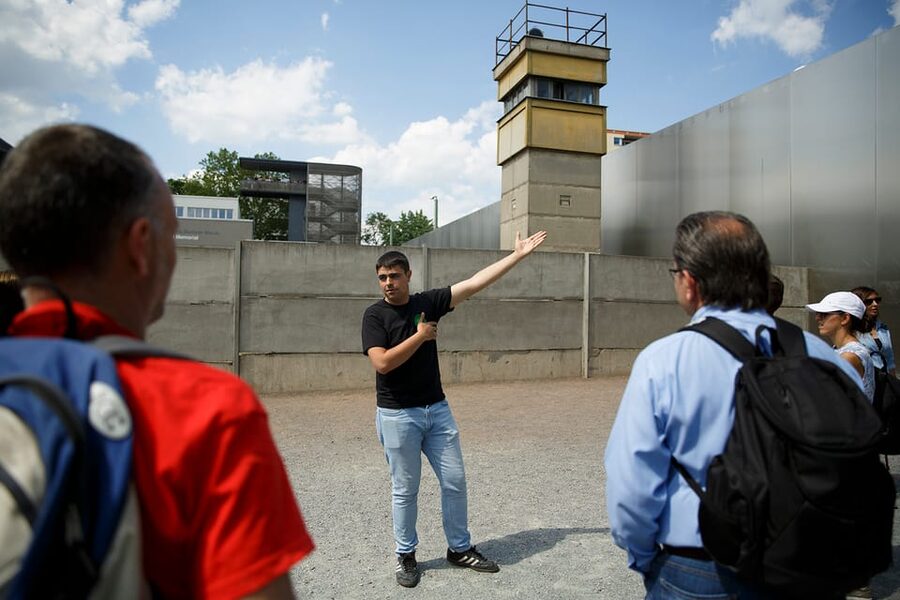
I like this approach because the Wall was never just a single barrier. It included fencing, patrol areas, watchtowers, restricted ground, and a deadly border zone. The tour’s focus on the Death Strip helps you picture the barrier as a wide security system rather than a thin line of concrete.
The four-hour length is useful for this subject. You have enough time to move between several sites without turning the outing into an all-day commitment. Still, it is a history-heavy schedule. If you prefer a slow museum visit or long stops for photography, you may find the pace a little tight.
The guide leads in Spanish, which is important for visitors who want more than basic facts. The comments from past bookings point to guides who explain the subject with care and detail. Jordi, from Barcelona, received praise for his competence and commitment, while Constantino was noted for his enthusiasm and memorable anecdotes.
Other Berlin trips people book alongside this one:
- Berlin: Reichstag, Dome and Government District Guided Tour
★ 4.7 · 18,288 reviews - Berlin: 1-Hour City Tour by Boat with Guaranteed Seating
★ 4.3 · 16,993 reviews - Berlin: Boat Tour Along the River Spree
★ 4.4 · 11,252 reviews
Meeting at Alexanderplatz
The meeting point is easy to identify if you know what to look for. Meet beside a green flag marked tours en español, next to the only entrance to the Fernsehturm, Berlin’s television tower, at Alexanderplatz. It is between the tower and Alexanderplatz railway station, beside Espresso House.
Alexanderplatz is a practical starting place because it is a major transport hub. Give yourself enough time to locate the green flag rather than relying on a last-minute dash through the square. The television tower is hard to miss, but large city squares can still create confusion when several tour groups are gathering.
This start also places you in the former East Berlin before the tour even begins. Alexanderplatz was an important public center in East Berlin, so the location fits the theme instead of being just a convenient pickup point.
Seeing the Wall and the Death Strip
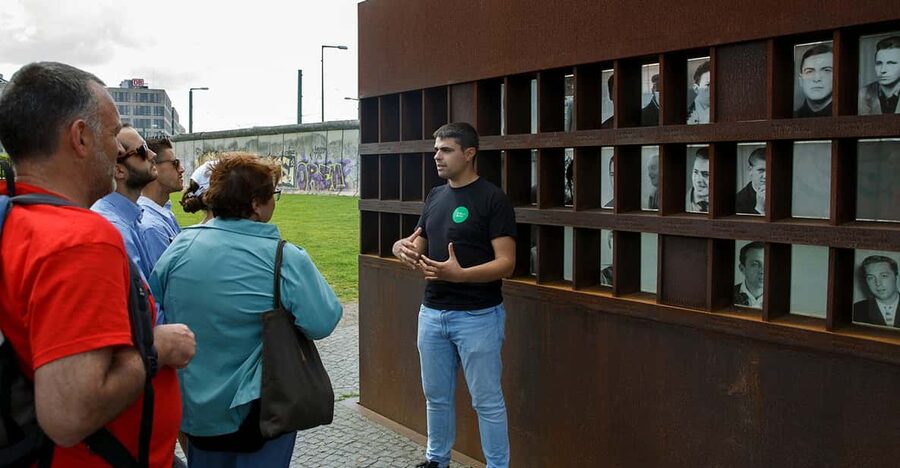
The Wall remains the emotional center of the tour. You learn why it was built, how it divided Berlin, and what the border meant for people who wanted to cross from East to West. The tour also covers some of the ingenious escape methods used by Berliners.
The phrase Death Strip can sound abstract until you understand what it contained. It was the controlled zone between border barriers, designed to expose anyone trying to cross. Looking at the remains with a guide helps you imagine the scale of the restricted area and the risks involved in escape attempts.
This part should suit you if you want context rather than a quick photograph beside a surviving section of wall. The guide’s role matters here. Concrete alone cannot explain the fear, rules, and sudden separation that shaped ordinary lives.
You will also hear why the Wall eventually came down and how Berlin changed afterward. The route does not treat 1989 as the end of the story. It connects the political collapse of East Germany with changes in the city and in the lives of Berliners.
Bernauer Strasse and the human story
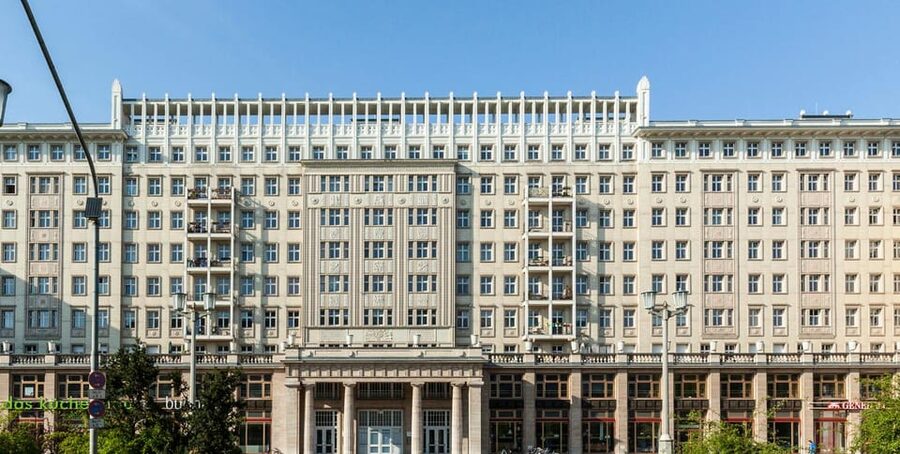
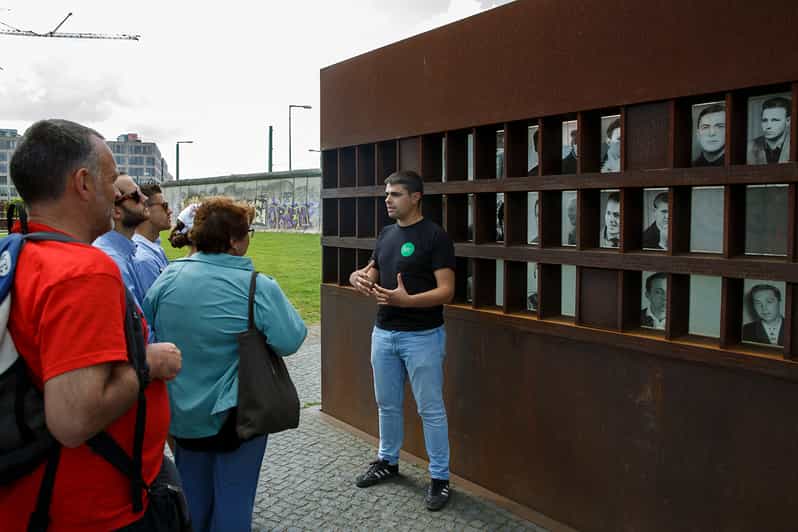
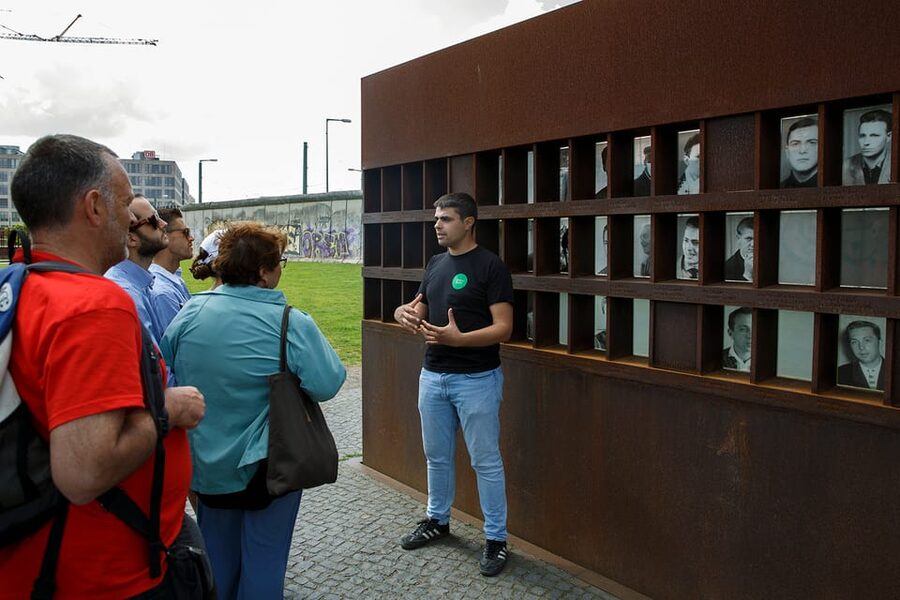
Bernauer Strasse Wall Memorial is one of the most important stops because the border cut directly through a neighborhood. The site helps explain how homes, streets, families, and escape routes were affected by the division.
This is where the Wall becomes more than a symbol. You can understand how close the two sides were physically, even though crossing between them was forbidden. The memorial preserves parts of the border setting and gives the guide room to explain the escape attempts and the measures used to stop them.
I would give this stop your full attention. It is easy to rush through Berlin’s Wall sites, especially when you have seen photographs of the same concrete panels many times. Bernauer Strasse rewards patience because the surrounding story is the point.
The tour is also useful for visitors who know the broad outline of the Cold War but want the Berlin details. You learn not only that the city was divided, but how the division reached into streets, transport routes, and private lives.
Something different for another day:
- Discover Berlin Half-Day Walking Tour
★ 5.0 · 9,624 reviews - Berlin: Hop-on Hop-off Bus Tour with Live Commentary
★ 4.3 · 8,579 reviews - Berlin: Government District around the Reichstag Guided Tour
★ 4.7 · 8,447 reviews - Berlin: Reichstag, Plenary Chamber, Cupola & Government Tour
★ 4.6 · 8,422 reviews
Frankfurter Allee and East Berlin’s public face
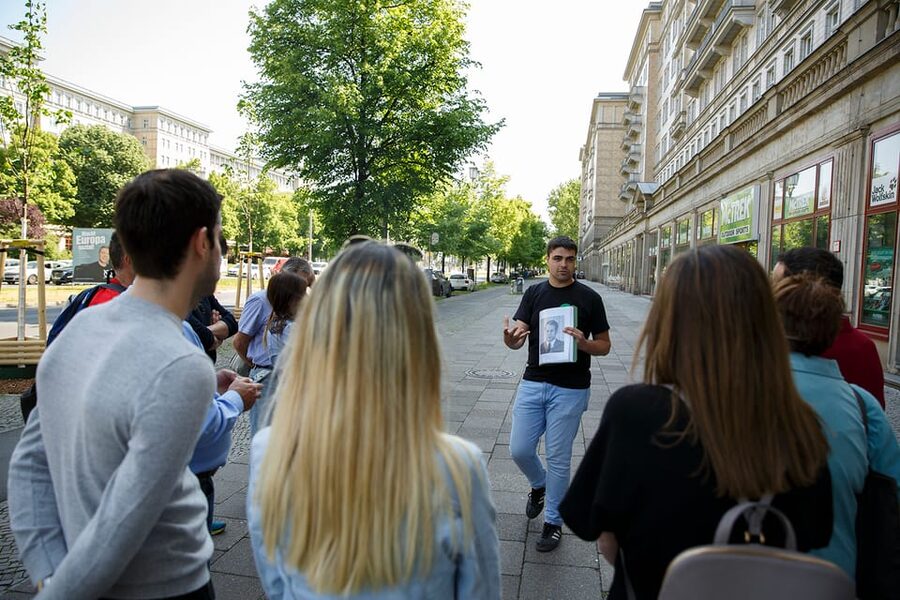
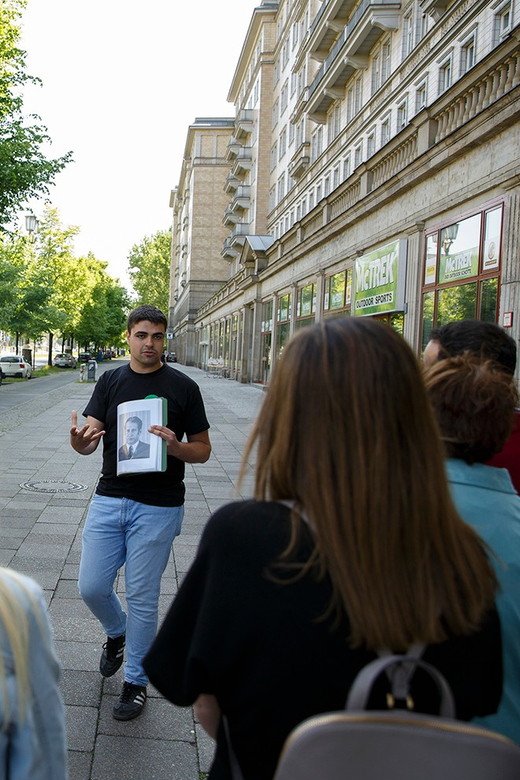
Frankfurter Allee adds a different view of Cold War Berlin. Instead of focusing only on barriers and escape attempts, the tour visits a major East Berlin avenue associated with the city’s planned public image.
A broad avenue can tell you a great deal about a political system. Architecture, street planning, and grand public spaces were used to project order and strength. At the same time, these official images existed beside restrictions, surveillance, and limited freedom.
This stop helps balance the route. Without it, the story might become only a tale of walls and secret police. Frankfurter Allee shows how East Germany presented itself and how the city was shaped for public life under socialism.
Do not expect every stop to offer a dramatic surviving structure. Some places matter because of what they reveal about the city’s design and political message. The guide’s explanation is especially valuable here, since the meaning of an avenue is not always obvious from a quick look.
The ghost stations beneath divided Berlin
The former ghost stations offer one of the strangest details of divided Berlin. Underground lines continued to run through parts of the city, but some stations were closed or sealed because the routes passed through East Berlin while serving West Berlin trains.
These stations show how the division reached underground. A border was not only something you saw above ground. It also changed commuting, station access, train routes, and the basic act of moving around your own city.
I like this part because it gives you a practical sense of the division. The Wall affected more than landmark sites. It altered the transport network that people depended on each day.
The exact experience at former ghost stations can depend on the route and current access conditions. Treat this as a historical explanation of the sites rather than a promise of a long underground visit. The important point is understanding why these stations became known as ghost stations and what they reveal about Berlin’s split transport system.
Remember that public transport is part of the route. You must purchase a Berlin AB transport card for the day, and the ticket is separate from the tour price.
Inside the Stasi Museum
The Stasi Museum gives the tour its clearest look at state surveillance. The museum is located in the former headquarters of East Germany’s Ministry for State Security, and the visit focuses on the methods used to control the population of East Berlin.
The Stasi was not simply a police force in the ordinary sense. Its work involved monitoring people, gathering information, and using fear and pressure to protect the state. The museum helps put those methods into a physical setting, with the former office environment providing an important part of the atmosphere.
Entry to the museum is included, which improves the value of the tour. You do not have to arrange a separate museum visit, and the guide’s earlier discussion of the Wall gives you useful context before you arrive.
One practical detail matters: the experience may not be a fully guided museum tour from start to finish. The guide leads the Cold War route and includes museum entry, but you should be prepared to spend part of the museum visit exploring on your own. This distinction is worth keeping in mind if you expect a guide to interpret every display inside.
A visitor from Germany described the tour as both informative and moving, which makes sense here. The Stasi Museum is not just about documents and offices. It asks you to consider what happens when the state treats private life as a security problem.
A Spanish guide makes difficult history easier
Cold War politics involves dates, governments, borders, and competing explanations. In a language you understand well, those details are easier to connect. The Spanish format is a major reason to choose this experience over a general English-language outing.
The strongest guide comments point to enthusiasm, clear detail, and a willingness to discuss Berlin’s past. Constantino was praised for his passion and anecdotes. Jordi was singled out for being highly competent and engaged. Another booking described Jordi’s explanation of the Wall as detailed and especially worthwhile.
That does not mean every group will have the same guide. It does show the standard the company has reached with some of its guides. You should expect a live Spanish guide, but not assume a specific person unless your booking confirms it.
The topic can be emotionally heavy, especially when the conversation turns to surveillance, failed escapes, and the Death Strip. A professional guide helps keep the story serious without making it confusing or theatrical. One French-speaking visitor who joined the Spanish experience found the subject difficult but the explanation professional and detailed.
Is $41 a fair price?
At $41 per person, the tour sits in a reasonable range for a four-hour guided city experience, especially because Stasi Museum admission is included. You are paying for a guide, a planned route across several Cold War locations, and access to a museum that would otherwise require separate planning.
The main extra cost is the Berlin AB day ticket. Since public transport is necessary and not included, add that expense before comparing the tour with a self-guided day.
The value is strongest if you want the sites connected by a clear explanation. You could visit some Wall remains independently, but you would need to research the Death Strip, Bernauer Strasse, ghost stations, Frankfurter Allee, and Stasi surveillance on your own. The tour saves that preparation time.
It is less useful if you only want a short Wall photo stop or prefer to spend hours inside the museum. This is a broad introduction to Berlin’s Cold War story, not a specialist museum seminar.
Who should book this experience?
I would recommend it to first-time Berlin visitors who want a firm historical framework. It also suits Spanish-speaking visitors who want to ask questions and hear the subject explained naturally.
History students, families with older children, and anyone interested in twentieth-century Europe should find plenty to think about. The tour also works well early in a Berlin visit, since later visits to Wall fragments or museums will make more sense after you understand the main timeline.
You may want another plan if you dislike public transport, long historical explanations, or moving between several parts of a city. The tour is wheelchair accessible, which is helpful, but the route still involves transport between sites, so check your own comfort with a four-hour city outing.
Bring your attention more than your appetite. Food and drinks are not included, and the schedule is built around historical stops rather than a restaurant break.
Booking flexibility and practical planning
You can cancel up to 24 hours before the start time for a full refund, and the reserve now, pay later option keeps your plans flexible. Starting times vary, so check availability for the date you want.
Arrive at Alexanderplatz with your transport ticket already sorted if possible. Look for the green tours en español flag beside the television tower entrance and Espresso House, rather than waiting near a random part of the square.
The tour is offered in Spanish and lasts four hours. Since transport tickets, food, and drinks are separate, the $41 price should be viewed as the cost of the guided experience and museum entry, not as an all-inclusive day.
My verdict: a strong choice for Cold War Berlin
Book this tour if you want Berlin’s Wall story explained through real places, with the Stasi Museum included and a Spanish-speaking guide leading the way. Bernauer Strasse, the Death Strip, ghost stations, and Frankfurter Allee give you more than the usual quick stop at a surviving Wall section.
I would skip it only if you want a very slow museum visit, a short sightseeing walk, or a tour with no extra transport cost. For everyone else, the four-hour route offers a thoughtful and well-priced way to understand how division shaped Berlin, and how the city changed after the Wall came down.
FAQ
How long does the Berlin Cold War and Stasi Museum tour last?
The tour lasts four hours.
What language is the tour conducted in?
The live tour guide speaks Spanish.
What is included in the price?
A Spanish-speaking tour guide and entrance to the Stasi Museum are included.
Is public transportation included?
No. You must purchase a Berlin AB transport ticket separately. A one-day AB ticket is necessary for the tour.
Where is the meeting point?
Meet beside a green flag marked tours en español, next to the only entrance to the Fernsehturm at Alexanderplatz. The meeting point is between the television tower and Alexanderplatz railway station, beside Espresso House.
Is the tour wheelchair accessible?
Yes, the activity is listed as wheelchair accessible.
Can I cancel the booking?
Yes. You can cancel up to 24 hours in advance for a full refund. You can also reserve now and pay later.
Just added around Berlin
- Berlin: Private Guided Tour of the Main Sights★ 5.0 · 13 reviews
- Private Highlights of Berlin Bike Tour★ 5.0 · 13 reviews
- Modern Berlin Private Walking Tour: Diverse, Vibrant and Exciting German Capital★ 5.0 · 13 reviews
- Tour in Berlin from Warnemünde and Rostock Cruise Port★ 4.1 · 13 reviews
- Berlin: Stasi Museum Private Guided Tour with Entry Ticket★ 4.8 · 13 reviews
- Private Food Tour Experience with a born and bred Berliner★ 5.0 · 14 reviews
- Berlin: Rheinsberg Palace Entrance Ticket★ 4.8 · 14 reviews
- Berlin in one day – day tour with an expert guide★ 5.0 · 14 reviews
Berlin Tours, compared.
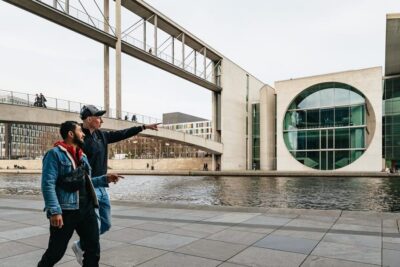
Reichstag, Dome and Government District Guided Tour
Read our review →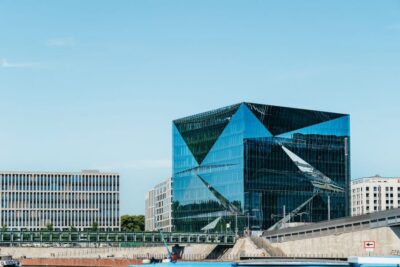
1-Hour City Tour by Boat with Guaranteed Seating
Read our review →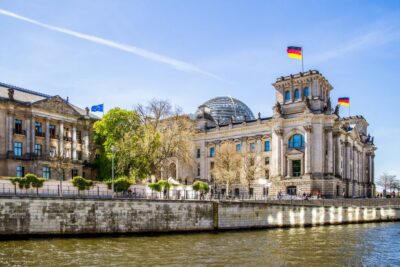
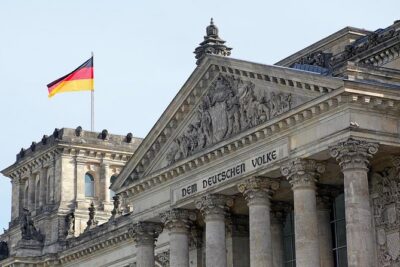
Government District around the Reichstag Guided Tour
Read our review →
Reichstag, Plenary Chamber, Cupola & Government Tour
Read our review →