
Reviewed · 2-HOUR EXPERIENCES
Berlin: Karl-Marx-Allee 2-Hour Tour
Berlin’s socialist boulevard tells a surprising story. This two-hour walking tour follows Karl-Marx-Allee through Friedrichshain, linking grand apartment blocks, cinema architecture, church ruins, and Cold War city planning. I like the clear focus on architecture and political history, and I like that a live guide adds old photos, posters, and small details that are easy to miss alone. The main drawback is simple: it is a walking tour, so you will spend the full two hours outdoors and on your feet.
Guide Tobias has received especially warm praise for his passion, clear communication, and ability to bring the boulevard’s past to life. The tour costs $23 per person, which is fair value if you want context rather than just a stroll down a broad avenue. If Berlin’s divided past, urban design, or postwar architecture interests you, this is a smart way to spend two hours.
In This Review
- Key points at a glance
- Why Karl-Marx-Allee deserves two hours
- Frankfurter Tor and the grand entrance
- Friedrichshain’s apartment blocks and arcades
- Kosmos cinema and Josef Kaiser’s design
- Hochhaus an der Weberweise and the city’s vertical ambitions
- The partial ruins of the Church of the Resurrection
- Strausberger Platz and the gateway to the socialist center
- What the guide adds to the walk
- Is $23 a fair price?
- Who should book this Karl-Marx-Allee walk?
- Should you book it?
- FAQ
- How long is the Karl-Marx-Allee tour?
- How much does the tour cost?
- What languages are available?
- Is this a walking tour?
- Is hotel pickup included?
- Where does the tour meet?
- Can I cancel for a full refund?
- Do I have to pay when I book?
Key points at a glance
- Frankfurter Tor’s twin towers provide the tour’s grandest architectural moment and one of Berlin’s most recognizable views.
- Karl-Marx-Allee changed names three times, moving from Frankfurter Allee to Stalinallee and finally to its present name.
- The Friedrichshain apartment buildings reveal how housing, ceremony, and socialist ideals were combined in one monumental street.
- The Kosmos cinema shows a different side of the boulevard, with design by architect Josef Kaiser.
- Strausberger Platz and Hochhaus an der Weberweise help explain how the boulevard was planned as a gateway to East Berlin’s socialist center.
- Historical photos, old posters, artwork, and less obvious details make the guided visit more rewarding than simply following the avenue alone.
Why Karl-Marx-Allee deserves two hours
Karl-Marx-Allee is not just a wide street with large buildings. It is an enormous political statement made from stone, plaster, towers, arcades, and carefully planned public spaces. At almost two kilometers long, the boulevard forms the largest monument in Berlin.
That scale matters. You can walk along the avenue and see the grand buildings, but it takes a guide to explain why they were built this way and what message they were meant to send. The street changed from Frankfurter Allee to Stalinallee, then later to Karl-Marx-Allee. Those names track major shifts in East German politics and public memory.
I find this kind of tour useful because it connects physical places to changing ideas. The buildings were not placed here by accident. Their height, width, decoration, and position along the road were part of a wider plan for a socialist city.
The experience is also a good counterpoint to Berlin’s better-known sights. Many first visits focus on the Brandenburg Gate, the Berlin Wall, Museum Island, and the Reichstag. Karl-Marx-Allee offers a different Berlin, one shaped by postwar rebuilding and East Germany’s attempt to create a grand urban center of its own.
A few more tours and experiences worth a look
- Berlin: Third Reich and Cold War 2 Hour Walking Tour
★ 4.9 · 6,830 reviews - Berlin’s Best: 2 Hour Walking Tour Third Reich and the Cold War
★ 5.0 · 5,486 reviews - Berlin: 2-Hour Lake Oberhavel Cruise from Tegel
★ 4.4 · 577 reviews
Frankfurter Tor and the grand entrance
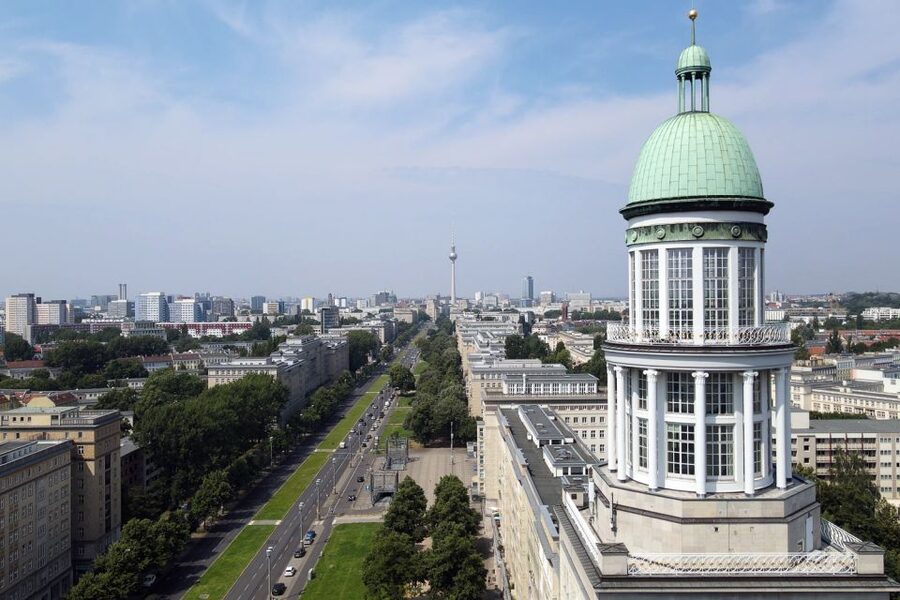
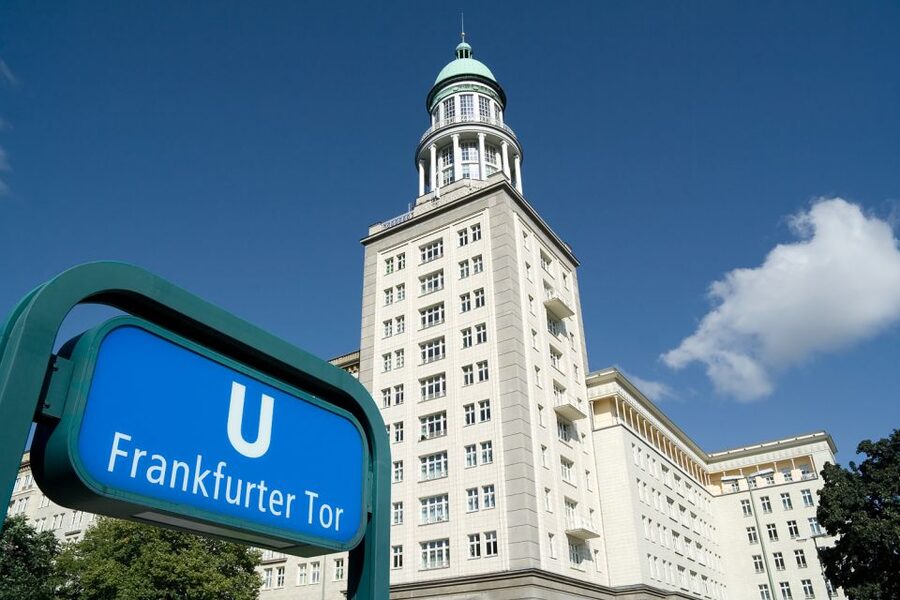
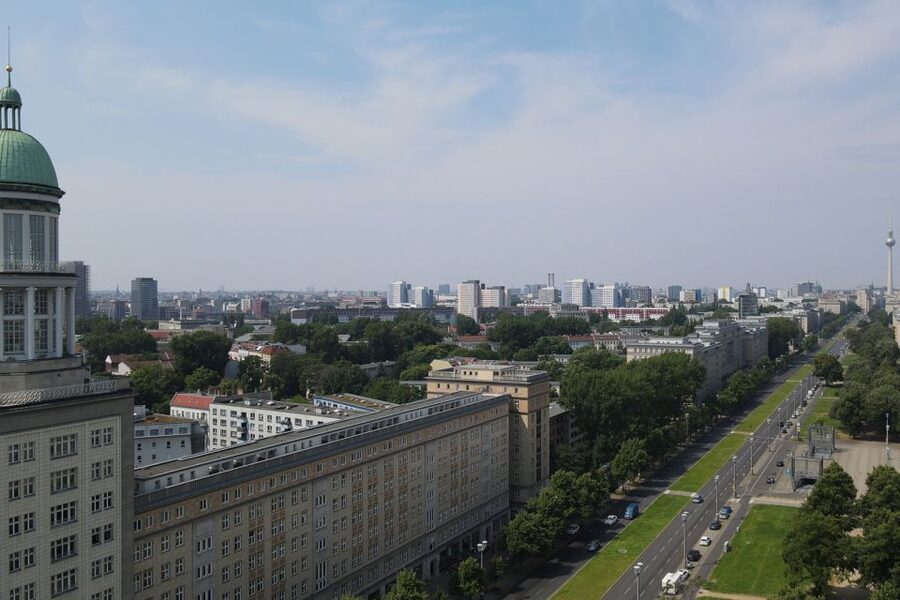
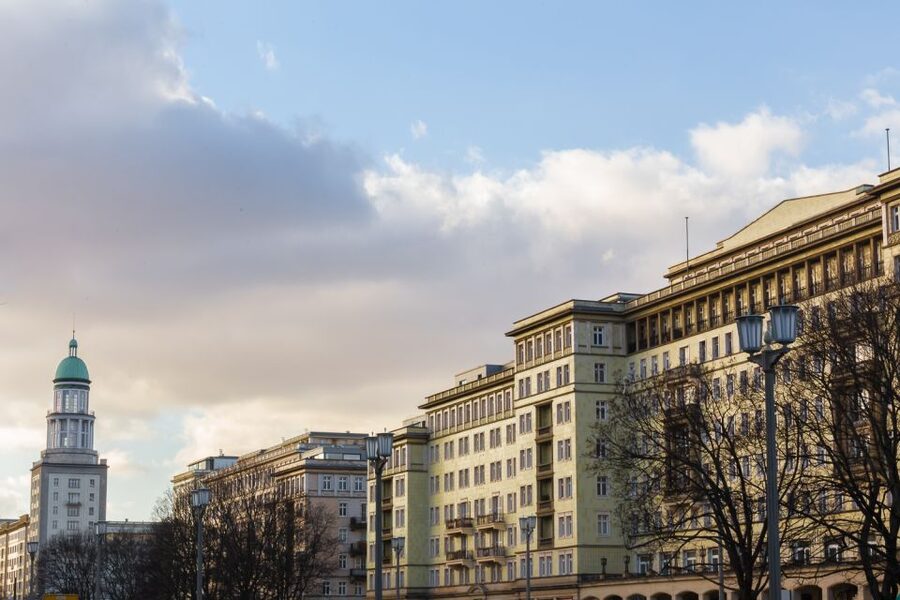
Frankfurter Tor is the architectural highlight of the walk. Its distinctive towers give the boulevard a formal gateway and create the sort of view that explains, at a glance, why this street was meant to impress.
The towers are not merely decorative landmarks. They help frame the avenue and give the broad road a sense of ceremony. From here, you begin to understand the difference between ordinary housing and housing designed to project state power.
I would pay close attention to the scale of the buildings around the square. The architecture feels deliberately oversized, with a rhythm that makes the street seem more like a ceremonial route than a normal residential district. This is one of the places where a guide’s explanation adds real value. Without context, you might admire the towers and move on. With context, you can read them as part of a plan for a new socialist capital.
This stop is also likely to be one of the best photo opportunities. The towers give you a clear visual marker, while the long boulevard offers strong lines stretching into the distance. Take a moment here instead of rushing into the next section.
Friedrichshain’s apartment blocks and arcades
The apartment buildings in Friedrichshain show how the boulevard’s grand public image was carried into everyday housing. Their arcades give the buildings a repeated pattern and a distinctive street-level character.
Arcades are worth studying closely because they soften the massive scale of the blocks. They create covered passages and a more formal relationship between the buildings and the pavement. You are looking at housing, but housing presented with the dignity and weight of official architecture.
The buildings also help make the history more human. A monumental boulevard can feel abstract when you only hear about leaders, names, and political systems. Apartment blocks remind you that this was also a place where people lived their daily lives.
A guide can point out details you might miss during a self-guided walk. One review specifically praised the use of historical photos and old posters, along with access to artwork and less obvious parts of the area. Those additions help you compare the street as it was planned with the street you see today.
Do not expect a museum-style visit with extensive indoor time. The focus is on looking carefully at the buildings and listening as the guide explains their purpose. If you enjoy architectural detail, this part of the walk may be more interesting than the famous towers.
Kosmos cinema and Josef Kaiser’s design
The Kosmos cinema adds a cultural note to the route. Designed by Josef Kaiser, it shows that Karl-Marx-Allee was not planned only for government symbolism or residential blocks. Cinemas and other public facilities were also part of the boulevard’s identity.
The cinema is an important stop because it broadens the story. Socialist city planning involved entertainment and public life as well as housing. The Kosmos gives the tour a chance to discuss how architecture served ordinary leisure and collective culture.
I also like the change of pace here. After examining long rows of apartment buildings and large squares, a cinema offers a more specific building with a clear function. Josef Kaiser’s design gives the guide another way to explain postwar architecture without repeating the same point at every stop.
The supplied information does not promise entry into the cinema, so you should treat this as an exterior architectural stop unless your guide says otherwise. That is not a serious weakness, but it is useful to know before booking. The tour is built around the street and its buildings, not around indoor admissions.
Something different for another day:
- Berlin: Reichstag, Dome and Government District Guided Tour
★ 4.7 · 18,288 reviews - Berlin: 1-Hour City Tour by Boat with Guaranteed Seating
★ 4.3 · 16,993 reviews - Berlin: Boat Tour Along the River Spree
★ 4.4 · 11,252 reviews - Discover Berlin Half-Day Walking Tour
★ 5.0 · 9,624 reviews
Hochhaus an der Weberweise and the city’s vertical ambitions
The high-rise building known as Hochhaus an der Weberweise is another useful stop along the boulevard. Its height changes the visual rhythm of the area and shows how the planners used vertical buildings to create focal points.
In a street filled with large apartment blocks, a high-rise can act like a marker. It gives the avenue a stronger profile and helps organize the surrounding urban space. This is the sort of detail that makes the tour valuable for anyone interested in city planning.
You will hear about the contrast between the large ceremonial scale of Karl-Marx-Allee and the practical needs of a residential neighborhood. That tension is part of what makes the area interesting. The boulevard was designed to communicate confidence, yet it also had to function as a place for homes, transport, shops, and public life.
The tour’s route appears carefully chosen to show several different building types rather than one endless row of similar facades. That variety should keep the walk moving, especially if you are already familiar with Berlin’s more formal monuments.
The partial ruins of the Church of the Resurrection
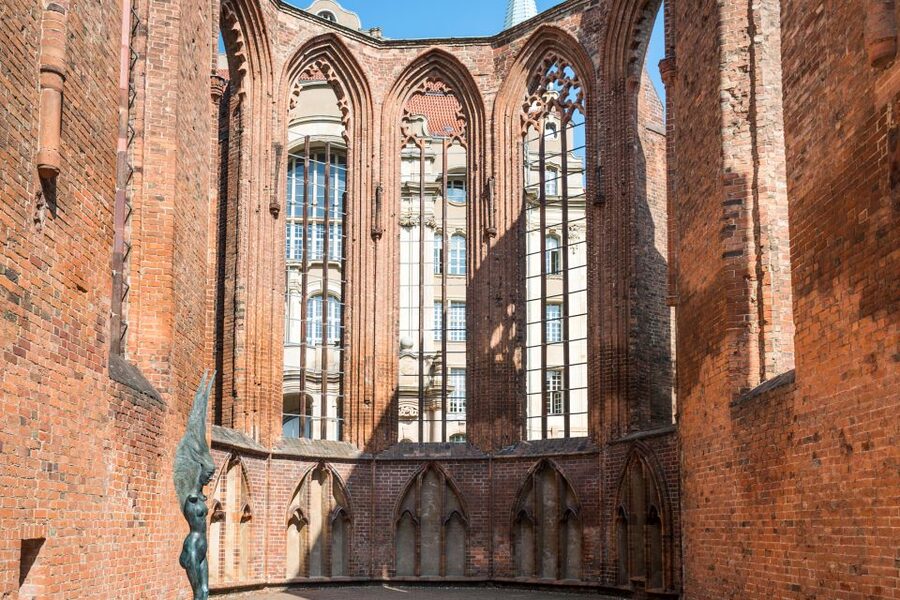
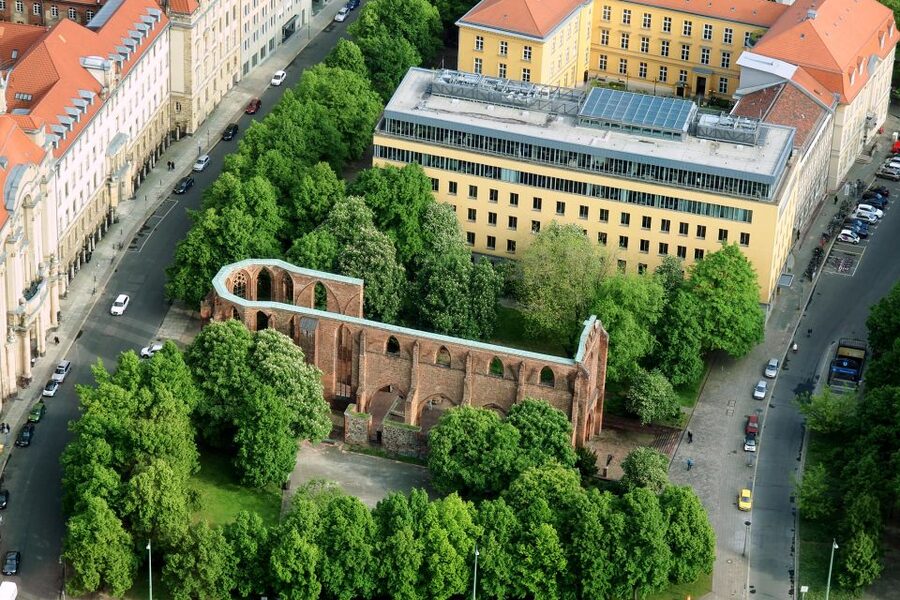
The partial ruins of the Church of the Resurrection provide one of the most striking contrasts on the route. Against the monumental buildings and orderly boulevard, the damaged church brings war and destruction into view.
This stop helps prevent the story from becoming too neat. Karl-Marx-Allee often looks like a confident postwar project, but Berlin was rebuilding after immense damage. The church ruins preserve a visible reminder of the city that existed before the boulevard took its present form.
I would listen closely here for the connection between destruction, reconstruction, and political messaging. The new street was not built on an empty page. Its planners were working amid physical ruins and the competing memories of wartime Berlin.
The church also gives the walk emotional variety. You move from grand towers and planned apartment blocks to a fragment that feels quieter and more vulnerable. That contrast is one reason I would choose a guided tour instead of simply photographing the avenue and leaving.
Strausberger Platz and the gateway to the socialist center
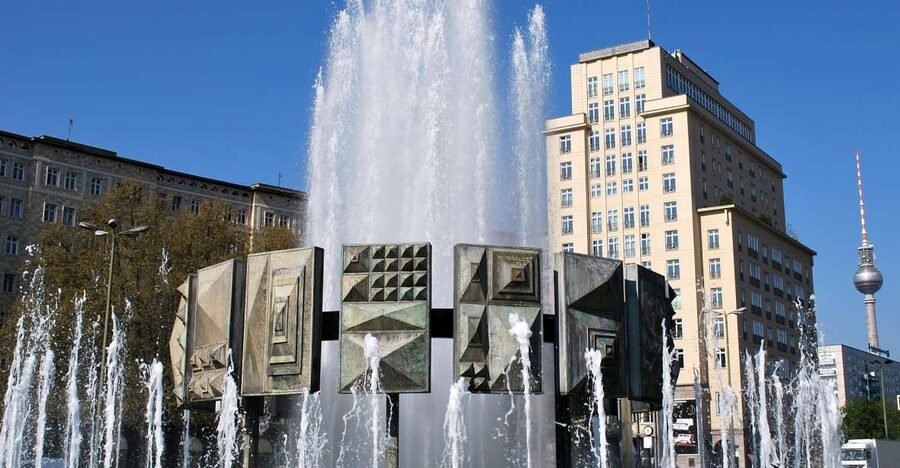
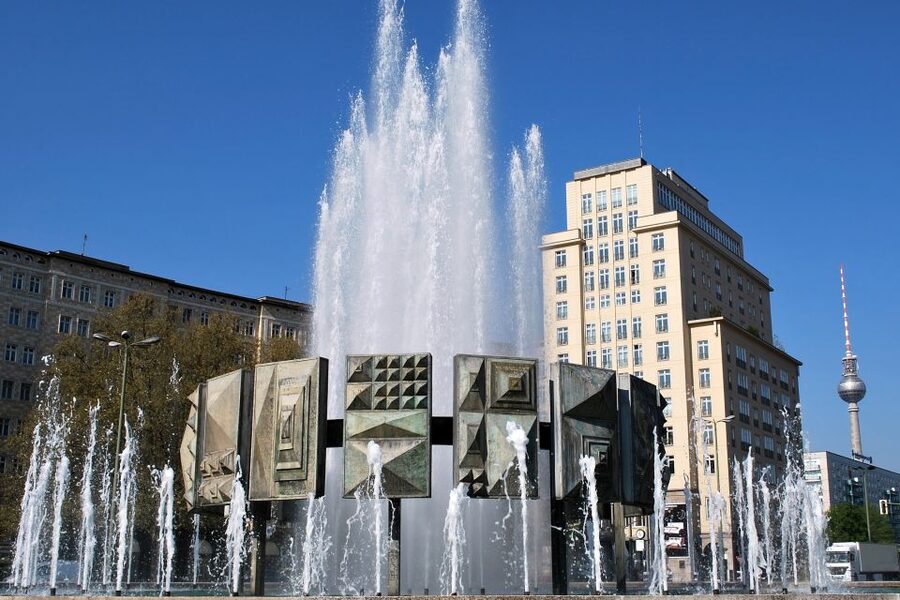
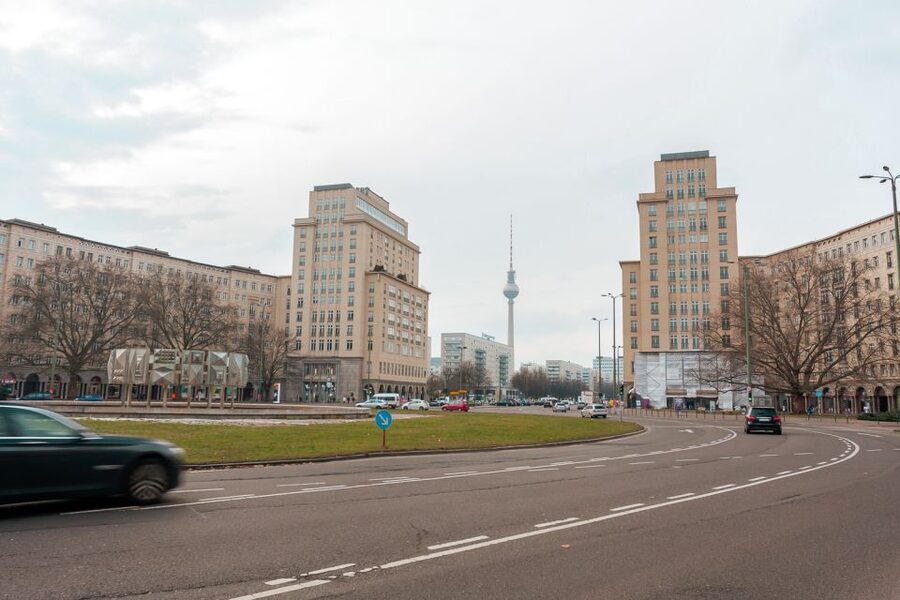
Strausberger Platz is another major point on the route, marked by distinctive high-rise buildings. These structures helped form a gateway to the socialist city center, giving the square an important role in the overall plan.
A gateway is both practical and symbolic. It guides movement, frames the route, and tells you that you are entering a significant part of the city. The high-rises at Strausberger Platz work together with the wider boulevard to create that sense of arrival.
This is a good place to think about how urban planning shapes your experience without you noticing. The buildings do not simply line the road. They direct your eye, establish scale, and turn an ordinary journey into a formal approach.
If you are taking photographs, look for the relationship between the square, the high-rise buildings, and the long axis of Karl-Marx-Allee. The most useful images here will show the buildings as a group rather than treating each one as an isolated facade.
What the guide adds to the walk
The guide is the main reason to book this experience. A self-guided walk can show you the architecture, but it may not explain the name changes, the political purpose of the boulevard, or the relationship between its different buildings.
The strongest feedback centers on guide Tobias, who was praised for being passionate, communicative, and engaging. That matters on a subject that could easily become a dry list of dates and architectural terms. A good guide turns the street into a sequence of choices, ambitions, and changes.
The use of historical photos, old posters, artwork, and less visible parts of the area is especially useful. You get a way to compare past and present, rather than relying only on the current appearance of the buildings.
The tour is offered in German or English. If you book the English version, confirm your selected language and meeting point carefully, since the meeting location may change depending on the option you choose. The duration is two hours, long enough to cover the main sights without making the experience an all-day commitment.
Is $23 a fair price?
At $23 per person, this is reasonably priced for a two-hour walking tour with an expert guide. You are not paying for transport, hotel pickup, or admission to a major indoor attraction. You are paying for interpretation, route planning, and the chance to see details that you might otherwise pass without understanding.
That distinction is important. If you only want to walk Karl-Marx-Allee and take photographs, you can explore the street independently. The tour becomes better value if you want the political background, architectural explanation, historical images, and a route that connects Frankfurter Tor, Friedrichshain, the Kosmos cinema, Hochhaus an der Weberweise, the church ruins, and Strausberger Platz.
The small time commitment helps. Two hours fits neatly into a Berlin sightseeing day, especially if you want something focused between visits to larger museums or central attractions. You can also keep your plans flexible by reserving now and paying later. Cancellation is free up to 24 hours before the tour for a full refund.
Who should book this Karl-Marx-Allee walk?
I would recommend this tour most strongly to people with an interest in:
- Postwar European architecture
- East German history and Cold War Berlin
- Urban planning and monumental boulevards
- Berlin’s lesser-known districts
- Photography focused on buildings and public spaces
- Guided walks with historical explanation
It should also suit anyone who has already seen central Berlin’s headline sights and wants a different side of the city. The subject is specific, so it may not be the best fit if you want a general introduction to Berlin or a tour packed with famous landmarks.
Families with older children may find the changing names, city rebuilding, and huge buildings easier to understand with a guide’s stories and visual material. Younger children may find two hours of architectural discussion less exciting, though the towers and high-rises provide plenty to look at.
I would wear comfortable shoes and dress for changing weather. The tour is entirely described as a walking experience, with no hotel pickup or drop-off, so plan your route to the meeting point and allow time to find the correct location.
Should you book it?
Book this tour if you want Berlin’s buildings to explain the city’s politics, not just provide a backdrop for photographs. The best parts are the well-chosen route, the contrast between monumental architecture and church ruins, and the guide’s use of photos, posters, and anecdotes.
Skip it if your Berlin plans are already full of walking tours or if you have little interest in architecture and postwar history. For everyone else, $23 buys a focused, useful two hours on one of the capital’s most unusual streets. Guide Tobias is a particularly strong choice if his tour is available, given the praise for his energy and clear explanations.
FAQ
How long is the Karl-Marx-Allee tour?
The walking tour lasts two hours.
How much does the tour cost?
The listed price is $23 per person.
What languages are available?
The tour is offered in German and English.
Is this a walking tour?
Yes. The experience includes a walking tour with an expert guide.
Is hotel pickup included?
No. Hotel pickup and drop-off are not included.
Where does the tour meet?
The meeting point may vary depending on the option you book. Check the selected option for the exact location.
Can I cancel for a full refund?
Yes. You can cancel up to 24 hours in advance for a full refund.
Do I have to pay when I book?
No. The reserve now and pay later option lets you hold a place without paying immediately.
Just added around Berlin
- Berlin: Private Guided Tour of the Main Sights★ 5.0 · 13 reviews
- Private Highlights of Berlin Bike Tour★ 5.0 · 13 reviews
- Modern Berlin Private Walking Tour: Diverse, Vibrant and Exciting German Capital★ 5.0 · 13 reviews
- Tour in Berlin from Warnemünde and Rostock Cruise Port★ 4.1 · 13 reviews
- Berlin: Stasi Museum Private Guided Tour with Entry Ticket★ 4.8 · 13 reviews
- Private Food Tour Experience with a born and bred Berliner★ 5.0 · 14 reviews
- Berlin: Rheinsberg Palace Entrance Ticket★ 4.8 · 14 reviews
- Berlin in one day – day tour with an expert guide★ 5.0 · 14 reviews
2-Hour Experiences, compared.
Berlin’s Best: 2 Hour Walking Tour Third Reich and the Cold War
Read our review →
Browse the lists this tour appears in