
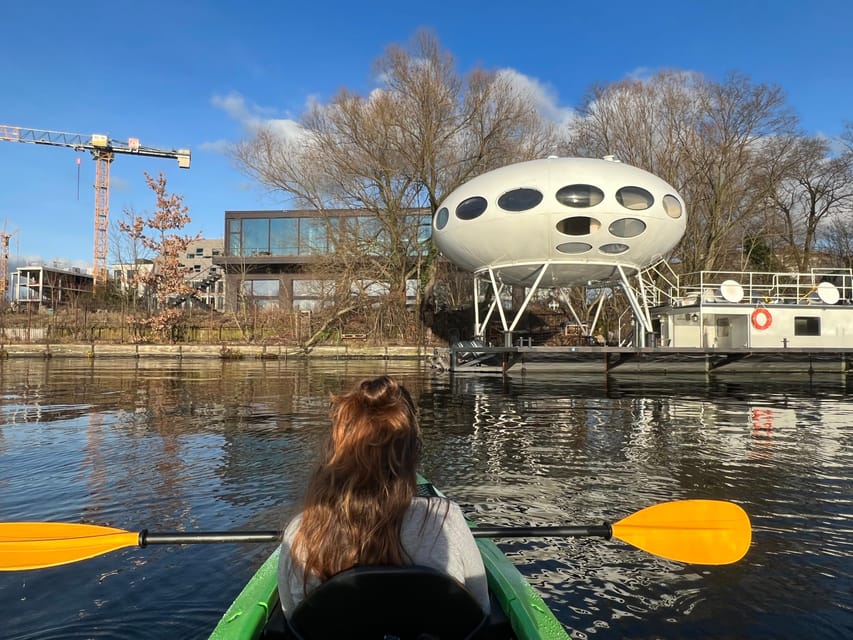
Reviewed · CANOES & KAYAKS
Berlin: guided canoe | kayaktour
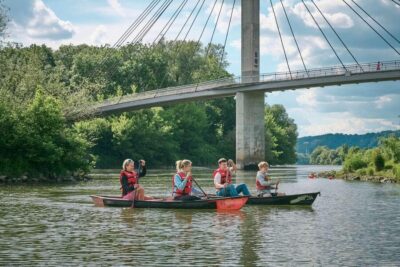
Berlin looks different from the water. This two-hour canoe tour follows the Spree through southeast Berlin, where former GDR sites, quiet bays, small islands, and changing city districts tell a less polished story of the capital. I like the mix of gentle exercise and local history, especially the chance to see the old Spreepark Ferris wheel and the former Stasi prison from the river.
I also like that beginners get a short paddling lesson before setting off, with lifejackets and a waterproof box for valuables included. The main drawback is practical: finding the canoe station at Funkhaus Berlin may take patience, and one customer could not locate it at all. Build in extra time for the walk from public transport.
In This Review
- Key points to know before paddling
- Why this part of Berlin works so well by canoe
- Getting to Funkhaus Berlin without a last-minute scramble
- Your first minutes: lifejackets, paddling basics, and the launch
- Treptower Park and the quieter side of the Spree
- Stralau peninsula, from fishing area to city district
- Rummelsburg and the former Stasi prison
- Spreepark and the story behind the Ferris wheel
- Klingenberg power station and Berlin’s industrial past
- Finishing at the East German milk bar
- Is $34 a fair price for two hours?
- Who will enjoy this Berlin canoe tour most?
- Should you book the Funkhaus canoe tour?
- FAQ
- Where does the Berlin canoe tour start?
- How do I reach the canoe station by public transport?
- How long does the tour last?
- What languages are available?
- Is the tour suitable for beginners?
- Are lifejackets provided?
- Can I protect my valuables from the water?
- Does the tour return to the starting point?
- Is the tour suitable for non-swimmers?
- Can I cancel for a full refund?
Key points to know before paddling
- The route starts at Funkhaus Berlin: You meet at Backstagetourism Kanustation beside the former GDR radio complex on Nalepastraße.
- The tour suits beginners: A short paddling course comes first, followed by a guided trip in a canoe along the Spree.
- The scenery mixes nature and Cold War history: You pass the Rummelsburg natural reserve area, Stralau peninsula, the former Stasi prison, and remnants of Spreepark.
- The river route is about more than city views: Your guide explains an underwater tunnel, a fishing village’s development, a power station, and East Berlin radio history.
- The tour returns to its starting point: You finish at the canoe station, with the option of relaxing at the old milk bar.
- Allow time to find the meeting point: The tram from Ostkreuz runs every 20 minutes, and the boat station is reached by walking along the river.
Why this part of Berlin works so well by canoe
Central Berlin is full of grand buildings, museums, and busy streets. Southeast Berlin offers something different. The Spree widens a few kilometers from the city center, creating bays and small islands where the pace slows down.
From a canoe, you are close to the riverbank. You are not sealed behind a bus window or moving too quickly to notice details. The guide can point out buildings, shorelines, and remnants of Berlin’s divided past while you paddle in a small group.
I like this route because its sights are not arranged like a standard postcard tour. You see a church, a power station, an old prison, a former amusement park, and a natural reserve in one outing. The story is about work, leisure, surveillance, industry, and the uneasy process of change after German reunification.
The water itself is part of the experience. The river widens around the route, and the small islands and bays give the canoe trip a quieter character than you might expect from Germany’s capital. You still see signs of the city, but the river creates useful distance from it.
A few more tours and experiences worth a look
- Berlin: Guided Tour by Canoe
★ 4.7 · 116 reviews - Explore Berlin by canoe
★ 4.5 · 36 reviews - Dresden: Königstein Fortress Paddle Steamer Cruise
★ 4.6 · 591 reviews
Getting to Funkhaus Berlin without a last-minute scramble
The canoe station is at Funkhaus Berlin on Nalepastraße. From Ostkreuz station, take tram line M21 to Köpenicker Chaussee and Blockdammweg. From there, walk toward Funkhaus and continue along the river until you reach the boat station.
This is the part I would plan carefully. The tram runs at 20-minute intervals, so missing one can make you late for a fixed departure. One customer was unable to find the start point and described the location as poorly indicated, so do not rely on a rushed arrival or a casual search on Google Maps.
I would arrive early enough to identify Funkhaus, then follow the river rather than assuming the canoe station is directly at the road. Keep your booking details available, and ask for directions before leaving public transport if anything seems unclear.
The activity begins and ends at Backstagetourism Kanustation. That return journey is convenient because you do not need to arrange a second pickup point across the city.
Your first minutes: lifejackets, paddling basics, and the launch
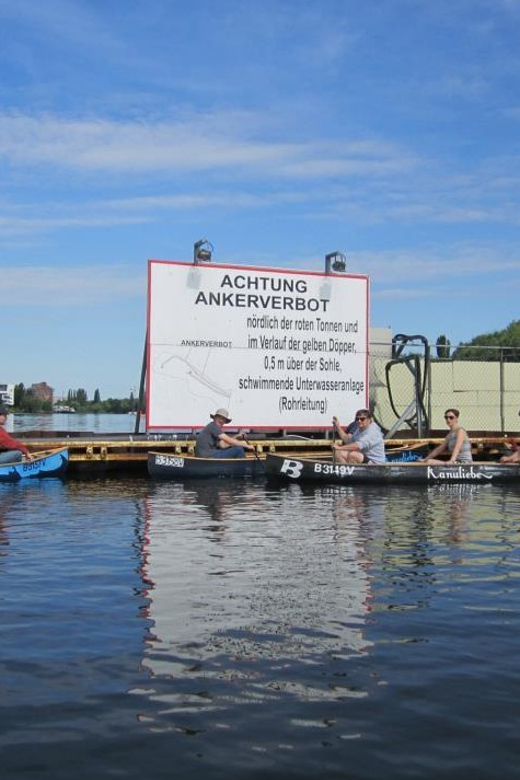
You do not need advanced canoeing skills. The tour is specifically suitable for beginners, and the guide starts with a short paddling course before the canoes enter the water.
You will put on a lifejacket, learn the basic paddling movements, and receive instructions for staying together. The guide then lowers the canoes into the Spree, and the group sets off.
This introduction matters. A canoe is easy to use once you understand the rhythm, but beginners still need to know how to steer, slow down, and coordinate with another person if the canoe is shared. A short lesson also helps you feel less awkward during the first minutes on the river.
You should be comfortable around water. The tour is not suitable for non-swimmers or people with mobility impairments. That is worth taking seriously, even though the route is beginner-friendly.
The guide leads the group throughout the trip and speaks German or English. If you need another language, at least five participants are required for a foreign-language guide. No individual guide’s name is provided, so the experience depends on the guide assigned to your departure.
Treptower Park and the quieter side of the Spree
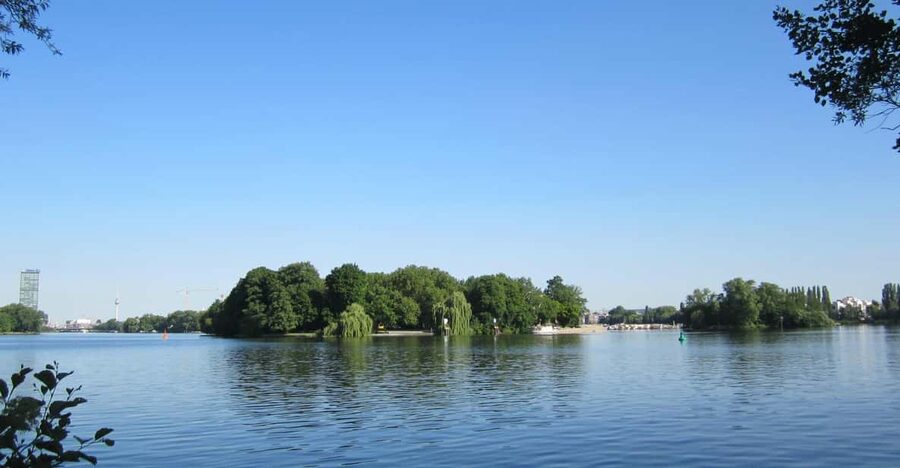
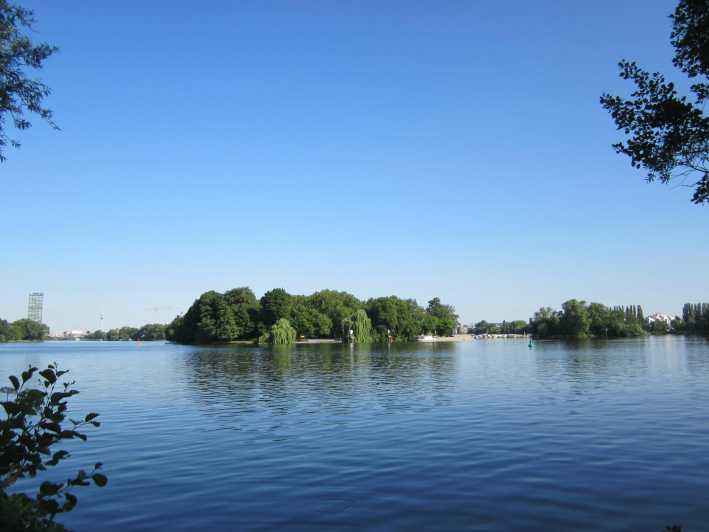
One of the early points of interest is the area near Treptower Park and the natural reserve island close to Rummelsburg. This section gives you a break from Berlin’s built-up image.
The small island and the river’s wider shape show how quickly the city can give way to pockets of open space. You are still within Berlin, but the canoe makes the setting feel more remote. This is one of the tour’s best reasons to choose the water instead of another walking route.
You will want to keep your group close together here. The guide shares information while the canoes move along the bank, so the trip is not simply a quiet paddle without commentary. At the same time, the route does not sound like a stop-and-start museum tour. You keep moving and listen as the stories unfold around you.
The natural reserve is especially useful for visitors who want a gentler side of Berlin. It also provides a contrast with the industrial and political landmarks later in the tour.
Something different for another day:
- Berlin: Reichstag, Dome and Government District Guided Tour
★ 4.7 · 18,288 reviews - Berlin: 1-Hour City Tour by Boat with Guaranteed Seating
★ 4.3 · 16,993 reviews - Berlin: Boat Tour Along the River Spree
★ 4.4 · 11,252 reviews - Discover Berlin Half-Day Walking Tour
★ 5.0 · 9,624 reviews
Stralau peninsula, from fishing area to city district
The tour follows the tip of the Stralau peninsula and explains how the area developed from a fishing zone. That detail gives the peninsula a human scale.
Urban Berlin can look permanent when you see it from a train or major road. The story of Stralau reminds you that the riverbanks had practical local roles long before the city expanded around them. Fishing, transport, industry, housing, and recreation all shaped this part of Berlin.
You also see the small village church in Rummelsburg Bay. It is an appealing detail because it breaks up the larger story of factories, prisons, and redevelopment. The church helps you picture the older settlement beneath the modern city.
Another unusual subject is the underwater tunnel connecting Stralau with Treptower Park. You hear how this link fits into the area’s development, adding an engineering story to the route. It is the kind of fact that is easy to miss if you visit the peninsula independently.
Rummelsburg and the former Stasi prison
The former Stasi remand prison in Rummelsburg gives the tour its most serious historical stop. From the river, you learn about the notorious detention site and the role it played in the former East German state.
The canoe is a striking place from which to hear this story. You are outdoors, moving past the riverbank, yet the subject turns to surveillance, imprisonment, and political control. That contrast gives the stop emotional weight without requiring a formal museum visit.
The tour does not replace a dedicated visit to a memorial or prison museum. Instead, it gives you geographic context. You see where the site is located and understand how it formed part of a larger network of GDR institutions along the river.
If Cold War history is a main reason for your Berlin visit, this section will likely be one of the most valuable parts. If you want only light sightseeing and relaxation, the prison story may make the tour feel more serious than expected. I consider that a strength, but it is useful to know before booking.
Spreepark and the story behind the Ferris wheel
Across the river, you can see the remains of Spreepark, the former theme park, including its Ferris wheel. The sight is unusual because it combines childhood entertainment with the complicated years after reunification.
Your guide tells the story of fairground operator Norbert Witte, who ran the park after German reunification. The details give the abandoned rides more meaning. Instead of seeing only a leftover amusement park, you hear about the people and events connected to its short-lived revival.
The view from the river is also practical. You see the remains from outside, so this canoe trip is not an admission visit to Spreepark. If you want to explore the park’s buildings or rides directly, you would need a separate arrangement.
Still, the river viewpoint has its own appeal. The old Ferris wheel is an unmistakable marker, and it fits the tour’s larger theme: Berlin’s past is often visible in fragments, sometimes beside new development and sometimes left in a state of uncertainty.
Klingenberg power station and Berlin’s industrial past
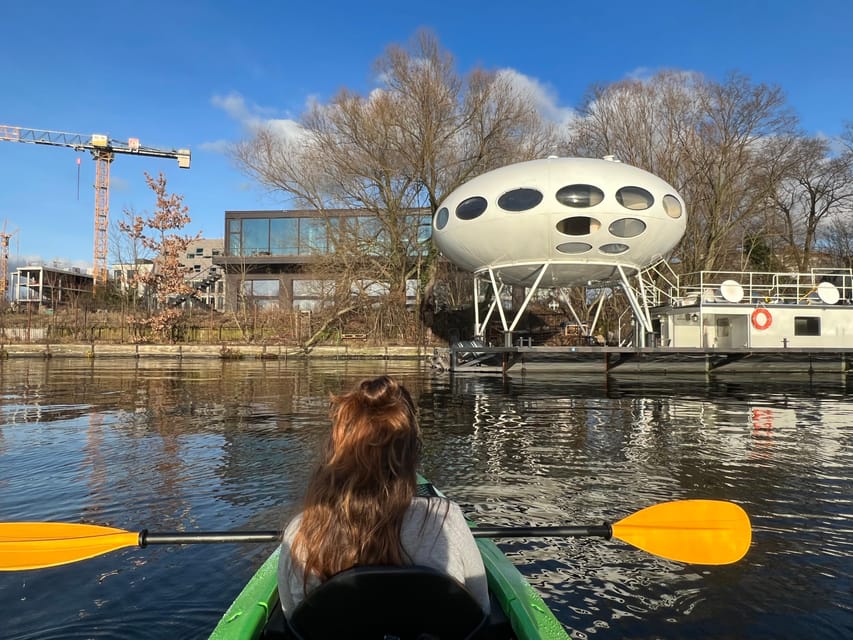
The route also passes the nearly 100-year-old Klingenberg power station. This adds an industrial note to a trip that already covers politics, leisure, and nature.
Power stations rarely make the first page of a city guide, but they explain how Berlin grew and functioned. From the canoe, you see the relationship between the river and the city’s infrastructure. The Spree was not just a pretty waterway. It supported power, transport, industry, and settlement.
This is another reason to listen closely to the guide. The riverbank is not packed with obvious monuments. Much of the interest comes from learning what a building or structure meant and how it fits into Berlin’s past.
You should not expect a long stop at each sight. The canoe keeps moving, and the guide provides the explanation during the route. That makes the experience active and efficient, but it also means you may want to note down places you would like to revisit later.
Finishing at the East German milk bar
At the end, you return to the canoe station and can relax at the milk bar. Drinks are still served in an original East German setting, giving the tour a pleasant final chapter.
This stop is not just a place to sit after paddling. It connects with the larger Funkhaus setting, where the former GDR radio complex remains part of the experience. For me, that setting makes the end feel more distinctive than finishing beside an ordinary rental dock.
Groups can also arrange a barbecue party after the tour. Tours of the large recording studio and other Funkhaus buildings may be organized for groups as well. Those extras require separate arrangements, so you should contact the operator ahead of time rather than expect them to be included.
If you are booking for a school group, each student pays EUR 25 and accompanying adults can join for free. That makes the program worth considering for an educational outing, particularly because the route joins geography, environmental awareness, and modern German history.
Is $34 a fair price for two hours?
At $34 per person, the price is reasonable if you want more than a basic canoe rental. You get the canoe, a guide, a beginner paddling lesson, a lifejacket, and a waterproof box for valuables.
The real value comes from the commentary. Renting a canoe on your own would let you see the same water, but you would miss the explanations about Stralau, the underwater tunnel, the Stasi prison, Spreepark, Norbert Witte, and Klingenberg power station.
The two-hour length also works well for a city break. You get a substantial river outing without giving up a full morning or afternoon. Still, you should remember that the price covers a guided canoe tour, not entrance to Spreepark, a prison memorial, or the Funkhaus recording studios.
The published rating is 4.1 from seven reviews, which suggests a generally positive but not flawless experience. The clearest practical warning concerns the meeting point, not the canoe route itself. Spend a little time planning the arrival and the price becomes easier to justify.
Who will enjoy this Berlin canoe tour most?
I would recommend it to you if you want an active sightseeing option and have already seen some of central Berlin. It suits people who enjoy local stories, former industrial areas, and Cold War history more than polished landmark tours.
It is also a good match for beginners who want to try canoeing without committing to a full-day outing. The paddling course keeps the starting point approachable, while the guide provides structure for the entire route.
Families and school groups may find the mix of water activity and history useful. The school pricing makes the tour particularly practical for organized educational visits.
I would think twice if you dislike being around water, cannot swim, or have mobility limitations. You should also reconsider if you need a perfectly simple meeting point. The access instructions are manageable, but the low tram frequency and river walk demand attention.
This is not the right tour if your main goal is to see Berlin’s best-known buildings. It is a better choice when you want to understand the less familiar southeast of the city and see how nature, industry, GDR history, and redevelopment sit side by side.
Should you book the Funkhaus canoe tour?
Book it if you want a two-hour Berlin experience that combines gentle paddling with specific local stories. The former Stasi prison, Spreepark Ferris wheel, Stralau peninsula, underwater tunnel, and Klingenberg power station give the route far more substance than a simple recreational paddle.
Before booking, check the departure time and plan the journey from Ostkreuz carefully. Arrive early, follow the river walk to the station, and do not assume the tram will come quickly if you miss it.
For $34, I think the tour offers good value for active visitors who want a different view of Berlin. The route is beginner-friendly, but the history is not superficial. If that balance appeals to you, this is a thoughtful way to spend two hours beyond the city center.
FAQ
Where does the Berlin canoe tour start?
The tour starts at Backstagetourism Kanustation beside Funkhaus Berlin on Nalepastraße.
How do I reach the canoe station by public transport?
From Ostkreuz train station, take tram line M21 to Köpenicker Chaussee and Blockdammweg. Walk to Funkhaus and continue along the river until you reach the boat station.
How long does the tour last?
The guided canoe tour lasts two hours.
What languages are available?
The live guide can conduct the tour in German or English. A foreign-language guide requires at least five participants.
Is the tour suitable for beginners?
Yes. The guide gives you a short paddling course before the canoes enter the water.
Are lifejackets provided?
Yes. A lifejacket is included as part of the activity.
Can I protect my valuables from the water?
Yes. A waterproof box for valuable items is provided.
Does the tour return to the starting point?
Yes. The activity ends back at Backstagetourism Kanustation.
Is the tour suitable for non-swimmers?
No. The activity is not suitable for non-swimmers.
Can I cancel for a full refund?
Yes. You can cancel up to 24 hours in advance for a full refund. You can also reserve now and pay later.
Just added around Berlin
- Kreuzberg Private Walking Tour: Immigrants, Artists & Hipsters★ 5.0 · 3 reviews
- Private Photo Tour in Kreuzberg★ 5.0 · 3 reviews
- Individual city tour Berlin for max. 8 persons★ 5.0 · 3 reviews
- Berlin’s Jewish Heritage: Private Tour of the Vibrant Jewish District★ 5.0 · 3 reviews
- Berlin & The Third Reich Private Guided Tour★ 5.0 · 3 reviews
- Private Analogue Photography Experience in Berlin★ 5.0 · 3 reviews
- Spy Mission in Berlin: Self-Guided Espionage Puzzle Quest★ 5.0 · 3 reviews
- Berlin Christmas Markets Walking Tour with Local Guide★ 5.0 · 3 reviews
Canoes & Kayaks, compared.
Browse the lists this tour appears in