Reviewed · BERLIN TOURS
Berlin: Entry to Alte Nationalgalerie
Berlin puts its art under one roof. The Alte Nationalgalerie makes Berlin’s Museum Island especially rewarding, with 19th-century paintings and sculpture ranging from Romantic drama to French Impressionism. I like the clear sweep through Classicism, Biedermeier, early Modernity, and the art of the Berlin Secession. I also like that the ticket includes an audio guide, so you can set your own pace without paying for a private tour.
The main caution is practical: some rooms or floors may be closed during your visit, and the Impressionist rooms are a major reason many people choose this museum. Your timed ticket is also non-refundable, so check the available date and time carefully before paying.
In This Review
- Key points at a glance
- Why the Alte Nationalgalerie deserves a place on your Berlin list
- Entering on Bodestraße and getting oriented
- Classicism, Goethe’s age, and the Group of Princesses
- Romanticism and Friedrich’s The Monk by the Sea
- Sculpture, Sleeping Beauty, and the pleasure of looking up
- Menzel’s Eisenwalzwerk and the arrival of modern industry
- Manet, Monet, Renoir, and the Impressionist rooms
- Early Modernity, Secession artists, and the end of the visit
- How to use the included audio guide
- Timing, price, and who gets the best value
- Should you book the Alte Nationalgalerie?
- FAQ
- Where is the Alte Nationalgalerie located?
- How much does admission cost?
- How long is the ticket valid?
- Do I need to choose an entry time?
- Is an audio guide included?
- Does the ticket include Berlin transportation?
- Does this ticket include Berlin’s other Museum Island museums?
- Is the Alte Nationalgalerie wheelchair accessible?
- Can I bring a backpack?
- Are discounted tickets available?
- Can I cancel the ticket?
Key points at a glance
- Friedrich’s The Monk by the Sea: See one of German Romanticism’s most memorable paintings, a spare work built around a tiny human figure and a huge stretch of sky and water.
- Menzel’s Eisenwalzwerk: Encounter a major image of industrial labor, a sharp change from the dreamy mood of the Romantic galleries.
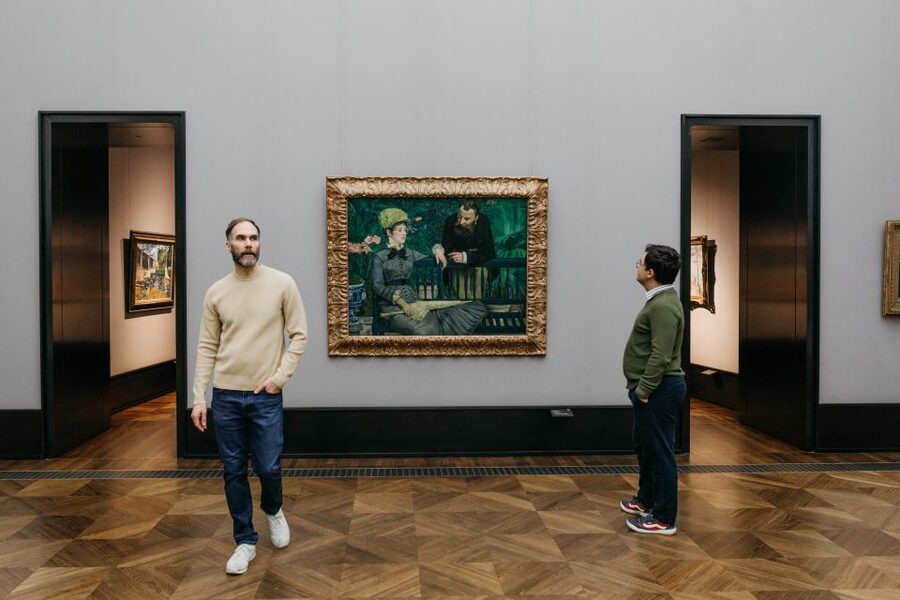
- French Impressionism: Look for works by Manet, Monet, and Renoir, though room closures can affect what is on view.
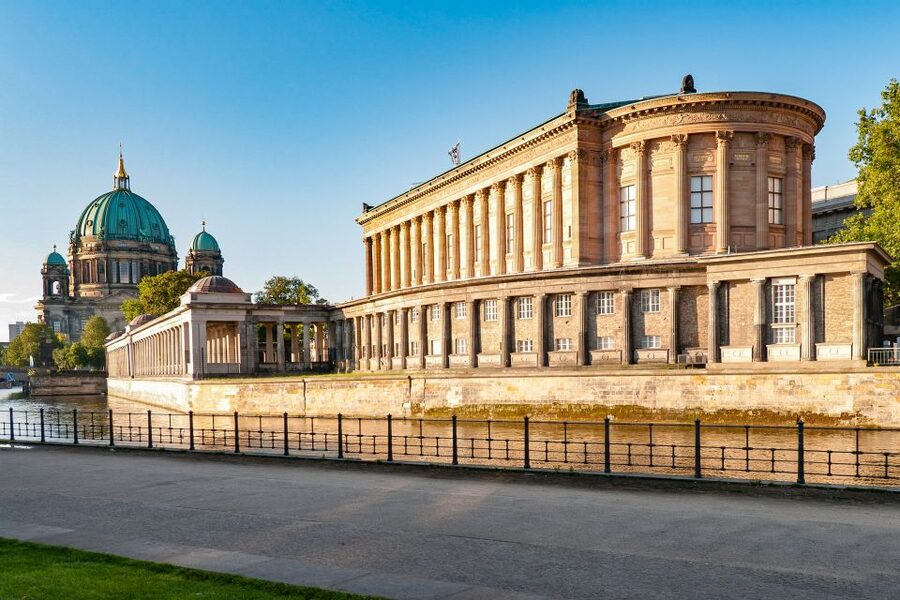
- A grand Museum Island setting: The gallery opened in 1876 as the third museum on the Spree Island, part of today’s UNESCO World Heritage Site.
- The Group of Princesses: See a refined portrait group linked with the age of Goethe and German Classicism.
- Useful access details: The building is wheelchair accessible, backpacks are not allowed, and you should enter within 15 minutes of your booked time.
Why the Alte Nationalgalerie deserves a place on your Berlin list
The Alte Nationalgalerie is not simply a room full of famous names. It gives you a focused look at the art of the 19th century, a period when Europe moved from courtly Classicism through Romanticism and industrial change toward Impressionism and early Modernity.
That progression gives the visit its shape. You can begin with formal sculpture and idealized figures, move into the emotional world of Goethe’s era, then finish with artists responding to modern city life, factories, and changing ideas about light and color.
The building itself adds weight to the experience. It was imagined as a sanctuary for art and science, an idea connected with Friedrich Wilhelm IV. The gallery opened in 1876, after the Prussian state received a major donation from banker Joachim Heinrich Wilhelm Wagener. His collection included works by the Düsseldorf school and Belgian history painters.
Today, the museum is known as the Alte Nationalgalerie, or Old National Gallery. Its location on Berlin’s Museum Island makes it easy to pair with other major museums, though your ticket covers only this one building.
At $14 per person, the entry price is reasonable for a central Berlin museum with a full day of validity and an audio guide included. The value depends on your interests. If you enjoy 19th-century painting, sculpture, or German Romanticism, this is a strong buy. If your main goal is ancient Egypt, classical archaeology, or medieval art, another Museum Island ticket may serve you better.
Other Berlin trips people book alongside this one:
- Berlin: Reichstag, Dome and Government District Guided Tour
★ 4.7 · 18,288 reviews - Berlin: 1-Hour City Tour by Boat with Guaranteed Seating
★ 4.3 · 16,993 reviews - Berlin: Boat Tour Along the River Spree
★ 4.4 · 11,252 reviews
Entering on Bodestraße and getting oriented
You enter at the Alte Nationalgalerie visitor entrance on Bodestraße, 10178 Berlin. The activity ends at the same point, and transportation is not included, so you handle your own way to and from Museum Island.
The booked entry time matters. You should arrive ready to enter the museum within 15 minutes of your selected timeslot. This is not a ticket you can casually hold for later in the day, so avoid scheduling it immediately after another appointment across town.
The museum is wheelchair accessible throughout the building. Backpacks are not allowed, so pack light and check the current cloakroom arrangements before you arrive. A small bag may be handled differently, but the clear rule is to avoid bringing a backpack.
Once inside, take a moment to get your bearings rather than rushing straight toward the famous paintings. The building’s formal design prepares you for the museum’s original purpose: art was meant to be experienced in an orderly, serious setting, but the collection itself becomes more varied as you move through the rooms.
Classicism, Goethe’s age, and the Group of Princesses
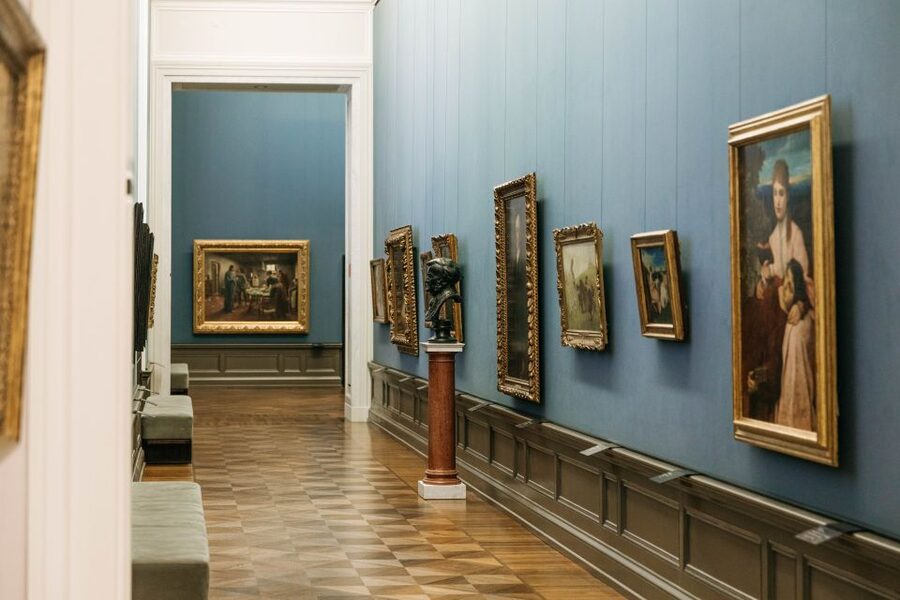
The early galleries introduce the ideals of Classicism. Look for balanced compositions, polished figures, and an interest in ancient models. These works can feel restrained beside the later paintings, but they help you understand the artistic rules that Romantic painters began to question.
The so-called Group of Princesses is one of the notable works to seek out. Portrait groups of this type are more than family records. They present rank, education, fashion, and social connections through pose and clothing. Take time to notice how the figures are arranged and how much the image depends on quiet expression rather than dramatic action.
The museum also holds Shadow’s marble tomb for Count Alexander von der Mark, made in 1790. This sculpture offers an early highlight before the gallery’s main 19th-century themes take over. Marble can make death look calm and orderly, but the subject gives the work a sharper emotional edge.
I would not treat these rooms as a quick obstacle before reaching the Impressionists. They show you the visual language that shaped German art at the turn of the 19th century. If you use the audio guide, this is a good place to add context to works that may seem formal at first glance.
Romanticism and Friedrich’s The Monk by the Sea
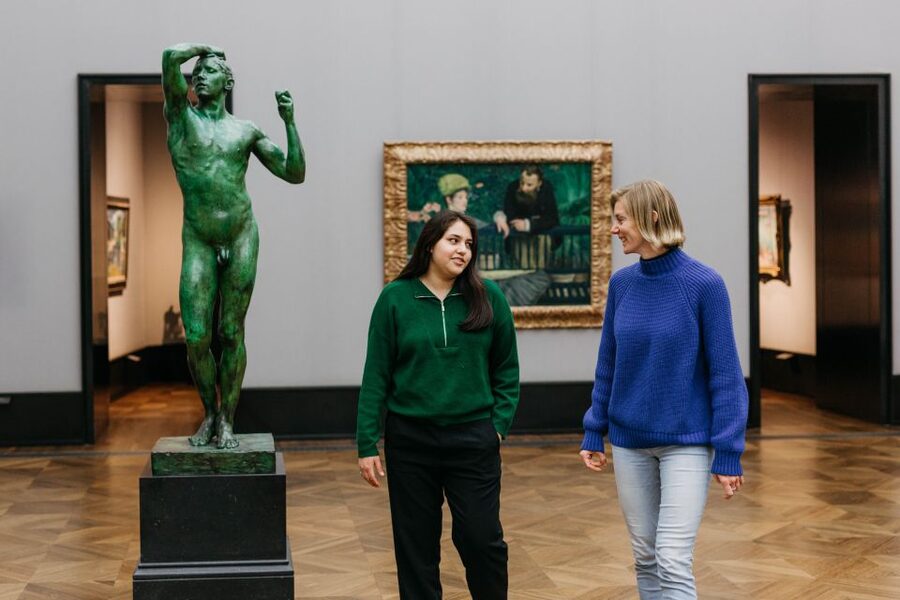
The Romantic galleries are the emotional center of the museum. German Romantic painters often turned to nature, solitude, ruins, mist, and distant horizons to express feelings that traditional religious or historical scenes could no longer contain.
Caspar David Friedrich’s The Monk by the Sea is the work many people most want to see. Its power comes from restraint. A solitary figure appears tiny against a broad field of sky and water, leaving you with a sense of uncertainty rather than a neatly explained story.
Do not expect a crowded scene or a long narrative. The painting asks you to look slowly at the balance between the monk, the shore, the sea, and the sky. The near emptiness is the point. It creates a mood that can feel quiet, bleak, or spiritual depending on how long you stay with it.
Friedrich’s Gothic Cathedral at the Water continues the Romantic interest in architecture, memory, and nature. The title tells you what to look for, but the larger idea is the meeting of human construction and the natural world. These paintings reward close attention to atmosphere more than quick identification of historical facts.
This is also where the Alte Nationalgalerie feels most distinctly German. French Impressionism is a major draw, but Friedrich’s work gives the museum a voice that you will not get from a general survey of European art.
Something different for another day:
- Discover Berlin Half-Day Walking Tour
★ 5.0 · 9,624 reviews - Berlin: Hop-on Hop-off Bus Tour with Live Commentary
★ 4.3 · 8,579 reviews - Berlin: Government District around the Reichstag Guided Tour
★ 4.7 · 8,447 reviews - Berlin: Reichstag, Plenary Chamber, Cupola & Government Tour
★ 4.6 · 8,422 reviews
Sculpture, Sleeping Beauty, and the pleasure of looking up
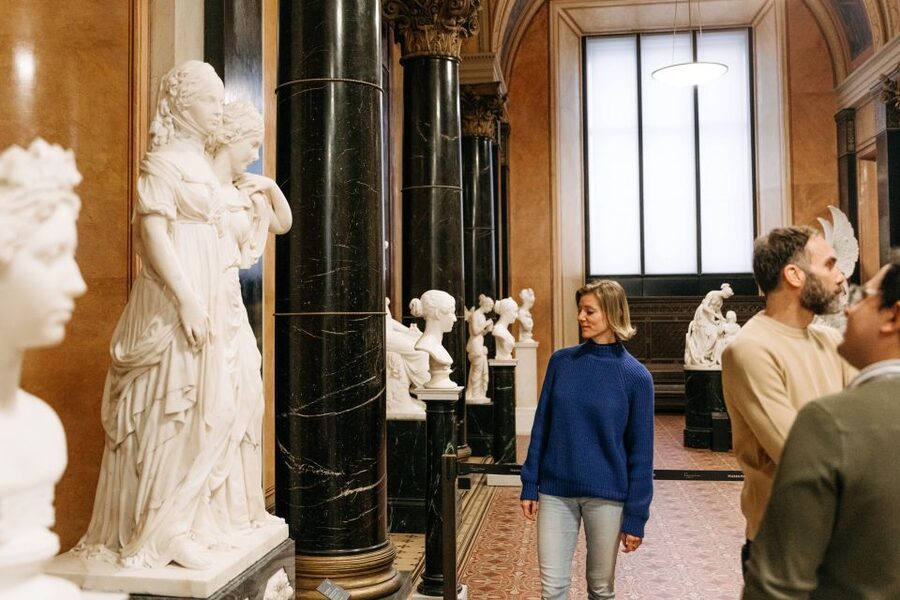
Painting receives most of the attention, yet the sculpture rooms deserve their share of your time. One highlight is Sleeping Beauty, described as a breathtaking work and a good example of how the museum uses sculpture to break up the sequence of framed paintings.
Sculpture changes the way you move through a gallery. You can view it from different angles, study the treatment of hair and fabric, and notice how the artist suggests softness in a hard material. That contrast is part of the pleasure.
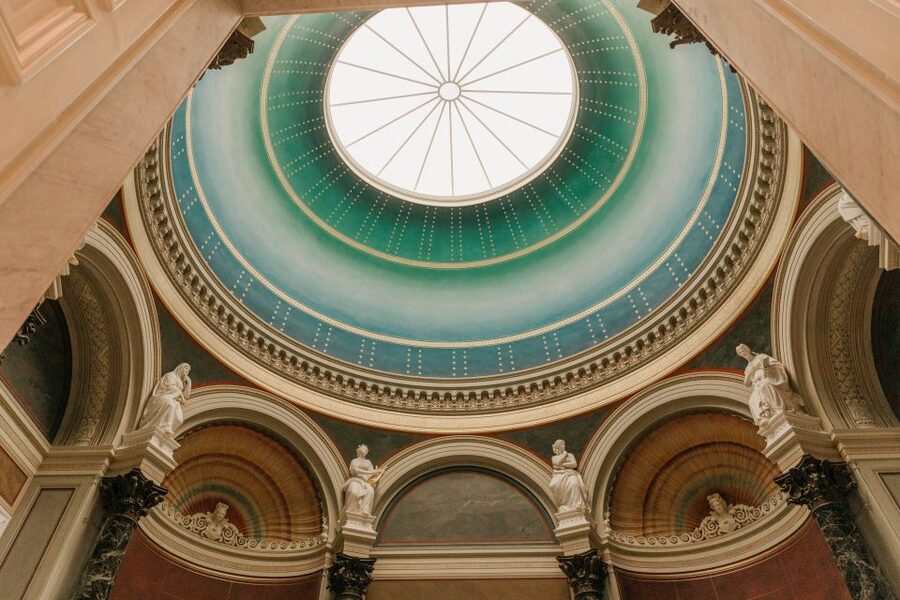
The building also rewards looking beyond eye level. Its grand interior gives the art a formal setting, and the arrangement can feel almost theatrical. At the same time, a grand setting can make a museum visit tiring. If you try to see every room at speed, the details will blur together.
I would choose a handful of anchors, then allow the surrounding works to fill out the story. The Monk by the Sea, the Group of Princesses, Sleeping Beauty, and Eisenwalzwerk give you four very different reasons to remember the museum.
Menzel’s Eisenwalzwerk and the arrival of modern industry
Adolph Menzel’s Eisenwalzwerk changes the mood again. Instead of a solitary figure facing an immense natural world, you see the force of industrial labor and the modern factory.
This painting matters because it brings ordinary work into the territory once reserved for grand history painting. The setting is hot, crowded, and physical. It asks you to consider the people who made industrial progress possible, rather than treating progress as an abstract idea.
Look for the contrast between the machinery, the bodies of the workers, and the controlled composition. The scene is not simply a celebration of technology. It also records strain, heat, and human effort.
Placed within the wider museum, Eisenwalzwerk helps connect the Romantic galleries with early Modernity. Art is no longer focused only on princes, saints, ancient heroes, or remote landscapes. The factory becomes a serious subject.
This is one reason I recommend the museum to visitors who think they are not especially interested in 19th-century art. The collection is not one-note. It moves from polished marble to political and social observation, then toward new approaches to light and everyday life.
Manet, Monet, Renoir, and the Impressionist rooms
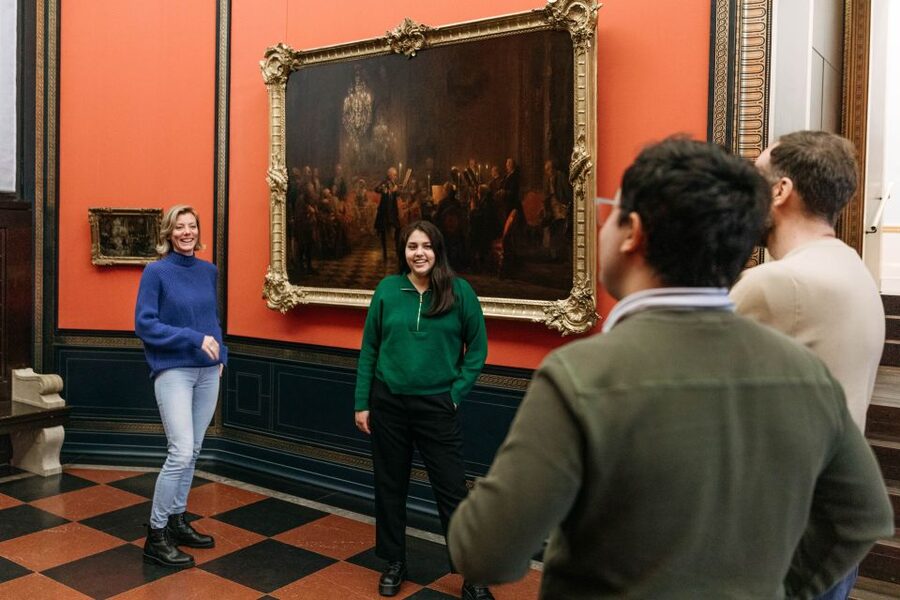
The French Impressionist paintings are another major attraction. The collection includes works by Édouard Manet, Claude Monet, and Pierre-Auguste Renoir, giving you a chance to see how artists began to treat color, brushwork, and modern subjects differently.
Impressionist paintings often make more sense when you step back. From close range, the brush marks may look loose or unfinished. At a little distance, the image can settle into light, atmosphere, and movement.
You may find that these rooms are the busiest part of your visit, especially if Impressionism is your main reason for coming. Plan enough time to enjoy the paintings rather than treating them as a final checklist.
There is one important warning. A room or even an entire floor may be closed during your visit, and the closure may affect the Impressionist display. Since the ticket is non-refundable, check the museum’s current display information as closely as possible before booking. If a specific artist or gallery is your priority, do not assume every advertised section will be open.
Even with a partial closure, the museum can still offer excellent value because the collection covers so many movements. But your expectations should match the day’s access.
Early Modernity, Secession artists, and the end of the visit
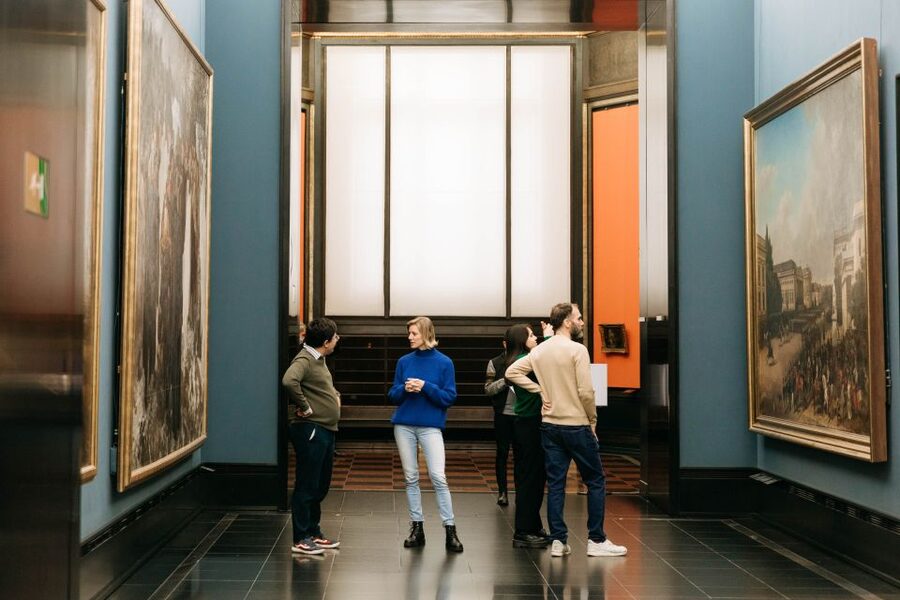
The later galleries move toward early Modernity and the art of the Berlin Secession period, broadly associated with the years from 1880 to 1920. Here, you may encounter works by Max Liebermann, Franz von Stuck, and Gustav Klimt, along with drawings, sculptures, paintings, and exhibition posters.
This section can feel like a reward after the earlier historical sequence. The art becomes more concerned with personal style, new forms, decorative surfaces, and the changing culture of exhibitions.
The series of self-portraits near the end is a particularly clever feature. It works almost like the closing credits of a film, giving you a final look at artists through their own eyes. It is a small idea, but it gives the end of the route a sense of closure.
The exhibition posters are also worth pausing over. They remind you that museums are not only places where art is stored. They are also places where art is presented, promoted, and debated. The posters can make you imagine the excitement of earlier exhibitions without requiring a separate history lecture.
If the upper floor is closed, this late section may be affected too. That is why I would ask about current access at the entrance and use the available rooms in the order that suits the day.
How to use the included audio guide
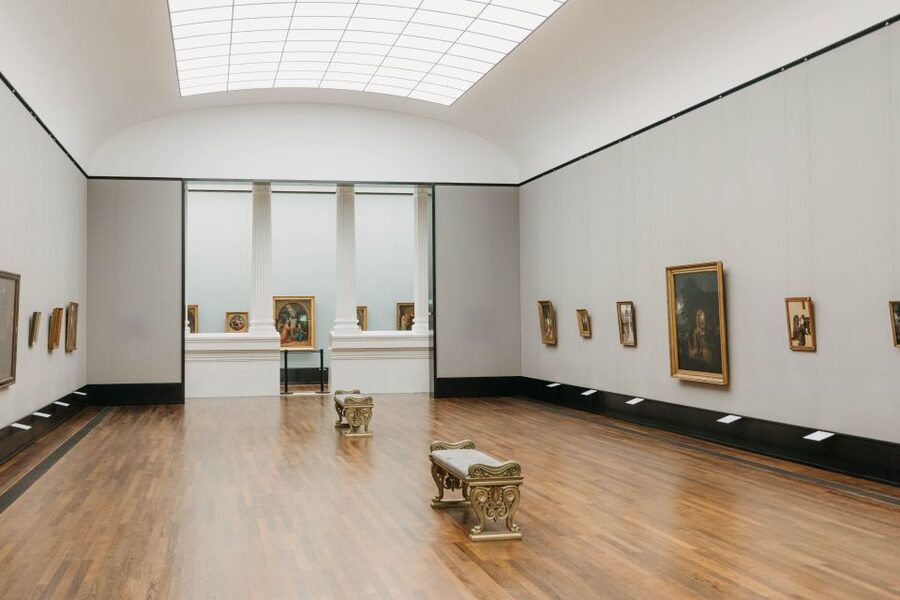
The audio guide is included with your ticket, which improves the value of the $14 admission. It lets you choose between a quiet, self-directed visit and a more explained route.
I suggest using it selectively. Listening to every entry can turn an art museum into an audio marathon. Instead, choose the works that need context, such as Friedrich’s Romantic paintings, Menzel’s factory scene, or the sculpture of Count Alexander von der Mark.
An audio guide is also useful when you are visiting without a specialist. You can learn why a work matters, then spend your own time looking. That balance is better than racing from label to label.
The museum also offers exhibition talks and guided tours on different themes for children and adults. The supplied information does not give fixed schedules, so check what is available on your date if a talk is important to you.
Timing, price, and who gets the best value
The ticket costs $14 per person and is valid for one day. It is not a timed guided tour, but you do select an entry timeslot and must enter within 15 minutes of that time.
The price is fair when you count the museum’s central location, the range of major works, and the included audio guide. It becomes even better if you take your time and treat the visit as a full museum stop rather than a short photo opportunity.
You do not receive transportation or entry to the other museums on Museum Island. That is not a problem, but it matters when you plan your budget. If you want to visit several institutions, look at the available combination or island-wide ticket options separately.
Discounted tickets require appropriate identification. Bring the required proof if you book a reduced fare, since the discount is not simply based on age or appearance.
I think this experience suits you best if you enjoy:
- German Romanticism and Caspar David Friedrich
- 19th-century European painting
- French Impressionism
- Sculpture and formal museum interiors
- Self-guided visits with an audio guide
- A focused stop on Museum Island rather than a full guided excursion
It may be less suitable if you want a fast visit, dislike timed entry, or are coming only for one room that might be closed.
Should you book the Alte Nationalgalerie?
Book it if you want a strong, focused look at German and European art from Classicism through early Modernity. The museum gives you memorable anchors, from The Monk by the Sea and the Group of Princesses to Eisenwalzwerk, Sleeping Beauty, and paintings by Manet, Monet, and Renoir.
Before paying, check which floors and galleries are open. That single step can determine whether the ticket feels like a bargain or a compromise, especially if Impressionism is your main target.
For $14, an audio guide, wheelchair access, and a full day of validity make this a sensible Museum Island choice. Just arrive within the 15-minute entry window, leave your backpack behind, and allow enough time to look rather than simply collect famous titles.
FAQ
Where is the Alte Nationalgalerie located?
The visitor entrance is on Bodestraße, 10178 Berlin, on Museum Island.
How much does admission cost?
Admission costs $14 per person.
How long is the ticket valid?
The ticket is valid for one day.
Do I need to choose an entry time?
Yes. You should check availability for starting times and enter within 15 minutes of your booked timeslot.
Is an audio guide included?
Yes. The ticket includes an audio guide.
Does the ticket include Berlin transportation?
No. Transportation is not included.
Does this ticket include Berlin’s other Museum Island museums?
No. Tickets to the other museums on the island are not included.
Is the Alte Nationalgalerie wheelchair accessible?
Yes. The entire building is wheelchair accessible.
Can I bring a backpack?
No. Backpacks are not allowed.
Are discounted tickets available?
Discounted tickets are available, but you must show appropriate identification to use one.
Can I cancel the ticket?
No. The activity is non-refundable, so check the date, time, and current gallery access before booking.
Just added around Berlin
- Berlin: Private Guided Tour of the Main Sights★ 5.0 · 13 reviews
- Private Highlights of Berlin Bike Tour★ 5.0 · 13 reviews
- Modern Berlin Private Walking Tour: Diverse, Vibrant and Exciting German Capital★ 5.0 · 13 reviews
- Tour in Berlin from Warnemünde and Rostock Cruise Port★ 4.1 · 13 reviews
- Berlin: Stasi Museum Private Guided Tour with Entry Ticket★ 4.8 · 13 reviews
- Private Food Tour Experience with a born and bred Berliner★ 5.0 · 14 reviews
- Berlin: Rheinsberg Palace Entrance Ticket★ 4.8 · 14 reviews
- Berlin in one day – day tour with an expert guide★ 5.0 · 14 reviews
Berlin Tours, compared.
Reichstag, Dome and Government District Guided Tour
Read our review →
1-Hour City Tour by Boat with Guaranteed Seating
Read our review →
Government District around the Reichstag Guided Tour
Read our review →
Reichstag, Plenary Chamber, Cupola & Government Tour
Read our review →