Reviewed · BERLIN TOURS
Berlin Battlefield Tour – Operation Berlin 1945 (Small Group)
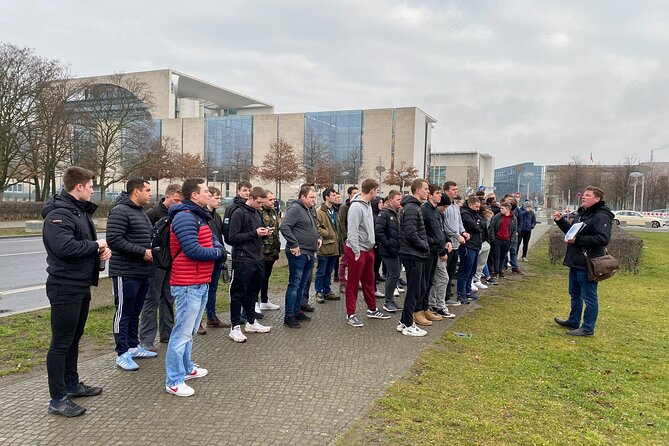
Berlin’s final battle still marks the city. This 2.5-hour walking tour follows the Soviet advance from Berlin Central Station to the Reichstag and Weidendammer Bridge, turning familiar city sights into a clear account of the fighting in April and May 1945. I like the small group of no more than 15 people, which gives you room to hear the guide and ask questions. I also like the route itself: Moltke Bridge, the former Himmler House, the Reichstag, and the last breakout point are all tied together on foot.
The main point to consider is that this is an outdoor history walk. You need to be comfortable walking between stops and spending time outside in whatever weather Berlin provides. Bottled water and rain ponchos are supplied if needed, but poor weather can lead to a cancellation or a new date.
The guide can make or break a battlefield tour. Jochen has earned particular praise for his command of the subject and for handling detailed questions, including from a young history enthusiast. At $54.01 per person, the tour is not the cheapest way to see central Berlin, but the small group and focused military history make it good value for anyone who wants more than a quick look at the Reichstag.
In This Review
- Key points about the Berlin battlefield walk
- Why the route works so well
- Starting at Berlin Hauptbahnhof
- Moltke Bridge and the Soviet approach
- The Himmler House and room-to-room combat
- Platz der Republik and the exposed ground before the Reichstag
- The Reichstag and the final Soviet banner
- Weidendammer Bridge and the last breakout
- What the $54.01 price gets you
- Practical advice before you book
- Who should choose Operation Berlin 1945?
- Should you book this Berlin battlefield tour?
- FAQ
- Where does the Berlin Battlefield Tour begin?
- Where does the tour finish?
- How long does the experience last?
- What language is the tour offered in?
- How many people can join the tour?
- What sights are included on the route?
- Is admission to the sights included?
- Are water and rain protection provided?
- Is the tour accessible by public transport?
- What is the cancellation policy?
Key points about the Berlin battlefield walk
- The route follows the Soviet advance: You begin near Berlin Hauptbahnhof and finish at Weidendammer Bridge, covering several key points in the final battle.
- Moltke Bridge sets the tactical scene: The ornate red sandstone bridge helps you understand how the Soviet 3rd Shock Army approached the government quarter.
- The Reichstag is only part of the story: The tour also covers the Himmler House, the former Königsplatz, and the Führerbunker’s final days.
- The group stays small: A maximum of 15 people means you can usually hear the guide and ask questions without shouting across a crowd.
- The tour ends near Friedrichstrasse: Weidendammer Bridge is about 50 meters from the S and U Friedrichstrasse station.
- Weather matters: This is an outdoor experience, with free cancellation up to 24 hours before the start time.
Why the route works so well
Many Berlin history tours pile up dates and names without showing how the city’s geography shaped events. This one uses a short, logical route through the government quarter. You move from the Soviet approach, across a key bridge, into the area around the Reichstag, and then toward a final escape attempt over the Spree.
That order matters. At the start, you are near the modern Hauptbahnhof, a busy transport hub with little obvious connection to the final battle. After a roughly ten-minute introduction, the guide places you in the setting of spring 1945 and explains the Soviet 3rd Shock Army’s axis of advance.
I like this beginning because it gives you a framework before the details arrive. You are not simply told that Berlin fell. You learn which force was moving where, what the German defenders were trying to protect, and why the government quarter became such a hard target.
The tour then moves west toward the Moltke Bridge. From there, each stop adds a new layer without requiring an extended journey across the city. The route finishes close to public transport, so you can continue sightseeing without retracing your steps.
Other Berlin trips people book alongside this one:
- Berlin: Reichstag, Dome and Government District Guided Tour
★ 4.7 · 18,288 reviews - Berlin: 1-Hour City Tour by Boat with Guaranteed Seating
★ 4.3 · 16,993 reviews - Berlin: Boat Tour Along the River Spree
★ 4.4 · 11,252 reviews
Starting at Berlin Hauptbahnhof
Meet on the southern side of Berlin Central Station at Ella-Trebe-Straße 9. The modern station is easy to reach, but its sleek architecture can make it hard to picture wartime Berlin. That contrast is useful. You begin in a present-day city and then gradually read the older story through the streets and structures around you.
The opening introduction lasts about ten minutes. Use this time to settle in, check that you can hear the guide, and ask any early question about the route. Since the walk is offered in English, it suits visitors who want military history explained clearly rather than left to museum labels or a guidebook.
The tour lasts about 2 hours and 30 minutes overall. The listed stop times add up to about 75 minutes, leaving the rest for walking and discussion. That is important for planning. This is not a series of indoor lectures with a quick stroll between them. You will be moving through central Berlin, with time spent outdoors at each location.
Moltke Bridge and the Soviet approach
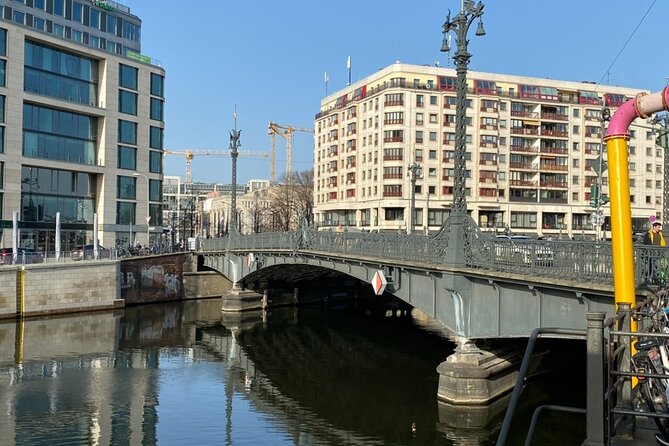
The first major stop is Moltkebrücke, also known as Moltke Bridge. Its ornate red sandstone structure became the setting for some of the fiercest fighting in the city. The guide uses the bridge to explain the Soviet 3rd Shock Army’s line of advance and the problems facing both attacking troops and German defenders.
This is where the tour begins to feel like a battlefield visit rather than a general Berlin history walk. A bridge is not just a pretty crossing. It controls movement, and in the final battle, control of crossings and routes into the government quarter mattered greatly.
You can expect around ten minutes here. That may sound brief, but the stop works as an orientation point. The guide can show how the Soviet attack was directed and why the bridge became a dangerous obstacle.
The small group helps at this stop. You are likely to be standing outdoors near a city crossing, so a large crowd would make maps, gestures, and spoken explanations harder to follow. With no more than 15 participants, questions can remain part of the conversation instead of being saved for the end.
The Himmler House and room-to-room combat
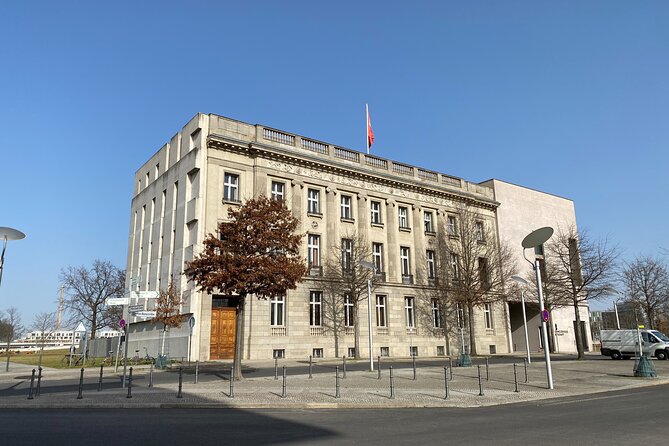
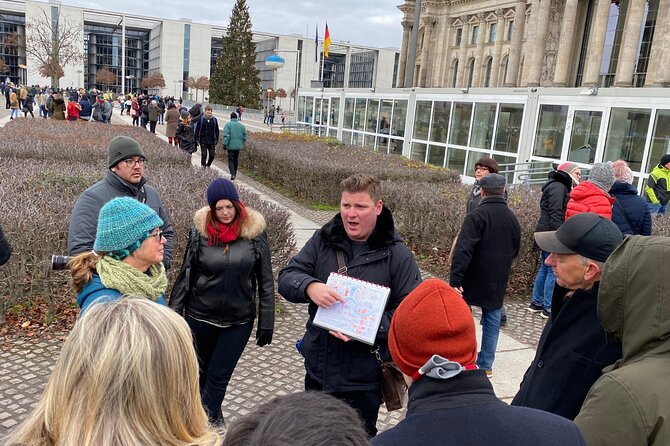
After crossing Moltke Bridge, you reach the Bundeskanzleramt area and the building once known as the Interior Ministry. It was nicknamed the Himmler House in the old diplomatic quarter.
The stop focuses on a Soviet artillery barrage fired at very close range and the brutal room-to-room fighting that followed. This section adds a human scale to the battle. Large movements by armies can sound abstract, but fighting inside a government building turns the conflict into a series of confined, frightening encounters.
The stop lasts about ten minutes. I would pay close attention here, since the subject is grim and the details are easy to lose if you are more interested in the surrounding modern offices. The value comes from connecting a present-day government area with the violence that took place in the same part of Berlin.
This is also one reason the tour suits adults and older children with a strong interest in the Second World War. The subject matter is serious. It is not a light city walk with a few wartime facts added for color.
Something different for another day:
- Discover Berlin Half-Day Walking Tour
★ 5.0 · 9,624 reviews - Berlin: Hop-on Hop-off Bus Tour with Live Commentary
★ 4.3 · 8,579 reviews - Berlin: Government District around the Reichstag Guided Tour
★ 4.7 · 8,447 reviews - Berlin: Reichstag, Plenary Chamber, Cupola & Government Tour
★ 4.6 · 8,422 reviews
Platz der Republik and the exposed ground before the Reichstag
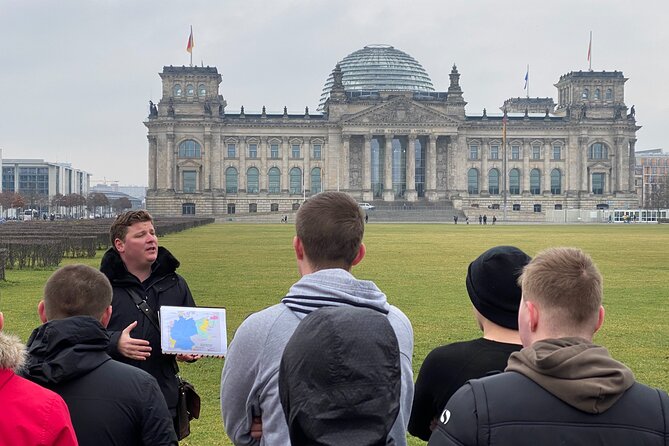
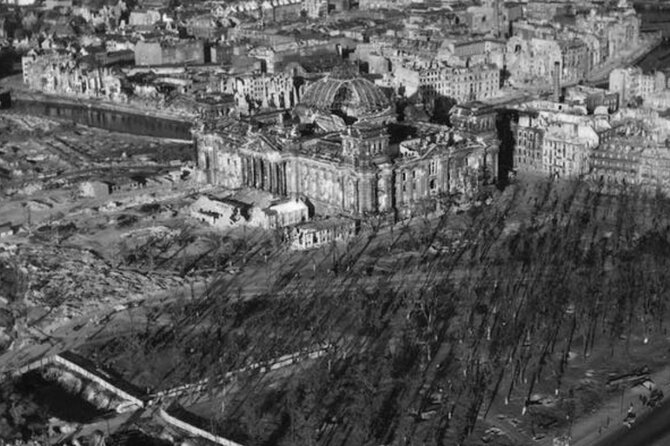
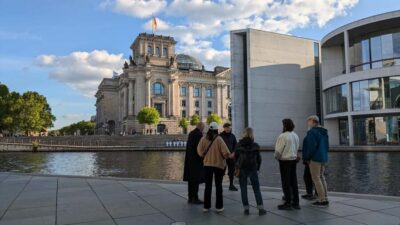
The next stop is Platz der Republik, the former Königsplatz. Here, the guide discusses the area as no man’s land and describes the roughly 300-meter stretch that the 207th and 150th Rifle Divisions had to cross before reaching the Reichstag.
Today, an open urban space can look harmless. The tour asks you to picture it under fire, with troops exposed and the Reichstag ahead. That change in viewpoint is one of the strongest features of a battlefield walk. You are not simply learning what happened. You are using distance and position to understand why the attack was so dangerous.
The stop takes about ten minutes. It is a useful pause before the Reichstag because it gives the building a military context. Without this explanation, you might see the Reichstag only as a major symbol of modern Germany. With it, you understand why reaching the building mattered during the final days of the battle.
The Reichstag and the final Soviet banner
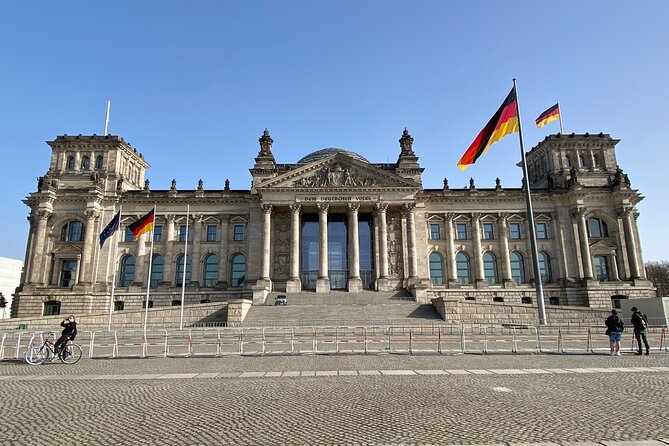
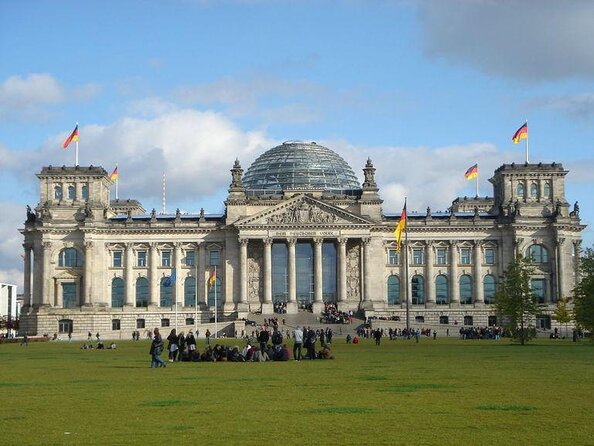
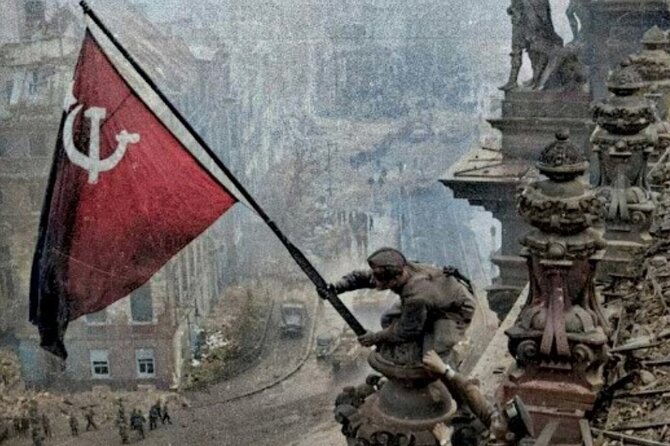
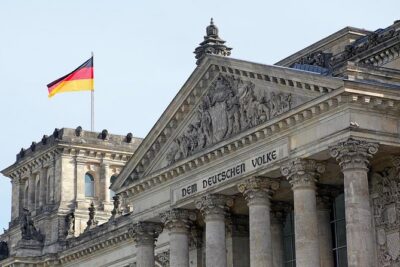
At the Reichstag, the tour spends about 20 minutes, the longest stop on the route. The guide discusses Hitler’s final moments in the Führerbunker, only a few hundred meters away, before turning to the famous story of Sergeant Yegorov and Sergeant Kantariya.
The pair raised special banner No. 5 on the roof, an act that came to signify the end of the battle. The stop does not treat the Reichstag as an isolated photo opportunity. It connects the building to the nearby bunker, the Soviet attack, and the symbolism that followed.
You should not expect entry into the Reichstag as part of this experience. The information provided describes an exterior walking tour, with all admissions listed as free. The focus is on the ground outside and the events tied to it.
This is likely to be the emotional center of the walk. The Reichstag is already one of Berlin’s best-known sights, but the guide gives you a reason to look at it differently. Instead of seeing only a restored parliamentary building, you can consider the damage, fighting, and propaganda value attached to it in 1945.
The tour’s strongest guide feedback also fits this stop. Jochen is praised for explaining the history well and for discussing details at length with a participant who had a serious interest in the subject. If you enjoy asking precise questions about commanders, units, or the sequence of events, the small group gives you a better chance to do so.
Weidendammer Bridge and the last breakout
The final stop is Weidendammer Brücke, reached after the Reichstag. During the last days of the Battle of Berlin, it was one of the few bridges still intact across the Spree. On the night of May 1, 1945, it became the scene of heavy fighting during an attempt to break out from the Führerbunker.
This ending is well chosen. The Reichstag can feel like the obvious finale, but Weidendammer Bridge adds a darker, less polished closing chapter. It shifts attention from the public symbol of victory to the desperate attempt to escape.
The stop lasts about 15 minutes. The guide explains the fighting around the bridge and the connection to the bunker. You finish at the site of the failed German breakout rather than returning to the starting point.
That matters for your plans. The bridge is only about 50 meters from S and U Friedrichstrasse station, so you have quick public transport connections afterward. You can ask the guide how best to reach your next destination, but you should still know your onward plan before starting.
What the $54.01 price gets you
At $54.01 per person, this is a moderate-priced specialist tour. You are paying for roughly 2.5 hours with an English-speaking guide, a maximum group size of 15, bottled water, and rain ponchos if needed. There are no attraction admission fees included because the route is conducted outdoors at public sites.
The value depends on your interests. If you only want exterior photographs of the Reichstag, you can see much of the area independently for less money. You can also walk across central Berlin without a guide.
I think the price makes more sense if you want the military geography explained as you go. The tour connects six locations that might otherwise seem unrelated. It also saves you the work of researching the Soviet advance, the fighting around the government quarter, and the final breakout before arriving.
A small group is especially valuable here. A 15-person maximum is not a private tour, but it is far more personal than a large coach group. The available feedback gives this feature proper weight: participants could hear the guide and ask questions, and one history-focused parent and son were able to discuss the subject in detail.
Practical advice before you book
Wear shoes suitable for a city walk and dress for outdoor conditions. The route includes bridges, open public spaces, and streets between the stops. The exact walking pace is not provided, so allow the full 2.5 hours rather than treating the stop times as the whole experience.
Bring your own interest in the subject. This tour is designed around military history and the final battle for Berlin. If you prefer art, architecture, food, or a broad introduction to the city, another walking tour may fit better.
The start and finish are convenient, but they are not the same place. Begin at the south side of Hauptbahnhof and end near Friedrichstrasse station. That point-to-point format is useful for a sightseeing day, since you can plan the next activity from central Berlin rather than returning to the station where you began.
Confirmation arrives when you book. Most people can participate, and service animals are allowed. The experience requires a minimum number of participants, and poor weather can cause a change of date or a full refund.
Free cancellation is available if you cancel at least 24 hours before the scheduled start. After that point, the amount paid is not refunded, and changes made within 24 hours are not accepted.
Who should choose Operation Berlin 1945?
I would choose this tour if you want a focused account of Berlin’s final battle rather than a general overview of the city’s past. It is especially suitable for anyone interested in the Soviet advance, the final days of Nazi Germany, battlefield tactics, or the meaning attached to the Reichstag.
Families can also find value here if older children already enjoy military history. The detailed questions handled by Jochen suggest that the tour can support serious discussion, not just a basic explanation. Still, the fighting described is disturbing, so consider the age and interests of everyone in your group.
I would hesitate if you dislike outdoor walks, need a fully indoor activity, or want to visit the Reichstag building itself. This experience does not include admission to attractions, and poor weather can affect the schedule.
Should you book this Berlin battlefield tour?
Book it if you want to understand how the final battle moved through central Berlin. The route is compact, the group is limited to 15, and the stops build from Soviet strategy to close combat, the assault on the Reichstag, and the last breakout at Weidendammer Bridge.
Skip it if you are looking for a casual sightseeing walk or an interior visit to the Reichstag. At $54.01, the tour earns its price through focused guiding and context, not through entry tickets or grand views. For a history-minded visitor, that is a fair trade.
FAQ
Where does the Berlin Battlefield Tour begin?
It begins at Ella-Trebe-Straße 9, on the southern side of Berlin Central Station, also called Hauptbahnhof.
Where does the tour finish?
The tour ends at Weidendammer Brücke in central Berlin.
How long does the experience last?
The tour lasts approximately 2 hours and 30 minutes.
What language is the tour offered in?
The tour is offered in English.
How many people can join the tour?
The group has a maximum of 15 participants.
What sights are included on the route?
The route includes Berlin Central Station, Moltke Bridge, the Bundeskanzleramt area and former Himmler House, Platz der Republik, the Reichstag, and Weidendammer Bridge.
Is admission to the sights included?
The listed stops have no admission ticket charge. The experience is an outdoor walking tour, and entry into the Reichstag is not included in the provided details.
Are water and rain protection provided?
Bottled water is provided, and rain ponchos are available if needed.
Is the tour accessible by public transport?
Yes. The starting point is at Berlin Central Station, and the finish is about 50 meters from S and U Friedrichstrasse station.
What is the cancellation policy?
You can cancel up to 24 hours before the start time for a full refund. Cancellations or changes made less than 24 hours in advance are not accepted for a refund. If poor weather or an insufficient number of participants cancels the tour, you are offered another date or a full refund.
Just added around Berlin
- Berlin: Private Guided Tour of the Main Sights★ 5.0 · 13 reviews
- Private Highlights of Berlin Bike Tour★ 5.0 · 13 reviews
- Modern Berlin Private Walking Tour: Diverse, Vibrant and Exciting German Capital★ 5.0 · 13 reviews
- Tour in Berlin from Warnemünde and Rostock Cruise Port★ 4.1 · 13 reviews
- Berlin: Stasi Museum Private Guided Tour with Entry Ticket★ 4.8 · 13 reviews
- Private Food Tour Experience with a born and bred Berliner★ 5.0 · 14 reviews
- Berlin: Rheinsberg Palace Entrance Ticket★ 4.8 · 14 reviews
- Berlin in one day – day tour with an expert guide★ 5.0 · 14 reviews
Berlin Tours, compared.
Reichstag, Dome and Government District Guided Tour
Read our review →
1-Hour City Tour by Boat with Guaranteed Seating
Read our review →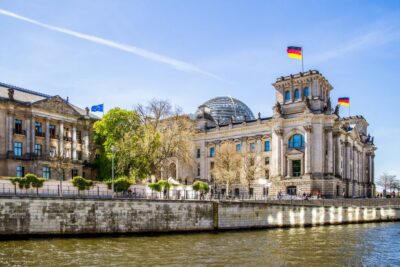
Government District around the Reichstag Guided Tour
Read our review →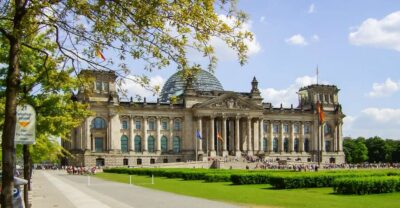
Reichstag, Plenary Chamber, Cupola & Government Tour
Read our review →