Reviewed · BERLIN TOURS
Berlin and National Socialism: Berlin under Nazism
Berlin’s past is impossible to ignore. This four-hour walking and transit tour helps you connect the city’s Nazi-era sites into one clear story, from the modern Bundestag to the ruins of Hitler’s final refuge. I like the focused subject and the chance to see several major memorials in one morning. I also like that guides such as Julia, Helena, and Celia use photographs, videos, anecdotes, and clear explanations to make difficult events easier to understand.
The main thing to consider is transport. Your AB public transport ticket is not included, and the route covers a wide stretch of Berlin, including Tempelhof. The subject is also serious from start to finish, so this is best for you if you want careful historical context rather than a light sightseeing outing.
In This Review
- Key points to know before booking
- Why this tour helps make sense of Berlin
- Starting at the Bundestag and the story of modern Germany
- Remembering the Sinti and Roma victims
- The Soviet Memorial in the Tiergarten
- Tempelhof and Berlin’s aviation story
- The Topography of Terror brings the evidence indoors
- The Führerbunker site and the end of the regime
- How the guides shape the experience
- Price, transport, and what you receive
- Who should book this Berlin history tour?
- Should you book it?
- FAQ
- How long does the Berlin Under Nazism tour last?
- What time does the tour begin?
- Where does the tour meet?
- Where does the tour end?
- Is the tour conducted in Spanish?
- Is public transportation included?
- What is the maximum group size?
- Can I cancel for a full refund?
Key points to know before booking
- Four hours of Nazi-era Berlin: The tour links political buildings, memorials, museums, and sites connected with the Second World War.
- A Spanish-speaking guide: Julia, Helena, and Celia have all led this experience, with praise for their warmth, detail, and ability to answer questions.
- The Bundestag begins the story: You see the parliament building and learn how war damage, postwar division, and reunification shaped modern Germany.
- Several memorials are included: The Sinti and Roma memorial and the Topography of Terror include admission, while other stops are viewed without an entry charge.
- You need an AB transport ticket: This is an important extra cost and practical detail because the route is spread across central Berlin and Tempelhof.
- Small enough to stay personal: The group limit is 25 people, a reasonable size for asking questions without expecting a private tour.
Why this tour helps make sense of Berlin
Berlin has memorials and historic buildings scattered across a large central area. On your own, you can visit the Memorial to the Murdered Jews of Europe, the Topography of Terror, or the former Reichstag and still miss how they fit together. This tour gives you a single subject and a guide to connect the pieces.
The focus is the Third Reich, the Nazi government from 1933 to 1945. You can expect discussion of political power, wartime destruction, Nazi persecution, genocide, and the last days of Adolf Hitler. The route also deals with how Berlin changed after the war and how the city’s modern democratic institutions emerged.
I especially like this approach for a first visit. You do not need to arrive with a detailed understanding of German political history. A good guide can explain why each place matters, then show how the locations relate to one another.
The experience is conducted in Spanish, which is a major advantage if you understand historical subjects more easily in your first language. The strongest praise has gone to the guides’ presentation. Julia is described as detailed, attentive, and generous with practical suggestions for the rest of your time in Berlin. Helena is praised for making the subject clear and engaging. Celia receives repeated praise for her warmth, passion, and respectful treatment of tragic events.
Other Berlin trips people book alongside this one:
- Berlin: Reichstag, Dome and Government District Guided Tour
★ 4.7 · 18,288 reviews - Berlin: 1-Hour City Tour by Boat with Guaranteed Seating
★ 4.3 · 16,993 reviews - Berlin: Boat Tour Along the River Spree
★ 4.4 · 11,252 reviews
Starting at the Bundestag and the story of modern Germany
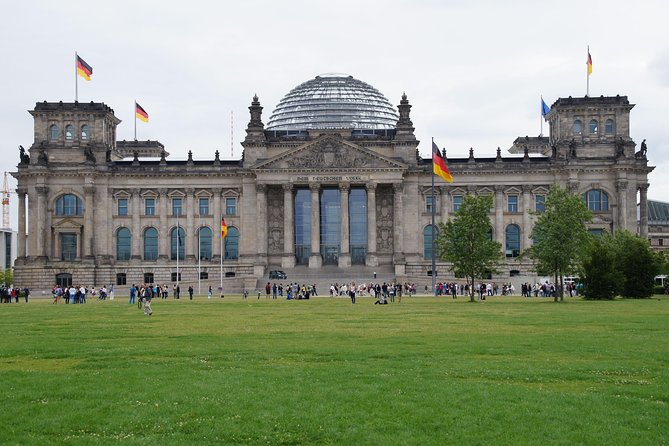
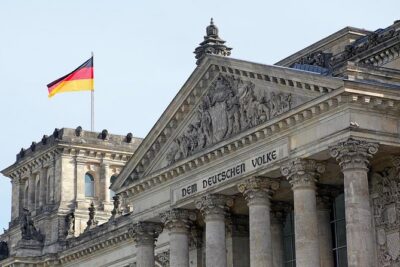
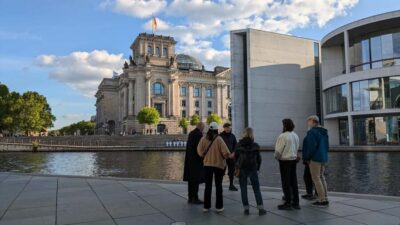
The tour begins at 10:00 am near the Berlin TV Tower, at Panoramastraße 1A. From there, the route includes the Bundestag, Germany’s federal parliament, for about 20 minutes.
The building is useful here because it represents more than government. It carries the marks of Berlin’s twentieth-century upheavals. The original building was badly damaged during the war. It was protected from the elements and partly renovated in the 1960s, but it was not fully restored until after German reunification on October 3, 1990.
Architect Norman Foster led the reconstruction. The work finished in 1999, when the building again became the meeting place of the German parliament. That arc gives your guide a strong way to explain the shift from dictatorship to democracy, then from a divided city to a reunited country.
You will spend about 20 minutes here, and no admission charge is listed for the stop. The itinerary does not promise entry inside the building, so think of this as an exterior visit and historical explanation rather than a parliament tour. That distinction matters if you are hoping to see the interior or the famous glass dome.
Remembering the Sinti and Roma victims
The next stop is the Memorial to the Sinti and Roma Victims of National Socialism. The visit lasts about five minutes, with admission included.
This is a brief stop, but it carries great weight. The monument honors the estimated 220,000 to 500,000 Sinti and Roma people murdered in the Nazi genocide, known as Porraimos. The site broadens the story beyond the most familiar accounts of Nazi persecution and reminds you that the regime targeted several groups for destruction.
Five minutes is not long, especially for a memorial that deserves quiet thought. Still, a guide can provide essential context before you continue. I would treat this as an introduction rather than a full museum visit. If this part of Nazi history is especially important to you, you may want to return on your own and spend more time there.
The Soviet Memorial in the Tiergarten
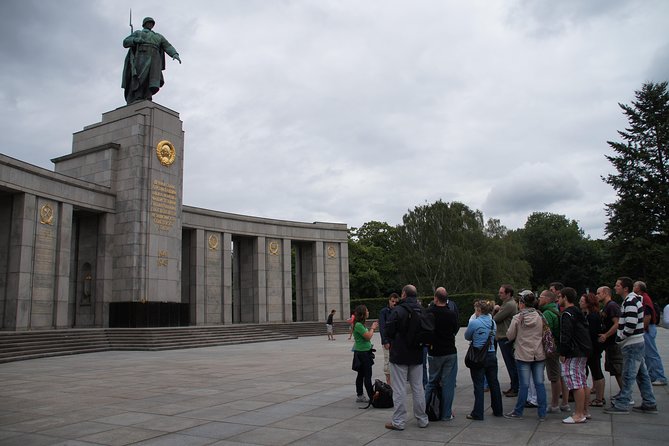
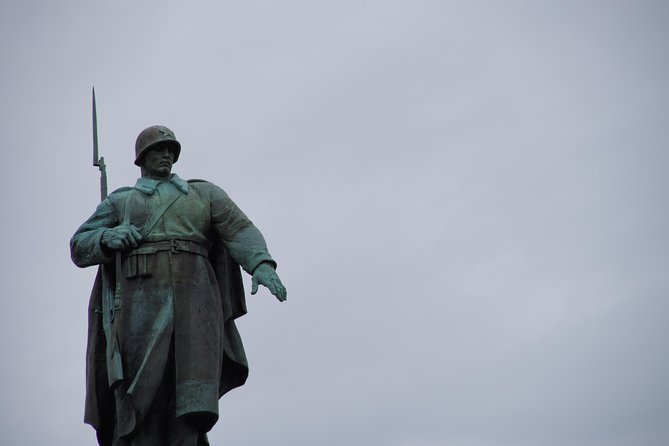
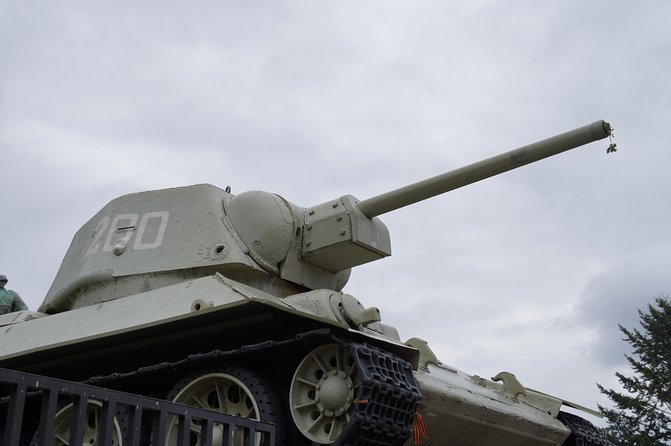
The Soviet Memorial Tiergarten receives about 15 minutes. Admission is free.
The memorial honors Soviet soldiers who died in the Battle of Berlin in April and May 1945. The site is dedicated especially to the roughly 80,000 Soviet Armed Forces personnel who died in that battle. It is one of several Soviet war memorials in Berlin.
This stop adds a military and postwar dimension to the tour. The Nazi period did not end neatly when the war ended. Berlin was left physically damaged and politically divided, and Soviet victory played a major part in what followed.
The memorial also helps you see how different countries remember the war. A visit here is not only about architecture or military loss. It is a reminder that Berlin’s public spaces carry competing memories of dictatorship, defeat, occupation, and liberation.
The free admission keeps the tour price focused on the guide rather than entry fees. The 15-minute schedule should give you time for explanation and photographs, but not a long, independent examination of the site.
Something different for another day:
- Discover Berlin Half-Day Walking Tour
★ 5.0 · 9,624 reviews - Berlin: Hop-on Hop-off Bus Tour with Live Commentary
★ 4.3 · 8,579 reviews - Berlin: Government District around the Reichstag Guided Tour
★ 4.7 · 8,447 reviews - Berlin: Reichstag, Plenary Chamber, Cupola & Government Tour
★ 4.6 · 8,422 reviews
Tempelhof and Berlin’s aviation story
Tempelhof takes about 25 minutes. The airport was one of the most important airports at the beginning of the twentieth century. In 1926, with ten flights each day, it was considered the largest airport in Europe.
Its inclusion gives the tour a useful change of subject. Much of the route concerns persecution, war, and government. Tempelhof shows how Berlin functioned as a modern capital and transportation center before and during the Nazi era.
The stop may also appeal to you if you like places where history is visible through large public structures. The itinerary does not specify an interior tour or a special admission area, so you should not book expecting a full airport visit. Instead, expect a guided look at the site and its place in Berlin’s story.
Tempelhof is also the clearest reason to plan your public transport. The route is not a compact walk around one square. Your AB ticket is an extra cost, but it gives the guide a practical way to connect sites that would otherwise take much longer to reach on foot.
The Topography of Terror brings the evidence indoors
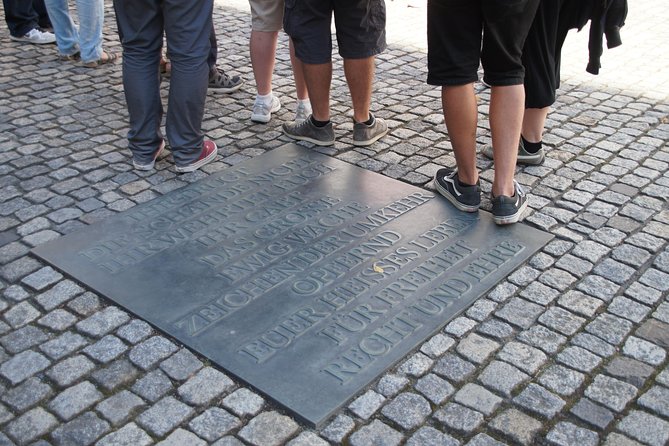
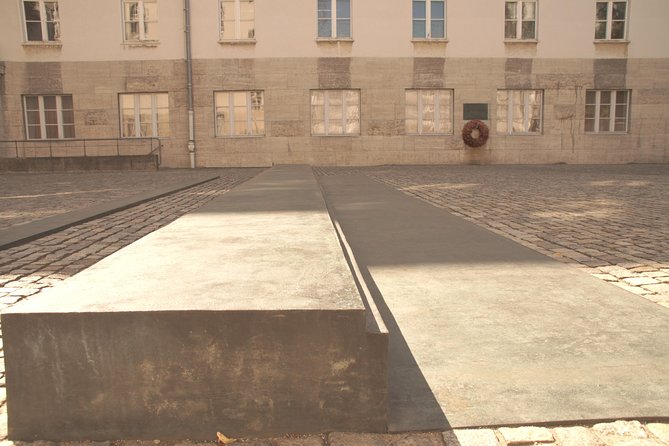
The Topography of Terror is an indoor and outdoor history museum, with roughly 15 minutes allocated on the tour. Admission is included.
The museum is located at a former site connected with the Nazi security apparatus. Based on the stated tour focus, your guide uses this stop to explain how the regime organized repression and violence. It is one of the places where the tour moves from broad political context toward the machinery that made persecution possible.
Fifteen minutes is a short visit for an indoor museum. You should see this as a guided introduction, not a chance to read every display. If you prefer to examine photographs, documents, and panels slowly, return later with extra time.
The guide’s use of photographs and videos is particularly useful at this point. One of the most consistent strengths described for Julia, Helena, and Celia is their ability to place the locations in their time period. That visual support can help you understand what has changed and what has disappeared.
The Führerbunker site and the end of the regime
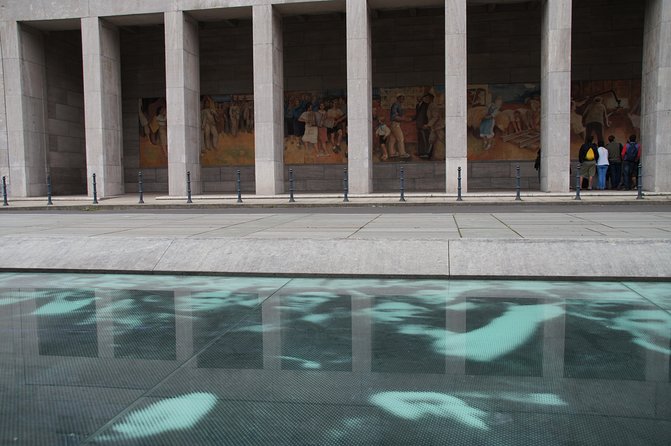
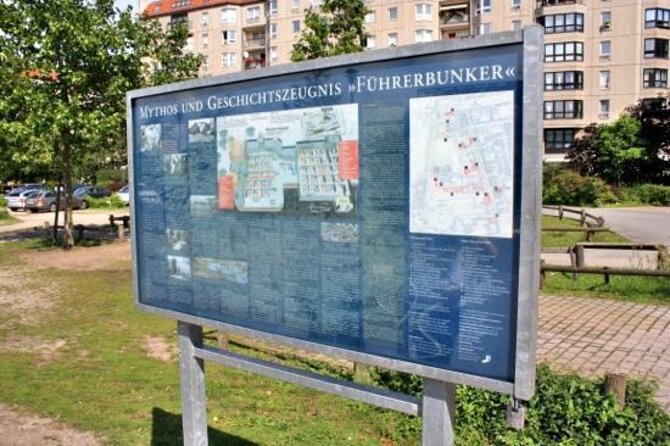
The stop at the Führerbunker lasts about 15 minutes and has no admission charge. You will see the area where Hitler spent his final hours alive.
The word site is important. This is not presented as an intact bunker tour or an underground attraction. The value comes from learning what happened at this location and understanding its place in the final days of the Nazi government.
A good guide handles this stop with care. The subject can easily become sensational, but the purpose here is to explain the collapse of the regime and the human consequences of its decisions. The surrounding modern city also makes the location striking. You are not looking at a preserved theatrical set. You are standing in a city that has rebuilt, renamed, and reinterpreted places tied to dictatorship.
The stop ends at the Memorial to the Murdered Jews of Europe on Cora-Berliner-Straße. That ending gives the tour a sober final note and places the memory of the Holocaust at the center of your last moments on the route.
How the guides shape the experience
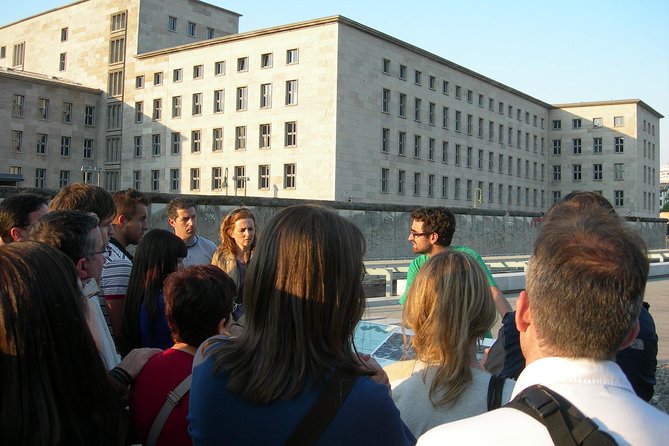
The guide is the heart of this tour. Names may vary, but Julia, Helena, and Celia are all identified as guides who have led the experience.
Julia is praised for using photographs and videos, answering questions in detail, and adding recommendations for other parts of Berlin. Helena is described as professional, friendly, and skilled at making a difficult subject clear. Celia is repeatedly praised for her warmth, empathy, historical understanding, and ability to keep a four-hour tour engaging.
That last point matters. Four hours is a long time to spend on one tragic period. The guide needs to provide structure, not just facts. The strongest descriptions suggest that these guides connect events, explain unfamiliar details, and adjust to the group’s questions.
The tour is also described as respectful. That is essential. Sites connected with genocide and dictatorship should never be treated as ordinary photo stops. You can expect a serious tone, but not necessarily a dry lecture.
The group limit is 25 people. That is not private, but it is small enough for the guide to remain audible and respond to some questions. If you want a fully customized route, the shared format may feel limited. For most people, though, the size offers a good balance between social energy and personal attention.
Price, transport, and what you receive
The listed price is $25.54 per person. For a four-hour guided experience in central Berlin, that is a fair price, especially because admission is included at the Sinti and Roma memorial and the Topography of Terror.
The value comes mainly from organization and interpretation. You could visit several of these places independently, but you would need to research the background, plan the order, and pay attention to public transport. Here, the guide creates a continuous subject and helps you avoid treating each site as an isolated stop.
You still need to buy an AB transport ticket. That extra expense should be included in your budget before booking. The tour is near public transportation, and most people can participate, but the details do not specify the exact transport method or how much time is spent walking between stops.
The mobile ticket is convenient. Confirmation is sent at booking, and the meeting point is clearly given near the Berlin TV Tower. The final stop is the Memorial to the Murdered Jews of Europe, a central location that works well for continuing your sightseeing.
Free cancellation is available if you cancel at least 24 hours before the start time. Changes or cancellations inside that window are not accepted for a refund. The activity is operated by cultourberlin.
Who should book this Berlin history tour?
I would choose this tour if you want a guided framework for Nazi-era Berlin, especially if you prefer Spanish. It suits first-time visitors who want to understand what they are seeing, as well as people who already know the basics but want to connect the sites.
It is a strong choice for history enthusiasts, but you do not need to be an expert. The guide’s job is to establish the setting and explain unfamiliar events. The most useful preparation is simply to arrive ready for a serious subject.
I would not choose it if you want a relaxed sightseeing walk, extensive museum time, or a tour devoted equally to all periods of Berlin’s past. The route is firmly focused on the Third Reich and the war years. Some stops are short, and the AB ticket costs extra.
Bring weather-appropriate clothing. The tour includes outdoor memorials and city stops, and one account describes cold, rain, and even a brief snowfall. The experience continued successfully in poor weather, but you will enjoy it more if you are prepared to remain outside.
Should you book it?
Yes, if you want clear Spanish explanations and a carefully connected route through Berlin’s Nazi-era sites. At $25.54, the tour offers good value for four hours, included admission at selected stops, and a group capped at 25 people.
Book with realistic expectations. You are not getting a private tour or long visits inside every museum. You are getting a serious, well-organized introduction led by guides praised for warmth, preparation, and respect. Add the AB transport ticket to your budget, dress for changing weather, and allow extra time after the tour if you want to study the Topography of Terror or the memorials at greater length.
FAQ
How long does the Berlin Under Nazism tour last?
The tour lasts approximately four hours.
What time does the tour begin?
The tour starts at 10:00 am.
Where does the tour meet?
The meeting point is Berlin TV Tower, Panoramastraße 1A, 10178 Berlin, Germany.
Where does the tour end?
The tour ends at the Memorial to the Murdered Jews of Europe, Cora-Berliner-Straße 1, 10117 Berlin, Germany.
Is the tour conducted in Spanish?
Yes. A Spanish-speaking guide is included.
Is public transportation included?
No. The AB public transport ticket is not included in the price.
What is the maximum group size?
The tour can have a maximum of 25 participants.
Can I cancel for a full refund?
Yes, if you cancel at least 24 hours before the experience start time. Cancellations or changes made less than 24 hours in advance are not accepted for a refund.
Just added around Berlin
- Berlin: Private Guided Tour of the Main Sights★ 5.0 · 13 reviews
- Private Highlights of Berlin Bike Tour★ 5.0 · 13 reviews
- Modern Berlin Private Walking Tour: Diverse, Vibrant and Exciting German Capital★ 5.0 · 13 reviews
- Tour in Berlin from Warnemünde and Rostock Cruise Port★ 4.1 · 13 reviews
- Berlin: Stasi Museum Private Guided Tour with Entry Ticket★ 4.8 · 13 reviews
- Private Food Tour Experience with a born and bred Berliner★ 5.0 · 14 reviews
- Berlin: Rheinsberg Palace Entrance Ticket★ 4.8 · 14 reviews
- Berlin in one day – day tour with an expert guide★ 5.0 · 14 reviews
Berlin Tours, compared.
Reichstag, Dome and Government District Guided Tour
Read our review →
1-Hour City Tour by Boat with Guaranteed Seating
Read our review →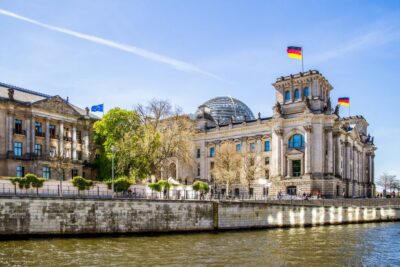
Government District around the Reichstag Guided Tour
Read our review →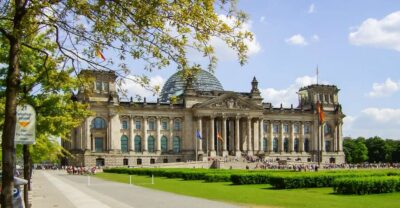
Reichstag, Plenary Chamber, Cupola & Government Tour
Read our review →