Reviewed · BERLIN TOURS
Berlin: 2.5-Hour Neighborhood Tour of Neukölln
Neukölln rewards curious walkers. This 2.5-hour tour connects old Rixdorf, working-class Rollberg, grand public buildings, and today’s multicultural Neukölln in one compact walk. I especially like the contrast between the village feel around Richardplatz and the urban drama of Karl-Marx-Strasse. I also like that the tour looks beyond Berlin’s famous center, where the city’s changes feel close and easy to understand.
The main consideration is pace. You cover many sites in 150 minutes, and much of the value comes from listening to the guide rather than simply taking photos. The meeting point can vary by booking, so you should confirm the exact starting place and wear comfortable shoes.
In This Review
- Key points about the Neukölln walk
- Why Neukölln makes a better walk than you might expect
- Rixdorf before Neukölln: the story behind the name
- Richardplatz and the Bohemian village
- Neukölln Town Hall and the old civic center
- Rollberg and the Innstrasse housing complex
- The old public pool and Neukölln’s public institutions
- Saalbau Neukölln and Karl-Marx-Strasse
- What Tobias adds to the experience
- How the $23 price holds up
- Practical advice before you go
- Who should book this Neukölln tour?
- Should you book it?
- FAQ
- How long is the Neukölln neighborhood tour?
- How much does the tour cost?
- Which languages are available?
- Where does the tour meet?
- Can I request a particular date and time?
- Is the tour wheelchair accessible?
- What places are included on the tour?
- Does the tour visit Richardplatz?
- Are food and drinks included?
- Can I cancel the booking?
Key points about the Neukölln walk
- Rixdorf’s surprising past: Learn why the old name was changed to Neukölln in 1912 and how Protestant Bohemian refugees shaped the district.
- Richardplatz and Bethlehem Church: See a village-like corner of Berlin, including the former exile community and its church.
- Working-class Rollberg: Hear how the proletarian residence district developed and see the striking housing complex on Innstrasse.
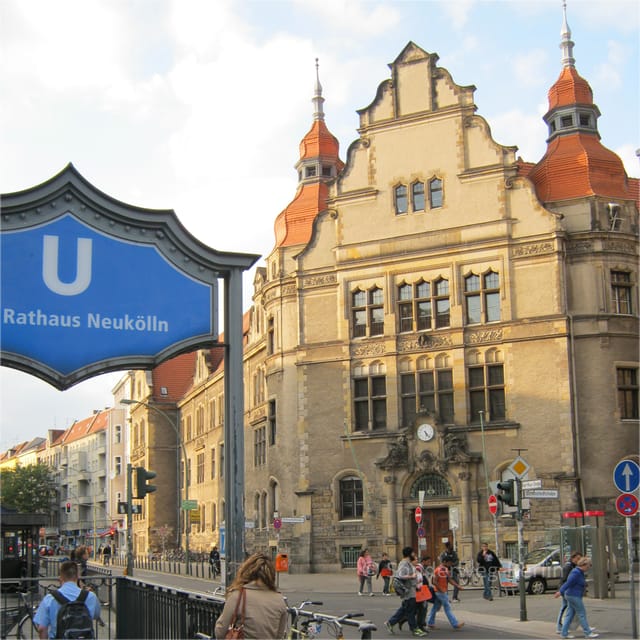
- Public buildings with stories: Visit the old district court, former prison, town hall, and old Neukölln public pool façade.
- A changing city center: Walk along Karl-Marx-Strasse, including its arcade, and discover Saalbau Neukölln.
- A guide-led experience: English and German tours are available, and Tobias has received especially warm praise for his personal, relaxed way of explaining local history.
Why Neukölln makes a better walk than you might expect
Many first visits to Berlin focus on the Brandenburg Gate, Museum Island, the Wall, or grand avenues. Those places matter, but Neukölln gives you a different kind of Berlin. Here, history is built into ordinary streets, housing blocks, former civic buildings, and old village lanes.
I like this tour because it does not treat Neukölln as a single thing. It shows several versions of the district at once. You move from medieval origins to Protestant migration, then to industrial growth, working-class housing, municipal ambition, and the multicultural neighborhood that exists today.
That mix also makes the tour useful if you already know central Berlin. You are not simply seeing another landmark from the standard sightseeing list. You are learning why this part of the city looks and feels the way it does.
The tour lasts 2.5 hours and costs $23 per person. For a small-group walking experience led by a live guide, that is a fair price, especially if you value context. You could walk through Neukölln on your own for free, of course, but you would miss the links between the court, town hall, housing districts, Bohemian village, and public buildings.
Other Berlin trips people book alongside this one:
- Berlin: Reichstag, Dome and Government District Guided Tour
★ 4.7 · 18,288 reviews - Berlin: 1-Hour City Tour by Boat with Guaranteed Seating
★ 4.3 · 16,993 reviews - Berlin: Boat Tour Along the River Spree
★ 4.4 · 11,252 reviews
Rixdorf before Neukölln: the story behind the name
The walk explains how Rixdorf became Neukölln in 1912 with the approval of Wilhelm II. The name change was not a simple administrative update. Rixdorf had gained a reputation for frivolous entertainment, and officials wanted to improve the city’s public image.
That detail gives the tour a useful sense of humor. Place names are often presented as dry facts, but here the name tells you something about how the city saw itself and how local leaders wanted others to see it.
The older story reaches back much further than 1912. Rixdorf was shaped by German residents and Bohemian Exulanten, Protestant refugees who settled here in the 18th century. Their religious faith and puritan habits influenced daily life, creating a sharp contrast with the later reputation for nightlife and amusement.
You will hear how these different identities overlapped. Neukölln was not born as the multicultural district you see today. Its character was built in layers, with each period leaving behind streets, buildings, and customs.
Richardplatz and the Bohemian village
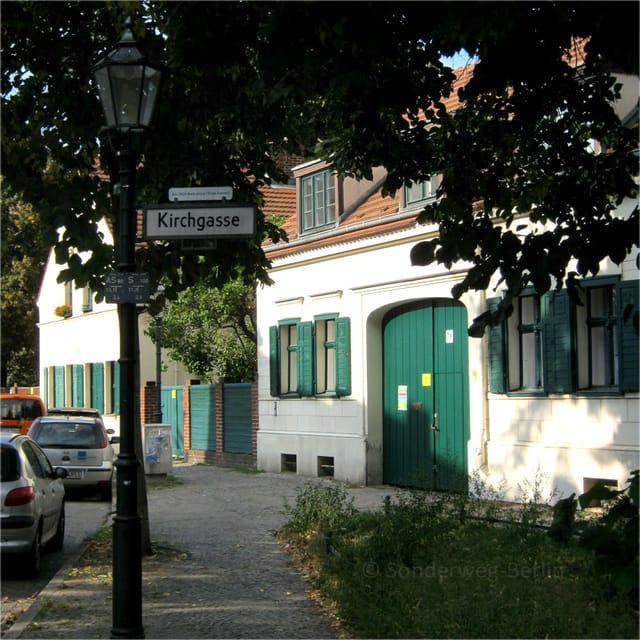
Richardplatz is one of the most appealing parts of the walk. The area still has a village-like atmosphere, which can feel unexpected in a large capital city. That change of mood is one of the tour’s best moments.
The square and surrounding streets help you picture the earlier Rixdorf community. Instead of reading about Protestant refugees in a museum, you are seeing the setting where their community took root. The point is not just that Bohemian settlers once lived here. The point is that their arrival helped shape the district’s identity.
The tour also includes the exile houses in Bohemian Rixdorf and a visit to Bethlehem Church on Richardplatz. These stops give the religious history a physical setting. You can better understand why this section of Neukölln feels different from the busier commercial streets nearby.
I would give Richardplatz extra attention if you enjoy architecture and local history. It is also a good place to slow down mentally after the broader story of urban growth. The only limitation is that this is a walking tour, not a long church visit or a museum program, so the time inside or around each site may be limited.
Neukölln Town Hall and the old civic center
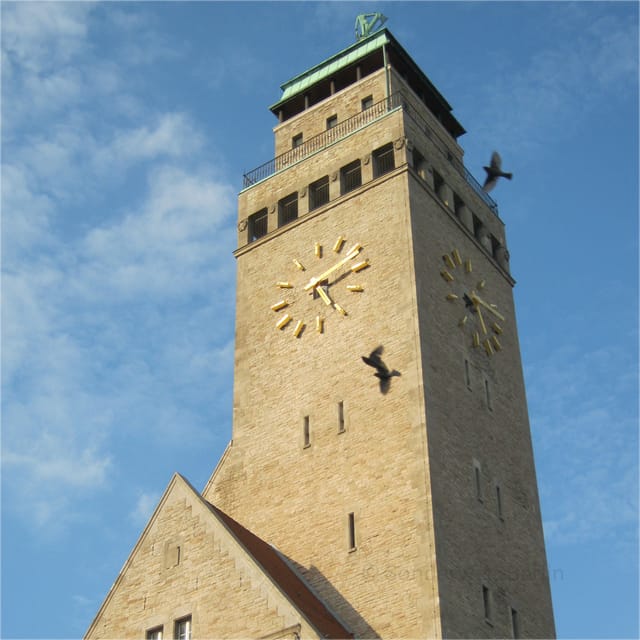
The magnificent architecture of Neukölln Town Hall provides a strong contrast to the village character of Richardplatz. The building reflects a city that wanted to present itself as important, organized, and modern.
Your guide can use the town hall to explain how Neukölln developed as an independent urban center south of Berlin before becoming part of greater Berlin. This makes the building more interesting than a quick exterior photograph. Its size and formal design express civic ambition.
The old district court and former prison add another layer. These buildings show how local government, law, and public order worked in the growing district. Together with the town hall, they form a picture of a city managing a rising population and a changing social structure.
I like this part of the route because it avoids the usual Berlin habit of treating architecture as decoration. The buildings are evidence of political and social change. You are looking at the institutions that helped govern Neukölln, not just at attractive façades.
Something different for another day:
- Discover Berlin Half-Day Walking Tour
★ 5.0 · 9,624 reviews - Berlin: Hop-on Hop-off Bus Tour with Live Commentary
★ 4.3 · 8,579 reviews - Berlin: Government District around the Reichstag Guided Tour
★ 4.7 · 8,447 reviews - Berlin: Reichstag, Plenary Chamber, Cupola & Government Tour
★ 4.6 · 8,422 reviews
Rollberg and the Innstrasse housing complex
The Rollberg district brings the tour into the world of working-class Neukölln. You learn about the history of this proletarian residence district and see the notable housing complex on Innstrasse.
This is where the tour becomes especially useful for understanding everyday urban life. Berlin’s story is often told through palaces, museums, and political monuments. Rollberg points you toward housing, density, and the needs of ordinary residents.
The architecture on Innstrasse is one of the more unusual stops. Its design gives you something concrete to study while the guide explains how residential districts were planned and built. Look beyond the overall shape and pay attention to how the buildings create shared spaces and a sense of community.
A past tour with Tobias also included the atrium houses on Rollberg. That detail suggests the route may feature more than a quick look at one façade, depending on the chosen option and the day’s arrangements. Ask at booking if a particular Rollberg feature matters most to you.
This section may appeal less if you only want famous monuments. It is not polished sightseeing in the traditional sense. Its value lies in showing how Berlin housed its population and how design reflected social goals.
The old public pool and Neukölln’s public institutions
The façade of the old Neukölln public pool is another reminder that city history is not limited to government offices and churches. Public baths were important civic institutions, tied to health, hygiene, leisure, and urban life.
The exterior gives the guide a chance to explain how public services changed as Berlin’s population grew. Even if you are not deeply interested in swimming facilities, the building helps connect architecture with the daily needs of residents.
The old pool also adds visual variety to the walk. After the formal town hall and the heavy civic story of the court and prison, you get a building linked to ordinary recreation and public health.
You should expect to view the site as part of the walking route rather than plan on a full pool visit. Food, drinks, and personal expenses are not included, so plan your own refreshment stop before or after the tour.
Saalbau Neukölln and Karl-Marx-Strasse
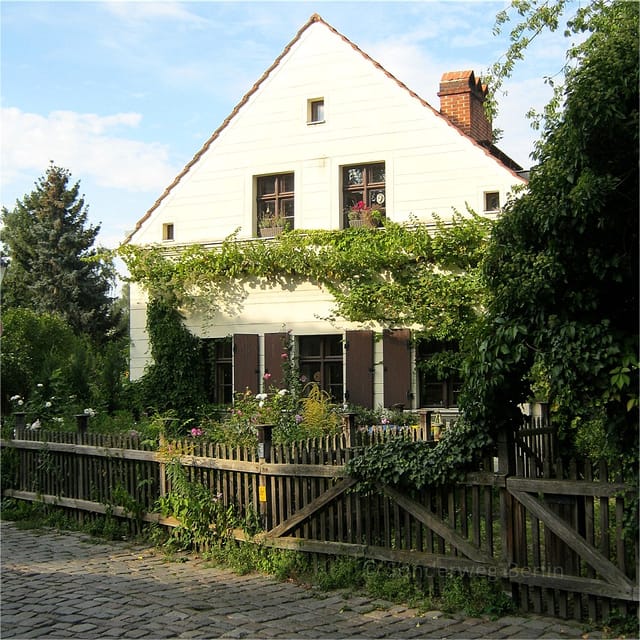
Saalbau Neukölln introduces the cultural side of the district. Its presence shows that Neukölln has long been more than a residential and administrative area. Culture, performance, and public gathering belong to the neighborhood’s story too.
The walk continues toward Karl-Marx-Strasse and its arcade. This is a useful change of setting. Instead of isolated historic buildings, you experience one of Neukölln’s main commercial corridors, where the district’s present-day energy is easier to see.
The arcade gives you a close look at how shopping streets have changed over time. It is not presented as a grand monument, and that is precisely why it is valuable. You are seeing the kind of place that shapes local routines and public life.
Depending on the route, the walk may also include the Neuköllner Oper and the former brewing room of the Kindl brewery. These additions were part of an especially full private tour with Tobias. They connect performance, industry, and neighborhood change in a way that fits the wider theme of the tour.
Karl-Marx-Strasse can be busy and urban, so do not expect the calm of Richardplatz here. That contrast is part of the point. Neukölln changes mood quickly, and the guide helps you see those shifts as part of one connected district.
What Tobias adds to the experience
The guide can make or break a neighborhood walk, and Tobias has received particularly strong praise for his approach. His style is described as personal, relaxed, communicative, and able to explain history with a light touch.
That matters in Neukölln because the subject is broad. You are moving between religious migration, urban planning, civic power, working-class housing, public services, entertainment, and modern identity. A stiff lecture could make that feel like a list of dates. A conversational guide can help the pieces fit together.
Tobias has also led very small groups, including one private-feeling tour for only two people on Christmas Day. That does not guarantee a private group on your date, but it suggests the experience can become quite personal when demand is low.
One German participant who had been born in Berlin still found unfamiliar corners and new information on the walk. That is a useful sign for both first-time visitors and Berlin residents. You do not need to be a history specialist, and you do not need to be new to the city to find value here.
The tour is offered in German and English. If you have a strong interest in architecture, urban development, or local history, tell the provider when arranging your meeting point and time. A requested date, time, and meeting location can be arranged for you and your group upon request.
How the $23 price holds up
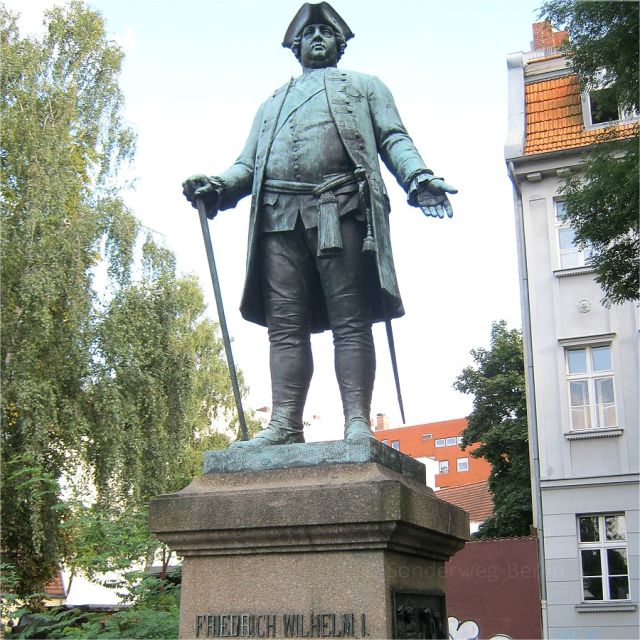
At $23 per person, this is priced below many longer Berlin tours and offers a solid return if you want a guide’s interpretation rather than a simple walk through the neighborhood.
The value comes from the number of connected subjects covered in 2.5 hours. You see the town hall, court, former prison, housing architecture, public pool façade, Saalbau, Karl-Marx-Strasse, Richardplatz, exile houses, and Bethlehem Church. More important, the guide explains how those places relate to one another.
Still, you should judge the price against your interests. If you prefer museums, interior visits, or a slow photography walk, this may feel too focused on exterior architecture and spoken history. Food and drinks are not included, and the tour does not promise admission to a series of paid attractions.
For someone who wants an affordable introduction to a less familiar Berlin district, the price is sensible. The free cancellation option up to 24 hours before the tour and reserve-now, pay-later booking also make it easier to fit into a changing schedule.
Practical advice before you go
This is a walking tour, so comfortable shoes are the obvious choice. You will get more from it if you arrive ready to look closely at façades, housing layouts, street plans, and small signs of change rather than waiting for one major monument.
Confirm the meeting point because it may differ by the option you book. You can also request a meeting point, date, and time for your group, but provide those details when booking.
The tour is wheelchair accessible. Since the route covers urban streets and several exterior locations, you should still confirm the exact route if you have specific mobility needs.
English and German are available. The live guide format means you can ask questions and follow up on subjects that interest you. If you want the most from the tour, ask about the 1912 name change, the Bohemian settlers, Rollberg housing, and the former Kindl brewery area.
There is no mention of food or drink being included, so bring what you need or plan a stop afterward. The tour length is long enough to give you a real sense of Neukölln but short enough to fit into a day of sightseeing.
Who should book this Neukölln tour?
I would recommend it to you if you have already seen central Berlin and want a district with more local texture. It also suits anyone interested in architecture, migration, religion, public housing, municipal history, or the way cities change their image.
It is a good choice for repeat visitors and Berlin residents because the route reaches places that are easy to overlook. The former prison, old public pool, housing complex, and arcade are not the usual headline stops, but they help explain the city better than another generic viewpoint.
Families with older children may enjoy the variety, especially the prison, church, village square, and unusual housing. Younger children may find 2.5 hours of spoken history tiring, since the experience is built around explanation rather than hands-on activities.
I would be more cautious if you want a quiet walk, a food tour, or extensive interior access. You will spend much of the time outdoors, and the exact route can vary by booking option.
Should you book it?
Book this tour if you want to understand Neukölln rather than simply pass through it. The route links Bohemian Rixdorf, civic Berlin, working-class Rollberg, public institutions, commercial Karl-Marx-Strasse, and the multicultural district of today.
The strongest reason to go is the local focus and the guide’s personal style, particularly if Tobias leads your walk. At $23, the tour offers good value for a compact, fact-filled introduction to one of Berlin’s most layered neighborhoods.
Skip it if you only want famous sights or long visits inside major attractions. For everyone else, especially repeat visitors and curious first-timers, this is a smart way to spend 2.5 hours away from Berlin’s usual center.
FAQ
How long is the Neukölln neighborhood tour?
The tour lasts 2.5 hours.
How much does the tour cost?
The listed price is $23 per person.
Which languages are available?
The live tour guide is available in German and English.
Where does the tour meet?
The meeting point may vary depending on the option booked. A meeting point can also be arranged for you and your group upon request.
Can I request a particular date and time?
Yes. You can provide a preferred meeting point, date, and time when booking for your group.
Is the tour wheelchair accessible?
Yes, the activity is listed as wheelchair accessible.
What places are included on the tour?
The route includes the old district court and former prison, Neukölln Town Hall, Rollberg, the housing complex on Innstrasse, the old public pool façade, Saalbau Neukölln, the arcade on Karl-Marx-Strasse, Bohemian Rixdorf, Richardplatz, and Bethlehem Church.
Does the tour visit Richardplatz?
Yes. The tour explores Richardplatz and includes the exile houses in Bohemian Rixdorf and Bethlehem Church.
Are food and drinks included?
No. Food, drinks, and personal expenses are not included.
Can I cancel the booking?
You can cancel up to 24 hours in advance for a full refund. You can also reserve now and pay later.
Just added around Berlin
- Berlin: Private Guided Tour of the Main Sights★ 5.0 · 13 reviews
- Private Highlights of Berlin Bike Tour★ 5.0 · 13 reviews
- Modern Berlin Private Walking Tour: Diverse, Vibrant and Exciting German Capital★ 5.0 · 13 reviews
- Tour in Berlin from Warnemünde and Rostock Cruise Port★ 4.1 · 13 reviews
- Berlin: Stasi Museum Private Guided Tour with Entry Ticket★ 4.8 · 13 reviews
- Private Food Tour Experience with a born and bred Berliner★ 5.0 · 14 reviews
- Berlin: Rheinsberg Palace Entrance Ticket★ 4.8 · 14 reviews
- Berlin in one day – day tour with an expert guide★ 5.0 · 14 reviews
Berlin Tours, compared.
Reichstag, Dome and Government District Guided Tour
Read our review →
1-Hour City Tour by Boat with Guaranteed Seating
Read our review →
Government District around the Reichstag Guided Tour
Read our review →
Reichstag, Plenary Chamber, Cupola & Government Tour
Read our review →