
Reviewed · PRIVATE DRIVER DAYS IN BERLIN
Welcome/Farewell SightseeingTaxi Tour +Transfer from/to the airport
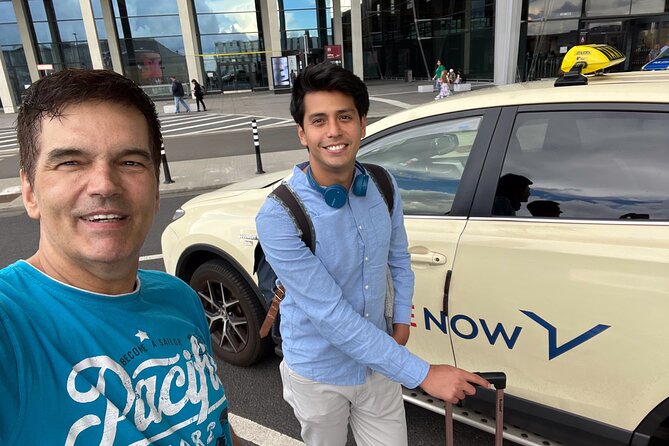
Berlin begins at the airport. This private taxi tour turns a transfer into a first look at the city, with stops at the Brandenburg Gate, Museum Island, Hackescher Markt, and more. I like the air-conditioned car with WiFi, and I like that your own group controls the pace instead of following a large bus. The main drawback is time: with only one to three hours, you will see many places from the road and have time to explore only a few.
Guide Gunter Bauer adds useful local context, from Cold War escape attempts at Friedrichstraße station to the book burning memorial at Bebelplatz. I also like the practical airport arrangement, but you need to send your flight details and a mobile message after landing so the pickup works smoothly.
In This Review
- Key points to know before booking
- Why this Berlin taxi tour can be a smart first ride
- Arrival at Brandenburg Gate and Pariser Platz
- Reichstag, the Chancellery, and the working parliament
- Friedrichstraße station and Unter den Linden
- Bebelplatz, the Neue Wache, and royal Berlin
- The Humboldt Forum and Berlin Cathedral
- Hackescher Markt and the smaller-scale city
- Alexanderplatz, the Red City Hall, and Nikolaiviertel
- Hausvogteiplatz, the Holocaust Memorial, and Potsdamer Platz
- Price, comfort, and the airport plan
- Who should choose this private Berlin tour?
- Should you book it?
- FAQ
- Is the airport transfer included in the tour?
- How long does the experience last?
- Is this a private tour?
- What should I provide for an airport pickup?
- Is the tour offered in English?
- What is included in the price?
Key points to know before booking
- Airport transfer plus city tour: You can turn your arrival or departure ride into a guided introduction to central Berlin.
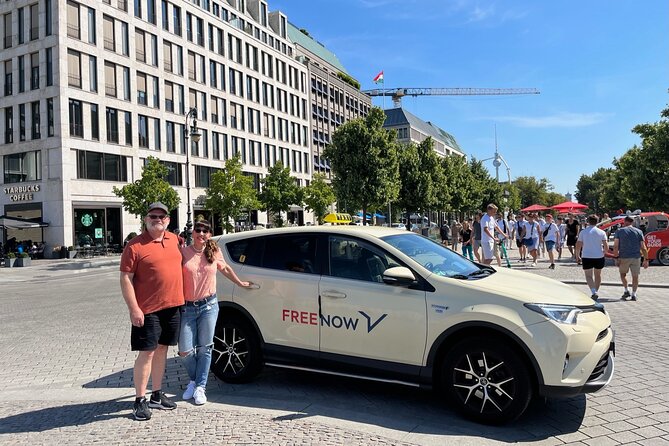
- Private vehicle for your group: Only your party participates, making photo stops and questions easier than on a standard coach tour.
- Strong coverage of Berlin’s major eras: The route links Prussian royal buildings, Nazi history, the Berlin Wall, East Berlin, and reunification.
- Flexible sightseeing: Stops can be made according to your interests, while less important sights can be viewed from the car.
- Good practical comforts: The price includes an air-conditioned vehicle, parking fees, onboard WiFi, and city pickup.
- Best for first-time orientation: You can use the tour to decide which museums and neighborhoods deserve a longer visit later.
Why this Berlin taxi tour can be a smart first ride
A regular airport transfer gets you from BER to your hotel. This experience tries to do more with the same basic journey. You ride through central Berlin with a private guide, stop for photographs, and receive a fast but useful explanation of how the city was shaped by monarchy, war, division, and reunification.
That combination is the real appeal. Berlin is spread out, and its most important sights are not all in one compact old town. The Brandenburg Gate, Reichstag, Museum Island, East Berlin monuments, and Potsdamer Platz each tell a different part of the story. A car lets you connect them without spending your first hours working out public transport routes or walking long distances with luggage.
I would treat this as an orientation tour, not a full museum visit. The usual duration is about one to three hours, so the route is designed to show you the city’s framework. You may get out at major points, take pictures, and listen to an explanation, but you should not expect to enter every church, museum, or memorial.
The private format matters. You can ask why the Berlin Palace was demolished, how the Wall affected Friedrichstraße station, or why a rebuilt square looks older than it really is. A large group tour often has to move on. Here, the sightseeing can be adjusted to your interests, although the exact amount of stopping depends on your available time.
More Private Driver Days in Berlin
- Berlin: Listening Station Teufelsberg Tour with Transfer
★ 4.8 · 354 reviews - Private Berlin Custom Half-Day Tour with Private Driver and Guide
★ 5.0 · 59 reviews - Berlin Private Transfer to/from Berlin Brandenburg Airport
★ 4.0 · 32 reviews
Arrival at Brandenburg Gate and Pariser Platz
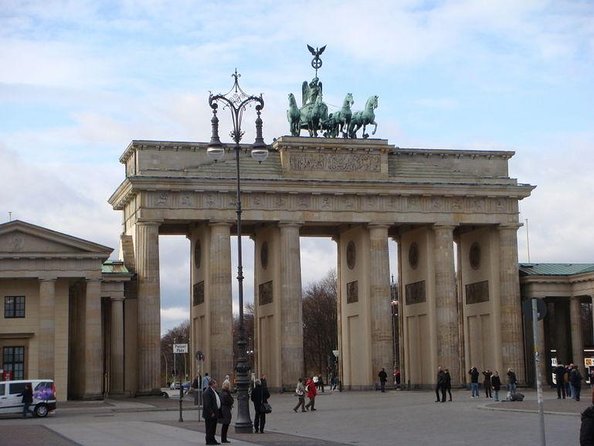
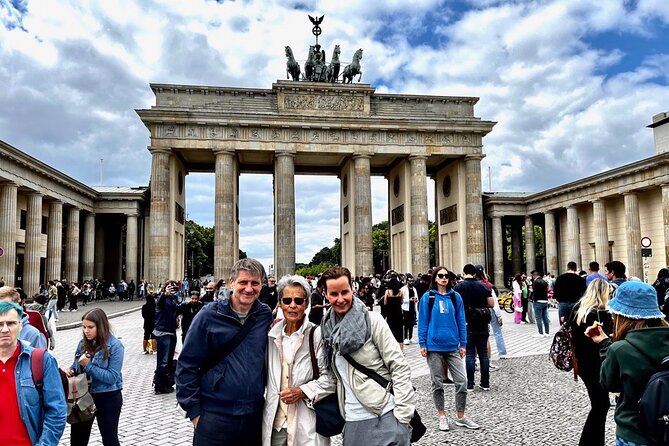
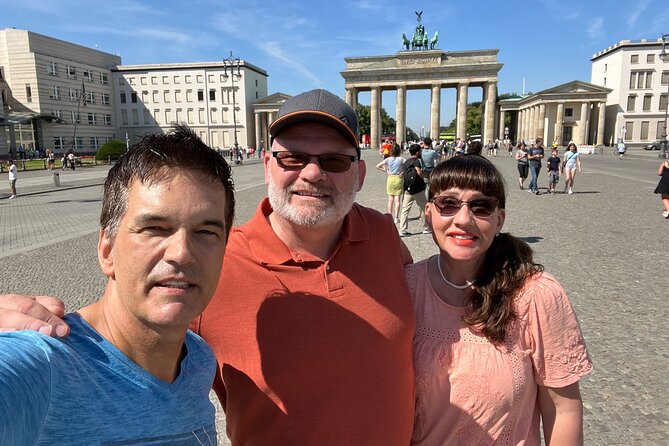
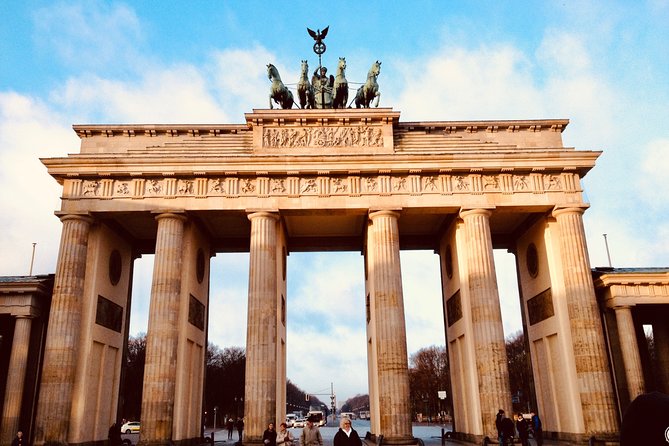
The Brandenburg Gate is the natural opening scene. Today, it is a symbol of German unity, but its story began as a city gate leading west from the royal residence toward the elector’s hunting grounds, now the Tiergarten. The familiar neoclassical form was expanded after the French Revolution.
The gate gained new meaning during the Napoleonic period. Napoleon took the Quadriga, the four-horse chariot topped by the goddess of peace, to Paris. After France’s defeat, the sculpture returned in a triumphal procession and was later given victory symbolism, including the eagle and iron cross.
The 20th century left the gate isolated and difficult to reach. During the division of Berlin, the Wall blocked access from the west, while fences and barriers sealed it from the east. The surrounding buildings had been badly damaged, and the remains of the Hotel Adlon were eventually demolished.
A short stop here gives you a useful sense of how Berlin’s political meaning can change without the stonework moving. You can take photographs from Pariser Platz, the formal square in front of the gate. Rebuilt after reunification, the square now includes the Liebermann House, the Academy of Arts, and the French and American embassies.
I like the way this part of the tour explains the setting rather than treating the gate as a single photo opportunity. You see why Pariser Platz is sometimes described as Berlin’s finest reception room. The one limitation is that five minutes passes quickly, so ask in advance if you want time for more than a quick picture.
Reichstag, the Chancellery, and the working parliament
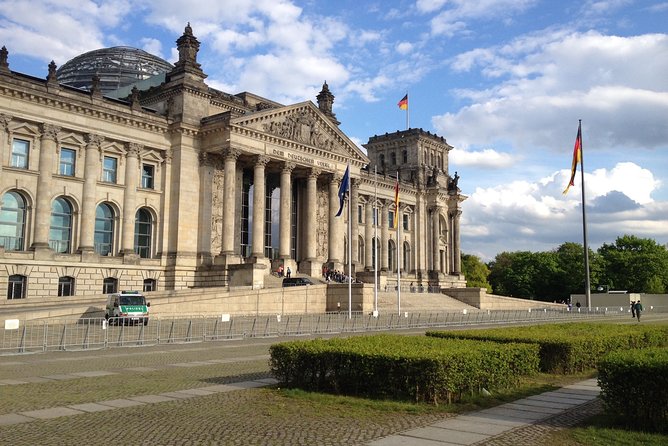
The Reichstag is one of the most useful exterior stops because its appearance hides a complicated past. It began as a grand Wilhelmine parliament building, though critics once mocked its design as a booth or monkey house. After the war, Soviet soldiers raised their flag there, creating one of the most famous images associated with the building.
During the Cold War, the Reichstag sat only a few meters from the Wall on the West Berlin side. It could not function as a normal federal parliament building, and official meetings there could provoke protests from East Berlin. After reunification, the interior was gutted and redesigned for a Bundestag of more than 700 deputies.
The glass dome now gives the building its modern identity. It also reflects a political idea: parliament should be visible to the public. The dome replaced a more ordinary roof concept and became one of the clearest symbols of the new Berlin.
Nearby, you see the Federal Chancellery, a huge white government building with ten floors, 36 meters of height, and roughly 500 office rooms for more than 300 employees. The chancellor’s office is in the upper left section. An official apartment was included in the rotunda, though the chancellor does not use it.
The Paul Löbe Building is another important stop. This long glass structure is where much of parliament’s daily work takes place. Committees handle discussion and voting there, while final speeches take place in the Reichstag. Its curved sections and glass walls make the idea of an open parliament visible from outside.
This section is more satisfying if you enjoy government and modern architecture. If you mainly want old Berlin, you may prefer to spend more time around the palace, cathedral, or Museum Island.
Friedrichstraße station and Unter den Linden
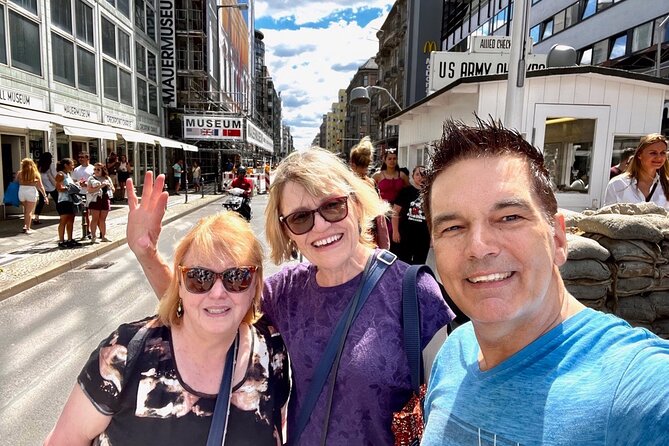
Friedrichstraße station offers one of the clearest Cold War stories on the route. It was the only Berlin station where certain trains could continue between East and West Berlin, including international services such as the Paris to Moscow Express. It was also used for people leaving East Berlin, usually without the option of returning.
The station was sealed with barriers and customs checkpoints, while Stasi observation routes monitored movement. Escape attempts were made here, sometimes with tragic results. The nearby Palace of Tears recalls the farewells between East Berlin residents and their relatives. Many departures felt permanent.
This is the kind of stop that can make the division of Berlin easier to understand. The Wall was not just a concrete barrier in a street. It affected railway platforms, family visits, travel documents, and the ordinary act of saying goodbye.
From here, the route can continue along Unter den Linden, Berlin’s grand ceremonial boulevard. It began as a riding path from the Berlin Palace through the Brandenburg Gate to the royal hunting grounds. As the city expanded westward, the path became a major avenue lined with linden trees.
The boulevard connects several key buildings, including the State Library, Humboldt University, and the State Opera. The name might suggest a street lined with walnuts, thanks to the old wordplay surrounding its trees, but the linden trees won.
Unter den Linden can feel formal and monumental. That is useful context before moving toward smaller streets and courtyards later in the tour.
More Private Driver Days from Berlin:
- Minivan Driver and Guide (DIN15565) Tailor Made Berlin Highlights
★ 5.0 · 17 reviews - Private Transfer from Berlin to Prague with 2h of Sightseeing
★ 4.5 · 17 reviews - Private One way Airport Transfer Berlin Airport To Berlin
★ 3.5 · 17 reviews - Private Transfer from Berlin to Prague with 4h of Sightseeing
★ 4.5 · 7 reviews
Bebelplatz, the Neue Wache, and royal Berlin
Bebelplatz gathers several important buildings into one view. The State Opera, St. Hedwig’s Cathedral, Humboldt University, and the former royal library form part of the Forum Fridericianum, a planned royal ensemble associated with Frederick the Great.
The square is also a place of remembrance. A glass panel in the pavement reveals an empty library below. It recalls the Nazi book burning of May 10, 1933, when books considered unacceptable by the regime were destroyed. From above, the memorial is easy to miss, which is part of its effect.
Humboldt University began as a palace for Prince Heinrich, the younger brother of Frederick II. After his death, it became the core of the Royal Friedrich Wilhelm University, now Humboldt University. The nearby former royal library is sometimes nicknamed the chest of drawers because of its curved facade.
The Neue Wache is another stop worth taking slowly. During East Berlin’s years, people watched the ceremonial guard change here. The soldiers are gone, but the building remains a memorial to victims of war and terror.
Inside is Käthe Kollwitz’s enlarged Pietà, a mother mourning her dead son. The sculpture was inspired by Kollwitz’s own loss during the First World War. Official wreath ceremonies are often held here, especially around the national day of mourning in November.
The neighboring Crown Prince’s Palace and Crown Princess’s Palace are easier to overlook. They once housed royal children, including their upbringing and later family life. Today, the Crown Prince’s Palace is linked with the administration involved in rebuilding the City Palace and Humboldt Forum, while the Crown Princess’s Palace is used for exhibitions.
The Humboldt Forum and Berlin Cathedral
The former Berlin Palace occupied the site of today’s Humboldt Forum for centuries. It served the electors, kings, and emperors of Brandenburg and Prussia before being badly damaged in the war.
After 1945, the East German government demolished the remaining palace despite opposition. For decades, the site became an open area used at times for public events. The rebuilt Humboldt Forum restores the historic exterior, including the Schlüter courtyard, while giving the interior a new cultural role.
If the tour allows a longer stop, the roof terrace is especially worthwhile because it gives you a broad view over central Berlin. That visit depends on your interests and on the available time, so do not assume it will be included as a full interior visit during a short airport transfer.
Berlin Cathedral sits close by. Its present form is about 115 years old, despite its older-looking appearance. The building can be visited for its interior, the Hohenzollern burial place, and the climb toward the dome.
I find the cathedral useful as a lesson in Berlin’s character. It combines grand imperial ambition, wartime destruction, long rebuilding, and a polished present-day appearance. It is not ancient, but it carries the visual weight of an older European church.
Museum Island occupies the northern section of an island in the Spree. Five major museums here have UNESCO protection. The Old Museum was created to make royal collections available to the public, followed by the New Museum, the Old National Gallery, the Bode Museum, and the Pergamon Museum.
A taxi tour cannot replace time inside these institutions. It can help you choose. If you have only one museum visit available, ask Gunter Bauer to explain the choices and use the drive to form a sensible plan for the rest of your stay.
Hackescher Markt and the smaller-scale city
Hackescher Markt changes the mood. After the large royal and government buildings, the area around the historic S-Bahn station and Hackesche Höfe feels smaller, more intimate, and closer to everyday Berlin.
The courtyards combine homes, studios, workshops, and shops. They were restored after reunification after years of less careful use during the GDR period. Their design reflects an older pattern in which people lived and worked close together.
The extended route can include Große Hamburger Straße, sometimes called the Street of Tolerance. The area contains the Sophienkirche, an old Jewish cemetery, a Catholic hospital, and traces of the former Spandau suburb.
The Jewish cemetery includes members of the Mendelssohn family. A former synagogue nearby was built in a Moorish style with a golden dome, but its large worship hall was destroyed by wartime bombing. The surviving setting helps show that Jewish life in Berlin existed alongside Protestant and Catholic institutions rather than in a sealed-off quarter.
This optional extension is valuable for anyone who wants a less ceremonial view of Berlin. It also requires a tradeoff. Every extra neighborhood means less time at the Brandenburg Gate, Humboldt Forum, or Potsdamer Platz.
Alexanderplatz, the Red City Hall, and Nikolaiviertel
Alexanderplatz shows East Berlin’s attempt to create a socialist urban center. Its earlier name, Ochsenplatz, refers to its former role outside the old city walls. The square was later redesigned around wide open space and large modern buildings.
The route can pass the television tower, House of Tourism, House of Statistics, House of the Teacher, House of Electrical Engineering, and the World Clock. You may stop or simply view these buildings from the car.
The scale is deliberate. The open space was suited to public gatherings and broad views, with modern structures intended to express the future promised by socialism. It is not the prettiest part of Berlin for everyone, but it is one of the clearest places to see the physical language of the GDR.
The Red City Hall takes its name from its red brick, not from the political party of Berlin’s governing mayor. It was built in the 1870s in a northern Gothic style and eventually needed the neighboring town house because city administration had outgrown it.
You can visit some rooms for free, including a room filled with plaster casts of well-known statues, but the taxi stop is mainly an exterior orientation.
Nikolaiviertel offers a different kind of historical experience. Much of what you see was reconstructed in the 1980s, when the GDR government wanted to create an old-looking Berlin quarter. The Nikolaikirche, Berlin’s oldest church, forms the centerpiece and now houses a city museum.
The Garlic House contains a Biedermeier interior connected with the life of a cloth-maker family. Restaurants near the Spree add to the old-Berlin setting, though you should remember that this is a reconstructed district, not a perfectly preserved medieval neighborhood.
Near the river, you can also see the old crossing between the two early settlements that became Berlin and Cölln. The crossing once used a dam and channels to power mills before a small lock was built in the 19th century. A modern double-chamber lock replaced that arrangement in the 1930s.
Hausvogteiplatz, the Holocaust Memorial, and Potsdamer Platz
Hausvogteiplatz is an easy place to miss, which makes it a useful addition to a guided drive. The square developed in the 19th century as a center for Jewish clothing makers. Tailoring had once been restricted, but Jewish businesses built expertise in ready-made clothing and created strong competition.
The surrounding houses mix restored older facades with modern apartments. Small buildings designed by different architects give the area a varied, almost miniature-palace quality.
The Memorial to the Murdered Jews of Europe is one of the essential stops. Its 2,711 concrete stelae occupy a large field near the Brandenburg Gate and Potsdamer Platz. You can walk through them, though the experience is difficult to understand from the edge.
As the ground drops and the blocks vary in height, you may feel uncertain about direction and scale. The design points toward the fear and confusion experienced by Jewish people under Nazi rule. An information center below provides further material.
Allow time to walk through the memorial rather than taking only a roadside photograph. This is one place where the private taxi’s flexibility matters, but it is also one place where the guide should give you quiet time.
Potsdamer Platz was once a major traffic center during Berlin’s 1920s heyday. War destroyed most of its buildings, and the Wall later turned the area into a wide death strip. After reunification, Sony and Mercedes developed a new district with cinemas, the Berlinale Palace, the Film Museum, the former Lego Museum, cafes, bars, shops, offices, and upper-level apartments.
The area is modern and commercial, but its location makes it historically important. You can see how quickly Berlin filled a space that had been empty and dangerous for decades.
Price, comfort, and the airport plan
The listed price is $171.52 per person. Its value depends heavily on how many people are in your private party and how you use the time. For one person or a couple, it is a substantial transfer cost. For a private group sharing the experience, the personal guide, direct hotel pickup, airport transport, and flexible sightseeing may make the price easier to justify.
The price includes the air-conditioned vehicle, parking fees, WiFi, and pickup from a hotel, apartment, or other desired city location. It also includes both parts of the service: the taxi ride under the tariff with 7 percent VAT and the city tour with 19 percent VAT.
Snacks are not included, so plan to eat before or after the ride. The car can also accommodate a baby seat on request. A removable stroller cradle and foldable frame are required, and extra luggage space is reduced when a stroller is carried.
For the welcome service, provide your flight number and arrival time. After landing, send an SMS or WhatsApp message, then send another message when your suitcases reach the baggage carousel if possible. Gunter waits in the second lane rather than the main taxi queue, and he needs about five minutes to reach the arrivals hall from his free waiting area.
For the farewell service, do not come onto the street until Gunter sends an SMS or WhatsApp message. Include a working mobile number when you book. These details may sound fussy, but they prevent the classic airport problem of standing at different doors and wondering where the car went.
The service is offered in English. Service animals are allowed, and medium-sized companion dogs can lie on the rear floor. A large dog uses the back area, leaving no room for luggage there, while animals cannot use passenger seats unless secured in a suitable carrier.
Who should choose this private Berlin tour?
I would recommend it most strongly to first-time visitors who want their bearings quickly, families with luggage, older visitors who prefer limited walking, and anyone with a short airport layover or tight arrival schedule. It also suits people who want a private conversation about Berlin’s difficult past rather than a scripted sightseeing loop.
The tour is less suitable if your main goal is extended museum time. The route covers so much that some stops may be brief or viewed from the car. You should also check your timing carefully if you are using it before a flight, since traffic and airport procedures can affect how much sightseeing is sensible.
Gunter Bauer’s role is central. The available feedback praises him as an outstanding guide and highlights the comfort of seeing Berlin by car, stopping for pictures, and learning enough city history to plan later days. That is the experience’s best use: not trying to replace Berlin, but helping you choose what to do next.
Should you book it?
Book this private taxi tour if you want a comfortable introduction to Berlin built around your airport transfer. It gives you major landmarks, strong historical context, useful photo stops, and the freedom to shape the route around your interests.
Skip it if you already know Berlin well or want to spend your money on long museum visits. For a first visit, though, the combination of direct transport, private guiding, and a broad look at the city offers solid value, especially when several people share the private experience.
Free cancellation is available if you cancel at least 24 hours before the local start time. Changes or cancellations inside that window are not accepted for a refund.
FAQ
Is the airport transfer included in the tour?
Yes. The experience includes transfer from or to BER Airport, along with pickup from a hotel, apartment, or another desired location in Berlin.
How long does the experience last?
The sightseeing taxi experience lasts approximately one to three hours.
Is this a private tour?
Yes. Only your group participates, and the vehicle is arranged as a private activity.
What should I provide for an airport pickup?
Provide your flight number and arrival time. After landing, send an SMS or WhatsApp message, and send another message when you have your suitcases at the baggage carousel if possible.
Is the tour offered in English?
Yes. English is the stated tour language.
What is included in the price?
The price includes an air-conditioned vehicle, parking fees, WiFi onboard, city pickup, the BER airport transfer, and both the taxi ride and city tour taxes. Snacks are not included.
Just added around Berlin
- Kreuzberg Private Walking Tour: Immigrants, Artists & Hipsters★ 5.0 · 3 reviews
- Private Photo Tour in Kreuzberg★ 5.0 · 3 reviews
- Individual city tour Berlin for max. 8 persons★ 5.0 · 3 reviews
- Berlin’s Jewish Heritage: Private Tour of the Vibrant Jewish District★ 5.0 · 3 reviews
- Berlin & The Third Reich Private Guided Tour★ 5.0 · 3 reviews
- Private Analogue Photography Experience in Berlin★ 5.0 · 3 reviews
- Spy Mission in Berlin: Self-Guided Espionage Puzzle Quest★ 5.0 · 3 reviews
- Berlin Christmas Markets Walking Tour with Local Guide★ 5.0 · 3 reviews
Private Driver Days in Berlin, compared.
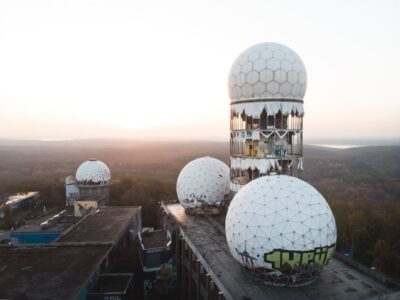
Listening Station Teufelsberg Tour with Transfer
Read our review →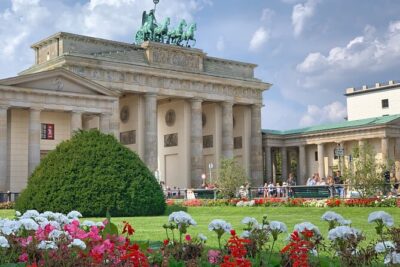
Private Berlin Custom Half-Day Tour with Private Driver and Guide
Read our review →
Berlin Private Transfer to/from Berlin Brandenburg Airport
Read our review →
Private Transfer from Berlin to Prague with 2h of Sightseeing
Read our review →
Minivan Driver and Guide (DIN15565) Tailor Made Berlin Highlights
Read our review →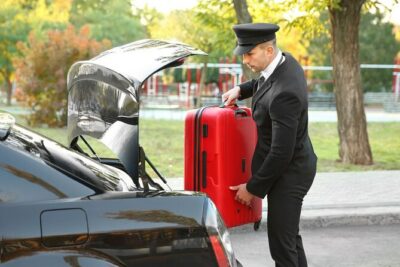
Private One way Airport Transfer Berlin Airport To Berlin
Read our review →
Private Transfer from Berlin to Prague with 4h of Sightseeing
Read our review →Browse the lists this tour appears in