
Reviewed · HISTORICAL TOURS
Völklingen Ironworks World Heritage Site: Guided tour of the ironworks site
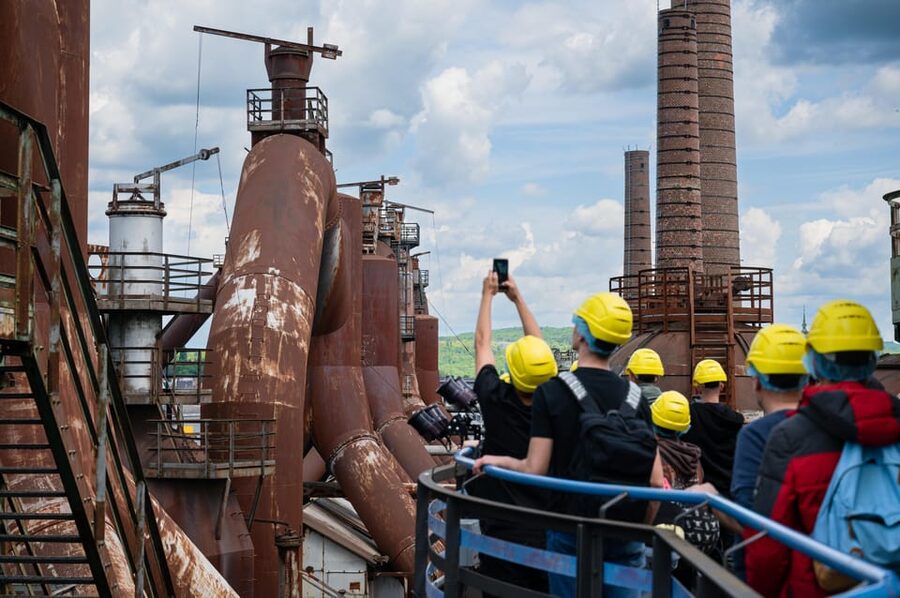
Industry still breathes here. The Völklingen Ironworks gives you a rare look at a complete industrial-age steelworks, from the blower hall and pipe systems to the blast furnace, with a guide explaining how pig iron was made and how workers lived around this demanding place. I especially like the expert-led tour and the chance to keep exploring after the two-hour walk.
I also like that the $25 price includes day admission, every permanent and special exhibition, the Ferrodrom Science Center, and the Paradise garden. The main drawback is pace: two hours can feel quick inside such a huge complex, and one visitor found there was little time to stop, read, or take photographs during the guided portion.
The tour is in German, and some material remains in its original language. If you understand German, this is a strong introduction to one of Europe’s most unusual industrial monuments. If not, you can still appreciate the scale, machinery, and views, but the spoken explanations will be harder to follow.
In This Review
- Key Points Before You Book
- Why Völklingen Ironworks Matters
- Starting at the Ticket Office
- Inside the Blower Hall
- How Pig Iron Was Produced
- Blast Furnaces and the Open Areas
- Exhibitions and the Ferrodrom Science Center
- The Old Coking Plant and Paradise
- Rooftop Views and Height Concerns
- What the Guide Adds
- Who Will Get the Most From This Visit
- Is $25 Good Value?
- Should You Book the Völklingen Ironworks Tour?
- FAQ
- Where is the Völklingen Ironworks?
- How long does the guided tour last?
- What language is the tour in?
- Where does the tour begin?
- What does the $25 price include?
- Can I explore the site after the guided tour?
- Is the Völklingen Ironworks wheelchair accessible?
- Is the experience suitable for people afraid of heights?
- Who can receive free admission?
- Can I cancel the booking?
Key Points Before You Book
- A complete industrial monument: Völklingen is the only fully preserved ironworks from the height of industrialization.
- A guide-led route: Your guide explains pig iron production, old machinery, working conditions, and Saarland’s industrial past.
- More than a two-hour tour: Your ticket also covers the exhibitions, Ferrodrom Science Center, Paradise garden, coking plant, and viewing platform.
- German-language experience: The live tour guide speaks German, and some content is presented in its original language.
- Height matters: The site includes elevated routes and a viewing platform, so it is not suitable if you are afraid of heights.
- Good value for a full day: At $25, the guided visit also gives you time to see the wider World Cultural Heritage Site at your own pace.
Why Völklingen Ironworks Matters
Völklingen Ironworks is not a museum built to imitate an old factory. It is the preserved factory itself, with its halls, open spaces, machinery, furnaces, and maze of pipes still defining the site.
The works is a UNESCO World Heritage Site and was the first monument from the industrial age to receive that distinction. That matters because the place shows industrial production as a whole system. You are not looking at one restored machine behind glass. You are seeing how raw materials, heat, air, fuel, labor, and transport came together to produce pig iron.
The site also helps explain Saarland’s place in central Europe. The region’s story is tied closely to coal, iron, industrial labor, and changing political borders. A visit here gives that history a physical setting instead of reducing it to dates in a textbook.
I find the contrast especially striking. Heavy steelmaking machinery occupies the same grounds as a reclaimed garden, exhibition spaces, concerts, and cultural events. The factory’s old working world has not been erased, but it has been given a new public life.
More Historical Tours in Germany:
- Leipzig: City History Canal Sightseeing Tour on a Motorboat
★ 4.7 · 6,232 reviews - Berlin: Natural History Museum Entrance Ticket
★ 4.6 · 3,382 reviews - Leipzig: 1.5-Hour Historical Walking Tour in German
★ 4.7 · 2,217 reviews
Starting at the Ticket Office
The meeting point is simple: go to the entrance area at the ticket office. That is where the guided tour begins, so you do not need to search through the sprawling works for your guide.
Your admission covers the two-hour guided visit and the rest of the site for the day. That arrangement is important because the tour gives you structure, while the later self-guided time lets you stop at places the group may pass quickly.
The basic price is $25 per person. I consider that fair for a site of this scale because you are paying for both the live explanation and a full day of access. The price is even better if you plan to visit several exhibitions and spend time in the coking plant, Ferrodrom, Paradise, and the viewing areas.
You should check the starting time when booking because the activity has set tour times. Free admission is available for anyone under 18, anyone under 27 with a valid student ID, and anyone with a valid SaarlandCard. Disabled visitors with a disability rating of 60 percent or more receive reduced admission. These free or reduced tickets are obtained at the entrance ticket office.
Inside the Blower Hall
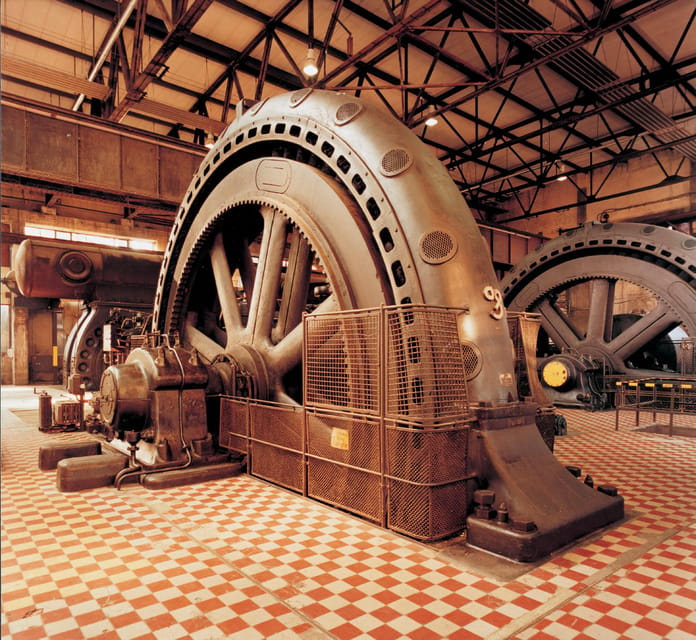
The blower hall is one of the first places where the machinery’s size begins to make sense. The guide explains the role of the blowers and the way air was supplied to the furnaces. This is where the production process stops being an abstract industrial term and becomes a chain of huge physical machines.
You will see old technology on a scale that is difficult to understand from photographs. The equipment is not delicate. It was built to work hard, day after day, in an environment shaped by heat, dust, noise, and constant movement.
A strong guide makes a major difference here. The best part of the tour is not simply hearing the names of machines. It is learning what each one did and how it fitted into the larger process. The guide also answers questions, and the tour has earned praise for clear, vivid explanations and engaging stories.
You may want to photograph everything, but do not count on having unlimited time during the guided walk. One piece of practical advice is to keep your camera ready, but listen first. The guided section moves through a large site, and stopping to read every sign or frame every machine can make you fall behind.
How Pig Iron Was Produced
The central question of the visit is straightforward: how was pig iron made? Your guide uses the machinery and structures around you to explain the answer.
The blast furnace required a steady flow of materials and air, along with intense heat. The process turned iron-bearing material into pig iron, an early product in steel and iron production. At Völklingen, you can connect that process to the actual halls, pipes, and furnace structures that supported it.
This part of the tour is useful even if you have little interest in engineering. You do not need a technical background to understand the basic sequence when it is explained beside the equipment itself. The machinery gives the lesson weight, while the guide supplies the missing pieces.
The human side is just as important. The tour asks how the people who worked here lived and how they coped with factory life. Industrial history can become too focused on machines, but Völklingen makes it possible to consider the workers who operated, maintained, and depended on this system.
That balance is one of the strongest reasons to choose a guided visit instead of walking through alone. You can see the machinery without help, but the social meaning of the works is easier to grasp when someone connects production with the lives around it.
A few more tours and experiences worth a look
- Berlin: Reichstag, Dome and Government District Guided Tour
★ 4.7 · 18,288 reviews - Dresden: Semperoper Tickets and Guided Tour
★ 4.7 · 12,102 reviews - Berlin: Government District around the Reichstag Guided Tour
★ 4.7 · 8,447 reviews - Hamburg: Elbphilharmonie Plaza Guided Tour
★ 4.7 · 5,882 reviews
Blast Furnaces and the Open Areas
The blast furnace area gives you the clearest sense of the factory’s vertical scale. The route moves through a mixture of halls, open spaces, and pipe systems, creating a setting that feels part museum, part working plant, and part industrial maze.
The site is large enough that a two-hour tour can only provide an introduction. One visitor described the guided route as a small glimpse of a huge complex, and that is the right expectation. You will see important sections, but you will not absorb every exhibition, platform, machine, and outdoor area before the tour ends.
That is not a flaw if you plan your time well. Think of the tour as your orientation. It gives you the story and points out what deserves a closer look. Then use the rest of the day to return to the sections that caught your attention.
The open areas also help you understand how separate parts of the works connected. The pipes are not decorative additions. They make the site’s systems visible, showing how air, gas, heat, and materials moved through the plant.
Exhibitions and the Ferrodrom Science Center
After the guided tour, your ticket gives you access to all permanent and special exhibitions. This is where you can slow down and fill in details that the moving tour could not cover.
The Ferrodrom Science Center is included as well. Its presence makes the visit more useful for families, students, and anyone who prefers practical explanations. The center offers another way to understand the forces and processes behind iron production, rather than relying only on labels and historical text.
Because the tour is in German, the exhibitions may also be important for visitors who want more time with visual material. Some content is shown in its original language, so check your comfort level before booking if you do not understand German.
I would not rush straight out after the guided portion. The all-day admission is part of the value. Use it to revisit the machinery, spend time with the exhibitions, and choose your own pace after the guide has finished.
The Old Coking Plant and Paradise
The old coking plant shows another side of the production system. Coking was closely tied to the fuel demands of ironmaking, and this section helps you see that the works depended on more than furnaces alone.
Then comes one of the site’s most surprising changes: Paradise. This landscape garden has developed on part of the former coking plant, where nature has reclaimed areas once associated with intense industrial work.
The contrast is not an attempt to make the factory pretty. It shows how a former production site can take on a new role without hiding its past. You can move from rusted structures and heavy industrial equipment into a garden shaped by the site’s own change over time.
The garden also adds breathing room to a visit filled with metal, concrete, pipes, and enclosed halls. If you need a quieter break, this is likely to be one of the most welcome parts of the day. Admission to Paradise is included.
Rooftop Views and Height Concerns
The viewing platform above the rooftops offers a different reading of Völklingen. From above, the confusing network of halls and pipes becomes easier to understand as one connected works.
You can also look across Völklingen and the surrounding Saarland setting. The view puts the ironworks in its regional context, showing how a major industrial site sits within a lived-in part of central Europe rather than in an isolated museum district.
There is a practical warning here. The experience is not suitable for people afraid of heights. The site includes elevated routes and a viewing platform, so you should be comfortable with height before reserving.
If heights are only a mild concern, you can ask the guide about the route, but the supplied information does not promise an alternative path. I would treat this as a real booking consideration, not a minor footnote.
What the Guide Adds
The guide is the heart of the experience. A good industrial site can be impressive on its own, but it can also leave you wondering what you are looking at. Here, the guide explains the machines, tells stories about the factory, and connects the ironworks with Saarland’s eventful past.
The strongest feedback focuses on the guide’s ability to answer questions and describe the machinery in a clear, vivid way. That suggests you should bring questions of your own, especially if you want more than a quick walk through the halls.
The guide-led format also helps with orientation. Völklingen is not a compact building with a simple route. Its halls, outdoor sections, pipes, exhibitions, and elevated areas can feel confusing at first. A two-hour introduction gives you a map in your head.
The tradeoff is speed. The tour must keep moving, and you may not have much time to stop for photographs or read every display. If you are a careful photographer or a serious museum reader, save those activities for after the tour.
Who Will Get the Most From This Visit
I would choose this tour if you enjoy industrial history, engineering, UNESCO sites, architecture, or places with a strong connection to working life. It also suits curious families and students because the Ferrodrom Science Center adds a hands-on science angle to the historic machinery.
You do not need to be an iron expert. The tour is designed to explain the production process and the human story for a general audience. You only need enough curiosity to look past the rust and ask what each part once did.
The visit works less well if you want a short, highly polished museum experience with lots of quiet reading time. It also may not suit you if you dislike heights or cannot follow German-language guiding.
Wheelchair access is available. Since the site is large and includes different halls and outdoor areas, you may still want to confirm the practical route at the ticket office when you arrive.
Is $25 Good Value?
At $25, the tour is good value if you treat it as a full-day cultural visit rather than a two-hour attraction. The guided portion provides context, and the admission continues to pay off through the exhibitions, Ferrodrom Science Center, Paradise garden, old coking plant, and viewing platform.
The value is weaker only if you plan to leave immediately after the guide finishes. In that case, you would be paying mainly for a quick introduction to a site that deserves more time.
Free and reduced admission options also change the calculation. Visitors under 18, students under 27 with valid identification, and SaarlandCard holders can enter free. Disabled visitors with a valid disability rating of 60 percent or more receive reduced admission at the entrance ticket office.
You can also reserve now and pay later, which helps if your schedule is still taking shape. Free cancellation is available up to 24 hours before the activity for a full refund.
Should You Book the Völklingen Ironworks Tour?
Book it if you want the machinery explained, not just photographed. The guide adds the production story, the worker’s perspective, and the Saarland connection, while the all-day ticket gives you time to explore the exhibitions and outdoor sections afterward.
I would plan at least several extra hours beyond the two-hour tour if your schedule allows. That gives you time to revisit the blower hall, study the blast furnace area, visit Ferrodrom, walk through Paradise, and reach the viewing platform without hurrying.
Skip it if you need an English-language tour, dislike elevated routes, or only want a fast look at the site. For German speakers and anyone interested in the physical reality of industrial history, this is one of the more memorable heritage visits in Saarland.
FAQ
Where is the Völklingen Ironworks?
The Völklingen Ironworks is in Saarland, Germany.
How long does the guided tour last?
The guided tour lasts two hours.
What language is the tour in?
The live tour guide speaks German. Some content is presented in its original language.
Where does the tour begin?
The tour begins in the entrance area at the ticket office.
What does the $25 price include?
It includes the guided tour, day admission to the Völklingen Ironworks World Cultural Heritage Site, all permanent and special exhibitions, the Ferrodrom Science Center, and the Paradise garden.
Can I explore the site after the guided tour?
Yes. After the guided portion, you are free to explore the entire site and visit the exhibitions and other included areas.
Is the Völklingen Ironworks wheelchair accessible?
Yes. The activity is wheelchair accessible.
Is the experience suitable for people afraid of heights?
No. The experience is not suitable for people afraid of heights because the site includes elevated areas and a viewing platform.
Who can receive free admission?
Visitors under 18 can enter free. Visitors under 27 with a valid student ID and visitors with a valid SaarlandCard also receive free admission. These tickets are obtained at the entrance ticket office.
Can I cancel the booking?
Yes. You can cancel up to 24 hours in advance for a full refund. You can also reserve now and pay later.
Just added around Germany
- e-Scavenger hunt Aachen: Explore the city at your own pace★ 4.0 · 13 reviews
- Munich: Private or Group Third Reich and WWII Walking Tour★ 4.9 · 13 reviews
- Canyoning Advanced Day Trip★ 5.0 · 13 reviews
- Wiesbaden Biebrich: Outdoor Escape Game★ 4.7 · 13 reviews
- Berlin: Private Guided Tour of the Main Sights★ 5.0 · 13 reviews
- From Munich: Neuschwanstein Castle and Linderhof Private Tour★ 5.0 · 13 reviews
- Trier, Moselle: Wine excursion with boat trip★ 3.9 · 13 reviews
- From Dresden: Guided Day Tour by Bus of Seiffen Toy Village★ 4.0 · 13 reviews
Historical Tours, compared.
City History Canal Sightseeing Tour on a Motorboat
Read our review →
Bamberg: Guided Beer History Tour with Optional Tasting
Read our review →Browse the lists this tour appears in