
Reviewed · HISTORICAL TOURS
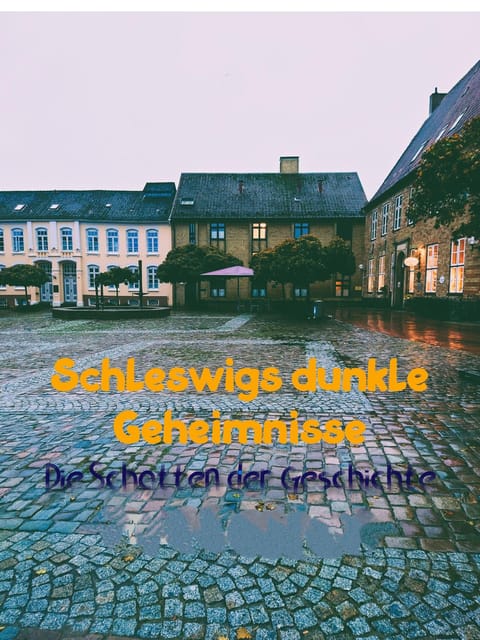
The shadows of history – “Schleswig’s dark secrets
Some towns keep their worst stories underground. Schleswig’s Dark Secrets tour brings those stories into the old city streets, linking witch hunts, plague, cathedral legends, crime, and grim archaeological finds to the places where the town’s past took shape. At $17 per person for 1.5 hours, it offers a focused way to see Schleswig from a darker, less polished angle.
I like the mix of documented history and local legends, and I like that the guide adds lighter anecdotes rather than turning the whole walk into a grim lecture. Guide Dirk has a gift for friendly, humorous storytelling, and he adjusts the tour to suit the group’s level of historical knowledge. The main consideration is clear: stories of executions, violence, death, plague, and witch trials may be too heavy for some people, and children under 13 are not permitted.
In This Review
- Key points to know before you book
- Starting beside the Rathausmarkt fountain
- Witch hunts and the cost of fear
- Plague stories in a peaceful old town
- Schleswig Cathedral, legends, and the line between fact and tale
- The Schlei and the danger beyond the streets
- Criminal cases and archaeological evidence
- A guide who keeps the mood human
- Is $17 a fair price?
- Who will enjoy this walk most?
- Should you book Schleswig’s Dark Secrets?
- FAQ
- Where does the tour begin?
- How long does the tour last?
- What language is the tour conducted in?
- Is the tour suitable for children?
- Is an interior visit to Schleswig Cathedral included?
- Does the tour discuss witch hunts?
- Does the tour include stories about the Schlei?
- Is the tour wheelchair accessible?
- Can I book a private group?
- Can I cancel the booking?
Key points to know before you book
- Meet at the Rathausmarkt fountain: The tour begins at the fountain by Schleswig’s town hall, a simple and central starting point for a walk through the old town.
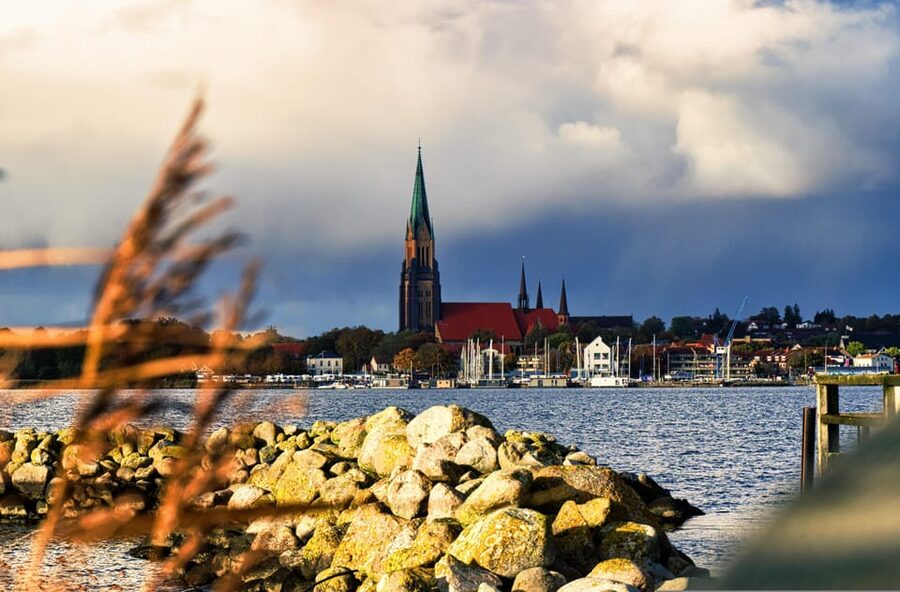
- The Schleswig Cathedral is part of the story: You hear about legends connected to the cathedral, but an interior visit is not included.
- Witch hunts take center stage: The tour explains how innocent women were accused and often burned at the stake.
- The Schlei adds another layer: Fishermen, myths, and local threats feature in the stories tied to this important waterway.
- Archaeology makes the past tangible: Dark finds connected with the founding of Schleswig help ground the legends in physical evidence.
- German is the tour language: A private group option is available, and the experience is wheelchair accessible.
Starting beside the Rathausmarkt fountain

Your meeting point is the fountain at Rathausmarkt, beside Schleswig’s town hall. That gives the tour a practical start in the heart of town, without requiring a separate transfer or complicated meeting arrangement.
From there, the walk enters Schleswig’s older story. The appeal is not simply hearing a list of dates and names. You are given a sense of how fear shaped daily life, how stories grew around familiar buildings and waterways, and how later generations remembered unpleasant events.
The tour lasts about 90 minutes. That is long enough to build a clear theme without taking up an entire day. I see this as a useful addition to a morning or afternoon in Schleswig, especially if you want a guided introduction before exploring the town on your own.
The tone matters. This is not presented as a solemn academic seminar. Dirk is described as friendly, funny, and able to keep the walk moving. One private group of 13 women especially appreciated his entertaining style, while another group found that he adapted the material to what they already knew.
That flexibility is valuable. A group with a strong interest in local history can follow the details more closely, while a casual visitor can still enjoy the strange stories and vivid settings.
More Historical Tours in Germany:
- Leipzig: City History Canal Sightseeing Tour on a Motorboat
★ 4.7 · 6,232 reviews - Berlin: Natural History Museum Entrance Ticket
★ 4.6 · 3,382 reviews - Leipzig: 1.5-Hour Historical Walking Tour in German
★ 4.7 · 2,217 reviews
Witch hunts and the cost of fear
The witch hunt section is likely to be the most serious part of the experience. Schleswig and the wider Schlei area were not spared the fear that swept through parts of Europe. Women who had done nothing wrong could be accused of witchcraft, tried, and burned at the stake.
The important point is that the tour treats these events as human history, not just spooky entertainment. You hear about the mechanisms of accusation and the danger of rumor. The stories show how quickly fear could become official punishment.
I appreciate that focus because it gives the subject weight. A witch hunt is more than a dramatic tale about magic. It reveals how vulnerable people could become targets when communities were under pressure and institutions accepted superstition as evidence.
You should also know what you are signing up for. The material includes violence and death. Even if the guide adds humor elsewhere, this part may feel upsetting, particularly for anyone sensitive to stories of persecution or execution.
The minimum age is 13, which fits the subject matter. Parents should still use their own judgment, since the age rule alone does not tell you how each child will react.
Plague stories in a peaceful old town

Schleswig today can feel calm and inviting, which makes the plague stories more striking. The city suffered several waves of plague, and the tour uses those events to show that quiet streets once held fear, sickness, and sudden loss.
You are not simply looking at old buildings as attractive backdrops. The stories ask you to imagine how people understood disease before modern medicine and public health. A familiar street can take on a different mood when connected to the memory of repeated epidemics.
This is one of the tour’s strengths. It places local events inside a wider pattern without losing the sense of place. You do not need specialist knowledge to follow it. The guide’s job is to make the past understandable and concrete, and the reported response to Dirk’s tours suggests that he does this with a light touch.
The plague material also balances the witch hunt stories. Both subjects show communities facing forces they could not control, but they produced different kinds of fear. Disease threatened everyone, while accusations of witchcraft could turn neighbors against particular individuals.
Schleswig Cathedral, legends, and the line between fact and tale
Schleswig Cathedral is one of the tour’s main story settings. The building is said to be haunted, and the walk explores the myths and legends attached to it.
The distinction between fact and folklore is important here. The tour includes both true events and legendary stories, so you should not expect every tale to be presented as proven history. That mix is part of the fun, provided you enjoy hearing how a place can collect stories over time.
The cathedral is included from the outside and in the surrounding discussion. An interior tour is not part of the experience. If you want to see the inside, plan that separately rather than assuming your ticket covers it.
I like this arrangement for a short walking tour because the cathedral becomes a setting within a larger story. You are not spending the full 90 minutes on architecture alone. Instead, the building connects religious life, local fear, legend, and the ways people explain unexplained events.
Still, anyone booking mainly for the cathedral interior should take note. This tour is about the dark history of Schleswig, not a standard cathedral visit.
Something different for another day:
- Berlin: Reichstag, Dome and Government District Guided Tour
★ 4.7 · 18,288 reviews - Berlin: 1-Hour City Tour by Boat with Guaranteed Seating
★ 4.3 · 16,993 reviews - Hamburg: Sex and Crime in St. Pauli Tour for Ages 18+
★ 4.7 · 15,447 reviews - Hamburg: 1.5-Hour Harbor and Speicherstadt Day Cruise
★ 4.6 · 14,200 reviews
The Schlei and the danger beyond the streets
The Schlei brings the tour out of the narrow focus of buildings and city lanes. Fishermen along the water were also threatened, and the tour shares myths and stories tied to the inlet.
These tales add a strong local flavor. Waterways often carry their own warnings, creatures, spirits, and memories, and the Schlei is treated as more than a scenic feature. It becomes part of the town’s working life and its fears.
I find this especially useful if you are already planning time near the Schlei. The tour gives you a way to connect the water with Schleswig’s people and stories, rather than viewing it only as a pleasant setting.
The details provided do not promise a long excursion along the shore or a separate boat ride. This remains a guided walking tour. You should think of the Schlei material as part of the historical and legendary narrative, not as a water-based activity.
The story of Black Grete adds a playful threat to the walk. The guide asks if you still need to be careful of her today, which gives the tour its teasing, local-story quality. It is a good example of how the experience can make you smile without losing its darker theme.
Criminal cases and archaeological evidence
The tour also includes a real criminal case. That detail helps vary the pace. Instead of moving only between broad topics such as plague and witchcraft, the guide brings the story down to a specific crime and the people involved.
A real case can be more powerful than a legend because it shows how justice, violence, and local gossip worked in a particular situation. The supplied details do not name the case, so you should not book expecting a famous national mystery. The value is in hearing one concrete example within Schleswig’s wider past.
The archaeological section adds another useful change of focus. Dark archaeological finds connected with the founding of Schleswig provide physical evidence of the town’s earliest story.
That matters because legends can float free from proof. Archaeology brings you back to objects, remains, and traces that survived from the past. The tour uses those finds to make the beginnings of Schleswig feel tangible, even while other sections explore ghosts and folk tales.
I would consider this combination one of the best reasons to choose the experience. You get serious history, local folklore, a criminal anecdote, and archaeology rather than one long run of ghost stories.
A guide who keeps the mood human
The guide can make or break a storytelling walk. Here, Dirk receives particular praise for being sympathetic, witty, and able to explain the dark side of Schleswig in an entertaining way.
That does not mean the subject is treated as a joke. It means the presentation has room for a smile between difficult stories. One group found the 90 minutes passed quickly, which is a good sign for anyone concerned that a history walk might feel slow or overly formal.
Dirk also adjusts the tour to the group’s knowledge. If you already know something about Schleswig, you may get more from the chance to ask questions or follow connections. If the town is new to you, the explanations are designed to remain accessible.
The language is German only. That is a major practical point. If you are not comfortable following spoken German for 90 minutes, the storytelling will be difficult to enjoy, since the experience depends on the guide’s narration rather than written displays.
A private group is available. That can be useful for friends, family, school-age groups over the minimum age, or a club that wants the pace and tone shaped around its own interests.
Is $17 a fair price?
At $17 per person, the cost is reasonable for a live, 90-minute guided walk, particularly if you value local stories that would be hard to find while walking alone.
You are paying for interpretation, not admission to a major museum or a cathedral interior. The tour’s value comes from the guide’s ability to connect places with stories and explain the difference between documented events and local legend.
For a private group, the value depends on the final group arrangement, but the option can make sense when several people share the cost. A 13-person group used the private format, and the guide adapted the experience to them.
The free cancellation window is also practical. You can cancel up to 24 hours before the start for a full refund, and you can reserve now while paying later. That gives you some flexibility if your Schleswig plans are still changing.
The activity is wheelchair accessible, which makes it more broadly usable than many old-town walks. The information provided does not describe the exact street surfaces or any steep sections, so anyone with specific mobility concerns should confirm those details before booking.
Who will enjoy this walk most?
I would choose this tour if you like local history with a touch of the uncanny, especially when the stories stay tied to real places. It suits adults, history fans, people curious about folklore, and groups looking for something more distinctive than a standard sightseeing walk.
It is also a good match for visitors who prefer a short activity. At 1.5 hours, the tour leaves plenty of time for the cathedral, the Schlei, museums, meals, or further exploration.
You may want to skip it if you dislike stories about death, executions, witch trials, or violence. It is not suitable for children under 13, and the German-only format makes language ability essential.
I would also avoid booking it if your main goal is a detailed architectural tour or an interior visit to Schleswig Cathedral. The cathedral is important to the storytelling, but the experience covers the whole dark side of the town rather than one building.
Should you book Schleswig’s Dark Secrets?
Book it if you want a lively German-language walk that mixes serious history with legends, archaeology, and a little local humor. The strongest features are the varied subject matter, the connection to real places, and Dirk’s reported ability to make the material clear and enjoyable.
Skip it if the themes of witch hunts, plague, crime, and death would make your visit uncomfortable. For everyone else, $17 buys a compact and memorable look at Schleswig’s less peaceful past, with enough factual grounding to keep the spooky stories from floating away.
FAQ
Where does the tour begin?
The meeting point is the fountain at Rathausmarkt in Schleswig, beside the town hall.
How long does the tour last?
The guided walking tour lasts 1.5 hours.
What language is the tour conducted in?
The tour is conducted in German.
Is the tour suitable for children?
Children under 13 are not permitted. The tour also includes witch hunts, violence, and death, so older children may still need careful consideration.
Is an interior visit to Schleswig Cathedral included?
No. The tour includes stories and legends connected with Schleswig Cathedral, but a cathedral interior tour is not included.
Does the tour discuss witch hunts?
Yes. It covers the history of witch hunts in Schleswig and around the Schlei, including accusations against innocent women and executions by burning.
Does the tour include stories about the Schlei?
Yes. The tour covers myths and legends connected with the Schlei and stories about dangers faced by fishermen.
Is the tour wheelchair accessible?
Yes. The activity is listed as wheelchair accessible.
Can I book a private group?
Yes. A private group option is available.
Can I cancel the booking?
Yes. You can cancel up to 24 hours in advance for a full refund. You can also reserve now and pay later.
Just added around Germany
- St George’s Culinary Food Tour★ 5.0 · 3 reviews
- Castle Braunfels Day Trip from Frankfurt★ 5.0 · 3 reviews
- Discover Hamburg: Private Walking Tour★ 5.0 · 3 reviews
- Whodunnit – Interactive city walk in Düsseldorf★ 4.5 · 3 reviews
- Discover Dusseldorf’s most Photogenic Spots with a Local★ 5.0 · 3 reviews
- Kreuzberg Private Walking Tour: Immigrants, Artists & Hipsters★ 5.0 · 3 reviews
- Private Photo Tour in Kreuzberg★ 5.0 · 3 reviews
- Dusseldorf Private Walking Tour With A Professional Guide★ 4.5 · 3 reviews
Historical Tours, compared.

City History Canal Sightseeing Tour on a Motorboat
Read our review →
Bamberg: Guided Beer History Tour with Optional Tasting
Read our review →Browse the lists this tour appears in