
Reviewed · CITY TOURS
Night magic city tour in Berlin
Berlin tells its best stories after dark. This 90-minute walking tour turns central Berlin into a small outdoor stage, using actors, costumes, audio, and visual effects to bring the city’s old quarters to life. The route stays in Mitte, linking Alexanderplatz with the Nikolaiviertel and the Spree.
I like the mix of solid historical detail and playful theater, especially the chance to see Berlin through its medieval center rather than only through its grand 20th-century landmarks. I also like the small comforts reported on the tour, including coffee, chocolate, and a schnapps at the end. The main drawback is practical: it depends on good weather, and one booking failed when the guide did not arrive.
The tour costs $46.99 per person, which is fair if you want more than a standard walk and enjoy a bit of performance. It is less appealing if you prefer a quiet, uninterrupted lecture or need a flexible plan in cold, wet, or icy conditions.
In This Review
- Key points before you book
- Why Berlin at night works so well
- Meeting the Neptune Fountain
- Red bricks and the Red City Hall
- Spotting the Ampelmännchen
- Nikolaiviertel, Berlin’s reconstructed old quarter
- St. Nikolai Church and Berlin’s earliest center
- Humboldt Forum and the modern face of old Berlin
- Mühlendamm and the Spree crossing
- The theatrical format and what you actually get
- Price, group size, and overall value
- Who should book this Berlin night walk
- Should you book the Night Magic City Tour?
- FAQ
- How long does the Night Magic City Tour last?
- How much does the tour cost?
- Where does the tour begin?
- Where does the tour end?
- What language is the tour offered in?
- How large is the group?
- What places are included on the route?
- Does the experience use actors or visual effects?
- Can I cancel for a full refund?
- Can the tour be canceled because of weather?
Key points before you book
- A theatrical route through old Berlin: The tour visits the Neptune Fountain, Red City Hall, Nikolaiviertel, St. Nicholas’ Church, Humboldt Forum, and Mühlendamm.
- Audio and live performance work together: The experience uses an audio-guide format, actors, costumes, and visual effects to create a story around the streets.
- The focus is Berlin’s historic core: You spend the evening around Alexanderplatz, the Spree, Museum Island, and the reconstructed medieval quarter.
- Small group size: The maximum is 20 people, enough to feel personal without requiring a private tour.
- The tour is short but concentrated: Plan on about 1 hour and 30 minutes, with the walk beginning at St. Marienkirche and ending near Ephraim’s.
- Weather matters: Poor weather can cancel the experience, with a different date or full refund offered.
Why Berlin at night works so well
Berlin can feel scattered during daylight. Major sights sit across a wide area, and the city’s layers of Prussian, Imperial, Nazi, Cold War, and modern history do not always connect at first glance.
This tour takes a narrower approach. It concentrates on the oldest part of central Berlin, where a fountain, a town hall, a church, a river crossing, and a rebuilt medieval quarter sit close together. The evening setting gives the route a different mood, especially when visual effects and performers add a sense of theater to the streets.
You are not getting a broad survey of every famous Berlin sight. You will not cover the Brandenburg Gate, the Berlin Wall, or the Reichstag on this route. Instead, you get a focused look at the city’s early foundations and the way old Berlin has been rebuilt and presented today.
The use of an audio guide is an unusual feature. It helps keep the story moving while actors provide the human touch. The strongest praise centers on this combination, with the sound, performances, and visual effects helping block out traffic noise and other distractions. That may suit you if ordinary walking tours feel too passive.
The format also makes this a good choice for an evening when you want something lighter than a museum visit. It is educational, but not stiff.
More City Tours in Berlin
- Berlin: 1-Hour City Tour by Boat with Guaranteed Seating
★ 4.3 · 16,993 reviews - Berlin: City Sightseeing Hop-On Hop-Off Bus Tour
★ 4.1 · 4,233 reviews - Potsdam: City and Castles Tour
★ 4.7 · 3,721 reviews
Meeting the Neptune Fountain

The route begins at St. Marienkirche on Karl-Liebknecht-Strasse 8, near Alexanderplatz. One of the early stops is the Neptune Fountain, built in 1891 and designed by Reinhold Begas.
At the center, Neptune holds his place as the Roman god of the sea. Around him are four women representing the major rivers of Prussia at the time: the Elbe, Rhine, Vistula, and Oder. Their objects make the symbolism easier to read. Fruits and ears of corn point to the Elbe, a fishnet and grapes to the Rhine, wooden blocks to the Vistula, and goats and animal skins to the Oder.
This is the sort of detail that can slip past you on a normal walk. The fountain is more than a decorative landmark. It also reflects the political geography of 1891. The Vistula is now entirely within Poland, while the Oder forms part of the border between Germany and Poland.
For you, the value is in seeing how public art can explain a former state. The stop gives the tour a useful early lesson: Berlin’s monuments often tell stories about places and borders that no longer look the same on a modern map.
The fountain is also a good fit for the performance style. A large sculpture in an open city setting gives actors and visual effects something dramatic to work with. Just remember that this is an outdoor stop, so winter darkness and wet pavement can affect comfort.
Red bricks and the Red City Hall
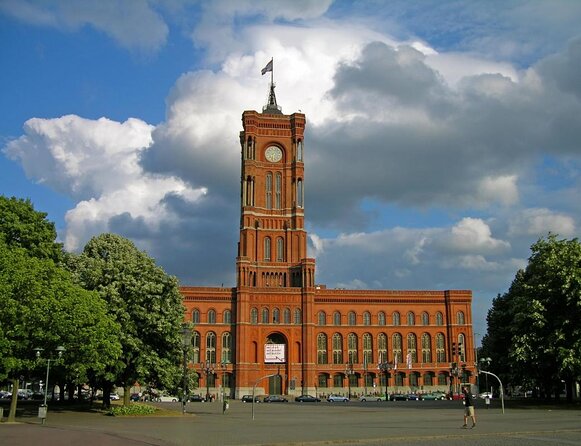
The next part of the walk brings you to Rotes Rathaus, Berlin’s Red City Hall. The building gets its name from the red clinker bricks used across its facade.
The building sits in Mitte on Rathausstrasse, close to Alexanderplatz. It is the home of Berlin’s governing mayor and the Senate of Berlin, so this is not merely an old building placed on a sightseeing route. It remains part of the city’s working political center.
The tour’s route lets you connect civic power with the older quarters nearby. Within a short walk, you move from a 19th-century public monument to a functioning seat of government, then toward Berlin’s medieval core. That sequence helps show how the city grew layer by layer.
The Red City Hall is mainly an exterior stop in this experience. You should not expect an interior visit or a long architectural study. Its value comes from the setting, the bold brickwork, and the role it plays in Berlin’s civic life.
Spotting the Ampelmännchen
Berlin’s pedestrian signals offer one of the simplest clues to the city’s divided past. The Ampelmännchen, or little traffic light man, is the figure used on pedestrian signals in Germany.
Before reunification in 1990, East and West Germany used different versions. West Germany used a more generic human figure. East Germany used a figure that generally appeared male and wore a hat. The eastern version became especially recognizable and remains a popular symbol in Berlin.
This stop works because it turns an everyday object into a short history lesson. You do not need a museum label to understand the point. Look at the pedestrian signal, notice the hat, and you have a direct reminder of the former East German city.
The Ampelmännchen also adds a lighter note to the tour. After monuments and churches, a traffic signal gives the story a bit of humor. The interactive format can make this kind of detail easier to remember than a long list of dates.
A few more tours and experiences worth a look
- Berlin: Solar Powered Sunset Catamaran Cruise & Audio Guide
★ 4.6 · 1,043 reviews - Berlin: Live-Guided Evening Sightseeing Tour by Open-top Bus
★ 4.1 · 783 reviews - Berlin: Bus Tour by Night with Live Commentary
★ 4.2 · 687 reviews - Berlin: Kreuzberg Guided Walking Evening Tour
★ 4.7 · 555 reviews
Nikolaiviertel, Berlin’s reconstructed old quarter
Nikolaiviertel is the heart of the tour. Founded around 1200, it developed with nearby Cölln as part of the early settlement that became Berlin.
Today, the quarter contains restored medieval buildings and modern imitations of older structures. That distinction matters. This is not a perfectly preserved medieval village. It is a reconstructed historic area, and part of the experience is understanding how Berlin chose to rebuild and present its oldest center.
The quarter sits in Mitte, about five minutes from Alexanderplatz. Its streets and lanes offer a change from the broad avenues around the major civic buildings. The scale feels more intimate, which makes it well suited to a guided performance.
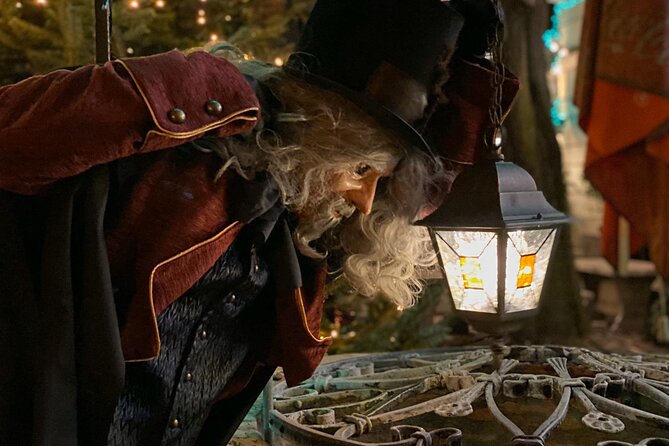
The tour uses this setting for stories, small performances, and audience participation. The most positive feedback emphasizes the warm welcome, costumes, and playful moments that bring people into the action. You might be asked to take part in a small scene or join in with the group, so this is not the best match if you want to remain completely anonymous.
For many visitors, Nikolaiviertel will be the most memorable part of the route. You see where Berlin’s early story is placed, while also learning that the quarter’s present appearance includes substantial rebuilding. That balance is important. The tour can be entertaining without pretending that every old-looking wall is untouched.
St. Nikolai Church and Berlin’s earliest center
St. Nikolai Church, also called Nikolaikirche or St. Nicholas’ Church, is one of the central stops in the quarter. Built between 1220 and 1230, it is described as Berlin’s oldest church, along with the nearby Church of Our Lady at Alexanderplatz.
The church helps anchor the date of the city’s beginnings. Berlin is often associated with 20th-century conflict and division, but this stop shifts your attention back to the medieval settlement. Its location also makes clear why Nikolaiviertel matters: the church, quarter, river, and old streets all sit within a compact historic area.
You should think of this as an atmospheric exterior stop rather than a church tour. The supplied details do not promise interior access, so plan on hearing the story and viewing the building from the route.
The evening performance adds a useful layer here. A centuries-old church surrounded by reconstructed streets naturally lends itself to storytelling. The theatrical approach can make the date and setting feel more immediate, especially for children or anyone who finds conventional historical explanations dry.
Humboldt Forum and the modern face of old Berlin
From the older quarter, the route leads toward the Humboldt Forum on Museum Island. This museum of non-European art occupies a striking building that combines three rebuilt Baroque facades from the former Royal Palace with a contemporary exterior facing the Spree.
Inside, the design is modern and associated with architect Franco Stella. The institution is named for Prussian scholars Wilhelm and Alexander von Humboldt. Its collections mainly come from the Berlin State Museums and include non-European art, temporary exhibitions, and public events.
The Humboldt Forum gives the tour a useful contrast. Nikolaiviertel presents a reconstructed medieval center, while the Humboldt Forum combines historical reconstruction with modern architecture and museum use. Berlin repeatedly places old forms beside new ones, and this stop makes that habit visible.
The tour does not include a museum visit, so do not book it expecting admission or time among the collections. You will see the building as part of the outdoor route and hear why it matters. If you have extra time, you can return separately for the interior, subject to the museum’s own opening hours and admission arrangements.
Mühlendamm and the Spree crossing
The final listed stop is Mühlendamm, or Mill Dam. This major thoroughfare runs through Mitte between the historic Cölln and Fischerinsel quarters and Molkenmarkt in Alt-Berlin.
The name comes from watermills that once operated here. A causeway was first laid out at this location around 1200, and it became a key part of the late medieval city’s foundation. The Mühlendammbrücke now crosses the Spree at this point.
This is a strong closing location because it ties together water, trade, transport, and urban growth. Rivers often explain why cities begin where they do, and the Spree crossing shows how a practical route can become part of a capital’s identity.
The tour ends at Ephraim’s, on Spreeufer 1, also in the 10178 postal area. The compact route means you finish close to the starting area rather than being taken far across Berlin. That is useful if you have dinner plans nearby or want to continue exploring Mitte on foot.
The theatrical format and what you actually get
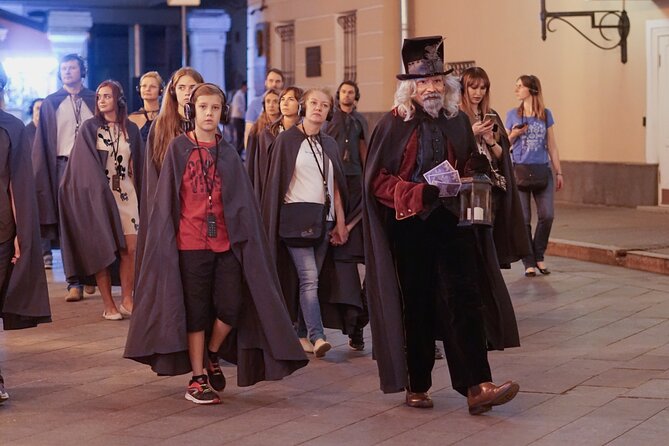
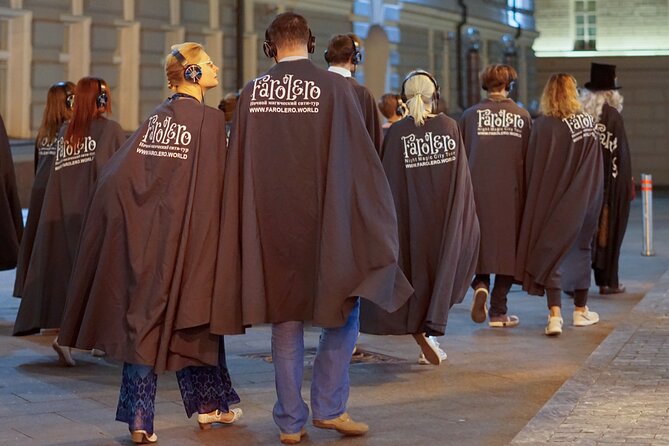
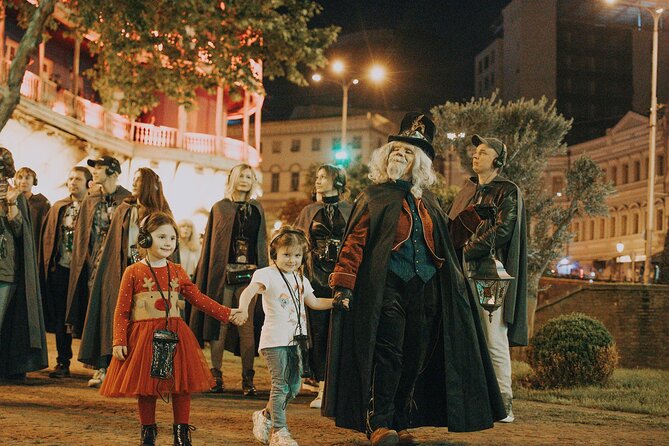
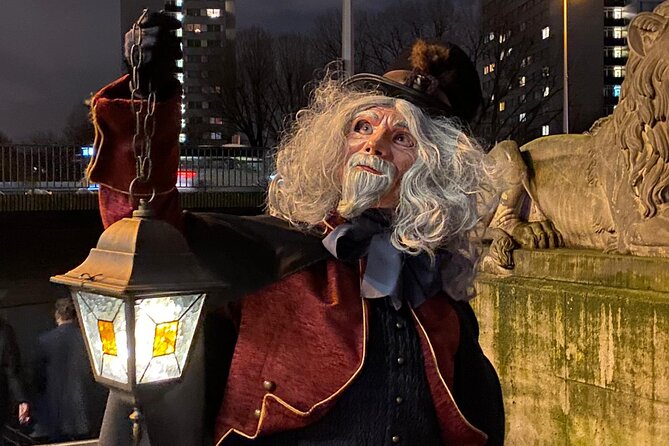
Farolero’s approach is more than a guide speaking while you walk. The experience can include an audio-guide track, actors, costumes, visual effects, and short interactive moments.
That mix received the strongest praise. The audio gives structure, while the actors provide movement and personality. Visual effects add a sense of spectacle without turning the route into a full stage show.
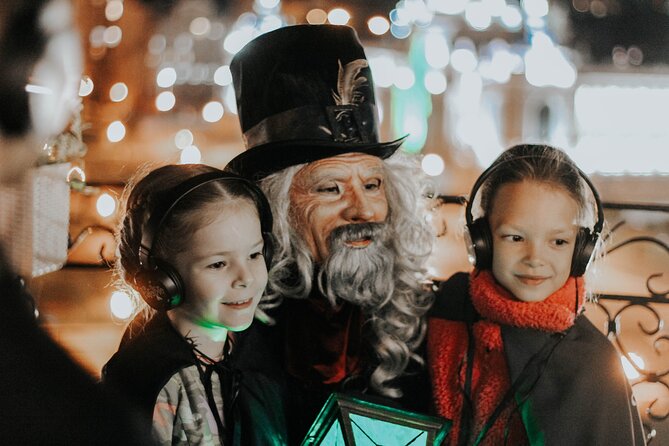
You should arrive ready for participation. One account describes people being warmly welcomed and dressed in costume before the walk. Another highlights small performances involving both the team and the group. The experience sounds designed to make you part of the story, not just an audience standing at the edge.
There are also small refreshments. Coffee, chocolate, and a schnapps at the end have been included according to the available feedback. These are modest extras, but they matter on a cool evening. They also help the experience feel more like a hosted event than a basic point-to-point walk.
Still, the format will not suit everyone. If you want detailed art criticism, a large number of monuments, or a serious academic lecture, you may find the theatrical elements distracting. If you enjoy a story with humor and audience involvement, the same features are likely to be the reason you remember it.
Price, group size, and overall value
At $46.99 per person, this sits above a simple free walking tour but below the cost of a private guide. The price makes the most sense when you value the added production: costumes, actors, audio, visual effects, and refreshments.
The 20-person maximum is another point in its favor. A group of that size can still move through narrow streets and hear the performance without becoming a huge crowd. It is not a private experience, though, and interactive scenes may feel less personal when the group is full.
The 90-minute length is well judged for an evening activity. You get a concentrated introduction to the historic center without giving up the entire night. I would pair it with dinner or a separate visit to a museum rather than treating it as a complete Berlin sightseeing program.
The rating is 4.7 from 25 ratings, with 92 percent recommending it. That is a strong result, but the sample is not large. One serious complaint describes a guide who did not appear at the designated time and place, followed by a request for a refund. The issue appears isolated in the available feedback, but it is worth noting because a missed start is especially unpleasant in cold or icy weather.
Free cancellation is available until 24 hours before the start time. Cancellations inside that window are not refunded, and changes are not accepted. The experience can also be canceled for poor weather or if the minimum number of people is not reached. In those cases, you are offered another date or experience, or a full refund.
Who should book this Berlin night walk
I would recommend it to you if you like:
- Short walking tours with a clear theme
- Berlin’s medieval and civic history
- Actors, costumes, and light audience participation
- A small group rather than a large coach tour
- Evening sightseeing that stays around Mitte
- A gentler introduction for children or anyone who enjoys visual storytelling
You may want another option if you prefer a strictly factual guide, dislike being included in performances, or have no backup plan for bad weather.
Because the route is outdoors, wear shoes suited to city pavement and check the forecast. The information provided says most people can participate, but it does not offer detailed accessibility information. If you need specific assistance, ask the provider before booking.
Should you book the Night Magic City Tour?
Book it if you want Berlin’s oldest center presented with warmth, humor, and a little stagecraft. The route is compact, the group is limited to 20, and the combination of audio, actors, costumes, and effects gives the evening more personality than a standard orientation walk.
I would not choose it as your only Berlin tour. It does not cover the city’s major 20th-century sights, and the museum stops are viewed from outside. But as a 90-minute night outing around Alexanderplatz, Nikolaiviertel, the Spree, and Museum Island, it offers fair value at $46.99.
Choose a dry evening, leave room for a bit of participation, and keep your expectations focused on atmosphere and storytelling. For that kind of night, this is an appealing way to get acquainted with old Berlin.
FAQ
How long does the Night Magic City Tour last?
The tour lasts approximately 1 hour and 30 minutes.
How much does the tour cost?
The listed price is $46.99 per person.
Where does the tour begin?
The meeting point is St. Marienkirche, Karl-Liebknecht-Strasse 8, 10178 Berlin, Germany.
Where does the tour end?
The tour ends at Ephraim’s, Spreeufer 1, 10178 Berlin, Germany.
What language is the tour offered in?
The experience is offered in English.
How large is the group?
The maximum group size is 20 people.
What places are included on the route?
The route includes the Neptune Fountain, Rotes Rathaus, Ampelmännchen, Nikolaiviertel, St. Nikolai Church, Humboldt Forum, and Mühlendamm.
Does the experience use actors or visual effects?
Yes. The experience can include an audio guide, actors, costumes, and visual effects.
Can I cancel for a full refund?
Yes. You can cancel at least 24 hours before the start time for a full refund. Cancellations made less than 24 hours before the start time are not refunded.
Can the tour be canceled because of weather?
Yes. The experience requires good weather. If poor weather causes a cancellation, you are offered another date or a full refund.
Just added around Berlin
- Berlin: Private Guided Tour of the Main Sights★ 5.0 · 13 reviews
- Private Highlights of Berlin Bike Tour★ 5.0 · 13 reviews
- Modern Berlin Private Walking Tour: Diverse, Vibrant and Exciting German Capital★ 5.0 · 13 reviews
- Tour in Berlin from Warnemünde and Rostock Cruise Port★ 4.1 · 13 reviews
- Berlin: Stasi Museum Private Guided Tour with Entry Ticket★ 4.8 · 13 reviews
- Private Food Tour Experience with a born and bred Berliner★ 5.0 · 14 reviews
- Berlin: Rheinsberg Palace Entrance Ticket★ 4.8 · 14 reviews
- Berlin in one day – day tour with an expert guide★ 5.0 · 14 reviews
City Tours, compared.
1-Hour City Tour by Boat with Guaranteed Seating
Read our review →
City History Canal Sightseeing Tour on a Motorboat
Read our review →
Browse the lists this tour appears in