
Reviewed · HISTORICAL TOURS
Historic Free Tour of Hamburg Old Warehouse District
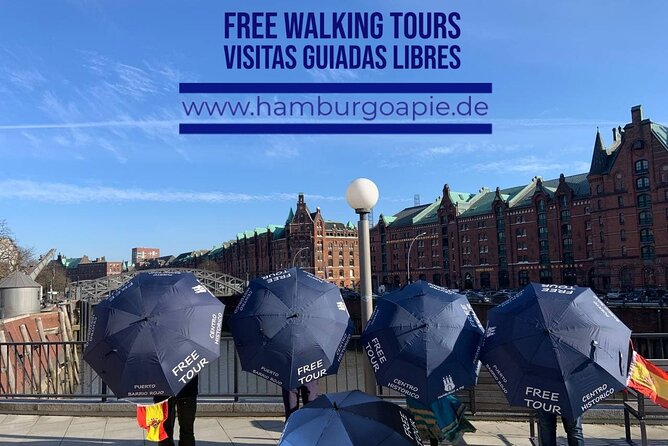
Follow the red brick and look up. This 100-minute walking tour links Hamburg’s Speicherstadt warehouses, canals, bridges, HafenCity, and Chilehaus into one clear story about trade, architecture, and forced change. I like the Spanish-language guide and the way the tour connects old warehouses with the modern Elbphilharmonie. I also like the pay-what-you-decide format, which keeps the starting cost low.
The main consideration is pace. You cover a good stretch on foot, from Baumwall to Chilehaus, and the tour does not include museum admissions, food, drinks, or entry to the Elbphilharmonie. It is best for you if you want history and city orientation rather than a long indoor visit.
In This Review
- Key Points to Know Before You Go
- Starting at Baumwall and Entering Speicherstadt
- Why Speicherstadt Is More Than a Pretty Backdrop
- The Human Cost Behind the Warehouses
- Canals, Bridges, and Practical Port Design
- HafenCity and the Elbphilharmonie View
- Chilehaus, the Sharp Final Stop
- What the Spanish-Language Format Adds
- Price, Payment, and Overall Value
- Weather, Mobility, and Planning the Afternoon
- Who Will Get the Most From This Walk
- Should You Book the Speicherstadt Tour?
- FAQ
- How long does the walking tour last?
- Where does the tour start?
- What time does the tour begin?
- Where does the tour finish?
- Is the tour offered in Spanish?
- Are museum tickets included?
- Can I cancel for a full refund?
Key Points to Know Before You Go
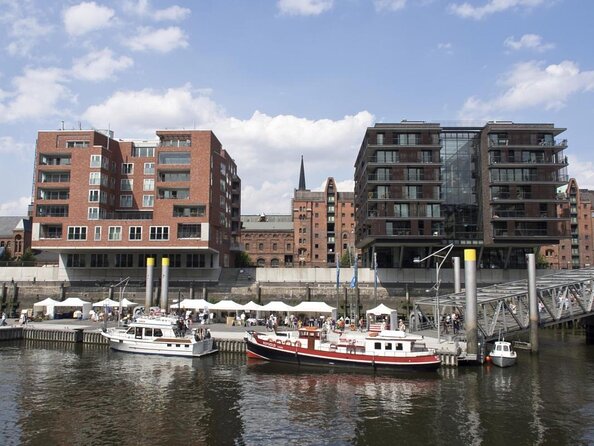
- A 100-minute route through Speicherstadt: Walk historic canals, bridges, alleys, and warehouse facades in Hamburg’s former port district.
- Spanish-language guiding: The tour is designed for Spanish-speaking visitors and includes stories about trade, architecture, and Hamburg’s changing waterfront.
- Pay at the end: The listed price is $2.16 per person, while the tour also lets you decide how much to pay at the end.
- A strong architecture mix: See exposed red brick warehouses, HafenCity, the Elbphilharmonie, and the sharply pointed Chilehaus.
- No major admission costs included: Museum tickets, public transport, food, drinks, and access to the concert hall are separate.
- Small enough to stay manageable: The group limit is 30 people, with 20 or more bookings recorded in the latest month.
Starting at Baumwall and Entering Speicherstadt
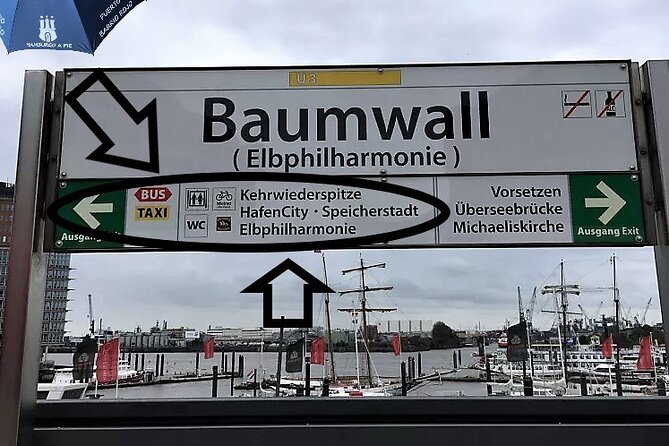
The meeting point is at Baumwall, 20459 Hamburg, with a 2:45 pm start. That location places you near the southern edge of Hamburg’s old city and close to the harbor districts that define this part of town.
From there, the walk moves toward Speicherstadt, Hamburg’s historic warehouse quarter. You are not simply looking at handsome old buildings. The guide explains why the district was built, how goods moved through it, and how Hamburg used its port position to grow as a trading city.
The timing is useful for a first afternoon in Hamburg. At roughly one hour and forty minutes, the tour is long enough to give you a proper introduction but short enough to leave room for dinner, a museum, or an evening walk. You should still wear comfortable shoes. This is a walking route across canals, bridges, lanes, and paved city streets, not a brief photo stop.
The tour finishes at Chilehaus, 20095 Hamburg. That one-way route is helpful because you do not have to retrace your steps to Baumwall. You end closer to Hamburg’s central city area, where you can continue exploring on your own.
More Historical Tours in Hamburg
- The Local Tour of Hamburg Historic Centre
★ 5.0 · 1,058 reviews - Hamburg: Historical Tour of the St. Pauli Sex Work District
★ 4.4 · 215 reviews - Hamburg: UNESCO-World Heritage Sites Tour
★ 4.7 · 137 reviews
Why Speicherstadt Is More Than a Pretty Backdrop
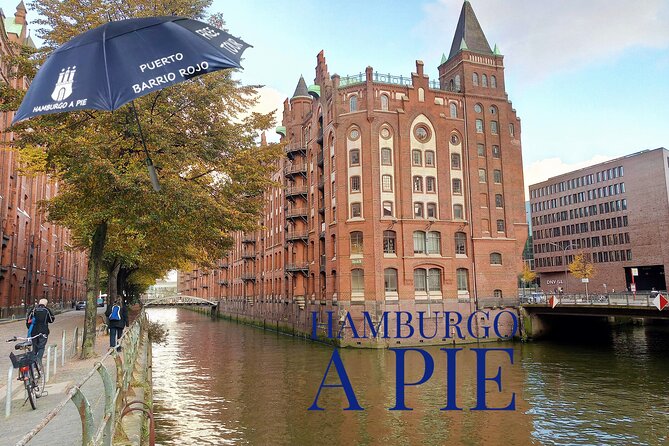
Speicherstadt is known for its red brick walls and narrow waterways, but its real interest is the trade system behind the architecture. The complex was built as a huge storage district for goods such as coffee, tea, cocoa, spices, and tobacco.
The warehouses were arranged with canals and bridges so cargo could move through the port area. That practical design explains why the district feels different from a normal old-town quarter. Its streets were shaped by commerce, not by homes, churches, or public squares.
The buildings use a neo-Gothic brick style, with tall walls, pointed details, and repeated vertical lines. The district was built on wooden piles, a major engineering detail in a wet port setting. You get a better sense of the place when you notice how its beauty comes from function. These were working warehouses first, postcard scenery second.
One especially notable detail is the reference to the world’s largest warehouse complex and the world’s largest storage site for oriental carpets. The tour uses these facts to show the scale of Hamburg’s trading activity. You can also expect stories about the letters assigned to the warehouses as they were built, a small detail that helps you read the district as a planned working system rather than one giant block of old buildings.
The Human Cost Behind the Warehouses
The most important part of the history is not only the goods and grand buildings. The creation of Speicherstadt also changed where people lived.
The route explains how residents were removed from their homes when this section of the island was set aside for a special customs arrangement. The purpose was to handle goods without charging the same duties, but the policy had a human cost. People who already lived in the area lost their homes with little warning.
That detail gives the district a sharper edge. It keeps the tour from becoming a simple celebration of Hamburg’s wealth and commercial power. You see the impressive brickwork, but you also hear about the people displaced to create it.
I value this kind of context because it changes the way you look at the canals. A picturesque waterway can also mark a major urban decision. The tour’s strongest historical material appears to come from these connections between trade policy, daily life, and architecture.
Canals, Bridges, and Practical Port Design
As you walk, the guide points out the historic canals, bridges, and alleys that give Speicherstadt its character. These are not random scenic details. Together, they show how the district worked as a storage and transfer center.
You will have chances to stop in front of important buildings and take photographs. Photographs during the walk are included, provided you bring your own camera or mobile phone. That means you should have your phone charged and ready, especially if you want images of the canal views and brick facades.
The route also includes entry to one of Hamburg’s oldest coffee shops, but no food or drink is included. This is a small stop rather than a café break. You should not budget the tour as if it provides a tasting or a seated refreshment. Instead, treat it as a chance to see a historic interior or location connected to Hamburg’s coffee trade.
The coffee connection makes sense here. Coffee was one of the goods stored and traded in the warehouse district, and Hamburg’s port history is closely tied to imported products. Still, you pay for anything you choose to consume.
Something different for another day:
- Hamburg: Sex and Crime in St. Pauli Tour for Ages 18+
★ 4.7 · 15,447 reviews - Hamburg: 1.5-Hour Harbor and Speicherstadt Day Cruise
★ 4.6 · 14,200 reviews - Hamburg: 90-Minute Evening Lights Harbor Cruise
★ 4.5 · 7,728 reviews - Hamburg: 2-Hour XXL Port of Hamburg Cruise Tour
★ 4.7 · 6,979 reviews
HafenCity and the Elbphilharmonie View
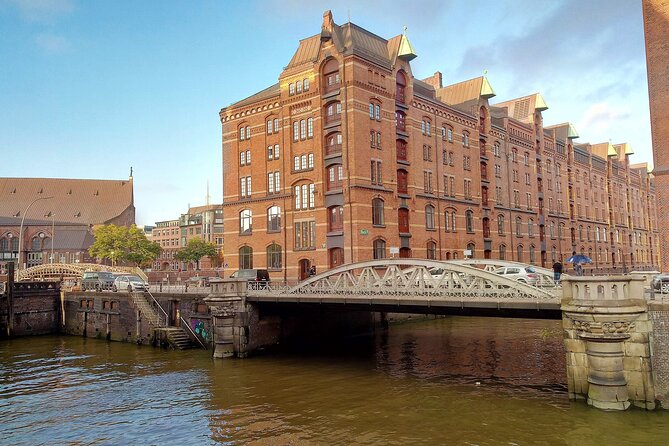
The walk then brings the older warehouse district into conversation with HafenCity, Hamburg’s newer port-city quarter. This contrast is one of the best reasons to choose the tour.
HafenCity is known for the Elbphilharmonie concert hall, with its striking facade and advanced acoustics. The route includes views of the building, but it does not include access inside. You should think of this as an architectural and urban-planning stop, not a concert-hall visit.
The view helps explain how Hamburg has reshaped its waterfront. Speicherstadt reflects storage, customs, and cargo. HafenCity points toward housing, culture, public space, and a modern city identity. Seeing both in one walk gives you a useful sense of Hamburg’s changing priorities.
The Elbphilharmonie also offers a practical lesson in public building projects. The tour includes the fact that its construction costs increased greatly. That makes the building more than a dramatic silhouette. You hear about the financial side of creating a major cultural landmark, which adds a welcome bit of realism to the architecture.
Because the tour is outdoors, your view of the concert hall depends on the route, weather, and available vantage points. Access to exhibitions or other paid areas is not part of the experience. If you want an interior visit, you need to arrange that separately.
Chilehaus, the Sharp Final Stop
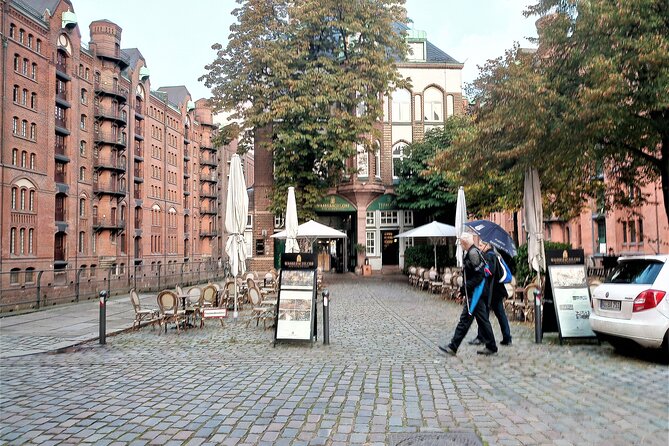
The final destination is Chilehaus, a building famous for its sharply pointed facade. One end resembles the bow of a ship, with an angle so narrow that it feels almost theatrical.
Chilehaus gives the walk a strong ending because it changes the architectural mood again. Speicherstadt is a broad warehouse district with repeated brick walls and canals. Chilehaus is a single powerful structure, shaped around its pointed corner and designed to catch your eye from the street.
The building’s port-city character is easy to understand. Its ship-like form links architecture to Hamburg’s maritime identity without copying a vessel in a literal way. The tour ends here, so you can spend extra time taking photographs or continue into the nearby central districts after the guide finishes.
If you care most about architecture, this final stop may be the highlight. If you prefer interiors, note that the experience is primarily about exterior views and explanations. The tour does not list entry to Chilehaus or museums as part of the price.
What the Spanish-Language Format Adds
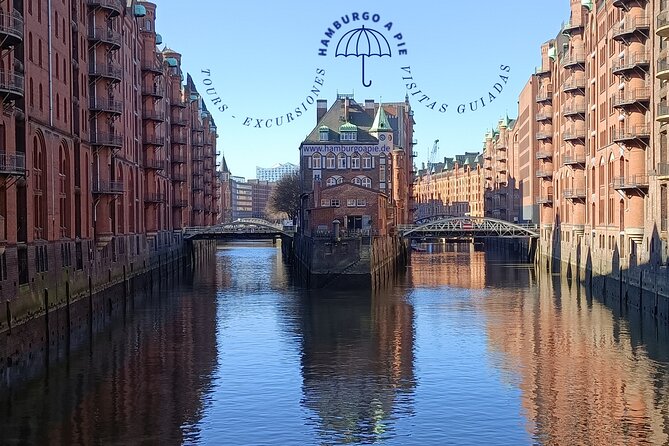
The tour is offered in Spanish, which is its clearest audience choice. If you understand Spanish comfortably, you can follow the historical explanations without relying on translated signs or scattered English-language information.
The content covers trade, customs, warehouse construction, city growth, residents who lost their homes, the Elbphilharmonie, and Chilehaus. That is a useful range for a short walking tour. You are getting an introduction to Hamburg through one district, not a full city tour.
The guide also gives local recommendations for continuing on your own. This is valuable at the end because you finish near Chilehaus rather than returning to the starting point. You can use the advice to choose a museum, café, neighborhood walk, or other activity, though the specific recommendations are not listed in advance.
The group limit is 30 people. That is not a private walk, and the experience may feel less personal when the group is full. Still, the fixed limit prevents the size from becoming unlimited. If you want individual attention, arrive at the meeting point a little early and stay near the guide during stops.
Price, Payment, and Overall Value
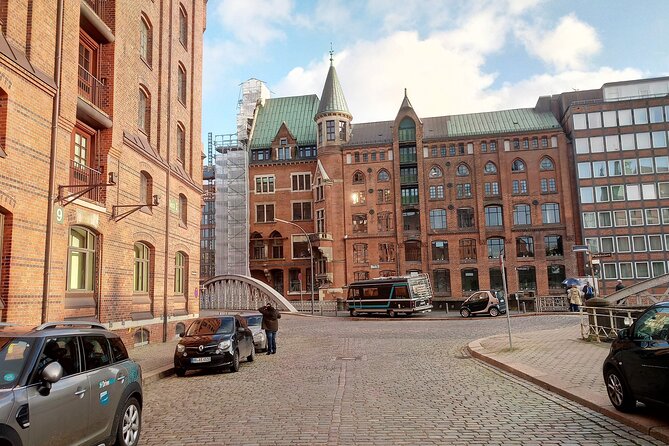
The listed price is $2.16 per person, an unusually low amount for a guided walk lasting about 100 minutes. The tour also says you decide how much to pay at the end. That pay-what-you-decide approach makes the experience low risk, especially if you are trying to keep your Hamburg budget under control.
The value depends on what you want from a tour. For a small fee, you receive a Spanish-language walk, historical explanations, photo opportunities, local suggestions, third-party insurance, and access to the old coffee shop location without a required purchase.
The price does not cover everything you might want to do in the district. Museum and exhibition tickets, including places such as Miniatur Wunderland or the Coffee Museum, are separate. Public transport to Baumwall is separate, as are food, drinks, boat trips, and entry to the Elbphilharmonie.
That separation is reasonable. The tour gives you an outdoor orientation, while the major attractions remain optional. I would book it as a way to understand the area before deciding which paid attractions deserve your time and money.
Weather, Mobility, and Planning the Afternoon
The tour requires good weather. If poor conditions cause cancellation, you are offered another date or a full refund. Since the experience takes place outside for nearly two hours, check the forecast and dress for Hamburg’s changeable conditions.
You receive confirmation at booking, and the tour is near public transportation. Service animals are allowed, and most people can participate. The data does not specify step-free access, seating breaks, or the exact surface conditions, so you should contact the provider if you need those details.
Free cancellation is available up to 24 hours before the start time for a full refund. Inside that 24-hour window, the amount paid is not refunded, and changes are not accepted. The cut-off follows local Hamburg time.
The 2:45 pm start makes this a good fit after a morning museum visit or a relaxed lunch. You should allow enough time to reach Baumwall without rushing. Since the end point is Chilehaus, check your evening plans before booking. The walk does not return you to the start.
Who Will Get the Most From This Walk
I would choose this tour if you want a clear introduction to Hamburg’s port history without committing to a long museum visit. It suits Spanish-speaking visitors who enjoy architecture, city history, and walking at a steady pace.
It is also a good first-day activity. You learn the basic shape of Speicherstadt, HafenCity, and the central port area, then receive suggestions for exploring further. The route gives you useful context before you visit a coffee museum, Miniatur Wunderland, the Elbphilharmonie, or another nearby attraction.
You may want something else if you need a private guide, an indoor experience, a food tasting, or a full tour of the concert hall. The walk offers views and explanations, not admission tickets or extended time inside attractions.
Should You Book the Speicherstadt Tour?
Book it if you want Spanish-language history, striking brick architecture, canal views, and a low-cost introduction to Hamburg’s old warehouse district. The best parts are the connections between trade, customs policy, displaced residents, modern HafenCity, and the bold design of Chilehaus.
Skip it if your schedule is too tight for 100 minutes on foot or if bad weather would spoil your afternoon. For most visitors who want to understand why Speicherstadt matters, the pay-what-you-decide format makes this an easy addition to a Hamburg itinerary.
FAQ
How long does the walking tour last?
The tour lasts approximately 1 hour and 40 minutes, or about 100 minutes.
Where does the tour start?
The meeting point is Baumwall, 20459 Hamburg, Germany.
What time does the tour begin?
The scheduled start time is 2:45 pm.
Where does the tour finish?
The tour ends at Chilehaus, 20095 Hamburg, Germany.
Is the tour offered in Spanish?
Yes. Spanish-language guiding is included.
Are museum tickets included?
No. Museum and exhibition tickets, including Miniatur Wunderland and the Coffee Museum, are not included.
Can I cancel for a full refund?
Yes, if you cancel at least 24 hours before the experience starts. Cancellations within 24 hours are not refunded.
Just added around Hamburg
- Mister X Hamburg 2h city tour, hunting & games for all ages★ 5.0 · 13 reviews
- Hamburg: Private 1.5-Hour Walking Tour of St. Pauli★ 4.9 · 13 reviews
- Yacht Sailing After Work Tour of Hamburg Harbor★ 5.0 · 13 reviews
- Free Tour: Port, Red Light District and Beatles. You decide how much to pay at the end★ 3.9 · 13 reviews
- Private 5-Hour Hamburg Countryside Tour with a former policeman★ 5.0 · 14 reviews
- Hamburg: After work Millerntor stadium tour with drinks★ 4.8 · 14 reviews
- Hamburg: Guided Walking Tour★ 4.2 · 14 reviews
- Hamburg: Tour of Blankenese on the Banks of the Elbe★ 4.5 · 14 reviews
Historical Tours, compared.
City History Canal Sightseeing Tour on a Motorboat
Read our review →

Bamberg: Guided Beer History Tour with Optional Tasting
Read our review →Browse the lists this tour appears in