
Reviewed · HISTORICAL TOURS
Hamburg: UNESCO-World Heritage Sites Tour
Hamburg’s red-brick heart tells a remarkable story. This two-hour walk links the Kontorhäuser office buildings with the canals and warehouses of Speicherstadt, showing how trade shaped Hamburg. I like the clear route from Jakobikirche to Magdeburg Harbour, and I like the way the guide connects architecture with clerks, cargo, spices, and everyday port work. The main consideration is language: the tour is conducted in German, and the short ferry ride runs only on Saturdays.
At $18 per person, this is a low-cost way to get your bearings in central Hamburg while seeing several important buildings from the outside. Guide Albert has earned special praise for his detailed explanations, clear voice, and steady pace, though the tour operates in all weather, so bring suitable clothing.
In This Review
- Key points to know before you book
- Why this short Hamburg tour works
- Starting at Jakobikirche and entering Hamburg’s business quarter
- Sprinkenhof: a working building, not just a grand facade
- Chilehaus and the power of a dramatic silhouette
- Meßberg and the shift from offices to storage
- Speicherstadt and its famous red-brick warehouses
- Dar es Salaam Square and the wider port story
- From the International Maritime Museum to Magdeburg Harbour
- What the guide adds to the experience
- Is $18 a fair price for two hours?
- Who should book this walk?
- Final call: a smart introduction to Hamburg’s trading past
- FAQ
- Where does the Hamburg UNESCO World Heritage Sites Tour begin?
- Where does the tour finish?
- How long does the tour last?
- Is the tour available in English?
- Does every tour include a ferry ride?
- What happens if it rains?
Key points to know before you book
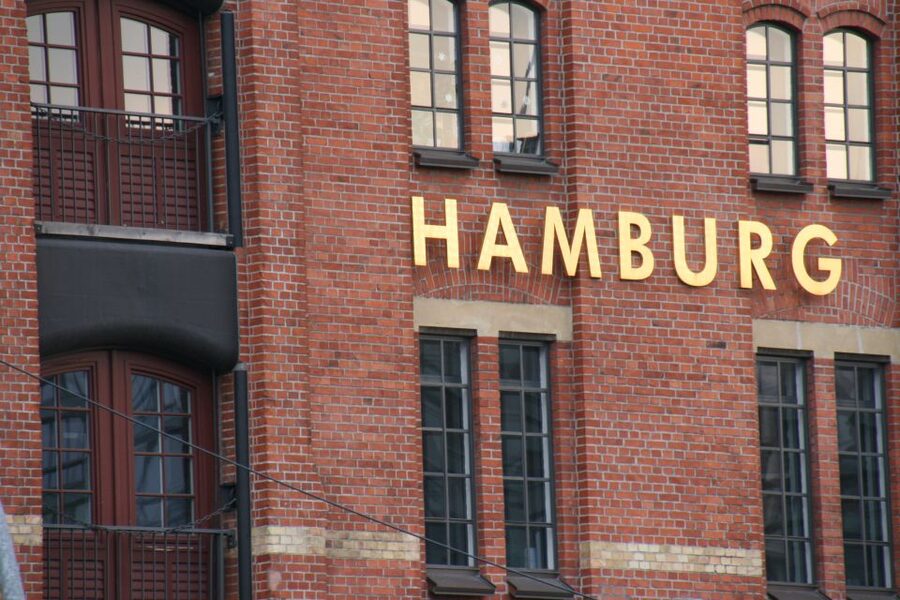
- Chilehaus and Kontorhäuser: See the sharp, ship-like Chilehaus and learn how Hamburg’s office districts reflected international trade and growing wealth.
- Speicherstadt’s brick canals: Walk through the famous warehouse quarter, with old winches, carpet storage, waterways, and carefully preserved facades.
- Port stories with real objects: Pictures and spice samples help turn Hamburg’s commercial past into something you can see and smell.
- A practical two-hour route: Start at Jakobikirche and finish at Magdeburg Harbour, covering several major sights without taking up a whole day.
- Saturday ferry option: A short ferry trip is part of the experience only on Saturdays, so do not assume it will be included on every departure.
- German-language guiding: This is best for you if you understand German well enough to follow spoken historical and architectural explanations.
Why this short Hamburg tour works
Hamburg can feel scattered at first. The old city center, Kontorhaus district, Speicherstadt, Elbe waterfront, and newer HafenCity areas all sit close together, but they do not always make sense as one story when you explore alone.
This walk gives those places a clear connection. You begin with Hamburg’s office buildings, where merchants and clerks handled international trade, then move toward the warehouses that received and stored goods. By the end, you are looking toward the port and Magdeburg Harbour, with a better sense of how money, paperwork, shipping, and storage worked together.
I especially like the scale. Two hours is long enough for useful context but short enough to fit before a museum, lunch, or another city sight. You are not signing up for an all-day march. The route still includes architecture, canals, port views, and local history.
The tour also has a practical advantage for first-time visitors. You do not need to decide which office building matters, why the brick warehouses are important, or how the port districts connect. The guide makes those choices for you.
The tradeoff is that this is primarily an exterior walking tour. You should expect to look at buildings, streets, canals, and port areas rather than spend extended time inside museums or historic rooms. The International Maritime Museum is pointed out along the way, but an admission visit is not part of the tour.
More Historical Tours in Hamburg
- The Local Tour of Hamburg Historic Centre
★ 5.0 · 1,058 reviews - Hamburg: Historical Tour of the St. Pauli Sex Work District
★ 4.4 · 215 reviews - Sightseeing Tour – Free Tour – Historic Center-Hamburg On Foot
★ 5.0 · 112 reviews
Starting at Jakobikirche and entering Hamburg’s business quarter
The meeting point is Jacobikirche, at the corner of Bugenhagenstraße and Barkhof. The formal starting location is listed as Jakobikirchhof, so check the exact corner before you arrive and allow enough time to find the group.
From here, the tour heads into the Kontorhaus district. These office buildings were designed for commerce, not domestic life. Their purpose was to house businesses, clerks, accounting work, and the countless transactions that kept Hamburg connected to markets around the world.
That makes this opening useful. Instead of treating the buildings as pretty old facades, you learn to read them as working places. The stories focus on clerks, money-counting tables, economic growth, and Hamburg’s expanding influence as a Hanseatic city.
You will also hear about Hamburg’s development over time. The city’s success was not built only at the docks. It depended on offices, records, negotiations, storage, and an organized system for moving goods from ship to warehouse and onward to customers.
If you enjoy architecture, this section gives you plenty to notice. If you mainly want postcard views, the early part may feel more urban and businesslike than scenic. I would stay with it, since the office buildings explain the system that makes the later warehouse district meaningful.
Sprinkenhof: a working building, not just a grand facade
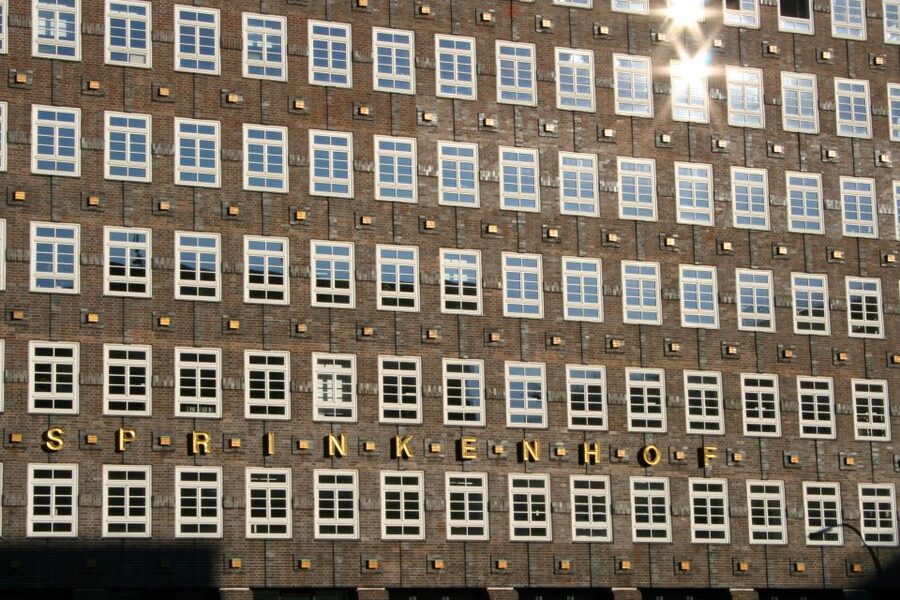
Sprinkenhof is one of the major Kontorhäuser on the route. Here, the guide explains how these large office buildings fit into Hamburg’s commercial growth.
The value of this stop lies in the connection between design and function. You are not only hearing dates and names. You are considering how a building served businesses, where clerks worked, and how a modern commercial city presented its economic strength.
The tour does not turn Sprinkenhof into an isolated architectural object. Instead, it places the building within the wider history of Hamburg’s trade. That approach helps you understand why this district is part of the city’s UNESCO World Heritage story.
The stop is guided rather than self-paced, so you should expect the group to pause while the guide explains details. A clear voice matters here, especially with street noise around the city center. One of the strongest comments about Albert’s guiding was that his voice was easy to hear and that he kept a comfortable pace.
Chilehaus and the power of a dramatic silhouette
Chilehaus is the architectural star of the first part of the walk. Its pointed form is hard to miss, and the building’s shape is often compared to the bow of a ship.
That comparison is especially fitting in a port city. Chilehaus links office work with maritime commerce, making it a strong visual bridge between the Kontorhäuser and the Speicherstadt warehouses that come later.
Your guide explains the building as part of Hamburg’s commercial age, when international trade brought money, ambition, and large office projects into the city center. This is where the tour’s architecture and economic story meet most clearly.
I like this stop because it gives you a building you can remember long after the tour. You also gain a better reason for its unusual shape. Rather than seeing an attractive brick structure and moving on, you understand why its appearance reflects Hamburg’s identity.
The route may feel busy here, with city streets and other people around the building. This is not a quiet gallery visit. You are seeing Chilehaus in its urban setting, which is part of the point.
Something different for another day:
- Hamburg: Sex and Crime in St. Pauli Tour for Ages 18+
★ 4.7 · 15,447 reviews - Hamburg: 1.5-Hour Harbor and Speicherstadt Day Cruise
★ 4.6 · 14,200 reviews - Hamburg: 90-Minute Evening Lights Harbor Cruise
★ 4.5 · 7,728 reviews - Hamburg: 2-Hour XXL Port of Hamburg Cruise Tour
★ 4.7 · 6,979 reviews
Meßberg and the shift from offices to storage
At Meßberg, the tour moves closer to the district where Hamburg’s commercial machinery becomes easier to picture. The transition matters. The Kontorhäuser housed the people and paperwork of trade, while the warehouses stored the goods themselves.
This is also a useful place to consider the contrast between polished office architecture and the hard practical work of moving cargo. Hamburg’s economic story involved both elegant facades and dusty storage areas.
The guide’s use of pictures and samples of spices adds a hands-on touch. The samples help you connect the port with actual products rather than leaving the story at the level of architecture. Spices were valuable cargo, and their smell can make the old trading system feel more concrete.
Do not expect a food tasting or a long demonstration. The provided details indicate pictures and samples used to explain how the port worked. That is enough to add variety to a walking tour, but the central experience remains guided sightseeing.
Speicherstadt and its famous red-brick warehouses
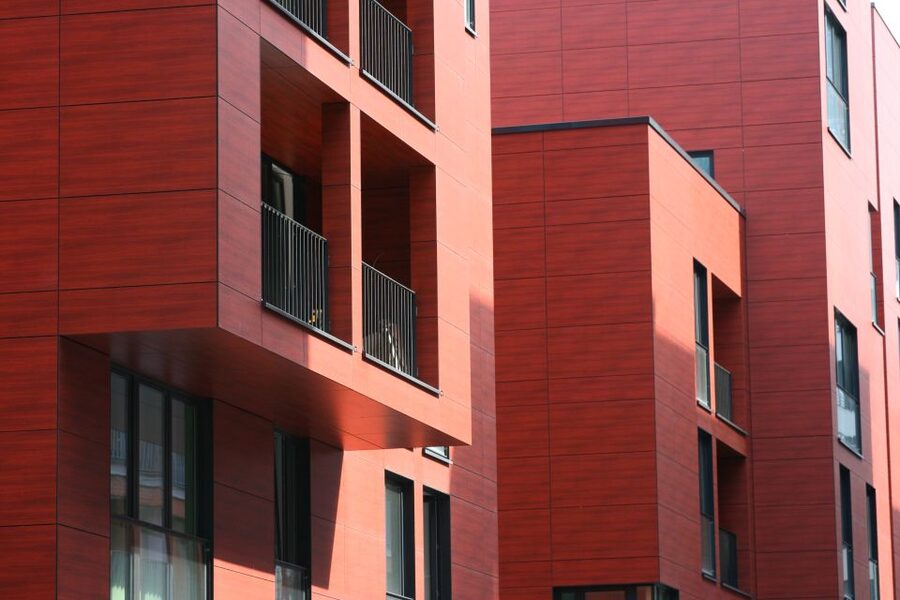
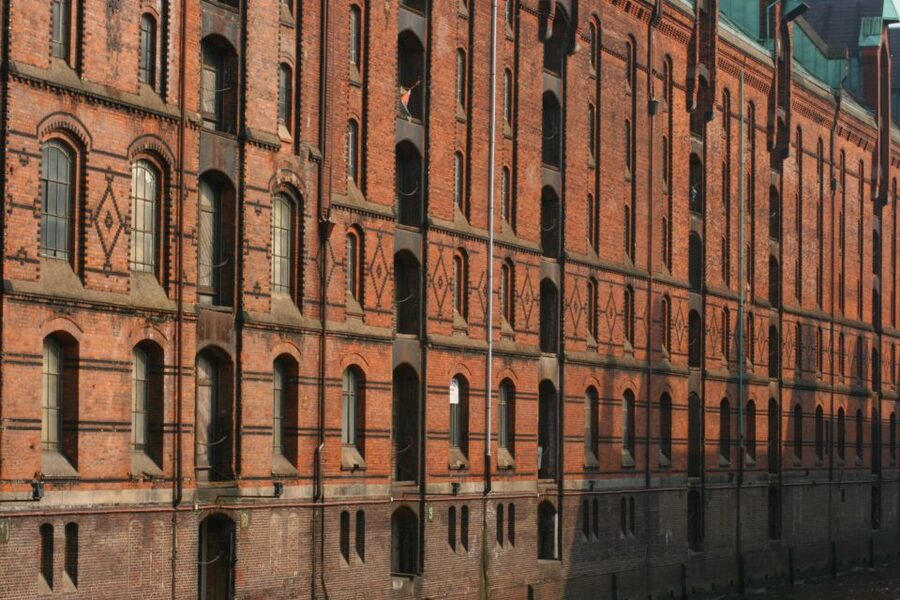
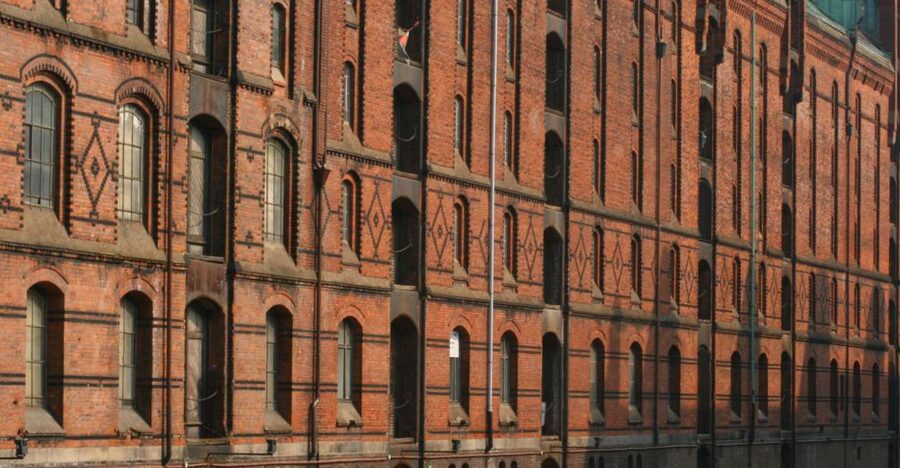
Speicherstadt is the part of the tour most visitors picture before arriving. Its rows of red-brick storehouses, canals, bridges, and tall facades create one of Hamburg’s most recognizable city scenes.
The guide points out the variety within the district. You may see old rope winches, carpet storage, warehouse details, canal views, and the contrast between preserved brick buildings and newer architecture nearby.
That contrast is one of the tour’s best features. Hamburg is not presented as a city frozen in one period. The old storehouses remain important, but modern dock promenades and new construction show how the area continues to change.
The warehouses also make trade easier to understand. Goods arriving through the port needed secure places to wait before distribution. Speicherstadt was built around that need, so the canals and storage buildings were part of a working system, not just decorative scenery.
You should wear shoes suited to a steady city walk. The tour takes place outdoors and continues in all weather. Rain will not cancel the route, so a waterproof layer is more useful than hoping for perfect skies.
If you want extensive time for photographs, keep your expectations realistic. The guide needs to maintain the group’s pace, and the walk covers several districts. You will have chances to admire the canals and facades, but this is not a dedicated photography tour.
Dar es Salaam Square and the wider port story
Dar es Salaam Square adds another layer to the route. By this point, the tour has moved beyond the office district and warehouse quarter toward Hamburg’s wider maritime setting.
The name itself points toward the international reach of the port, while the guiding explains how Hamburg connected to places far beyond northern Germany. The port story here is not limited to ships and buildings. It includes the flow of goods, information, money, and people.
This section is valuable if you want more than a quick walk through attractive brick streets. You begin to see the districts as parts of a large commercial network. The tour presents Hamburg as a place shaped by global connections, while keeping the focus on specific streets and buildings.
You will also see new dock promenades and modern architecture around the older quarters. For me, that visual mix is one of the most interesting parts of the route. It gives you a quick lesson in how a historic port city adapts while keeping major traces of its past.
From the International Maritime Museum to Magdeburg Harbour
The walk finishes at Magdeburg Harbour. Along the way, the guide identifies important nearby buildings, including the International Maritime Museum and the Überseequartier.
The museum provides useful context even if you do not go inside. Its presence reinforces the maritime focus of the district, while Überseequartier shows the newer side of Hamburg’s waterfront development.
The ending at Magdeburg Harbour gives the tour a logical finish. You start among office buildings and finish near the water, where the movement of goods becomes easier to imagine. You also get views toward the Elbe and a stronger sense of how close these districts are to Hamburg’s port.
A short ferry trip is offered only on Saturdays. If that matters to you, confirm the departure day before booking. On another day, you should think of the experience as a walking tour rather than a walking and ferry combination.
Since the route ends at the harbour instead of returning to the starting point, you should plan your next stop from there. The supplied information does not specify a return transfer, so do not assume the tour brings you back to Jacobikirche.
What the guide adds to the experience
A good guide makes this kind of tour worthwhile. Without one, Speicherstadt is easy to admire but harder to understand, and the Kontorhäuser can look like a collection of impressive office blocks without a clear purpose.
The strongest praise has gone to the quality of the explanations, the guide’s enthusiasm, and the manageable pace. Albert, specifically, has been praised for giving many well-founded details while keeping the walk lively. Even people already familiar with Hamburg found new historical information in his presentation.
That is an important point for repeat visitors. This is not only an orientation walk for first-time visitors. If you already know the main city center, the focus on architecture, office work, port operations, and Hamburg’s development may still give you fresh connections.
The tour is conducted in German. You need enough German to follow a spoken explanation while walking outdoors. There is no information provided about an English-language departure, translation materials, or multilingual guiding, so you should not book this tour expecting those options.
Is $18 a fair price for two hours?
At $18 per person, the value is good if you want structured context without paying for a full-day experience. The route includes several significant areas, a live guide, architectural explanations, port history, and the chance to see UNESCO-listed districts in one compact walk.
The price is less attractive if you only want to take photographs or wander freely. You can see many exterior sights on your own, but you would miss the organized explanation of how Kontorhäuser, warehouses, cargo, and port administration fit together.
I would consider this a particularly sensible choice near the beginning of your Hamburg stay. It gives you a working map of the city’s historic commercial center, making later visits to Speicherstadt, the maritime museum, or the waterfront easier to appreciate.
You can cancel up to 24 hours before the tour for a full refund, and the reserve-now, pay-later option keeps your plans flexible. Those terms are useful in a city where weather may affect how much you want to walk outdoors.
Who should book this walk?
I would recommend it to you if you enjoy architecture, urban history, port cities, and practical explanations of how places functioned. It also suits anyone who wants a focused introduction to Hamburg without spending half a day on a sightseeing bus.
It is a good fit for repeat visitors too. Albert’s detailed presentation has helped people who already know Hamburg discover new parts of its past.
You may want to skip it if you do not understand German, dislike walking in poor weather, or want extensive indoor visits. The experience is outdoor, guide-led, and focused on seeing buildings and districts rather than entering a long list of attractions.
Families and older participants may appreciate the two-hour length and the reported steady pace, but the tour still requires continuous walking. The available information does not specify accessibility arrangements, so you should ask the provider directly if that is important for you.
Final call: a smart introduction to Hamburg’s trading past
Book this tour if you want Hamburg to make more sense. For $18, you get a compact route through Chilehaus, Sprinkenhof, Meßberg, Speicherstadt, Dar es Salaam Square, and Magdeburg Harbour, with the port’s story tying the stops together.
The best reasons to go are the strong historical explanation, the manageable pace, the visual contrast between red-brick warehouses and modern waterfront architecture, and the small sensory touch of spice samples. Just remember that the tour is in German, the ferry runs only on Saturdays, and the walk continues in all weather.
FAQ
Where does the Hamburg UNESCO World Heritage Sites Tour begin?
The meeting point is Jacobikirche, at the corner of Bugenhagenstraße and Barkhof. The starting area is also identified as Jakobikirchhof.
Where does the tour finish?
The tour finishes at Magdeburg Harbour.
How long does the tour last?
The walking tour lasts two hours.
Is the tour available in English?
The live tour guide language is German. No English-language option is specified.
Does every tour include a ferry ride?
No. The short ferry trip is available only on Saturdays.
What happens if it rains?
The tour operates in all weather conditions. You should dress appropriately for outdoor walking and changing weather.
Just added around Hamburg
- Mister X Hamburg 2h city tour, hunting & games for all ages★ 5.0 · 13 reviews
- Hamburg: Private 1.5-Hour Walking Tour of St. Pauli★ 4.9 · 13 reviews
- Yacht Sailing After Work Tour of Hamburg Harbor★ 5.0 · 13 reviews
- Free Tour: Port, Red Light District and Beatles. You decide how much to pay at the end★ 3.9 · 13 reviews
- Private 5-Hour Hamburg Countryside Tour with a former policeman★ 5.0 · 14 reviews
- Hamburg: After work Millerntor stadium tour with drinks★ 4.8 · 14 reviews
- Hamburg: Guided Walking Tour★ 4.2 · 14 reviews
- Hamburg: Tour of Blankenese on the Banks of the Elbe★ 4.5 · 14 reviews
Historical Tours, compared.
City History Canal Sightseeing Tour on a Motorboat
Read our review →

Bamberg: Guided Beer History Tour with Optional Tasting
Read our review →Browse the lists this tour appears in