
Reviewed · TICKETS
Hamburg: Kunsthalle Entrance Ticket
Art history gets one excellent address. Hamburg’s Kunsthalle brings eight centuries of European art into one visit, from medieval altarpieces to major contemporary works. You can see Caspar David Friedrich’s famous Wanderer above the Sea of Fog, then move through Rembrandt, Munch, Warhol, and Gerhard Richter without changing museums.
I especially like the range and the chance to compare German art with major French, Dutch, and international works under one roof. I also like the flexibility: your ticket is valid for one day, so you can take your time instead of racing through a giant collection. The main consideration is that the audio guide costs €6 as a loan device, unless you use the museum’s free app.
- Eight centuries in one museum: Move from northern German medieval painting to international contemporary art.
- Caspar David Friedrich’s masterpiece: See Wanderer above the Sea of Fog, one of the museum’s best-known works.
- Strong German collections: Friedrich, Runge, Liebermann, Munch, Beckmann, and the Brücke group receive serious attention.
- A broad old-master selection: Look for Rembrandt, Cranach, Holbein, van Dyck, and Pieter de Hooch.
- A one-day ticket: You can plan a long art day and return to sections that deserve more time.
- A useful break inside the museum: Café Das Liebermann and The Cube offer drinks, snacks, meals, and views toward Inner Alster Lake.
In This Review
- Why Hamburg’s Kunsthalle Deserves Your Time
- Start With Eight Centuries of European Art
- Caspar David Friedrich and German Romanticism
- Modern Art From Munch to Beckmann
- Contemporary Voices and International Names
- Planning a One-Day Kunsthalle Visit
- Café Das Liebermann and The Cube
- Price, Access, and What the Ticket Includes
- Who Will Enjoy This Museum Most?
- Should You Book the Hamburg Kunsthalle Ticket?
- FAQ
- How long is the Hamburg Kunsthalle ticket valid?
- What does the entrance ticket include?
- Is the audio guide included?
- Does the audio guide cover special exhibitions?
- Is the Kunsthalle wheelchair accessible?
- What items must be stored before entering the galleries?
- Can I cancel the booking?
Why Hamburg’s Kunsthalle Deserves Your Time
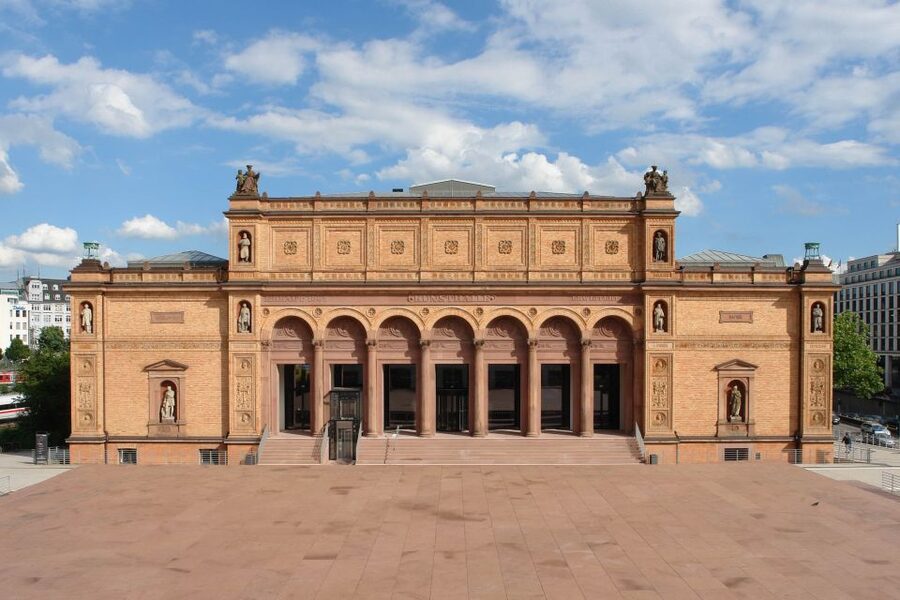
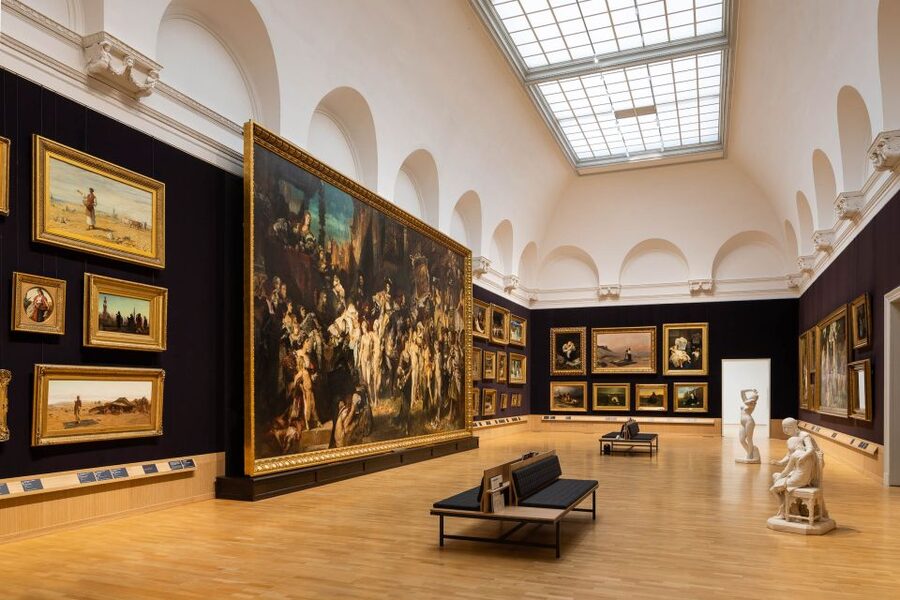
Hamburg’s Kunsthalle is one of Germany’s largest and most important art museums. That description can sound formal, but the practical point is simple: you get a wide survey of European art without spending your day crossing the city between separate museums.
The collection covers the Middle Ages through the present. You can begin with religious art made for medieval churches, continue through the Renaissance and Dutch Golden Age, then reach German Romanticism, French Realism, Impressionism, modern art, and contemporary work.
That range suits you if your interests are broad or if you are still finding your way into art museums. It also works for a focused visit. You might come mainly for Friedrich, the Dutch painters, Edvard Munch, or the modern collection, then give the rest a quick look.
The museum has earned a strong rating of 4.6 from 235 reviews. Short comments describe the visit as perfect and the films as very beautiful and impressive, though the comments offer little practical detail. The more useful takeaway is that the museum makes a strong general impression, especially for an art lover who wants variety rather than one narrow subject.
Start With Eight Centuries of European Art
Do not treat the Kunsthalle as one long corridor of paintings. The collection is easier to enjoy if you think of it as several linked chapters.
The old masters begin with northern German medieval painting. Altarpieces by Bertram von Minden and Master Francke are especially important. These works give you a direct look at the religious purpose of medieval art, when painted panels helped shape worship and communicate biblical stories to people who might not read.
The Renaissance section broadens the view beyond Germany. Works by Lucas Cranach the Elder, Hans Holbein, and Paris Bordone connect northern Europe with the wider artistic changes of the period. You can watch artists move toward more natural figures, richer portraiture, and a stronger interest in the individual.
The Dutch Golden Age brings Rembrandt van Rijn, Pieter de Hooch, and Anton van Dyck. This is a valuable part of the collection because it moves away from the grand religious and courtly subjects of earlier centuries. You might find scenes of domestic life, portraits, interiors, and careful observations of ordinary surroundings.
Give this section time even if old paintings are not your main reason for visiting. The early works establish the visual language that later artists would question, borrow from, or reject.
A few more tours and experiences worth a look
- Hamburg: Hamburg Dungeon Admission Ticket
★ 4.7 · 5,745 reviews - Hamburg: Ticket to the Panoptikum Waxworks
★ 4.3 · 2,489 reviews - Hamburg: International Maritime Museum Entrance Ticket
★ 4.7 · 547 reviews
Caspar David Friedrich and German Romanticism
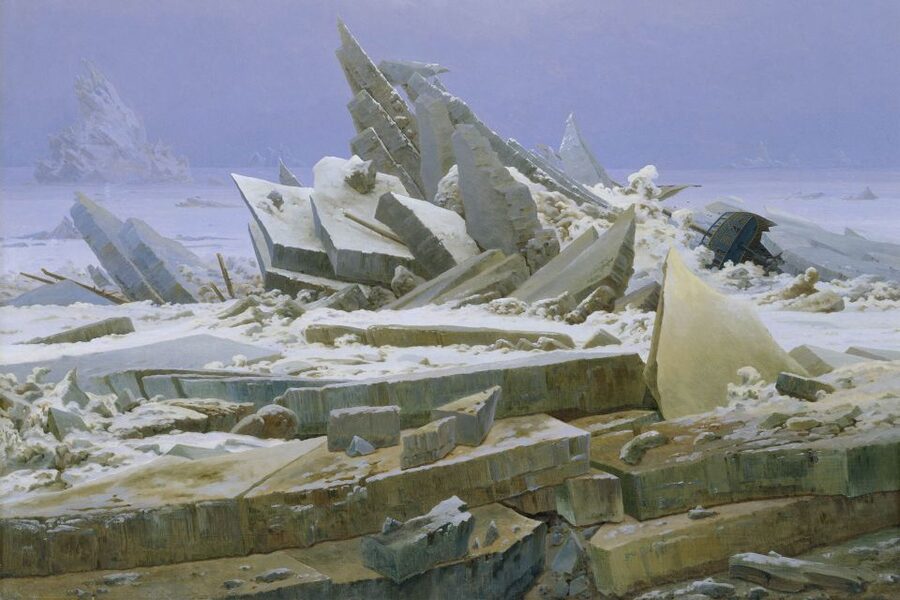
For many people, the emotional center of the visit is Caspar David Friedrich. His Wanderer above the Sea of Fog is world-famous, and seeing it in person gives you a chance to study the details that reproduction tends to flatten.
The lone figure looks out over a fog-filled mountain scene. You are not simply being shown a view. The painting asks you to consider what the figure sees, what remains hidden, and how a person fits into a much larger natural world.
The Kunsthalle’s 19th-century collection includes extensive holdings by Friedrich, Philipp Otto Runge, and Max Liebermann. This makes the section more useful than a single-famous-painting stop. You can place Friedrich beside other German artists and see different approaches to nature, mood, color, and modern life.
French Realists and Impressionists also have an important place here. That comparison matters. German Romantic painting often gives nature a powerful, reflective role, while Realist and Impressionist artists may direct your attention toward changing light, daily life, or the quick impression of a scene.
I would make this section a priority early in your visit, especially if the Friedrich painting is your main goal. Large museums can be tiring, and you do not want to reach the work after your attention has already worn thin.
Modern Art From Munch to Beckmann
The modern collection presents the unsettled story of the first half of the 20th century. Here, artistic rules begin to loosen, and the paintings often carry a stronger sense of anxiety, distortion, experiment, or personal expression.
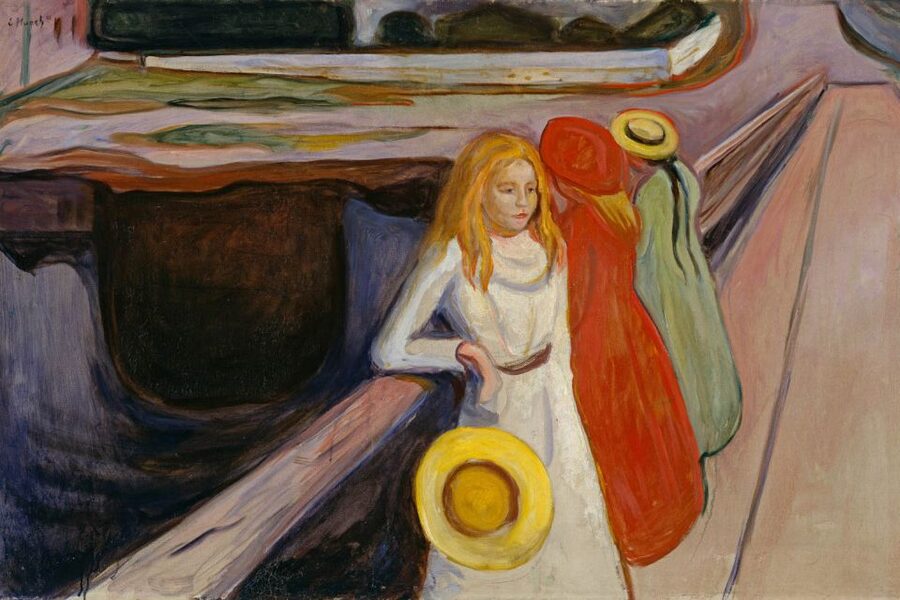
The Kunsthalle holds important works by the Brücke group, a German movement known for bold color and forceful forms. Edvard Munch, Paul Klee, Wilhelm Lehmbruck, Paula Modersohn-Becker, Lovis Corinth, and Max Beckmann are also represented.
This group gives you several different paths through modern art. Munch can bring psychological tension. Klee can turn toward signs, symbols, and playful abstraction. Lehmbruck’s work adds sculpture to the story, while Modersohn-Becker and Corinth show different approaches to the human figure and painterly expression.
Max Beckmann is especially useful for understanding the difficult mood of the period. His work can feel crowded, sharp, and uneasy. It does not ask you to admire beauty in a simple way. It asks you to look harder.
If you are visiting with someone who prefers clear pictures, this section may be more demanding than the old masters. That is not a flaw, but it is worth knowing. The museum offers a broad account of changing art, not a room full of easy favorites.
Contemporary Voices and International Names
The contemporary collection gives the Kunsthalle a strong connection to the art world of recent decades. Major works by Bruce Nauman, Gerhard Richter, Jenny Holzer, Nan Goldin, Andy Warhol, Richard Serra, and Sigmar Polke are included.
This section can feel very different from the medieval galleries. That contrast is part of the appeal. You move from paintings made for churches and royal courts to works that question language, identity, mass culture, photography, space, and the act of looking itself.
Andy Warhol gives you a familiar entry point through popular imagery. Jenny Holzer shifts attention toward language and public messages. Richard Serra shows how large-scale form can change your sense of the room. Gerhard Richter and Sigmar Polke offer different ways to question what a painting is supposed to show.
You may not connect with every work, and you do not need to. Contemporary art often works best when you slow down and ask what the artist wants you to notice rather than deciding immediately if you like it.
The section is particularly useful if your group has mixed interests. One person can focus on old masters, another on German Romanticism, and another on postwar or contemporary art, all within the same museum.
Something different for another day:
- Hamburg: Sex and Crime in St. Pauli Tour for Ages 18+
★ 4.7 · 15,447 reviews - Hamburg: 1.5-Hour Harbor and Speicherstadt Day Cruise
★ 4.6 · 14,200 reviews - Hamburg: 90-Minute Evening Lights Harbor Cruise
★ 4.5 · 7,728 reviews - Hamburg: 2-Hour XXL Port of Hamburg Cruise Tour
★ 4.7 · 6,979 reviews
Planning a One-Day Kunsthalle Visit
The ticket is valid for one day, with availability and starting times shown when you book. That gives you room to set your own pace, but a one-day ticket does not mean you need to spend the entire day inside.
For a first visit, I would plan three stages:
- Begin with the old masters and northern German medieval works.
- Continue to the 19th-century galleries for Friedrich, Runge, Liebermann, Realism, and Impressionism.
- Finish with modern and contemporary art, or reverse the order if Friedrich is your main reason for coming.
The exact gallery route can depend on current displays and special exhibitions. The museum regularly attracts large audiences for these temporary shows, so it is wise to check what is on before you arrive if a special exhibition is important to you.
Take a pause before you reach the final rooms. Art museums are not endurance tests, despite what your feet may tell you. A drink or snack can help you return to the collection with fresher attention.
The audio guide is available in German and English. A loan device costs €6 at the ticket desk, and the guide covers both the collection areas and current special exhibitions. The museum app can be downloaded free of charge, giving you another way to access the guide without paying for the loan device.
Café Das Liebermann and The Cube
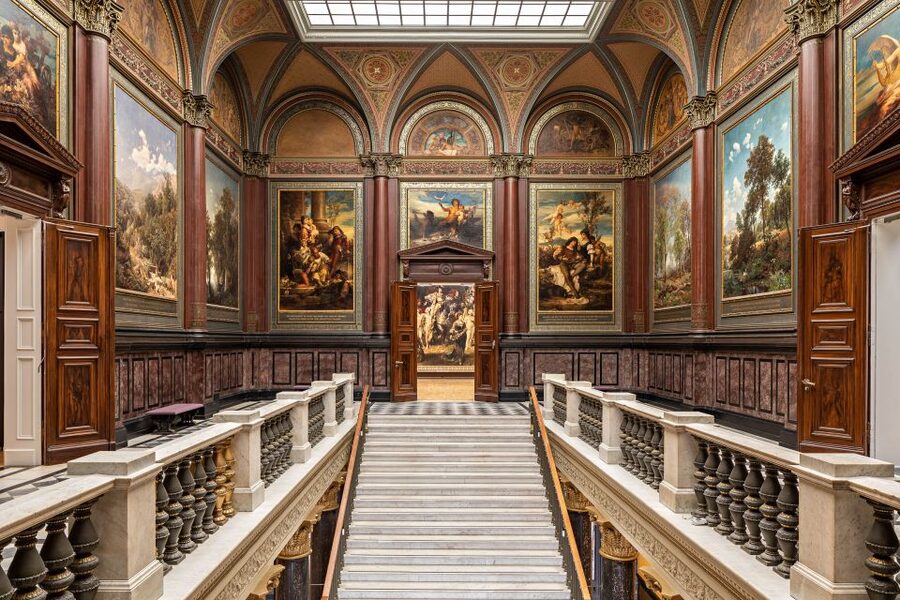
A museum café is useful when it is placed well, and Café Das Liebermann has returned to its former location in the Kunsthalle’s impressive pillared hall. You can stop there for a drink or a snack without turning the visit into a full restaurant outing.
The Cube is in the Gallery of Contemporary Art and offers views toward Inner Alster Lake. Its daytime menu includes snacks and lunch choices, while the evening service moves to an à la carte dinner menu.
This matters if you are planning a long museum day or want to keep your meal close to the galleries. The restaurant setting also gives you a chance to talk through what you have seen, which is often when a museum visit starts to make more sense.
Do not assume you need a full meal, though. If your schedule is tight, the café may be the more practical stop. The information provided does not give exact opening hours or menu prices, so check current details if you are planning around lunch or dinner.
Price, Access, and What the Ticket Includes
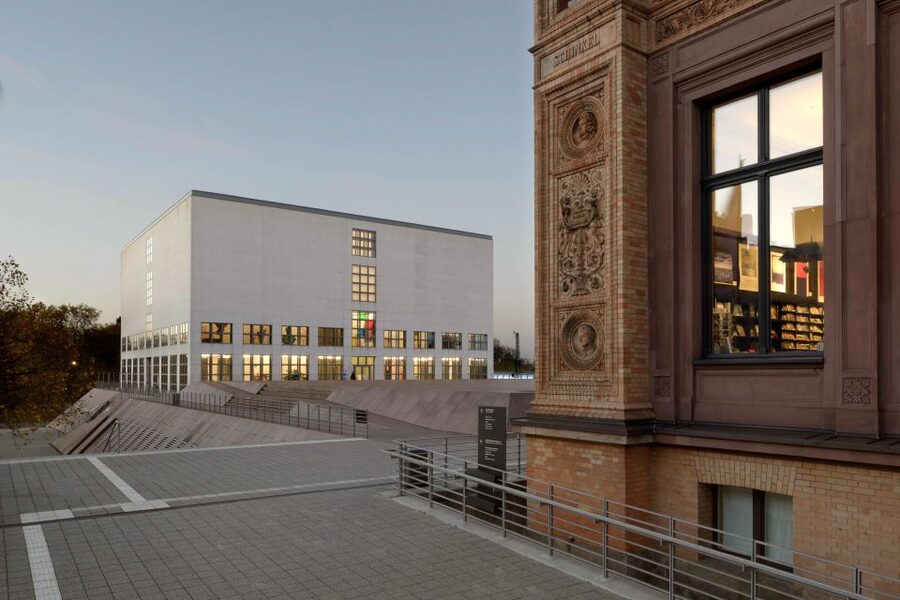
At about $21 per person, the ticket is fair value for a major museum with eight centuries of art. The value is strongest if you plan to spend several hours inside and take advantage of both the permanent collection and any included access available on the day.
The ticket includes entrance to the Hamburger Kunsthalle and access to the permanent collection. The audio guide is not included as a physical loan device, despite the general activity details referring to audio access. In practice, budget €6 for the device at the ticket desk, or use the free museum app.
Large bags, backpacks, umbrellas, suitcases, and trolleys must be deposited. Lockers are available, but a bag larger than DIN A4 may not go into the galleries. Pack lightly if you can. This is a small detail, but it saves time at the entrance and makes the visit easier.
The museum is wheelchair accessible. English and German are the listed languages for the experience and audio guide.
Free cancellation is available up to 24 hours before the visit, and you can reserve now and pay later. Those options are useful if your Hamburg schedule depends on weather, train timing, or a changing city plan.
Who Will Enjoy This Museum Most?
I would recommend the Kunsthalle to you if you want one serious museum visit with a wide range of art. It is a particularly good choice for people interested in German painting, Romanticism, modern art, or the links between European artistic periods.
It also suits couples or families with different tastes. The collection is broad enough for one person to seek out Rembrandt while another looks for Warhol or Munch.
You may prefer a smaller museum if you want a quiet, tightly focused display or if you have only a short amount of time. A huge collection can feel demanding, and not every room will match your interests.
The strongest reason to go is not one famous painting alone. It is the chance to see Wanderer above the Sea of Fog in the same museum as medieval altarpieces, Dutch interiors, Brücke works, and international contemporary art.
Should You Book the Hamburg Kunsthalle Ticket?
Book it if you want range, flexibility, and serious German art in one stop. The $21 price makes sense for a visit of several hours, especially if you use the permanent collection fully and take a break at one of the in-house cafés.
I would be more cautious if your Hamburg schedule is packed or if you only enjoy one narrow art period. In that case, choose your priority rooms before arriving and accept that you will not see everything.
For most art lovers, this is a strong-value museum ticket. Go for Friedrich, stay for the centuries around him, and use the free app if you want guidance without adding the €6 audio-device fee.
FAQ
How long is the Hamburg Kunsthalle ticket valid?
The ticket is valid for one day. You should check availability for the starting times offered when booking.
What does the entrance ticket include?
It includes entrance to the Hamburger Kunsthalle and access to the permanent collection.
Is the audio guide included?
A physical audio-guide loan device costs €6 at the ticket desk. The guide is available in German and English, and the museum app can be downloaded free of charge.
Does the audio guide cover special exhibitions?
Yes. Audio guides are offered for both the collection areas and current special exhibitions.
Is the Kunsthalle wheelchair accessible?
Yes, the experience is wheelchair accessible.
What items must be stored before entering the galleries?
Bags larger than DIN A4, backpacks, umbrellas, suitcases, trolleys, and other larger items must be deposited. Lockers are available.
Can I cancel the booking?
Yes. You can cancel up to 24 hours in advance for a full refund. You can also reserve now and pay later.
Just added around Hamburg
- Hamburg: Private 1.5-Hour Walking Tour of St. Pauli★ 4.9 · 13 reviews
- Mister X Hamburg 2h city tour, hunting & games for all ages★ 5.0 · 13 reviews
- Yacht Sailing After Work Tour of Hamburg Harbor★ 5.0 · 13 reviews
- Free Tour: Port, Red Light District and Beatles. You decide how much to pay at the end★ 3.9 · 13 reviews
- Private 5-Hour Hamburg Countryside Tour with a former policeman★ 5.0 · 14 reviews
- Hamburg: After work Millerntor stadium tour with drinks★ 4.8 · 14 reviews
- Hamburg: Guided Walking Tour★ 4.2 · 14 reviews
- Hamburg: Tour of Blankenese on the Banks of the Elbe★ 4.5 · 14 reviews
Tickets, compared.
Munich Hop-On Hop-Off Tour: 1-Day or 2-Day Ticket
Read our review →


Browse the lists this tour appears in