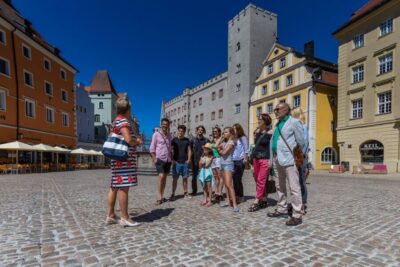
Reviewed · OLD TOWN WALKS
Exclusive Wine & Food Tasting in Historic Cellar | Mainz Old Town
Wine tastes better underground. In Mainz, BottleStops pairs five to six local wines with small plates in a historic hillside cellar, making this a relaxed way to start an evening in the Old Town. I like the intimate group size, limited to 12 people, and I especially like that host Jérôme explains German wine in clear, friendly English. The main drawback is the cellar temperature: one attendee found it chilly, so bring a jacket.
This is not a quick pour-and-move-on tasting. You spend about two hours learning how Riesling, Pinot Noir, Sekt, and other regional wines connect to Mainz food and geography. At $102.12 per person, it is not a budget drink, but the price includes all wine, water, food pairings, taxes, and a dedicated wine guide in a memorable setting.
In This Review
- Key Things to Know Before You Book
- Why This Mainz Tasting Works So Well
- Meeting at Kupferbergterrasse at 5:30 pm
- Entering the Historic Cellar
- The Opening Sekt and Mainz Wine Culture
- Dry Riesling With Sausage
- Grauburgunder With Cheese
- Spätburgunder and Dry-Cured Sausage
- Red Blend and Mainz Spundekäs
- Riesling and the Final Surprise Pairing
- Jérôme’s Teaching Style
- What the $102.12 Price Includes
- Who Should Book This Experience?
- Booking, Cancellations, and Useful Planning
- Should You Book the Mainz Cellar Tasting?
- FAQ
- Where does the wine tasting start?
- What time does the experience begin?
- How long does the tasting last?
- Where does the activity end?
- How many people can join the group?
- Is the tasting offered in English?
- How many wines will be served?
- What food is paired with the wine?
- Is water included?
- Can I cancel for a full refund?
Key Things to Know Before You Book
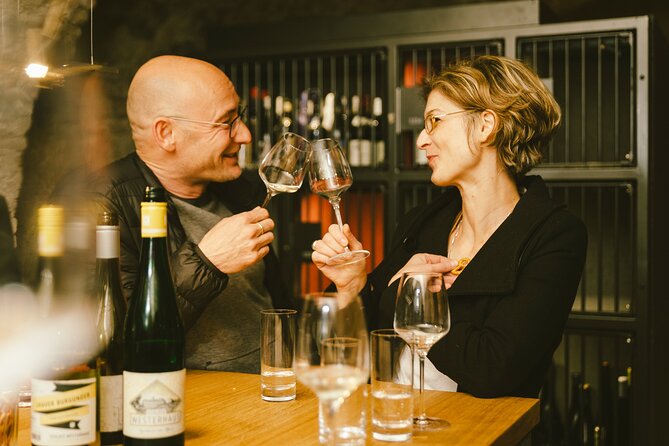
- Six wines in a hillside cellar: The evening begins with sparkling wine and continues through a flight of local whites, reds, and a final Riesling.
- Jérôme leads the tasting: He brings wine knowledge, local stories, humor, and strong English skills to the table.
- Food is part of the lesson: Sausage, cheese, Spundekäs, and surprise pairings show how Mainz eats with its wine.
- Small groups keep it personal: With no more than 12 people, you have room to ask questions and discuss the wines.
- A 5:30 pm start suits an evening out: The tasting ends at the same meeting point, leaving you free to continue dinner or explore Mainz.
- Bring an extra layer: The cellar is atmospheric, but it may feel cold after you sit for a while.
Why This Mainz Tasting Works So Well
Mainz is one of Germany’s best places to learn about wine because the city and its surrounding vineyards are closely tied to everyday drinking culture. This experience gives you an introduction without requiring a full day in the countryside or a working knowledge of German wine labels.
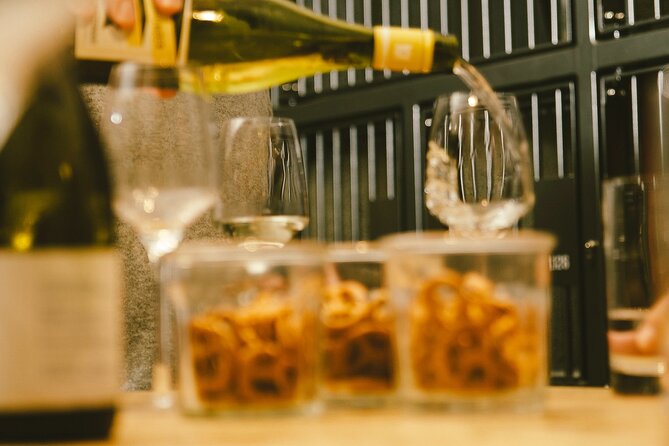
I like the way the tasting links each glass to a snack. You are not simply told that a wine is dry, crisp, fruity, or full-bodied. You get to test how it behaves with sausage, cheese, cured meat, or a soft local spread. That makes the information easier to remember and gives the evening a natural rhythm.
The group limit also matters. A large tasting can turn into a crowded lesson where you hear only half of what is said. Here, Jérôme can answer individual questions, adjust the conversation to the group, and keep the mood informal. The tone is educational, but it is not a formal wine course.
The experience is offered in English, and Jérôme’s command of the language has been praised by English-speaking participants. That is important in Germany, where wine labels and regional terms can be confusing even for experienced drinkers. You should be able to ask about production, price, labels, and food pairing without worrying that something is getting lost.
More Food Tours in Frankfurt
- Wiesbaden: Sparkling Winemaking Tour with 3-Glass Tasting
★ 4.8 · 155 reviews - Heidelberg and Rhine Valley Day Trip With Wine Tasting and Dinner from Frankfurt
★ 3.5 · 101 reviews - Rhine Valley Wine Tasting Tour from Frankfurt and Mainz
★ 5.0 · 87 reviews
Meeting at Kupferbergterrasse at 5:30 pm
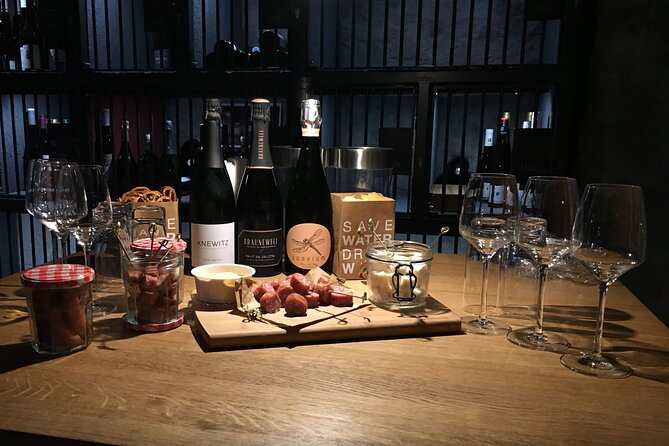
The tasting begins at Kupferbergterrasse 23, 55116 Mainz, at 5:30 pm. The activity ends back at the same location, so you do not need to arrange a second meeting point or wonder where the evening finishes.
The start time is well chosen for a first Mainz activity. You can spend the afternoon seeing the cathedral, walking through the Old Town, or arriving from another nearby stop, then use the tasting as a bridge into the evening. Afterward, you can continue with dinner or drinks on your own.
The meeting point is near public transportation, which makes arrival simpler. Still, plan enough time to find the address and arrive before the first pour. A wine tasting has a set sequence, and arriving late can mean missing the opening Sekt and the introduction to the evening.
Most people can take part, but the activity is not recommended for people with mobility issues. The cellar setting is a central part of the experience, so anyone who has trouble with access or underground spaces should check their comfort level before paying.
Entering the Historic Cellar
The surprise of the evening is the setting. The tasting takes place in one of the region’s atmospheric cellars, below the Mainz hillside. It is not a bright tasting room with rows of polished tables. The underground location gives the event a sense of place and makes it feel tied to Mainz rather than copied from a wine bar anywhere in Europe.
That atmosphere comes with a tradeoff. The cellar can be chilly, especially when you are sitting for two hours. I would bring a light jacket even if the weather outside is warm. This is a small practical detail, but it can shape your comfort more than the quality of the wine.
The setting may also differ from what you picture when you hear exclusive wine tasting. One attendee found the cellar fun but not quite what they expected. That is useful to keep in mind: book this for character and atmosphere, not for a sleek luxury lounge.
The Opening Sekt and Mainz Wine Culture
The first taste is a classic Sekt, Germany’s sparkling wine. It comes with a surprise pairing and introduces the historic connection between German Sekt and French Champagne.
This is a smart opening. Sparkling wine refreshes the palate and gives Jérôme a chance to explain an important part of German wine culture before the still wines arrive. Sekt is familiar to many people, but its place in Germany’s wine tradition is less well known outside the country.
The surprise food pairing also sets the tone. You are encouraged to notice how the wine changes with food rather than judge it on its own. That idea continues throughout the tasting, so pay attention to the pairing as much as the label.
If you do not know much about German wine, this first glass helps establish the basic approach. The goal is not to memorize every technical term. It is to understand how style, region, food, and production affect what ends up in your glass.
More Historical Tours in Frankfurt
- Frankfurt Self-Guided Historical Walking Tour
★ 4.0 · 58 reviews - Frankfurt: Old Town Historical Walking Tour in German
★ 4.7 · 43 reviews - Darmstadt: City Highlights and History Guided Walking Tour
★ 4.0 · 23 reviews - magnificent historic Heidelberg, private Tour, from Frankfurt
★ 4.5 · 15 reviews
Dry Riesling With Sausage
The next pairing brings together dry Riesling and sausage, a combination that reflects Mainz’s local food phrase, Weck, Woscht & Woi. In plain terms, that means bread, sausage, and wine.
The sausage is a local bologna-style Fleischwurst. It is a simple food, but that is exactly why it works here. Wine culture in Germany is not only about expensive bottles and special dinners. It also belongs with ordinary regional food, shared in a relaxed setting.
The dry Riesling is likely to be a key moment for anyone who thinks of Riesling as sweet. One person arrived convinced they did not like Riesling and left with a new appreciation for it. The tasting includes different styles, and the dry version paired with sausage gives you a direct way to reconsider the grape.
Jérôme also teaches a useful tasting habit: take three sips before deciding what you think. The first sip can reflect surprise or adjustment. By the third, you have a better idea of the wine’s actual taste with the food. It is a simple tip you can use later in restaurants and wine shops.
Grauburgunder With Cheese
Grauburgunder, known internationally as Pinot Grigio or Pinot Gris, is paired with cheese from northern and southern Germany. This section broadens the lesson beyond Riesling and shows how a familiar grape can take on a different character in German hands.
I like this part because it is practical. Many people recognize Pinot Grigio as a light restaurant white, but Grauburgunder can feel fuller and more substantial. Cheese gives you a clear comparison point and helps show why the same wine may seem different beside food.
The pairing also brings regional variety to the table. You get more than a single Mainz style. The cheeses are used to show how food from different parts of Germany can affect the wine, making the tasting about the country’s eating habits as well as its vineyards.
If you normally choose only white wine or only reds, this is a good place to stay open-minded. Several participants arrived with limited interest in German whites and enjoyed being pushed toward bottles they would not normally choose.
Spätburgunder and Dry-Cured Sausage
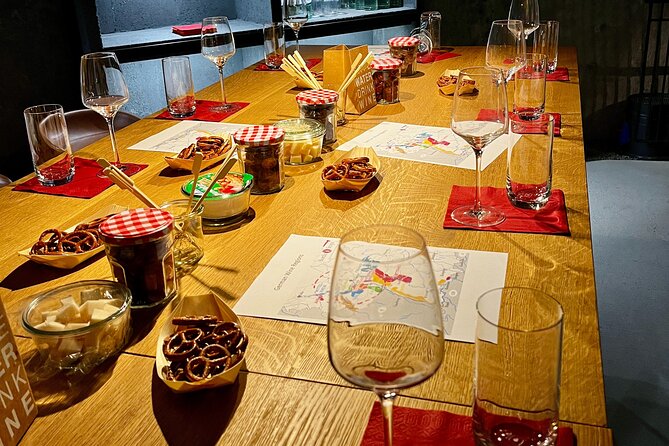
Spätburgunder is Germany’s name for Pinot Noir, and here it is served with dry-cured sausage. This gives the tasting a red-wine course without abandoning the local snack theme.
German Pinot Noir is often less obvious to international drinkers than French or New World versions. The pairing lets you consider its style in a direct, unfussy way. You do not need to know the grape in advance. Taste it, try it with the sausage, and ask Jérôme what makes the regional expression different.
The dry-cured sausage adds salt, spice, and texture. That makes it a useful contrast to the softer Fleischwurst served earlier. The food is modest, but it keeps the wines connected to real German eating rather than treating the tasting as a technical exercise.
This is also a good course for people who fear that a German wine tasting means only sweet whites. The selection includes red wine and a red blend, so the evening covers more ground than Riesling alone.
Red Blend and Mainz Spundekäs
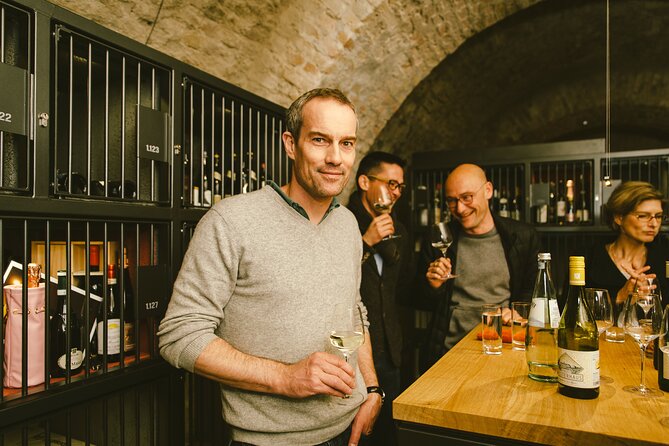
The red blend is paired with Spundekäs, one of Mainz’s favorite snacks. Spundekäs is a soft, seasoned cheese spread, and it brings a distinctly local note to the tasting.
This may be the most regional pairing of the night. You are not simply matching wine with generic crackers or a plate of international cheese. You are trying something associated with the city and seeing how it works with a red blend that has French roots.
The combination also shows why wine pairing does not have to be precious. A spreadable cheese and a local red can be more revealing than a formal dish because the flavors are direct and easy to compare.
If you are unsure about unfamiliar snacks, this is still a low-pressure setting. The portions are described as small plates, so you are sampling rather than committing to a full meal. You should plan to eat dinner later if you need a substantial meal, since the food here is designed to accompany the wine.
Riesling and the Final Surprise Pairing
The last course returns to Riesling with another surprise pairing. It is designed to challenge the idea that sweet Riesling is hard to match with food.
This ending gives the tasting a useful contrast. You have already tried dry Riesling with sausage, so now you can compare it with a sweeter style and consider how a different food pairing changes the result. Even if you normally avoid sweet wine, this is the point where you may find the style more balanced than expected.
The final course also gives Jérôme room to answer questions that came up during the earlier pours. By this stage, you have tasted enough styles to ask better questions about labels, sweetness, production, and value.
Do not expect the exact bottles or pairings to be fixed. The selection can change with the season and availability. That flexibility is normal for a small regional tasting, but it means you should treat the listed menu as a guide rather than a promise of specific vintages.
Jérôme’s Teaching Style
The host is a major part of the experience. Jérôme brings clear explanations, local wine knowledge, and a relaxed sense of humor. He also talks about Mainz’s wine-making past, the region’s geography, and how wines are produced.
I would choose this tasting mainly for the chance to ask questions. You can learn how to read German labels, how to identify reputable producers, and what a sensible price range might be when shopping for wine later. That information gives the tasting value beyond the evening itself.
The teaching is not limited to flavor notes. Jérôme explains how the wines fit into German wine culture and encourages the group to expand its usual choices. That is why the event works for both beginners and people who already drink wine but know little about Germany.
His English is described as excellent, so English-speaking participants should feel comfortable. The group atmosphere is friendly and sometimes turns a room of strangers into a casual table of wine companions by the end.
What the $102.12 Price Includes
At $102.12 per person, this is a special-occasion activity rather than a cheap way to drink. The cost includes five to six alcoholic tastings, local snack pairings, water, and all fees and taxes.
The value depends on what you want from a tasting. If you only want several glasses of wine, you can probably spend less elsewhere. If you want a guided introduction to German wine, regional food, label advice, and access to a historic cellar, the price is easier to justify.
The small group helps. You are paying for more than the liquid in the glass. You are also paying for Jérôme’s time, the food, the setting, and a structured evening that would take effort to recreate on your own.
There is no pressure to buy wine, which is another positive. You can ask what to look for when shopping without feeling that the answer is leading to a sales pitch.
Who Should Book This Experience?
I would recommend it most strongly to:
- People visiting Mainz for the first time
- Couples looking for an easy evening activity
- Wine drinkers who want to understand German labels and grape varieties
- Curious eaters who enjoy small local snacks
- Visitors who prefer a small group to a large scheduled tour
- Anyone who thinks they dislike Riesling and wants to test that assumption
It is less suitable if you want a full dinner, a large vineyard tour, or a polished modern tasting room. It is also not the right choice for someone who dislikes underground spaces, has mobility concerns, or is uncomfortable in a cool cellar.
The experience includes alcohol, so plan your evening around that fact. Its 5:30 pm start makes it a natural first stop before dinner, but the small plates should not be treated as a complete evening meal.
Booking, Cancellations, and Useful Planning
The activity is often reserved about 43 days ahead, so I would not leave it until the day before if your Mainz schedule is fixed. Confirmation is sent at booking, and you receive a mobile ticket.
You can cancel for a full refund up to 24 hours before the 5:30 pm start time. Changes or cancellations made within 24 hours are not accepted for a refund. If the minimum number is not reached and BottleStops cancels the event, you are offered another date or experience, or a full refund.
The group limit is 12 people. That number is large enough for a social evening but small enough for questions, which is one of the strongest reasons to choose this activity over a generic bar tasting.
Should You Book the Mainz Cellar Tasting?
Book it if you want a warm, personal introduction to German wine with local food and a setting you will remember. The combination of Jérôme’s teaching, the small group, and the cellar makes this more useful than a simple flight of wines.
I would especially choose it early in a Mainz visit. You will learn enough about Riesling, Spätburgunder, Grauburgunder, Sekt, and regional snacks to make better choices during the rest of your stay.
Skip it if you need a full meal, require step-free access, or want a tour centered on vineyard scenery. For everyone else, bring a jacket, arrive ready to ask questions, and give Riesling three sips before making up your mind.
FAQ
Where does the wine tasting start?
It starts at Kupferbergterrasse 23, 55116 Mainz, Germany.
What time does the experience begin?
The tasting starts at 5:30 pm.
How long does the tasting last?
The experience lasts approximately two hours.
Where does the activity end?
It ends back at the meeting point at Kupferbergterrasse 23.
How many people can join the group?
The group is limited to a maximum of 12 people.
Is the tasting offered in English?
Yes. The experience is offered in English.
How many wines will be served?
You will taste five to six wines. The exact wines can change with the season and availability.
What food is paired with the wine?
Pairings can include sausage, cheese, dry-cured sausage, Spundekäs, and surprise pairings. The exact food can vary.
Is water included?
Yes. Water is included with the wine and snack pairings.
Can I cancel for a full refund?
Yes. You can cancel at least 24 hours before the start time for a full refund. Cancellations or changes made less than 24 hours before the start are not refunded or accepted.
More Wine Tours in Frankfurt
- Rüdesheim – Guided wine hikes with 4wines and cable car ride
★ 4.5 · 26 reviews - Private day trip to the Romantic Rhine Valley with river cruise and wine tasting
★ 5.0 · 22 reviews - From Rüdesheim: 1.5-Hour Boat Cruise with Wine Tasting
★ 3.6 · 22 reviews
More Old Town Walks in Frankfurt
- Frankfurt: New Old Town and Highlights German-Language Tour
★ 4.7 · 1,316 reviews - Heidelberg Castle and Old Town Tour from Frankfurt
★ 4.0 · 587 reviews - Frankfurt: Highlights and New Old Town English-Language Tour
★ 4.7 · 96 reviews - Guided Axe Throwing Experience in Frankfurt Altstadt
★ 5.0 · 93 reviews
Just added around Frankfurt
- Wiesbaden Biebrich: Outdoor Escape Game★ 4.7 · 13 reviews
- from Frankfurt – romantic Black Forest & brewery, private tour★ 5.0 · 13 reviews
- Frankfurt : Highlights & hidden Gems Private Walking Tour★ 4.6 · 13 reviews
- Discover the Heart of Frankfurt – City Tour in German★ 5.0 · 13 reviews
- From Frankfurt: Heidelberg and Rothenburg Guided Day Trip★ 5.0 · 14 reviews
- Private German Beer Tasting Experience in Frankfurt Old Town★ 5.0 · 14 reviews
- Frankfurt: Old Town Crime Mystery Game★ 4.3 · 14 reviews
- Mainz Highlights, private walking tour★ 4.9 · 15 reviews
Old Town Walks, compared.

Old Town & Viktualienmarkt City Walk in German
Read our review →

The Night Watchman Old Town Walking Tour in German
Read our review →