
Reviewed · BERLIN WALL TOURS
Berlin Wall: City Tour of Divided Germany
Berlin’s old border still shapes its city center. This two-hour walking tour connects the Palace of Tears, Brandenburg Gate, Potsdamer Platz, and Checkpoint Charlie, giving you a clear route through the story of divided Germany. I like that it focuses on real places rather than treating the Berlin Wall as a single monument, and I especially like the attention to personal stories about daily life on both sides.
The price is fair at $21 per person, especially if you want a compact introduction before exploring further on your own. The main drawback is important: the live guide speaks German, so this is not a good choice if you need an English-language explanation. You will also want comfortable shoes and warm clothing in cold weather.
In This Review
- Key points to know before you book
- Starting at the Palace of Tears
- Friedrichstrasse station and the daily border
- Following the Spree toward the government district
- Brandenburg Gate, once a symbol of division
- The Holocaust Memorial and the former death strip
- Potsdamer Platz and the Tiergarten Triangle
- The longest remaining Wall section
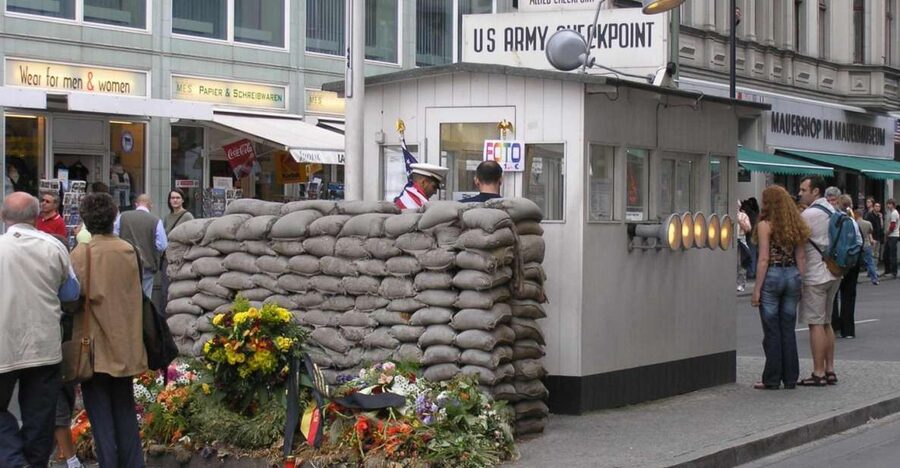
- Checkpoint Charlie as the final major stop
- How much value do you get for $21?
- Pace, clothing, and the best time to go
- Who should choose this Berlin Wall tour?
- Should you book it?
- FAQ
- Where does the Berlin Wall city tour meet?
- How long does the tour last?
- What language is the tour in?
- What does the $21 price include?
- Which Berlin Wall sites are visited?
- What should I bring?
- Can I cancel or pay later?
Key points to know before you book
- Starts at the Palace of Tears: Meet outside Tränenpalast, at the entrance in front of Friedrichstrasse station.
- Covers major Cold War sites: The route includes the former border station, the government district, Brandenburg Gate, Potsdamer Platz, the longest remaining stretch of the Wall, and Checkpoint Charlie.
- Personal stories add meaning: Guides Stefan or Stephan received special praise for sharing details and personal accounts that are not always part of a standard sightseeing walk.
- A focused two-hour route: You get a useful overview without giving up an entire day, though the number of stops means the pace may feel brisk.
- German only: The tour has a live German-speaking guide, with no other language listed.
- Flexible booking: You can cancel up to 24 hours ahead for a full refund and reserve now while paying later.
Starting at the Palace of Tears
The tour begins outside Tränenpalast, the Palace of Tears, at Reichstagufer 10117 Berlin. The meeting point is at the entrance in front of Friedrichstrasse station, and the venue has only one entrance, which helps remove some of the usual meeting-point confusion.
The name Palace of Tears refers to the emotional farewells that took place here when people from East Berlin said goodbye to visitors from the West. It is a fitting place to begin because the division of Berlin was not only a line on a map. It affected families, friendships, commutes, shopping, work, and the simple act of saying goodbye.
Starting at Friedrichstrasse station also makes practical sense. This was the single border station during the Cold War, so the first stop places you directly inside the machinery of division. You begin with a site where the border shaped ordinary movement through the city, not just a place designed for dramatic photographs.
I would arrive a little early. Friedrichstrasse is a large and busy area, and the meeting instructions specify the entrance clearly because Tränenpalast has only one entrance. If you arrive late, finding a moving walking group may be difficult.
More City Tours in Berlin
- Berlin: 1-Hour City Tour by Boat with Guaranteed Seating
★ 4.3 · 16,993 reviews - Berlin: City Sightseeing Hop-On Hop-Off Bus Tour
★ 4.1 · 4,233 reviews - Potsdam: City and Castles Tour
★ 4.7 · 3,721 reviews
Friedrichstrasse station and the daily border
The early part of the route looks at how the border worked in everyday life. That focus is one of the tour’s strongest features. Berlin’s division was not an abstract political argument happening far away. It controlled which streets you could use, which relatives you could visit, and how easily you could cross from one part of the city to another.
The former Friedrichstrasse border station helps you picture that system in a concrete way. It was the single border station during the Cold War, making it a key place for understanding how people entered and left the divided city.
You should expect the guide to explain the border through stories and details rather than only dates. The feedback about personal accounts is consistent, with Manuela praising the guide’s personal stories and Sophie describing many personal details that are not usually heard elsewhere. That kind of storytelling can make the history easier to grasp, especially if you know the broad outline but want to understand how the division affected people at street level.
The route is conducted in German. If you are comfortable following a German-speaking guide, this can be a strong choice. If you are not, the historical sites will still be visible, but much of the value comes from the spoken explanation.
Following the Spree toward the government district
From Friedrichstrasse, the walk follows the Spree toward Berlin’s parliament and government district. Parts of this area once lay along the border strip, so the route shows how the division cut through places that now appear central and open.
This is a useful section because it links the Wall to the political heart of modern Berlin. You are not simply looking at a leftover section of concrete. You are tracing a former boundary through the center of a capital city, past buildings connected to parliament and government.
The walk along the river should also help you connect the individual stops. A tour about the Berlin Wall can otherwise become a string of disconnected locations. Here, the route gives you a sense of how the border moved through the city, separating districts that are now joined by normal streets and public spaces.
Do not expect a museum-style presentation at every stop. The included service is the city tour itself, so the value lies in the guide’s explanation and the route. If you want extensive indoor exhibits, allow separate time for museums after the walk.
Brandenburg Gate, once a symbol of division
Brandenburg Gate is one of Berlin’s most recognizable sights, but its role during the division gives it a much heavier meaning. The border ran here, and the gate became a symbol of the split city and its uncertain future.
Today, it is easy to see Brandenburg Gate as a grand neoclassical monument in an open public square. The tour asks you to picture it differently: as a place beside a fortified boundary, linked to the fate of Berlin and the wider conflict between two political systems.
I like this stop because it connects a familiar postcard view to the less visible structure that once surrounded it. You may already have photographed Brandenburg Gate, but hearing where the border ran changes the way you read the space around it.
This is also a good example of why a guided walk can add value. Without context, the gate is beautiful but fairly straightforward. With the history of the border, it becomes part of a story about access, separation, and political power.
More Berlin Wall walks:
- Skip-the-Line: Berlin Wall Museum at Checkpoint Charlie
★ 4.1 · 2,041 reviews - Berlin: East Side Gallery Spree Cruise in a Solar Catamaran
★ 4.0 · 1,039 reviews - Cold War, Berlin Wall, Spies and the East Side Gallery
★ 5.0 · 1,024 reviews - Berlin: Guided Bike Tour of the Berlin Wall and Third Reich
★ 4.7 · 499 reviews
The Holocaust Memorial and the former death strip
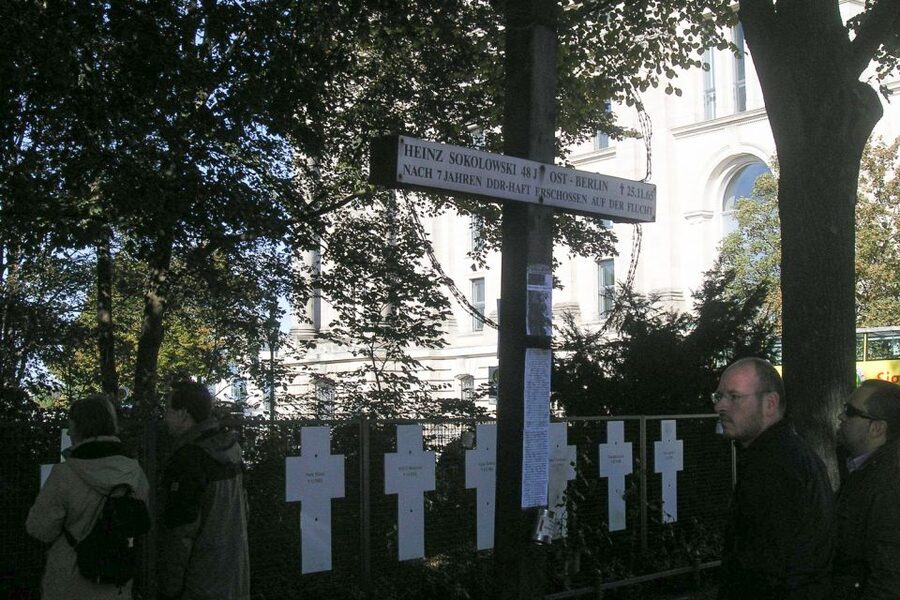
The route continues from the Holocaust Memorial at the former death strip. This is a serious section of the walk, and it joins two difficult parts of Berlin’s past: the murder of Europe’s Jews under Nazi rule and the later division of the city.
The tour does not present the Wall in isolation. By visiting the former death strip near the memorial, it places the Cold War border within a city marked by more than one period of violence and political repression. That broader setting matters because Berlin’s central spaces often carry several layers of memory at once.
You should allow yourself time to take in the importance of the location. The tour lasts two hours, so the guide cannot offer an unlimited amount of time at every stop. Still, the sequence creates a strong link between the memorial sites and the city that grew around them.
This part may feel emotionally demanding. That is not a flaw, but it is worth knowing before you book. The experience is historical and reflective rather than light sightseeing.
Potsdamer Platz and the Tiergarten Triangle
At Potsdamer Platz, the split is particularly visible in the former Tiergarten Triangle. This stop shows how sharply the city changed around the Wall.
Potsdamer Platz is now associated with modern architecture and a busy central location. Its Cold War story is very different. The division left a visible gap through an area that had once been an important part of Berlin, and the former Tiergarten Triangle helps explain where the border ran and how the city was cut apart.
I find this kind of contrast especially useful for understanding Berlin. A preserved Wall segment tells you what the barrier looked like. Potsdamer Platz helps you understand what the barrier did to the shape and movement of the city.
The tour does not promise a long architectural study of the modern buildings around the square. Instead, the stop uses Potsdamer Platz to show the physical effect of division and the way Berlin’s center was later rebuilt.
The longest remaining Wall section
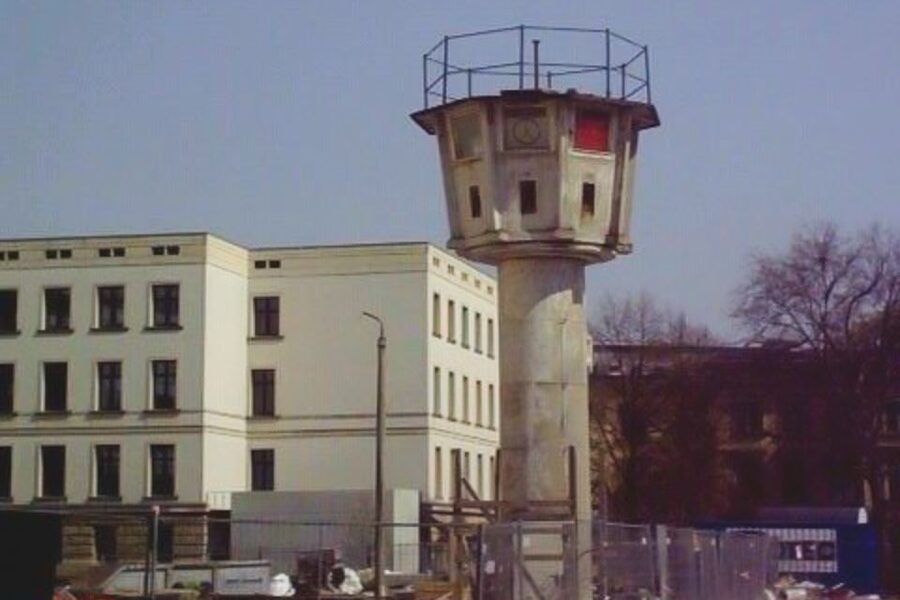
The walk includes the longest remaining stretch of the Berlin Wall. This is one of the clearest places to see the scale of the former barrier rather than treating it as a small historic fragment.
A preserved section can help you understand that the Wall was not just a single concrete slab. It was part of a border system that changed the way people moved through the city. The longer surviving stretch gives the guide room to explain the border as a zone and to point out how the city was affected around it.
For you, this is likely one of the most visual parts of the experience. It offers a stronger sense of distance and continuity than isolated pieces of Wall scattered around Berlin. Bring a camera if you like, but listen closely too. The physical remains are important, while the personal stories explain why they matter.
The walking pace may be fairly steady, since several major sites are included in only two hours. If you prefer slow photography, long pauses, or extensive museum visits, you may want to return to some places afterward.
Checkpoint Charlie as the final major stop
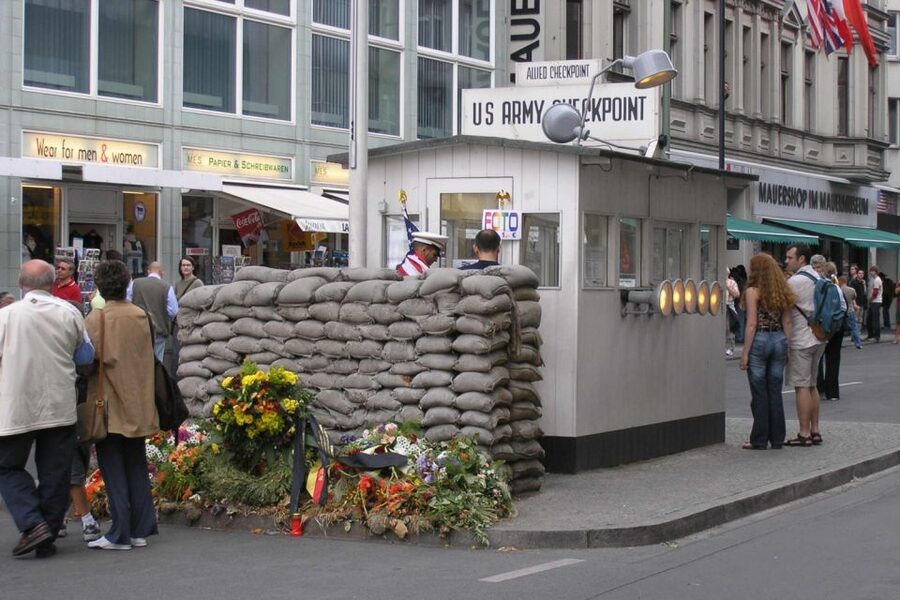
Checkpoint Charlie is the tour’s famous closing point. Once a Cold War crossing point, it is now one of Berlin’s best-known reminders of the divided city.
Its fame can make the site feel overly polished or tourist-oriented, but the historical role remains important. The tour places Checkpoint Charlie after the longer route through less obvious places, which helps you see it as part of a larger border story rather than the whole story.
That ordering is valuable. If you begin and end with only the most famous sights, it is easy to reduce Berlin’s division to a few photographs. By the time you reach Checkpoint Charlie, you have already followed the former border through stations, government buildings, memorial spaces, and rebuilt parts of the city.
I would treat Checkpoint Charlie as a final reference point, not the sole reason to book. The strength of this experience is the connection between all the sites.
How much value do you get for $21?
At $21 per person, this is a reasonably priced guided introduction to divided Berlin. You are paying for a two-hour route and a live German-speaking guide, not entrance to several museums or a full-day private tour.
The value is strongest if you want structure. You could visit many of these places independently, but you would need to work out the route and supply the historical connections yourself. The tour puts the sites in an order that makes geographical sense, from Friedrichstrasse through the government district and central memorial areas to Checkpoint Charlie.
The personal storytelling also improves the value. Sophie gave the guide Stefan a full recommendation for sharing information, including details that are not normally heard. Another booking described a small group and an intensive experience, with the guide extending the tour by an hour. That extra time should not be treated as guaranteed, but it suggests the guide may be willing to give the subject more time when conditions allow.
The rating is 4.9 from 103 ratings, with repeated praise for the guide’s information, personal accounts, and strong presentation. The comments are mainly in German, which matches the listed tour language. I would regard the high rating as evidence of strong guide-led content, not a promise that every group will have the same pace or an extended route.
Pace, clothing, and the best time to go
This is a two-hour walking tour, so comfortable shoes are essential. The route covers a substantial part of central Berlin and includes several outdoor stops. There is no need to dress formally, but sensible footwear will make the experience easier.
Cold weather deserves special attention. Sophie specifically noted being satisfied despite low temperatures. That is a useful warning: the tour can still work in winter, but you should dress for standing outside while listening, not only for walking between heated indoor spaces.
Starting times vary, so you need to check availability for your chosen date. The meeting point is central, but the tour itself is not a ride in a vehicle. Plan on walking between the sites and listening outdoors for much of the two hours.
The small-group comment is encouraging, but group size is not stated as a fixed feature. You should not book on the assumption that every departure will be tiny. The experience may feel more personal if your departure is small, especially when the guide is sharing personal stories.
Who should choose this Berlin Wall tour?
I would choose this tour if you want a focused introduction to the division of Berlin and prefer history explained on the street where it happened. It suits you especially well if you can follow German and want a guide who may add personal accounts beyond basic textbook facts.
It is also a good fit for a first visit to Berlin. The route brings together several major places in a logical order, so you can use it to get your bearings and decide which sites deserve a longer return visit.
Families with older children or teenagers may find the route useful, provided they are ready for serious subjects. The Holocaust Memorial and former death strip require a thoughtful approach, and the tour deals with political violence, separation, and the fate of people living under the border.
I would hesitate if you need an English-language tour, dislike outdoor walking, or want detailed indoor exhibitions. The tour includes only the city walk, and German is the only listed language.
Should you book it?
Book this Berlin Wall tour if you want a compact, guide-led explanation of how division shaped daily life, streets, and famous landmarks. The route is well chosen, the price is sensible, and the strongest praise centers on personal stories and clear information from guides such as Stefan or Stephan.
Skip it if you cannot follow German or if you want to explore at a slow, photographic pace. For everyone else, it offers a useful way to connect Friedrichstrasse, Brandenburg Gate, Potsdamer Platz, the remaining Wall, and Checkpoint Charlie into one understandable story. Reserve now and pay later if you want flexibility, and remember that cancellation is free up to 24 hours before the tour.
FAQ
Where does the Berlin Wall city tour meet?
Meet at the entrance of Tränenpalast, the Palace of Tears, in front of Friedrichstrasse station on Reichstagufer, 10117 Berlin. Tränenpalast has only one entrance.
How long does the tour last?
The scheduled duration is two hours. A guide may extend the tour, but additional time is not guaranteed.
What language is the tour in?
The tour has a live German-speaking guide. German is the only listed language.
What does the $21 price include?
The price includes the city tour. Admission to separate museums or other attractions is not listed as included.
Which Berlin Wall sites are visited?
The route includes Friedrichstrasse station and the Palace of Tears, the Spree and parliament area, Brandenburg Gate, the Holocaust Memorial and former death strip, Potsdamer Platz and the former Tiergarten Triangle, the longest remaining stretch of the Wall, and Checkpoint Charlie.
What should I bring?
Bring comfortable shoes because the experience is a walking tour. Warm clothing is also sensible in cold weather because many stops are outdoors.
Can I cancel or pay later?
You can cancel up to 24 hours in advance for a full refund. The reserve now and pay later option lets you book without paying immediately.
Just added around Berlin
- Berlin: Private Guided Tour of the Main Sights★ 5.0 · 13 reviews
- Private Highlights of Berlin Bike Tour★ 5.0 · 13 reviews
- Modern Berlin Private Walking Tour: Diverse, Vibrant and Exciting German Capital★ 5.0 · 13 reviews
- Tour in Berlin from Warnemünde and Rostock Cruise Port★ 4.1 · 13 reviews
- Berlin: Stasi Museum Private Guided Tour with Entry Ticket★ 4.8 · 13 reviews
- Private Food Tour Experience with a born and bred Berliner★ 5.0 · 14 reviews
- Berlin: Rheinsberg Palace Entrance Ticket★ 4.8 · 14 reviews
- Berlin in one day – day tour with an expert guide★ 5.0 · 14 reviews
Berlin Wall Tours, compared.
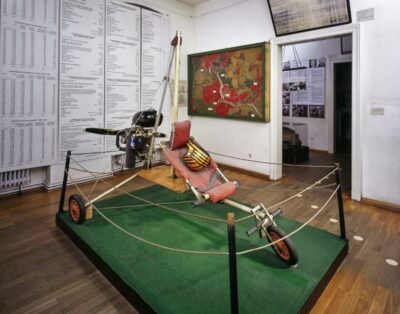
Skip-the-Line: Berlin Wall Museum at Checkpoint Charlie
Read our review →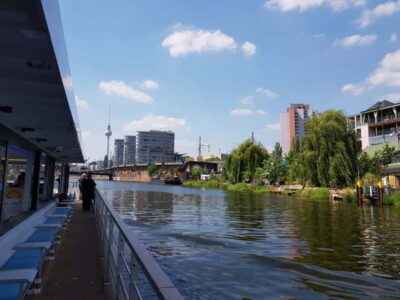
East Side Gallery Spree Cruise in a Solar Catamaran
Read our review →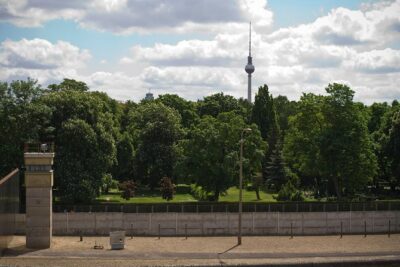
Cold War, Berlin Wall, Spies and the East Side Gallery
Read our review →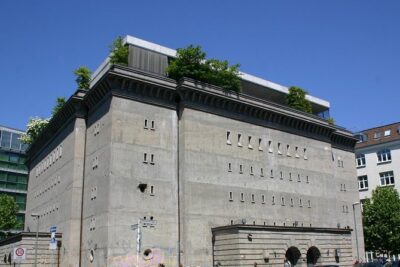
Guided Bike Tour of the Berlin Wall and Third Reich
Read our review →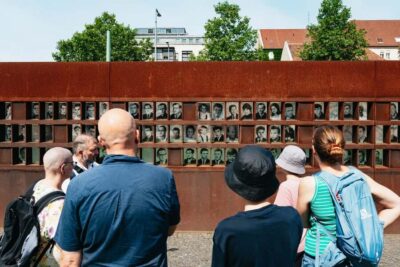
Cold War, Berlin Wall, Spies and the East Side Gallery
Read our review →Browse the lists this tour appears in