
Reviewed · ESCAPE ROOMS & GAMES
Berlin Kreuzberg: Scavenger Hunt Self-Guided Tour
Kreuzberg rewards curious walkers. This self-guided game turns a 15-kilometer route into a string of riddles, stories, and city sights, beginning at Passionskirche and passing Bergmannstraße, Viktoriapark, the Jewish Museum, Prinzessinnengarten, Bethanien, Urbanhafen, and Tempodrom. I like the freedom to stop whenever I want, and I like that the game gives a group something to do together instead of simply following a flag through the streets. The main catch is distance: the advertised 330 minutes may feel short if you stop often or solve at a relaxed pace.
I also like the useful local context built into each envelope. You learn why Kreuzberg has its name, how places are used today, and what makes each stop worth your time. Just plan carefully, since this is a long city walk with no guide, no included transport, and no food or entrance fees.
In This Review
- Quick facts for planning your Kreuzberg game
- How the 16-envelope game works
- Starting at Passionskirche and Marheinekeplatz
- Bergmannstraße: food, shops, and a lively first stretch
- Viktoriapark and the Kreuzberg monument
- From the Jewish Museum to Prinzessinnengarten
- Bethanien, Urbanhafen, and the route’s urban character
- Tempodrom gives the walk a striking finish
- What $52 means for a group of up to 10
- Timing, distance, and comfort
- Who will enjoy this most
- Should you book the Kreuzberg scavenger hunt?
- FAQ
- How long does the Kreuzberg scavenger hunt take?
- Where does the scavenger hunt start?
- Is a tour guide included?
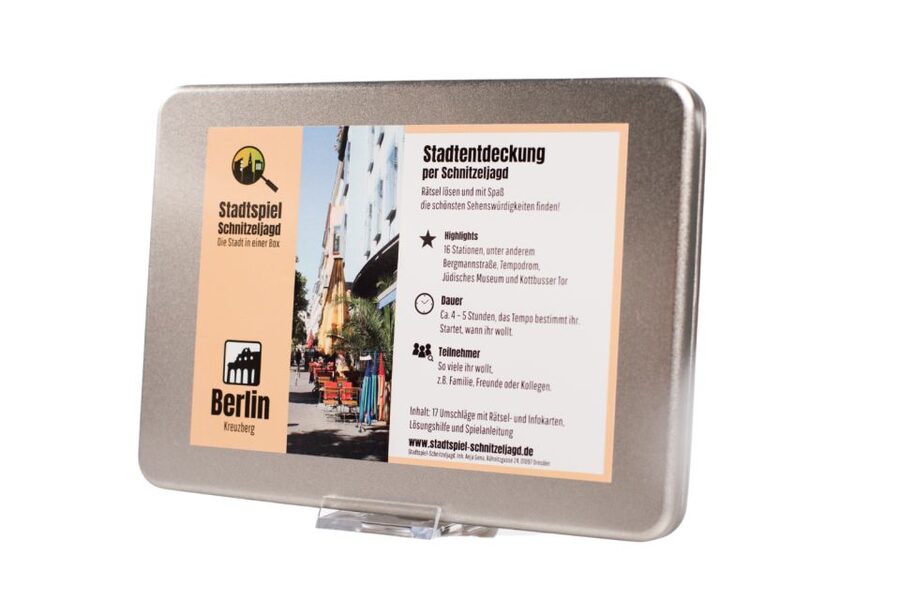
- What comes in the game box?
- Can I choose when to start?
- Is transportation included?
- How is the box delivered?
Quick facts for planning your Kreuzberg game
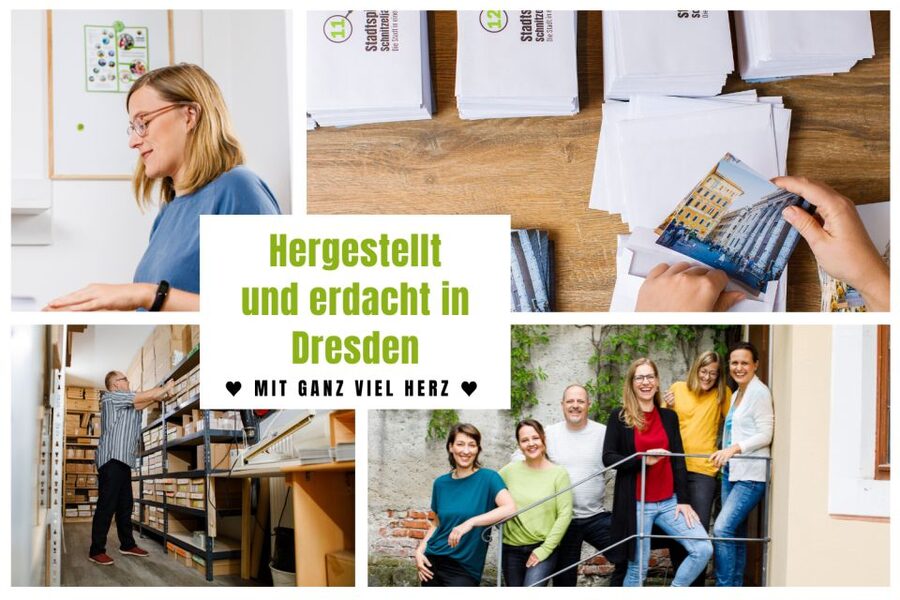
- Sixteen sealed envelopes guide the route: Each one contains directions, a puzzle, background information, and the clue for the next stop.
- The walk begins at Passionskirche: Marheinekeplatz provides a clear starting point before the route moves toward Bergmannstraße.
- Viktoriapark supplies the best big-city view: The Kreuzberg monument sits on the former Tempelhofer Berg, with a view across Berlin.
- The route is flexible by design: You can pause for photos, food, or a longer look at a sight, then continue later.
- Expect a serious walk: One participant measured the full route at about 15 kilometers, so comfortable shoes matter.
- It costs $52 per group of up to 10: That can be good value for a family or group, but less so for one or two people.
How the 16-envelope game works
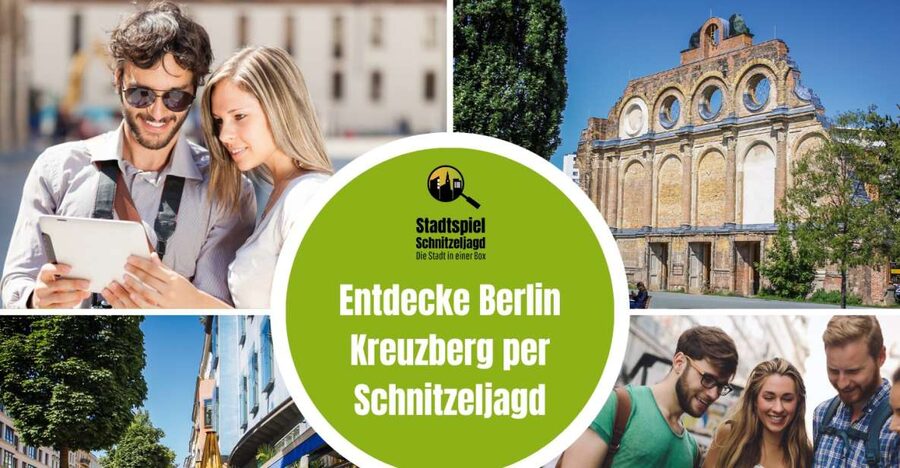
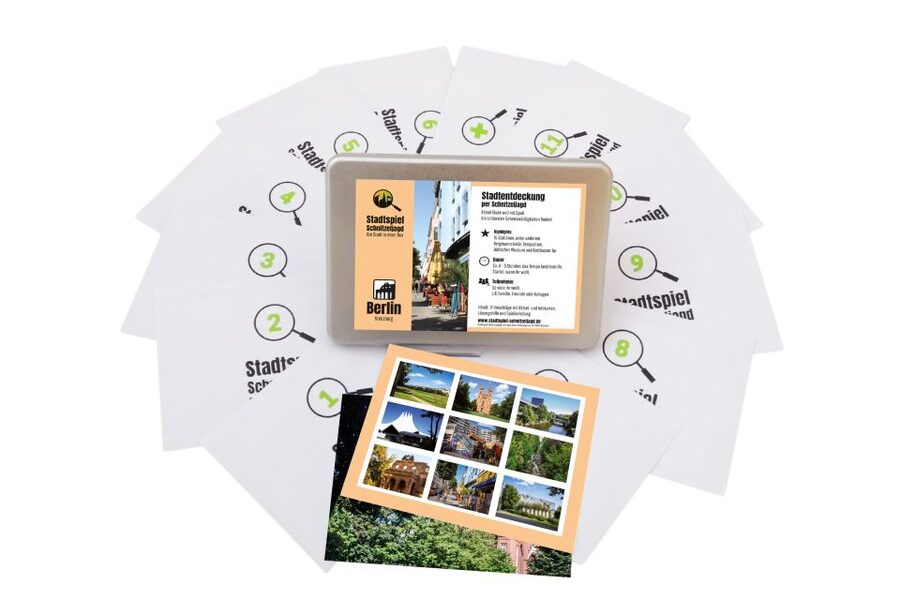
The experience arrives as a physical scavenger hunt box. Inside are 16 sealed and numbered envelopes, plus an emergency envelope containing the solutions. You open them in order as you move through Kreuzberg.
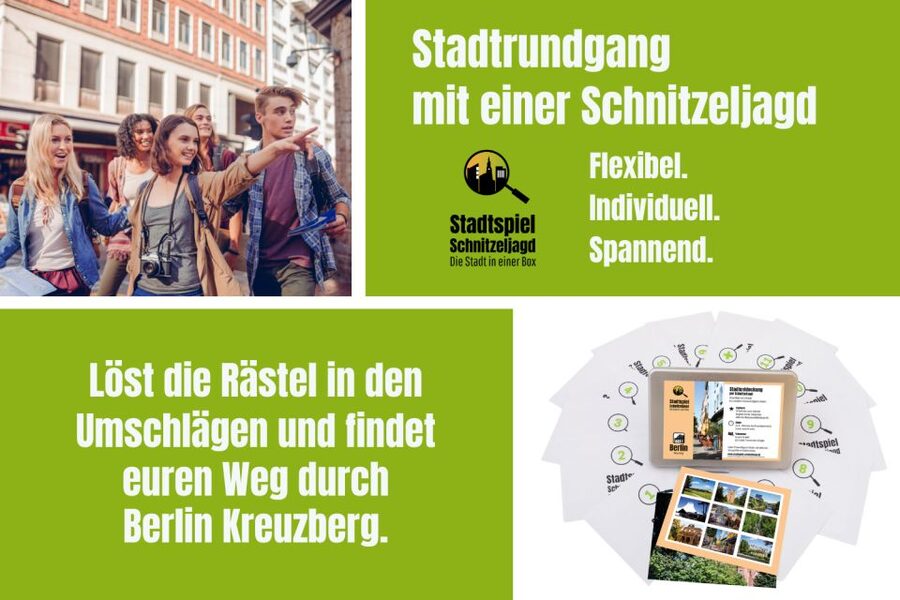
The envelopes do more than point you down the next street. Each includes a small task, clear directions, and information about the place in front of you. The puzzles give the walk a purpose, while the short explanations help you notice more than the obvious postcard view.
I like this format for groups that enjoy solving things together. One person can read the directions, another can study the puzzle, and someone else can keep an eye on the map and surroundings. It also works for a family, though younger children may need help with the reading and route decisions.
The emergency envelope is a useful safety net. If a puzzle proves stubborn, you do not have to lose half an hour or skip the next stop. You can check the answer and keep moving. That choice makes the game less stressful, especially when you have a meal reservation or a fixed evening plan.
There is no guide waiting at Passionskirche. You receive the box by mail and choose the date and start time yourself. The selected date is not a strict appointment, since you can begin after the box arrives and play whenever you like.
More Escape Rooms & Games in Berlin
- Escaping and spying on the Berlin Wall Scavenger hunt
★ 4.5 · 128 reviews - Berlin: Self-Guided Family and School Class Scavenger Hunt
★ 4.6 · 128 reviews - Berlin: “Shadow of the Rubber Duck” Escape Room Experience
★ 4.7 · 95 reviews
Starting at Passionskirche and Marheinekeplatz
The route begins at Passionskirche on Marheinekeplatz, giving you a defined meeting point without the need to find a tour office. This matters because self-guided activities can otherwise begin with a vague instruction to meet somewhere in a large district.
From here, the route heads toward Bergmannstraße. The opening section helps you settle into the game: read the first envelope, work out the clue, and get used to moving through Berlin while watching for details.
Marheinekeplatz and the surrounding streets are a practical place to begin because food and everyday neighborhood life are close at hand. You can eat before starting, save a meal for later, or use the area as a final rest stop if you decide to split the walk across two outings.
The lack of a guide has two sides. You can start without matching anyone else’s schedule, but you also need to take responsibility for reading directions and keeping the group together. If you prefer a polished narrative delivered by an expert, this will feel spare. If you like setting your own rhythm, the freedom is the point.
Bergmannstraße: food, shops, and a lively first stretch
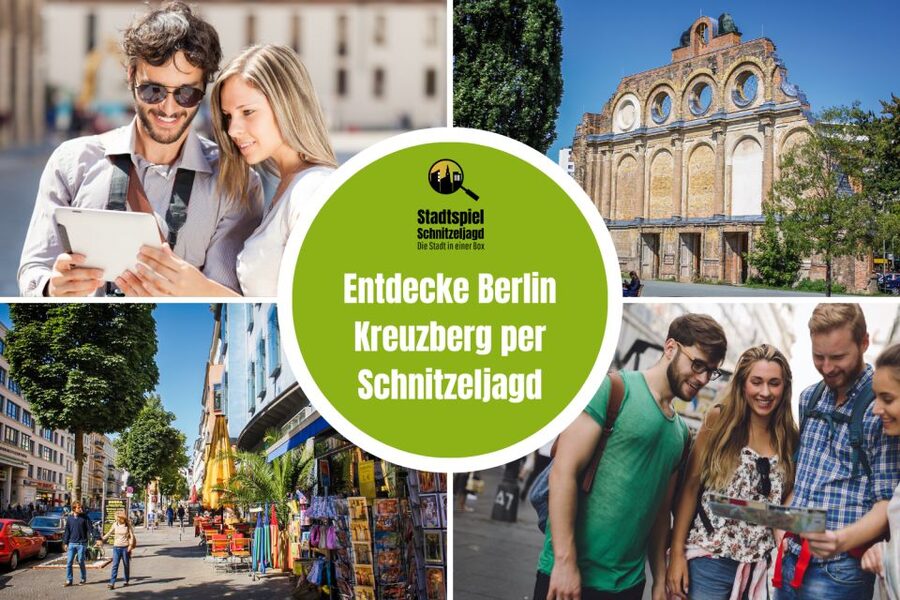
Bergmannstraße brings a change of pace. The route takes you through a busy Kreuzberg street with international food and more unusual culinary options. This is one of the best places to build in a pause, since you are not tied to a guide or a fixed lunch stop.
I would resist rushing here. The game may tell you where to go next, but you decide how long to stay. A quick snack can keep the walk moving, while a proper meal gives you a sensible break before the longer section toward Viktoriapark.
The tradeoff is time. The stated duration is 330 minutes, or five and a half hours, but the route may take longer if you stop to eat, take photographs, or study the information at each location. One participant specifically found the 15-kilometer distance much longer than expected, and another noted that the suggested time allowances were difficult to follow.
For that reason, I would treat five and a half hours as a rough framework rather than a promise. If you want to finish in one day, start early and keep your breaks purposeful. If your schedule allows, split the game into two sessions and enjoy Bergmannstraße and the parks without watching the clock.
Viktoriapark and the Kreuzberg monument
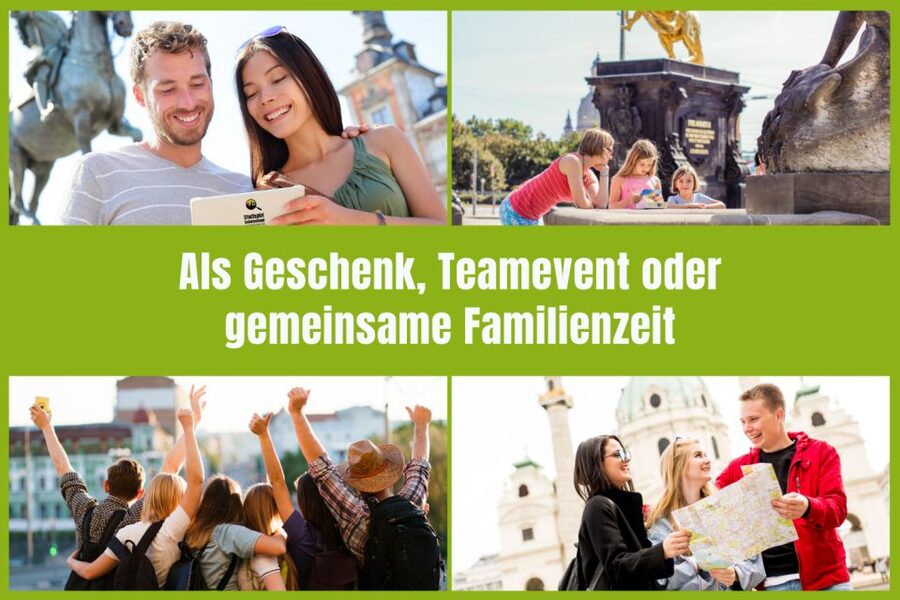
Near Bergmannstraße, just beyond Mehringdamm, the route reaches Viktoriapark. This is a welcome shift from streets and storefronts to open public space.
The park contains the Kreuzberg, the hill that gave the district its name. In 1821, Karl Friedrich Schinkel’s National Monument was inaugurated on the former Tempelhofer Berg. It is crowned by the Prussian Iron Cross, an important detail that turns a simple viewpoint into a lesson in Berlin’s political and architectural past.
The high point is the city view. From the monument, you can look across Berlin, making this one of the route’s strongest visual rewards. After several kilometers of pavement, the open outlook also gives you a chance to pause and reset.
This stop shows why the scavenger hunt format works well here. Instead of merely photographing the monument, you receive context about its name, construction, and place in the district. The puzzle encourages you to examine what you are seeing, which can make a familiar park feel more purposeful.
Still, do not mistake the park stop for a short hop. The route continues across a large part of Kreuzberg, and the climb and walking distance add up. If anyone in your group has limited stamina, use the flexible format to take a longer break here or stop the game for the day.
Something different for another day:
- Berlin: Reichstag, Dome and Government District Guided Tour
★ 4.7 · 18,288 reviews - Berlin: 1-Hour City Tour by Boat with Guaranteed Seating
★ 4.3 · 16,993 reviews - Berlin: Boat Tour Along the River Spree
★ 4.4 · 11,252 reviews - Discover Berlin Half-Day Walking Tour
★ 5.0 · 9,624 reviews
From the Jewish Museum to Prinzessinnengarten
After Viktoriapark, the route continues toward the Tempodrom and passes the Jewish Museum and Prinzessinnengarten. These stops broaden the experience beyond monuments and scenic views.
The Jewish Museum adds an important cultural and historical layer to the walk. The information in the game covers the history and current use of each sight, so you are not left with only a name and a direction. No entrance fees are included, however, and the activity does not promise admission to any attraction.
That distinction is important. You can see the exterior locations as part of the walk, but entering a museum or paid sight would require extra time and money. I would not plan an inside visit unless you confirm its opening hours and allow the route to run longer.
Prinzessinnengarten offers a different kind of urban interest. It is a community-focused garden project in the middle of Kreuzberg, and its presence shows how the district mixes public culture, environmental ideas, and everyday city life. This is exactly the sort of place that can disappear if you move through Berlin only by major landmarks.
The game’s strength here is variety. You are not spending five hours looking at one type of building. You move between neighborhood streets, a park, a monument, a museum, a garden project, and later cultural spaces. The route gives you a wider sense of Kreuzberg as a district with several personalities.
Bethanien, Urbanhafen, and the route’s urban character
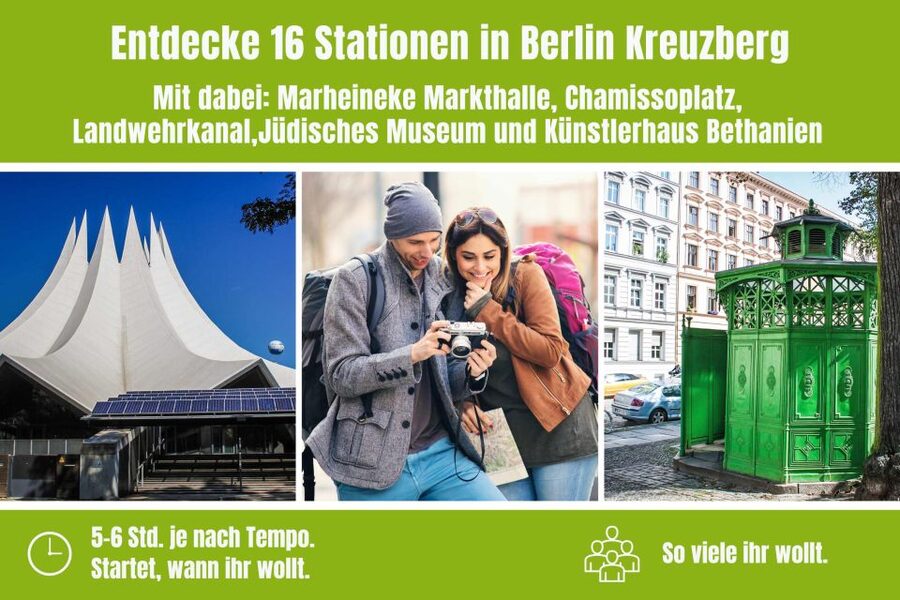
The experience also includes the artists house Bethanien and the former Urbanhafen. These locations fit Kreuzberg’s creative and changing character.
Bethanien adds an arts focus to the route. The game provides background on each stop, so you can learn about the site rather than treating it as a random point on a walking map. For anyone interested in Berlin’s independent art scene, this is a useful counterpoint to the district’s better-known food streets and monuments.
The former Urbanhafen brings another kind of setting. Water, open space, and former industrial use create a different mood from Bergmannstraße or Viktoriapark. You can pause for photos and compare the area’s past function with its present use.
I value these less famous stops because they help you see Kreuzberg as a living district instead of a checklist of famous addresses. The route does not only send you to the biggest attraction. It asks you to notice how public spaces, cultural projects, and older structures fit together.
The practical issue is route length. Moving between many separate points is what makes the tour varied, but it also explains the 15-kilometer estimate. Keep your shoes comfortable, carry water, and avoid packing the day with another fixed appointment on the far side of Berlin.
Tempodrom gives the walk a striking finish
The route continues to Tempodrom, known for its unusual and dramatic architecture. After parks, streets, gardens, and cultural sites, the building provides a strong visual change.
The experience is designed around discovering the city from the outside as you move through it. You do not need to enter every building to gain something from the route, and entrance fees are not part of the price. If the architecture catches your attention, you can take photographs or spend time reading the information before opening the next envelope.
One useful point is that the final location is not clearly described in advance beyond the route’s key sights. If you are leaving a bicycle somewhere or need to catch a train at a precise time, plan conservatively. A past participant wanted a rough idea of the endpoint for exactly this reason.
I would also avoid assuming that the finish brings you back to the start. The activity is a point-to-point city walk, and you should be ready to arrange your own return. Public transport tickets are not included, so keep a transit plan and payment method ready for the end.
What $52 means for a group of up to 10

The price is $52 per group of up to 10 people, not $52 per person. That makes the value strongest for a family, school-age group, birthday outing, or team event.
For 10 people, the cost works out to about $5.20 each. Even a group of five pays about $10.40 per person, which is still reasonable for a five-hour activity with printed materials and a planned route. For one or two people, the price is harder to justify compared with a free walk or a standard city guide, though the puzzles and structure may still be worth it.
A team outing is a particularly good match. The shared tasks create conversation and give everyone a role, while the ability to pause makes it easier to include food or rest. A group of seven previously used it for a team event and enjoyed it enough to consider trying other districts.
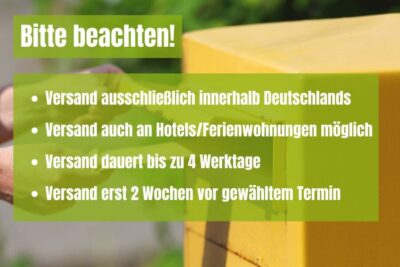
The box is shipped to your address, with delivery within Germany taking up to four working days. It is shipped at the earliest two weeks before the selected date, so provide a reliable shipping address and order with enough time. Pickup in Berlin is not available.
Timing, distance, and comfort
The official duration is 330 minutes, but you should budget more if you want to linger. The route can be completed flexibly, and one useful feature is that you can stop the game and continue later. That turns a demanding walk into a two-part plan.
The 15-kilometer distance is the key detail to take seriously. Comfortable shoes are essential. You should also expect regular outdoor walking, puzzle-solving, reading, and route checking rather than a short neighborhood stroll.
I would plan it this way:
- Start with a full morning or early afternoon available.
- Use Bergmannstraße for a meal or snack break.
- Save extra time at Viktoriapark for the view.
- Do not schedule a separate timed attraction immediately after the expected finish.
- Split the activity into two days if your group includes children or anyone who prefers an easy pace.
The route is listed as wheelchair accessible, which is helpful, but the supplied information does not provide detailed accessibility notes for every surface, slope, or entrance. If your group needs specific access information, confirm those details before setting out.
Who will enjoy this most
I would recommend the scavenger hunt to people who like independent travel, neighborhood walks, and light puzzles. It suits friends, families, couples, and work groups that want a shared activity without a guide controlling every stop.
It is also a good choice for repeat visitors to Berlin. The route focuses on Kreuzberg, and its mix of well-known and less obvious places gives you a reason to explore beyond the usual central sights. Even people who know Berlin may pick up new facts from the envelopes.
I would be more cautious if you dislike long walks, need a tightly timed schedule, or want deep interpretation from a live local guide. The game supplies written information, but it cannot answer follow-up questions or adjust the route when your interests change.
The puzzles are small rather than an elaborate escape-room challenge. Their job is to connect the stops and keep you alert, not to test expert-level logic. That makes the activity approachable, though serious puzzle fans may find the tasks fairly light.
Should you book the Kreuzberg scavenger hunt?
Book it if you want a flexible group activity and can handle a route of roughly 15 kilometers. The best value comes with five to 10 people, especially for a team event or family outing where the box becomes a shared game rather than a simple walking guide.
Think twice if you have only a few hours, want a guide, or plan to visit several interiors along the way. The strongest reasons to book are the freedom to pause, the useful information at each stop, and the chance to connect places such as Viktoriapark, Prinzessinnengarten, Bethanien, Urbanhafen, and Tempodrom in one long Kreuzberg outing.
I would book it with comfortable shoes, a flexible day, and a plan for food and the journey home. Treat the five-and-a-half-hour duration as an estimate, not a finish-line guarantee, and the experience becomes much easier to enjoy.
FAQ
How long does the Kreuzberg scavenger hunt take?
The stated duration is 330 minutes, or five and a half hours. The full route is about 15 kilometers, and you may need more time if you stop for food, photos, or longer visits at the sights.
Where does the scavenger hunt start?
The starting point is Passionskirche at Marheinekeplatz in Berlin Kreuzberg.
Is a tour guide included?
No. This is a self-guided activity, and there is no guide at the meeting point. You follow the directions and puzzles in the mailed game box.
What comes in the game box?
The box contains 16 sealed and numbered envelopes with riddles, directions, information, and facts about the sights. It also includes an emergency envelope with the solutions.
Can I choose when to start?
Yes. You can start on any date and at any time after receiving the box. You can also pause the game and continue later.
Is transportation included?
No. Transportation tickets, food, beverages, entrance fees, and travel to and from the starting point are not included.
How is the box delivered?
The scavenger hunt box is shipped to the address you provide. Delivery within Germany can take up to four working days, and pickup in Berlin is not available.
Just added around Berlin
- Berlin: Private Guided Tour of the Main Sights★ 5.0 · 13 reviews
- Private Highlights of Berlin Bike Tour★ 5.0 · 13 reviews
- Modern Berlin Private Walking Tour: Diverse, Vibrant and Exciting German Capital★ 5.0 · 13 reviews
- Tour in Berlin from Warnemünde and Rostock Cruise Port★ 4.1 · 13 reviews
- Berlin: Stasi Museum Private Guided Tour with Entry Ticket★ 4.8 · 13 reviews
- Private Food Tour Experience with a born and bred Berliner★ 5.0 · 14 reviews
- Berlin: Rheinsberg Palace Entrance Ticket★ 4.8 · 14 reviews
- Berlin in one day – day tour with an expert guide★ 5.0 · 14 reviews
Escape Rooms & Games, compared.
Sex and Crime in St. Pauli Tour for Ages 18+
Read our review →

Self-Guided Family and School Class Scavenger Hunt
Read our review →
Escaping and spying on the Berlin Wall Scavenger hunt
Read our review →Browse the lists this tour appears in