
Reviewed · CASTLE & PALACE TOURS
Berlin: Classical concerts in Köpenick Palace – Aurora Hall
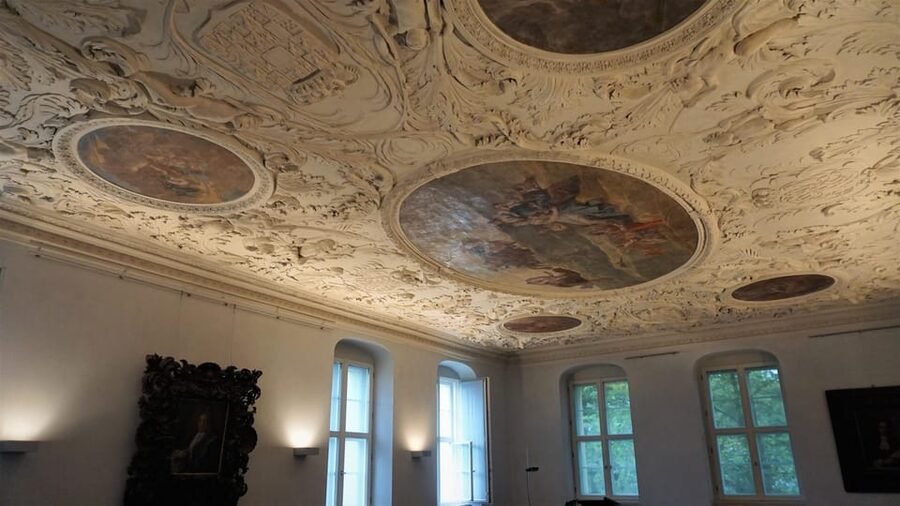
Music sounds better under palace ceilings. In Berlin’s Köpenick Palace, the Aurora Hall gives a 90-minute concert a memorable setting, while the varied 2026 program lets you choose between Mozart, Bach, Schubert, opera, violin, guitar, and piano. I like the chance to pair live classical music with free museum admission, and I like that the price is a reasonable $33 per person.
The main caution is comfort and event reliability. One verified account from September 2025 described excessive heat because the hall had no refrigeration, while another reported that a paid event did not take place and that no follow-up arrived. Those points do not define every concert, but they are worth keeping in mind before you book.
In This Review
- Key points about the Aurora Hall concerts
- Why Köpenick Palace changes the concert experience
- Choosing the right 2026 date
- February 15: Pure Romance, Romantic Duets
- March 8: Mozart Piano Works, Complete Performance 2nd Program
- March 22: Mozart, Songs, Arias, and Duets
- March 29: The Seven Last Words of the Savior on the Cross
- April 3: The Music Book of Frederick the Great
- April 4: Mozart Piano Works, Complete Performance 3rd Program
- April 5: Piano Magic for Four Hands
- April 6: Classical Violin Sonatas
- May 1: Schubert Potpourri
- May 10: Bach Violin Sonatas 2
- May 17: Piano Music to Dream To
- May 31: Iberian Sounds
- What $33 gets you in Berlin
- Comfort, sound, and the one serious caution
- Who will enjoy this most
- Should you book the Köpenick Palace concert?
- FAQ
- Where do the concerts take place?
- How long is each concert?
- How much does the experience cost?
- Is museum admission included?
- Can I cancel my booking?
- Is the venue wheelchair accessible?
- Can I record the concert?
Key points about the Aurora Hall concerts
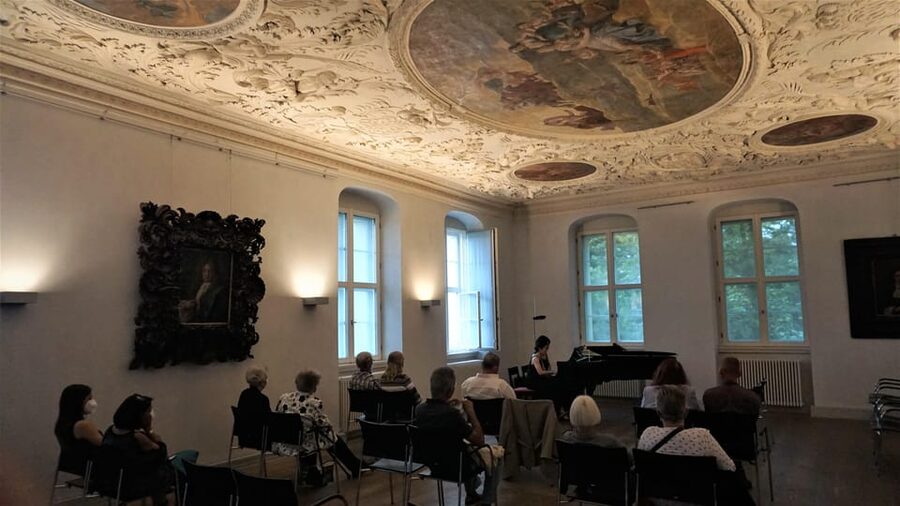
- A palace setting: Concerts take place in the historic Aurora Hall at Köpenick Palace.
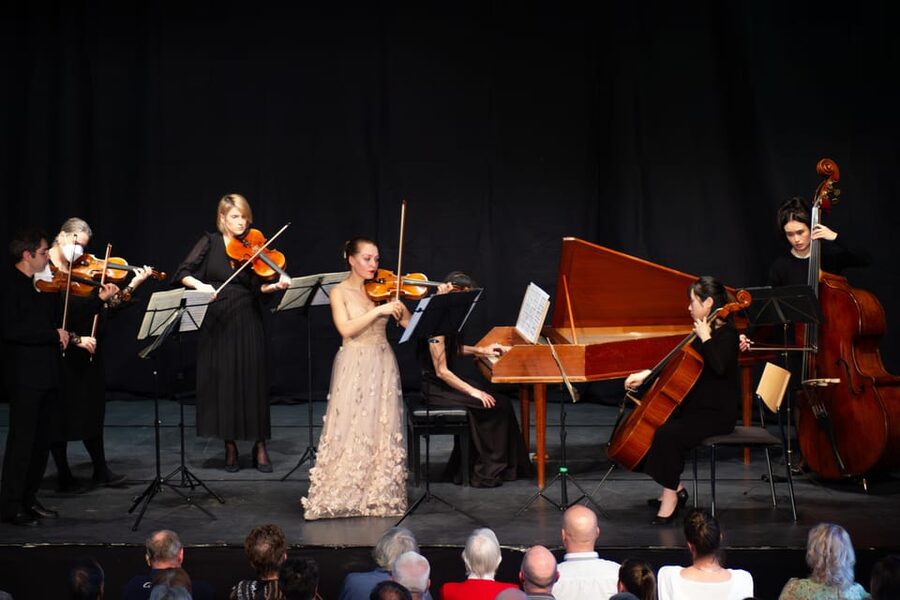
- Many musical styles: The 2026 calendar includes Romantic duets, Mozart, Bach, Schubert, opera, harpsichord, recorder, guitar, and piano.
- Short evening commitment: Each event lasts 90 minutes, making it easy to fit into a Berlin day.
- Free museum admission: Your concert booking includes admission to the museum.
- Reasonable cultural value: At $33, the experience costs less than many major concert performances in European capitals.
- Practical limits: Audio recording is not allowed, some material is presented in its original language, and one past concert account raised concerns about heat and communication.
Why Köpenick Palace changes the concert experience
A classical concert can happen in any hall. Here, the room is part of the appeal.
The Aurora Hall at Köpenick Palace gives the music an old-world setting instead of the neutral feel of a modern concert venue. I like that connection between the room and the program. A Mozart piano work in a palace hall feels more fitting than a Mozart selection in a generic event space, even if the music itself remains the main reason to attend.
You should also allow time for the included museum admission. The available information does not specify how much museum access you receive before or after the concert, so check the timing when you book. Still, the added admission improves the value of the $33 ticket. You are not paying only for 90 minutes of music.
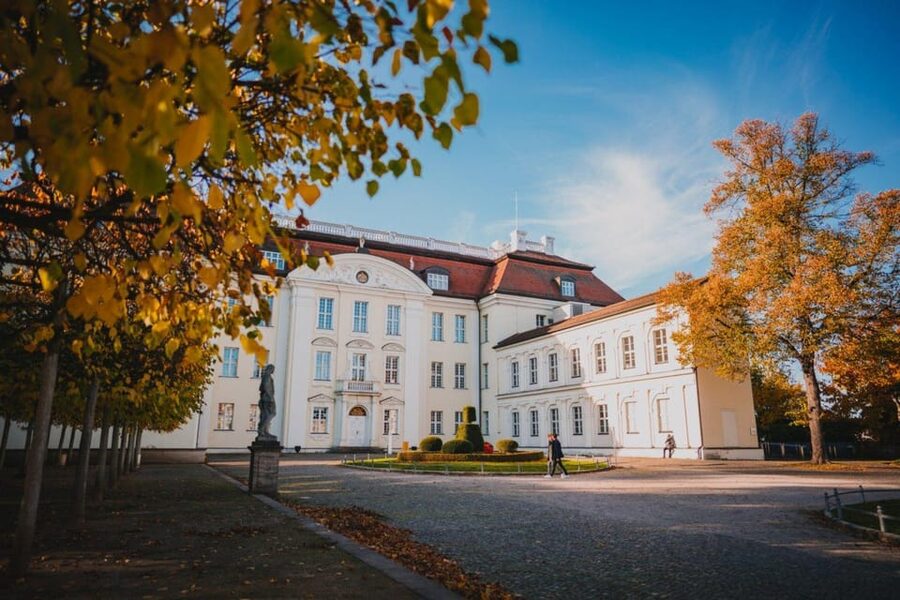
The location is in Berlin State, in Köpenick Palace. The meeting point is specifically the Aurora Hall, so you should follow the venue information carefully rather than simply heading to a general palace entrance. The details provided do not include transport directions, parking information, seating plans, or a dress code.
More Castle & Palace Tours in Berlin
- Potsdam: Palace Tour by Boat
★ 4.5 · 2,369 reviews - Potsdam: Sanssouci Palace and Prussian Palaces Entry Ticket
★ 4.5 · 2,101 reviews - Berlin: Charlottenburg Palace Entry Ticket
★ 4.4 · 2,076 reviews
Choosing the right 2026 date
This is not one fixed concert repeated throughout the season. It is a series of separate performances, each with its own theme and musicians. That matters because the best date for you depends on your taste.
Some evenings center on a single composer. Others offer a broad program or a particular combination of instruments. Read the title before booking, especially if you want opera, instrumental music, or a specific composer.
February 15: Pure Romance, Romantic Duets
This opening program focuses on Romantic duets. Inês Pinto sings soprano, Kristina Naudé sings alto, and Beatrice Wehner-Schaller accompanies them on piano.
This is the clearest choice if you enjoy the human voice and the emotional sweep of Romantic music. The combination of soprano and alto should give the program contrast, with the piano supporting both singers. It is also a good pick if you want an accessible first concert rather than a program devoted entirely to instrumental technique.
March 8: Mozart Piano Works, Complete Performance 2nd Program
Maria-Magdalena Pitu-Jokisch performs this second program of Mozart’s piano works.
The title suggests a continuing series rather than a standalone selection. If you enjoy hearing one composer explored at length, this date may suit you better than a mixed concert. It is also useful for repeat visits, since the second program is distinct from the third program scheduled for April 4.
The word complete signals an ambitious scope, but the available information does not list the individual pieces or total number of works. You should check the exact program before booking if you have a particular Mozart sonata in mind.
More Castle & Palace Tours around Berlin:
- From Berlin: Potsdam and Sanssouci Palace Tour with Entry
★ 4.5 · 1,094 reviews - Potsdam Tour from Berlin With Guided Sanssouci Palace Visit
★ 4.5 · 364 reviews - Berlin: Guided Palace Tour by the Insider
★ 5.0 · 38 reviews - Charlottenburg Palace with an excursion to Potsdam
★ 5.0 · 23 reviews
March 22: Mozart, Songs, Arias, and Duets
Yuri Mizobuchi, mezzo-soprano, and Stephen Barchi, baritone, perform with Graham Cox on piano.
This is the most obvious Mozart choice for anyone who prefers opera and vocal music to solo piano. Songs, arias, and duets offer more variety than a single vocal format, and the two voice types create a natural contrast.
Some content is presented in its original language. That is normal for classical vocal music, but you should not expect every song or aria to be performed in English. If understanding each word matters to you, check whether translations or surtitles are offered. That information is not provided.
March 29: The Seven Last Words of the Savior on the Cross
The Mozart Ensemble Berlin performs this program.
The title points to a serious, reflective work. This may be the best choice if you want a focused musical statement rather than a light concert of short pieces. The program also gives you a chance to hear an ensemble instead of a solo pianist or a small vocal pairing.
Because the title refers to a religious subject, the atmosphere may feel more solemn than the other dates. The available details do not identify the exact composer or instrumentation beyond the Mozart Ensemble Berlin, so check the full program if that affects your decision.
April 3: The Music Book of Frederick the Great
Susanne Ehrhardt plays recorders, with Yuko Tomeda on harpsichord.
This is one of the more distinctive programs on the calendar. Recorder and harpsichord bring an earlier sound world than the Romantic and late Classical programs. If you want something less predictable than a standard piano recital, this date deserves a close look.
The reference to Frederick the Great suggests a program tied to an important royal musical collection or court tradition, but the available information does not list the individual compositions. The instrument pairing alone makes this a strong choice for listeners curious about early music.
April 4: Mozart Piano Works, Complete Performance 3rd Program
Naoko Fukumoto performs this third Mozart piano program.
This is another date for committed Mozart listeners. It follows the second program on March 8, but it is not described as a repeat. You can select either date based on your schedule, or attend both if you want a broader picture of the composer’s piano writing.
The listing does not provide a detailed work list. If you are attending for one famous piece, confirm the program before buying.
April 5: Piano Magic for Four Hands
Naoko Fukumoto and Maria-Magdalena Pitu-Jokisch share the piano parts.
Four-hand piano music has a special appeal because two performers use one instrument. The physical coordination is part of the interest, but the sound can also be fuller than a standard solo recital. This is likely the most playful piano-focused option in the series.
I would choose this date if you want instrumental music with a social, collaborative feel. It also gives you a break from the repeated format of one pianist alone onstage.
April 6: Classical Violin Sonatas
Annegret Pieske plays violin, accompanied by Victoria Litsoukova on piano.
This is a traditional chamber music pairing. The violin carries the singing line, while the piano has a full partnership rather than acting as simple background support. If you like close musical conversation between two instruments, this is a sensible pick.
The title is broad and does not identify the composers. Check the final program if you prefer Baroque, Classical, Romantic, or modern sonatas.
May 1: Schubert Potpourri
Stephen Barchi sings baritone, with Maria-Magdalena Pitu-Jokisch on piano.
The word potpourri suggests a selection of Schubert pieces rather than one large work. That can make for an approachable evening, especially if you want variety within one composer’s world. The baritone and piano pairing should work well for Schubert’s intimate vocal writing.
This is a good date for listeners who want art song, but again, some material may be performed in its original language. The program details do not state whether translations are supplied.
May 10: Bach Violin Sonatas 2
Marianne Boettcher plays violin, accompanied by Yuko Tomeda on harpsichord.
This second Bach sonata program is the strongest choice for Baroque music fans. The pairing of violin and harpsichord fits the period style and offers a more historically distinctive sound than a violin recital with modern piano.
As with the Mozart series, the number 2 implies that this is part of a larger sequence. The available information does not name the works in this program, so confirm the selections if you are planning around a specific Bach sonata.
May 17: Piano Music to Dream To
Maria-Magdalena Pitu-Jokisch performs this solo piano program.
The title points toward a gentle, restful mood. This may suit you if you want an easygoing concert after a full day in Berlin, though the exact composers and pieces are not supplied. Do not assume the program is limited to one period or one composer.
May 31: Iberian Sounds
Inês Pinto sings soprano, accompanied by Márcio Silva on guitar.
This final listed program brings together voice and guitar with an Iberian theme. It offers a change of color from the Mozart, Bach, and Schubert dates and may appeal to you if you like Spanish or Portuguese musical traditions.
The title is broad, so the exact national and linguistic mix is not stated. Since the concert may include original-language material, check the program details if that is important to you.
What $33 gets you in Berlin
At $33 per person, this experience sits in a useful middle range. You get a 90-minute concert in a historic palace room plus free museum admission. For a city known for major concert venues and expensive cultural events, that is a fair package.
The value is strongest if you already plan to visit Köpenick Palace or want a cultural evening that does not take up half the night. The short duration helps. You can make the concert one part of your Berlin plans instead of building an entire day around it.
The value is weaker if you are paying mainly for a famous international soloist or a detailed, high-profile production. The information names skilled and internationally recognized artists, but it does not provide full biographies, orchestra size, seating categories, or program notes. You are buying an intimate cultural setting and a focused concert, not a large-scale opera production.
Free museum admission adds a useful extra, but confirm how it is timed with the concert. If the museum is open before or after your performance, arrive with enough time to use that benefit.
Comfort, sound, and the one serious caution
The concert itself receives the strongest praise in the available feedback. A verified Spanish booking described the music as formidable. That is the part of the experience I would put first: the artistic program and the historic room are the clear reasons to consider booking.
Comfort needs more attention. One account from September 2025 reported excessive heat and no refrigeration in the hall. September can be warm, and conditions may vary by date, but this is still a practical warning. If you are sensitive to heat, check the forecast and consider asking the provider about ventilation before you commit.
There is also a more serious report from May 2025 about a paid event not taking place, followed by no response. A single failed event does not tell you how every 2026 concert will operate, but it is enough reason to save your confirmation, check the event status before leaving for Köpenick, and use the stated cancellation protection if your plans change.
You can cancel up to 24 hours in advance for a full refund. The reserve now and pay later option also helps if your Berlin schedule is still moving. These policies reduce financial risk, but they do not remove the need to confirm that the concert is proceeding.
Who will enjoy this most
I would recommend these concerts to you if you like classical music and want the room to matter as much as the repertoire. The selection is broad enough for both seasoned listeners and curious newcomers, provided you choose a date that matches your taste.
The vocal programs suit you if you enjoy opera, art song, and expressive duets. The Mozart piano series is better for focused listening, while the four-hand piano date offers a lighter shared performance. Bach violin sonatas and the recorder and harpsichord program are the clearest choices for early music.
The experience may be less suitable if you need detailed translations, exact work lists, guaranteed cool temperatures, or a large production with orchestra and stage effects. Some material is presented in its original language, and the supplied details do not promise subtitles or translations.
The venue is wheelchair accessible. Alcohol and drugs are not allowed, and audio recording is prohibited. Those rules are simple, but they matter if you hoped to capture the performance on your phone. Keep it away and listen properly.
Should you book the Köpenick Palace concert?
I would book this if you want a reasonably priced classical concert in an unusual historic setting and you are willing to choose your date carefully. The $33 price is fair because museum admission is included, and the 90-minute format is easy to fit into a Berlin visit.
My first choices would be March 22 for Mozart vocal music, April 5 for four-hand piano, April 3 for recorder and harpsichord, or May 31 for voice and guitar. If comfort is a concern, check conditions at the Aurora Hall before booking, and verify the event status close to the date.
This is best treated as a focused palace concert, not a guaranteed grand Berlin spectacle. For the right listener, that smaller scale is exactly the attraction.
FAQ
Where do the concerts take place?
The concerts take place in the Aurora Hall at Köpenick Palace in Berlin State, Germany.
How long is each concert?
Each concert lasts 90 minutes.
How much does the experience cost?
The listed price is $33 per person.
Is museum admission included?
Yes. Free museum admission is included with the concert experience.
Can I cancel my booking?
Yes. You can cancel up to 24 hours in advance for a full refund.
Is the venue wheelchair accessible?
Yes. The activity is described as wheelchair accessible.
Can I record the concert?
No. Audio recording is not allowed. Alcohol and drugs are also prohibited.
More Concerts
- Berlin: Classical Concert at Kaiser Wilhelm Memorial Church
★ 4.6 · 387 reviews - Berlin: Classical concerts at the Bode Museum Berlin
★ 4.3 · 26 reviews - Dresden: Gala Concert in the Dresden Zwinger
★ 4.7 · 1,510 reviews - Munich: Classical Concert at the Residenz Palace
★ 4.5 · 148 reviews
Just added around Berlin
- Kreuzberg Private Walking Tour: Immigrants, Artists & Hipsters★ 5.0 · 3 reviews
- Private Photo Tour in Kreuzberg★ 5.0 · 3 reviews
- Individual city tour Berlin for max. 8 persons★ 5.0 · 3 reviews
- Berlin’s Jewish Heritage: Private Tour of the Vibrant Jewish District★ 5.0 · 3 reviews
- Berlin & The Third Reich Private Guided Tour★ 5.0 · 3 reviews
- Private Analogue Photography Experience in Berlin★ 5.0 · 3 reviews
- Spy Mission in Berlin: Self-Guided Espionage Puzzle Quest★ 5.0 · 3 reviews
- Berlin Christmas Markets Walking Tour with Local Guide★ 5.0 · 3 reviews
Castle & Palace Tours, compared.


Neuschwanstein & Linderhof Castle-Fairytale Day Tour from Munich
Read our review →

Premium Neuschwanstein Castle and Linderhof VIP Tour from Munich
Read our review →

Sanssouci Palace and Prussian Palaces Entry Ticket
Read our review →Browse the lists this tour appears in