
Reviewed · CITY TOURS
Münster Unpacked Tour : Rickshaw City Tour with Guide
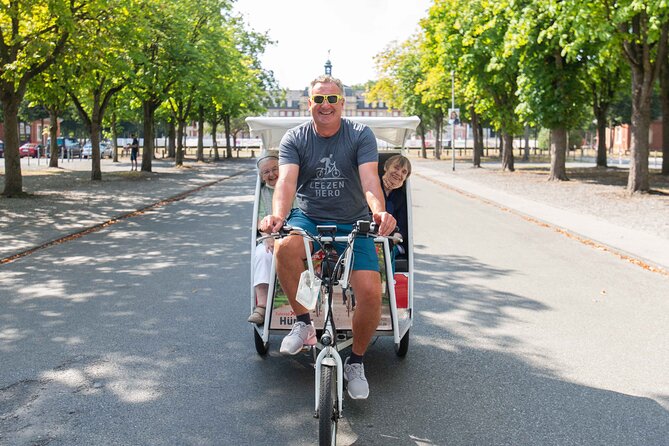
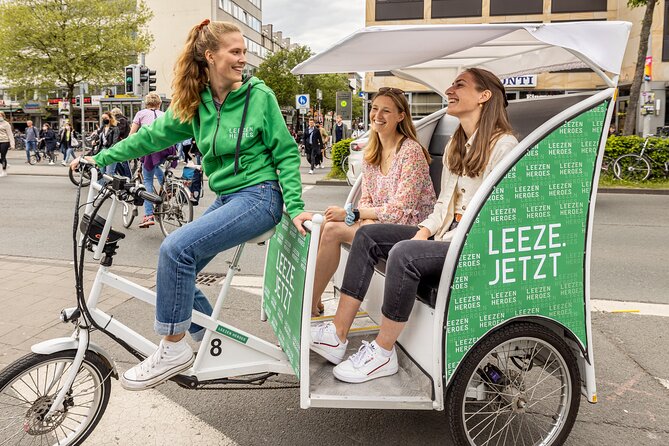
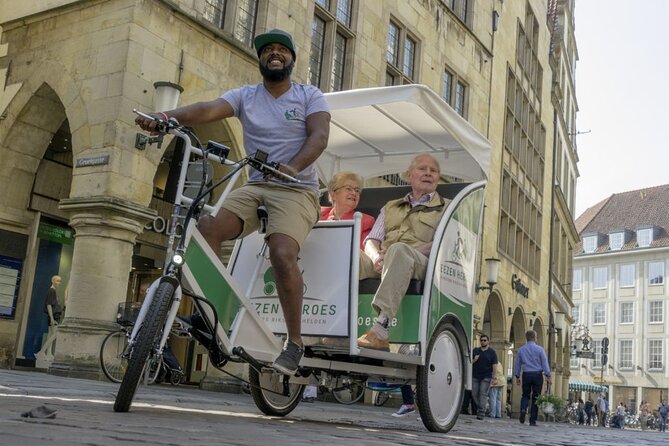
Münster is made for two wheels. This one-hour rickshaw tour gives you an easy way to connect the city’s grand historic sights, lively market area, literary landmarks, and Aasee without wearing out your feet. I like the relaxed pace and the chance to hear stories from a local guide while moving through Münster’s cycle-friendly streets. I also like the range of stops, from the Peace Hall to the Anabaptist cages and the gardens by the lake.
The main drawback is the short running time. One hour passes quickly, and the tour gives you an overview rather than long visits at each sight. A single report also described a battery problem that left the rickshaw moving slowly, so I would confirm the vehicle is ready to go if timing matters.
In This Review
- Key points at a glance
- Why a rickshaw works so well in Münster
- Starting at Prinzipalmarkt 10
- The Peace Hall and Münster’s political past
- Münster Cathedral and the city’s starting point
- The Wednesday and Saturday market
- Schloss Münster and the castle garden
- St Lambert’s Church and some darker stories
- A literary stop at Antiquariat Michael Solder
- Erbdrostenhof and the details you might miss
- Aasee brings the ride into open space
- The guides make or break the hour
- Is $41.57 a fair price?
- Who will enjoy this Münster ride?
- Should you book the rickshaw tour?
- FAQ
- Where does the Münster rickshaw tour start?
- Where does the tour end?
- How long does the tour last?
- Is the tour offered in English?
- What sights are included?
- How many people can join?
- Can I cancel for a full refund?
Key points at a glance
- A compact route through Münster’s historic center: You see the Town Hall, cathedral, Lambert’s Church, Erbdrostenhof, and the bookshop linked to the Wilsberg television series.
- A useful choice for first-day orientation: The rickshaw covers more ground than a walking tour and returns to the same central meeting point.
- Short stops with plenty of local stories: Most landmarks receive about five minutes of attention, with ten minutes set aside for Aasee.
- Guides add much of the value: Stefan and George are praised for friendly, humorous explanations, while other guides offer restaurant tips and personal insight.
- Best on market days: On Wednesdays and Saturdays, the weekly market adds color, food, and a look at daily life in Münster.
- Small group format: The maximum group size is 14, though the number of rickshaws used can vary.
Why a rickshaw works so well in Münster

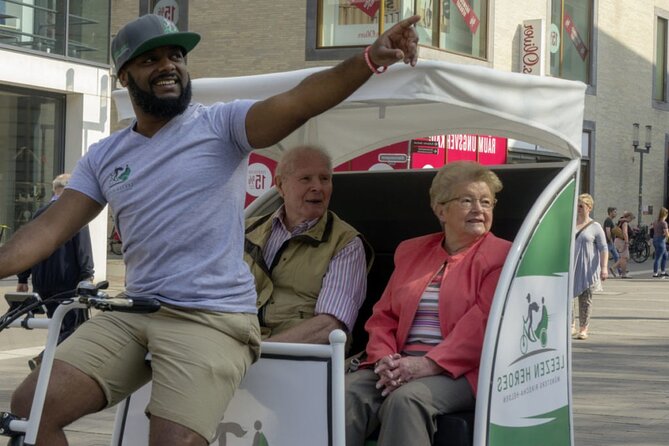
Münster is famous for its cycling culture, and a rickshaw fits the city better than a large sightseeing bus. You sit close to the streets, hear the guide without a loudspeaker, and can look around without worrying about traffic or navigation.
The ride is also a practical choice if you want an overview without committing to a long walk. The route links the old center with the Schloss area and Aasee, which are not all clustered around the Prinzipalmarkt. You get a sense of the city’s layout in a short time.
Do not expect a long, leisurely stop at every building. The schedule allows roughly five minutes at most historic points. That is enough for an explanation and photographs, but not enough for a detailed interior visit. Think of this as a moving introduction that helps you decide where to return later.
The tour is offered in English and uses private transportation. Most people can take part, service animals are allowed, and the activity is near public transportation. The maximum group size is 14, which keeps the experience more personal than a large bus outing, though a full group could feel less intimate than a private ride for two.
A few more tours and experiences worth a look
- Berlin: Reichstag, Dome and Government District Guided Tour
★ 4.7 · 18,288 reviews - Dresden: Semperoper Tickets and Guided Tour
★ 4.7 · 12,102 reviews - Berlin: Government District around the Reichstag Guided Tour
★ 4.7 · 8,447 reviews
Starting at Prinzipalmarkt 10
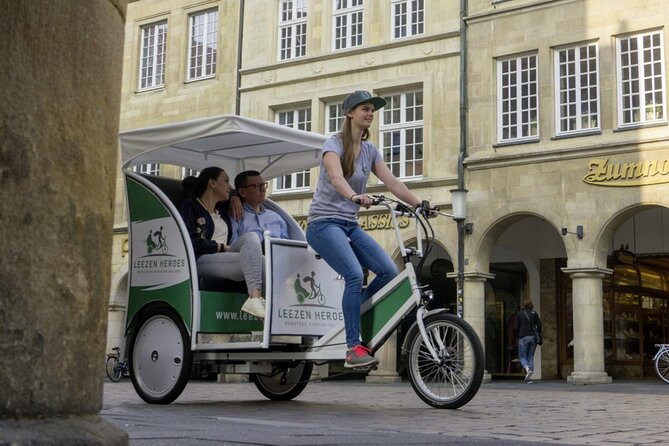
The meeting point is Prinzipalmarkt 10, in the heart of Münster. This is a useful place to begin because the square itself is one of the city’s defining urban spaces, lined with historic gabled buildings and arcades.
Arrive ready to begin promptly. With only about an hour available, even a late start takes away from the sightseeing time. The tour ends back at the meeting point, so you can easily continue on foot afterward.
I would use the ride early in your stay. The guide’s route gives you a helpful mental map, and the stops point out places you might otherwise pass without understanding. Afterward, you can return to the cathedral, explore the market, or spend more time around the old town.
The Peace Hall and Münster’s political past

The first stop is the Historic Town Hall, home to the Friedenssaal, or Peace Hall. This room is tied to the negotiations that helped end the Thirty Years’ War, giving Münster a place in European diplomatic history.
The guide also connects the building to the Hanseatic League, the trading network that linked northern European cities. That detail helps explain why Münster mattered beyond its religious role. The town was involved in commerce, politics, and regional power.
The site has a modern connection, too. The G7 meeting held here in 2023 brought current international affairs back into this old setting. That contrast is one of the most interesting parts of the stop: medieval and early modern politics meet present-day diplomacy inside the same city hall.
You should treat this as an outside orientation unless the guide confirms access to the interior. Admission is listed as free, but the tour is not built around extended indoor visits. If the Peace Hall is high on your list, plan a separate return visit.
Münster Cathedral and the city’s starting point
The route continues to St. Paulus Dom, Münster’s cathedral. This is described as the place where Münster was founded, so the stop is not simply about an impressive church. It places the city’s beginnings at the center of the tour.
Five minutes here works well for a first look. The guide can point out the cathedral’s role in Münster’s religious and civic life, then add stories that give the building a human scale. The supplied tour details promise several tales from the site, which should make this more than a quick photograph from the rickshaw.
The short stop has a clear limitation. You will not have much time to study the interior, examine details, or sit quietly. I would note what catches your eye and come back later if you want a fuller visit.
More City Tours in Germany:
- Berlin: 1-Hour City Tour by Boat with Guaranteed Seating
★ 4.3 · 16,993 reviews - Leipzig: City History Canal Sightseeing Tour on a Motorboat
★ 4.7 · 6,232 reviews - Cologne: Panoramic City Cruise
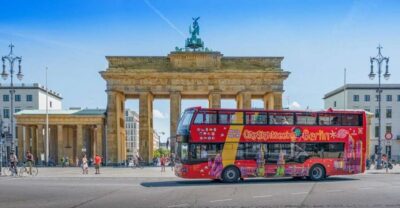
★ 4.3 · 5,698 reviews - Berlin: City Sightseeing Hop-On Hop-Off Bus Tour
★ 4.1 · 4,233 reviews
The Wednesday and Saturday market

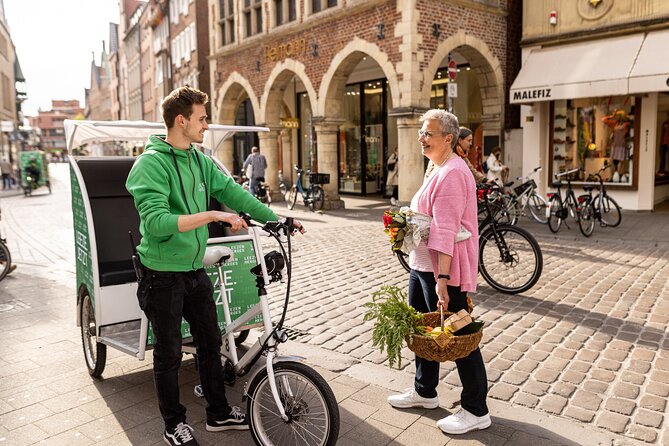
On Wednesdays and Saturdays, the weekly market adds a different side of Münster. Instead of focusing only on stone buildings and political events, the guide explains how the markets developed and offers practical tips for using them.
This is one of the strongest reasons to choose your departure day carefully. The market brings daily business into the historic center, and you get a better sense of how the city works beyond its monuments. You might also pick up ideas for local food or later shopping, though the tour itself is not presented as a dedicated food tasting.
The exact amount of time at the market is not specified. The pace may depend on the crowd and the day’s route. If markets are important to you, schedule extra time before or after the ride rather than expecting this short stop to replace a full market visit.
Schloss Münster and the castle garden
Schloss Münster was built in 1780 as the palace of the prince-bishop. Its scale and formal design give you a break from the tighter streets of the old center and show how religious and political authority shaped the city.
The guide can also take a look at the castle garden if you are interested. That option adds variety to the route, especially after several urban landmarks. It gives you a chance to see Münster as a city of open grounds and formal spaces, not only churches and old civic buildings.
Again, the stop is listed at about five minutes. That is enough to understand the building’s place in Münster, but not enough for an extended garden visit. If you enjoy gardens, plan to return separately and allow more time.
St Lambert’s Church and some darker stories
St Lambert’s Church is one of the tour’s most story-filled stops. The guide covers the tower woman, the cages of the Anabaptists, classical poets, and modern art. Those subjects take you from local tradition to religious conflict and then into later cultural life.
The Anabaptist cages are especially important to notice. They recall the violent episode when Münster became the center of an Anabaptist movement in the sixteenth century. The cages are not decorative curiosities. They point to a harsh chapter in the city’s past, and a good explanation helps you understand why these objects remain part of Münster’s public memory.
The tower woman is another local detail that makes the stop feel specific to Münster. Rather than giving you only dates and architectural labels, the guide uses people, legends, and unusual objects to make the church easier to remember.
With five minutes available, listen for the main thread and ask a short question if time allows. This is the sort of place where a guide’s style matters. The strongest comments about Stefan, George, and the other guides praise a clear, warm, humorous approach. One poor experience found the history flat and too close to something you could read online. That contrast is worth keeping in mind: the storytelling is a major part of what you are paying for.
A literary stop at Antiquariat Michael Solder
The Antiquariat Michael Solder is an antiquarian bookshop known from the ZDF series Wilsberg. This is a small but clever stop because it connects Münster’s real streets with popular television.
For anyone familiar with the series, the bookshop adds a personal connection to the route. If you have never seen Wilsberg, it still offers a glimpse of Münster’s literary and secondhand book culture.
The five-minute format means you will likely hear why the shop matters rather than browse at length. If you want to enter and explore, set aside time after the tour and check opening arrangements independently.
Erbdrostenhof and the details you might miss
Erbdrostenhof is a grand Baroque building with a handsome facade and a reputation for rewarding a second look. The guide’s point here is not simply that the building is beautiful. It is that architectural details can disappear when you hurry past them.
This makes the rickshaw useful. You can stop, look up, and hear what to notice without needing to navigate the street at the same time. The guide can direct your attention to features you might otherwise miss.
The five-minute visit is best viewed as an introduction to the building’s design and role in Münster. It will not satisfy someone who wants a full architectural study, but it gives you a reason to come back with more time.
Aasee brings the ride into open space
The longest stop is Aasee, with about ten minutes planned for the park and lake area. The guide points out sculptures, discusses the setting, and gives suggestions for going out.
This stop broadens the tour beyond the historic center. You see how Münster uses open public space and how art fits into the city’s everyday surroundings. The sculpture focus is useful because public art can be easy to overlook when you are busy following a map.
The guide’s suggestions for going out may also help you plan the rest of your day. One guide is specifically praised for recommending a restaurant, so it is sensible to ask for a dining tip if you need one.
Ten minutes is enough for an introduction and a few views, but not for a full walk around the lake. If Aasee appeals to you, return later and give it its own time.
The guides make or break the hour
This is a story-led tour, so the guide matters as much as the route. Stefan is praised for explaining Münster’s key sights vividly and in a friendly way. George is described as relaxed, enriching, and empathetic. Other guides are praised for warmth, humor, and an easy manner.
Those details matter because a one-hour tour can feel either lively or rushed. The best version turns a short stop into a memorable story. The weaker version can sound like a list of facts you could find online.
The supplied feedback is strongly positive overall, with a 4.8 rating from 29 ratings and 93 percent recommending the experience. Still, the one poor account raises a practical concern. The rickshaw battery reportedly failed, the vehicle moved in first gear, and the driver became exhausted, cutting the effective sightseeing time short.
That appears to be an isolated problem rather than the normal pattern, but it is the clearest risk in the available information. If you are booking around a train departure, museum reservation, or fixed meal, leave a buffer.
Is $41.57 a fair price?
At the supplied price of $41.57 per person, this is not the cheapest way to see Münster. A walk around the central sights costs nothing, and you can visit many landmarks independently.
The value comes from time saved and interpretation. You cover several separate areas in roughly an hour, avoid route planning, and receive context about places that may otherwise look like attractive buildings without a clear story. For two people or a small group, the private transportation element can make the price easier to justify.
One quoted experience referred to a price of 59 euros, so I would check the current charge carefully before booking. Pricing may vary by date, currency, group arrangement, or booking channel. Make sure you understand the final per-person amount.
I would not book this expecting admission to a series of attractions. The listed stops have no admission charge, and the price pays mainly for the rickshaw, driver, and guided route. It is a good value for orientation, comfort, and local explanation. It is less attractive if you prefer to explore slowly and read every museum label yourself.
Who will enjoy this Münster ride?
I would recommend it to first-time visitors who want a quick overview, people who prefer not to walk for long periods, and anyone who enjoys hearing local stories while moving through a city.
It also suits families and mixed-age groups because the pace is easy and the route does not demand a long walk. The small maximum group size helps keep the guide within speaking distance.
Cycling enthusiasts may enjoy the choice of transport for symbolic reasons, but you do not need to be a cyclist to appreciate it. The rickshaw offers a comfortable alternative to renting a bike or joining a larger vehicle.
I would be more cautious if you want deep access to interiors, long time at the market, or a slow visit to Aasee. The tour is an overview, not a full day of sightseeing.
Free cancellation is available up to 24 hours before the start time. Changes or cancellations made inside that window are not accepted for a refund, so keep the local cut-off time in mind.
Should you book the rickshaw tour?
Book it if you want a friendly, efficient introduction to Münster and value a guide who can connect the Peace Hall, cathedral, Anabaptist cages, Baroque architecture, television history, and Aasee in one compact route.
Choose a market day if the weekly market interests you, and ask the guide for a restaurant suggestion or advice on places worth revisiting. Arrive on time, keep your schedule flexible, and remember that the ride is a sampler.
Skip it if you already know Münster well or prefer to spend an hour inside one building. For most first visits, though, the mix of comfort, local stories, and broad coverage makes the rickshaw a sensible way to get your bearings fast.
FAQ
Where does the Münster rickshaw tour start?
The tour starts at Prinzipalmarkt 10, 48143 Münster, Germany.
Where does the tour end?
The activity ends back at the meeting point on Prinzipalmarkt.
How long does the tour last?
The tour lasts approximately one hour.
Is the tour offered in English?
Yes. The experience is offered in English.
What sights are included?
The route includes the Historic Town Hall, Münster Cathedral, the weekly market area, Schloss Münster, St Lambert’s Church, Antiquariat Michael Solder, Erbdrostenhof, and Aasee.
How many people can join?
The activity has a maximum of 14 travelers.
Can I cancel for a full refund?
Yes. You can cancel at least 24 hours before the experience start time for a full refund. Cancellations or changes made less than 24 hours before the start are not accepted for a refund.
Just added around Germany
- e-Scavenger hunt Aachen: Explore the city at your own pace★ 4.0 · 13 reviews
- Munich: Private or Group Third Reich and WWII Walking Tour★ 4.9 · 13 reviews
- Canyoning Advanced Day Trip★ 5.0 · 13 reviews
- Wiesbaden Biebrich: Outdoor Escape Game★ 4.7 · 13 reviews
- Berlin: Private Guided Tour of the Main Sights★ 5.0 · 13 reviews
- From Munich: Neuschwanstein Castle and Linderhof Private Tour★ 5.0 · 13 reviews
- Trier, Moselle: Wine excursion with boat trip★ 3.9 · 13 reviews
- From Dresden: Guided Day Tour by Bus of Seiffen Toy Village★ 4.0 · 13 reviews
City Tours, compared.
1-Hour City Tour by Boat with Guaranteed Seating
Read our review →
City History Canal Sightseeing Tour on a Motorboat
Read our review →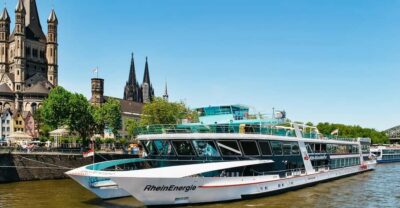
Browse the lists this tour appears in