
Reviewed · CITY TOURS
Lübeck: Classic Tour of the Hanseatic City
Lübeck rewards slow looking. This private 90-minute walk makes the old town easy to read, from the Holsten Gate and Salzspeicher warehouses to the five main churches and decorated merchants’ houses. I like the private format, which keeps the pace flexible for a group of up to six, and I like the focus on Lübeck’s architecture rather than a hurried checklist of sights. The main thing to consider is the short duration: you will see the city’s key exterior landmarks, but you should not expect a deep visit inside every church or museum.
The tour is especially useful if you want a clear first orientation in Lübeck, or if you have only a small window in the city. Guides such as Christel and Crystal have been praised for warm, informed explanations, while one German-language booking specifically valued the background information. At $259 per group, it makes the most sense for families or friends sharing the cost, not for a solo visitor looking for the cheapest walk.
In This Review
- Key points at a glance
- Why Lübeck makes such a good walking tour city
- Starting beneath the Holsten Gate
- The Salzspeicher warehouses and Lübeck’s port
- Town hall architecture and the Hanseatic city
- The five main churches and the seven-spire view
- The Teufelchen and Lübeck’s small surprises
- Merchants’ houses and the Brothers Mann
- What the private format changes
- Is 90 minutes enough for Lübeck?
- Guide quality and language choice
- Who should book this Lübeck walk?
- Should you book the Classic Tour of Lübeck?
- FAQ
- Where does the Lübeck walking tour begin?
- How long does the tour last?
- How many people can join the private group?
- What languages are available?
- What landmarks are included?
- Are food, drinks, or transfers included?
- Can I cancel for a full refund?
Key points at a glance
- A private group of up to six: You are not folded into a large crowd, and the price covers the whole group rather than each person separately.
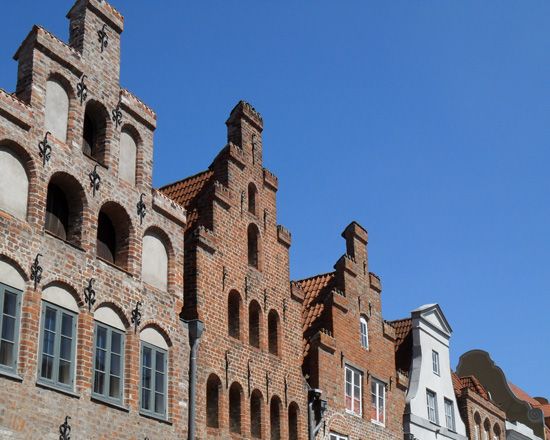
- A strong architectural route: The walk links the Holsten Gate, Salzspeicher warehouses, town hall, St. Mary’s Church, merchants’ houses, and the Buddenbrook-Haus area.
- Lübeck’s famous skyline: Five main churches and the city’s seven-spire image help explain why the old town is so recognizable.
- A 90-minute orientation: The length suits a first visit, a cruise or day stop, and anyone who wants the essentials without spending half a day on a tour.
- English or German guiding: You can choose between the two listed tour languages.
- A well-regarded guide team: Christel and Crystal are named in especially positive comments, with praise for both their subject knowledge and friendly manner.
Why Lübeck makes such a good walking tour city
Lübeck is compact in the way good historic cities should be compact. Its old town sits on an island surrounded by waterways, and the central streets bring together churches, civic buildings, warehouses, and former merchants’ homes within a manageable area.
The city is known as the City of Seven Spires and the Gateway to the North. Those names are not just tourist decoration. The spires give you a useful visual map as you walk, while the northern position helps explain Lübeck’s importance as a Baltic Sea trading center.
The old town became Germany’s first UNESCO World Heritage Site in 1987. That recognition focused on the whole historic setting, not one isolated monument. Here, the pleasure comes from seeing how the parts fit together: brick churches, narrow lanes, town houses, harbor buildings, and public squares form one coherent medieval cityscape.
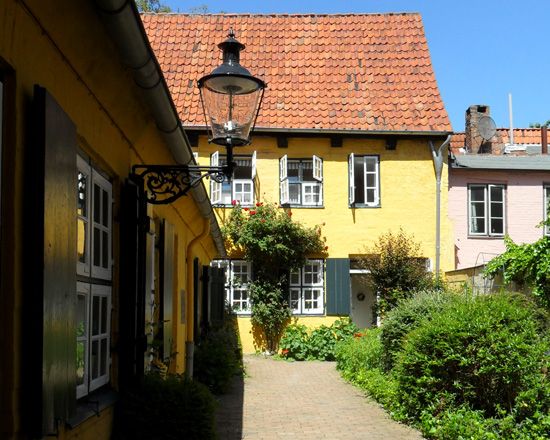
That is where a guide helps. You can admire red brick on your own, but it takes some context to understand why Lübeck looks different from many other German cities. This tour puts the buildings into the story of the Hanseatic city and points out the details you might otherwise pass without noticing.
More City Tours in Germany:
- Berlin: 1-Hour City Tour by Boat with Guaranteed Seating
★ 4.3 · 16,993 reviews - Leipzig: City History Canal Sightseeing Tour on a Motorboat
★ 4.7 · 6,232 reviews - Cologne: Panoramic City Cruise
★ 4.3 · 5,698 reviews
Starting beneath the Holsten Gate
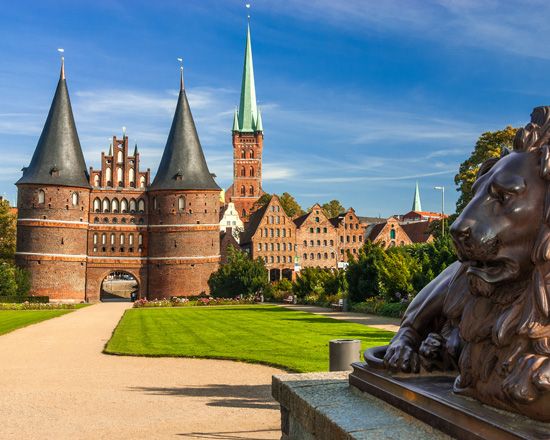
The meeting point is directly at the Holsten Gate, or Holstentor, one of Lübeck’s most recognizable landmarks. It is a practical starting place because the gate gives you an immediate sense of the city’s former importance and makes the meeting location hard to miss.
The gate’s thick brick towers and fortified appearance create a dramatic first impression. It also introduces a useful theme for the tour: Lübeck was both a trading center and a defended city. You begin with a structure that says commerce on one side and protection on the other.
Do not expect the tour to begin with a long museum visit inside the gate. The route is a walking tour with a professional guide, and the supplied details focus on seeing the landmark as part of the city streetscape. If you want to spend serious time inside the Holsten Gate, you would need to arrange that separately.
From here, the walk continues toward the Salzspeicherhäusern, the row of salt storage buildings. Their brick fronts are among the best reminders that Lübeck’s waterfront was once a working place, not simply a pretty backdrop for photographs.
The Salzspeicher warehouses and Lübeck’s port
The Salzspeicher buildings connect architecture with trade. Salt was a valuable commodity, and storage buildings beside the water tell you more about the city’s economic life than a grand monument can do alone.
The route also passes the former industrial heart of Lübeck, the Port of Lübeck. This section gives the tour a useful change of tone. Instead of looking only at churches and ornate façades, you get a glimpse of the commercial machinery that helped make the city powerful.
I especially like this part of the route because it keeps Lübeck from becoming a collection of attractive old buildings. The port and warehouses explain why merchants invested in large homes, why the city needed strong civic institutions, and why the Hanseatic identity matters.
The tour description does not promise a port cruise or a visit inside working harbor facilities. You are seeing the port as part of the walking route, so keep your expectations focused on urban history, views, and explanation rather than an industrial tour.
Town hall architecture and the Hanseatic city
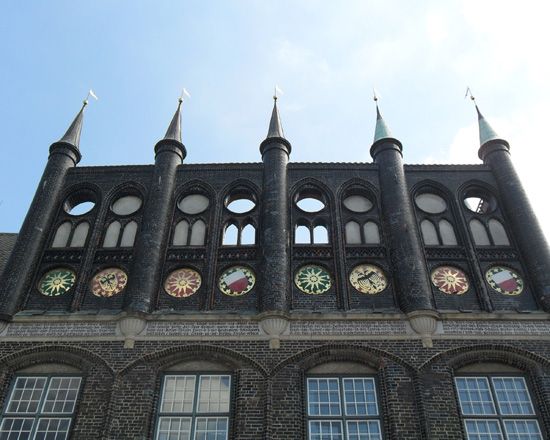
The next major stop is Lübeck’s town hall, with its traditional Hanseatic architecture and long civic story. Town halls matter on this kind of walk because they show how trade became politics. Lübeck was not merely a place where merchants sold goods. It was a city that organized rules, taxes, and public life around commerce.
Here, a guide can point out the relationship between the civic center and the surrounding streets. The architecture is not simply decorative. It reflects the confidence of a city that played a major role in northern European trade.
The town hall also provides a useful pause after the port section. You move from goods and warehouses to the official heart of the city, then onward to churches and private houses. That progression gives the 90-minute route a sensible shape.
Because the tour is short, you should treat the town hall as a guided exterior highlight unless your guide explains otherwise. The information provided does not include interior admission, tickets, or time for an extended indoor visit.
Something different for another day:
- Berlin: Reichstag, Dome and Government District Guided Tour
★ 4.7 · 18,288 reviews - Hamburg: Sex and Crime in St. Pauli Tour for Ages 18+
★ 4.7 · 15,447 reviews - Hamburg: 1.5-Hour Harbor and Speicherstadt Day Cruise
★ 4.6 · 14,200 reviews - From Munich: Neuschwanstein & Linderhof Castle Full-Day Trip
★ 4.5 · 12,494 reviews
The five main churches and the seven-spire view
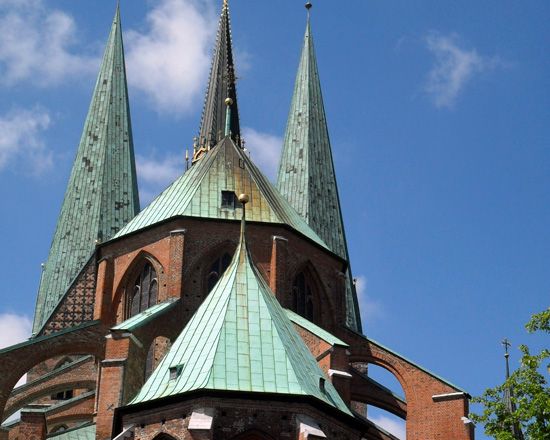
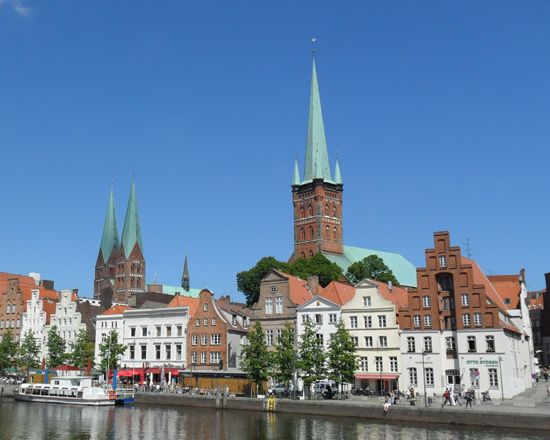
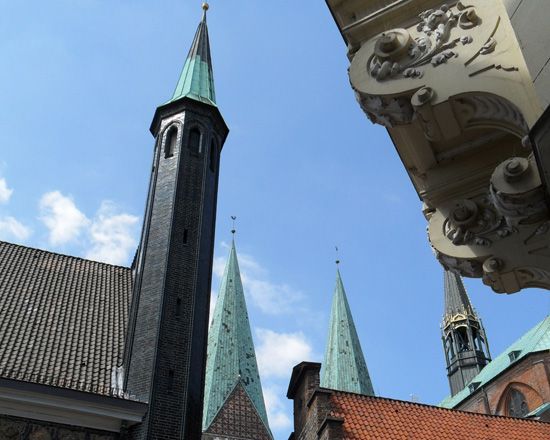
Lübeck’s skyline is one of the tour’s biggest rewards. The city’s five main churches shape the view from many streets, and their towers help explain the nickname City of Seven Spires.
St. Mary’s Church is one of the named stops. Its presence near the town hall shows how closely religion, civic power, and daily urban life were connected in the old town. Even if you do not enter, the church gives scale to the surrounding streets and helps make sense of Lübeck’s skyline.
The route highlights the five principal churches rather than presenting each one as a full separate visit. That distinction matters. You will gain a broad understanding of the city’s major religious buildings, but a 90-minute walk cannot give every church equal interior time.
I would recommend looking up during this section. Lübeck’s architecture works at two levels: the street-level brickwork and façades reward close attention, while the towers give the city its grand outline. You will get more from the walk if you alternate between those two views instead of rushing from one marked stop to the next.
The Teufelchen and Lübeck’s small surprises
The route includes the sweet Teufelchen, or little devil. This is the sort of small feature that gives a city walk personality. Lübeck’s major monuments explain its public story, while a detail such as the Teufelchen adds a local bit of character and a memorable visual pause.
The supplied information does not explain exactly how the guide presents the Teufelchen, so I would treat it as a brief point of interest rather than a full attraction. Still, these small stops are often what help a walking tour feel less like a list of dates and more like a stroll through a lived-in old town.
That balance is one of the tour’s strengths. You get the major landmarks, but also the chance to wander through little streets and notice decorated houses. Lübeck is at its best when you let the route slow down around corners and façades.
Merchants’ houses and the Brothers Mann
The tour follows the footsteps of the Brothers Mann and ends near Buddenbrook-Haus. This adds a literary thread to the architecture. The Mann family is closely tied to Lübeck, and the Buddenbrook-Haus setting helps connect the city’s grand merchant culture with family life, literature, and memory.
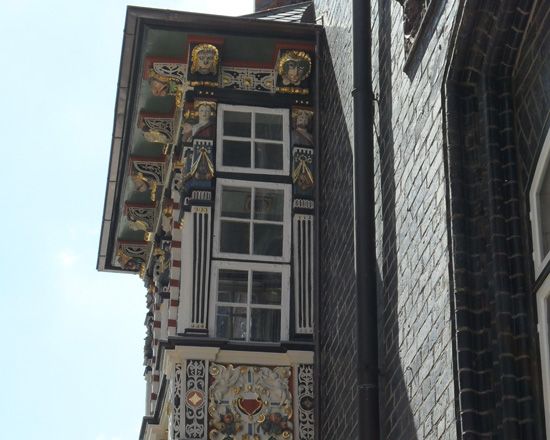
The route’s mention of traditional Kaufmannshäuser, or merchants’ houses, is important. These buildings show how successful trading families lived and presented themselves. Their decorated fronts are not random ornaments. They reflect wealth, status, and the desire to make a private home part of the city’s public face.
You will wander through famous streets and look at decorated houses rather than simply stopping at one museum entrance. That makes the final section a good fit for anyone who enjoys atmosphere and architectural detail.
If your main interest is Thomas Mann or the Buddenbrook family, note that the experience is still a city tour, not a dedicated literary tour. You will receive the Lübeck setting and the Brothers Mann connection, but the 90-minute format limits the amount of literary discussion possible.
What the private format changes
A private group of up to six is the clearest practical advantage. You do not have to match the pace of a large mixed group, and you can ask questions without waiting for a crowd to quiet down.
The format is also good for families and friends with different levels of interest. One person can ask about architecture, another about Lübeck’s trading past, and someone else can focus on the Brothers Mann. A private guide can usually respond more directly than a guide addressing several dozen people, although the exact flexibility depends on the guide and the timing.
There is one important value calculation. At $259 per group, the effective price is about $43 per person if six people participate. For four people, it is roughly $65 each, and for two people, about $130 each. That makes the tour fairly attractive for a full group, but expensive for a couple compared with a shared city walk.
The fee covers a professional guide. Transfers, food, and drinks are not included, so you should arrive at the Holsten Gate independently and plan your own refreshments before or after the walk.
Is 90 minutes enough for Lübeck?
Ninety minutes is enough for a strong introduction, not enough for every layer of the city. The route covers the main visual markers and gives you a framework for exploring more on your own.
I see the short length as an advantage if you have limited time. You can fit it around a wider day in Lübeck without committing to a half-day activity. It also suits people who prefer a focused walk and lose patience when tours linger too long at every stop.
The tradeoff is depth. You will pass or view the Holsten Gate, warehouses, port, town hall, churches, Teufelchen, merchants’ houses, and Buddenbrook-Haus area in one continuous experience. If you want lengthy church visits, museum time, or a detailed study of Hanseatic history, you will need additional time beyond the tour.
Wear comfortable shoes and think of this as an urban walk rather than a sightseeing vehicle. The meeting point is at the Holsten Gate, and the route proceeds through the old town on foot. Since the starting times vary, you should check availability for the date you want.
Guide quality and language choice
The guide is the heart of a short walking tour. The strongest praise attached to this experience centers on clear background information, strong subject knowledge, and a friendly manner.
Christel received especially warm comments for both her understanding of Lübeck and her way of handling the group. Crystal was also praised as friendly and well informed. The names are spelled in two ways in the available feedback, so do not assume that a particular guide will be assigned, but these comments suggest a capable guide team.
Tours are offered in English and German. That makes the experience practical for international visitors and German-speaking groups alike. Since the walk depends on spoken explanation, choose the language in which you can best follow historical details and ask questions comfortably.
The 4.8 rating from 64 reviews supports the overall picture of a well-received experience. One four-star comment specifically valued the varied background information, which is a useful clue about the tour’s appeal: it is not only about taking photographs at famous sites.
Who should book this Lübeck walk?
I would recommend it to first-time visitors who want a quick, intelligent orientation. It is also a good choice for a small family or friend group that values a private guide and can share the fixed price.
It suits architecture fans, people curious about Hanseatic trade, and readers interested in the Brothers Mann. The route gives each subject a place without making any one of them the entire focus.
It is less suitable if you want extensive museum access, a long stop inside every church, or a full-day exploration. It may also be poor value for one or two people unless private guiding is a high priority.
The free cancellation option up to 24 hours before the start and reserve-now, pay-later booking make the tour easier to fit into a changing schedule. Those policies do not change the sightseeing itself, but they reduce the risk of committing too early.
Should you book the Classic Tour of Lübeck?
Book it if you want the city’s key sights explained in a compact private walk. The route has a good arc: fortified entrance, salt warehouses, port, town hall, churches, small street details, and the literary setting around Buddenbrook-Haus.
I particularly like the way it connects Lübeck’s beauty with its working past. You are not only shown impressive brick buildings. You are given a basic understanding of how trade, civic power, religion, and merchant families shaped the old town.
Skip it if you plan to spend several days exploring Lübeck at a slow pace and prefer to discover streets independently. For everyone else, especially a group of four to six, the private price can be reasonable, and 90 minutes gives you a useful start without swallowing your whole day.
FAQ
Where does the Lübeck walking tour begin?
The meeting point is directly at the Holsten Gate, also called the Holstentor.
How long does the tour last?
The walking tour lasts 90 minutes.
How many people can join the private group?
The price covers one private group of up to six people.
What languages are available?
The live guide is available in English or German.
What landmarks are included?
The route includes the Holsten Gate, Salzspeicher warehouses, the former Port of Lübeck area, the town hall, the Teufelchen, St. Mary’s Church, merchants’ houses, and the streets around Buddenbrook-Haus. It also highlights Lübeck’s five main churches.
Are food, drinks, or transfers included?
No. The tour includes a professional guide, but transfers, food, and drinks are not included.
Can I cancel for a full refund?
Yes. You can cancel up to 24 hours in advance for a full refund. You can also reserve now and pay later.
Just added around Germany
- e-Scavenger hunt Aachen: Explore the city at your own pace★ 4.0 · 13 reviews
- Munich: Private or Group Third Reich and WWII Walking Tour★ 4.9 · 13 reviews
- Canyoning Advanced Day Trip★ 5.0 · 13 reviews
- Wiesbaden Biebrich: Outdoor Escape Game★ 4.7 · 13 reviews
- Berlin: Private Guided Tour of the Main Sights★ 5.0 · 13 reviews
- From Munich: Neuschwanstein Castle and Linderhof Private Tour★ 5.0 · 13 reviews
- Trier, Moselle: Wine excursion with boat trip★ 3.9 · 13 reviews
- From Dresden: Guided Day Tour by Bus of Seiffen Toy Village★ 4.0 · 13 reviews
City Tours, compared.
1-Hour City Tour by Boat with Guaranteed Seating
Read our review →
City History Canal Sightseeing Tour on a Motorboat
Read our review →
Browse the lists this tour appears in