
Reviewed · CITY TOURS
Leipzig City Tour 2.0: entertaining on the go mobile projections
Leipzig’s past gets a digital twist. This 90-minute walking tour uses mobile projections and headsets to add historical scenes, facts, and stories to the city center. I like the way the technology lets you keep looking around and taking photos without losing the guide’s commentary. I also like the compact route, which covers major squares, passages, railway history, and the events of 1989 without taking up half your day.
The main consideration is that the tour moves through busy central streets and depends on its multimedia format. If you prefer a quiet, traditional walk with long stops inside churches or museums, this may feel too brisk. The group can reach 30 people, so the headsets matter, especially when the streets are lively.
In This Review
- Key points at a glance
- A 90-minute introduction to Leipzig with a screen in the street
- Starting at Richard-Wagner-Straße 13
- Leipzig’s first railway connection
- Passages, courtyards, and the city behind the main streets
- The peaceful revolution of 1989
- A column with a question behind it
- Leipzig’s first skyscraper
- Augustusplatz and Leipzig’s large urban spaces
- Robes, sculpture, and Leipzig’s more surprising details
- The Leipzig Passenger System and the Hansa-Hof
- A snack stop and Leipzig’s trading past
- Old foundations and the route back to the meeting point
- What the technology adds, and where it may not help
- Is $18.97 a fair price?
- Who should book this Leipzig walk?
- Should you book Leipzig City Tour 2.0?
- FAQ
- Where does the tour start?
- Where does the tour finish?
- How long does the tour last?
- What is the price?
- Is the tour conducted with a mobile ticket?
- How many people can join the tour?
- Does the tour visit a church connected with the 1989 events?
- Does the tour use headsets?
- Are service animals allowed?
- Can I cancel for a full refund?
Key points at a glance
- Mobile projections bring history into the street: Historic locations are paired with visual material that helps explain what happened there.
- The 90-minute schedule is easy to fit in: You get a focused introduction to central Leipzig without giving up an entire morning or afternoon.
- Headsets make sightseeing easier: You can look at buildings, take pictures, and still follow the guide.
- The route covers more than postcard squares: Expect railway history, courtyards, passages, the peaceful revolution of 1989, and Leipzig’s commercial past.
- Mario Jung receives warm praise: His welcome, modern equipment, friendly manner, and useful extra information about Segways all add to the experience.
- The price is reasonable for a guided city walk: At $18.97 per person, the technology and small time commitment help justify the cost.
A 90-minute introduction to Leipzig with a screen in the street
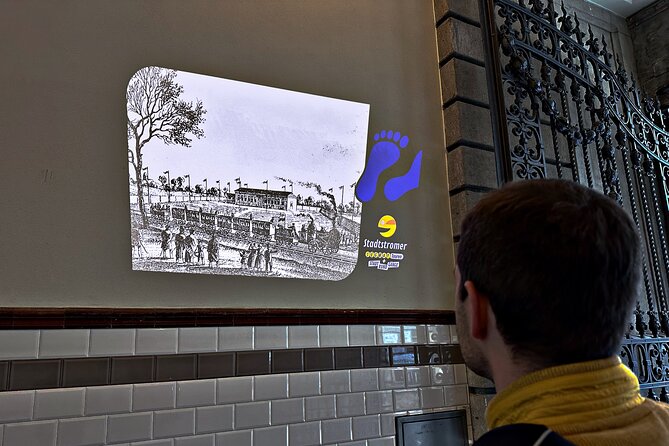
Leipzig City Tour 2.0 is built around a simple idea: a city walk does not have to choose between old-fashioned storytelling and new technology. You walk through central Leipzig with a guide, listen through a headset, and see projections that connect present-day places with earlier moments.
That format changes how you use the hour and a half. You are not asked to stare at a screen for the whole tour. Instead, the headset lets you keep your eyes on the buildings and squares while the projections add another layer to the scene.
I especially like this for a first visit to Leipzig. The route introduces the city’s main center, but it also points out details you could easily pass without noticing, including courtyards, passages, a column with a political meaning, and buildings connected with trade and transport.
The technology is not the whole point. It works best as a tool for making places easier to understand. The tour still depends on the guide’s explanations and the physical route through Leipzig.
More City Tours in Leipzig
- Leipzig: City History Canal Sightseeing Tour on a Motorboat
★ 4.7 · 6,232 reviews - Combo Tour in Leipzig: Guided City Tour & City Sightseeing
★ 4.7 · 2,317 reviews - Leipzig: 90-Minute Trabi City Tour
★ 4.9 · 728 reviews
Starting at Richard-Wagner-Straße 13
The tour begins at Richard-Wagner-Straße 13, 04109 Leipzig. It also ends at the same meeting point, which simplifies your plans and avoids the usual problem of finishing a walking tour on the opposite side of the center.
The start is near public transportation, another practical plus if you are arriving from elsewhere in Leipzig. Confirmation is provided when you book, and the experience uses a mobile ticket.
The tour has a maximum of 30 people. That is not an intimate private walk, but the headsets should make it easier to hear the guide while you look around. The equipment also means you do not have to stay focused on the guide’s face at every moment.
A friendly welcome is part of the experience. Mario Jung is identified as the owner and guide, and his manner receives particular praise. One detailed response highlights the warm greeting, modern equipment, well-judged timing, and fair price. That combination matters: good equipment can improve a city walk, but it cannot rescue a cold or disorganized guide.
Leipzig’s first railway connection
One early stop explains how the first German long-distance railway began from Leipzig. This gives the route a useful starting point in the city’s role as a transport and commercial center.
The railway story is especially valuable because it puts Leipzig’s growth into practical terms. Rather than presenting the city only through grand buildings and famous names, the tour shows how movement of people and goods helped shape it.
Expect the multimedia material to support the explanation with images or projections. The exact presentation can vary with the equipment and conditions, but the aim is clear: to make a historic development easier to picture while you are standing in the modern city.
Passages, courtyards, and the city behind the main streets

Leipzig is known for its many passages and courtyards, and the tour gives them a central place. These spaces can be easy to miss if you simply follow the main shopping streets.
The stop is useful because it shifts your attention from large facades to the way the city is arranged behind them. Passages connect streets, buildings, businesses, and courtyards in a way that reflects Leipzig’s long commercial life.
This is one of the parts I would value most on a first walk. A map can show you the city center, but a guide can point out why these connections matter and where to look. The tour’s multimedia approach should help link what you see now with how these spaces functioned in earlier periods.
You should keep in mind that this is still a city-center walking tour, not a dedicated architectural study. The stop gives you an introduction rather than an exhaustive survey of every passage.
Something different for another day:
- Leipzig: 1.5-Hour Public Tour with Night Watchman Bremme
★ 4.6 · 3,116 reviews - Leipzig: 1.5-Hour Historical Walking Tour in German
★ 4.7 · 2,217 reviews - Leipzig: 2-Hour Guided Walking Tour in German
★ 4.8 · 1,612 reviews - Leipzig: 13-Stop Hop-on/Hop-off Bus Ticket
★ 4.6 · 1,468 reviews
The peaceful revolution of 1989
Another important stop deals with the origin of Leipzig’s peaceful revolution in 1989. This is one of the tour’s most serious subjects, and it gives the modern city a strong political dimension.
The route explains where the movement began. It does not go inside the church connected with this history, so you should not book this tour expecting a church visit or an indoor religious-site tour.
That limitation is worth knowing in advance. At the same time, keeping the stop outdoors allows the tour to connect the 1989 story with the streets and public spaces where history unfolded. The projections may help make the period more concrete, while the guide supplies the local context.
For anyone interested in recent German history, this stop can be more meaningful than a quick photograph of a monument. It shows Leipzig not only as an old trading city, but also as a place linked to major political change.
A column with a question behind it
The tour pauses at a column and asks why it is there. That small question reflects the style of the experience: look at a familiar object, then learn the reason behind it.
This kind of stop works well on a walking tour because it trains you to notice details. Leipzig’s center has many monuments, markers, and pieces of public art that can seem self-explanatory until someone gives you the background.
The projection format should be useful here. A visual comparison or historic image can show how the object relates to an earlier time, though the supplied details do not specify exactly what appears on the screen.
Leipzig’s first skyscraper
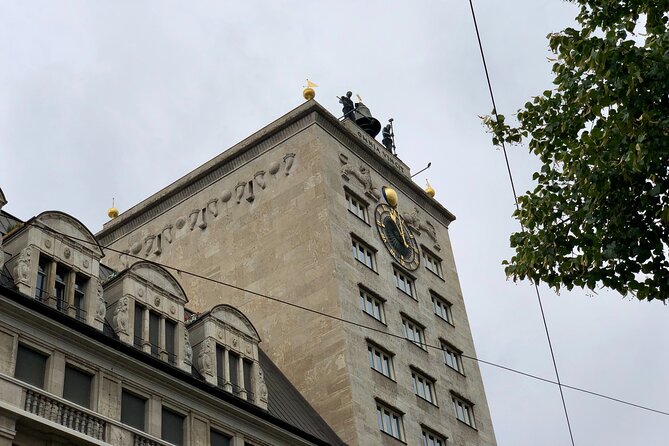
The route also visits the city’s first skyscraper, which still offers something special today. The stop combines architectural history with a present-day point of interest.
That wording suggests you will learn both why the building mattered when it was created and what remains notable about it now. It is a good example of the tour’s wider purpose: connect Leipzig’s past with the city you are walking through today.
Do not assume this means a guaranteed visit to an observation deck or an interior. The available information describes the building as a stop, but it does not promise entry or a view from above.
Augustusplatz and Leipzig’s large urban spaces
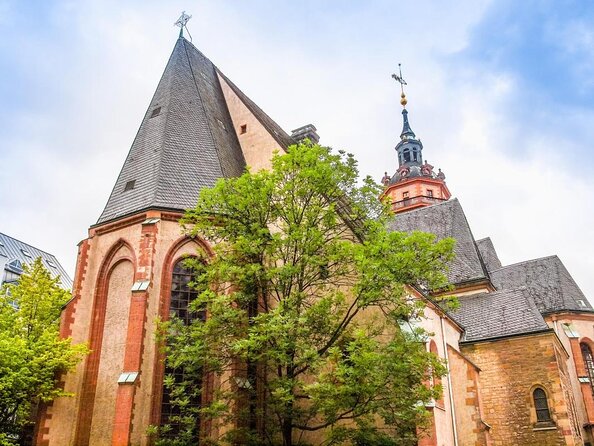
The tour includes Leipzig’s largest inner-city square, giving you a chance to see how the city handles open public space. Large squares can look impressive, but they make more sense when you know how they connect to the surrounding streets and buildings.
The route also covers a passage between Augustusplatz and Markt. It explains why this connection is more than a simple way to get from one square to another.
This part should help you get your bearings. Leipzig’s center is compact enough to walk, but its squares, passages, and underground connections can still seem unrelated when you first arrive. A guide gives these places a sequence and a purpose.
Because the tour lasts about 90 minutes, the explanations are likely to remain focused. You will get the key ideas, not a long architectural lecture at every corner.
Robes, sculpture, and Leipzig’s more surprising details
One stop explains what a particular house has to do with robes. This sounds like one of the tour’s lighter historical puzzles, the kind of detail that makes a city walk memorable after the larger facts begin to blur together.
The route also features a sculpture that seems surprising in light of when it was erected during the GDR period. The guide explains why it was possible. This is a valuable reminder that Leipzig’s public art and architecture cannot always be understood through simple labels such as old or modern, East or West.
These stops give the tour variety. You move from major political events and urban planning to odd details that reward curiosity. The multimedia projections should be particularly helpful with sculpture, since visual material can show the work in a different setting or explain the debate around it.
The Leipzig Passenger System and the Hansa-Hof
Another stop deals with the Leipzig Passenger System and its present-day connection to the Hansa-Hof. The name may not mean much before the tour, but the point is to show how older city connections continue to shape the center.
This section sounds more specialized than the main square stops. That is a good thing if you want details beyond the usual list of famous sights. You are not simply being led from monument to monument; you are being shown how different parts of the center relate to one another.
The available information does not specify whether you enter the Hansa-Hof or how long you remain there. Treat it as a guided explanation at or near the relevant connection rather than a separate building tour.
A snack stop and Leipzig’s trading past
The itinerary includes a place where you can still enjoy a snack. This gives the route a practical, everyday note. Cities are not only made of monuments, and food stops often reveal how people have used a place over time.
The tour then turns to Leipzig’s stock exchange and explains why it was essential in a city built around commerce. This is a strong pairing: one stop shows daily eating and meeting, while the next explains the financial machinery behind Leipzig’s trading life.
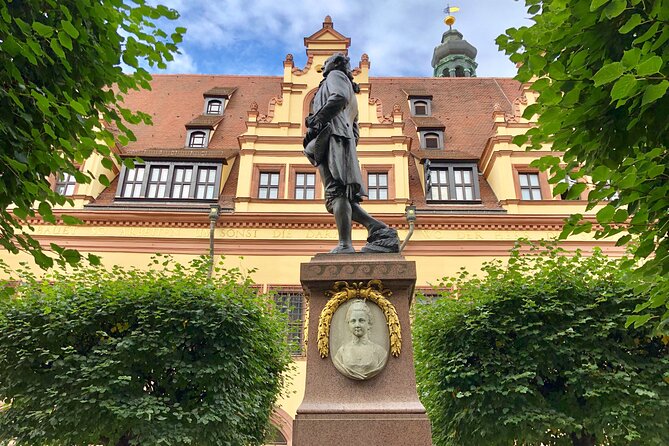
The stop at the marketplace in front of the Old Town Hall adds another layer. The guide points out what the square has hidden, suggesting details that are not obvious from a quick look. You will want to keep your eyes moving here rather than treating the marketplace as a background for a photo.
Old foundations and the route back to the meeting point
The tour also visits a building constructed on older foundations. The guide shows you how those earlier layers can still be seen. This is the sort of explanation that turns a façade into evidence of the city’s changing shape.
A final connection links the market square with the tin can, a local nickname or reference that is not explained in the supplied details. The guide’s explanation is therefore important. This is another reason the tour works better with a live guide than with a self-guided route: you receive the local meaning rather than only the name.
The walk finishes back at Richard-Wagner-Straße 13. That makes the tour easy to combine with another central activity before or after it.
What the technology adds, and where it may not help
The mobile projections are the tour’s main selling point, but I would judge them as an aid rather than a replacement for Leipzig itself. The best moments should come when the projection helps you picture a past scene, understand a building, or grasp the meaning of a public object.
The modern headsets are just as practical. You can turn toward a façade, take a picture, or examine a square without missing the spoken explanation. That freedom is especially useful for a group of up to 30 people.
Still, technology can be affected by outdoor conditions, equipment issues, or the pace of the group. The available information does not explain how the projections work in poor weather or whether every stop has the same visual treatment. If you want a fully traditional walk, the multimedia format may feel like an extra layer you do not need.
Is $18.97 a fair price?
At $18.97 per person, the tour sits at a reasonable price for a guided 90-minute city walk. You are paying for a guide, the headset equipment, the multimedia content, and a route that covers several parts of Leipzig’s central story.
The value is strongest if you are new to Leipzig and want orientation without committing to a longer tour. You also get more than a basic parade of landmarks, since the route includes the railway, commercial passages, 1989, public art, urban connections, and older foundations.
The price is less compelling if you plan to visit only one attraction or already know the city center well. It also does not appear to include museum admission, church entry, food, or a guaranteed building interior visit. Think of it as a focused introduction, not an all-inclusive sightseeing package.
Who should book this Leipzig walk?
I would recommend it to first-time visitors who want a clear introduction to central Leipzig and enjoy learning through images as well as spoken explanation. Families with older children and teenagers may also appreciate the moving format and short schedule.
It suits people who like taking photographs because the headsets let you look around without losing the commentary. It is also useful for anyone interested in the peaceful revolution of 1989, Leipzig’s commercial past, or the city’s unusual passages and courtyards.
You may want another type of tour if you need a church interior, a long museum visit, or a specialist architectural lecture. The pace is designed to cover many stops in 90 minutes, so it favors variety over extended time at one site.
The cancellation terms are straightforward: you can receive a full refund if you cancel at least 24 hours before the start time. Changes made inside that period are not accepted, and the tour can be canceled if its minimum number is not reached.
Should you book Leipzig City Tour 2.0?
Book this tour if you want a lively, time-efficient introduction to Leipzig with a friendly guide and technology that helps the city’s stories take shape. The warm welcome, modern equipment, well-sized schedule, and fair price are its strongest points.
Choose something else if your priority is indoor access, a slow architectural walk, or an intimate private group. For most first visits, though, this is a practical way to get your bearings and notice the details that a solo walk could easily miss.
FAQ
Where does the tour start?
The tour starts at Richard-Wagner-Straße 13, 04109 Leipzig, Germany.
Where does the tour finish?
The activity ends back at the meeting point on Richard-Wagner-Straße 13.
How long does the tour last?
The tour lasts approximately 1 hour and 30 minutes.
What is the price?
The price is $18.97 per person.
Is the tour conducted with a mobile ticket?
Yes. A mobile ticket is available, and confirmation is provided at the time of booking.
How many people can join the tour?
The maximum group size is 30 people.
Does the tour visit a church connected with the 1989 events?
No. The route discusses the origin of the peaceful revolution in 1989, but it does not go into the church.
Does the tour use headsets?
Yes. Modern headsets allow you to look around and take photographs while continuing to hear the guide.
Are service animals allowed?
Yes. Service animals are allowed.
Can I cancel for a full refund?
Yes, if you cancel at least 24 hours before the experience start time. Cancellations made less than 24 hours in advance are not refunded.
Just added around Leipzig
- The classic – experience Leipzig’s city centre★ 5.0 · 13 reviews
- Leipzig’s Communist Past: A Self-Guided Audio Tour★ 5.0 · 16 reviews
- Corpses, Leprosy, Lucifer 75-minute Tour at the Old Cemetery★ 5.0 · 16 reviews
- first electrical carriage in town – guided City Tours – Leipzig★ 5.0 · 17 reviews
- Leipzig : Guided tour with Panorama Tower for a private group★ 5.0 · 19 reviews
- Motorboat tour ”Little Venice Tour” Gustav★ 4.5 · 19 reviews
- Leipzig’s Courtyards and Passages – Guided Tour for a Private Group★ 5.0 · 20 reviews
- Leipzig: “SoKO Leipzig”, unique Escape Room, 60 minutes★ 4.6 · 20 reviews
City Tours, compared.

1-Hour City Tour by Boat with Guaranteed Seating
Read our review →
City History Canal Sightseeing Tour on a Motorboat
Read our review →


Browse the lists this tour appears in