
Reviewed · CITY TOURS
City tour Chemnitz
Chemnitz rewards a closer look. This 90-minute minibus tour connects the city’s industrial past, socialist chapter, and new cultural ambitions without asking you to cover a large city on foot. I like the small vehicle, which holds up to eight people, and I like the clear route through very different parts of Chemnitz.
The tour also offers a useful overview for first-time visitors, especially with a local certified guide speaking English or German. The main consideration is pace: $23 buys orientation rather than long stops, so you should not expect an in-depth visit inside museums or buildings.
In This Review
- Key points to know before booking
- Why Chemnitz makes a good city tour
- Starting at Straße der Nationen or Hotel Chemnitzer Hof
- Karl Marx in the modern city center
- From linen bleaching to the Manchester of Saxony
- Auto-Union and the city’s engineering spirit
- Kaßberg and Wilhelminian-era Chemnitz
- Heckert and the GDR housing story
- The castle district and Chemnitz’s earlier beginnings
- What 90 minutes can realistically deliver
- Is $23 a fair price?
- Who should book this Chemnitz tour?
- My recommendation
- FAQ
- How long does the Chemnitz city tour last?
- What type of vehicle is used?
- How many people can join the minibus?
- Which languages are available?
- Is the tour private or shared?
- Where does the tour start?
- Where does the tour finish?
- What places are covered during the tour?
- Does the tour include a local guide?
- How much does the tour cost?
- Can I cancel the booking?
- Do I have to pay when I reserve?
Key points to know before booking
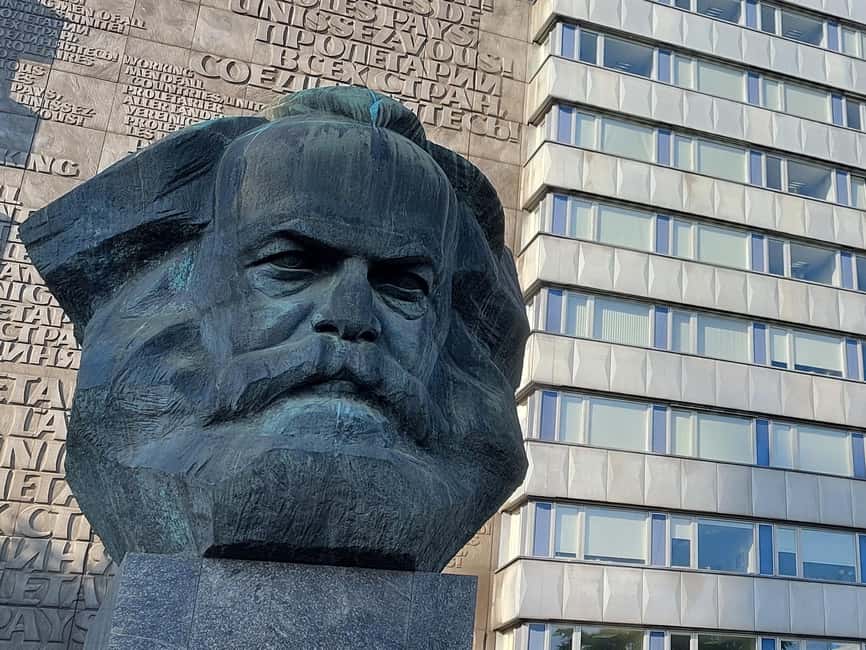
- Karl Marx’s oversized head gives the city center an unmistakable symbol of its former name, Karl-Marx-Stadt.
- Industrial Chemnitz comes into focus between Zwickauer Straße and Annaberger Straße, where the city’s factories and engineering past shaped its identity.
- Kaßberg’s Wilhelminian-style district offers a sharp contrast to the industrial areas and later GDR housing.
- Heckert’s GDR residential area shows how everyday city life was planned during the socialist period.
- The castle district takes you back toward Chemnitz’s earlier beginnings, before factories made the city wealthy.
- A compact group of up to eight people makes the tour more personal than a large coach outing.
Why Chemnitz makes a good city tour
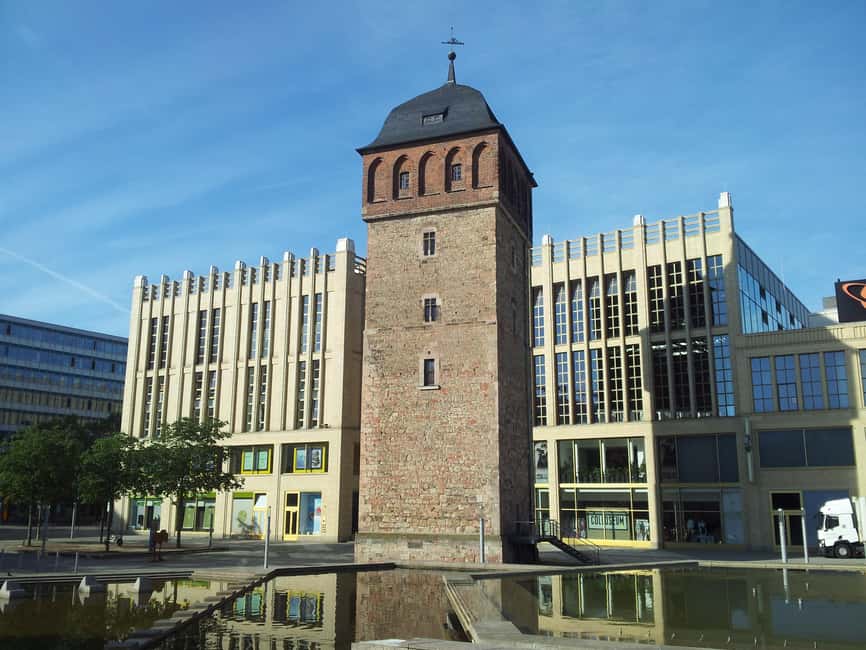
Chemnitz is not a city that reveals itself in one postcard view. Its story is split across factory districts, grand late-19th-century housing, socialist apartment areas, and a modern center still working out what it wants to be.
That makes a guided drive useful. In 90 minutes, you can see how several eras sit beside one another. You are not simply looking at attractive buildings. You are following the rise, collapse, renaming, and reinvention of a major Saxon industrial city.
The route also fits Chemnitz’s role as European Capital of Culture 2025. The title is not just a decorative label here. It reflects a city trying to build a new cultural identity after decades in which industry, war, socialism, and reunification shaped public life.
I would choose this tour early in a Chemnitz visit. It gives you a mental map, points out districts you might otherwise miss, and helps explain why the city can feel modern, industrial, historic, and distinctly East German at the same time.
More City Tours in Germany:
- Berlin: 1-Hour City Tour by Boat with Guaranteed Seating
★ 4.3 · 16,993 reviews - Leipzig: City History Canal Sightseeing Tour on a Motorboat
★ 4.7 · 6,232 reviews - Cologne: Panoramic City Cruise
★ 4.3 · 5,698 reviews
Starting at Straße der Nationen or Hotel Chemnitzer Hof
You have two possible starting locations: Straße der Nationen or Hotel Chemnitzer Hof. The exact meeting point depends on the option you book, so check your confirmation carefully rather than assuming the vehicle will meet you at the hotel.
Both locations return as possible drop-off points at the end. That keeps the outing simple and avoids the usual problem of finishing a city tour far from where you began.
The starting area places you close to the central part of Chemnitz. From there, the guide can introduce the city’s modern face before moving into the older districts and industrial corridors.
A minibus is a practical choice for this route. Chemnitz’s story is spread out, and walking between the center, Kaßberg, Heckert, the industrial streets, and the castle district would take much longer than the allotted 90 minutes. The vehicle lets you cover that ground while the guide provides the connections.
The tradeoff is equally clear. You will see the city from the minibus rather than spend long periods examining individual façades. If you want a slow architecture walk, this is not the right format. If you want to understand the city’s broad shape quickly, it works well.
Karl Marx in the modern city center
The Karl Marx head is the tour’s most recognizable landmark. It recalls the period when Chemnitz was renamed Karl-Marx-Stadt, a name it carried during the German Democratic Republic era before becoming Chemnitz again.
The monument is valuable because it turns political history into something physical and easy to understand. You do not need a long museum visit to grasp that the city’s public identity changed with the country around it.
The central area also represents present-day Chemnitz. Modern buildings sit near reminders of the city’s socialist and industrial past, creating the slightly mixed visual character that defines much of the tour.
I would pay close attention here to the guide’s explanation of the name changes. Chemnitz began as a Slavic settlement, became a major industrial center, turned into Karl-Marx-Stadt, and later reclaimed Chemnitz. Those changes are not side notes. They explain the city’s ongoing search for a clear identity.
The Karl Marx head is also a good early reference point. Once you have seen it, the rest of the tour becomes a story about what came before and after the era it represents.
From linen bleaching to the Manchester of Saxony
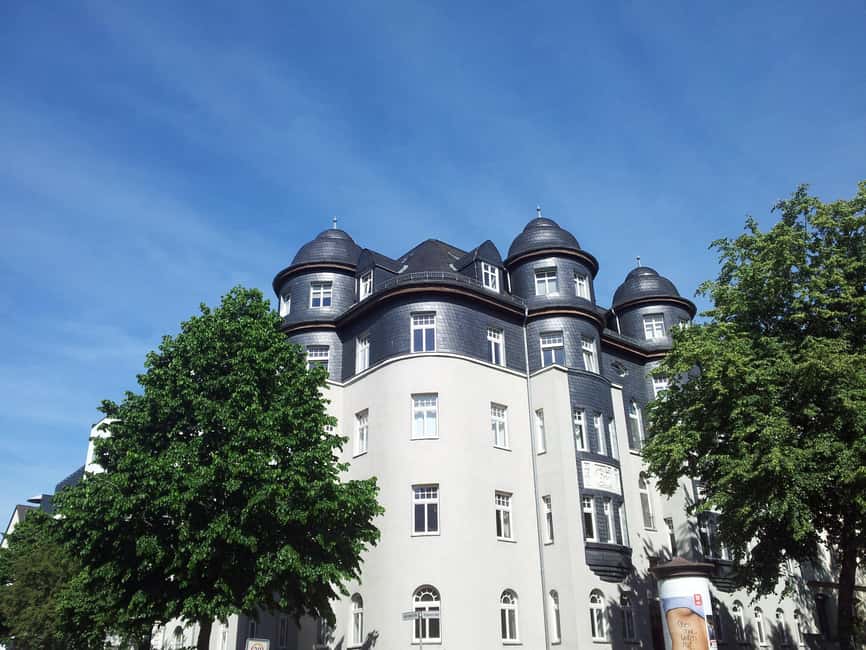
Chemnitz grew wealthy through a combination of local advantages. Saxony’s linen bleaching monopoly helped create an early industrial base, while the city’s closeness to the Ore Mountains connected it with mining and related production.
Then British inventions changed the pace of development. The spinning jenny and steam engine helped push Chemnitz into rapid industrial growth. Factories produced textile machines, locomotives, bicycles, and cars.
For a city tour, this background matters because it explains why Chemnitz looks so different from a purely medieval Saxon town. Its wealth came from machines and manufacturing, not just trade or royal buildings.
The nickname Manchester of Saxony captures that industrial role. Another name, Rußchamtz, referred to the soot from the city’s many smoking chimneys. The image is not polished, but it tells you how strongly factories shaped daily life and the city’s reputation.
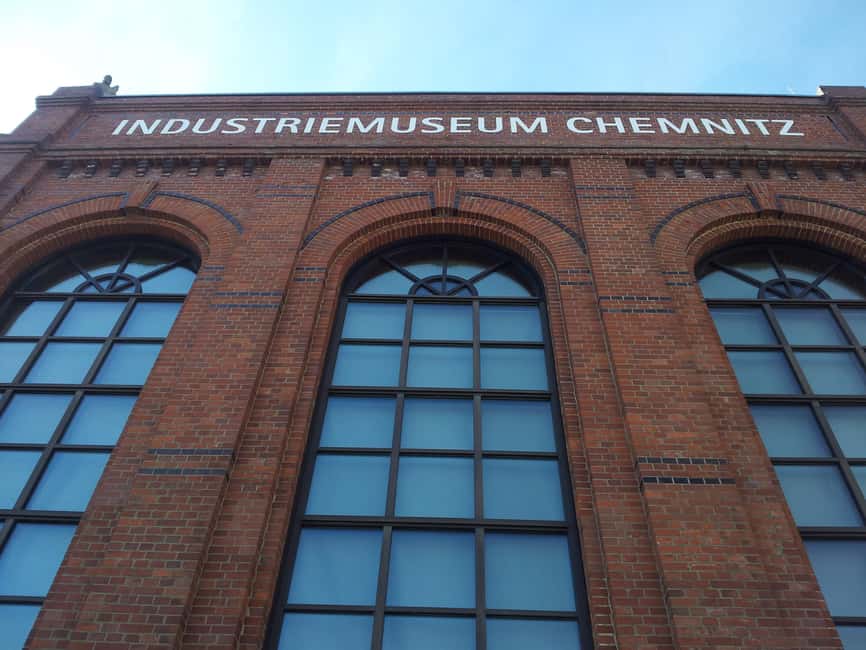
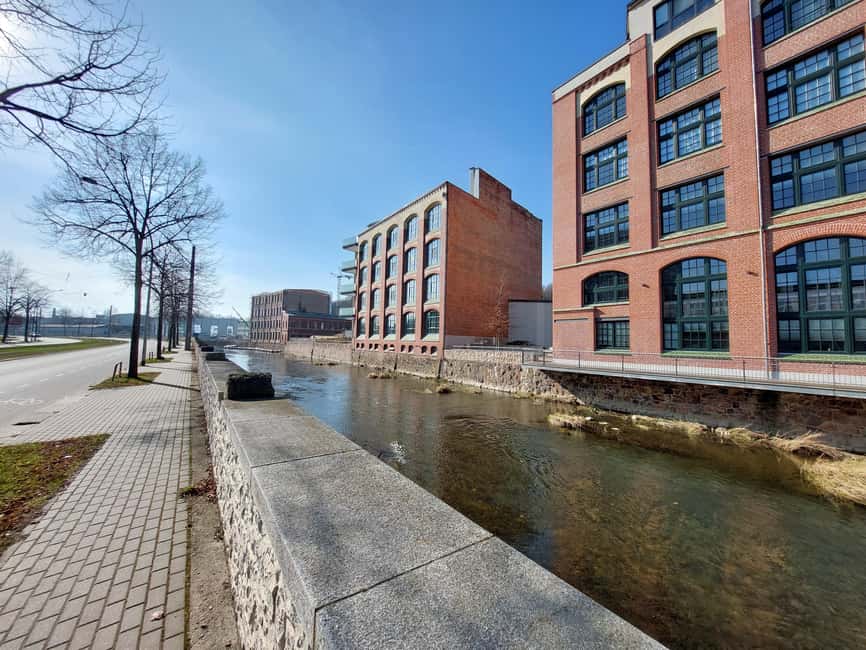
The route’s industrial section helps put those facts on actual streets. Between Zwickauer Straße and Annaberger Straße, you see the broad area associated with Chemnitz’s industrial culture. The guide can connect the buildings and roads with the products that once made the city important.
Do not expect a technical factory tour. The value lies in the links between place and history. A bicycle, locomotive, automobile, or textile machine may sound like a list in a book. On this route, those industries become the reason Chemnitz grew so fast.
Something different for another day:
- Berlin: Reichstag, Dome and Government District Guided Tour
★ 4.7 · 18,288 reviews - Hamburg: Sex and Crime in St. Pauli Tour for Ages 18+
★ 4.7 · 15,447 reviews - Hamburg: 1.5-Hour Harbor and Speicherstadt Day Cruise
★ 4.6 · 14,200 reviews - From Munich: Neuschwanstein & Linderhof Castle Full-Day Trip
★ 4.5 · 12,494 reviews
Auto-Union and the city’s engineering spirit
Chemnitz was once home to Auto-Union, the company that later became Audi. That connection gives the city a special place in German automotive history and adds another layer to its reputation as a city of engineers and manufacturers.
The tour does not promise an Audi museum visit or a factory interior. Instead, the Auto-Union reference helps you understand the city’s wider industrial character.
Chemnitz built more than cars. Its factories produced the machines used to make other goods, along with locomotives, bicycles, and textile equipment. That range is important. It shows a city whose industrial skill reached across transport, engineering, and textiles.
The Second World War brought a major break. The German armaments industry was strongly represented in Chemnitz until the war ended, and the city’s industrial rise did not continue in the same way afterward.
A guide-led overview is especially useful here because industrial history can feel abstract when presented as dates and company names. As you move through the city, the story becomes one of changing uses, changing political systems, and a population repeatedly adapting to new conditions.
Kaßberg and Wilhelminian-era Chemnitz
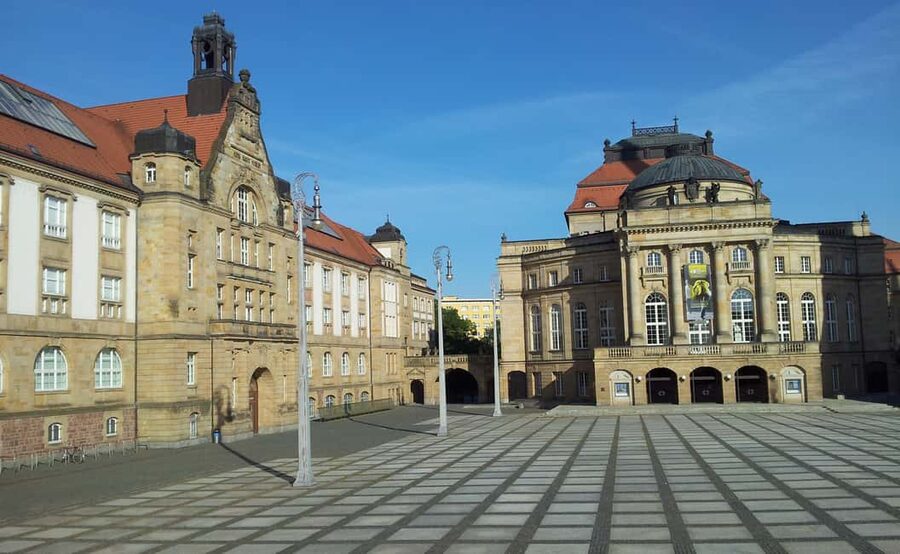
Kaßberg brings a different mood to the route. Its Wilhelminian-style area reflects the period when Chemnitz was prosperous and expanding during the German Empire.
The district offers an important contrast with the industrial streets. Factory growth created wealth, and that wealth helped shape more formal residential areas. You see how a manufacturing city expressed status and confidence through its housing.
I like this part of the tour because it keeps Chemnitz from being reduced to smokestacks and socialist apartment blocks. The city had prosperous middle-class districts, too, with a visual language different from the center and the later planned housing areas.
You may find the minibus format slightly limiting here. Kaßberg rewards a slower look at façades and streets, while a passing view gives you the broad impression rather than every architectural detail.
Still, the district earns its place in a short city tour. It helps you read Chemnitz as a city of social contrasts. Industrial workers, business owners, engineers, and officials did not all live in the same kind of neighborhood.
Heckert and the GDR housing story
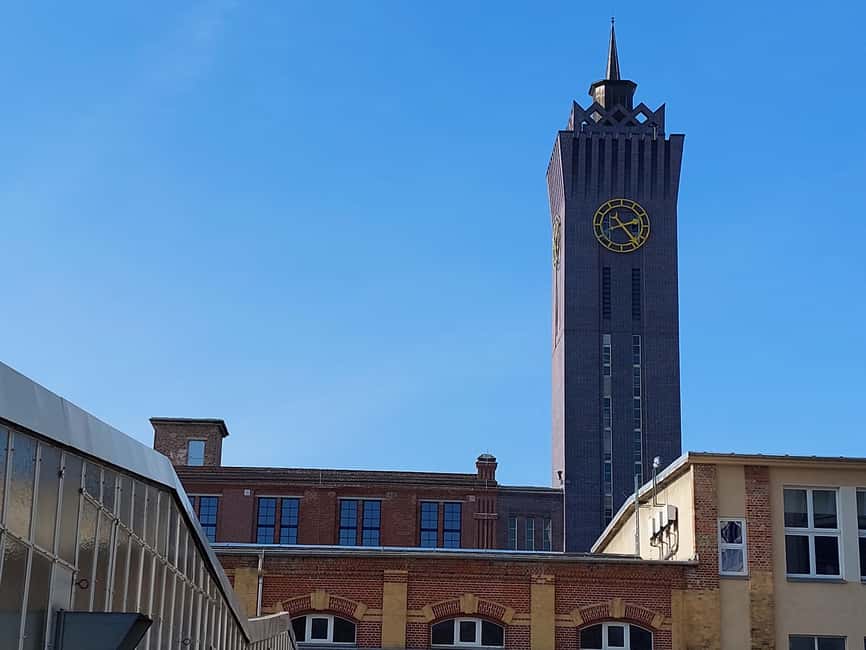
The Heckert residential area represents another major period: the German Democratic Republic. Large planned housing districts were built to meet the needs of an expanding urban population and industrial workforce.
This part of the route matters because it shows ordinary housing, not just monuments. Political history often focuses on official buildings and famous statues. Apartment districts reveal more about how people actually lived and how the state organized urban growth.
Heckert also makes the city’s postwar story easier to grasp. Chemnitz had been heavily tied to industry and armaments, then became Karl-Marx-Stadt within East Germany. New residential areas formed part of the socialist answer to housing and city planning.
Do not expect Heckert to look like a historic quarter. Its importance is functional and social. You are seeing a planned residential environment shaped by a particular political and economic system.
The contrast with Kaßberg is one of the tour’s best teaching tools. One district reflects Wilhelminian prosperity and private urban development. The other reflects GDR-era planning and large-scale housing needs. Seeing both in one outing gives you a better feel for the city than visiting only the central square.
The castle district and Chemnitz’s earlier beginnings
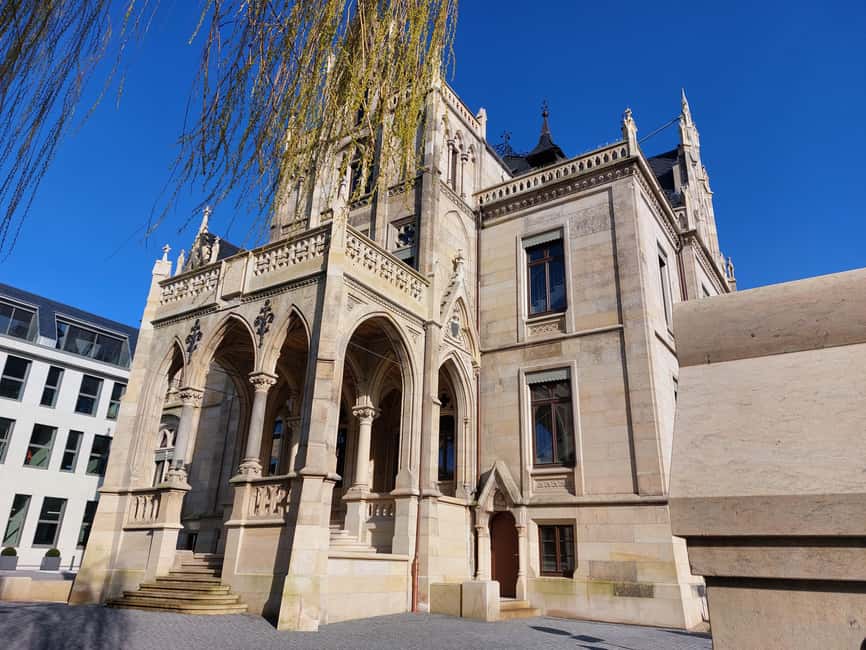
The castle district brings the tour back toward Chemnitz’s older roots. The city began as a Slavic settlement, long before industrial expansion changed its scale and fortunes.
This stop helps restore balance to the story. Chemnitz is often introduced through Karl Marx, factories, or the East German period, but the city existed before those chapters. The castle district points toward the earlier settlement and the foundations of the modern city.
Its place at the end of the route also works well. After seeing industrial districts and GDR housing, you return to a setting associated with the city’s beginnings. The full route becomes a broad timeline: early settlement, industrial growth, wartime destruction and decline, socialist reconstruction, and present-day cultural renewal.
The castle district is best treated as historical context rather than a separate attraction visit. The tour information does not include a scheduled museum entry or extended stop inside a building, so plan on seeing the area as part of the drive.
What 90 minutes can realistically deliver
The strongest praise for this experience is captured by the German description Guter Überblick, kurzweilig, meaning a good overview that stays entertaining. That is exactly the right expectation.
Ninety minutes is enough to introduce the city’s main chapters, but not enough to explore each district on foot. You will get a guided sweep through the center, industrial areas, Kaßberg, Heckert, and the castle district. You will not get a full architectural study or detailed museum tour.
That short format is useful if you have limited time in Chemnitz. It also suits a first afternoon, when you want to decide which areas deserve a second look.
The tour can work well in poor planning conditions, too. Instead of piecing together a route through unfamiliar streets, you sit back and let the guide connect the areas. Since the group can be private or small, you may have a better chance to ask questions than on a large sightseeing bus.
Still, check the starting time before planning the rest of your day. The tour lasts 1.5 hours, but available departure times vary. The activity finishes back at the meeting point, either Hotel Chemnitzer Hof or Straße der Nationen, depending on the selected option.
Is $23 a fair price?
At $23 per person, this is a reasonable orientation tour rather than a premium sightseeing experience. The price includes the 90-minute minibus ride and a local certified guide, with groups of up to eight people.
The value is strongest if you would otherwise spend your first hours simply trying to understand Chemnitz’s layout. You are paying to cover several districts efficiently and to hear the political and industrial links between them.
A large city tour might offer a lower price per person, but the small vehicle changes the feel of the outing. Private and small-group options are available, which can make the cost more worthwhile for people who prefer a quieter tour and direct contact with the guide.
The price is less attractive if you want extensive time at one landmark. There are no stated museum admissions, meals, or special interior visits included. Think of the $23 as a compact city introduction.
Free cancellation up to 24 hours before the activity and a reserve-now, pay-later option reduce the risk when your plans are still shifting. Those policies are useful, but the main value remains the route and the guide’s ability to explain the city in a short time.
Who should book this Chemnitz tour?
I would recommend it to first-time visitors, history-minded visitors, and anyone curious about German industrial cities beyond the better-known destinations.
It is also a good fit if you want to see several parts of Chemnitz without arranging local transport yourself. Families and small groups may appreciate the minibus, while private groups can choose a more personal format.
You should consider another type of outing if your priority is detailed architecture, a museum interior, or a long walk through one neighborhood. The pace is intentionally broad. It gives you the framework, then leaves you free to return to the places that catch your interest.
English and German are available. Since no guide’s name is provided in advance, you should choose the language that lets you ask questions comfortably and get the most from the historical explanations.
My recommendation
Book this tour if you want a fast, sensible introduction to Chemnitz’s complicated identity. The route covers the city center, Karl Marx, industrial culture, Kaßberg, Heckert, and the castle district in a compact 90 minutes, and the small group size keeps the experience from feeling like a distant coach commentary.
Skip it if you already know Chemnitz well or want to spend your time inside museums and historic buildings. For most first visits, though, $23 is a fair price for getting your bearings and learning why this former Manchester of Saxony is now trying to write its next chapter through culture.
FAQ
How long does the Chemnitz city tour last?
The tour lasts 1.5 hours, or 90 minutes.
What type of vehicle is used?
The experience takes place in a minibus.
How many people can join the minibus?
The minibus can carry up to eight people for the city tour.
Which languages are available?
The live tour guide is available in English and German.
Is the tour private or shared?
Private and small-group options are available.
Where does the tour start?
There are two possible starting locations: Straße der Nationen and Hotel Chemnitzer Hof. The exact meeting point depends on the option booked.
Where does the tour finish?
The activity ends back at the meeting point. The listed drop-off locations are Hotel Chemnitzer Hof and Straße der Nationen.
What places are covered during the tour?
The route includes the modern city center, Karl Marx’s head, industrial areas between Zwickauer Straße and Annaberger Straße, Kaßberg, the Heckert GDR residential area, and the castle district.
Does the tour include a local guide?
Yes. The experience includes a local certified tour guide.
How much does the tour cost?
The listed price is $23 per person.
Can I cancel the booking?
You can cancel up to 24 hours in advance for a full refund.
Do I have to pay when I reserve?
No. A reserve-now, pay-later option is available, so you can book without paying immediately.
Just added around Germany
- e-Scavenger hunt Aachen: Explore the city at your own pace★ 4.0 · 13 reviews
- Munich: Private or Group Third Reich and WWII Walking Tour★ 4.9 · 13 reviews
- Canyoning Advanced Day Trip★ 5.0 · 13 reviews
- Wiesbaden Biebrich: Outdoor Escape Game★ 4.7 · 13 reviews
- Berlin: Private Guided Tour of the Main Sights★ 5.0 · 13 reviews
- From Munich: Neuschwanstein Castle and Linderhof Private Tour★ 5.0 · 13 reviews
- Trier, Moselle: Wine excursion with boat trip★ 3.9 · 13 reviews
- From Dresden: Guided Day Tour by Bus of Seiffen Toy Village★ 4.0 · 13 reviews
City Tours, compared.

1-Hour City Tour by Boat with Guaranteed Seating
Read our review →
City History Canal Sightseeing Tour on a Motorboat
Read our review →
Browse the lists this tour appears in