
Reviewed · GOSLAR TOURS
Braunschweig: Private Tour to Ghosts, Witches & Vampires
Braunschweig keeps its darkest stories underfoot. This private 1.5-hour walk connects the Altstadtmarkt and Kohlmarkt with tales of ghosts, witches, zombies, vampires, burial customs, and old superstitions. I like the unusual route, especially the medieval cemetery hidden beneath modern streets, and I like that your own private group of up to 25 people can ask questions as you go. The main drawback is that the live tour is offered in German, so you need a strong grasp of the language to follow the stories.
I also like the compact scale. The walk covers about 1.5 kilometers, with stops at old buildings, half-timbered houses, and a narrow street once linked to the local hangman. The tour earns a 5 out of 5 rating from four reviews, including praise for its exciting stories and wealth of information. Still, this is a history walk with a supernatural angle, not a theatrical haunted-house show, and children under eight cannot join.
In This Review
- Key details before you book
- Starting at Altstadtmarkt with a darker purpose
- Walking above a medieval cemetery
- Entering the hangman’s half-timbered lane
- One of Braunschweig’s oldest houses
- Mos Teutonicus and the practical side of burial
- Blood, vampires, and the fear of the undead
- Finishing at Kohlmarkt
- What the private format adds
- Comfort, weather, and access
- Who will enjoy this dark-history walk
- Should you book it?
- FAQ
- How long is the Braunschweig ghosts, witches, and vampires tour?
- What language is the tour conducted in?
- Where does the tour start and finish?
- How large can the private group be?
- Is the tour suitable for young children?
- What should I bring, and what is not allowed?
Key details before you book
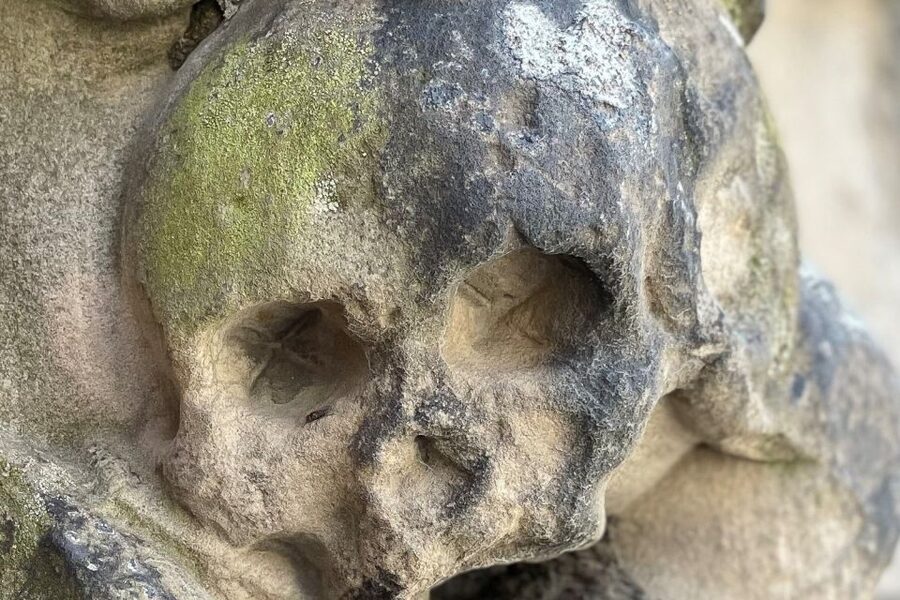
- A medieval cemetery beneath the city: Learn how a burial ground became part of the modern urban fabric.
- A former hangman’s street: Slip into a side lane lined with half-timbered houses and hear about its grim past.
- Mos Teutonicus explained: Discover the medieval practice of separating flesh from bone before burial.
- Old vampire defenses: Hear about methods once used to repel vampires and the undead.
- Private German-language guiding: Your group has a certified local guide, but the tour is conducted in German.
- Short, practical route: The 1.5-kilometer walk lasts 90 minutes and operates in rain or shine.
Starting at Altstadtmarkt with a darker purpose
The tour begins at Altstadtmarkt, one of the natural gathering points in central Braunschweig. Arrive five minutes early and look for a guide wearing a LED-display backpack marked with GetYourGuide and Braunschweig. The guide waits up to 30 minutes, but arriving on time keeps the group together and gives you the full storytelling period.
From the start, the tone is likely to be more historical than frightening. You will hear about the beliefs, fears, and practical problems that shaped medieval life. Ghosts and vampires provide the hook, but the useful part is seeing how people once explained illness, death, strange sounds, and bodies that did not appear to rest peacefully.
This opening also helps you get oriented in central Braunschweig. Since the route ends at Kohlmarkt and covers only about 1.5 kilometers, you do not need a full evening or special transport plan. It fits neatly before dinner, after a day of sightseeing, or as a short introduction to the older center.
A few more tours and experiences worth a look
- Braunschweig: Private City Walking Tour with Certified Guide
★ 4.8 · 35 reviews - Quedlinburg UNESCO World Heritage Group Tour (private)
★ 4.6 · 32 reviews - Quedlinburg: Guided City Walk – Highlights tour (private)
★ 4.7 · 12 reviews
Walking above a medieval cemetery
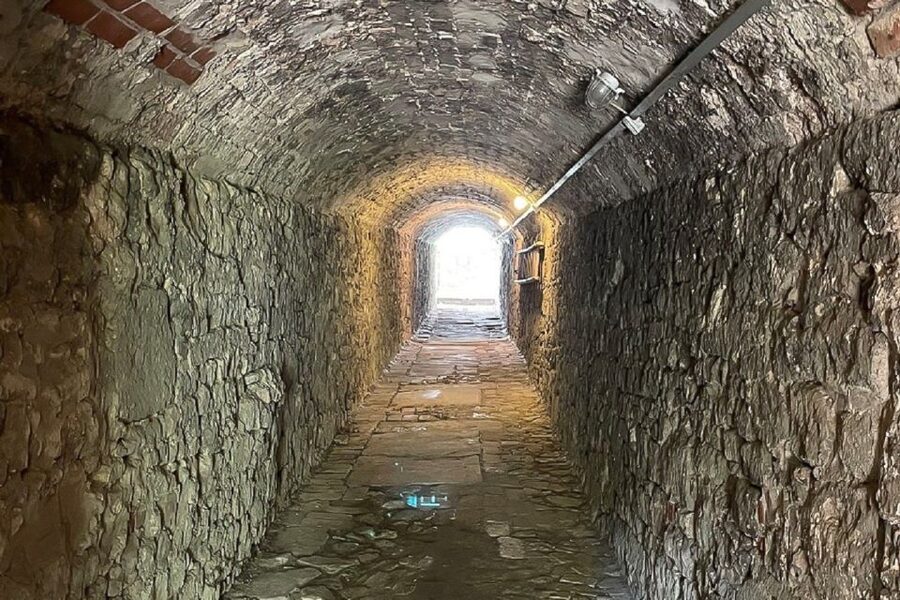
The cemetery is the tour’s most distinctive stop. It is not presented as a grand, open burial ground that you can explore on your own. Instead, you learn that a medieval cemetery lies beneath the streets of today’s city. That change in setting gives the stop its power: ordinary urban ground gains another layer once you know what lies below it.
I like this kind of storytelling because it connects supernatural legend with physical history. A ghost story can feel vague, but a burial ground beneath your feet gives the subject a firm place. Your guide can explain how burial customs and local ideas about the dead shaped the stories later told about restless bodies and returning spirits.
The cemetery section also introduces the tour’s interest in how people were buried, not just what they feared. You will hear about gruesome methods and superstitions that may seem strange now but once served as attempts to control death and protect the living.
Do not expect a long archaeological visit or a chance to enter a separate underground site. The attraction here is the guide’s explanation and the setting on the city walk. If you want a museum display or visible ruins, this part may feel light. If you enjoy learning what survives beneath familiar streets, it is likely to be one of the strongest moments.
Entering the hangman’s half-timbered lane
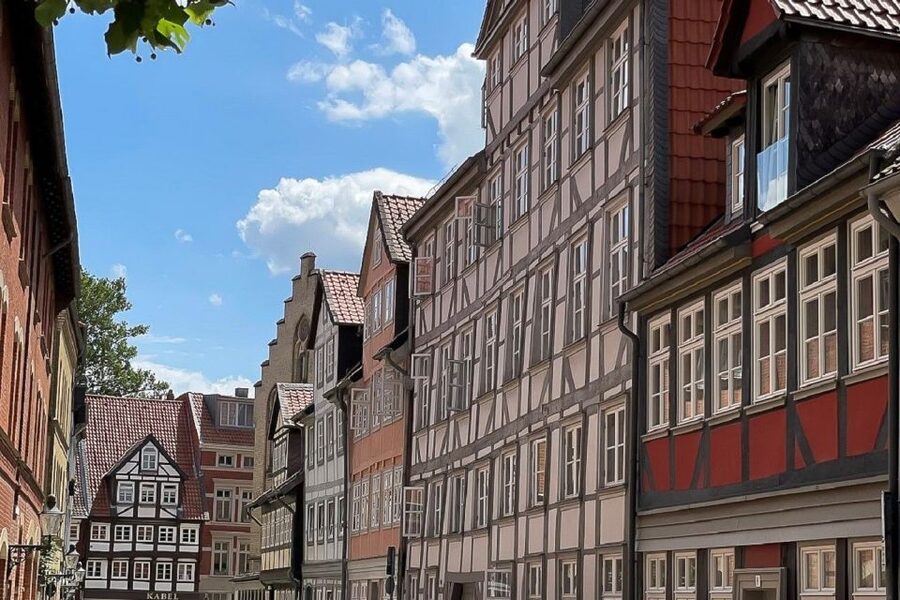
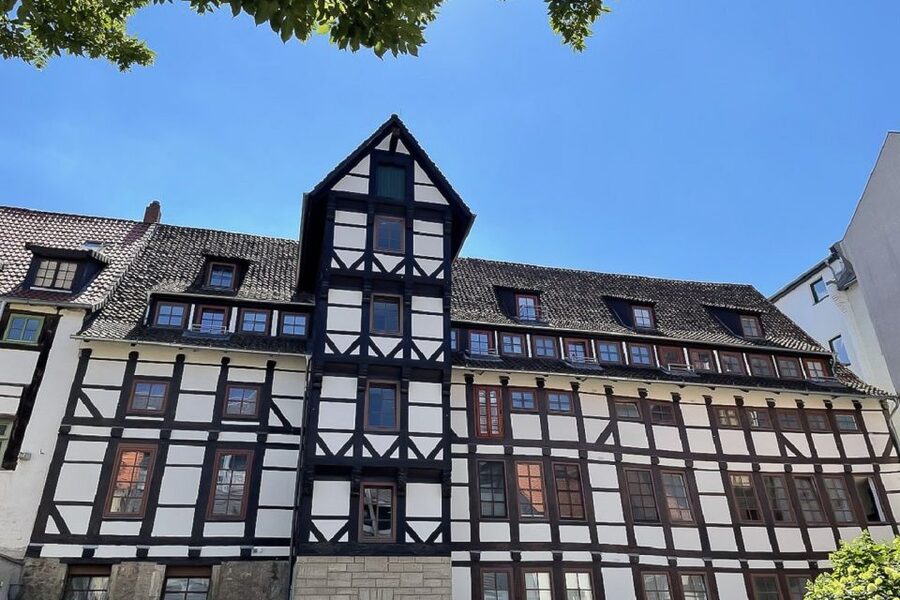
The route then moves into a side street associated with Braunschweig’s former hangman. The lane is lined with old half-timbered houses, giving the story a strong visual setting. You are not simply hearing about an executioner in an abstract lecture. You are standing in a place connected with an unpopular but necessary medieval occupation.
That detail helps explain the social world behind the legends. The hangman often lived apart from respectable society, and his work carried fear and stigma. A narrow lane of old houses makes it easier to picture the separation between ordinary townspeople and those who dealt with punishment, death, and the body.
The stop should appeal to anyone who likes the less polished side of urban history. It is not a story about grand rulers or decorated churches. Instead, it focuses on a person whose work reveals how the city handled crime and public order.
The practical limitation is that the experience depends on listening. There is no promise of a preserved hangman’s home, a dramatic reenactment, or a prop-filled exhibit. You will get the most from this stop if you enjoy short explanations tied to architecture and place.
One of Braunschweig’s oldest houses
The walk continues to one of the oldest houses in Braunschweig. The exact building is not identified in the available details, so you should treat this as a guided exterior stop rather than assume there is a scheduled interior visit. The value comes from placing the house within the city’s medieval past and linking it to the tour’s discussion of death and burial.
Old houses work especially well on a ghost walk because they make the passage of time visible. Timber, narrow streets, and surviving façades can seem quiet today, while the guide supplies the harsher stories associated with earlier generations. This is also a good chance to look up from the folklore and notice the city’s older building traditions.
The house stop adds balance. Without it, the tour might feel like a string of supernatural tales. With it, the walk gives you a bit of architectural context and a sense of Braunschweig as a real medieval town, not just a stage for vampire stories.
Something different for another day:
- Night Watchman Tour through Quedlinburg
★ 4.5 · 1,040 reviews - Premiumstadtführung (historische Altstadt und Schlossberg)
★ 4.4 · 627 reviews - Goslar: Tausend Schritte durch die Altstadt
★ 4.7 · 417 reviews - Quedlinburg: Guided City Highlights Walking Tour
★ 4.5 · 353 reviews
Mos Teutonicus and the practical side of burial
One of the most striking subjects is Mos Teutonicus, a medieval burial method involving the treatment of a body so that flesh and bones could be transported or buried separately. The subject is unsettling, but it shows how burial practices were shaped by distance, status, custom, and the limits of medieval preservation.
This is where the tour moves beyond simple spooky entertainment. You are encouraged to think about the physical realities of death before modern medicine, refrigeration, and public health systems. The method may sound shocking to modern ears, yet the guide’s explanation places it within the customs of its period.
I find this kind of detail more useful than a generic story about a haunted building. It gives you a specific practice to remember and helps explain why unusual burial methods could lead to fears about bodies returning from the grave. If you prefer gentle sightseeing, this topic may be too graphic. The tour is plainly designed for people comfortable with grim material.
The subject also connects directly with the cemetery stop. First, you learn that a burial ground exists beneath the modern city. Then you hear how bodies were handled and what people feared might happen after burial. The route builds its theme through related details rather than presenting isolated scares.
Blood, vampires, and the fear of the undead
The final part of the walk turns to beliefs about vampires, ghosts, witches, and zombies. You will hear that drinking blood was once viewed as a natural source of energy, along with other old ideas about the body and supernatural forces.
The most practical feature is the chance to learn ancient ways of repelling vampires and the undead. The supplied details do not specify every technique, so you should expect the guide to explain the beliefs and practices rather than assume a hands-on demonstration. Think of this as folklore explained in its historical setting, with a little dark humor likely built into the presentation.
The word zombie can suggest modern popular culture, but this experience focuses on older ideas about the dead returning or causing harm. That distinction matters. You are not booking a movie-themed attraction. You are hearing how communities interpreted death, illness, and unusual behavior before modern explanations were available.
The tour’s strongest praise centers on its storytelling and information. One five-star comment calls it highly exciting and praises the many stories and facts. That is a useful clue about the experience: the value rests on the guide’s ability to make connected tales memorable, not on special effects.
Finishing at Kohlmarkt
The walk ends at Kohlmarkt, back in central Braunschweig. The activity ends at the meeting point area rather than at a distant suburb, so you remain close to the city’s main sights and services. You can continue exploring on foot or arrange your next stop without needing a taxi or local bus.
The ending is practical rather than theatrical. There is no stated final performance, scare, or meal. Instead, you finish with the main themes in place: medieval burial grounds, execution, old houses, burial methods, blood lore, and defenses against the undead.
That makes the tour easy to add to a larger day. At 90 minutes, it does not take over your schedule. I would place it after you have seen some of central Braunschweig in daylight, since recognizing the streets and buildings can make the darker stories easier to picture.
What the private format adds
The price is $113 per group of up to 25 people, not $113 per person. For a large family, school group, club, or group of friends, that can be good value. A full group of 25 works out to roughly $4.50 per person, while a smaller group of two pays much more per head.
The private format gives you your own group and a live certified local guide. That matters on a story-based walk because you can ask for clarification, especially around unfamiliar German terms or burial customs. It also means you are not automatically mixed with strangers.
The tradeoff is the fixed group price. A solo visitor or couple may find the cost harder to justify than a large group. Since the tour is in German, a private booking may be particularly useful if everyone in your party has similar language skills. It would be less useful if only one person can follow German well.
The 5/5 score from four ratings is encouraging, especially because the strongest praise is specific: exciting stories and lots of information. The sample does not provide a broad range of opinions, so I would read the rating as a positive signal about the guide’s storytelling rather than proof that every visitor will love the subject matter.
Comfort, weather, and access
Wear comfortable shoes and clothing. The route is only 1.5 kilometers, but you will be walking and standing while listening. Comfortable footwear matters more than dressy clothes, especially on old streets or in wet weather.
The tour operates rain or shine, so check the forecast and bring suitable outerwear. There is no hotel pickup or drop-off, and food and drinks are not included. Plan a snack or meal separately before or after the walk.
The activity can be done barrier-free, which is useful for people who need an accessible route. Still, the exact street conditions and stopping points are not described, so anyone with specific mobility needs should confirm the details before booking.
Video and audio recording are not allowed. Bring your attention instead of a recording device, and consider writing down unusual terms after the tour if you want to remember them. The guide’s spoken explanation is the central part of the experience.
Who will enjoy this dark-history walk
I would recommend this tour to adults and older children who enjoy folklore, medieval customs, historic streets, and stories about death. It is a good fit if you want a short local experience that adds an unusual angle to a city visit.
It also suits groups looking for a shared activity. The private price becomes more attractive as your group grows, and a private setting lets your party set the pace of questions and discussion within the 90-minute schedule.
Children under eight are not allowed. Older children may enjoy the vampire and ghost theme, but the subjects of execution, gruesome burial, blood, and the undead may be too intense for some families. Use your judgment rather than treating the supernatural label as proof that the tour is child-friendly.
You should skip it if you need an English-language tour, dislike graphic historical subjects, or want a dramatic haunted attraction with actors and special effects. The language is German, the format is a walking tour, and the emphasis is on stories and information.
Should you book it?
Book this Braunschweig walk if you want local history with a dark twist, can follow German, and are traveling with enough people to make the group price worthwhile. The medieval cemetery beneath the streets, the hangman’s lane, and the explanation of Mos Teutonicus give the tour more substance than a standard ghost-story stroll.
I would be more cautious if you are booking for only one or two people, need English guiding, or prefer light folklore without grisly details. For the right group, though, the short route and strong praise for the storytelling make this a memorable way to see central Braunschweig after the usual daytime sights.
FAQ
How long is the Braunschweig ghosts, witches, and vampires tour?
The walking tour lasts 1.5 hours and covers about 1.5 kilometers.
What language is the tour conducted in?
The live tour guide speaks German.
Where does the tour start and finish?
The tour starts at Altstadtmarkt and ends at Kohlmarkt. The activity ends back at the meeting point area.
How large can the private group be?
The private tour is available for a group of up to 25 people.
Is the tour suitable for young children?
No. Children under eight years old are not permitted on the tour.
What should I bring, and what is not allowed?
Bring comfortable shoes and comfortable clothing. Video recording and audio recording are not allowed.
Just added around Goslar
- Braunschweig: Private Tour through the history of crime★ 4.5 · 11 reviews
- Quedlinburg: Guided City Walk – Highlights tour (private)★ 4.7 · 12 reviews
- Goslar: Executioner Caspar Kruse III. – If you dare!★ 4.8 · 12 reviews
- Goslar: Witches – From delusion to myth★ 4.7 · 16 reviews
- Braunschweig’s Mystery Morning: Breakfast & Escape Game★ 4.4 · 18 reviews
- Goslar: Rathausführung – historisch & multimedial★ 4.6 · 21 reviews
- Goslar: Ganz schön gruselig – das Mittelalter wird lebendig!★ 4.2 · 26 reviews
- Quedlinburg UNESCO World Heritage Group Tour (private)★ 4.6 · 32 reviews
Goslar Tours, compared.
Premiumstadtführung (historische Altstadt und Schlossberg)
Read our review →
Quedlinburg: Guided City Highlights Walking Tour
Read our review →
Quedlinburg: Historical Old Town Evening Walking Tour
Read our review →
Braunschweig: Guided Walking Tour with Food Tastings
Read our review →
Braunschweig: Private City Walking Tour with Certified Guide
Read our review →Browse the lists this tour appears in