
Reviewed · STREET ART
Berlin: Street Art and Alternative Tour
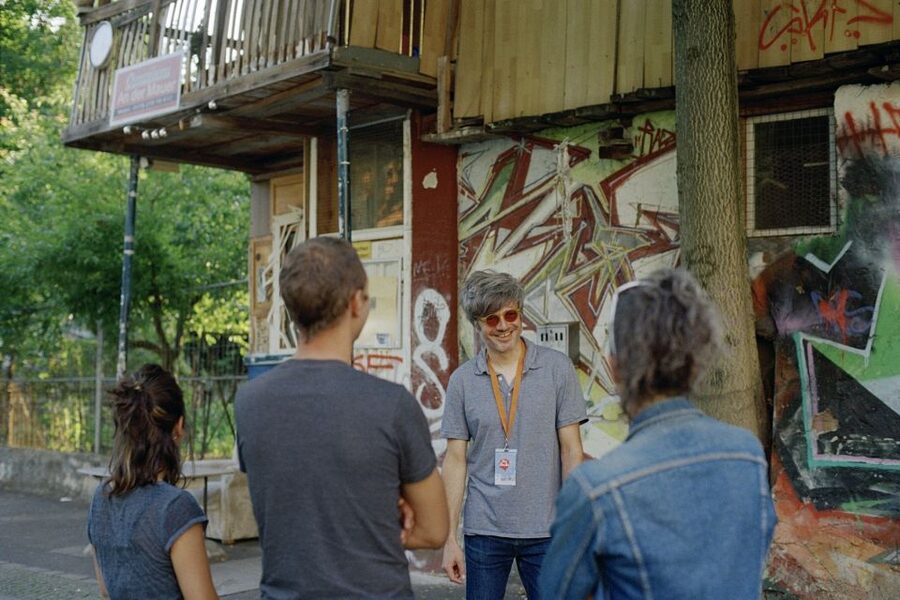
Berlin’s walls still argue with the past. This three-hour walking tour connects street art, Cold War division, post-1989 change, and modern gentrification in Kreuzberg, Friedrichshain, and parts of Mitte. I like its focus on the ideas behind the paint, not just the paint itself. I also like the small-group format and the choice of French or Italian guides, including praised guides such as Antonella, Iacopo, Martin, and Marie.
The price is $31 per person, which is fair for three hours with a live guide. You will need to buy a separate 24-hour AB public transport ticket, so factor that into the real cost. The meeting point can vary by booking option, and one useful tip from the tour experience is to check it carefully before setting out.
In This Review
- Key points at a glance
- Why Berlin street art needs a history lesson
- Starting in Kreuzberg, Berlin’s alternative quarter
- From small pieces to giant walls
- The East Side Gallery and the surviving Wall
- Friedrichshain and the post-Wall city
- The quieter art of Mitte
- What the guides add
- The real cost: $31 plus public transport
- Who should book this walk?
- Final verdict: A smart choice for curious Berlin visitors
- FAQ
- How long does the Berlin Street Art and Alternative Tour last?
- How much does the tour cost?
- Which areas does the tour visit?
- Is the East Side Gallery included?
- What languages are available?
- Is this a walking tour?
- Is public transportation included in the price?
- What should I bring?
- Can I cancel for a full refund?
- Can I reserve the tour without paying immediately?
Key points at a glance
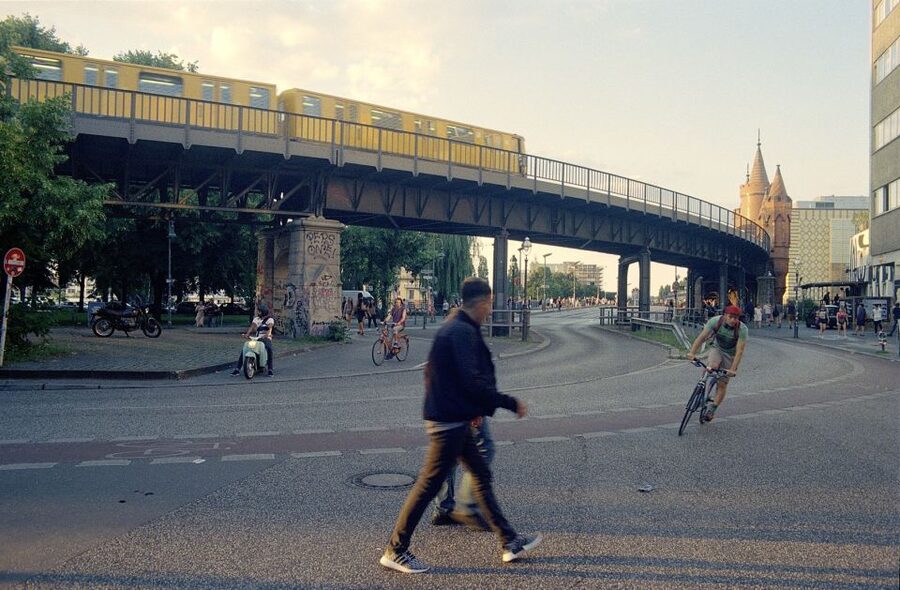
- Cold War scars become an outdoor gallery: The tour links Berlin’s divided past with the murals, tags, and political art that followed reunification.
- Kreuzberg gets the main spotlight: You walk through one of Berlin’s best-known alternative quarters and examine how art, activism, and neighborhood change overlap.
- East Side Gallery adds scale and history: Large works painted along a surviving section of the Wall help explain why public art became so important in Berlin.
- Mitte offers smaller discoveries: The tour also points out pieces tucked into corners, courtyards, and side streets that are easy to miss on a standard sightseeing route.
- French and Italian guidance is a major strength: Guides explain complicated history in an accessible way and invite questions.
- Bring good walking shoes and a transit ticket: This is a three-hour urban walk that uses public transportation, not a stationary gallery visit.
Why Berlin street art needs a history lesson
Berlin street art can look like a colorful scavenger hunt, but the best parts carry political weight. This tour explains how the city’s division into East and West shaped its alternative culture, then follows the changes that came after the Wall fell in 1989.
That context matters. Without it, a giant mural may simply look impressive. With it, you begin to see the city’s walls as records of protest, identity, freedom, and conflict over who gets to shape a neighborhood.
The tour also explains the 1990s revival of Berlin. After reunification, vacant spaces and damaged areas gave artists and alternative groups room to work. Over time, the same appeal attracted investment, new businesses, and rising pressure from gentrification.
I like this approach because it avoids treating street art as decoration alone. You get the colors, but you also get the arguments behind them. The guide helps you connect a painted wall with the economic and social changes taking place around it.
A few more tours and experiences worth a look
- Berlin: City Street Art Guided Walking Tour
★ 4.8 · 886 reviews - Berlin: 3-Hour Street Art Tour
★ 4.7 · 778 reviews - Berlin Street Art Walking Tour – Off The Grid
★ 5.0 · 270 reviews
Starting in Kreuzberg, Berlin’s alternative quarter
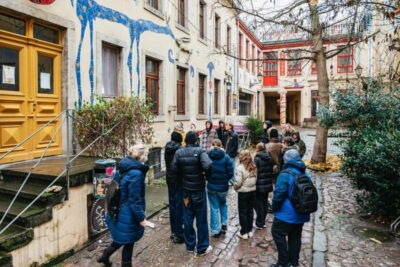
Kreuzberg is the heart of the experience. The district is closely tied to Berlin’s alternative identity, and the tour uses its streets to show how art grows out of local politics and daily life.
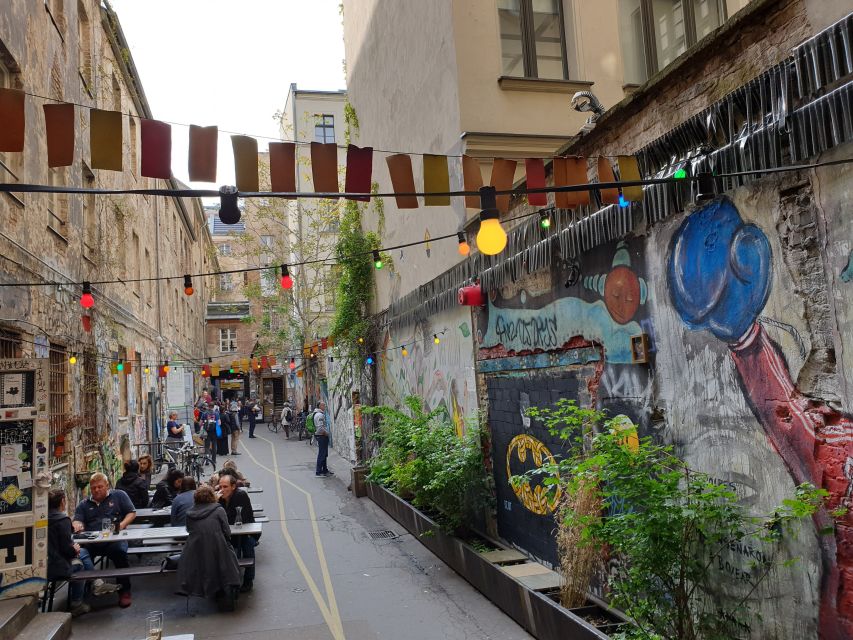
Expect to walk through streets where large pieces appear on building walls, while smaller works sit in corners, courtyards, and less obvious spaces. The point is not simply to check off famous murals. You are encouraged to notice how the art interacts with the buildings and the surrounding neighborhood.
Kreuzberg also gives the tour its strongest human scale. You are not only looking at a wall from a distance. You are walking through a district whose identity has shifted over several decades. The guide explains the connection between underground culture, social demands, architecture, and current change.
Marie received particular praise for making the area easy to understand while answering questions and adding current anecdotes. That is useful in Kreuzberg, where a short walk can raise complicated questions. Why is a neighborhood known for protest now attracting investment? What happens when art that once challenged the system becomes part of a city’s tourist image?
The tour does not promise simple answers. That is a good thing. Berlin’s alternative culture is not frozen in the 1990s, and the guide’s job is to show you that it keeps changing.
One practical point: the meeting place may not be the same as the first area you visit. A past participant wondered why the group did not meet directly at Kottbusser Tor when the tour began there. Check the exact meeting instructions before leaving your hotel, especially if you are relying on the AB transit system.
From small pieces to giant walls
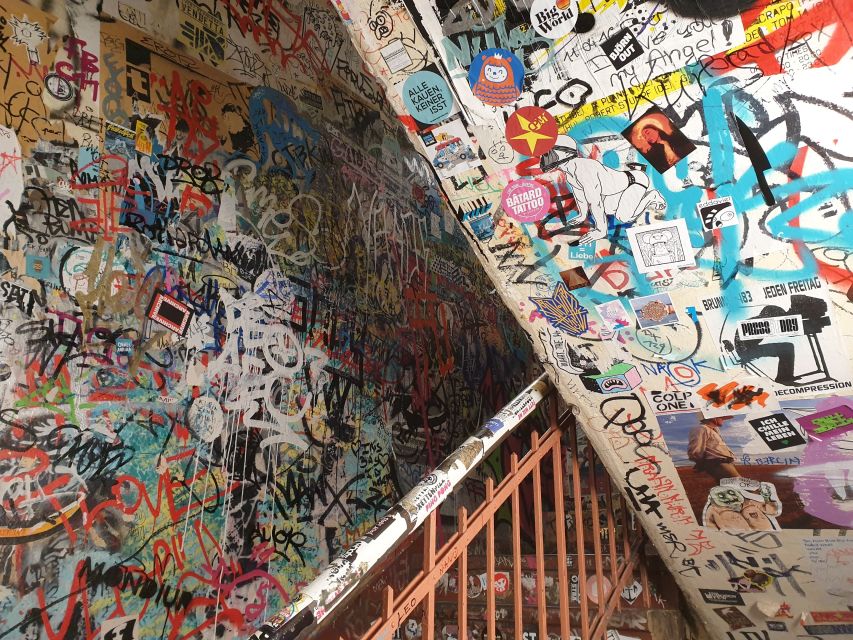
A useful feature of the route is its range. You see enormous works that dominate a building, then smaller pieces that can disappear into the city unless someone points them out.
That contrast helps you understand how street art functions. A large mural can address an entire neighborhood or become a public symbol. A tiny piece in a corner may feel more personal, temporary, or playful. The guide gives these different forms a place in the wider story.
I would not expect every work to remain unchanged. Urban art is temporary by nature. Paint fades, walls are cleaned, buildings change owners, and new pieces cover old ones. The value of the walk is not just in seeing a fixed collection. It is in learning how to read Berlin’s streets as an evolving gallery.
This is also where a guide adds real value. You can find famous Berlin street art on your own, but you may not know which piece connects to a political movement or why a particular location matters. The tour’s strongest moments come when a work becomes part of a larger story.
The East Side Gallery and the surviving Wall
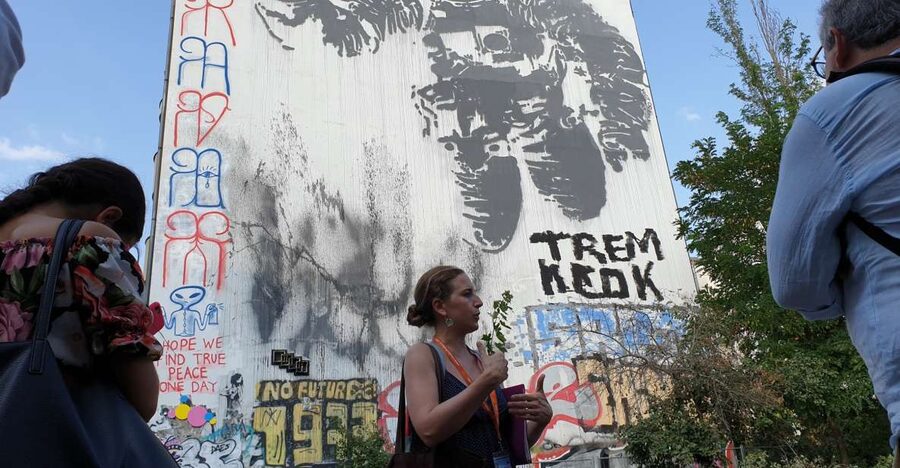
The East Side Gallery provides the tour’s clearest link between art and the Cold War. This open-air display occupies a long surviving section of the Berlin Wall, covered with works created after the Wall’s fall.
Here, the scale changes again. Instead of small pieces scattered through side streets, you see a long public stretch where art and political memory share the same surface. It is one of the places where Berlin’s past is impossible to ignore, even when the artwork is playful or brightly colored.
The stop is valuable for first-time visitors because it makes the Wall’s physical presence easier to grasp. Museums and history books can explain division, but standing beside a remaining section gives the subject a more direct force.
At the same time, you should know that the East Side Gallery is one of Berlin’s best-known sights. It can feel more public and organized than the less obvious corners of Kreuzberg or Mitte. That is not a flaw, but it does create a contrast. The tour works best because it places this famous section alongside less formal examples of urban art.
The guide also helps explain the tension between preservation and change. The Wall is a historic object, an art surface, and a public space. Those roles do not always fit neatly together.
Something different for another day:
- Berlin: Reichstag, Dome and Government District Guided Tour
★ 4.7 · 18,288 reviews - Berlin: 1-Hour City Tour by Boat with Guaranteed Seating
★ 4.3 · 16,993 reviews - Berlin: Boat Tour Along the River Spree
★ 4.4 · 11,252 reviews - Discover Berlin Half-Day Walking Tour
★ 5.0 · 9,624 reviews
Friedrichshain and the post-Wall city
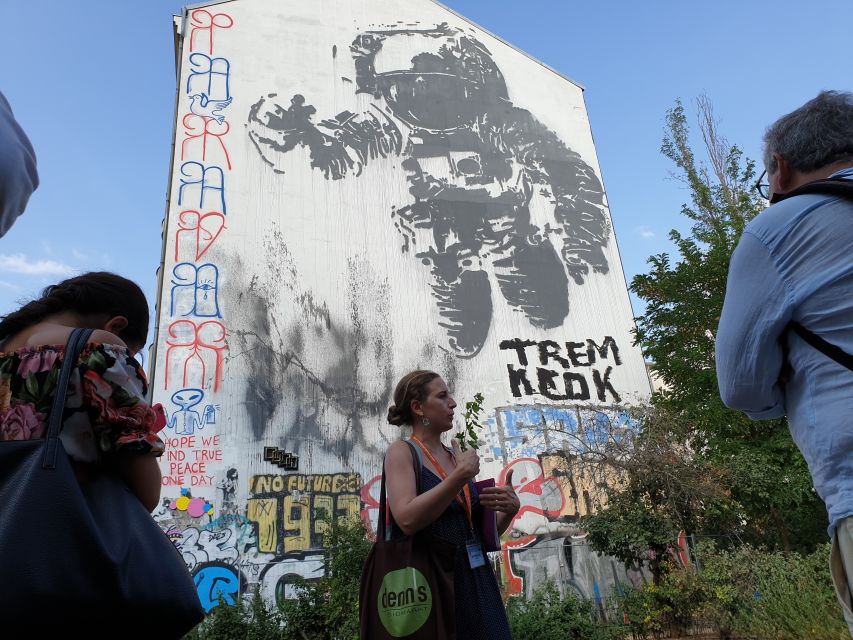
The route includes Friedrichshain, another important area for understanding Berlin after reunification. Its connection with the East Side Gallery makes it a natural part of a tour about the border between East and West.
Here, the tour looks at how the areas near the former Wall changed after 1989. The story is not only about political freedom. It is also about economic shifts, new uses for empty or damaged spaces, and the growth of Berlin’s alternative reputation.
I like that the tour treats the 1990s as a turning point rather than a footnote. Berlin’s revival did not happen by magic. Artists and alternative groups helped create a new identity for parts of the city, and that identity later became a reason for more people and money to arrive.
This is an important lesson for you as a visitor. The raw, rebellious Berlin you may expect from photographs is not the whole city. Some of that culture remains, but it exists beside redevelopment and changing rents. A good guide makes that tension visible without turning the walk into a lecture about urban policy.
The quieter art of Mitte
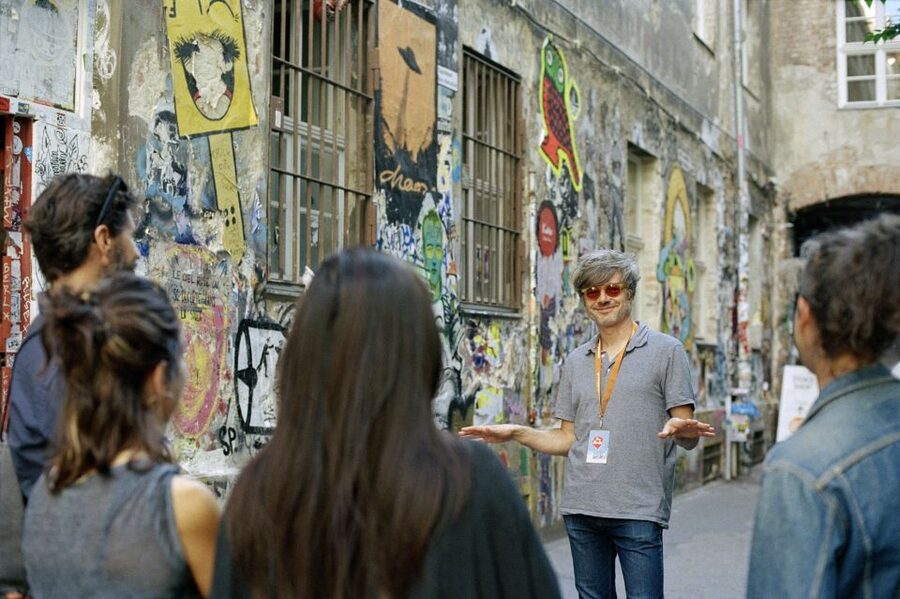
Mitte adds another layer to the route. The tour points out smaller works in corners, courtyards, and along streets where a standard sightseeing walk might pass without noticing them.
This part of the experience may appeal most to people who enjoy looking closely. You are not only waiting for a giant mural to appear. You are learning to scan doorways, walls, and side passages for signs of the city’s creative life.
The drawback is that small street art can be hard to predict. A piece may be temporary, partially covered, or less striking than the major murals. You should approach this section with curiosity rather than expecting a nonstop parade of famous images.
Still, it helps balance the tour. Kreuzberg and East Side Gallery provide strong headline sights. Mitte shows you the quieter, more informal side of urban art. Together, the districts make the experience feel like a story about a city, not a collection of photo stops.
What the guides add
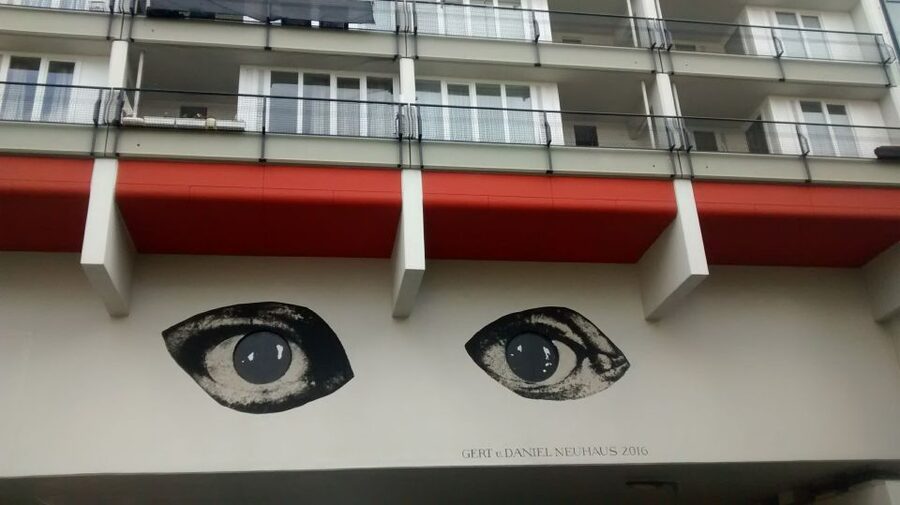
The guide is central to the tour’s value. You can walk through Kreuzberg and Friedrichshain without help, but you cannot easily know the social and political meaning of what you are seeing.
The strongest feedback focuses on guides who explain Berlin with passion while staying approachable. Antonella and Iacopo were praised for their preparation and for guiding the group through city history with energy. Martin was noted for sharing his affection for Berlin in a clear, accessible way. Marie earned praise for her warmth, current anecdotes, and willingness to answer questions.
Those details tell you what kind of experience to expect. This is not a silent walk from mural to mural. You will hear history, ask questions, and get explanations that connect street art with architecture, social demands, and neighborhood change.
The available languages are French and Italian. That is a major reason to choose this tour if you prefer one of those languages. A complicated subject becomes easier to follow when the guide can explain it naturally and respond to questions without a language barrier.
The experience is also better suited to people who enjoy interpretation than to people who only want photographs. The artwork is the entry point, but the history and politics are the main meal.
The real cost: $31 plus public transport
At $31 per person, the tour offers solid value for a three-hour guided walk, especially if you want more than a quick look at the East Side Gallery. The price includes the walking tour and a French- or Italian-speaking guide.
It does not include the required 24-hour AB public transport ticket. Since the route uses public transportation, you must buy that ticket separately. This is not a large complication, but it changes the final budget and deserves attention when you compare tours.
I see the transport requirement as both a cost and a useful part of the experience. Berlin is spread across several districts, and public transport makes it possible to connect Kreuzberg, Friedrichshain, East Side Gallery, and parts of Mitte within a three-hour route.
The booking terms are also flexible. You can reserve now and pay later, and cancellation is free up to 24 hours before the start for a full refund. Those policies are useful if your Berlin schedule is still shifting, but the main decision should rest on your interest in street art and urban history.
Who should book this walk?
I would recommend it to first-time visitors who want to see a side of Berlin beyond major monuments. It is also a good choice for returning visitors who have already seen the Brandenburg Gate and museum district and want a more social, political view of the city.
The tour suits you if you like:
- Urban art with historical and political context
- Walking through neighborhoods rather than viewing the city from a bus
- Small-group tours with time for questions
- French or Italian guiding
- Stories about Berlin after the Wall fell
- A mix of famous locations and less obvious street pieces
I would think twice if you want a purely visual street-art outing with lots of free time for photographs. The three-hour schedule has a clear educational purpose, and the guide’s explanations are a large part of what you pay for.
You should also be ready to walk outdoors for three hours. Comfortable shoes are essential. The route uses public transport, and the meeting point may vary, so read the booking information closely.
Final verdict: A smart choice for curious Berlin visitors
I would book this tour if you want to understand why Berlin became a center of alternative culture, not simply photograph its murals. Its best quality is the connection between art and history. Kreuzberg shows the living neighborhood, Friedrichshain and the East Side Gallery connect art to the former border, and Mitte adds smaller pieces that reward attention.
The strongest guides make the difference. Antonella, Iacopo, Martin, and Marie are praised for clear explanations, warmth, passion, and current observations. At $31, the tour is reasonably priced, but remember to add the 24-hour AB ticket.
Choose it for context, conversation, and a different view of Berlin. Skip it only if you want a short list of famous murals without much discussion. For curious visitors, this is a thoughtful way to see the city’s walls as part of its ongoing story.
FAQ
How long does the Berlin Street Art and Alternative Tour last?
The tour lasts three hours.
How much does the tour cost?
The listed price is $31 per person.
Which areas does the tour visit?
The experience focuses on Kreuzberg and Friedrichshain, including the East Side Gallery, and also points out street art in parts of Mitte.
Is the East Side Gallery included?
Yes. Visiting the East Side Gallery is one of the tour highlights.
What languages are available?
The live guide is available in French or Italian.
Is this a walking tour?
Yes. It is a small-group walking tour, with public transportation used during the route.
Is public transportation included in the price?
No. You need to purchase a separate 24-hour AB public transport ticket.
What should I bring?
Bring comfortable shoes. You will be walking for three hours.
Can I cancel for a full refund?
Yes. You can cancel up to 24 hours in advance for a full refund.
Can I reserve the tour without paying immediately?
Yes. The reserve-now, pay-later option lets you hold a place without paying at the time of booking.
Just added around Berlin
- Berlin: Private Guided Tour of the Main Sights★ 5.0 · 13 reviews
- Private Highlights of Berlin Bike Tour★ 5.0 · 13 reviews
- Modern Berlin Private Walking Tour: Diverse, Vibrant and Exciting German Capital★ 5.0 · 13 reviews
- Tour in Berlin from Warnemünde and Rostock Cruise Port★ 4.1 · 13 reviews
- Berlin: Stasi Museum Private Guided Tour with Entry Ticket★ 4.8 · 13 reviews
- Private Food Tour Experience with a born and bred Berliner★ 5.0 · 14 reviews
- Berlin: Rheinsberg Palace Entrance Ticket★ 4.8 · 14 reviews
- Berlin in one day – day tour with an expert guide★ 5.0 · 14 reviews
Street Art, compared.

Neustadt District Street Art Guided Walking Tour
Read our review →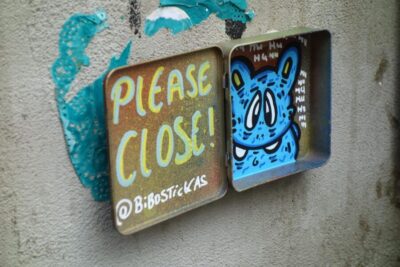

East Meets West: Berlin Food Culture & Street Art
Read our review →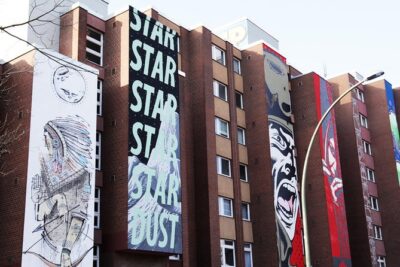
Browse the lists this tour appears in