
Reviewed · FRANKFURT TOURS
7-Day Taste of Central Europe Tour to Paris, Amsterdam, Brussels and more!
Europe in seven busy days. This tour gives you a quick, well-organized taste of Germany, the Netherlands, Belgium, France, and Luxembourg, with hotels, breakfasts, coach transport, and a tour manager arranged for you. I especially like the route’s variety: you move from Beethoven and Gothic cathedrals to Dutch windmills, Champagne country, Roman ruins, and Parisian boulevards.
I also like the small maximum group of 15, which can make a coach tour feel more personal, and the useful mix of guided walks and free time. The main caution is pace. You will see many famous places, but often for about an hour, and Paris hotel arrangements have been uneven on past departures.
In This Review
- Key points at a glance
- Who this fast Central Europe tour suits
- Day 1: Beethoven, Cologne Cathedral, and the road west
- Day 2: Windmills, canals, and Amsterdam’s big sights
- Day 3: Brussels in miniature, then Paris
- Day 4: The grand Paris circuit and Versailles
- Day 5: The Louvre, Seine, and Paris after dark
- Day 6: Reims and Luxembourg’s old fortifications
- Day 7: Roman Trier, the Rhine and Frankfurt
- Hotels, coach travel, and guide quality
- What the $968.14 price really buys
- Practical details before you book
- Should you book this seven-day European sampler?
- FAQ
- Where does the tour start and finish?
- How many nights of accommodation are included?
- Are meals included?
- What countries does the route visit?
- Is the tour conducted in English?
- How much luggage can I bring?
- Is Keukenhof Gardens available on every departure?
Key points at a glance
- Five countries in seven days: Germany, the Netherlands, Belgium, France, and Luxembourg all appear on one compact route.
- Paris gets two days: The Louvre, Eiffel Tower, Versailles, the Seine, and the Champs-Élysées are all included or offered as options.
- Breakfast and hotels are covered: Six breakfasts and six nights in at least three-star hotels are included, though the Paris property may be less convenient.
- A true sampler tour: You see highlights rather than settling into local life, making this useful for a first European trip.
- The coach does the hard work: A modern air-conditioned bus links cities that would otherwise require several train bookings.
- Budget carefully: The $968.14 price does not cover most attraction tickets, lunches, dinners, drinks, optional activities, or the listed €70 gratuity.
Who this fast Central Europe tour suits
I would look at this trip as a European sampler platter. It is not designed for lingering over coffee in Amsterdam or spending three hours in one Paris museum. Instead, it lets you collect a generous set of first impressions, then decide which cities deserve a longer return visit.
For a first visit to Europe, that can be a smart trade. The route removes much of the planning burden, and the coach carries you across several borders while your tour manager handles hotel coordination and daily timing. You get organized sightseeing without having to study five national rail systems.
The tour is also a good fit if you prefer company while abroad. Solo participants have found it easy to meet people, and the maximum group size is listed as 15. That is considerably more manageable than a giant motorcoach group, although the operator can combine English and Chinese-speaking participants when numbers are low.
You should choose something slower if your main goal is local culture, long museum visits, or spontaneous evenings. The schedule is tightly packed, with several long driving days and regular departures back to the coach. One particularly practical warning: facilities may be separated by several hours on some road sections, so this is not ideal if you need frequent restroom stops.
A few more tours and experiences worth a look
- Central and Eastern Europe Highlights 7-Day Tour from Frankfurt
★ 4.5 · 54 reviews
Day 1: Beethoven, Cologne Cathedral, and the road west
The tour begins at Frankfurt Hauptbahnhof at 8:30 a.m. That meeting point is practical if you arrive by train or stay near Frankfurt’s main station, but you need to arrange your own lodging before the tour. The coach first heads to Bonn, the former capital of West Germany.
Bonn receives about an hour, enough for an orientation walk past the Rococo-fronted town hall and Beethoven-Haus, the composer’s birthplace. Admission to the stop is listed as free, but the short visit means you should think of it as an introduction rather than a full museum outing.
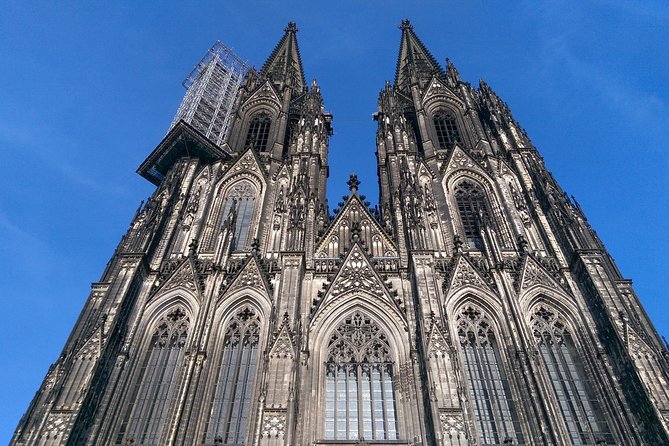
Next comes Cologne, where the cathedral provides the day’s major visual punch. Its Gothic towers and enormous interior make it one of the most rewarding short stops on the route. Admission to the cathedral is not included, so bring a little cash or a card if you want to enter under the applicable visiting arrangements.
You then have some free time for lunch, shopping, or a German beer before crossing into the Netherlands. That final phrase matters: Day 1 is not a gentle start. You are sightseeing, eating, and relocating across an international border in the same afternoon.
Day 2: Windmills, canals, and Amsterdam’s big sights
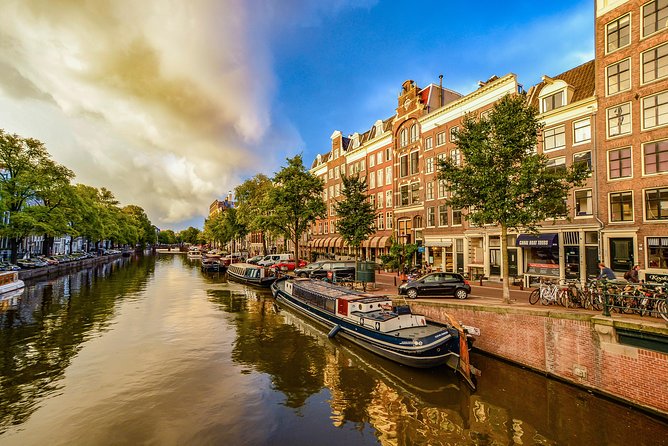
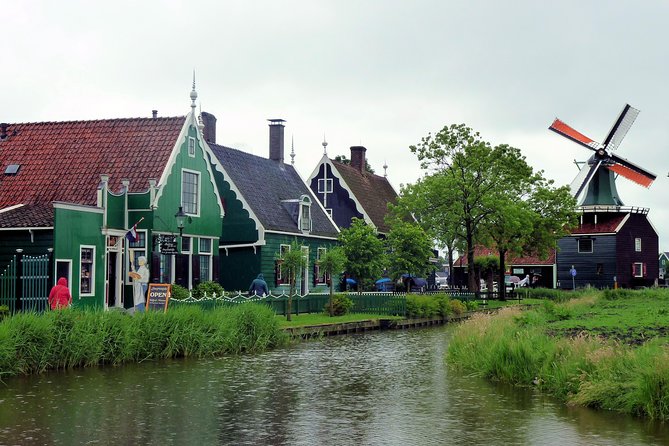
The second day combines rural Holland with central Amsterdam. At Zaanse Schans, you can see the traditional images many people associate with the Netherlands: windmills, clogs, and cheese. The stop lasts about an hour, so it works well for photographs and a quick look around, but it will not allow time to explore every building or workshop.
Back in Amsterdam, the group visits a diamond factory. The stop introduces cutting methods practiced in the city since the 16th century. This is a structured commercial visit, so shoppers interested in jewelry may appreciate it more than those hoping for extra time beside the canals.
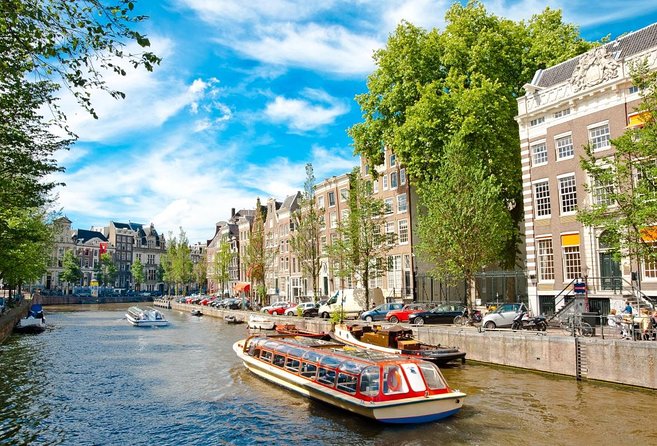
An optional one-hour canal cruise is a sensible add-on if you have never seen Amsterdam from the water. The canal ring gives you a different view of the narrow houses and bridges, and it can be less tiring than another walking circuit after a full day on the road.
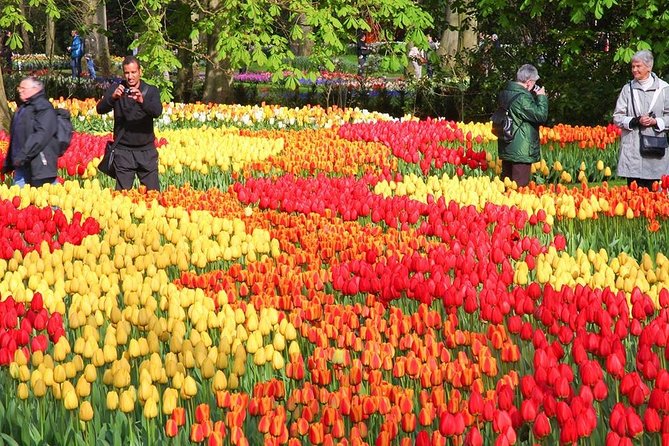
The schedule also includes Dam Square, home to the Royal Palace and a natural place for photos, shopping, or a quick meal. If you travel from mid-March to mid-May on the Red Line departure, Keukenhof Gardens is added, with more than seven million spring-flowering bulbs. That seasonal visit could be one of the tour’s most memorable stops, but it is not available year-round and admission is not included.
Day 3: Brussels in miniature, then Paris
The coach leaves Amsterdam for Brussels, stopping first at the Atomium. Built for the 1958 World’s Fair, this stainless-steel structure of spheres and tubes is one of Belgium’s most recognizable modern monuments. The visit is mainly a viewing stop, and the entrance ticket is extra if you want to go inside.
In central Brussels, the orientation walk covers the Grand Place and Manneken Pis. The Grand Place is the stronger of the two stops, with ornate historic buildings creating one of Europe’s most impressive public squares. Manneken Pis is much smaller than many first-time visitors expect, but its comic character has made it a city favorite.
You have free time for Belgian food, with chocolate, waffles, fries, and beer all tempting possibilities. The catch is time. Brussels gets a useful first look, not a full city experience, before the coach continues into France and on to Paris.
This is a recurring pattern: the route is excellent at showing you what a place feels like, but less successful if you want to explore its museums, neighborhoods, and evening life. I would use the free periods for one clear priority rather than trying to do everything.
Something different for another day:
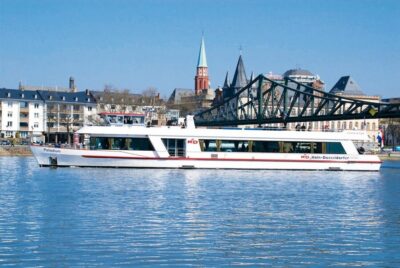
- Frankfurt: River Main Sightseeing Cruise with Commentary
★ 4.3 · 5,127 reviews - Frankfurt: Hop-On, Hop-Off Grand or Express Bus Ticket
★ 3.9 · 2,088 reviews - Frankfurt: 1-Hour Panorama Boat Cruise on the river Main
★ 4.4 · 1,822 reviews - Rhine Valley Castles: 1.5-Hour Boat Tour from Rüdesheim
★ 4.2 · 1,390 reviews
Day 4: The grand Paris circuit and Versailles
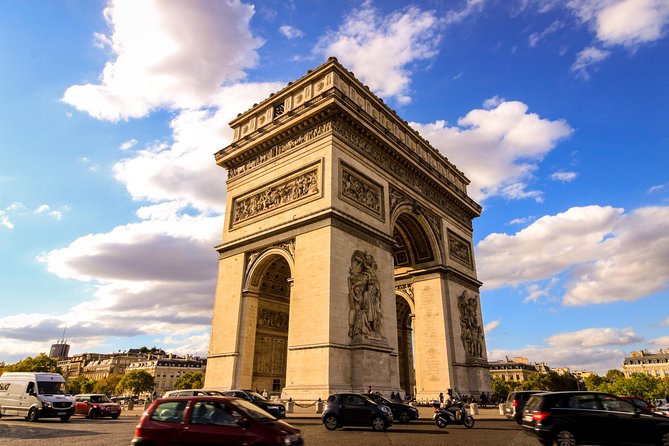
Paris receives two days, which is generous by the standards of this route. Day 4 begins with major landmarks along the Champs-Élysées, Place de la Concorde, and Arc de Triomphe. You see the grand ceremonial side of Paris, including the square tied closely to the French Revolution and the monument honoring those lost in the Revolution and Napoleonic wars.
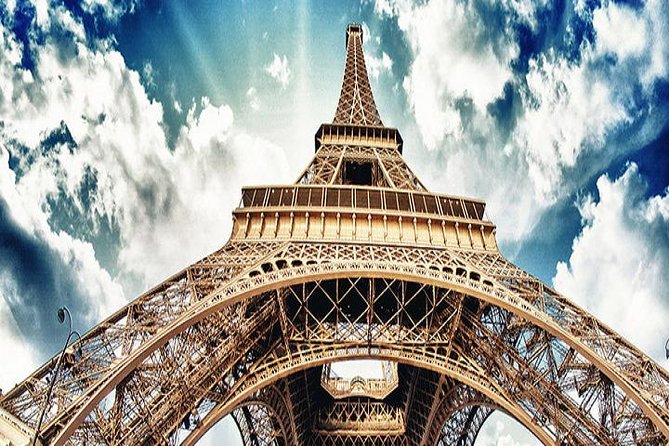
The program also includes L’Hôtel National des Invalides, where Napoleon’s tomb is located, followed by a stop at the Eiffel Tower. The Eiffel Tower visit is for viewing and photographs unless you choose an available paid option. The standard plan does not include climbing the tower, so do not assume you will reach the upper levels.
You then have a choice: spend time in the neighborhood and eat lunch, or use the opportunity to scale the Eiffel Tower if tickets and timing allow. This is one of the tour’s better design choices because it recognizes that people have different Paris priorities.
The afternoon continues to the Palace of Versailles, the royal residence until the Revolution began in 1789. Versailles is a major attraction, but one hour is a very short window for a palace and grounds of this scale. Entrance is not included, and an optional Paris evening show is available afterward.
This day may feel especially compressed. You are seeing the city by coach, walking through several major areas, and leaving central Paris for Versailles. I would keep expectations realistic and decide in advance which sights matter most.
Day 5: The Louvre, Seine, and Paris after dark
The Louvre is the headline stop on Day 5. You can see the Mona Lisa, Venus de Milo, and Winged Victory of Samothrace, but do not expect to cover the museum in an hour. The Louvre is vast, and even a guided gallery visit can only give you a focused route through its collections.
A guided gallery option may be worth the extra cost if you want context and a clear plan. Without one, it is easy to spend your entire visit trying to find the famous works. Admission is not included, so check the current arrangements before budgeting.
The Seine cruise offers a calmer change of pace. From the river, you can view Notre-Dame Cathedral, Pont Alexandre III, and other landmarks without fighting city traffic. It is one of the most enjoyable ways to use a limited Paris schedule, particularly after a morning in museum corridors.
The afternoon moves toward Palais Garnier and the Galeries Lafayette area. You can shop at the department stores or choose an optional French four-course dinner and show. Since meals are not included, this is also a chance to control your spending by choosing a café, quick meal, or supermarket option instead.
Past departures have had mixed Paris hotel experiences. Some participants found the Paris hotel below the standard of the other properties, with a location far from the center and limited nearby dining. That matters because a distant hotel can erase much of your free evening, especially after an already tiring day.
Day 6: Reims and Luxembourg’s old fortifications
The coach leaves Paris for Reims, passing through the Champagne region. Reims Cathedral is the principal stop, and its importance reaches beyond architecture: French kings were crowned there from the 11th century onward. It is a fitting place to connect the region’s religious and royal past with its better-known wine production.
You should not assume a Champagne tasting or vineyard visit is part of the base price. The route passes through the region, but the listed schedule centers on Reims Cathedral, and additional attraction tickets are generally extra.
Luxembourg City follows. The walking introduction includes Place de la Constitution and Pont Adolphe, with free time afterward to explore on your own. Luxembourg is a useful contrast to the larger capitals: compact, polished, and shaped by both modern institutions and older defensive works.
This is another long relocation day, but the change in scenery helps. You move from French cathedral country to a small grand duchy, then spend the night in Luxembourg. Hotel details are released only 24 to 48 hours before check-in, so you may not know the exact property far in advance.
Day 7: Roman Trier, the Rhine and Frankfurt
The final morning crosses back into Germany for Trier, described as the country’s oldest city. The Karl Marx Haus museum marks the philosopher’s birthplace, though the stop is presented as an exterior viewing opportunity and admission is not included.
Trier’s strongest sight is Porta Nigra, the best-preserved Roman city gate north of the Alps. The city cathedral is also part of the walking tour, including its association with the Holy Robe, said to be Christ’s tunic and displayed only occasionally. These stops give the final day real historical weight rather than making it only a drive back to Frankfurt.
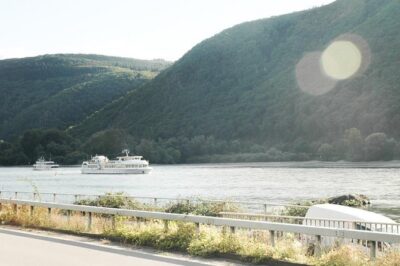
The route continues to Koblenz, where the Rhine and Mosel meet. You can have lunch beside the water and optionally add a Rhine boat cruise for broader views of the city and riverbanks. The cruise is not included, so check the day’s timing before committing.
The coach then passes through Rüdesheim, a wine-making town, before returning to Frankfurt’s Römerberg. The medieval town hall and plaza provide a pleasant finish, though the tour ends back at the original meeting point and does not provide accommodation on the final night.
Hotels, coach travel, and guide quality
The included hotels are at least three-star properties with private facilities, and twin, double, or single rooms are available. Six breakfasts are included, but lunch and dinner are not, so your food budget needs room for seven days of café meals, restaurant stops, and drinks.
The coach is modern, air-conditioned, and driven by a professional driver. That is a major part of the value. You avoid arranging separate trains between Frankfurt, Amsterdam, Brussels, Paris, Luxembourg, Trier, and the Rhine Valley, although you give up the freedom to linger.
Guide quality can shape the whole experience. Strong departures have included leaders such as Amanda, Lex Tang, Florian, and Uncle Ho, who were praised for being helpful, friendly, punctual, and attentive to landmarks. There has also been a serious complaint about an English-language departure where the guide spoke mostly Chinese and was difficult for some English speakers to understand.
The operator may combine English and Chinese groups if numbers are low. A bilingual tour leader is assigned in that situation, but if clear English commentary is essential for you, confirm the language arrangement before paying. A guide who adds useful local context can make these short stops much more rewarding; a poor match can leave you feeling like you are simply being moved from bus to bus.
What the $968.14 price really buys
At $968.14 per person, the base price is attractive for six nights, six breakfasts, intercity transport, a tour manager, and sightseeing across five countries. Hotels and transport alone can consume a large share of a self-planned European trip, especially when you add cross-border bookings and transfers.
Still, the headline price is not the final cost. You must add the €70 per-person gratuity, meals, drinks, attraction tickets, and optional activities. Louvre admission, Cologne Cathedral access, Zaanse Schans attractions, the Atomium, Versailles, and other listed stops may require extra payment.
The best value comes when you want convenience and range. The weakest value comes if you pay for many optional experiences but still feel rushed at each main sight. I would set aside a clear activity budget before departure and decide which paid stops are worth your limited time.
Practical details before you book
You meet at Frankfurt Main Station at 8:30 a.m. and return there at the end. The tour requires passport name, number, gender, date of birth, and nationality for every participant, and each passport must meet the six-month validity requirement stated by the operator.
Luggage is limited to one piece weighing no more than 30 kilograms, plus one small carry-on such as a purse, backpack, or camera bag. Rooming rules are specific: a twin room is standard, a double bed can be requested, and no triple rooms are arranged for groups of three.
Children under 18 must travel with an adult. One room can hold two adults and one child aged 2 to 11 without a separate bed, but other arrangements may bring an adult charge. Most people can participate, and the meeting point is near public transportation.
Cancellation is flexible only up to three full days before the start time. After that, refunds are not available, and late changes are not accepted. I would avoid booking nonrefundable connecting flights too tightly around the tour, especially because route changes can occur.
Should you book this seven-day European sampler?
Book it if you want a high-value first look at Central Europe, prefer organized transport, and are comfortable with early starts, short visits, and optional costs. Solo participants, first-time visitors, and people who want to compare several cities quickly are especially likely to appreciate it.
Skip it if Paris is your main reason for going and you want long museum visits or central accommodation. I would also choose another option if consistent English guiding is nonnegotiable unless the language setup is confirmed before departure.
For the right person, this is a practical introduction rather than a deep study of Europe. You will return with a camera full of landmarks, a sense of which cities deserve more time, and a much clearer idea of where to plan your next trip.
FAQ
Where does the tour start and finish?
It starts and ends at Frankfurt Main Hauptbahnhof, Am Hauptbahnhof, 60329 Frankfurt am Main, Germany. The listed start time is 8:30 a.m.
How many nights of accommodation are included?
Six nights in a minimum three-star hotel are included, with private facilities. Accommodation before the tour and on the final night in Frankfurt is not provided.
Are meals included?
Six breakfasts are included. Lunches, dinners, drinks, meal tips, and personal expenses are not included.
What countries does the route visit?
The route includes Germany, the Netherlands, Belgium, France, and Luxembourg.
Is the tour conducted in English?
English is offered, but the operator may combine English and Chinese-speaking groups when group numbers are low. A bilingual tour leader may then serve both language groups.
How much luggage can I bring?
You may bring one piece of luggage weighing up to 30 kilograms and one small hand-carry item, such as a purse, backpack, or camera bag.
Is Keukenhof Gardens available on every departure?
No. Keukenhof is included only on Red Line departures from mid-March to mid-May. Entrance is not included in the tour price.
Just added around Frankfurt
- Wiesbaden Biebrich: Outdoor Escape Game★ 4.7 · 13 reviews
- from Frankfurt – romantic Black Forest & brewery, private tour★ 5.0 · 13 reviews
- Frankfurt : Highlights & hidden Gems Private Walking Tour★ 4.6 · 13 reviews
- Discover the Heart of Frankfurt – City Tour in German★ 5.0 · 13 reviews
- From Frankfurt: Heidelberg and Rothenburg Guided Day Trip★ 5.0 · 14 reviews
- Private German Beer Tasting Experience in Frankfurt Old Town★ 5.0 · 14 reviews
- Frankfurt: Old Town Crime Mystery Game★ 4.3 · 14 reviews
- Mainz Highlights, private walking tour★ 4.9 · 15 reviews
Frankfurt Tours, compared.
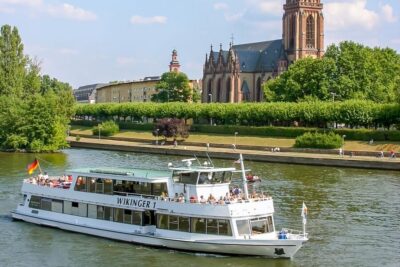
River Main Sightseeing Cruise with Commentary
Read our review →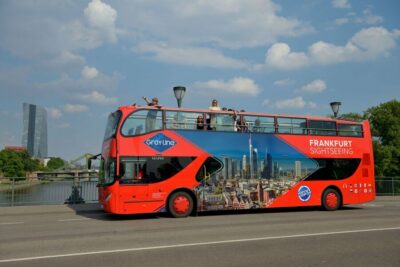
1-Hour Panorama Boat Cruise on the river Main
Read our review →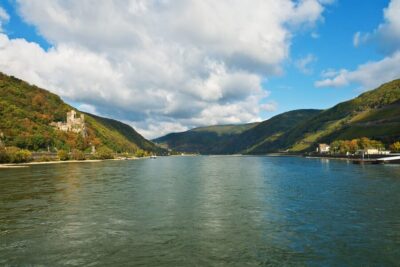
Rhine Valley Castles: 1.5-Hour Boat Tour from Rüdesheim
Read our review →
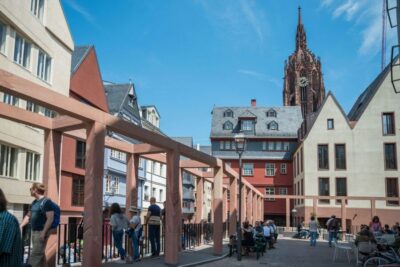
New Old Town and Highlights German-Language Tour
Read our review →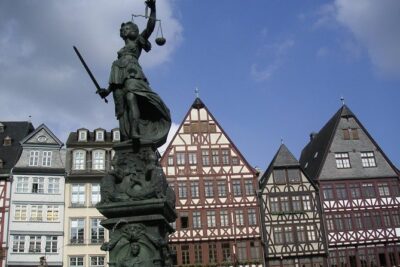
Rhine Valley Trip from Frankfurt including Rhine River Cruise
Read our review →Browse the lists this tour appears in