
Reviewed · LEIPZIG TOURS
Music in Leipzig – Bach, Wagner and the Thomanerchor
Leipzig sings its history out loud. This 90-minute private walk follows the Leipzig Music Trail through the city center, linking Bach, Wagner, Mendelssohn, Schumann, the Gewandhaus, the opera, and the famous Thomanerchor. I like the mix of street history and musical examples, and I like that the tour gives Leipzig’s churches and concert halls a clear story instead of treating them as isolated sights.
The main consideration is that this is a guided history walk, not a full concert experience. One recent booking found the churches closed at the scheduled time and expected more live music, so you should book it for context, stories, and carefully chosen musical moments rather than a performance.
In This Review
- Key points at a glance
- Why Leipzig is worth hearing, not just seeing
- Starting at the Old Town Hall
- Following Bach through Leipzig
- St. Thomas Church and the Thomanerchor
- What St. Nicholas Church adds
- Hearing an 18th-century Leipzig
- Wagner, Mendelssohn, Schumann and the wider story
- The Gewandhaus, opera and conservatory
- The guide makes the difference
- Is $188 a fair price?
- Who should book this music walk?
- Practical details before you reserve
- Should you book Music in Leipzig?
- FAQ
- Where does the tour meet?
- How long does the tour last?
- How much does the private group tour cost?
- Which languages are available?
- Is this a private tour?
- Is the tour wheelchair accessible?
- Does the tour include St. Nicholas Church?
- Does the tour include a live concert?
- Can I cancel the booking?
Key points at a glance
- A private 90-minute walk for up to 25 people: The fixed $188 group price can be good value for a family or larger party, but less so for one or two people.
- Bach is the central figure: You learn about his Leipzig work, his connection with St. Thomas Church, and his first performance as cantor at St. Nicholas Church in 1723.
- Wagner was born here: The tour connects Leipzig with Wagner as well as Bach, Mendelssohn, and Schumann.
- Historic street sound adds atmosphere: Musical examples and recreated 18th-century street noise help turn names and dates into something easier to picture.
- The Thomanerchor gets serious attention: You hear about the choir’s 800-year history and its lasting place in Leipzig’s musical life.
- Church access may vary: The route includes St. Nicholas Church and discusses St. Thomas Church, but actual entry can depend on opening conditions.
Why Leipzig is worth hearing, not just seeing
Many people first meet Leipzig as a trade fair city. Its broad civic identity can make the place seem practical and businesslike, but music gives the center another layer. This is where some of Europe’s most important composers lived, worked, taught, performed, or were born.
That makes a music walk useful even if you do not know a cantata from a concerto. You do not need to arrive as a Bach expert. The guide gives you a way to connect the streets, churches, concert institutions, and famous names.
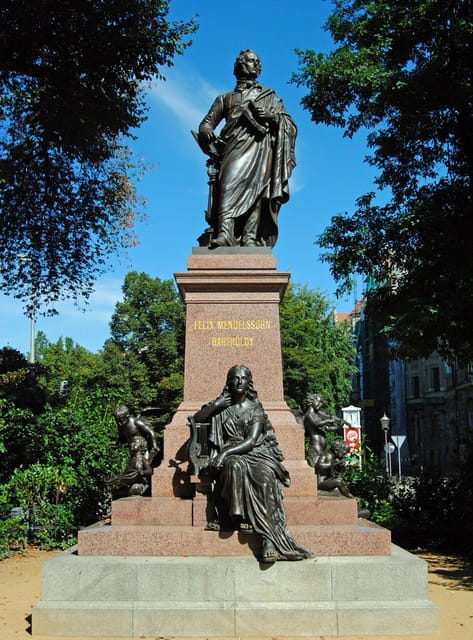
I especially like the historical range. Bach supplies the strongest thread, but Leipzig’s story does not stop in the 18th century. Richard Wagner was born in the city, while Felix Mendelssohn and Robert Schumann also had major ties here. The result is a tour about a living musical tradition, not just one famous former resident.
Leipzig’s musical life continues through the Gewandhaus, the opera, the conservatory, and the singers of the St. Thomas Church Choir. The tour explains how these institutions helped shape the city and why Leipzig still matters to classical music.
Other Leipzig trips people book alongside this one:
- Leipzig: City History Canal Sightseeing Tour on a Motorboat
★ 4.7 · 6,232 reviews - Leipzig: 1.5-Hour Public Tour with Night Watchman Bremme
★ 4.6 · 3,116 reviews - Combo Tour in Leipzig: Guided City Tour & City Sightseeing
★ 4.7 · 2,317 reviews
Starting at the Old Town Hall
The meeting point is the Museum Shop at the Old Town Hall, Markt 1. That is a sensible place to begin because you are already in Leipzig’s central historic area, and the location is specific enough to avoid a vague street-corner meeting.
From here, the guide leads you onto the Leipzig Music Trail. The trail gives the walk a useful backbone. Instead of zigzagging among unrelated monuments, you move from one music-related place to the next, learning how the city’s cultural institutions fit together.
You should arrive ready to walk for the full 90 minutes. The experience is described as a city tour, so expect a moving discussion rather than a seated museum visit. Comfortable shoes will make the route easier, though the supplied details do not specify the exact walking distance.
The private format matters here. Your group can ask questions about a composer, church, or musical institution without waiting for a large public group to catch up. The listed maximum is 25 people, so ask about your actual group size when booking if a smaller, more personal feel is important to you.
Following Bach through Leipzig
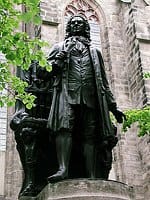
Bach is the emotional center of the route. He worked in Leipzig as cantor of the St. Thomas Church, and the tour explains the role of the church choir and the musical work connected with it.
The Thomanerchor has an 800-year history, which gives the discussion a much longer reach than Bach’s own lifetime. You learn why the choir is beloved far beyond Leipzig and how its singers remain part of the city’s identity.
The tour also introduces pieces Bach composed in Leipzig. Musical examples are important because they keep the experience from becoming a list of dates and appointments. Hearing a passage while standing in the city connected with it can help you understand the scale of Bach’s work more clearly.
Still, keep your expectations in check. This is not advertised as a concert, and one recent participant felt there was less music than expected. If you want a full Bach performance, you will need to seek out a separate concert or choir service during your stay. This walk is better for learning why Leipzig is the right place to hear one.
St. Thomas Church and the Thomanerchor
St. Thomas Church is one of the key cultural centers discussed along the route. Its importance comes from both Bach and the St. Thomas Church Choir, whose long history remains tied to Leipzig’s musical reputation.
The guide explains the choir’s place in the city rather than simply pointing to the building and moving on. That distinction is valuable. You get a clearer sense of how a church, a choir, a composer, and a civic tradition can reinforce one another over centuries.
The available information does not promise a choir performance or a guaranteed interior visit at St. Thomas Church. Treat the church as a major historical stop on the walk, not as a substitute for checking the day’s concert or service schedule.
This is one reason I would choose the tour early in a Leipzig visit. The background can help you make sense of later music plans. If you attend a concert or hear the choir afterward, names such as Bach and the Thomanerchor will already have a place in your mental map.
Something different for another day:
- Leipzig: 1.5-Hour Historical Walking Tour in German
★ 4.7 · 2,217 reviews - Leipzig: 2-Hour Guided Walking Tour in German
★ 4.8 · 1,612 reviews - Leipzig: 13-Stop Hop-on/Hop-off Bus Ticket
★ 4.6 · 1,468 reviews - Gruseltour Leipzig: A Haunted Guided Tour
★ 4.5 · 1,385 reviews
What St. Nicholas Church adds
St. Nicholas Church gives the Bach story another important address. The tour points out a bust of Bach in connection with his first performance there as cantor in 1723.
That detail helps widen your view of Bach’s Leipzig career. His story is not limited to one church, and the route shows how several central buildings shaped his work and public life.
St. Nicholas Church also carries significance beyond music, but the supplied details focus on the Bach connection. The guide may place the church within Leipzig’s wider cultural setting, yet you should judge the experience on the advertised musical history rather than expect a separate political or social history tour.
Access is a practical issue. A recent booking found the churches closed at the planned time. That means you may hear a strong explanation of St. Nicholas Church without getting the interior experience you pictured. If seeing the inside matters to you, confirm opening conditions before booking, or plan a separate visit when the church is open.
Hearing an 18th-century Leipzig
One of the more unusual features is the use of 18th-century street noise alongside musical examples. This gives the walk an audio layer that ordinary sightseeing often lacks.
You are not simply told that Leipzig was a working city in Bach’s day. You get a small sense of the sounds that would have surrounded people moving through it. That can make the period feel less remote and help you picture music as part of everyday public life.
The idea is especially helpful if you find long explanations of music history too abstract. Street noise gives the era a physical setting, while the Bach excerpts point you toward the artistic world that grew within it.
The amount of music appears to be limited rather than continuous. I would treat the audio material as a guide’s tool, not the main event. The heart of the experience remains the conversation between the city streets and the people who made Leipzig famous.
Wagner, Mendelssohn, Schumann and the wider story
Bach receives the most attention, but Leipzig’s musical identity is broader. Richard Wagner was born in the city, a useful fact for anyone who knows him mainly through grand opera and dramatic orchestral works.
Mendelssohn and Schumann also had strong connections with Leipzig. Their presence helps show how the city continued to attract important musical figures after Bach. The tour connects these names to Leipzig’s institutions and cultural centers, including the opera, the Gewandhaus, and the conservatory.
I like this wider approach because it prevents the tour from becoming a single-composer pilgrimage. You can follow Bach closely while still seeing how Leipzig’s musical character changed over time.
At the same time, 90 minutes is not enough for a full biography of four major composers. Expect concise connections and selected stories, not a detailed study of each person. If you already know a great deal about Wagner or Schumann, use the private format to ask targeted questions.
The Gewandhaus, opera and conservatory
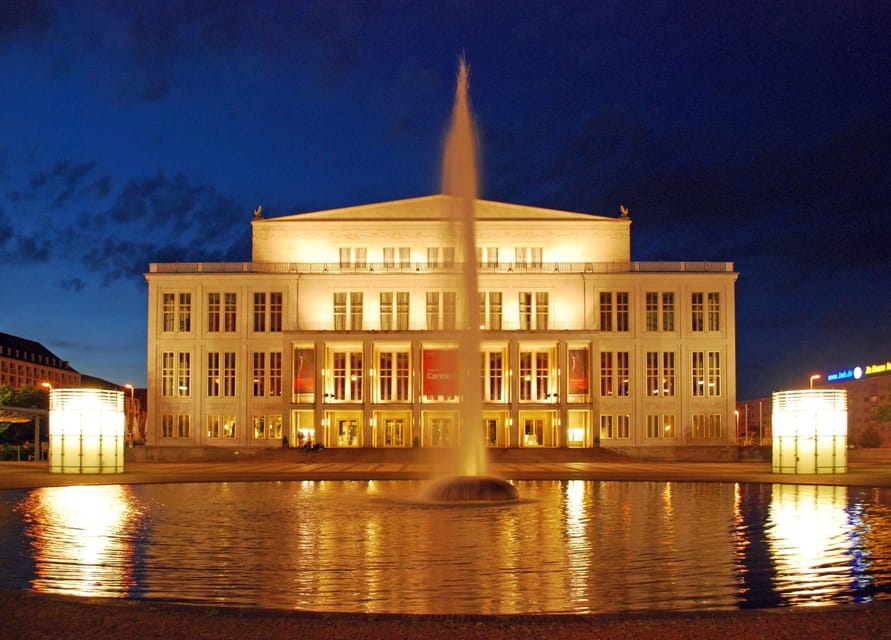
The Gewandhaus and opera are important parts of the city’s musical network. The tour provides information about these cultural centers and the musicians associated with them.
The Gewandhaus represents Leipzig’s concert tradition, while the opera points to the city’s stage life. The conservatory adds an educational side, showing how Leipzig’s musical influence was carried forward through teaching as well as performance.
These stops matter because they explain why Leipzig earned its reputation as one of Europe’s musical capitals. The story is not only about historic composers who once lived here. It also involves institutions that train performers, support ensembles, and keep music central to city life.
The supplied description does not promise entry into the opera, Gewandhaus, or conservatory. You should expect exterior context or discussion as part of the walking route unless your guide tells you otherwise. That is still useful, but it is different from a backstage visit or a concert hall tour.
The guide makes the difference

The strongest praise goes to the guide’s presentation. Tom is described as engaged, competent, entertaining, and genuinely enthusiastic about the connections among the city’s musical figures and places.
That combination is exactly what this tour needs. Music history can become a parade of names if the guide simply recites facts. A guide who explains the links between Bach, the churches, the choir, the concert institutions, and later composers gives the walk a clear shape.
One German-speaking participant valued the high number of facts without being buried under too many figures. That is a useful sign for visitors who want substance but do not want a lecture packed with dates.
The language list is broad: Spanish, English, French, German, Italian, and Russian. Since the experience is private, choosing the language that lets you ask the best questions will make a real difference. The listing identifies the format as a live guided tour, not an audio guide.
Is $188 a fair price?
The price is $188 for a private group of up to 25 people. At the maximum group size, that works out to about $7.52 per person, which is strong value for a 90-minute guided city walk.
For two people, the same price comes to $94 each. That is a much bigger commitment, especially because the tour does not include a concert, museum admission, or a guaranteed church interior visit.
The private format is the main reason to consider the cost. A family, school group, music society, or group of friends can spread the fixed price across many people. You also gain the chance to ask questions and move at a pace suited to your group.
For a couple, I would compare the price with the value of a private guide who can tailor the discussion. If you only want a quick overview of Bach, a standard city walk or self-guided music trail may cost less. If you care about music and want focused attention, the fixed group rate becomes easier to justify.
Who should book this music walk?
I would recommend it to first-time Leipzig visitors who want a clear introduction to the city’s musical identity. It suits people who like history in small, manageable portions and want to connect places with the people who used them.
It is also a good choice for families and larger private groups. The 90-minute length is long enough to provide real substance without taking over an entire day.
Music students, choir members, classical music fans, and Bach listeners will find the subject especially appealing. The tour may also work for people who know little about classical music, since the guide’s job is to provide context rather than assume specialist training.
I would be more cautious if your priority is live music. The musical examples add interest, but the experience is not presented as a performance. I would also think twice if your schedule is so tight that a possible church closure would spoil the day.
Practical details before you reserve
The tour lasts 90 minutes and has live guides in six languages: Spanish, English, French, German, Italian, and Russian. It is wheelchair accessible, and the group type is private.
You meet at the Museum Shop in the Old Town Hall at Markt 1. The starting time varies, so check availability for the date you want.
You can cancel up to 24 hours before the activity for a full refund. The reserve-now, pay-later option lets you hold a place without paying at the time of booking, which is useful when your Leipzig plans are still shifting.
One final tip: if you care about going inside St. Nicholas Church or St. Thomas Church, check access close to your tour date. The route includes these important places, but church opening conditions can change the balance between interior sightseeing and outdoor explanation.
Should you book Music in Leipzig?
Book it if you want Leipzig’s music story explained by a live guide, especially if you are traveling with a group large enough to make the $188 price work well. The Bach and Thomanerchor material is the strongest reason to go, while Wagner, Mendelssohn, Schumann, the Gewandhaus, and the opera give the walk useful breadth.
Skip it if you mainly want a concert or guaranteed church entry. In that case, spend your money on a performance and visit the churches separately.
For everyone else, this is a focused way to get your bearings in Leipzig’s musical center. Tom’s enthusiastic approach, the 18th-century sound elements, and the links among the city’s major music institutions give the 90 minutes a clear purpose.
FAQ
Where does the tour meet?
The meeting point is the Museum Shop at the Old Town Hall, Markt 1, in Leipzig.
How long does the tour last?
The tour lasts 90 minutes.
How much does the private group tour cost?
The price is $188 for a private group of up to 25 people.
Which languages are available?
Live guides are available in Spanish, English, French, German, Italian, and Russian.
Is this a private tour?
Yes. The experience is offered as a private group tour.
Is the tour wheelchair accessible?
Yes, the activity is listed as wheelchair accessible.
Does the tour include St. Nicholas Church?
St. Nicholas Church is part of the musical route, including the connection with Bach’s first performance there as cantor in 1723. Actual church access can depend on opening conditions.
Does the tour include a live concert?
No live concert is listed as an inclusion. The tour includes musical examples and 18th-century street sounds.
Can I cancel the booking?
Yes. You can cancel up to 24 hours in advance for a full refund.
Just added around Leipzig
- The classic – experience Leipzig’s city centre★ 5.0 · 13 reviews
- Leipzig’s Communist Past: A Self-Guided Audio Tour★ 5.0 · 16 reviews
- Corpses, Leprosy, Lucifer 75-minute Tour at the Old Cemetery★ 5.0 · 16 reviews
- first electrical carriage in town – guided City Tours – Leipzig★ 5.0 · 17 reviews
- Leipzig : Guided tour with Panorama Tower for a private group★ 5.0 · 19 reviews
- Motorboat tour ”Little Venice Tour” Gustav★ 4.5 · 19 reviews
- Leipzig’s Courtyards and Passages – Guided Tour for a Private Group★ 5.0 · 20 reviews
- Leipzig: “SoKO Leipzig”, unique Escape Room, 60 minutes★ 4.6 · 20 reviews
Leipzig Tours, compared.

City History Canal Sightseeing Tour on a Motorboat
Read our review →
1.5-Hour Public Tour with Night Watchman Bremme
Read our review →
Combo Tour in Leipzig: Guided City Tour & City Sightseeing
Read our review →


Browse the lists this tour appears in