

Reviewed · OLD TOWN WALKS
Münster: Old Town Highlights Guided Tour
Münster reveals its secrets quickly. This 90-minute walk links the cathedral, Lambertikirche, Prinzipalmarkt, and historic town hall into a clear story about how Münster grew from a small Saxon settlement. I like the compact route and the way it connects old buildings to real political and religious struggles. I also like that children under six join free, making the $16 price easier for families to justify.
The main consideration is language: the tour is held entirely in German. If you understand German, the entertaining guide and steady pace should make this a useful introduction to Münster. If you do not, the buildings will still be attractive, but much of the value lies in the spoken explanation.
In This Review
- Key points at a glance
- Why Münster’s old town works so well on foot
- Meeting at Michaelisplatz beside the historic town hall
- St. Paul’s Cathedral and the birth of Münster
- The Überwasserkirche and Münster’s headless saints
- St. Lambertus and the cages that mark a brutal ending
- Prinzipalmarkt and the center of civic Münster
- The historic town hall and the Peace Hall
- Erbdrostenhof and Clemenskirche: Schlaun’s baroque Münster
- What the guide adds to the experience
- Is $16 good value for 90 minutes?
- Who should book this Münster walk?
- Should you book the Old Town Highlights Guided Tour?
- FAQ
- How long is the Münster Old Town Highlights Guided Tour?
- How much does the tour cost?
- Can children join the tour for free?
- What language is the tour conducted in?
- Where is the meeting point?
- Can I cancel or pay later?
Key points at a glance
- A 90-minute introduction: See Münster’s main old-town sights without giving up half a day.
- A history told through buildings: The cathedral, churches, town hall, and baroque architecture all fit into one connected story.
- An unusual Anabaptist legacy: Learn why the Überwasserkirche lacks its spire and where the famous cages are found.
- The Peace Hall matters here: Münster’s historic town hall recalls the Peace of Westphalia in 1648.
- Good value for families: The adult price is $16, and children from 0 to 5 years old go free.
- German-language guiding: The tour suits German speakers best, with a live guide and time for questions.
Why Münster’s old town works so well on foot
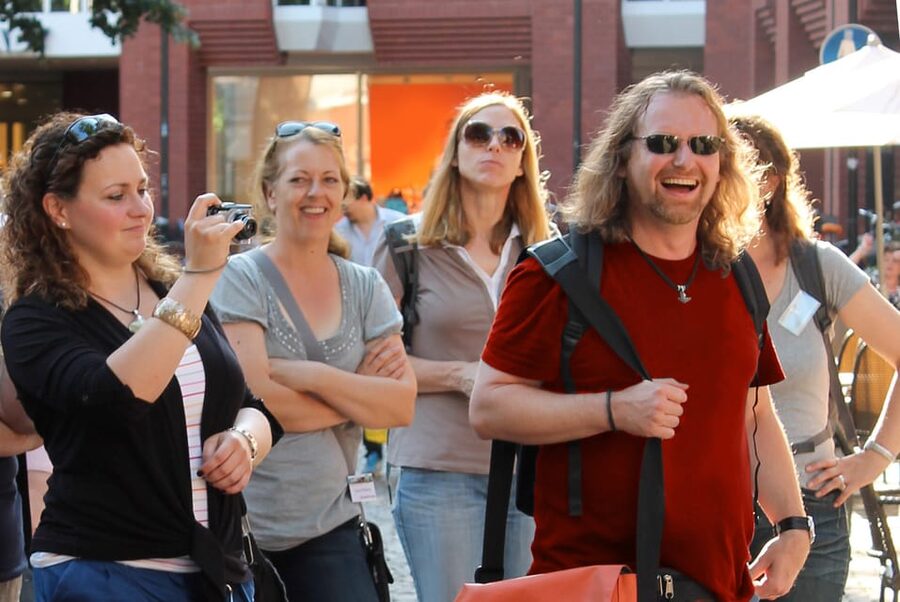
Münster is a city where the key sights sit close enough to form a natural walking lesson. You do not spend the tour waiting for transport or crossing long stretches of modern streets. Instead, the guide moves from one important square or building to the next, showing how religion, trade, war, and local government shaped the city.
That matters because Münster’s past is not displayed in one museum alone. It appears in the position of the churches, the shape of the Prinzipalmarkt, the decoration of the town hall, and even the missing parts of certain buildings. I like tours that help you read a city rather than simply photograph it, and this route is built around that idea.
The tour lasts about one and a half hours. That is long enough to give the sights context but short enough to fit before lunch, after arriving by train, or between other plans. A recent score of 4.7 from 286 ratings also points to a consistently strong experience, especially for the guide’s clear explanations, punctual start, and willingness to answer questions.
More Old Town Walks in Germany:
- Dresden: Semperoper and Old Town Tour
★ 4.8 · 5,735 reviews - Nuremberg: Old Town Guided Walking Tour
★ 4.6 · 2,416 reviews - Munich: Old Town & Viktualienmarkt City Walk in German
★ 4.7 · 2,304 reviews
Meeting at Michaelisplatz beside the historic town hall
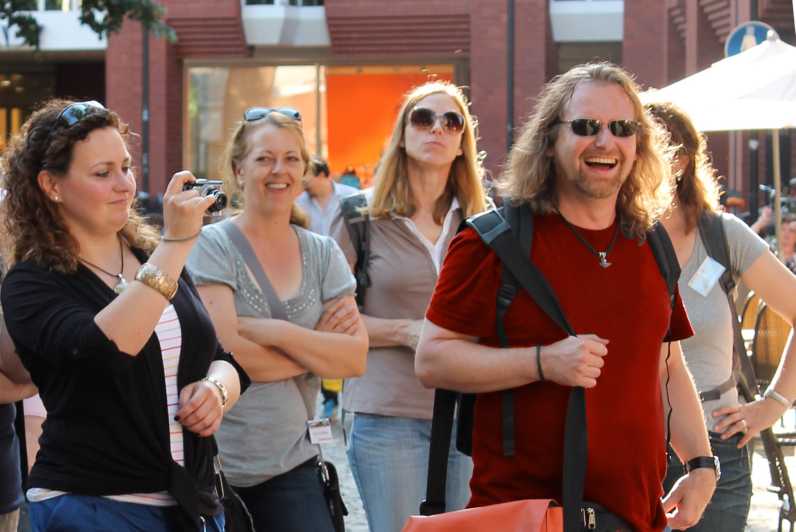
The meeting point is opposite the historic town hall, beneath the sign marked Michaelisplatz and close to the Rathausrelief. Look for the guide carrying an orange bag with the k3 sign. That bright bag should make the meeting easier in a busy central area.
This starting point is practical. You begin near one of Münster’s most important sights rather than at a remote office or transport stop. Arriving a little early gives you a chance to orient yourself around the town hall before the walk begins.
The guide is expected to start on time. That detail matters if you have booked the tour around another activity. One German participant specifically praised the punctual start, the friendly manner of the guide, and the complete answers to questions.
The tour is offered in German only. That is not a minor footnote. The guide’s explanations are the heart of the experience, so you should choose this walk only if you can follow spoken German comfortably. The route may still help you identify Münster’s main sights, but you will miss the connections between them if you cannot understand the commentary.
St. Paul’s Cathedral and the birth of Münster

The opening story begins at St. Paul’s Cathedral, where the guide explains how the small Saxon settlement of Mimigernaford developed into Münster. This gives you an early sense of place before the tour turns to later conflicts and grander buildings.
The cathedral stop is also used to explain cathedral immunity. In simple terms, this was the special area around the cathedral where church authority shaped local rights and daily life. The important point is not just the definition. It is the effect this arrangement had on the city’s growth and on the old tension between clergy and merchants.
Those disputes still affect the cityscape. The cathedral was not simply a religious building sitting inside a neutral town. It helped define who had power, where activity centered, and how Münster developed around competing interests. A good guide can make that abstract point visible by showing you the relationship between the cathedral area and the commercial center.
You should expect the cathedral portion to be more than a quick look at a famous church. It sets up the main theme of the tour: Münster’s buildings preserve arguments from earlier centuries. The city’s appearance becomes easier to understand once you know who controlled which spaces.
The Überwasserkirche and Münster’s headless saints
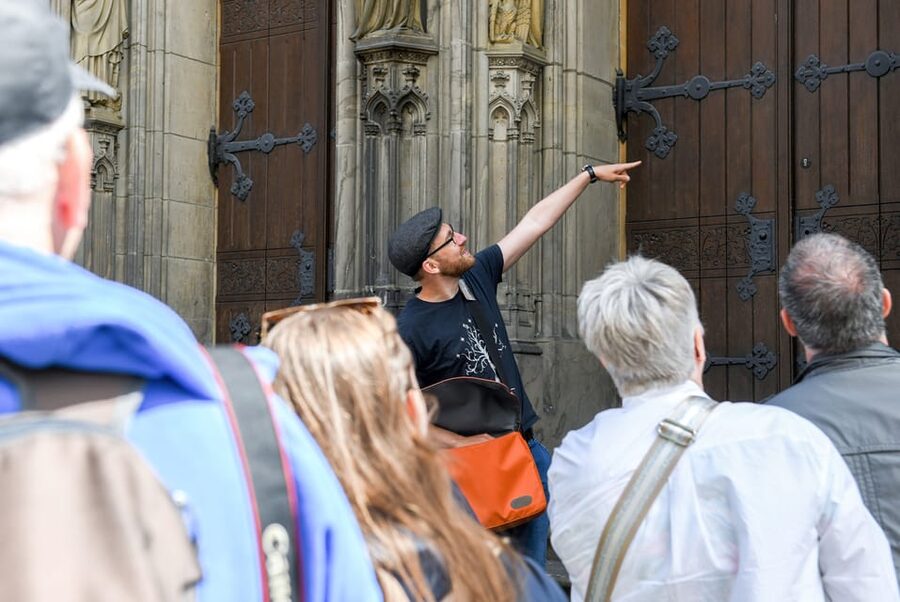
The tour then takes up one of Münster’s stranger chapters, the Anabaptist rule in the 16th century. This part gives the walk an edge that a standard architecture tour might lack. You learn how religious reform and political upheaval changed the city, and how traces of that period remain visible.
At the Überwasserkirche, the guide explains why the church tower still has no point. Some of the saints there also remain headless. These details are memorable because they turn a large historical conflict into something you can see with your own eyes.
The story is not presented as a collection of odd facts. It shows how the Anabaptist movement challenged established religious and civic authority, and how the later response left marks on Münster’s churches. If you enjoy history with a physical clue attached, this is likely one of the strongest parts of the route.
The missing spire and damaged statues also give you a useful reminder: old towns are not frozen scenes from a peaceful past. Buildings survive, but they often carry evidence of violence, protest, and changing beliefs. I would pay close attention here, since these are exactly the details you might walk past without a guide.
A few more tours and experiences worth a look
- Berlin: Reichstag, Dome and Government District Guided Tour
★ 4.7 · 18,288 reviews - Dresden: Semperoper Tickets and Guided Tour
★ 4.7 · 12,102 reviews - Berlin: Government District around the Reichstag Guided Tour
★ 4.7 · 8,447 reviews - Hamburg: Elbphilharmonie Plaza Guided Tour
★ 4.7 · 5,882 reviews
St. Lambertus and the cages that mark a brutal ending
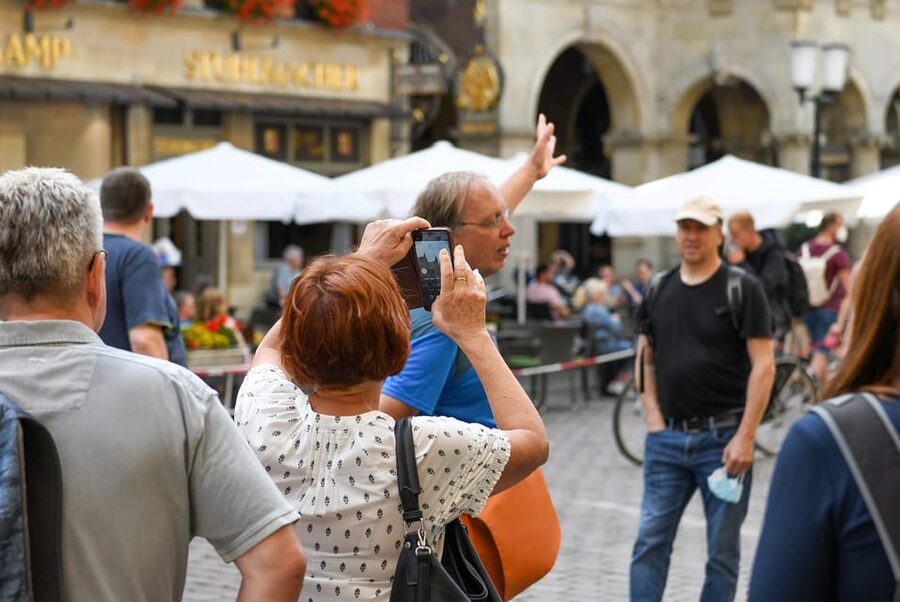
At the market church of St. Lambertus, the guide points out the cages on the tower. They symbolize the end of the Anabaptist movement in Münster and are among the most striking objects on the route.
You also learn about the tower keeper who worked there. That small practical detail helps bring the church back to everyday life. The tower was not only a religious landmark or a place associated with punishment. It was also a working part of the town, with someone responsible for watching over it.
This stop is likely to prompt questions, and the guide’s readiness to answer them is important. One highly rated account describes every question receiving a response, along with strong knowledge of the city. That makes the experience more useful than a memorized sequence of dates.
The cages can be difficult to look at, but they are valuable historical evidence. They connect Münster’s striking skyline with a painful chapter that shaped how the city remembered religious rebellion. You get a better sense of why this church is central to Münster’s identity once you know what the tower represents.
Prinzipalmarkt and the center of civic Münster

The Prinzipalmarkt is one of the city’s essential sights and part of the included highlights. Its arcaded buildings give Münster a strong visual center, but the tour’s value comes from learning how the market relates to the city’s merchants, clergy, and political power.
This is where the earlier discussion of commercial disputes becomes easier to place. Münster was not shaped by church authority alone. Merchants also wanted influence, and the city’s central spaces reflect that push and pull.
You can enjoy the Prinzipalmarkt on your own, of course. A guide adds value by explaining why the buildings are arranged as they are and how this part of town connected commerce with civic life. The stop also gives the walk a change of mood after the darker Anabaptist material.
The tour does not promise an extended architectural study of every facade. It is better understood as a focused introduction. You see the major center, hear the key story, and continue before the details become repetitive.
The historic town hall and the Peace Hall
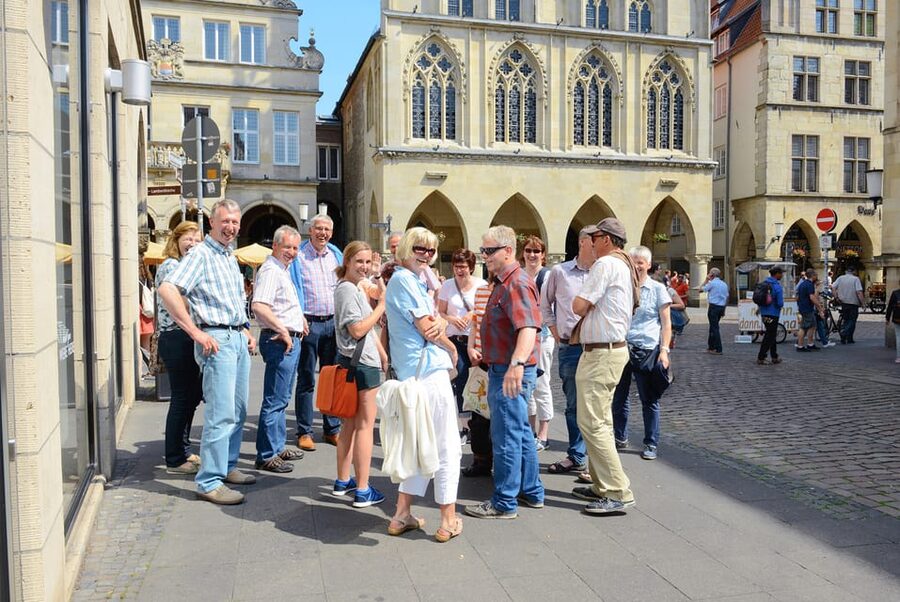
The historic town hall brings the tour back to international politics. Inside the building, the Peace Hall recalls the negotiations that ended the Thirty Years’ War in 1648. It is also associated with the peace signed between the Dutch and the Spanish.
This is one of the most valuable stops because Münster’s local story opens onto European history. The Peace of Westphalia is often taught as a major diplomatic settlement, but standing at the town hall gives the event a specific address. You can connect a large political change with one room in one city.
The guide explains the history of the Westphalian peace negotiations and why the town hall remains a symbol of peace. That does not mean the stop turns into a long lecture on European diplomacy. Instead, it gives you enough context to understand why this building carries unusual weight.
If you have limited time in Münster, the town hall is a strong reason to choose a guided walk rather than simply wandering the market. The building’s importance is not always obvious from the outside, and the explanation helps you see the place as more than an attractive historic facade.
Erbdrostenhof and Clemenskirche: Schlaun’s baroque Münster
The final architectural theme comes from Johann Conrad Schlaun, the baroque master builder whose work helped shape Münster’s appearance. The route includes the Erbdrostenhof and Clemenskirche, two examples that show his style from different angles.
You get to compare a grand residence with a church, which makes the architectural lesson more useful than seeing one isolated building. The guide explains why Schlaun’s work remains characteristic of Münster, giving you a visual pattern to look for elsewhere in the city.
The Erbdrostenhof helps show the formal side of baroque design. Clemenskirche adds a religious counterpart. Together, they widen the tour beyond medieval churches and political conflict, showing that Münster continued to change long after the events at the cathedral and St. Lambertus.
This section may appeal most to visitors who like architecture, but it also works as a calm finish after the heavier history earlier in the walk. I would not book the tour only for Schlaun, since the route covers much more. Still, these buildings make the final part feel rounded rather than ending abruptly at the town hall.
What the guide adds to the experience
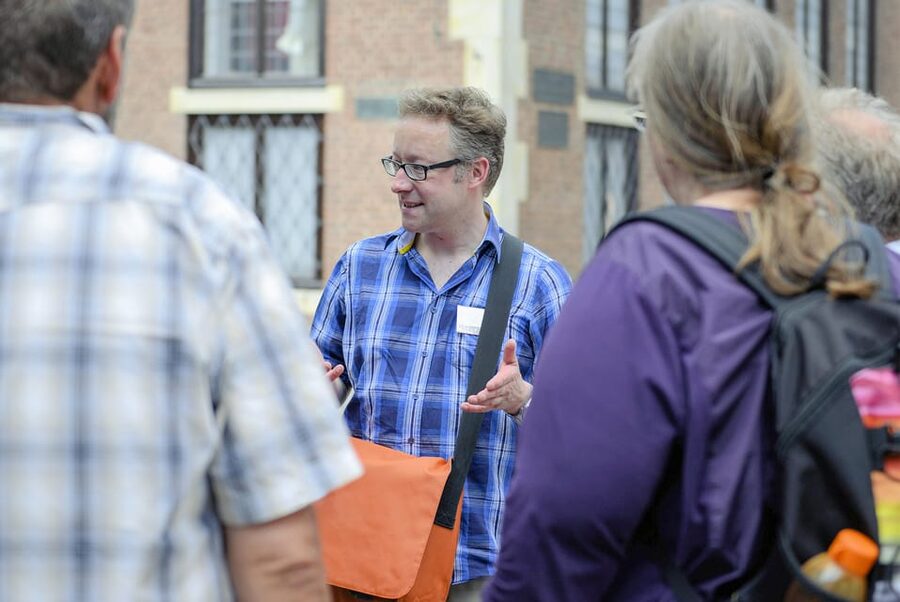
The guide is central to the value here. The tour is not built around entry to a special attraction or a long list of interiors. Its strength is the explanation of what you are looking at and how the sights connect.
The available feedback points to a guide who is friendly, entertaining, punctual, and ready to answer questions. One account also notes that the route included corners of the old town that might otherwise be missed. That is useful advice for you: pay attention when the guide moves away from the most famous facades, since the less obvious spots may hold the best local details.
The tone appears to be lively rather than dry. That matters in Münster, where the tour covers church authority, religious conflict, punishment, diplomacy, and baroque design in a short time. A flat lecture could make that sequence feel heavy. An engaging guide keeps the pace moving.
No individual guide name is provided, so you should not book expecting a particular person. The safer expectation is a competent German-speaking guide from k3 stadtführungen who can explain the city and respond to questions.
Is $16 good value for 90 minutes?
At $16 per person, this is a reasonable price for a focused introduction to Münster. You are paying less for admission to a single major attraction and getting a guided route that covers the cathedral, Lambertikirche, Prinzipalmarkt, historic town hall, Erbdrostenhof, and Clemenskirche.
The value is strongest on a first visit. You can use the walk to decide which buildings deserve a longer return visit. It also helps you avoid spending your limited time in the old town without knowing what you are seeing.
Families get an extra advantage because children under six join free. Older children may benefit from the stories about the cages, missing spire, and headless saints, although the German-only format remains the key issue.
The 90-minute length keeps the cost and time commitment manageable. You will not receive an exhaustive account of every street or museum, and that is a fair limitation. Think of it as a strong orientation walk, not a full-day study of Münster.
Booking flexibility adds some practical value. You can reserve now and pay later, and cancellation is free up to 24 hours before the start for a full refund. Check the available starting times when planning, since the exact schedule is not fixed in the details provided.
Who should book this Münster walk?
I would recommend it to German-speaking visitors who want a clear first look at the old town. It suits you especially well if you enjoy local politics, religious history, unusual architectural details, and short walking tours with a firm finish time.
Families with young children can also consider it, since ages 0 to 5 are free. The route includes visual details that may hold a child’s attention better than a purely chronological history lesson, though the guide’s explanations are still intended for a German-speaking audience.
You may want to skip it if you prefer exploring silently, need an English-language tour, or have already spent substantial time with Münster’s churches and town hall. The route focuses on the principal sights, so returning visitors looking for obscure museums or a specialized subject may need another experience.
Should you book the Old Town Highlights Guided Tour?
Book it if you want Münster to make sense quickly. For $16, you get a compact route through the city’s major sights and a connected account of settlement, church power, merchant influence, Anabaptist rule, the Peace of Westphalia, and baroque design.
The strongest reasons are the guide’s reported punctuality and friendly manner, the chance to hear answers to your own questions, and the unusual details you might otherwise miss: the headless saints, the pointed tower that never regained its point, and the cages at St. Lambertus.
My main warning is simple: this is a German-language tour. If that works for you, the walk offers good value and a practical start to Münster. If not, choose an English option instead, because the spoken history is what turns a pleasant old-town stroll into a worthwhile tour.
FAQ
How long is the Münster Old Town Highlights Guided Tour?
The tour lasts 1.5 hours.
How much does the tour cost?
The listed price is $16 per person.
Can children join the tour for free?
Yes. Children aged 0 to 5 years can take part for free.
What language is the tour conducted in?
The tour is held in German and includes a live German-speaking guide.
Where is the meeting point?
Meet opposite the historic town hall beneath the sign marked Michaelisplatz, close to the Rathausrelief. The guide carries an orange bag with the k3 sign.
Can I cancel or pay later?
You can cancel up to 24 hours before the tour for a full refund. You can also reserve your place and pay later.
Just added around Germany
- e-Scavenger hunt Aachen: Explore the city at your own pace★ 4.0 · 13 reviews
- Munich: Private or Group Third Reich and WWII Walking Tour★ 4.9 · 13 reviews
- Canyoning Advanced Day Trip★ 5.0 · 13 reviews
- Wiesbaden Biebrich: Outdoor Escape Game★ 4.7 · 13 reviews
- Berlin: Private Guided Tour of the Main Sights★ 5.0 · 13 reviews
- From Munich: Neuschwanstein Castle and Linderhof Private Tour★ 5.0 · 13 reviews
- Trier, Moselle: Wine excursion with boat trip★ 3.9 · 13 reviews
- From Dresden: Guided Day Tour by Bus of Seiffen Toy Village★ 4.0 · 13 reviews
Old Town Walks, compared.
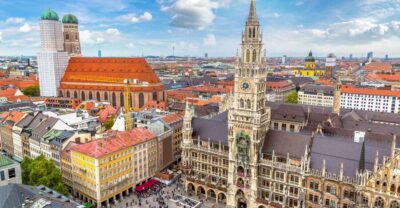
Old Town & Viktualienmarkt City Walk in German
Read our review →

The Night Watchman Old Town Walking Tour in German
Read our review →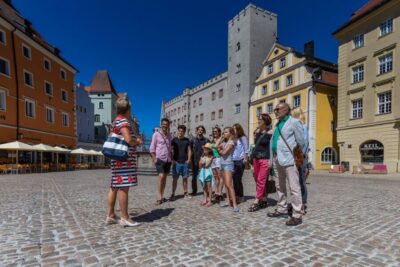
Browse the lists this tour appears in