
Reviewed · OLD TOWN WALKS
Lübeck: entertaining guided tour to old town highlights
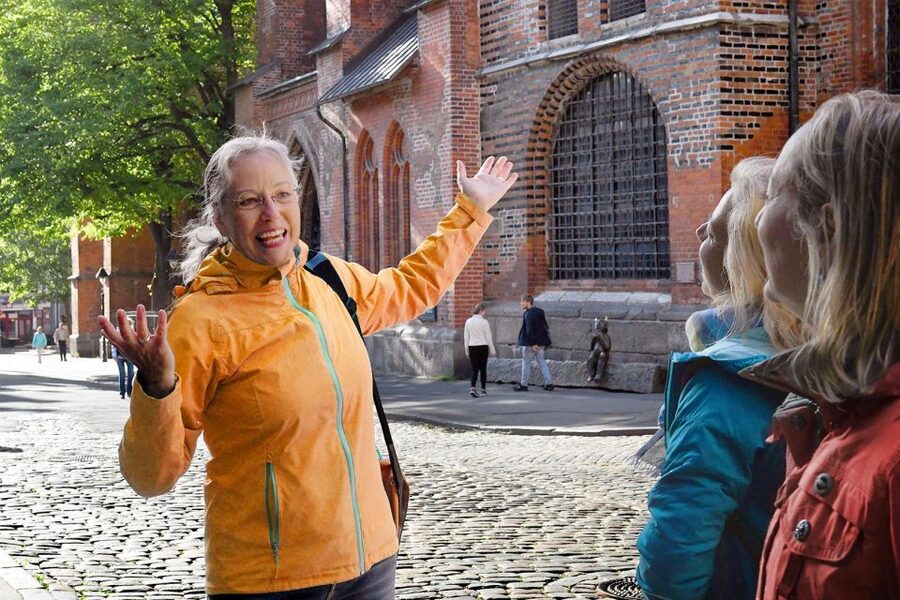
Lübeck’s old town begins with a grand doorway. This 1.5-hour walking tour starts at the Holstentor and threads through the brick-built center, linking major sights with stories about the Hanseatic city. I like the clear route and the mix of famous buildings with less obvious medieval corridors and courtyards.
I also like the guide’s balance of solid history and amusing anecdotes. At $16, the tour offers a useful introduction at a fair price, but you should consider the large groups of about 29 to 30 people reported on recent departures. That can make it hard to hear every explanation or see each stop clearly.
In This Review
- Key points about Lübeck’s old town tour
- Meeting the tour at the Holstentor
- Walking from the gate into Lübeck’s brick-built center
- Petrikirche and the old town viewpoint
- The Rathaus and Lübeck’s civic story
- St. Marien Church and the city’s seven towers
- Medieval corridors and abbey courtyards
- How the guides handle history and humor
- The group-size problem at 29 to 30 people
- Is the $16 price good value?
- Who should book this Lübeck walk?
- Should you book the Lübeck old town tour?
- FAQ
- Where does the Lübeck tour meet?
- How long does the tour last?
- What language is the tour conducted in?
- Which sights are included?
- What does the tour cost?
- Can I cancel the tour for a full refund?
- Can I reserve now and pay later?
Key points about Lübeck’s old town tour
- The Holstentor is the starting point: You meet on the park side, in front of Lübeck’s famous brick gate and seven-towered skyline.
- The route covers the essential center: The Holstentor, Petrikirche, Rathaus, and St. Marien Church all feature in the walk.
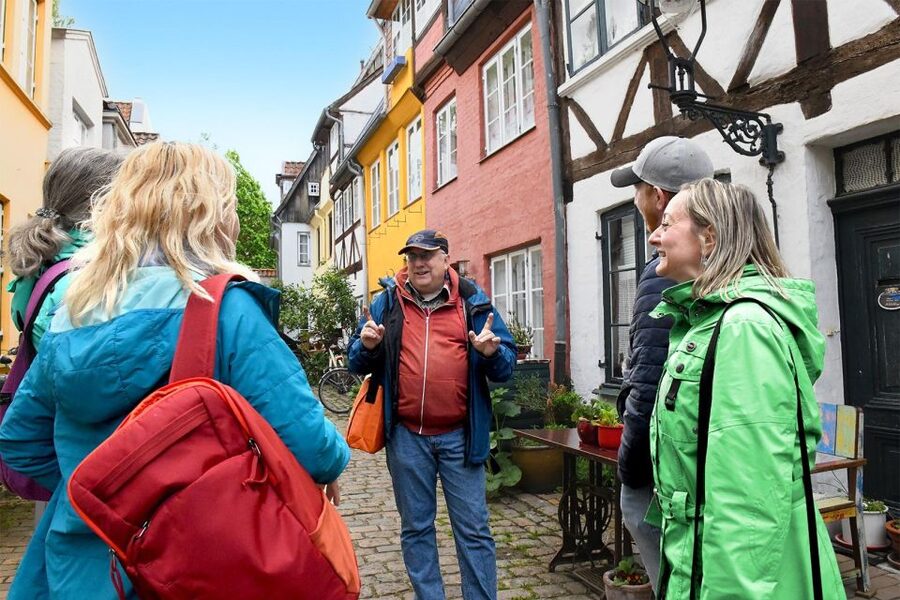
- Medieval corridors add local character: The tour leaves the grand streets for narrow passages and old abbey courtyards.
- The commentary mixes facts with humor: The best feedback praises the easy balance between city history and entertaining anecdotes.
- The tour is conducted in German: You need a good working knowledge of German to get the full benefit.
- The price is modest, but group size matters: $16 is reasonable for a guided introduction, though a crowd can reduce the personal feel.
Meeting the tour at the Holstentor
The meeting point is easy to identify: head to the park side of the Holstentor and look for the guide in front of Lübeck’s most recognizable landmark. This is a sensible place to begin because the gate gives you an instant sense of the city’s past and its defensive role.
The Holstentor is more than a photo stop. Its heavy brick form introduces the North German style that shapes much of the old town. From here, you are already looking toward Lübeck’s celebrated group of church towers, a skyline that helps explain why the city feels different from many other German historic centers.
I appreciate a starting point like this because you do not waste the first part of the tour searching for an obscure meeting place. The gate also gives the guide a strong opening subject. You can expect an explanation of Lübeck’s place as a major Hanseatic city, along with background on the architecture you will see during the walk.
One practical note: the tour begins outdoors, and the starting area can be uncomfortable in wet weather. On a recent rainy departure, people spent part of the opening standing around puddles. Wear shoes that can handle damp pavement, and arrive ready to stand rather than immediately settle into a dry indoor setting.
More Old Town Walks in Germany:
- Dresden: Semperoper and Old Town Tour
★ 4.8 · 5,735 reviews - Nuremberg: Old Town Guided Walking Tour
★ 4.6 · 2,416 reviews - Munich: Old Town & Viktualienmarkt City Walk in German
★ 4.7 · 2,304 reviews
Walking from the gate into Lübeck’s brick-built center
The route is designed as an introduction, not a march through every corner of Lübeck. You move from the Holstentor into the listed old town, stopping at the main buildings while the guide explains how the city developed and how its brick architecture reflects its northern setting.
Brick is the visual thread tying the tour together. The buildings do not rely on one grand stone monument alone. Instead, the town’s character comes from the repeated use of red brick in churches, civic buildings, gates, and older homes.
I find this useful for first-time visitors because a guide can point out relationships you might miss while walking alone. A church is not just a church, and a town hall is not merely a pretty facade. The commentary connects the buildings to Lübeck’s public life, trade, faith, and civic power.
The tour also gives you a feel for daily life in the old town. The stated focus is not only on major sights, but on Lübeck’s way of life, leisure, shopping, and places to go out. Those tips are especially helpful if you have an afternoon or evening left in the city and want more than a list of monuments.
Because the tour lasts only 90 minutes, the pace should suit people who want a first look rather than a specialist architectural study. You will get the main story and a selection of details. You will not receive a long, room-by-room treatment of each church or a full survey of every historic lane.
Petrikirche and the old town viewpoint
Petrikirche is one of the listed highlights, and it helps mark the transition from the Holstentor area into the heart of Lübeck. The church is important to the visual identity of the city, particularly because Lübeck’s skyline is so strongly shaped by its church towers.
The tour’s value here lies in context. Rather than simply pointing at the building and moving on, the guide can explain how the church fits into the city’s wider story and architecture. The exact amount of time at each stop may vary, especially with a large group, but Petrikirche gives the route another clear landmark after the opening gate.
You may also find this part of the walk useful for orientation. Lübeck’s old town can feel full of similar brick streets and historic facades when you first arrive. A guided route helps you connect the big landmarks and understand how the center is arranged.
Large groups are most noticeable at stops like this. A guide may begin speaking while people at the rear are still gathering, making it difficult for everyone to hear. If you want the best chance of following the explanation, stay near the guide and move promptly when the group is asked to continue.
The Rathaus and Lübeck’s civic story
The Rathaus is another major stop and one of the places where Lübeck’s power as a Hanseatic city becomes easier to understand. The building represents the city’s public authority, so it gives the tour a useful counterpoint to the churches and religious buildings.
I like this part of the itinerary because it broadens the story. A city tour that focuses only on churches can make Lübeck seem like a collection of beautiful old buildings. The Rathaus brings trade, administration, and civic life into the picture.
Expect the guide to draw attention to the building’s brick design and its place within the old town. You will probably hear historical details that make the facade easier to read, even if you are not an architecture specialist.
This is also where the guide’s style matters. The strongest experience comes from a tour leader who can explain dates and events without turning the walk into a school lesson. The praise for this tour centers on that balance: useful historical information is mixed with small jokes and memorable details.
You should keep your expectations realistic, though. A 90-minute walk cannot cover every period of Lübeck’s past. It is best viewed as a structured introduction that leaves you better prepared to explore on your own.
A few more tours and experiences worth a look
- Berlin: Reichstag, Dome and Government District Guided Tour
★ 4.7 · 18,288 reviews - Dresden: Semperoper Tickets and Guided Tour
★ 4.7 · 12,102 reviews - Berlin: Government District around the Reichstag Guided Tour
★ 4.7 · 8,447 reviews - Hamburg: Elbphilharmonie Plaza Guided Tour
★ 4.7 · 5,882 reviews
St. Marien Church and the city’s seven towers
St. Marien Church is among the most important sights on the route. Along with the Holstentor and the other churches, it helps you understand the scale and ambition of medieval Lübeck.
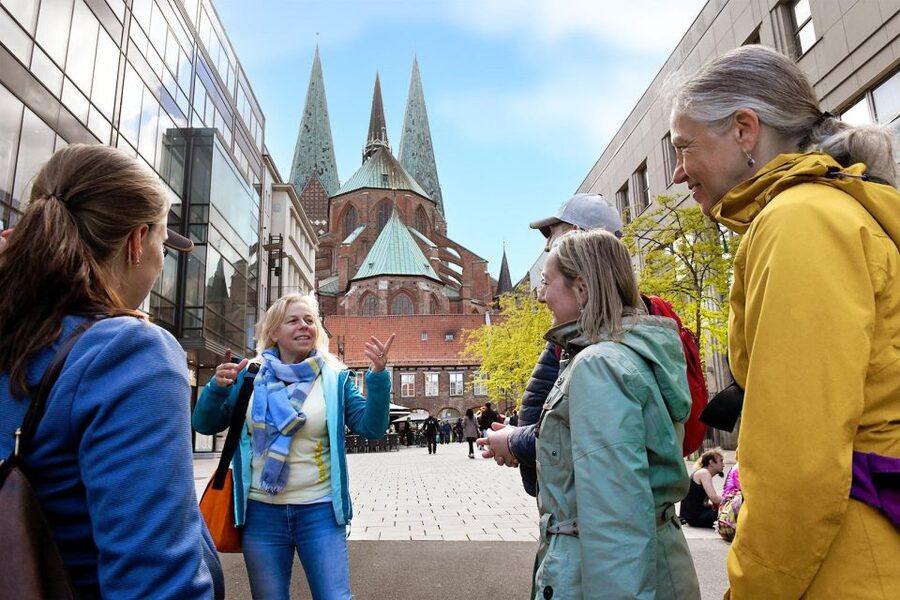
The church is particularly meaningful within the city’s famous skyline. The seven towers are not just a scenic backdrop. They are part of the way Lübeck presents its history, with major religious buildings rising above the brick center.
The guide’s job here is to make that skyline readable. You can expect historical explanation and architectural observations, with the larger story tied back to the Hanseatic city. This is one of the moments when a guide adds real value over a self-guided walk, since the buildings can otherwise blur into a series of impressive but disconnected facades.
I would not book this experience expecting guaranteed interior access to the churches. The information describes an outdoor city walk through the old town and does not promise entry. If seeing church interiors is your main goal, treat this tour as an overview and make separate plans.
Medieval corridors and abbey courtyards
The most distinctive part of the walk may be the detour into Lübeck’s medieval corridors and abbey courtyards. These smaller spaces offer a change from the grand gates, churches, and civic buildings.
I especially value this kind of detour because it gives you a sense of how people lived behind the formal street fronts. Narrow passages and courtyards can reveal a more intimate side of the old town, one that is easy to miss if you follow only the main sightseeing route.
The contrast also improves the pacing. After hearing about major buildings and city institutions, you move into quieter, more enclosed spaces. That shift helps turn Lübeck from a postcard skyline into a place with layers of everyday history.
The information does not promise that every corridor or courtyard will be visited, and the exact route can depend on local conditions and the group’s pace. Still, this feature is important when deciding between a basic landmark walk and a tour with more local texture.
How the guides handle history and humor
The tone appears to be one of the tour’s strongest points. Feedback describes guides as friendly, amusing, and effective at supplying historical information without making the walk feel heavy.
One recent assessment praised the way facts and funny anecdotes were kept in balance. Another described the guide as giving many details in a warm and humorous way, with interest holding through to the end. That is exactly what I want from a short city tour: enough information to give the town meaning, but enough personality to keep me looking up from the pavement.
The guide is also expected to offer practical suggestions for leisure activities, nightlife, and shopping. These tips can be more useful than another date from a history book, especially if Lübeck is one stop in a larger northern Germany trip.
The language is German only. That is not a minor detail. If you understand German comfortably, the tour could be a good way to hear local stories and phrasing. If you know only basic German, you may recognize the sights but miss the jokes, details, and practical advice that make the experience worthwhile.
The group-size problem at 29 to 30 people
The clearest weakness is group size. Several recent departures had roughly 29 or 30 participants, and that is large for a walking tour through historic streets.
A group that size creates two problems. First, the guide has to project a great deal, and people at the back may not hear every sentence. Second, the group can stretch out between stops, so the guide may begin speaking before everyone has arrived.
That can also reduce informal conversation. A smaller group makes it easier to ask a quick question, exchange a comment with the guide, or pause long enough to examine a detail. With 30 people, the walk can feel more like a moving class than a personal introduction.
I would stay close to the guide, especially at the Holstentor and the church stops. Arrive a little early, position yourself toward the front, and do not linger at the back when the group moves. These simple choices will not fix the crowd, but they can improve what you hear.
The group size is worth weighing against the price. At $16, I consider the tour fairly priced even with a larger party, especially if you want orientation and a clear historical framework. At a higher price, I would expect a smaller group or more personal attention.
Is the $16 price good value?
For $16, you are paying for a 90-minute guided walk through the key sights of Lübeck’s old town. The package includes a live German-speaking guide, explanations of the Holstentor, Petrikirche, Rathaus, and St. Marien Church, plus the medieval corridors and courtyards when included in the route.
That is solid value if you want a first introduction and do not plan to spend hours studying the city before arrival. A guide can save you from wandering past important buildings without understanding why they matter.
The price is less compelling if you want a quiet, highly personal experience. The large groups reported on recent tours limit the amount of individual attention, and you may need to make your own second visit to absorb the details.
The high overall score of 4.7 from 594 ratings supports the idea that most people find the tour useful and enjoyable. Still, the repeated concern about crowd size is specific enough that I would not ignore it. The tour is a good-value overview, not a small-group luxury walk.
You can also reserve now and pay later, which helps if your plans are still shifting. Cancellation is free up to 24 hours before the start time. Keep those policies in mind, but make the decision mainly on language, group size, and the kind of sightseeing you prefer.
Who should book this Lübeck walk?
I would recommend it to you if this is your first visit to Lübeck and you want the major sights explained in a short block of time. It also suits anyone who enjoys history presented with humor rather than a formal lecture.
The tour works well for visitors with limited time, since the route covers the old town highlights in 1.5 hours. It can also serve as a useful first walk before you return independently to the church, Rathaus, or smaller lanes that catch your eye.
German-speaking visitors will get the most from it. You need enough German to follow a live explanation outdoors, where a large group may make every word harder to catch.
I would look elsewhere if you want a private feel, a small group, extensive interior visits, or commentary in English. The tour’s strengths are its central route, accessible price, and lively historical presentation. Its weak point is the crowd.
Should you book the Lübeck old town tour?
Book it if you want a short, affordable German-language introduction beginning at the Holstentor and covering Lübeck’s essential brick landmarks. The mix of civic buildings, churches, medieval corridors, and practical city tips gives you more than a simple photo walk.
Go in prepared for a group of around 30 and stay near the guide. If you can accept that tradeoff, the $16 price is sensible and the tour should give you a clear grasp of why Lübeck’s old town matters.
FAQ
Where does the Lübeck tour meet?
The meeting point is in front of the Holstentor on the park side.
How long does the tour last?
The walking tour lasts 1.5 hours.
What language is the tour conducted in?
The live tour is conducted in German only.
Which sights are included?
The tour includes the Holstentor, Petrikirche, Lübeck’s Rathaus, and St. Marien Church. It also includes a detour to medieval corridors and abbey courtyards.
What does the tour cost?
The listed price is $16 per person.
Can I cancel the tour for a full refund?
Yes. You can cancel up to 24 hours in advance for a full refund.
Can I reserve now and pay later?
Yes. You can reserve your place and pay later, keeping your travel plans flexible.
Just added around Germany
- e-Scavenger hunt Aachen: Explore the city at your own pace★ 4.0 · 13 reviews
- Munich: Private or Group Third Reich and WWII Walking Tour★ 4.9 · 13 reviews
- Canyoning Advanced Day Trip★ 5.0 · 13 reviews
- Wiesbaden Biebrich: Outdoor Escape Game★ 4.7 · 13 reviews
- Berlin: Private Guided Tour of the Main Sights★ 5.0 · 13 reviews
- From Munich: Neuschwanstein Castle and Linderhof Private Tour★ 5.0 · 13 reviews
- Trier, Moselle: Wine excursion with boat trip★ 3.9 · 13 reviews
- From Dresden: Guided Day Tour by Bus of Seiffen Toy Village★ 4.0 · 13 reviews
Old Town Walks, compared.
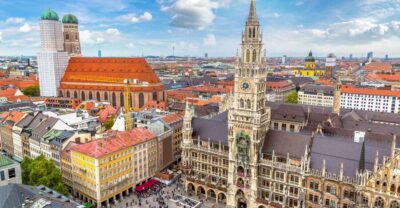
Old Town & Viktualienmarkt City Walk in German
Read our review →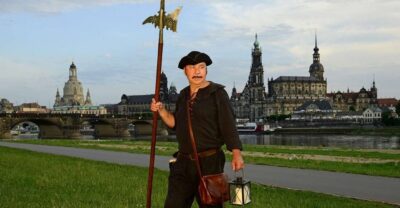


The Night Watchman Old Town Walking Tour in German
Read our review →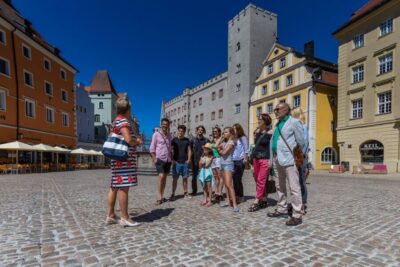
Browse the lists this tour appears in