
Reviewed · LEIPZIG TOURS
Leipzig: 360° Panorama THE CATHEDRALE OF MONET ticket
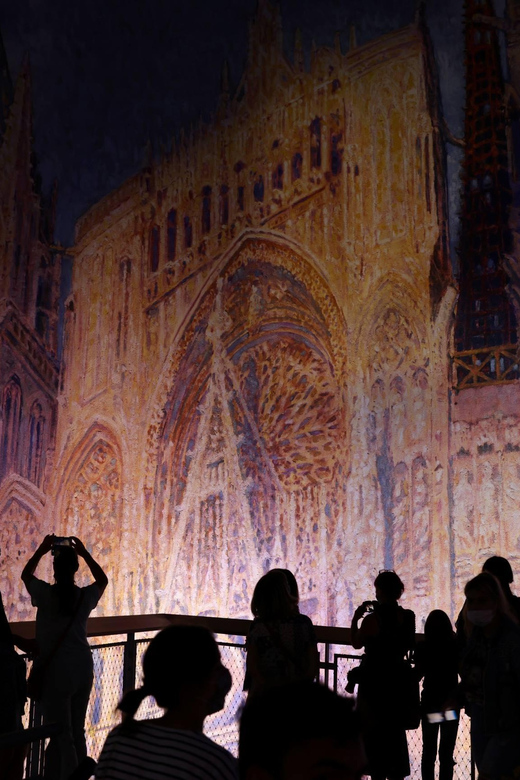
Art gets bigger than life here. At Leipzig’s Panometer, Yadegar Asisi turns Claude Monet’s Rouen Cathedral paintings into a 32-metre-high, 360-degree panorama that places you inside a 19th-century French town. I like the carefully timed change from daylight to evening, and I like the way the huge canvas lets you inspect brushstrokes and color from a completely different angle. The main drawback is simple: this is a visual art experience, not a guided tour of Rouen, and visitors who prefer original paintings or a more traditional museum may find the format unusual.
I also like the easy one-day ticket, the free parking, and the included exhibition and closing film. The 15-minute lighting cycle gives the visit a clear rhythm, but it can also make the main room feel busy when everyone gathers for the same sunset moment. A German guided tour costs an additional $4 per person.
In This Review
- Key details at a glance
- What THE CATHEDRAL OF MONET actually is
- Reading the Rouen scene from the ground level
- The 15-minute change from day to evening
- Why the huge scale changes Monet’s subject
- The accompanying exhibition and closing film
- Access, parking, and the extra German tour
- Is $18 a fair price?
- Who will enjoy this Leipzig art visit most
- Should you book THE CATHEDRAL OF MONET?
- FAQ
- Where is THE CATHEDRAL OF MONET located?
- How much does admission cost?
- How long is the ticket valid?
- What does the ticket include?
- Is a guided tour included?
- How long does the day and night sequence last?
- Is the Panometer barrier-free?
- Are pets allowed?
- Is parking available?
- Can I cancel the booking?
Key details at a glance
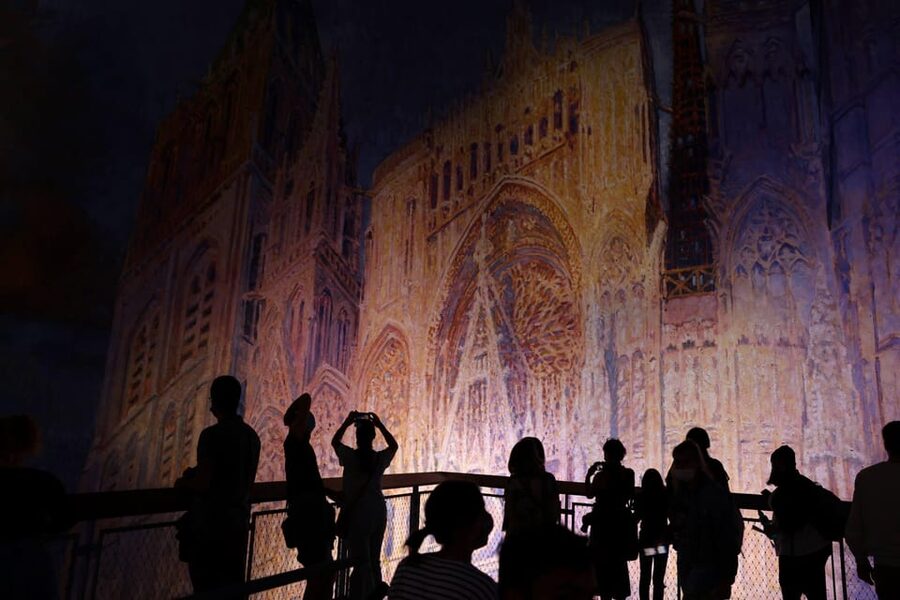
- A giant oil painting made for a round room: The original 6 by 2 metre painting was created in oil on canvas, digitized at high resolution, and printed as a 3,500-square-metre installation.
- A 15-minute day-to-night cycle: Light, sound, and music shift the scene from day toward evening, changing the way the cathedral and surrounding buildings appear.
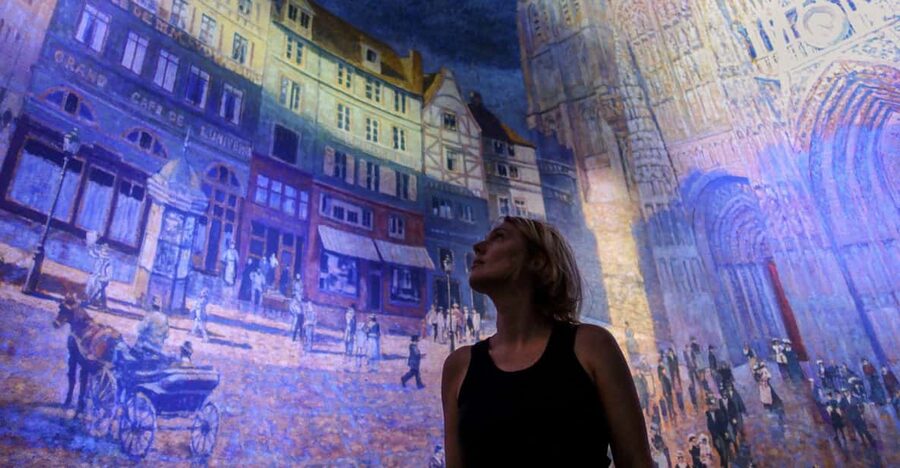
- Monet’s Rouen brought into city life: The picture shows the Cathedral of Our Lady, nearby houses, narrow streets, and figures including Claude Monet, Vincent van Gogh, and Auguste Renoir.
- A 15-metre viewing tower: The tower gives you a high view of the panorama, though this is the one part of the visit that is not barrier-free.
- More than the main panorama: Your ticket also covers the accompanying exhibition and a final film.
- A flexible $18 ticket: You can cancel up to 24 hours ahead for a full refund, or reserve now and pay later.
What THE CATHEDRAL OF MONET actually is
It helps to understand the format before you arrive. This is not one framed Monet painting hanging on a wall. It is a full-room artwork designed to surround you.
Berlin-based artist Yadegar Asisi began with the familiar subject of Rouen Cathedral. Monet painted the cathedral many times under different lighting conditions, studying how the stone changed with the hour and the weather. Asisi used one of those works as his starting point, then expanded its light, color, and setting into a round panorama.
The result is a 3,500-square-metre image inside the Panometer Leipzig. It is printed rather than painted directly onto the final structure, but the source work began as a 6 by 2 metre oil painting on canvas. That production method matters. As you look around, the canvas texture, brush marks, and thick paint applications help keep the image from feeling like a flat digital screen.
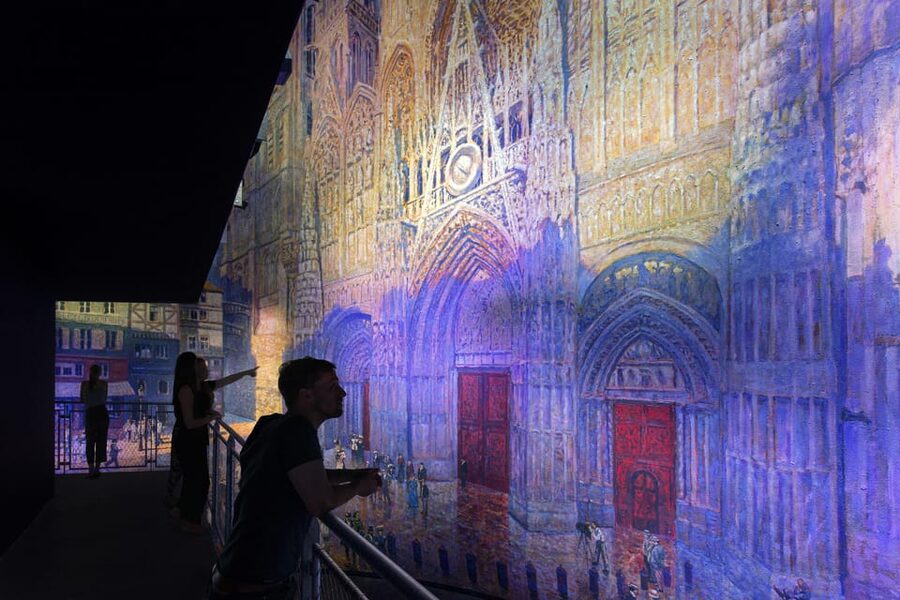
You are not simply looking at a cathedral. You are placed in the middle of a painted Rouen. The building rises above the scene, its facade catching late sunlight and sending orange-red color across the forecourt and nearby houses. The effect depends less on sharp architectural detail than on shifting tones, shadows, and the way light seems to travel across the town.
A few more tours and experiences worth a look
- Leipzig: 13-Stop Hop-on/Hop-off Bus Ticket
★ 4.6 · 1,468 reviews - Leipzig Zoo: Entry Ticket
★ 4.8 · 1,209 reviews - Leipzig: 1-Day Hop-On Hop-Off Bus and Leipzig Zoo Ticket
★ 4.6 · 152 reviews
Reading the Rouen scene from the ground level
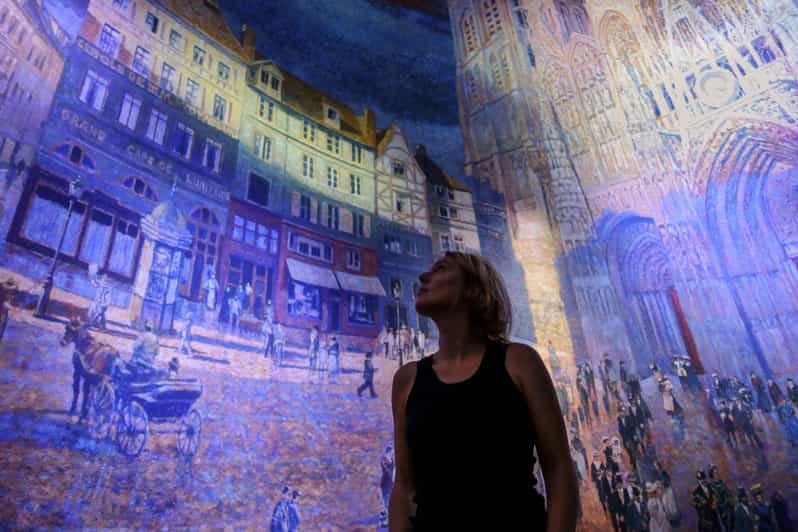
Your first view is likely to be the most direct. From the lower level, the cathedral fills much of the panorama, while streets and buildings spread around it. This is the best position for noticing the small human activity in the picture.
The city’s residents move through alleys and open spaces. Among them are recognizable painters and contemporaries, including Monet, Renoir, and van Gogh. Their presence gives the image a playful historical layer. You can spend time looking for them, then step back and let the whole scene take over again.
The lower view also helps you understand the painting’s color. The cathedral is not presented as a uniform gray stone building. Depending on the section you face, it appears touched by warm evening light or surrounded by cooler shadow. The houses receive those colors in turn, so the town seems to change even before the programmed lighting begins.
I would allow yourself time to look without trying to identify every figure. The panorama is large enough that you can miss the overall mood if you treat it like a search game. Start with the cathedral, follow the light across the buildings, and then return to the smaller details.
The biggest practical issue is orientation. A round room can make it hard to know where to begin, especially when other people are spread around the base. There is no single correct viewpoint, so take a slow walk around the perimeter before settling on a favorite section.
The 15-minute change from day to evening
The main event is the lighting cycle. Over about 15 minutes, the panorama moves through a change of day and night, supported by background sounds and music. As the light shifts, the painted Rouen changes with it.
This is where the ticket earns much of its value. You could see the artwork in ordinary room lighting, but the programmed sequence gives you a reason to stay. The cathedral’s facade becomes the focus as evening light warms the stone, then the surrounding streets and buildings take on darker, more subdued tones.
The sound is important, too. It helps turn the room from a static display into a timed presentation. You are not watching a film with a beginning and end. Instead, you are standing inside a fixed image while light and audio alter your reading of it.
I suggest finding a comfortable viewing spot before the cycle reaches its most dramatic stage. The 15-minute length is short enough to fit into a busy Leipzig day, but long enough that you should not rush out after a quick look. If you arrive midway through the sequence, staying for the next cycle will give you a fuller sense of the artwork.
This timing has one small disadvantage. Since the day-to-evening transition is a shared moment, people may gather in the same viewing areas. If you prefer a quiet museum, the room can feel less peaceful at the peak of the sequence. The upside is that the cycle repeats as part of the normal visit, so you are not limited to a single instant.
Why the huge scale changes Monet’s subject
Monet’s cathedral series is known for repeated views of the same building under different light. On a conventional museum wall, you compare paintings side by side or move from one frame to the next. Here, the subject becomes architectural and theatrical at once.
The scale changes your relationship with the work. You cannot take it in with one glance. You have to turn your head, move around the room, and decide how close or far away you want to stand. From near the canvas, brush marks and enlarged paint applications become part of the scene. From farther away, the image reads as a broad city view.
That shift is especially useful if impressionism feels distant or overly academic to you. The panorama makes the basic idea easy to grasp: light is not just added to a building. It changes the building’s apparent color, shape, and mood.
I find the format most rewarding for people who enjoy looking slowly. You do not need specialist art knowledge. The accompanying legend provides explanations, and the exhibition gives you context for the work. Still, do not expect a detailed art lecture unless you pay for the optional German guided tour.
The artwork’s size is also the reason this visit may not suit everyone. If you prefer small original works where you can study the artist’s hand at close range, a large printed panorama may feel less satisfying. This is an interpretation of Monet’s subject, not a display of his original cathedral panels.
Something different for another day:
- Leipzig: City History Canal Sightseeing Tour on a Motorboat
★ 4.7 · 6,232 reviews - Leipzig: 1.5-Hour Public Tour with Night Watchman Bremme
★ 4.6 · 3,116 reviews - Combo Tour in Leipzig: Guided City Tour & City Sightseeing
★ 4.7 · 2,317 reviews - Leipzig: 1.5-Hour Historical Walking Tour in German
★ 4.7 · 2,217 reviews
The accompanying exhibition and closing film
The panorama is the centerpiece, but your admission also includes an exhibition and a concluding movie. These additions help turn the visit into more than a single room with a large image.
Use the exhibition to slow down after the panorama. It can help explain the connection between Monet’s repeated cathedral paintings and Asisi’s expanded version. The legend is useful here as well, especially if you want help identifying parts of the scene or understanding the artistic approach.
The final film gives the visit a clear ending. Since the central image has no traditional gallery labels beside every detail, the film can help pull the ideas together after you have seen the panorama. I would not skip it automatically. It is part of the included program and gives you a chance to reflect on how the work was made.
The supplied information does not specify the film’s running time or the exact length of the exhibition visit. Plan your schedule around the one-day admission rather than a fixed tour duration. You can check available starting times when booking, but the ticket itself is valid for one day.
There is also a small café and museum shop in the exhibition area. That is convenient if you want a drink or a modest souvenir without leaving the building. It also gives you a natural pause before or after the central panorama.
Access, parking, and the extra German tour
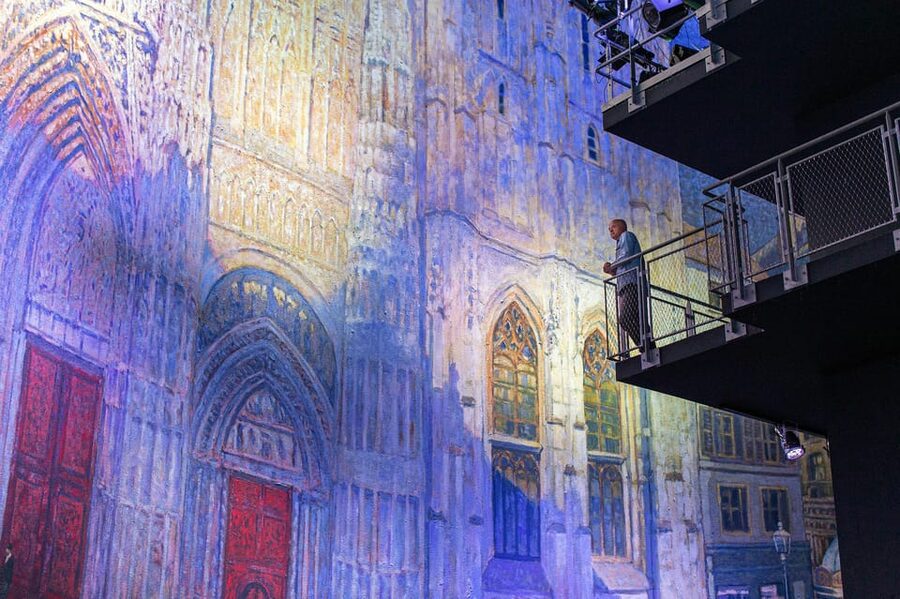
The Leipzig Panometer is barrier-free except for the 15-metre visitor tower. That distinction matters. You can access the main visit without treating the tower as essential, but the high viewpoint may not work for everyone.
The tower offers a different way to read the circular artwork. From above, you can better understand how the panorama wraps around the room and how the city scene is arranged. If you use the tower, treat it as an optional viewpoint rather than the definition of the visit.
Free parking is available on site, which makes the Panometer convenient if you are arriving by car. The provided information does not give detailed public transport instructions, so check current local routes if you are coming across Leipzig without a vehicle.
German guided tours cost $4 per person and are paid at arrival. The ticket already includes the exhibition, panorama, closing film, and a legend, so the extra tour is best for you if a spoken German explanation would add value. If you do not need that help, the included material lets you explore independently.
Pets are not allowed. Keep that in mind if you are traveling with an animal and need to plan another arrangement before entering.
Is $18 a fair price?
At $18 per person, this is not a bargain basement attraction, but the admission covers several parts of the visit. You get the large panorama, the supporting exhibition, the concluding film, and the legend. The one-day validity also gives you some flexibility instead of forcing you into a tightly timed short session.
The value depends on how you approach it. If you spend only a few minutes in the main room, the price may feel high for a single artwork. If you stay through the day-to-evening sequence, examine the painting from several levels, read the exhibition, and watch the film, the cost makes more sense.
I would compare it with the price of a standard museum admission, but not judge it by the number of objects on display. The Panometer offers one unusually large art environment rather than a collection of unrelated works. Its appeal comes from scale, light, and the chance to observe one subject from inside a painted scene.
The flexible booking terms improve the value for a planned Leipzig visit. You can reserve and pay later, and cancellation is free up to 24 hours before the visit. Check the available starting times before booking, since the ticket is valid for one day but does not remove the need to confirm availability.
Who will enjoy this Leipzig art visit most
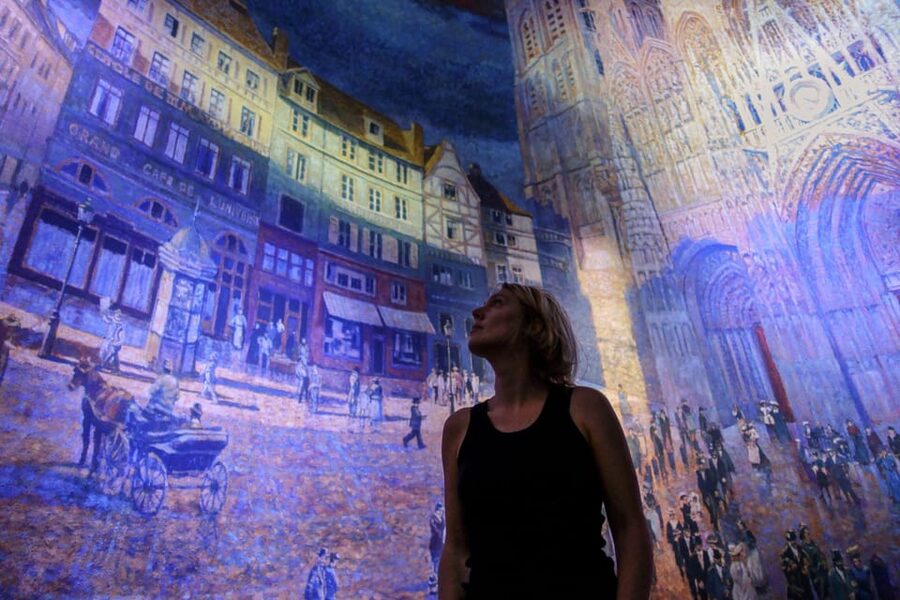
I would recommend THE CATHEDRAL OF MONET to you if you enjoy impressionism, large-scale installations, or unusual museum formats. It is also a good choice if you want a break from conventional sightseeing and prefer an attraction that can be taken at your own pace.
Families with older children may find the changing light and large scene easier to appreciate than a quiet gallery of small paintings. The search for Monet, Renoir, and van Gogh within the panorama gives younger visitors a clear visual task, though the attraction is still centered on looking rather than hands-on activity.
Art students and architecture fans have good reasons to visit, too. The cathedral shows how the same building can appear to shift under different light, while the production process offers a useful example of an oil painting transformed into a large printed installation.
I would be more cautious if your main goal is to see authentic Monet originals. You will not find original paintings by Monet here. You will find Asisi’s large-scale response to Monet’s Rouen Cathedral series, presented with lighting, audio, exhibition material, and film.
People who dislike enclosed viewing spaces or programmed sound may want to keep the format in mind. The main room is built around a 360-degree image, and the cycle is designed to be experienced as a complete sensory presentation.
Should you book THE CATHEDRAL OF MONET?
Book it if you want to see impressionism translated into a room-sized artwork rather than another conventional gallery display. The 15-minute light and sound cycle, the huge painted Rouen, and the included exhibition make the $18 ticket a reasonable choice for an art-focused stop in Leipzig.
Skip it if you only want original Monet paintings, a long guided history tour, or a quick attraction you can finish in five minutes. For the best visit, give yourself time for at least one full day-to-evening cycle, use the legend, look for the famous painters in the streets, and compare the lower and tower viewpoints if the stairs suit you.
With a rating of 4.7 from 410 reviews, the strongest praise centers on the unusual, highly absorbing exhibition format. That matches the attraction’s real strength: it gives you a new way to think about light, scale, and Monet’s cathedral without pretending to be a traditional museum.
FAQ
Where is THE CATHEDRAL OF MONET located?
The experience is at the Panometer Leipzig in Saxony, Germany.
How much does admission cost?
The listed price is $18 per person.
How long is the ticket valid?
The ticket is valid for one day. Check availability for the starting times offered on your chosen date.
What does the ticket include?
Admission includes the Panometer Leipzig exhibition, the 360-degree panorama artwork, the concluding movie, and a legend with explanations of the panorama.
Is a guided tour included?
No. German guided tours cost an additional $4 per person and are payable upon arrival.
How long does the day and night sequence last?
The change from day to night takes about 15 minutes and includes background sounds and music.
Is the Panometer barrier-free?
The Leipzig Panometer is barrier-free except for the 15-metre visitor tower.
Are pets allowed?
No. Pets are not allowed.
Is parking available?
Yes. Free parking is available on site.
Can I cancel the booking?
Yes. You can cancel up to 24 hours in advance for a full refund. You can also reserve now and pay later.
Just added around Leipzig
- The classic – experience Leipzig’s city centre★ 5.0 · 13 reviews
- Leipzig’s Communist Past: A Self-Guided Audio Tour★ 5.0 · 16 reviews
- Corpses, Leprosy, Lucifer 75-minute Tour at the Old Cemetery★ 5.0 · 16 reviews
- first electrical carriage in town – guided City Tours – Leipzig★ 5.0 · 17 reviews
- Leipzig : Guided tour with Panorama Tower for a private group★ 5.0 · 19 reviews
- Motorboat tour ”Little Venice Tour” Gustav★ 4.5 · 19 reviews
- Leipzig’s Courtyards and Passages – Guided Tour for a Private Group★ 5.0 · 20 reviews
- Leipzig: “SoKO Leipzig”, unique Escape Room, 60 minutes★ 4.6 · 20 reviews
Leipzig Tours, compared.
City History Canal Sightseeing Tour on a Motorboat
Read our review →
1.5-Hour Public Tour with Night Watchman Bremme
Read our review →
Combo Tour in Leipzig: Guided City Tour & City Sightseeing
Read our review →

Browse the lists this tour appears in