
Reviewed · LEIPZIG TOURS
Guided tour of the Federal Administrative Court in Leipzig
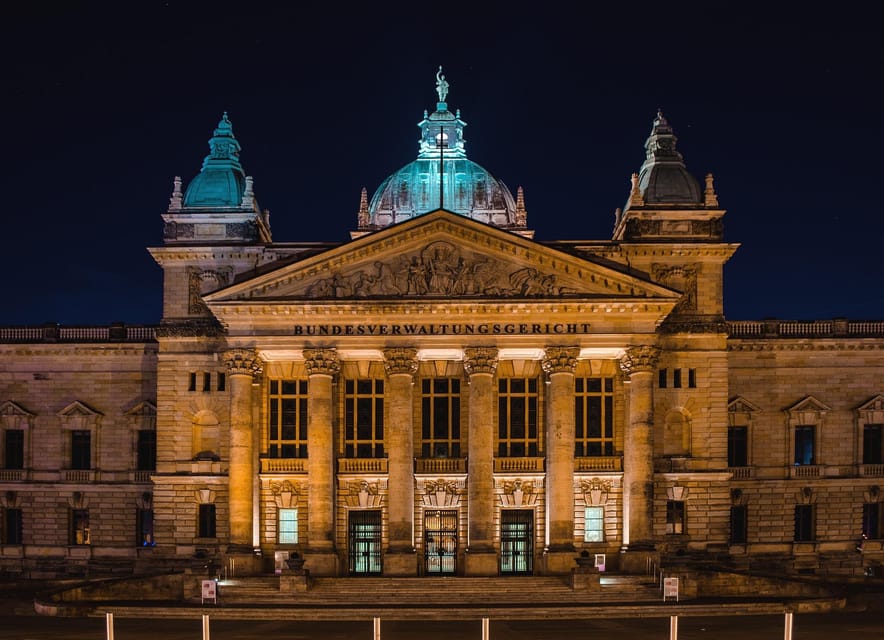
Justice has a grand address in Leipzig. Inside the former Imperial Court of Justice, you can see ornate halls, historic courtrooms, the president’s apartment, and the large room linked to the 1933 Reichstag Fire Trial. The building has housed Germany’s Federal Administrative Court since 2002, so this is both an architectural visit and a working lesson in modern German law.
I especially like the chance to explore Germany’s largest Palace of Justice from the inside, since most visitors only admire such buildings from the street. I also like the way the certified German-speaking guide connects the rooms to major events, including Karl Liebknecht’s defense against high treason charges. The main consideration is language: the live tour is in German, and you cannot enter after the tour begins.
In This Review
- Key details before you book
- Why this courthouse matters in Leipzig
- Entering through the foyer
- The domed hall and judicial architecture
- Historic courtrooms with serious associations
- The Reichstag Fire Trial hall
- The judges’ ancestral gallery
- The president’s apartment and ceremonial hall
- Understanding the Federal Administrative Court today
- Is $16 a fair price?
- Who will enjoy this 90-minute tour?
- Practical advice for a smooth visit
- Should you book the Federal Administrative Court tour?
- FAQ
- Where does the Federal Administrative Court tour start?
- Where does the tour finish?
- How long does the tour last?
- What language is the tour in?
- How much does the tour cost?
- Is the tour wheelchair accessible?
- How early should I arrive?
- Do I need a coin for the luggage compartment?
- Can I cancel the booking?
Key details before you book
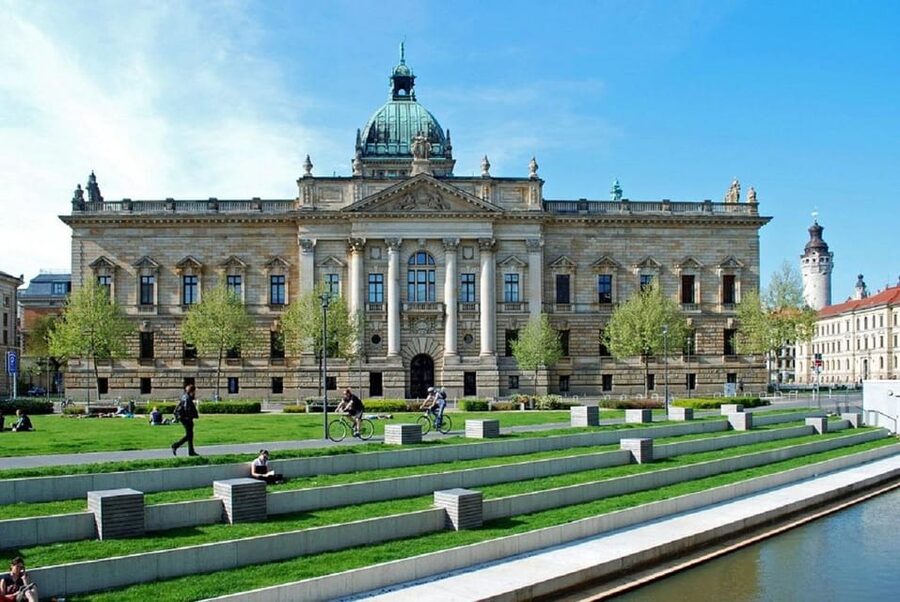
- A working supreme court in a former imperial building: Learn how the Federal Administrative Court handles disputes under German administrative law.
- The Reichstag Fire Trial hall: Visit the large room associated with one of the most charged legal proceedings in Germany’s 20th-century history.
- More than a courthouse corridor: The route includes the domed hall, historic courtrooms, the judges’ ancestral gallery, and the ceremonial hall in the president’s apartment.
- A compact 90-minute visit: The length gives you time to see the principal rooms without taking up an entire day in Leipzig.
- German-language guiding: A certified guide leads the tour, but you should be comfortable following German or arrange your own language support if needed.
- Easy planning with useful flexibility: The price is $16 per person, cancellation is free up to 24 hours before the tour, and you can reserve now and pay later.
Why this courthouse matters in Leipzig

The building was created for the Imperial Court of Justice, founded in 1879 as the supreme court of the German Reich. Its purpose was not modest. This was meant to be a representative center of justice, and its formal design still makes that clear.
You are not simply looking at decorative rooms. The building reflects changing systems of government and law. It began as the home of the highest court in the German Empire, later became tied to some of Germany’s most painful political chapters, and now houses the Federal Administrative Court of the Federal Republic of Germany.
That layered story gives the tour real weight. The same building can feel ceremonial in one room and politically troubling in the next. I find that contrast more useful than a visit focused only on architecture.
Since 2002, the Federal Administrative Court, known in German as the BVerwG, has worked here. It is Germany’s highest administrative court. Its cases concern disputes in administrative law, which broadly covers conflicts involving public authorities and the way government decisions are made and applied.
The tour presents this work in a clear, visual way. You are not expected to be a legal expert. Still, you should expect more than a house tour. The point is to show how the building’s past connects with the court’s present role.
A few more tours and experiences worth a look
- Combo Tour in Leipzig: Guided City Tour & City Sightseeing
★ 4.7 · 2,317 reviews - Leipzig: 2-Hour Guided Walking Tour in German
★ 4.8 · 1,612 reviews - Gruseltour Leipzig: A Haunted Guided Tour
★ 4.5 · 1,385 reviews
Entering through the foyer
The tour starts in the foyer of the Federal Administrative Court and ends there as well. This simple arrangement helps keep the visit easy to follow, especially if you are fitting it between other Leipzig sights.
Arrive at least 10 minutes early. This is not a place where you can stroll in late and quietly join the group. Once the tour has started, entry to the courthouse is not possible.
You will need to use the luggage compartment for certain belongings, and a 1 euro coin is required. Bring that coin with you rather than hoping to find one at the last minute. Pets are not allowed, although assistance dogs are permitted.
The building remains a court facility, so the tone is more formal than at a typical museum. That is part of the appeal, but it also means you should follow the guide’s instructions closely. Party groups and bachelor or bachelorette groups are not permitted.
The domed hall and judicial architecture
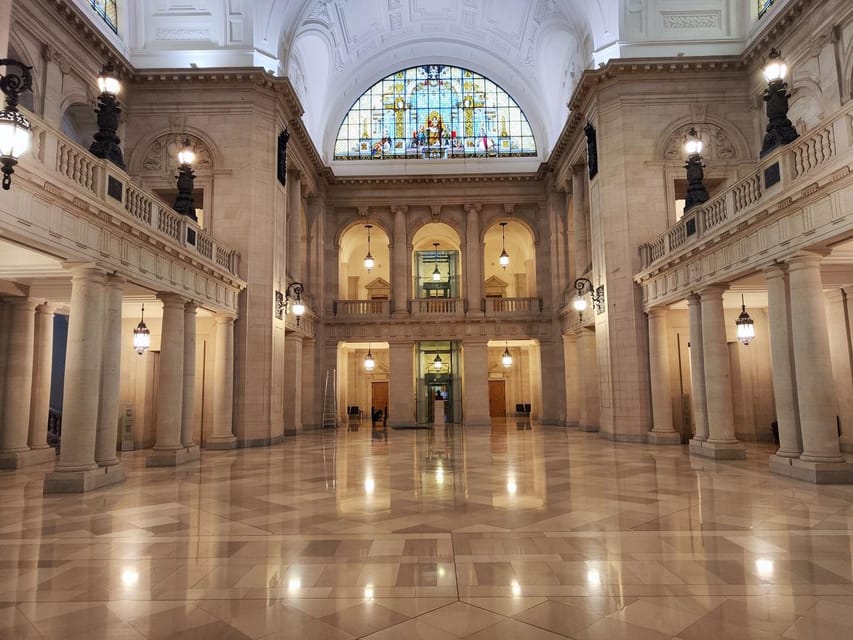
One of the main sights is the domed hall. This is where the building’s grand public image becomes clear. A domed space in a courthouse is not accidental decoration. It communicates order, authority, and ceremony before a single legal argument begins.
The tour gives you time to look at the architecture from inside rather than rushing past it on the way to a courtroom. Pay attention to how the building uses scale and formal design to shape your impression of justice.
That grandeur can feel heavy. Some visitors may prefer a smaller museum where the story is easier to absorb at their own pace. Here, the architecture demands attention, and the German-language explanation carries much of the interpretation.
Still, the domed hall is a strong reason to choose this visit if you care about buildings. The experience is not limited to a plaque and a quick photograph. You are guided through the way the courthouse was designed to represent the judicial system.
Historic courtrooms with serious associations
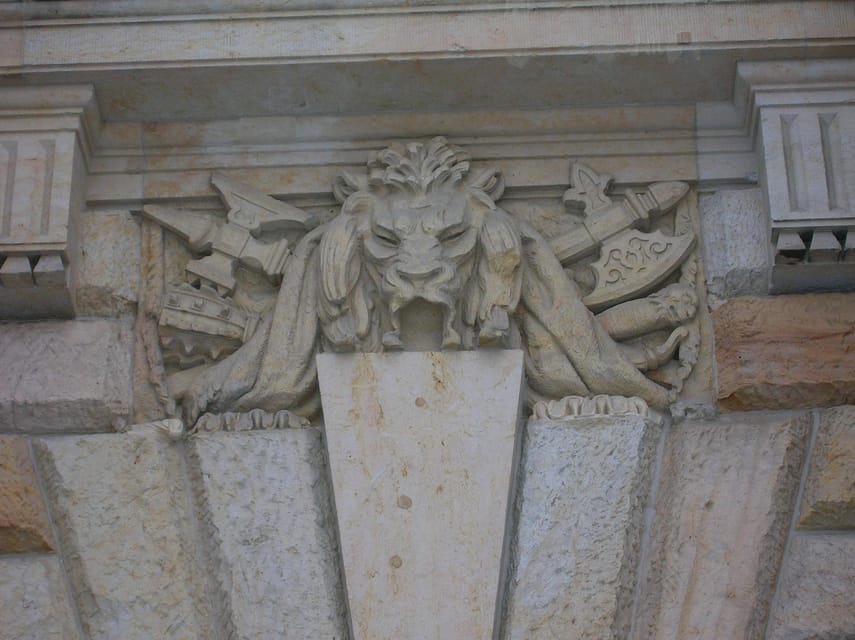
The route includes historic courtrooms, and these rooms help turn legal history into something more immediate. Court cases can seem distant when you read about them in a book. Seeing the rooms where proceedings took place gives the subject a physical setting.
One important figure connected with the building is Karl Liebknecht. He defended himself here against accusations of high treason. That episode adds a political dimension to the visit and shows how the court was involved in conflicts that reached well beyond ordinary legal disputes.
You should not expect a staged courtroom performance or a theatrical reenactment. The strength of the tour is the setting itself, along with the guide’s explanation of the court’s past and present work.
The historic rooms may be especially useful for visitors who want more context for Leipzig’s role in German political history. The tour stays focused on the building and the court, so it does not attempt to cover every period of the city’s past.
Something different for another day:
- Leipzig: City History Canal Sightseeing Tour on a Motorboat
★ 4.7 · 6,232 reviews - Leipzig: 1.5-Hour Public Tour with Night Watchman Bremme
★ 4.6 · 3,116 reviews - Leipzig: 1.5-Hour Historical Walking Tour in German
★ 4.7 · 2,217 reviews - Leipzig: 13-Stop Hop-on/Hop-off Bus Ticket
★ 4.6 · 1,468 reviews
The Reichstag Fire Trial hall
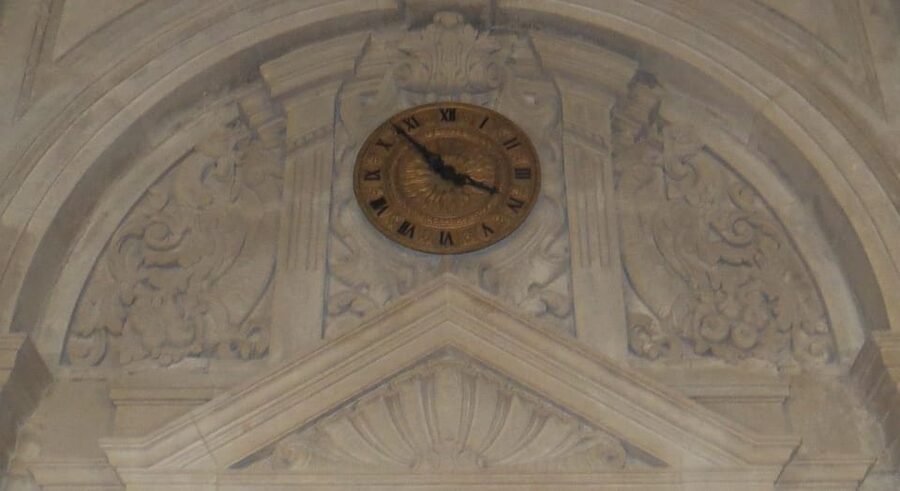
The large hall where the Reichstag Fire Trial took place is likely to be the most emotionally charged stop. In 1933, the trial followed the fire at Berlin’s Reichstag building and occurred during the early period of Nazi rule.
The room’s importance comes from the way law and politics collided there. You are seeing the setting of a trial that remains closely tied to the history of the Nazi seizure of power and the treatment of political opponents.
The tour does not turn this into a sensational stop. That is appropriate. A quiet explanation of the room and its role can be more effective than dramatic storytelling. Give yourself time to consider what the setting represents.
This part of the visit may be difficult for younger children or anyone looking for a light architectural outing. The courthouse is impressive, but its history includes real political fear and injustice. I would choose it for serious interest in German history, not as a casual rainy-day attraction.
The judges’ ancestral gallery
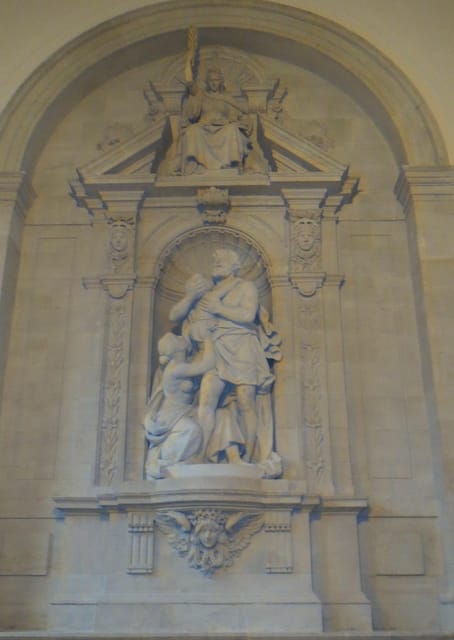
The judges’ ancestral gallery offers another way to read the institution. A gallery of judges places individual people within the longer story of the court.
The word ancestral may sound unusual in English, but the idea is straightforward: you see a visual record connected with the judges who shaped the institution. This gives the court a human face, although the presentation remains formal.
I like this kind of stop because it helps break up the larger architectural spaces. After looking at halls and courtrooms, you get a more personal sense of the people who held judicial office.
The gallery also raises useful questions about continuity. Which parts of a court’s identity survive political change? Which decisions deserve respect, and which should be examined critically? You may not get a long answer to every question in 90 minutes, but the setting gives the guide a good place to begin.
The president’s apartment and ceremonial hall

The tour also includes the president’s apartment, specifically its ceremonial hall. This is one of the less expected parts of the visit and adds a social side to the institution’s history.
A president’s apartment in a major court building shows that the structure was designed not just for legal work but also for representation. Important visitors, formal occasions, and official hospitality all needed a suitable setting.
The ceremonial hall should appeal to anyone interested in historic interiors. It also helps explain the building’s original status as a national institution. Courts communicate through decisions, but they also communicate through rooms, rituals, and public appearances.
This stop may feel more decorative than the courtrooms or Reichstag Fire Trial hall. That change of mood is useful, though. The tour moves between politics, law, daily institutional life, and architecture instead of repeating the same kind of room for 90 minutes.
Understanding the Federal Administrative Court today
The final layer of the tour is the work of the modern Federal Administrative Court. The BVerwG is the highest administrative court in Germany, and it decides disputes in administrative law.
That phrase can sound dry, so the guide’s job matters. The tour presents the court’s tasks and decisions in a vivid way, linking its current role to the building around you.
Administrative law concerns the relationship between government authorities and the people, organizations, or institutions affected by official decisions. The court’s work is therefore an important part of how public power is checked.
You are unlikely to leave with a law degree, and that is not the aim. Instead, you get a practical sense of why a highest administrative court exists and how it fits into Germany’s judicial system.
This modern section also keeps the tour from becoming a memorial to the past. The building is still in use. Its story did not end with the Imperial Court of Justice or the events of 1933.
Is $16 a fair price?
At $16 per person, this is a good-value visit for anyone interested in architecture, law, or German history. The price covers 90 minutes with a certified guide and access to spaces that are not part of an ordinary public stroll through Leipzig.
Value depends on your interests. If you want a general city tour, this may feel too specialized. If you enjoy grand buildings, political history, or the workings of courts, the price is modest for the amount of context packed into the visit.
The strongest value comes from the combination of access and interpretation. You are not paying only to enter a building. You are getting explanations of the former Imperial Court of Justice, the modern Federal Administrative Court, the courtrooms, the judges’ gallery, and the building’s major historical associations.
The high rating of 4.8 from 54 reviews supports the idea that the experience is well received, but I would still pay attention to the German-only format. A tour can be excellent and still be a poor match if you cannot follow the guide.
Who will enjoy this 90-minute tour?
I would recommend it most strongly to:
- You enjoy historic architecture with a serious purpose behind it.
- You want to understand Germany’s court system beyond the usual museums.
- You have an interest in the German Empire, Karl Liebknecht, or the Nazi period.
- You prefer a focused 90-minute activity rather than a full-day sightseeing commitment.
- You appreciate guided visits where access to special rooms matters.
- You can follow a live tour in German.
Families may find the building impressive, but the political and legal material is not designed as a children’s attraction. People with mobility needs can consider it too, since the tour is wheelchair accessible.
The experience is less suitable if you want a flexible, self-guided visit. The fixed starting time and no-late-entry rule require punctuality. It is also not suitable for party groups, pets, or bachelor and bachelorette outings.
Practical advice for a smooth visit
Book a starting time that leaves you enough margin to reach the courthouse. Arriving 10 minutes early is not just a polite suggestion here. Late entry is not possible once the tour has started.
Keep the 1 euro coin ready for the luggage compartment. Avoid bringing pets, apart from an assistance dog, and plan for a formal public-building setting rather than a casual attraction.
Check availability for the exact starting times before you arrange the rest of your Leipzig day. The tour lasts 1.5 hours, and its start time matters because you cannot join late.
The live guide speaks German. If your German is limited, decide in advance how much you want to rely on the visual architecture and how much you need to understand the legal explanations. The tour’s main value comes from the connection between the rooms, events, and present-day court work.
Free cancellation up to 24 hours before the activity gives you some useful protection if your plans change. You can also reserve now and pay later, which helps if you are still arranging your time in Saxony.
Should you book the Federal Administrative Court tour?
Book it if you want a serious, unusual Leipzig experience that combines architecture with the history of law. The domed hall, historic courtrooms, judges’ gallery, president’s ceremonial hall, and Reichstag Fire Trial room give the visit plenty of variety.
I would be especially keen to book if I had already seen Leipzig’s better-known sights and wanted something more focused. At $16, the tour offers strong value for people who care about the subject.
Skip it if you need an English-language tour, dislike formal historical subjects, or prefer to wander at your own pace. For the right audience, though, this is a memorable look inside a powerful building that still serves its original public purpose: administering justice.
FAQ
Where does the Federal Administrative Court tour start?
The tour starts in the foyer of the Federal Administrative Court in Leipzig.
Where does the tour finish?
The activity ends back at the original meeting point in the foyer.
How long does the tour last?
The guided tour lasts 1.5 hours.
What language is the tour in?
The live tour guide speaks German.
How much does the tour cost?
The listed price is $16 per person.
Is the tour wheelchair accessible?
Yes, the activity is wheelchair accessible.
How early should I arrive?
Arrive 10 minutes before the scheduled start. Entry is not possible after the tour has begun.
Do I need a coin for the luggage compartment?
Yes. You need a 1 euro coin for the luggage compartment.
Can I cancel the booking?
Yes. You can cancel up to 24 hours in advance for a full refund. You can also reserve now and pay later.
Just added around Leipzig
- The classic – experience Leipzig’s city centre★ 5.0 · 13 reviews
- Leipzig’s Communist Past: A Self-Guided Audio Tour★ 5.0 · 16 reviews
- Corpses, Leprosy, Lucifer 75-minute Tour at the Old Cemetery★ 5.0 · 16 reviews
- first electrical carriage in town – guided City Tours – Leipzig★ 5.0 · 17 reviews
- Leipzig : Guided tour with Panorama Tower for a private group★ 5.0 · 19 reviews
- Motorboat tour ”Little Venice Tour” Gustav★ 4.5 · 19 reviews
- Leipzig’s Courtyards and Passages – Guided Tour for a Private Group★ 5.0 · 20 reviews
- Leipzig: “SoKO Leipzig”, unique Escape Room, 60 minutes★ 4.6 · 20 reviews
Leipzig Tours, compared.

City History Canal Sightseeing Tour on a Motorboat
Read our review →
1.5-Hour Public Tour with Night Watchman Bremme
Read our review →
Combo Tour in Leipzig: Guided City Tour & City Sightseeing
Read our review →


Browse the lists this tour appears in