

Reviewed · CITY TOURS
e-Scavenger hunt Münster: Explore the city at your own pace
Turn Münster into your game board. This self-guided e-scavenger hunt uses your smartphone, GPS, clues, and assignments to lead you around the city at your own pace. I like the freedom to pause for coffee, wander into a museum, or stop taking photos without holding up a guide or group. I also like the price: $36.07 for up to six people, which can be good value for a family or group.
The main catch is that the game may not give you much background at each stop. Some questions can be answered without standing directly at the location, and the app does not provide a navigation option. If you want a polished history tour with detailed explanations, this is not the right format.
In This Review
- Key points at a glance
- What kind of Münster experience is this?
- Starting with Münster Cathedral and the weekly market
- The Peace of Westphalia at Historical City Hall
- Museums for art and city stories
- Churches from Gothic to Baroque
- Palace architecture on Salzstraße
- The Botanical Garden and the city’s quieter side
- City Library and the final church stop
- How good are the clues and assignments?
- Choosing the best time and group
- Is $36.07 good value?
- Who should book it?
- FAQ
- Where does the Münster e-scavenger hunt start?
- How long does the activity take?
- How many people can join one booking?
- Do I need to bring anything?
- Is the activity available every day?
- Can I cancel for a refund?
Key points at a glance
- A GPS-powered city game: Use your own phone to find locations, solve clues, answer questions, and complete assignments.
- Fourteen Münster stops: The route includes the cathedral, Peace of Westphalia landmarks, churches, museums, the market, palace architecture, and the Botanical Garden.
- Good for private groups: One booking covers up to six people, with no strangers joining your activity.
- A flexible two-to-four-hour outing: The game is available around the clock, so you can fit it around meals, museums, Christmas markets, or other plans.
- A route with useful surprises: Randomized locations can send you away from the most direct path, helping you notice parts of central Münster you might otherwise skip.
- Bring your own connection: The app is included, but your smartphone and data use are not.
What kind of Münster experience is this?
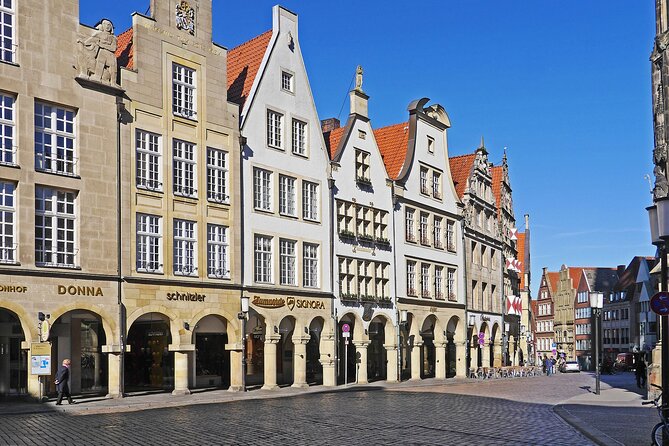
This is part walking tour, part treasure hunt, and part casual city quiz. You begin at Berliner Platz 25, 48143 Münster, then use your phone to work out where to go next. The game relies on GPS, so you are expected to find your own way between locations rather than follow turn-by-turn instructions.
That distinction matters. If you enjoy solving a puzzle and making small route decisions yourself, the format gives the outing a pleasant sense of independence. If you want someone to point out every building and explain why it matters, you may find the experience thin.
The activity is private for your group. Up to six people can share one booking, making the $36.07 price more attractive when split several ways. A solo participant pays the same group price, so the value is strongest for couples, families, or friends traveling together.
The stated playing time is about two to four hours. Your final time depends on how quickly you solve the clues, how often you pause, and whether you enter places along the route. The activity ends back at the meeting point, giving you a clear beginning and finish.
The booking information labels the location as Dortmund, but the start address, route, and all listed sights are in Münster. Check your confirmation carefully so you head to Berliner Platz in Münster, not Dortmund.
More Escape Rooms & Games:
- Private scavenger hunt around the Berge Castle in Gelsenkirchen
★ 3.5 · 4 reviews - Hamburg: Sex and Crime in St. Pauli Tour for Ages 18+
★ 4.7 · 15,447 reviews - Hamburg: Treasure Hunt Game through HafenCity
★ 4.7 · 364 reviews
Starting with Münster Cathedral and the weekly market
Saint Paul’s Cathedral, usually called Münster Cathedral, is one of the strongest early anchors for this city game. Along with the Historical City Hall, it helps define Münster’s central identity. The cathedral is also a practical orientation point, since the weekly market takes place directly in front of it.
The market adds a more everyday side to the route. You may find vegetables, fruit, plants, flowers, and regional specialties spread across the square. It is not just another photo stop. It gives you a chance to see how the center functions as a place for local shopping, not only sightseeing.
Market days can also make certain questions harder to spot. Temporary stalls and seasonal events may alter the view around the cathedral. During the Christmas market, for example, some details can be obscured. Give yourself extra time and do not assume every clue will be visible from the first angle.
The cathedral and market work well together because one offers a major architectural landmark while the other gives the stop a lived-in feel. You can also use this part of the route for a snack break, though the game itself does not include food or drinks.
The Peace of Westphalia at Historical City Hall
The Historical City Hall is one of the most meaningful stops on the route. It was a setting for negotiations connected with the Peace of Westphalia, which ended the Thirty Years’ War in Western Europe and the Eighty Years’ War between Spain and the Republic of the Seven United Netherlands.
The Peace of Münster was concluded here in 1648. That date gives the building importance beyond its attractive facade. A short game question cannot explain every political detail, but it can point you toward a moment when Münster became part of a major European settlement.
This is also a good example of the activity’s limits. The game can send you to an important place and ask you to notice a detail, but it may not provide a full account of the negotiations. I would treat the stop as a prompt to look more closely, not as a replacement for a museum visit or detailed guidebook.
Together with the cathedral, the city hall gives the game a strong central pair. You get religious architecture on one side and civic power on the other, with the city’s past connecting them.
Museums for art and city stories
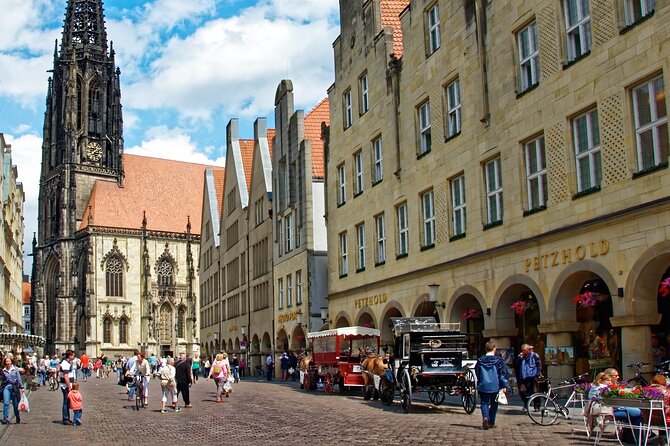
Several museum stops broaden the route beyond churches and public squares. The City Museum Münster presents the city’s story from its beginnings to the present in a permanent exhibition. This is the most direct place on the route for building a wider understanding of Münster itself.
The museum specializing in art includes late Gothic painting and sculpture, works connected with the Cranachs, and paintings from movements such as Der Blaue Reiter and Die Brücke. That gives the game a chance to point you toward both older religious art and more modern developments.
The Kunstmuseum Pablo Picasso Münster focuses on graphics by Pablo Picasso and his contemporaries. It adds a very different cultural note from the City Museum and the older church interiors. If you have time and the museums are open when you play, these stops can help you create a shortlist of places to revisit after the game.
Keep in mind that the activity price does not include museum admission. The supplied details identify the museums as route sights, but they do not promise entry or explain opening hours. Plan to enjoy the exterior and solve the assignment first, then decide if you want to return inside.
More City Tours:
- Private audio book city rally around the Rombergpark in Dortmund
★ 4.0 · 12 reviews - Berlin: 1-Hour City Tour by Boat with Guaranteed Seating
★ 4.3 · 16,993 reviews - Leipzig: City History Canal Sightseeing Tour on a Motorboat
★ 4.7 · 6,232 reviews - Cologne: Panoramic City Cruise
★ 4.3 · 5,698 reviews
Churches from Gothic to Baroque

The route includes several churches, and they are not all alike. St. Lambert’s Church is described as the key sacred building of Westphalian Late Gothic. Its place in central Münster makes it a useful stop for noticing the city’s medieval church architecture.
The Dominican Church sits on Salzstraße, not far from St. Lambert’s. Its location helps link the older religious center with one of Münster’s main urban streets. The game format may ask you to compare details from different buildings, though the exact questions can vary.
St. Clement’s Church offers a later style. Built between 1745 and 1753 as a monastery and hospital church, it was designed by Johann Conrad Schlaun. The church is on An der Clemenskirche, giving you another chance to see how Münster’s architecture changed over time.
St. Liudger Church reaches further back. The first construction dates from 1173, making it one of the oldest Roman Catholic church buildings in the city. You do not need to be an architecture expert to appreciate the contrast among these stops. One of the useful effects of the route is that it turns a collection of separate churches into a loose lesson in Münster’s changing religious and architectural life.
There is a drawback. A walking game that sends you to several churches can feel repetitive if you are mainly interested in secular sights. The route works best for people who enjoy comparing facades, locations, and building styles rather than checking off one church after another.
Palace architecture on Salzstraße
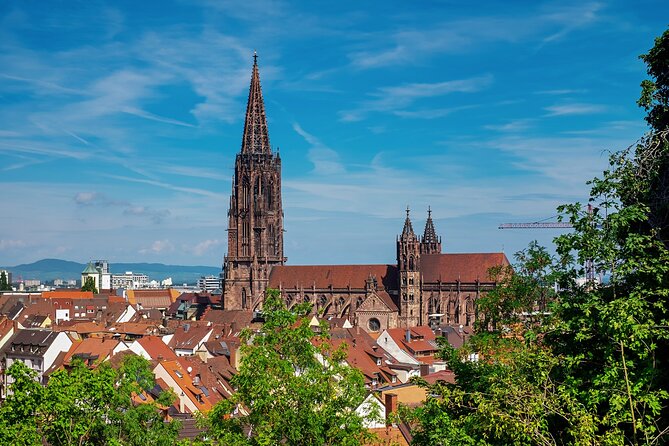
The Erbdrostenhof is one of the route’s most striking architectural stops. Located in the historic center on Salzstraße, this 18th-century palace gives the walk a more formal and aristocratic note.
Its inclusion is useful because the activity is not limited to major public attractions. A palace can reveal another side of Münster’s past, one tied to status, administration, and private power. The app may encourage you to inspect the building and surrounding street rather than simply pass by.
The route also includes the Kiepenkerl statue, positioned in the middle of the terrace shared by two Kiepenkerl restaurants. This is a lighter stop than the cathedral or city hall. You can pair it with a meal, though dining is at your own expense.
That flexibility is one of the better features of the game. You are not locked into a guide’s pace. If the terrace appeals to you, stop for food. If not, solve the clue and continue.
The Botanical Garden and the city’s quieter side
The Botanical Garden covers about five hectares and includes about 2,000 square meters of greenhouse space. Five of its ten greenhouses are open throughout the year, and the garden receives about 200,000 visitors annually.
This stop gives the route a change of pace. After central streets, churches, museums, and civic buildings, a garden can offer a calmer setting for a clue or photo assignment. It also gives you a reason to consider playing during daylight, when outdoor details are easier to see.
The supplied information does not promise that the game includes greenhouse entry or that every section will be open during your visit. Treat the garden as a listed sight on the route, and check conditions locally if entering the greenhouses is important to you.
The garden may also lengthen the outing. The estimated two to four hours is broad enough to allow for walking and pauses, but you should not rush if you want to look around properly. A quick player may finish closer to two hours, while a group that stops for photos or extra sightseeing can take longer.
City Library and the final church stop

The Münster City Library is another change from the city’s monumental buildings. It offers non-fiction and specialist books, novels, and books for children and young adults. Its presence on the route reminds you that Münster is a working city with ordinary civic institutions, not only a collection of historic facades.
The final listed sight, St. Liudger Church, brings you back to early religious architecture. Its first construction in 1173 gives it a long connection with the city, though the game will likely offer only a small amount of context.
This mixture is the point of the route. You move among major landmarks, cultural institutions, places to eat, and public services. The experience is less like a carefully staged historical narrative and more like a city sampler.
How good are the clues and assignments?
The game is easy to start, and the instructions are clear. You do not collect equipment, meet a guide, or wait for other participants. Download or access the online app, make sure your phone is ready, and begin at the stated meeting point.
The questions are generally manageable. Some assignments provide fun facts, and the route can work well for a group because people can discuss answers and make decisions together. The private format is especially useful for families, since you can pause or move at your own speed.
The clue quality is less consistent. Some questions may not require you to be physically at the location, which weakens the treasure-hunt feeling. If the answer can be found without looking closely at the building or surroundings, part of the point of walking there is lost.
The photo assignment has also received mixed treatment. You can skip a photo question, and a selfie will not be used without permission. That is helpful if you do not want to take photos or if a suggested selfie spot is unpleasant in winter.
The app also lacks a navigation option. You use GPS to find each place, but you must work out the route yourself. For some people, that is the fun. For others, it adds friction, especially when the locations appear in a random order instead of forming the most direct route.
Choosing the best time and group
The activity is listed as available Monday through Sunday, around the clock, from January 27, 2022 through June 17, 2026. That broad schedule is useful if you arrive early, prefer an evening walk, or need to fit the game between other plans.
Still, daylight is the safer choice for outdoor clues, photos, and architectural details. Market activity, seasonal stalls, and winter conditions can affect what you see. During Christmas markets, some questions may be harder because temporary structures cover or change parts of the route.
I would choose a group of two to six people. With several players, one person can read the clue, another can watch the GPS, and someone else can look for the answer. The price works best when divided among a full group.
The activity is near public transportation, and most people can participate. Service animals are allowed, and the format is user-friendly for people with hearing impairments because it does not depend on listening to a live guide.
Is $36.07 good value?
For one person, the price is not especially low for an app-based walking game with no equipment, admission, guide, smartphone, or data included. You are paying for the game structure, route, and access to the app.
For six people, the calculation changes. Split evenly, the cost is about $6 per person. At that rate, the activity can be a practical way to organize a half-day walk without paying separate guide fees.
Value depends on what you expect. If you want a playful way to see many Münster sights, the price is reasonable for a group. If you expect every stop to include original questions, strong historical explanations, and precise navigation, you may feel the cost is too high.
The clearest benefit is convenience. You can start any time, stop when you like, and return to the meeting point. The weakest part is content depth. You should plan to use the game as an introduction and make your own shortlist of museums, churches, and landmarks to explore further.
Who should book it?
I would recommend this experience to families, friends, couples, and independent visitors who enjoy puzzles more than formal commentary. It is also a good fit if you want a private activity with no fixed departure time and no strangers in the group.
You may want something else if you prefer a direct route, detailed explanations, or questions that always demand close inspection of each stop. The lack of built-in navigation means you need to be comfortable finding your way with GPS and your own phone.
Book it if you see the game as a flexible introduction to Münster. Use the clues to get oriented, enjoy the variety of sights, and note the places you want to revisit. For the best value, share it with several people, allow closer to four hours, and play in daylight when outdoor details are easiest to find.
FAQ
Where does the Münster e-scavenger hunt start?
It starts at Berliner Pl. 25, 48143 Münster, Germany. The activity ends back at the meeting point.
How long does the activity take?
The estimated duration is about two to four hours. Your time may vary depending on how quickly you solve the clues and how often you stop along the route.
How many people can join one booking?
One booking covers up to six people. It is a private activity, so only your group participates.
Do I need to bring anything?
You need a smartphone and data. The online app is included, but use of your smartphone and mobile data is not included.
Is the activity available every day?
Yes. It is listed as available Monday through Sunday, from 12:00 AM to 11:59 PM, during the stated operating period.
Can I cancel for a refund?
Yes. You can receive a full refund if you cancel at least 24 hours before the experience start time. Cancellations or changes made within 24 hours are not refunded or accepted.
Just added around Dortmund
- Private scavenger hunt around the Berge Castle in Gelsenkirchen★ 3.5 · 4 reviews
- Dortmund: Guided Walking Tour with a Local★ 4.2 · 4 reviews
- Explore Münster in 60 minutes with a Local★ 4.0 · 4 reviews
- Dortmund Soccer Segway Tour★ 5.0 · 10 reviews
- Private audio book city rally around the Rombergpark in Dortmund★ 4.0 · 12 reviews
- Combi Ticket: LEGOLAND Discovery Centre & SEA LIFE Oberhausen★ 3.5 · 19 reviews
- LEGOLAND Discovery Centre in Oberhausen Entrance Ticket★ 3.5 · 70 reviews
- Dortmund German Football Museum Skip-the-Line Admission Ticket★ 4.0 · 72 reviews
City Tours, compared.

1-Hour City Tour by Boat with Guaranteed Seating
Read our review →
City History Canal Sightseeing Tour on a Motorboat
Read our review →

Browse the lists this tour appears in