
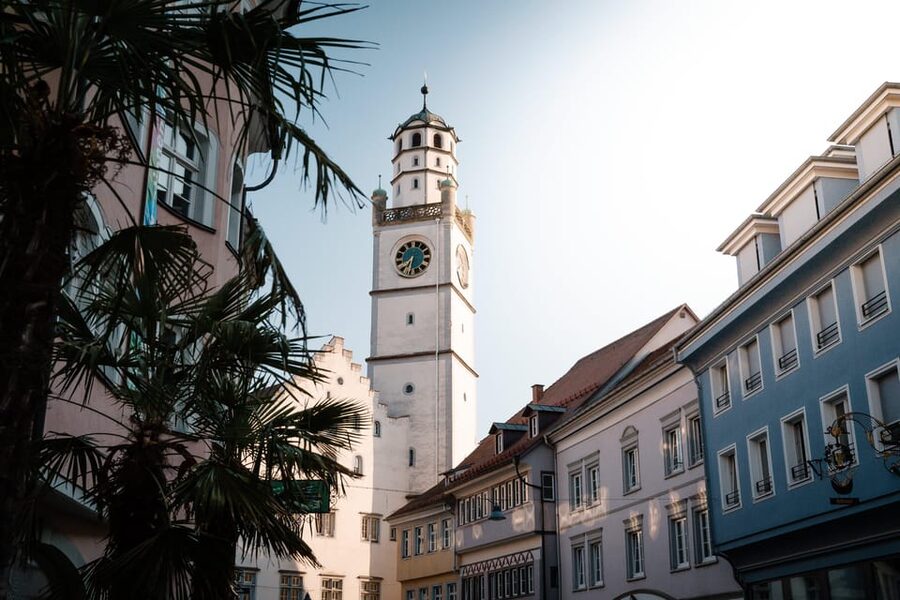
Reviewed · GERMANY
Der Klassiker RAVENSBURGER STADTGESCHICHTE
Ravensburg keeps its medieval shape. I like the way this 90-minute walk connects streets, squares, towers, and museums into one clear story, and I especially like the stop in the Humpis Quarter, where old living spaces make the past feel practical rather than distant. The main consideration is language: the guide speaks German only.
You begin at the Tourist Information in the Lederhaus and finish at Obertor, with no transport needed between stops. I also appreciate the tour’s tone: feedback repeatedly praises its humor, clear explanations, and flexible response to the group. At $14 per person, it is a sensible way to get your bearings before exploring Ravensburg on your own.
In This Review
- Key points to know before you go
- Why Ravensburg’s old town works so well on foot
- Starting at the Lederhaus and Tourist Information
- Marienplatz and the city’s public face
- Bachstrasse, the town hall, and Kornhaus
- The Evangelical City Church and changing eras
- The upper town and Ravensburg’s towers
- The Humpis Quarter and medieval living spaces
- A lively guide makes the history easier to remember
- Is $14 a fair price for 90 minutes?
- Who will enjoy this Ravensburg walk?
- Should you book Der Klassiker Ravensburger Stadtgeschichte?
- FAQ
- Where does the Ravensburg city history tour begin?
- Where does the tour finish?
- How long does the tour last?
- What language is the tour conducted in?
- What does the tour include?
- Is the tour wheelchair accessible?
- How much does the tour cost?
- Can I cancel the booking for a refund?
- Can I reserve the tour and pay later?
Key points to know before you go
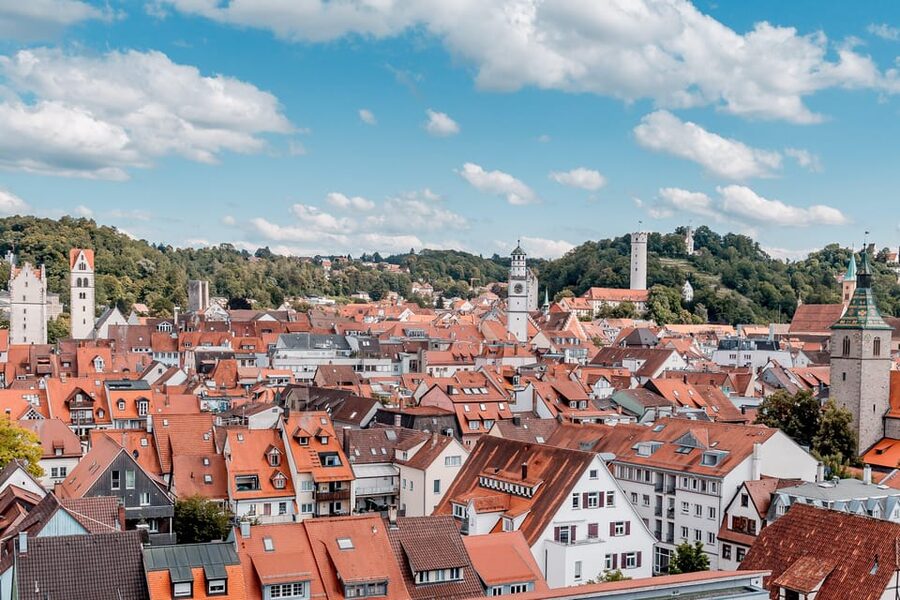
- A compact route through Ravensburg’s old town: The tour covers Marienplatz, Bachstrasse, the town hall, Kornhaus, the Evangelical City Church, and the upper town.
- Medieval life at the Humpis Quarter: The museum district includes preserved living quarters that help you picture how people once used the city’s buildings.
- A city shaped by trade: Ravensburg’s rise as an imperial city and home of the Ravensburger trading company explains why its old center became so substantial.
- The route begins and ends at useful landmarks: Meet at the front entrance of the Tourist Information in the Lederhaus and finish by Obertor.
- German-language guiding only: This matters if you need explanations in another language.
- Strong value for a short tour: The $14 price buys a full 90-minute guided introduction, rather than a quick orientation lap.
Why Ravensburg’s old town works so well on foot
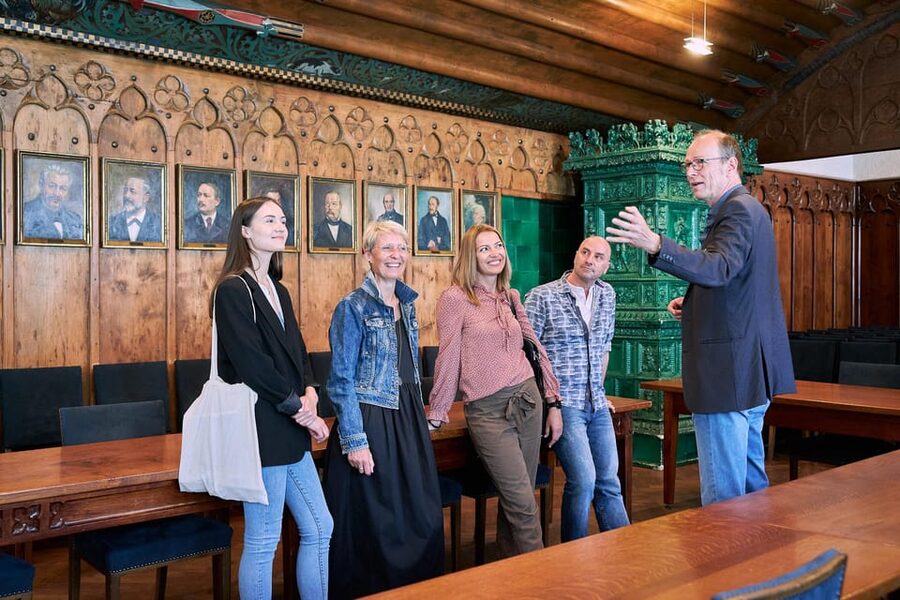
Ravensburg is one of southern Germany’s particularly well-preserved historic cities. Its old center still has much of the street pattern and building character that made the city important in the late Middle Ages.
That survival gives the walk a useful sense of place. You are not simply looking at one isolated church or tower. You are moving through a connected town, where streets, civic buildings, gates, and residential quarters all help explain how Ravensburg functioned.
The city grew as an imperial city and became a major center for the Ravensburger trading company. Its position in the Lake Constance region helped bring commercial importance, and that prosperity shaped the public squares and substantial buildings you see today.
I like tours that explain why a town looks the way it does. This one is not just a parade of dates and names. Its route gives you a basic timeline, from the city’s beginnings through its most important eras and into modern Ravensburg.
The 1.5-hour length is about right for this purpose. You get enough time to connect the main sights without turning the experience into an all-day history lesson. If you want a detailed visit inside every museum or church, you will need extra time afterward.
Other Germany trips people book alongside this one:
- Berlin: Reichstag, Dome and Government District Guided Tour
★ 4.7 · 18,288 reviews - Berlin: 1-Hour City Tour by Boat with Guaranteed Seating
★ 4.3 · 16,993 reviews - Hamburg: Sex and Crime in St. Pauli Tour for Ages 18+
★ 4.7 · 15,447 reviews
Starting at the Lederhaus and Tourist Information
The meeting point is the front entrance of the Tourist Information, located in the Lederhaus. This is a practical place to begin because you can arrive with questions about Ravensburg and then head directly into the historic center.
The first minutes are likely to set the scale of the tour. You are entering an old town that is best understood as a whole, not as a list of separate attractions. The guide introduces the city’s origins and gives you a framework for the streets ahead.
That opening matters. Without context, a medieval square can look attractive but vague. With a little background about Ravensburg’s role as an imperial city and trading center, the architecture begins to make more sense.
Allow yourself enough time to find the front entrance rather than arriving at the last second. The supplied details identify the meeting point clearly, but they do not provide a separate transport plan or parking information.
Marienplatz and the city’s public face
Marienplatz is one of the key early stops. As a main square in the historic center, it helps show how public life was organized in the old city.
Here, the guide can connect the physical setting with Ravensburg’s civic and commercial past. The value is not only in seeing a square, but in understanding how a successful late medieval town needed places for administration, trade, movement, and gathering.
You will also begin to notice the relationship between open squares and narrow streets. Ravensburg’s character comes from that contrast. The town does not present history in a single grand monument. It unfolds through the way its spaces fit together.
For first-time visitors, this is a helpful part of the walk because it gives you a reference point. After the tour, you can return to Marienplatz and use it to orient yourself around the old town.
Bachstrasse, the town hall, and Kornhaus
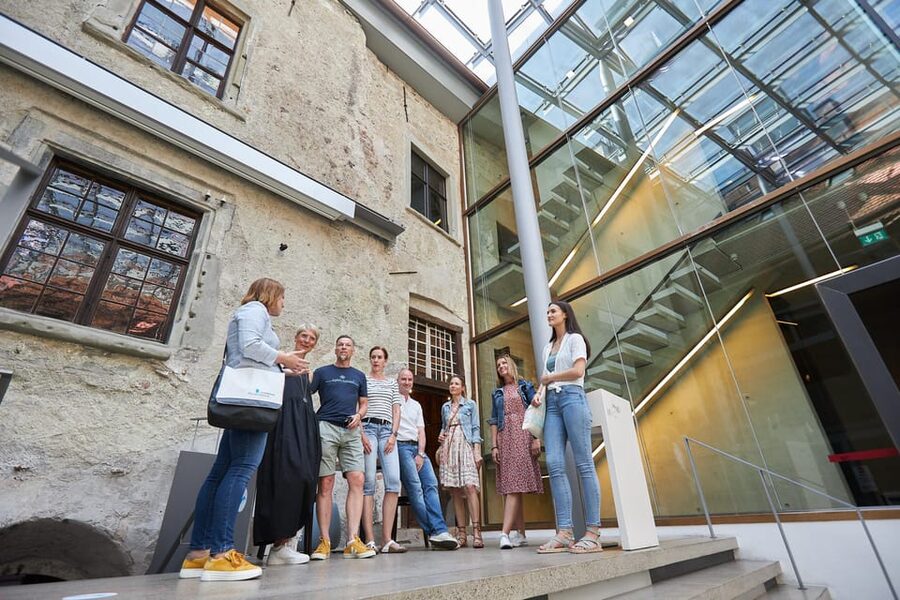
The route continues through Bachstrasse and to important civic buildings, including the town hall and Kornhaus. These stops broaden the story beyond churches and defensive towers.
The town hall represents the city’s governing side. Its place in the route helps explain how Ravensburg managed its affairs as an imperial city. The guide also places the building within the wider development of the old center, so you can see it as part of a working town rather than a decorative object.
Kornhaus adds another useful angle. The name points to grain storage, and the building belongs to the practical economic world that supported the city. This is the sort of stop that helps you remember Ravensburg as a trading and administrative center, not merely a photogenic medieval setting.
The route is strongest when these pieces are considered together. Marienplatz shows public space, the town hall shows civic power, and Kornhaus points toward food supply and commerce. You get a more grounded picture of daily urban life.
The supplied information does not give a detailed interior visit for each building. Treat these stops mainly as guided sightseeing points, with the guide explaining their place in Ravensburg’s story.
Something different for another day:
- Hamburg: 1.5-Hour Harbor and Speicherstadt Day Cruise
★ 4.6 · 14,200 reviews - From Munich: Neuschwanstein & Linderhof Castle Full-Day Trip
★ 4.5 · 12,494 reviews - Dresden: Semperoper Tickets and Guided Tour
★ 4.7 · 12,102 reviews - Berlin: Boat Tour Along the River Spree
★ 4.4 · 11,252 reviews
The Evangelical City Church and changing eras
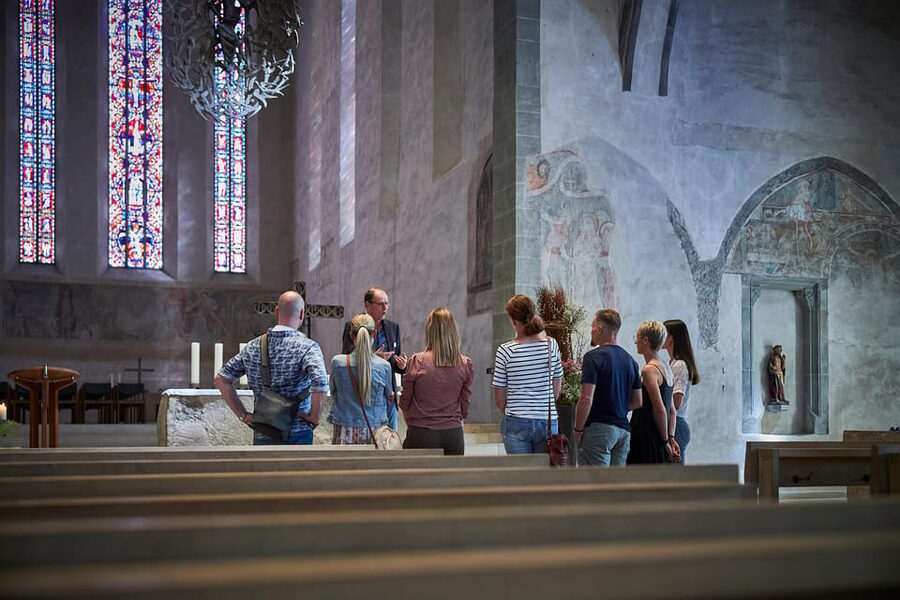
The Evangelical City Church adds a religious and historical layer to the route. Churches in old European cities often preserve several periods of local life, and this stop places Ravensburg’s religious history within the wider city tour.
The important benefit here is sequence. The guide does not present the church as a stand-alone attraction. It appears after the civic and commercial stops, allowing you to compare the roles played by religion, government, trade, and ordinary housing.
Ravensburg’s history continued beyond the late Middle Ages, and the classic city tour aims to carry the story through its most important periods up to the present day. That broader time span keeps the walk from becoming a narrow medieval snapshot.
If you prefer a tour focused only on architecture, you may find the historical overview more general than a specialist church tour. For most people, though, the church works well as one part of a larger introduction.
The upper town and Ravensburg’s towers
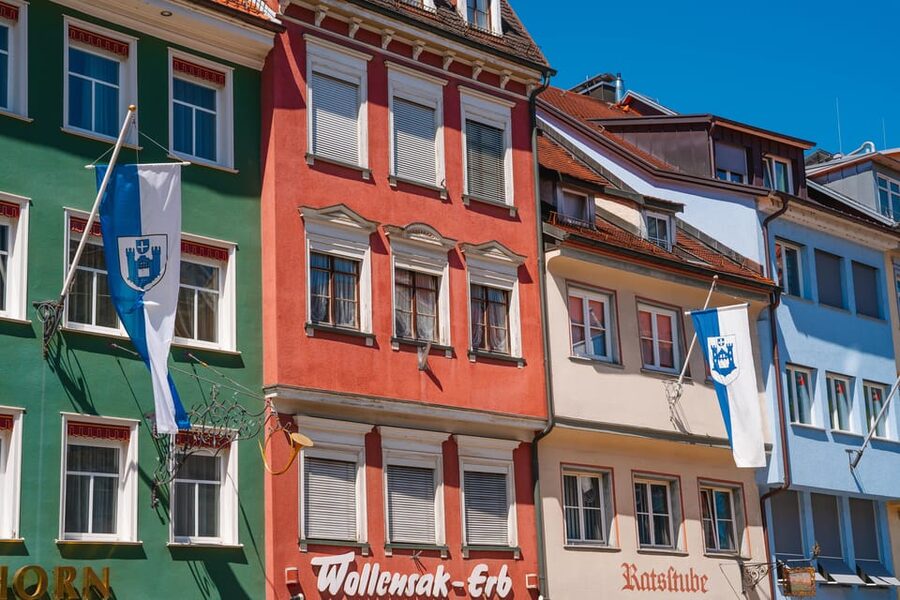
The route heads into the upper town, where the city’s gates and towers become especially important. Ravensburg is often associated with its defensive structures, and this section gives those landmarks a proper setting.
A tower is easy to admire from a distance. It is more useful when you understand what it says about the city. The upper town helps you read Ravensburg as a place that needed protection, controlled movement, and marked its entrances with strong civic symbols.
The tour finishes at Obertor, one of the city’s notable gateways. Ending there gives the route a clear shape. You begin at the Tourist Information in the lower part of the old town and work through streets, squares, civic sights, and the upper town before reaching a major gate.
The route may involve old-town streets and changes in level as it reaches the upper town. The activity is listed as wheelchair accessible, but the supplied information does not specify the exact surface conditions or any alternate route. If you use a wheelchair, it is sensible to confirm the practical route details when booking.
Obertor also works as a useful finishing point for further exploring. From there, you can continue at your own pace, return toward the center, or use the tour’s route as a guide for a second look at the sights that interested you most.
The Humpis Quarter and medieval living spaces
The Humpis Quarter Museum is the most distinctive stop for understanding ordinary life. Its medieval living quarters give the tour a human scale that monuments alone cannot provide.
Public buildings tell you how a city governed itself. Defensive towers show how it protected itself. Preserved homes help you think about how people actually lived, worked, and organized their daily surroundings.
This is why I would pay special attention during the museum district portion. Look for the connection between rooms, building use, and the city’s commercial success. The Humpis Quarter helps explain that Ravensburg was not only a trading name or a collection of grand structures. It was also a place where families and businesses occupied real homes in a dense urban center.
The tour does not promise a long museum visit or a separate in-depth museum program. The Humpis Quarter appears as part of the 90-minute city walk, so the guide’s explanation may be your main introduction. If the living quarters appeal to you, plan a separate return visit if time allows.
A lively guide makes the history easier to remember
The strongest praise for this tour focuses on the guide’s delivery. The experience is repeatedly described as informative, entertaining, humorous, and easy to follow. One particularly useful quality is the guide’s ability to react flexibly to the situation and the group.
That matters in a city tour. A rigid speech can make even beautiful streets feel flat. A guide who can adjust the pace, respond to questions, and add humor at the right moment gives the walk a more natural rhythm.
The feedback also suggests that the tour is not simply short for the sake of being short. It is designed to be kurzweilig, meaning pleasantly brisk and not drawn out. You get a lively overview without committing half a day.
The official language is German, so you should be comfortable following a German-language explanation. The available information does not list an English option or multilingual materials. This is the clearest reason some people may want to choose a different format.
Is $14 a fair price for 90 minutes?
At $14 per person, the tour offers good value if you want orientation, context, and a local guide in one package. The price is modest compared with the cost of booking several separate attractions, and the route covers a broad section of the historic center.
The value is strongest for a first visit. You learn which streets and buildings deserve a closer look, then you can spend the rest of your day choosing your own priorities. It is also a good fit if you have limited time in Ravensburg and want a structured introduction rather than wandering without a plan.
The price does not appear to include an extended museum admission program or private guiding. It covers a 90-minute city tour through the old town. Keep that distinction in mind if you expect detailed interior visits at every stop.
Free cancellation is available up to 24 hours before the start time, and you can reserve now while paying later. Those terms are useful when your Baden-Württemberg plans are still shifting. Starting times depend on availability.
Who will enjoy this Ravensburg walk?
I would recommend it most strongly to first-time visitors, history-minded adults, and anyone who wants to understand the old town before exploring independently. Families may also appreciate the short duration and the guide’s reported humor, though the amount of historical explanation may suit older children best.
It also fits well into a Lake Constance region itinerary. Ravensburg rose as a regional center, and this walk gives you a better sense of its importance than a quick photo stop would.
You may want to skip it if you need an English-language guide, dislike group walks, or have already spent significant time studying Ravensburg’s buildings. The tour offers an overview, not a specialist treatment of one monument or era.
The activity is listed as wheelchair accessible. Since the route includes the upper town and historic streets, check the exact route conditions if mobility details are important to you.
Should you book Der Klassiker Ravensburger Stadtgeschichte?
Book this tour if you want a friendly, well-paced introduction to a remarkably intact old town, especially if German is comfortable for you. The combination of civic squares, trade-related buildings, a city church, towers, gates, and the Humpis Quarter gives you more than a simple photo walk.
I would consider it a particularly good buy at $14. The guide’s humor and flexible style appear to be central strengths, while the 4.8 rating from 22 reviews suggests a consistently positive experience. Just keep your expectations focused: this is a 90-minute German overview, not a long museum study or multilingual tour.
FAQ
Where does the Ravensburg city history tour begin?
It begins at the front entrance of the Tourist Information in the Lederhaus.
Where does the tour finish?
The tour finishes at Obertor Ravensburg.
How long does the tour last?
The guided city tour lasts 1.5 hours, or 90 minutes.
What language is the tour conducted in?
The live tour guide speaks German. German is the only language listed for this activity.
What does the tour include?
It includes a 90-minute guided city tour through Ravensburg’s old town.
Is the tour wheelchair accessible?
Yes, the activity is listed as wheelchair accessible.
How much does the tour cost?
The listed price is $14 per person.
Can I cancel the booking for a refund?
Yes. You can cancel up to 24 hours in advance for a full refund.
Can I reserve the tour and pay later?
Yes. You can reserve your place and pay later, which keeps your plans flexible.
Just added around Germany
- e-Scavenger hunt Aachen: Explore the city at your own pace★ 4.0 · 13 reviews
- Munich: Private or Group Third Reich and WWII Walking Tour★ 4.9 · 13 reviews
- Canyoning Advanced Day Trip★ 5.0 · 13 reviews
- Wiesbaden Biebrich: Outdoor Escape Game★ 4.7 · 13 reviews
- Berlin: Private Guided Tour of the Main Sights★ 5.0 · 13 reviews
- From Munich: Neuschwanstein Castle and Linderhof Private Tour★ 5.0 · 13 reviews
- Trier, Moselle: Wine excursion with boat trip★ 3.9 · 13 reviews
- From Dresden: Guided Day Tour by Bus of Seiffen Toy Village★ 4.0 · 13 reviews