
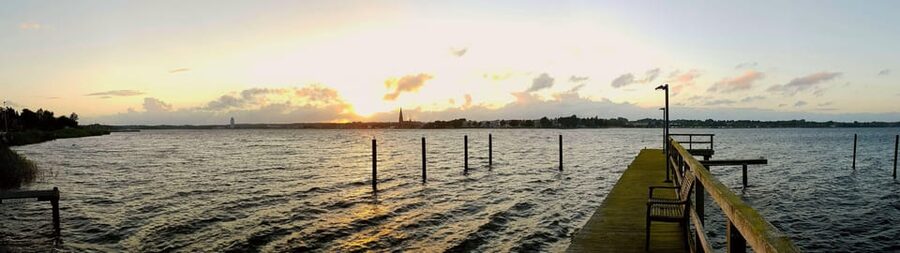
Reviewed · GERMANY
About Vikings, kings and cheeky monks (Medieval Schleswig)
History feels close in Schleswig. This 1.5-hour walking tour links the cathedral, old town, harbor, Holm fishing settlement, and St. John’s Monastery into one easy story about trade, royal power, and medieval life. I especially like the way it combines major sights with smaller corners that many visitors could miss, and I like the local focus on the Schlei and the old fishing community.
The $17 price is fair for a live guided walk, particularly if you want context rather than a quick look at buildings. The main limitation is that the cathedral visit is outdoors only. An interior visit may be available for an extra charge, depending on the time of day, so this tour is less suitable if seeing the cathedral interior is your main goal.
In This Review
- Key points at a glance
- Starting at Rathausmarkt in the heart of Schleswig
- Reading Schleswig Cathedral from the outside
- Following the old town from trade to decline
- The city harbor and the Schlei’s medieval role
- Exploring Holm, Schleswig’s fishing settlement
- St. John’s Monastery and the story of the cheeky monks
- What the guide adds to the experience
- Is $17 good value for 1.5 hours?
- Accessibility, language, and practical planning
- Who will enjoy this Schleswig history walk?
- Should you book Vikings, Kings and Cheeky Monks?
- FAQ
- Where does the tour begin?
- How long does the tour last?
- What language is the tour conducted in?
- Is the cathedral interior included?
- What places does the route cover?
- Is the tour wheelchair accessible?
- Is the tour suitable for families?
- Can I cancel my booking?
Key points at a glance
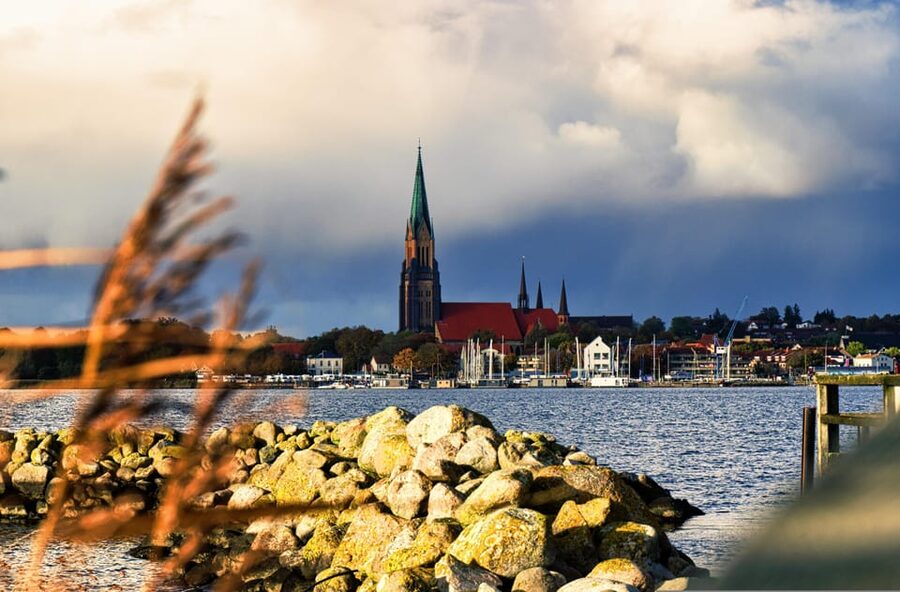
- The cathedral is explored from outside, with its role in Schleswig and Danish royal history explained along the way.
- Holm is more than a pretty waterfront quarter, with old fishing rights tied to the 1480 Schleibrief of King Christian I of Denmark.
- The walk connects Viking-era trade to later medieval change, including the decline of Schleswig’s leading place in regional commerce.
- St. John’s Monastery is one of Schleswig-Holstein’s best-preserved medieval monasteries, with a lighter story about monks whose reputations were not always saintly.
- The tour is conducted in German, lasts 1.5 hours, and is wheelchair accessible.
- The strongest theme is local storytelling, with the guide adapting to questions and explaining how the past shaped modern Schleswig.
Starting at Rathausmarkt in the heart of Schleswig
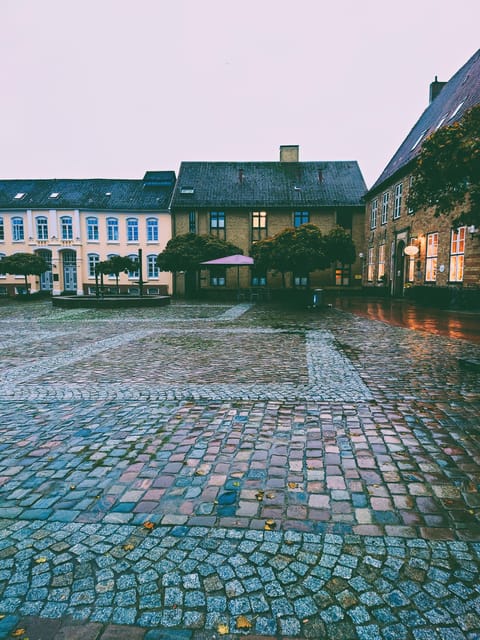
The tour begins at Rathausmarkt, in front of the Alte Apotheke. That central meeting point makes sense for a walking route through Schleswig because you start in the middle of town rather than spending the first part of the tour reaching the historic sights.
You should allow a few minutes to find the meeting place and arrive ready to walk. The tour is short enough to fit neatly into a morning or afternoon, and its central route makes it useful as an introduction before you explore Schleswig on your own.
The atmosphere is built around hygge, the Scandinavian idea of comfort, calm, and simple pleasure. Here, that does not mean sitting indoors with coffee and candles. It means taking time to notice the scale of the streets, the water, the old houses, and the quieter corners of the town.
The guide speaks German, so you will get the most from the walk if you understand the language well. The format is suited to families and groups, although one rating specifically cautioned that the material may be more suitable for adults than for children. That is worth noting: the route is accessible, but the subject matter is historical and may not hold the attention of younger children throughout.
Other Germany trips people book alongside this one:
- Berlin: Reichstag, Dome and Government District Guided Tour
★ 4.7 · 18,288 reviews - Berlin: 1-Hour City Tour by Boat with Guaranteed Seating
★ 4.3 · 16,993 reviews - Hamburg: Sex and Crime in St. Pauli Tour for Ages 18+
★ 4.7 · 15,447 reviews
Reading Schleswig Cathedral from the outside
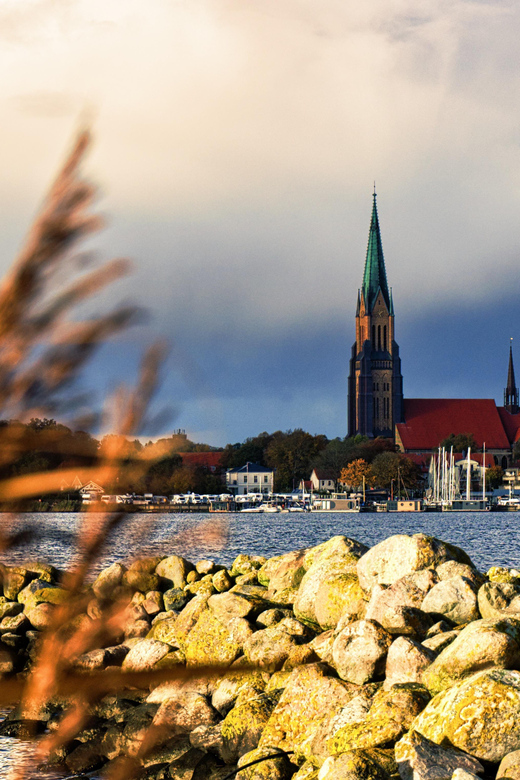
The cathedral is one of the tour’s main anchors. You will see it from the exterior and learn how it connects to Schleswig’s medieval past and to the Danish kings.
This is not simply a stop for taking a photograph. The cathedral helps explain Schleswig’s position during the Middle Ages. The tour asks what importance Schleswig and its cathedral had for Danish rulers, and why a city in this part of northern Germany mattered beyond its immediate surroundings.
Because the visit is outside only, the guide’s explanation is especially important. You will be looking at the building while hearing about the political and religious power tied to it. That approach can be satisfying if you prefer context to a hurried interior visit, but it also creates a clear limitation. You will not get to examine the cathedral’s inside as part of the basic $17 booking.
An interior visit may be booked at an additional cost, depending on the time of day. If the inside is high on your list, ask about availability before you book or before the walk begins. The included tour should be judged as an outdoor city walk, not as a full cathedral admission.
Following the old town from trade to decline
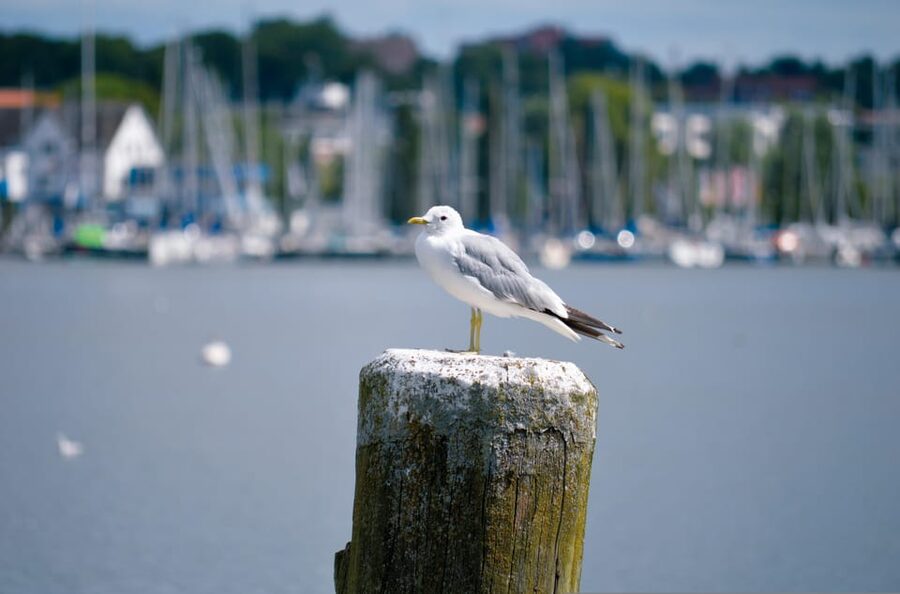
Schleswig’s old town gives the tour its wider setting. The walk traces the city’s story from its early medieval beginnings through the changes that shaped the streets and landmarks you see today.
The key idea is trade. In the early Middle Ages, Schleswig was an important commercial center with activity around the harbor. The Schlei, the long waterway beside the city, served as a busy shipping route. Goods, boats, merchants, and local workers all helped give the town a reach far beyond the immediate region.
That success did not last in the same form. A useful part of the tour is the question of why Schleswig lost its leading place in the trade network and what changed in the city afterward. This keeps the walk from becoming a simple list of dates and buildings. You get a sense of how changes in shipping and commerce can alter an entire town.
I like this part of the route because it gives you a way to read Schleswig after the tour ends. The harbor is no longer just a pleasant place by the water. The old town is no longer just a collection of attractive streets. Each area becomes part of a story about power, trade, and decline.
The supplied information does not give a fixed list of every street or building visited, so you should not expect a rigid checklist of landmarks. The emphasis is on the historic areas and the ideas that connect them.
The city harbor and the Schlei’s medieval role
The cozy city harbor helps you picture Schleswig when the waterway was central to its fortunes. Today, it is a relaxed stop on the route. In the early medieval period, the Schlei was a major shipping road, and the harbor district was a place of active trade.
This is where the tour’s Viking-era theme becomes useful. The experience is not presented as a theatrical Viking show. Instead, it uses Schleswig’s trading past to explain why the city developed where it did and why its position mattered.
You will also hear about the later changes that reduced Schleswig’s importance in the wider trading system. That contrast is valuable. It shows that historic cities are not frozen at the moment of their greatest success. Their waterfronts, streets, and institutions keep changing as routes and political priorities change.
The harbor portion should appeal to anyone who likes history tied to geography. You are not only hearing that the Schlei mattered. You are standing beside the water that made the city’s early trade possible.
Something different for another day:
- Hamburg: 1.5-Hour Harbor and Speicherstadt Day Cruise
★ 4.6 · 14,200 reviews - From Munich: Neuschwanstein & Linderhof Castle Full-Day Trip
★ 4.5 · 12,494 reviews - Dresden: Semperoper Tickets and Guided Tour
★ 4.7 · 12,102 reviews - Berlin: Boat Tour Along the River Spree
★ 4.4 · 11,252 reviews
Exploring Holm, Schleswig’s fishing settlement
Holm is one of the most distinctive parts of the walk. This old fishing settlement brings the story down from kings and cathedrals to the people who worked the water.
The route explains the connection between the fishing community and the Schlei. You will also learn about the special rights once held by the fishermen of Holm. Those rights were confirmed again in 1480 by the Schleibrief, issued by King Christian I of Denmark.
That detail gives Holm real historical weight. It was not simply a picturesque quarter beside the water. Its residents had recognized privileges linked to their work, their settlement, and their relationship with the Schlei.
I would pay close attention here, because this is the point where the tour feels most local. The cathedral introduces royal and religious power. Holm shows how those larger forces affected an established working community.
The fishing settlement is also likely to be one of the most visually appealing parts of the route. Still, the walk’s value is not only in its appearance. The guide’s explanation of the old fishing rights helps you understand why Holm belongs in a tour about Schleswig’s past.
St. John’s Monastery and the story of the cheeky monks
The final major stop is St. John’s Monastery, described as the best-preserved medieval monastery in Schleswig-Holstein. It adds a quieter and more intimate setting to a route that has already covered trade, kings, shipping, and fishing.
The monastery gives the guide a chance to explain the religious side of medieval Schleswig. It also supplies the tour’s playful title. You will hear why not every Schleswig monk had a spotless reputation.
That lighter thread matters. A walking tour can become tiring if every stop is presented with the same solemn tone. The story of the cheeky monks adds personality without losing the historical focus. It also gives families and casual visitors an easier way into the subject, even though the tour may still be too academic for some younger children.
St. John’s is also a good reminder that medieval buildings were working places, not just monuments for modern sightseeing. The monastery’s survival helps you picture the institutions that shaped daily life in Schleswig long after the city’s trading fortunes changed.
After the monastery, the route returns toward the starting point. The circular feel is practical: you finish near where you began instead of needing a separate bus or taxi.
What the guide adds to the experience
The guide is the main reason to choose this walk rather than simply visiting the sights with a map. The strongest praise focuses on clear explanations, strong command of the subject, and an entertaining style.
One recent participant described the tour as informative and built on the guide’s well-founded understanding. Another highlighted the guide’s ability to respond to questions and adjust the route for a small group of three people. That suggests you should feel comfortable raising a question rather than waiting for a formal question period.
The walk appears to balance prepared material with conversation. That is useful in a historic town, where a question about a building, a street, or the harbor can lead to a better explanation than a fixed script.
The feedback is not entirely uniform. One person rated it four stars and found it highly educational but not ideal for children. That is a helpful warning, not a major fault. If your group includes young children, you may want to frame the walk around the cathedral, fishing village, harbor, and monk stories rather than expect constant entertainment.
The experience provider is Hygge & Meer. The name fits the tone: relaxed, local, and centered on Schleswig rather than on a large-scale sightseeing operation.
Is $17 good value for 1.5 hours?
At $17 per person, this is a reasonably priced introduction to Schleswig. You are paying for a live guide, a connected historical story, and access to several important areas of town. The walk covers enough ground to give you orientation without taking up half a day.
The value is strongest if you are new to Schleswig. In 90 minutes, you get the city’s medieval background, the cathedral’s royal connection, the harbor’s trading role, Holm’s fishing privileges, and the monastery’s religious history.
The price is less attractive if you want extended access to the cathedral interior or a long museum-style tour. Those are not included. The cathedral’s inside may require an extra payment and depends on the time of day.
I would see the tour as a foundation. Afterward, you can return to the places that interested you most. A short guided walk can save you from looking at Schleswig’s sights without understanding why they matter.
Accessibility, language, and practical planning
The tour is listed as wheelchair accessible, which makes the route more widely usable. You should still raise any specific mobility concerns when booking, since historic town areas can vary in surface and slope even when a tour is described as accessible.
The live guide speaks German. No other tour language is listed, so German comprehension is important. If you are looking for an English-language walk, this experience may not meet your needs.
The walk lasts 1.5 hours, and starting times depend on availability. That duration is long enough for a meaningful overview but short enough to combine with other sightseeing in Schleswig.
Free cancellation is available up to 24 hours in advance for a full refund. You can also reserve now and pay later, which helps if your schedule is still changing.
Wear comfortable shoes and dress for the weather. Much of the experience takes place outdoors, including the cathedral stop, the harbor, Holm, and the route between them. The tour has a calm pace in spirit, but it is still a walking tour.
Who will enjoy this Schleswig history walk?
I would recommend it most strongly to:
- First-time visitors who want a clear introduction to Schleswig
- Adults interested in medieval trade, royal history, and local communities
- People who enjoy historic waterfronts and old town walks
- Families with older children who can follow a guided history talk
- Small groups that like asking questions and shaping the conversation
- Visitors who want a short activity before exploring more of the city alone
You may want to skip it if you need an English-language guide, if your only goal is the cathedral interior, or if very young children are likely to lose interest during a detailed historical explanation.
The tour also suits visitors who dislike rushed sightseeing. Its appeal comes from connections: the Schlei explains the harbor, the harbor helps explain Schleswig’s rise, the fishing rights give Holm a human story, and the monastery adds another layer to the city’s medieval identity.
Should you book Vikings, Kings and Cheeky Monks?
Book it if you want a compact, German-language introduction to Schleswig that goes beyond the main postcard views. The combination of cathedral exterior, old town, harbor, Holm, and St. John’s Monastery gives you a useful sense of how the city grew and changed.
The guide-led format is the real strength. Strong ratings praise the informative content, friendly delivery, and willingness to respond to questions. At $17, that is good value for a 1.5-hour walk, especially for first-time visitors.
Think twice if you require an interior cathedral visit, need English, or are planning for very young children. For everyone else, this is a pleasant and well-focused way to meet Schleswig through its Vikings, kings, fishermen, and slightly mischievous monks.
FAQ
Where does the tour begin?
The meeting point is Rathausmarkt, in the heart of Schleswig, in front of the Alte Apotheke.
How long does the tour last?
The walking tour lasts 1.5 hours.
What language is the tour conducted in?
The live tour guide speaks German.
Is the cathedral interior included?
No. The standard experience includes an exterior tour of Schleswig Cathedral. An interior visit may be available for an additional charge, depending on the time of day.
What places does the route cover?
The tour covers the exterior of Schleswig Cathedral, the old town, the city harbor, the Holm fishing settlement, and St. John’s Monastery.
Is the tour wheelchair accessible?
Yes. The experience is listed as wheelchair accessible.
Is the tour suitable for families?
Yes, the tour is described as suitable for families and groups. However, the historical content may not be ideal for every child.
Can I cancel my booking?
Yes. You can cancel up to 24 hours in advance for a full refund. You can also reserve now and pay later.
Just added around Germany
- St George’s Culinary Food Tour★ 5.0 · 3 reviews
- Castle Braunfels Day Trip from Frankfurt★ 5.0 · 3 reviews
- Discover Hamburg: Private Walking Tour★ 5.0 · 3 reviews
- Whodunnit – Interactive city walk in Düsseldorf★ 4.5 · 3 reviews
- Discover Dusseldorf’s most Photogenic Spots with a Local★ 5.0 · 3 reviews
- Kreuzberg Private Walking Tour: Immigrants, Artists & Hipsters★ 5.0 · 3 reviews
- Private Photo Tour in Kreuzberg★ 5.0 · 3 reviews
- Dusseldorf Private Walking Tour With A Professional Guide★ 4.5 · 3 reviews