
Reviewed · 1-DAY TOURS
Trier Small-Group Day Trip from Frankfurt
Ancient Rome is hiding in plain sight. This 10-hour small-group tour takes you from Frankfurt to Trier, Germany’s oldest city, with a professional guide, air-conditioned transport, and time to explore on your own. I like the efficient mix of guided sightseeing and free time, and I like that admission to the Roman Amphitheatre and Imperial Baths is included. The main drawback is the $457.25 price, which is steep for a day trip, especially since food, drinks, and hotel pickup are not included.
Trier earns its place on your Germany list with eight UNESCO World Heritage Sites, Roman monuments, Gothic churches, a grand cathedral, and a handsome market square. The group is capped at eight people, which can make the long drive and walking portions more personal. Still, a 2.5-hour journey each way leaves you with a full day on the clock, so this works best if Trier is a priority rather than a casual side trip.
In This Review
- Key points to know before you book
- Why Trier makes a strong day trip from Frankfurt
- Starting at 9:30 in central Frankfurt
- Porta Nigra: Trier’s massive Roman gateway
- The Cathedral and Church of Our Lady
- The Amphitheatre and Imperial Baths
- The Roman Bridge and Constantine’s Basilica
- Free time around the Main Market and Palace Garden
- What the small group changes
- Price, inclusions, and real value
- Weather, cancellations, and booking timing
- Who will enjoy this Trier outing most?
- Should you book this Trier day trip from Frankfurt?
- FAQ
- How long is the Trier day trip from Frankfurt?
- What time does the tour begin?
- Where is the meeting point?
- Does the tour return to Frankfurt?
- What is included in the tour price?
- Are food and drinks included?
- How many people can join the tour?
- Can I cancel for a full refund?
Key points to know before you book
- Roman Trier fills the day: Porta Nigra, the Amphitheatre, Imperial Baths, Roman Bridge, and Constantine’s Basilica give the visit a strong ancient-world focus.
- The group is limited to eight: That is a useful size for questions and a more personal walking tour.
- Two Roman sites have admission included: Entry to the Amphitheatre and Imperial Baths is covered, helping offset part of the high price.
- You get both guidance and free time: The walking tour explains the major sights, then you can choose between churches, museums, gardens, and the market.
- The drive takes about 2.5 hours each way: You spend much of the 10-hour outing on the road, but this avoids changing trains or managing a complicated connection.
- The meeting point is central Frankfurt: You must reach Wiesenhüttenplatz 38 yourself, and the tour returns there.
Why Trier makes a strong day trip from Frankfurt
Trier is not simply another pretty German town. Its story reaches back to the Roman period, and the old city center still contains an unusually large collection of Roman and medieval monuments. The city was founded in 17 BC, and much of the sightseeing feels like a history lesson spread across ordinary streets.
I especially like the contrast. One moment you are looking at massive sandstone blocks in a Roman gate. A few minutes later, you are in front of a medieval cathedral, a Rococo palace, or a traditional German market square. That range gives the day more substance than a trip focused on one monument.
The tour is also a practical way to reach Trier from Frankfurt. The two cities are not next door, and a self-guided rail trip requires more planning than many first-time visitors expect. Here, your transport and guide are arranged for you. The tradeoff is time: roughly five hours of driving in total means Trier needs to matter to you.
A few more tours and experiences worth a look
- From Frankfurt: Rhine Valley Day Trip
★ 4.4 · 1,317 reviews - Baden-Baden, Black Forest and Strasbourg Day Trip from Frankfurt
★ 4.0 · 297 reviews - Heidelberg and Rhine Valley Day Trip With Wine Tasting and Dinner from Frankfurt
★ 3.5 · 101 reviews
Starting at 9:30 in central Frankfurt
The day begins at Wiesenhüttenpl. 38, 60329 Frankfurt am Main, at the office of ETS Touristik and Greenline Frankfurt. The meeting time is 9:30 a.m., and hotel pickup and drop-off are not provided, so plan your route to the meeting point before the morning of the tour.
Your ride is an air-conditioned vehicle. That matters on a long outing, since you will spend about 2.5 hours traveling west to Trier. The group maximum is eight people, a far more manageable size than a large coach. You should have a better chance to hear the guide, ask questions, and keep the walking pace sensible.
The tour description gives about six hours in Trier. That leaves a substantial portion of the 10-hour schedule for the drive. I would treat this as a focused introduction to the city, not an unhurried two-day visit. Wear shoes suitable for walking and keep your expectations realistic about how much ground you can cover.
Porta Nigra: Trier’s massive Roman gateway
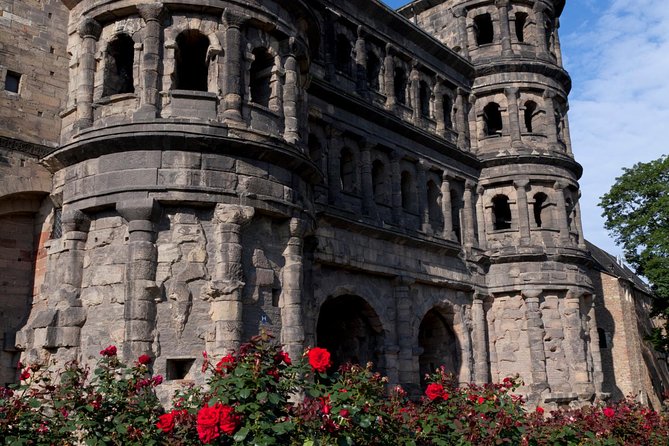
Porta Nigra is the natural opening act. The name means Black Gate, and the structure is one of the best-preserved Roman city gates north of the Alps. The largest sandstone blocks weigh up to six tons, so the building gives you an immediate sense of Roman engineering on a huge scale.
The gate dates to around 180 BC according to the tour information. Its size is the important thing here. You are not looking at a small fragment or a reconstructed outline. You are seeing a powerful piece of the old city wall rising directly beside Trier’s modern streets.
A guide adds real value at this stop. Without context, the gate can look like an impressive pile of stone. With an explanation of its role in the Roman city, the surviving masonry becomes easier to read. You can also use this first sight to get your bearings, since Porta Nigra is one of Trier’s clearest landmarks.
The Cathedral and Church of Our Lady
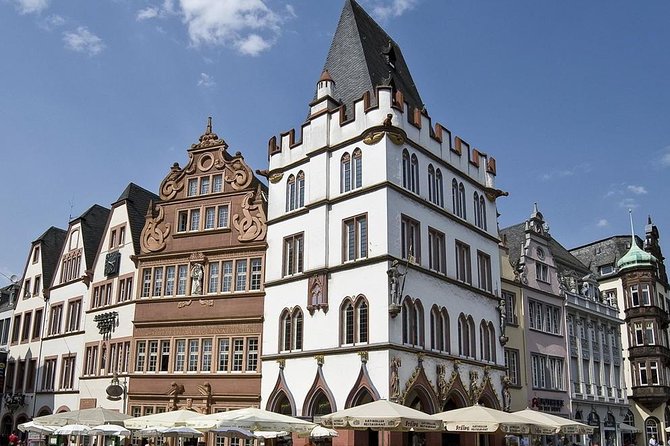
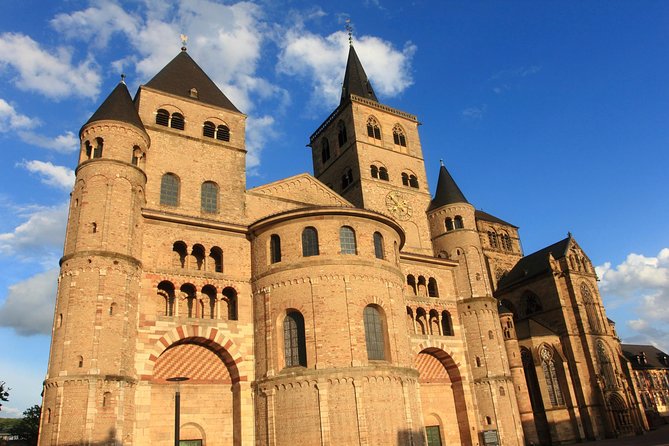
Trier Cathedral, also called the High Cathedral of Saint Peter, is identified as the oldest cathedral in Germany. Its long history is visible in the mixture of architectural styles. The cathedral is also associated with the Holy Rock, a famous relic mentioned as part of the city’s religious importance.
Next door is the Church of Our Lady, or Liebfrauenkirche. It is described as the oldest Gothic church in Germany, giving you a sharp contrast with the cathedral’s older and more layered design.
These churches help balance the Roman sights. If you only visit the ancient monuments, Trier can feel like an outdoor archaeology lesson. The cathedral district shows how the city continued to matter long after the Roman period. I would pay close attention to the guide here, since the value comes from understanding how the buildings fit together, not just taking exterior photographs.
The time available for interiors may depend on the walking schedule and opening conditions. The supplied details promise a guided visit around these landmarks, but they do not guarantee a particular amount of indoor time. If you have one specific church interior in mind, ask the guide early in the day.
Something different for another day:
- Frankfurt: River Main Sightseeing Cruise with Commentary
★ 4.3 · 5,127 reviews - Frankfurt: Hop-On, Hop-Off Grand or Express Bus Ticket
★ 3.9 · 2,088 reviews - Frankfurt: 1-Hour Panorama Boat Cruise on the river Main
★ 4.4 · 1,822 reviews - Rhine Valley Castles: 1.5-Hour Boat Tour from Rüdesheim
★ 4.2 · 1,390 reviews
The Amphitheatre and Imperial Baths
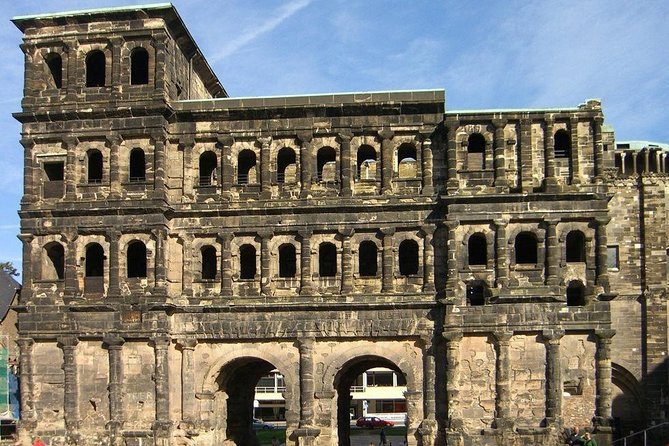
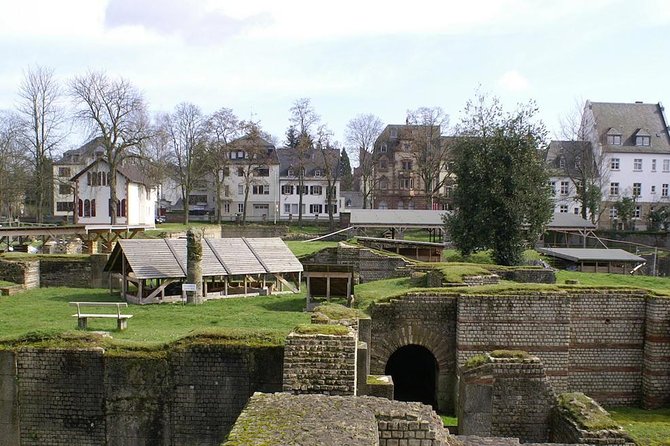
Beyond the medieval city wall, the tour reaches two major Roman remains. Admission to both the Trier Amphitheatre and the Imperial Baths is included, which is one of the clearest benefits built into the price.
The Amphitheatre once hosted public entertainment, including gladiator contests and fights involving animals. Today, the empty stone structure makes the old spectacles feel grim rather than glamorous. That is useful historical context. The site shows how Roman public life mixed architecture, politics, and cruelty on a grand scale.
The Imperial Baths were built in the fourth century AD and were among the largest baths in the Roman Empire. The surviving ruins let you see the scale of the complex and imagine the hidden systems that made Roman public bathing possible. You may find the baths more rewarding if you enjoy construction and engineering, while the Amphitheatre has the stronger emotional impact.
These stops are also where the included admissions matter most. You do not have to make separate ticket decisions or wonder if two of Trier’s major Roman sites fit your budget. Since the overall tour price is high, those admissions do not make it inexpensive, but they do make the package easier to calculate.
The Roman Bridge and Constantine’s Basilica
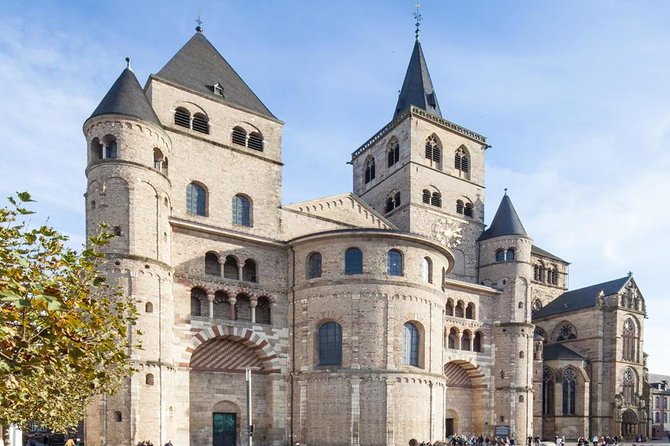
The Roman Bridge is another reminder that Trier was a working city, not just a collection of monuments. It is described as probably the oldest bridge in Germany. Even if bridges are not normally high on your sightseeing list, this stop helps connect the Roman remains to the Moselle River and the city’s wider layout.
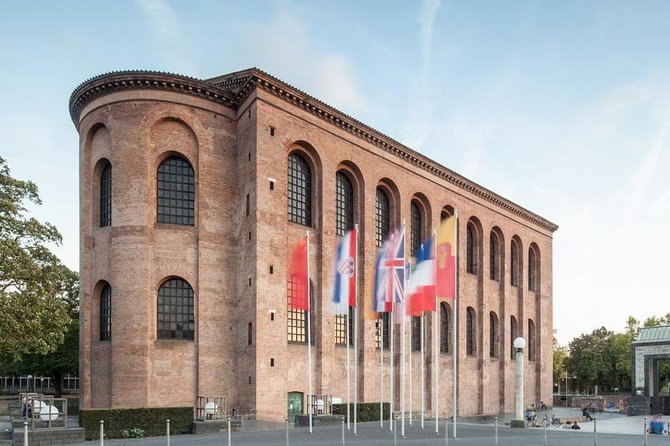
The tour also points out the Basilica, the former throne hall of Emperor Constantine. Its plain, enormous interior differs from the decorative churches nearby. That contrast is worth noticing. Roman imperial architecture did not need delicate ornament to impress; height, width, and sheer scale did the job.
You may not spend equal time at every site. The itinerary lists many landmarks within a limited period, so the guide has to keep the group moving. That is a fair trade for seeing a broad slice of Trier in one day, but anyone wanting long museum visits or careful architectural study may find the pace tight.
Free time around the Main Market and Palace Garden
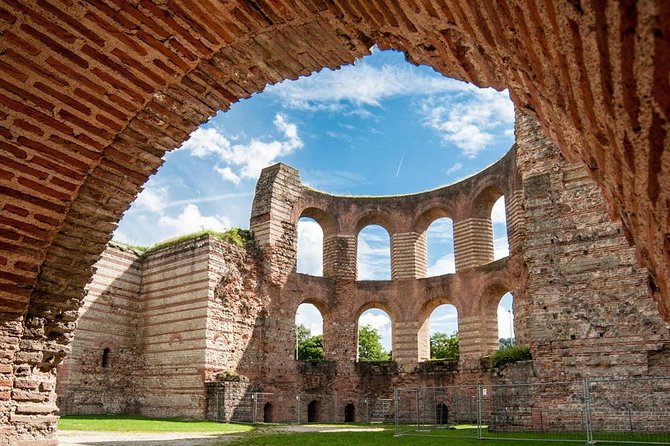
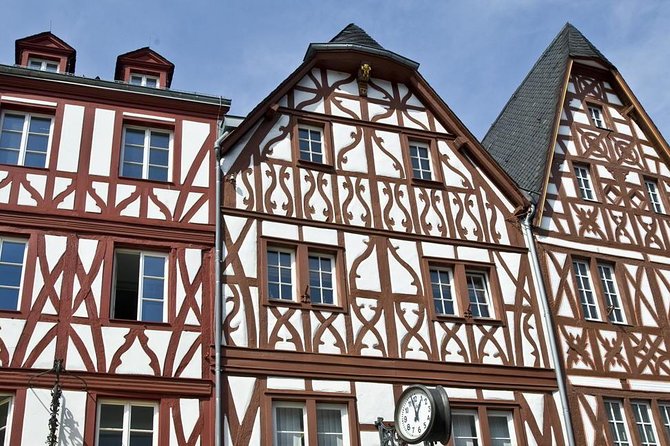
Guided sightseeing gives you the framework, but the free time is what allows the city to feel less like a checklist. The Main Market, or Hauptmarkt, sits in the center of Trier and offers a chance to pause among historic façades, shops, and German town-square scenery.
This is a sensible place to use unstructured time. You can look around at your own pace, take photographs, or simply enjoy the square without trying to keep up with a group. Food and drinks are not included, so this is also the natural point to arrange your own meal or snack if the schedule allows.
The Palace Garden, or Palastgarten, is another good choice. It is described as a crown jewel of garden architecture and sits near the Electoral Palace, considered one of the finest Rococo palaces in the world. The gardens offer a change of pace after the Roman remains and stone-heavy churches.
The itinerary also mentions the Archaeological Museum, Trier’s largest and most popular museum, along with the birthplace of Karl Marx. You likely cannot give every one of these places a proper visit during the same free period. Choose based on your interests. For Roman history, favor the Archaeological Museum. For a quick visual change, choose the palace and gardens. For a personal connection to modern political history, consider the Marx birthplace.
What the small group changes
A maximum of eight people is one of the strongest practical features. Small groups make it easier to hear explanations near busy monuments and easier for the guide to respond to individual interests. If the group is especially small, the day can feel close to a private tour.
That possibility is not theoretical. One booking had only a husband and wife with the guide, creating a highly personalized outing. Another especially positive account praised George for adapting the day after heavy rain affected several areas. Flexibility like that can matter more than a long formal script.
At the same time, small-group tours are not automatically perfect. The experience depends heavily on the assigned guide, and the guide’s style can shape the entire day. George received strong praise for being accommodating, but no specific guide is guaranteed when you book.
Price, inclusions, and real value
At $457.25 per person, this is a premium day trip. The price covers an air-conditioned vehicle, a professional guide, and admission to the Amphitheatre and Imperial Baths. It does not cover hotel pickup, food, or drinks.
I would judge the value in three parts. First, you are paying for convenience. The tour removes the need to plan the Frankfurt to Trier journey, arrange local transport, and work out how the Roman sites fit together. Second, you are paying for a very small group, which is a meaningful upgrade over a large bus tour. Third, you are paying for interpretation, not just transportation.
If you only want a ride to Trier and a few hours to wander, the price will feel hard to defend. If you value a guide who can explain the city’s Roman, religious, and royal layers, the cost becomes easier to understand. A private outing with only two people has already been possible on this tour, though you should not assume that will happen on your date.
The included site admissions help, but they are not enough by themselves to justify the full price. The strongest case is the combination of small-group service, guided context, and a difficult long-distance day trip handled in one package.
Weather, cancellations, and booking timing
One booking was canceled by the operator only one day before departure, after the customer had reserved months earlier. The communication was described as disappointing and unhelpful. This is the major warning attached to the experience, even though other accounts praised the day itself.
Confirmation is sent within 48 hours of booking, subject to availability. The tour is often booked about 90 days ahead, so reserve early if your Frankfurt schedule is fixed. Free cancellation is available up to 24 hours before the start time. Cancellations or changes made less than 24 hours before departure are not accepted for a refund.
The guide may adjust the day when weather affects certain sites or routes. George was praised for offering different sights after substantial rain. That kind of adjustment is useful, but it also means the exact rhythm of the day can change.
Who will enjoy this Trier outing most?
I would recommend it most to you if:
- You are staying in Frankfurt and want to see a major historic city beyond the Rhine-Main area.
- Roman architecture is a main reason you travel.
- You prefer a guide to explain complicated sites rather than reading everything on your phone.
- You want a small group instead of a full-size coach.
- You can handle a long day with several hours of driving and walking.
- You value seeing many landmarks, even if you cannot spend a long time inside each one.
You may want another plan if you dislike long road journeys, want extensive museum time, or need hotel pickup. The tour is also less attractive if you have several days available and can arrange an overnight stay in Trier. Spending a night would give you more room for the Archaeological Museum, churches, palace, gardens, and market.
Most visitors can participate, and the tour operates near public transportation, but the supplied details do not specify a full accessibility plan. If you have mobility needs, ask the provider before booking.
Should you book this Trier day trip from Frankfurt?
I would book this tour if Trier is high on your list and you want expert structure in a small group. The Roman gate, Amphitheatre, Imperial Baths, cathedral, Gothic church, bridge, palace area, and market make this one of the more substantial historic day trips available from Frankfurt.
I would skip it if the price feels uncomfortable or if you want a relaxed visit. At $457.25, the value depends on the guide and the convenience of having the long journey organized. Check that the tour is confirmed before building your plans around it, then arrive at Wiesenhüttenplatz 38 ready for a full day of Roman stones, medieval churches, and a lot of road time.
FAQ
How long is the Trier day trip from Frankfurt?
The experience lasts approximately 10 hours. The drive from Frankfurt to Trier takes about 2.5 hours each way, and the Trier portion is listed at about six hours.
What time does the tour begin?
The tour starts at 9:30 a.m.
Where is the meeting point?
You meet at Wiesenhüttenpl. 38, 60329 Frankfurt am Main, Germany, at the ETS Touristik and Greenline Frankfurt departure office.
Does the tour return to Frankfurt?
Yes. The activity ends back at the original meeting point in Frankfurt.
What is included in the tour price?
The price includes an air-conditioned vehicle, a professional guide, and admission to the Trier Amphitheatre and Trier Imperial Baths.
Are food and drinks included?
No. Food and drinks are not included unless specifically stated.
How many people can join the tour?
The tour has a maximum group size of eight people.
Can I cancel for a full refund?
Yes, if you cancel at least 24 hours before the experience start time. Cancellations and changes made less than 24 hours before the start time are not accepted for a refund.
Just added around Frankfurt
- Castle Braunfels Day Trip from Frankfurt★ 5.0 · 3 reviews
- Frankfurt to Prague – Private Transfer with 2 hours of Sightseeing★ 5.0 · 3 reviews
- Frankfurt – Private tour with Licensed guide★ 5.0 · 4 reviews
- Arrival by Luxury Vehicule from Frankfurt Airport to Frankfurt★ 4.0 · 4 reviews
- Frankfurt: Old Town Highlights Private Walking Tour★ 5.0 · 4 reviews
- Discover Frankfurt’s most Photogenic Spots with a Local★ 5.0 · 4 reviews
- 2 Hour Private Guided Walking Tour: Gutenberg and Mainz Cathedral★ 5.0 · 4 reviews
- Frankfurt: Private German Beer Tasting Tour in Old Town★ 4.5 · 4 reviews
1-Day Tours, compared.
Munich Hop-On Hop-Off Tour: 1-Day or 2-Day Ticket
Read our review →
Neuschwanstein Castle and Linderhof Palace Day Trip from Munich
Read our review →
Rothenburg and Nördlinger Ries Day Trip by Bus
Read our review →
Browse the lists this tour appears in