
Reviewed · DUSSELDORF TOURS
Düsseldorf: The Wehrhahn Line Metro Guided Tour
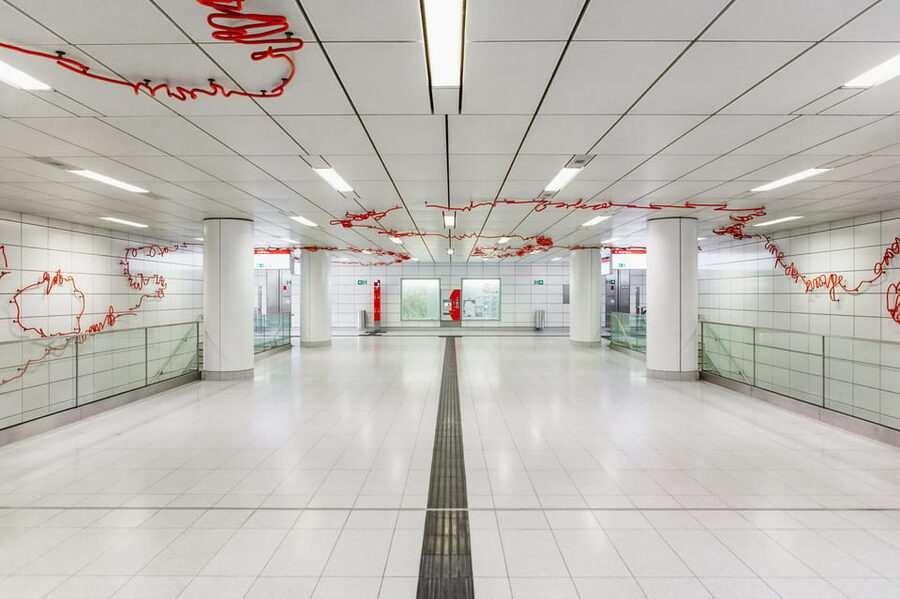
Underground art makes Düsseldorf worth a closer look. This 90-minute tour turns an ordinary U-Bahn ride into a guided look at how six metro stations were shaped by artists and engineers, with each stop given its own painted, sculptural, interactive, acoustic, or geometric character. You visit several of the line’s best-known stations, including Pempelforter Straße, Schadowstraße, Heinrich-Heine-Allee, Benrather Straße, and Kirchplatz.
I especially like the small-group feel and the fact that the tour gives you a clear theme instead of asking you to admire stations without context. I also like the choice between a shared group tour and a private tour. The main point to consider is that the $20 price does not include the required Metro-ticket, price level A3, and the live tour is offered in German.
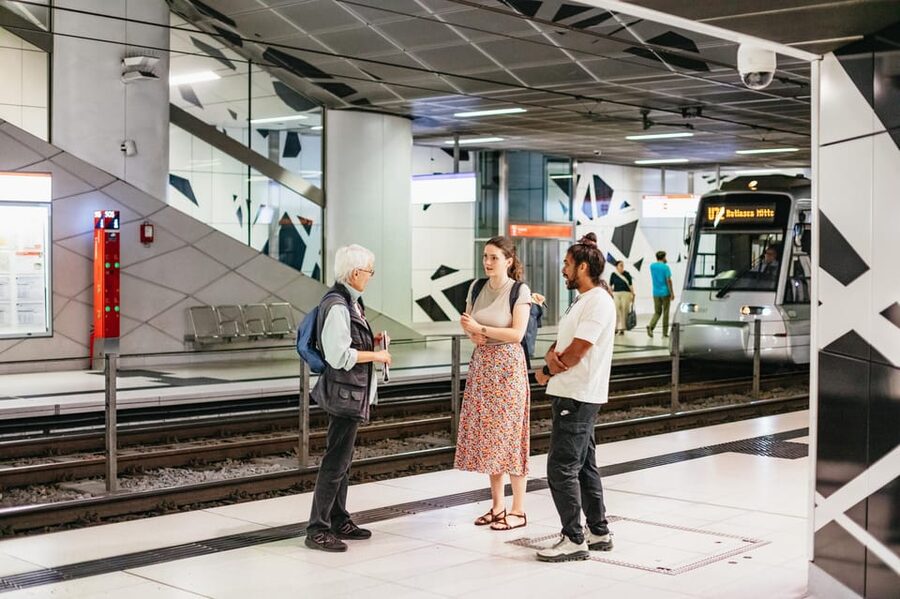
The tour has earned a strong 4.5 out of 5 rating from 29 ratings. The most praised points are the friendly, capable guiding and the amount of useful detail packed into a manageable morning or afternoon. One participant described a group of only three people, while another appreciated an older guide who explained everything clearly. That suggests the experience can feel personal, although the exact group size and guide may vary.
In This Review
- Key points about Düsseldorf’s underground art tour
- Why Düsseldorf’s Wehrhahn Line deserves a closer look
- Starting at Pempelforter Straße on Oststraße
- Pempelforter Straße and the first look at the line
- Schadowstraße and the art of comparison
- Heinrich-Heine-Allee adds a central city stop
- Benrather Straße and the line’s changing character
- Kirchplatz and the end of the route
- What the 90-minute format does well
- Shared group or private tour?
- Is $20 a fair price?
- Who should book this experience?
- Should you book the Wehrhahn Line tour?
- FAQ
- Where does the Wehrhahn Line metro tour start?
- How long does the tour last?
- What language is the tour conducted in?
- Is a Metro-ticket included?
- Which stations are included?
- Is this a shared or private tour?
- What is included in the price?
- Where does the tour end?
- Can I cancel the booking?
Key points about Düsseldorf’s underground art tour
- Pempelforter Straße is the meeting point: Meet at the street-level station access on Oststraße, at the corner of Am Wehrhahn.
- Five major stations are named on the route: You can expect attention to Pempelforter Straße, Schadowstraße, Heinrich-Heine-Allee, Benrather Straße, and Kirchplatz.
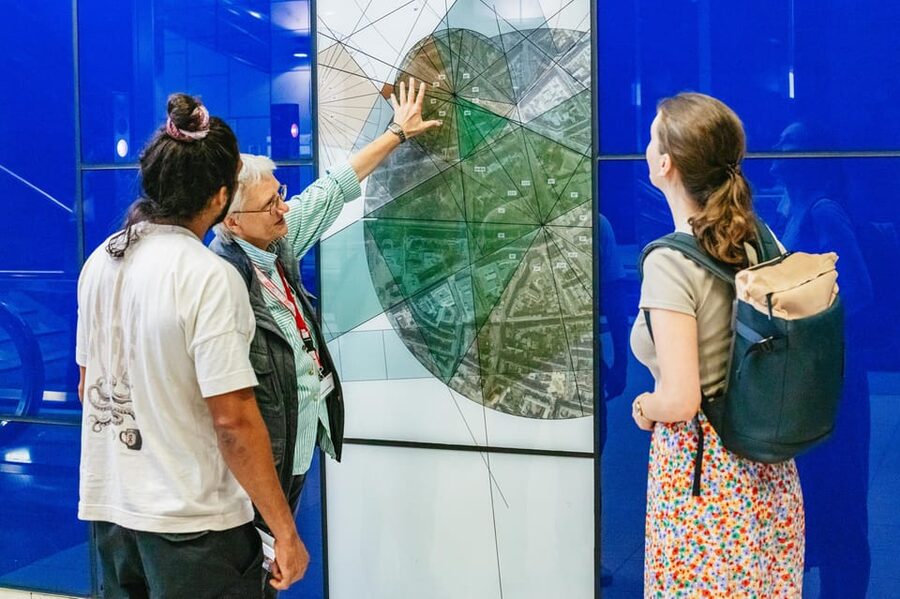
- The stations use different forms of art: Painted, sculptural, interactive, acoustic, and geometric features are all part of the design story.
- The tour lasts 1.5 hours: It is long enough for context and several stops without taking over your whole day.
- A Metro-ticket is extra: You must buy a price level A3 ticket before taking part.
- You can choose the tour style: Shared group and private guided options are available, with the tour conducted in German.
Why Düsseldorf’s Wehrhahn Line deserves a closer look
Many cities treat a metro station as a place to pass through. Düsseldorf’s Wehrhahn Line asks you to slow down and look up, around, and sometimes more closely at the space itself. The focus here is not simply on getting from one district to another. It is on the relationship between public transport, architecture, and commissioned art.
The line’s six subway stations were developed through work between different artists and subway engineers. That detail matters because it frames the stations as planned works, not random decoration added after construction. You are seeing how creative ideas were adapted to a working transport system.
The result is a route with different visual and sensory approaches from station to station. One stop may use painted elements, another sculptural forms, another geometric design. Interactive and acoustic features are also part of the mix. The tour is useful because a guide can explain how these choices fit into the station design rather than leaving you to guess what you are seeing.
This is a good way to experience a less obvious side of Düsseldorf. You do not need to set aside a full day, and you do not need to be a specialist in modern art. You simply need enough curiosity to notice that a subway platform can have a point of view.
A few more tours and experiences worth a look
- Düsseldorf: Guided Tour with a Night Watchman
★ 4.7 · 986 reviews - Düsseldorf: Altstadt Guided Tour
★ 4.5 · 447 reviews - Düsseldorf: Scavenger Hunt Self-Guided Tour
★ 4.6 · 127 reviews
Starting at Pempelforter Straße on Oststraße
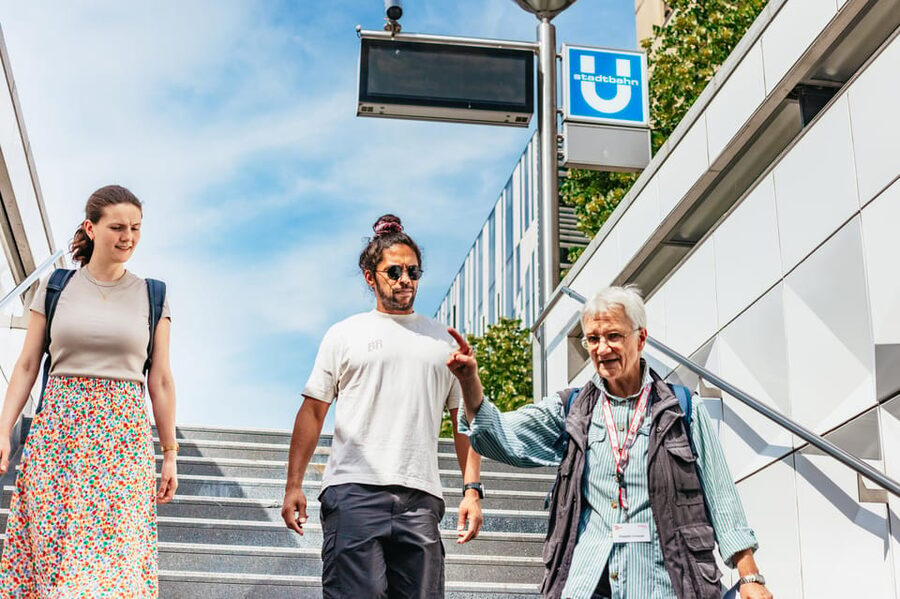
The stated meeting point is the street-level station access on Pempelforter Straße, on Oststraße at the corner of Am Wehrhahn. Take care here, since the activity information also lists Oststraße and Ferienwohnung Nordwind as starting location options. The clearest practical instruction is to look for the street-level station entrance at the Pempelforter Straße area on Oststraße.
Arrive with time to spare. A metro tour is less forgiving than a standard walking tour because the group needs to move through working stations and use the transit system. You also need your price level A3 Metro-ticket before the tour begins. It is not included in the $20 tour price.
The meeting point places you right inside the subject of the tour. You are not walking from a distant landmark to reach the art. The station access itself is the doorway into the route, which helps the experience feel like an exploration of the city’s everyday infrastructure.
The guide leads the group through the stations and explains the design concept developed for the line. Since the tour is in German, you should be comfortable following spoken German to get the full value from the explanations. The attraction is visual, but the meaning behind the art depends heavily on the guide’s commentary.
Pempelforter Straße and the first look at the line
Pempelforter Straße serves as both the meeting area and one of the notable stations on the route. It is a useful opening point because the tour begins with the line’s basic idea: each station has a distinctive character, but all belong to one larger transport project.
Expect the guide to set up the design story here and explain how the artists’ concepts worked alongside subway engineering. The information supplied for the tour does not assign one named artistic style to this particular station, so you should not arrive expecting a specific installation or material. Instead, pay attention to how the station’s visual elements work in a practical public setting.
This first stop also gives you a chance to understand the rhythm of the tour. You are not spending a long time at one museum object. You move through active metro spaces, listen to the explanation, and compare one station with the next. That makes the experience more about connections than isolated sights.
Schadowstraße and the art of comparison
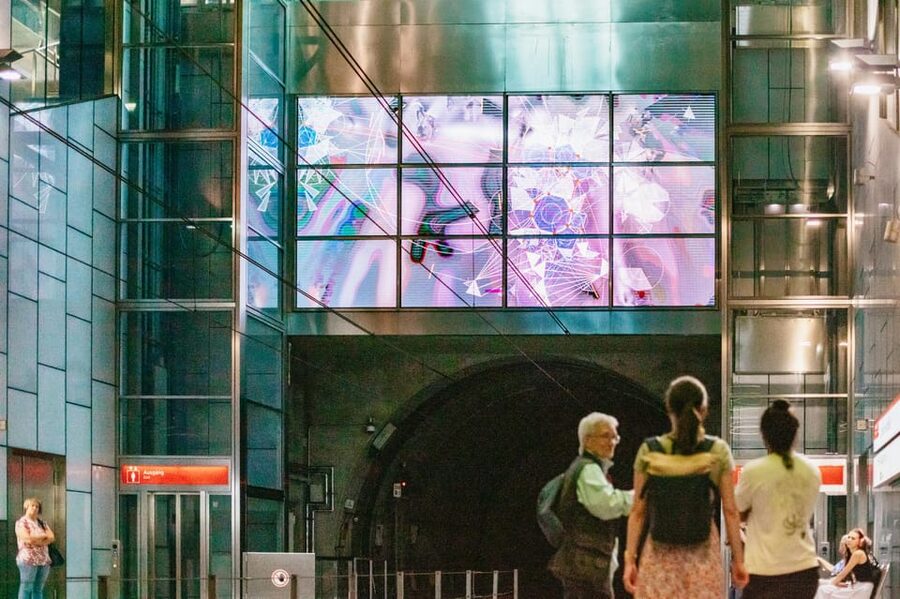
Schadowstraße is another named stop and one of the stations highlighted as a key part of the route. Its value comes partly from comparison. Once you have seen the opening station, you can start noticing how the design language changes as you move along the line.
The tour description points to painted, sculptural, interactive, acoustic, and geometric features across the stations. It does not specify which category belongs to Schadowstraße, so the guide’s explanation is important. You might find that the station’s character is easier to appreciate after seeing how another stop handles space, color, sound, or form.
For you, this is one of the strongest reasons to take the guided version rather than simply ride the Wehrhahn Line alone. A self-guided trip would let you see the stations, but it would not necessarily reveal how the different ideas were developed or how they relate to the work of the subway engineers.
Something different for another day:
- Düsseldorf: City Sightseeing Cruise on the Rhine
★ 4.1 · 2,954 reviews - Düsseldorf: 24-Hour Hop-On Hop-Off Ticket
★ 4.2 · 1,685 reviews - Düsseldorf: Brewery Tour with Alt Beer Tastings
★ 4.7 · 1,523 reviews - Düsseldorf: Altbier-Safari Beer Walking Tour
★ 4.4 · 1,150 reviews
Heinrich-Heine-Allee adds a central city stop
Heinrich-Heine-Allee is included among the best-known stations on the route. The tour uses it as part of a wider look at the line’s design rather than as a stand-alone attraction. You get a chance to see how the art and architecture continue through a station that has its own identity within the network.
The supplied details do not promise a particular artwork, historical story, or performance at Heinrich-Heine-Allee. That is worth keeping in mind. This is not a theatrical show with a fixed script of special effects. It is a guided look at design choices in real metro stations.
I would treat this stop as part of the tour’s overall progression. Notice the changes from earlier stations, listen for the guide’s comments on the design process, and compare the station’s shapes and surfaces with what you have already seen. The value builds as the route continues.
Benrather Straße and the line’s changing character

Benrather Straße gives you another point of comparison. By this stage, you should have a clearer sense of the central idea: the Wehrhahn Line is not presented as a row of identical platforms. The stations are meant to have individual character while still functioning as parts of one transit system.
This is where the different artistic methods become useful. Painted surfaces can create a strong visual mood. Sculptural elements can change the way you read a platform or passage. Interactive and acoustic features may ask you to pay attention in ways that a conventional station does not. Geometric design can make structure and movement feel more deliberate.
The information available does not identify the exact feature assigned to Benrather Straße. That keeps the tour from being a checklist of guaranteed objects, but it also means you should book it for the guided explanation and the station-to-station comparison, not for one particular photo.
Kirchplatz and the end of the route
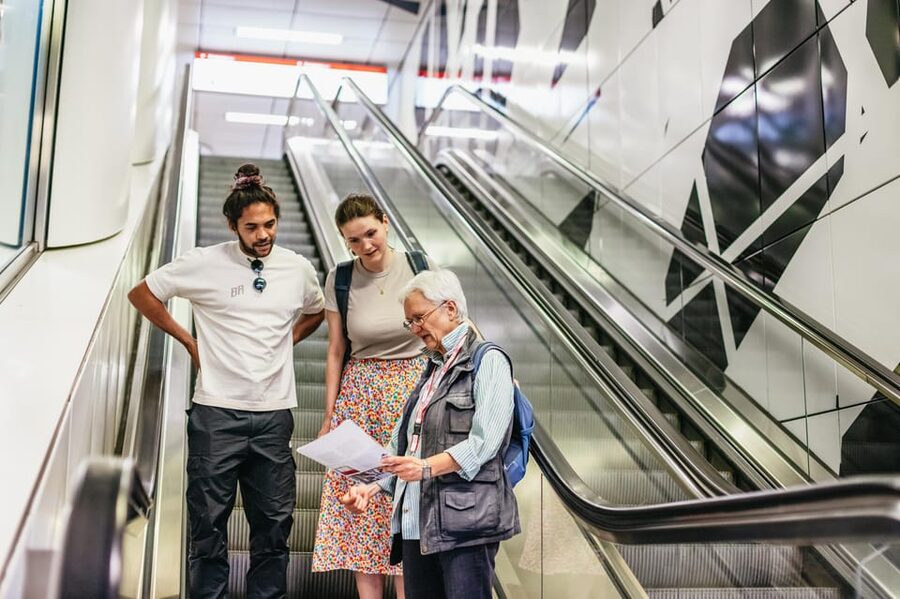
Kirchplatz is named as the final notable stop and one of the possible drop-off points. The activity information also says the tour ends back at the meeting point, while the itinerary lists Kirchplatz and Oststraße as drop-off locations. In practical terms, confirm the exact end point with the guide when you arrive, especially if you have another booking afterward.
As the final stop, Kirchplatz gives the tour a natural chance to pull the ideas together. You have seen several stations, considered the role of artists and engineers, and compared different kinds of visual and sensory design. The station is less important as a single grand finale than as the last piece in the route’s larger argument.
You may also appreciate the flexibility here. If the tour finishes at Kirchplatz, you are positioned to continue your day from that area. If it returns to Oststraße, you end where you began. The listed options make it sensible to ask about the exact ending before the group sets off.
What the 90-minute format does well

Ninety minutes is a sensible length for this kind of outing. It gives the guide time to explain the project and show several stations, but it does not turn the experience into a full-day commitment. You can fit it around other Düsseldorf plans more easily than a long museum visit or an extended city walk.
The short format also keeps the focus sharp. You are there to examine the Wehrhahn Line, not to cover every major sight in Düsseldorf. The guide can stay on topic and give you a series of clear examples without wandering into unrelated city history.
The trade-off is that 1.5 hours leaves little room for a slow, independent look at every feature. The tour moves at the group’s pace, and you may want extra time for photographs or closer inspection. If you prefer to linger at one station, a private tour may give you more control, though the supplied information does not promise a different route or duration for the private option.
Shared group or private tour?
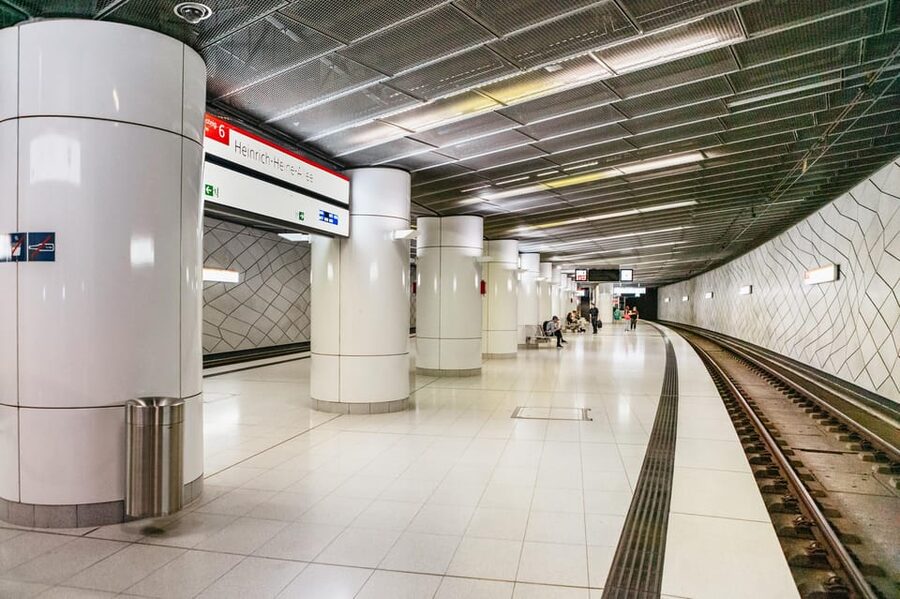
The shared group tour is likely the better value for most people. At $20 per person, it gives you a guided framework for seeing a part of Düsseldorf that is easy to overlook. The positive feedback emphasizes friendly guiding, clear explanations, and a manageable group. One rating specifically described only three people on the tour, though you should not assume every departure will be that small.
A private tour makes more sense if you want the guide’s attention focused on your party. It may suit visitors who have a strong interest in architecture or public art, or those who want to ask more questions as they move between stations. The private option costs more than the basic shared price if a surcharge applies, but the exact private price is not provided here, so check it before booking.
The language is a major decision point. The live guide speaks German. If you do not understand German well, you may still see the stations, but you will miss much of the design explanation that gives the tour its value.
Is $20 a fair price?
The $20 charge is reasonable for a 90-minute guided experience, especially if you enjoy architecture, public art, or unusual city tours. You are paying for interpretation, not just transportation. The guide connects the work of the artists with the engineering demands of a subway line and helps you notice details you might otherwise pass without seeing.
Still, budget for the separate Metro-ticket. The required price level A3 ticket is not included, so the final cost is higher than the advertised tour price. The ticket requirement is not a minor footnote. You cannot take part without it.
The value improves if you already plan to use Düsseldorf’s public transport during the day, since the Metro-ticket may fit into your wider transportation needs. The supplied information does not state the ticket price or validity details, so check the current fare before you go.
The cancellation terms are helpful for uncertain plans. You can cancel up to 24 hours in advance for a full refund, and the reserve-now, pay-later option lets you hold a place without paying today. Keep those policies in mind, but focus your decision on the German-language guiding and your interest in design.
Who should book this experience?
I would recommend the tour to you if you like seeing cities through their public spaces rather than only visiting headline sights. It suits architecture fans, modern art enthusiasts, public transport fans, and anyone who enjoys a compact activity with a clear subject.
It is also a good choice for repeat visitors to Düsseldorf. If you have already seen the main central sights, the Wehrhahn Line offers a different way to read the city. You are not simply riding the U-Bahn. You are looking at how a city chooses to represent itself underground.
Families with older children may enjoy the changing station designs, but the German-language commentary and the need to move through working stations should guide your decision. The tour is less suitable if you want a quiet, self-paced gallery visit or if you need commentary in another language.
The guide’s tone seems to be one of the experience’s strongest assets. Feedback praises a friendly, capable guide and clear explanations, with one participant calling the older guide especially good at explaining the details. No guide names are provided, so the person leading your departure may differ.
Should you book the Wehrhahn Line tour?
Book it if you want a short, focused look at Düsseldorf’s art and architecture and you are comfortable with German. The strongest reasons are the station-to-station comparison, the guide’s detailed explanations, and the chance to see design integrated into a working metro line.
Skip it if you need an English-language tour, dislike public transport logistics, or want a fixed list of famous artworks with guaranteed features at each stop. Remember to buy the A3 Metro-ticket separately and allow time to find the street-level access at Pempelforter Straße on Oststraße.
For the right visitor, $20 is a fair fee for a neatly timed, unusual city experience. It gives you a new way to look at Düsseldorf, and after the tour, you may never see a plain subway platform quite so plainly again.
FAQ
Where does the Wehrhahn Line metro tour start?
Meet at the street-level station access on Pempelforter Straße, on Oststraße at the corner of Am Wehrhahn.
How long does the tour last?
The tour lasts 1.5 hours. Starting times vary, so check availability when booking.
What language is the tour conducted in?
The live guided tour is conducted in German.
Is a Metro-ticket included?
No. You must purchase a Metro-ticket at price level A3 separately.
Which stations are included?
The named stations include Pempelforter Straße, Schadowstraße, Heinrich-Heine-Allee, Benrather Straße, and Kirchplatz.
Is this a shared or private tour?
You can choose between a shared group tour and a private guided tour.
What is included in the price?
The price includes the guided tour. A private tour is included if you select that option.
Where does the tour end?
The activity information lists Kirchplatz and Oststraße as drop-off locations and also states that the tour ends back at the meeting point. Confirm the exact end point with the guide.
Can I cancel the booking?
Yes. You can cancel up to 24 hours in advance for a full refund. A reserve-now, pay-later option is also available.
Just added around Dusseldorf
- Düsseldorf: 2-Day Art Exhibition and Museum Pass★ 4.6 · 13 reviews
- DüsseldorfCard Plus★ 4.1 · 14 reviews
- Duisburg-Ruhrot: Historic Harbor Pub Tour★ 4.8 · 15 reviews
- Dusseldorf : Highlights Walking tour with A Guide★ 4.6 · 16 reviews
- Sightrunning – Private Running Tour in Düsseldorf★ 5.0 · 16 reviews
- Düsseldorf: Private pub crawl with insider-guide & shots★ 4.1 · 18 reviews
- Düsseldorf PubCrawl: 4 Venues, Welcome Shots + Club Entry★ 5.0 · 18 reviews
- Schimmi tour pure (without catering)★ 4.9 · 19 reviews
Dusseldorf Tours, compared.



Browse the lists this tour appears in