
Reviewed · OLD TOWN WALKS
Die Kiez-Kapitän Hamburger Stadtführung & Speicherstadt Tour
Hamburg reveals itself in layers. This two-hour walk links the Alster, Town Hall, old port quarter, Speicherstadt, HafenCity, and Elbphilharmonie, giving you a useful first look at the city without the rush of a giant sightseeing circuit. I like the way it connects famous sights with lesser-known stories, including the great fire of 1842, the 1962 flood, and a curious poodle on a roof.
I especially like the central starting point at Jungfernstieg, beside the Alster boats and public transport, and the strong storytelling focus led by Jens Hartmann, also known as the Kiez-Kapitän. The main consideration is language: the tour is conducted in German, and a two-hour walk covering this much ground can feel brisk if you want long stops at each sight.
In This Review
- What makes this Hamburg walk worth your time
- Starting beside the Alster at Jungfernstieg
- From the Town Hall to Hamburg’s civic heart
- Trostbrücke and Laeiszhof: small stops with useful context
- St. Nikolai Memorial and the difficult wartime chapter
- Deichstrasse and the character of old Hamburg
- Entering the brick warehouses of Speicherstadt
- HafenCity and the city’s modern waterfront
- The Elbphilharmonie finale
- What the guide style adds
- Timing, price, and who gets the best value
- Should you book the Kiez-Kapitän Hamburg tour?
- FAQ
- Where does the Hamburg city tour begin?
- Where does the tour finish?
- How long does the tour last?
- What language is the tour conducted in?
- Is the tour wheelchair accessible?
- Does the tour include entry to the Elbphilharmonie?
- Can I visit the Elbphilharmonie Plaza afterward?
- How much does the tour cost?
What makes this Hamburg walk worth your time
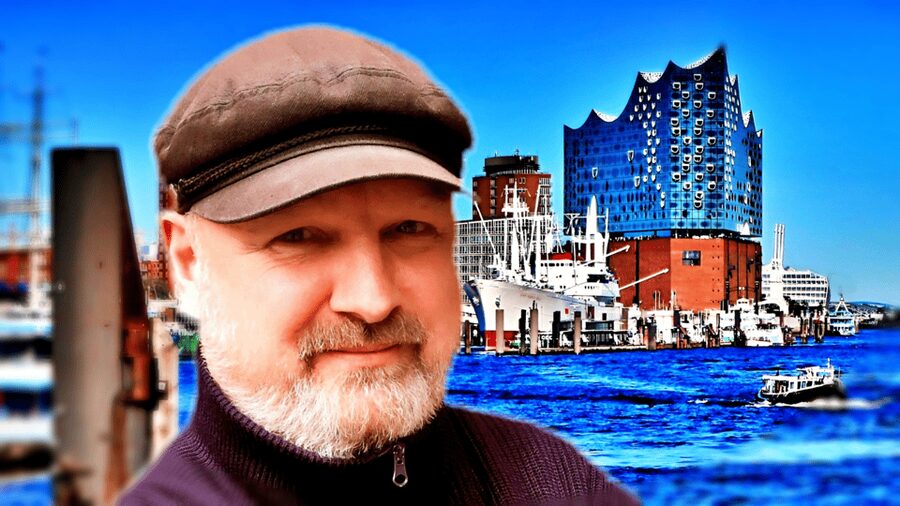
- A clear route from water to water: Begin beside the Alster and finish near the Elbphilharmonie at Am Sandtorkai 68.
- Hamburg’s biggest turning points: Hear about the 1842 fire, the 1962 flood, wartime destruction, and the city’s seafaring past.
- A useful mix of landmarks: The route includes the Town Hall, St. Nikolai Memorial, Deichstrasse, Speicherstadt, HafenCity, and the Elbphilharmonie.
- Stories beyond standard sightseeing: Look for details such as the poodle on the roof and the connection between Hamburg’s port culture, old songs, and modern architecture.
- Good value at $18: You get a live, guided introduction to central Hamburg for less than the price of many attraction tickets.
- A flexible finish: After the walk, you can visit the Elbphilharmonie Plaza separately, subject to the access rules in place that day.
Starting beside the Alster at Jungfernstieg
The tour begins at Jungfernstieg 58, directly beside the water at landing stage number 1 for the Alster boats. This is a practical meeting point. The S-Bahn and U-Bahn exits are nearby, and several bus lines serve the area, so you do not need to build a complicated transfer into your morning.
The Alster gives you a calm opening to a city that soon becomes much more urban and port-focused. From here, the guide places Hamburg in context as a Hanseatic city shaped by water, commerce, shipping, fires, floods, and rebuilding. That broad frame matters. You are not simply ticking off monuments. You are following the forces that changed Hamburg over roughly 1,200 years.
Jens Hartmann is the guide named in the tour information and recent booking feedback. His style appears to be a major reason the experience earns a 4.8 rating from 37 reviews. People who joined his walks describe detailed explanations, plenty of questions answered, and a relaxed pace with humor.
One practical note: the published duration is two hours, but Hartmann has sometimes continued for 30 to 45 minutes when a small group kept the conversation going. That sounds wonderful if you have time, but do not schedule a tight lunch reservation immediately afterward.
More Old Town Walks:
- Elphi Plaza Führung
★ 4.0 · 231 reviews - Hamburg Old Town on foot – the guided tour with heart
★ 4.9 · 27 reviews - Dresden: Semperoper and Old Town Tour
★ 4.8 · 5,735 reviews
From the Town Hall to Hamburg’s civic heart
The walk moves from the Alster toward Hamburg Town Hall, one of the city’s essential orientation points. Here, you get a sense of Hamburg as a self-governing trading city, not just a port with warehouses and ships.
The next stops are the Hamburg Chamber of Commerce and the Patriotic Society of 1765. These buildings and institutions help explain how business, civic life, and local identity developed together. For you, this section adds substance to the grand façades. The guide is not only pointing at architecture. He is explaining who made decisions, who traded, and how Hamburg organized itself.
The tour’s historical stories are a strong feature. You hear about the Great Hamburg Fire of 1842, a disaster that reshaped central Hamburg, and the Great Flood of 1962, which brought severe danger to the city. These events show why Hamburg’s relationship with water is both an asset and a risk.
I find this kind of context more useful than a string of dates. When you later see canals, embankments, brick warehouses, and port infrastructure, you understand that they are responses to real problems, not just attractive scenery.
Trostbrücke and Laeiszhof: small stops with useful context
Trostbrücke is one of those places that can slip past you if you are walking alone. On a guided route, it becomes a pause to connect Hamburg’s older center with its commercial past.
The nearby Laeiszhof continues that theme. The tour uses these stops to explain the city’s trading and seafaring connections. Hamburg’s identity is tied to merchants, shipping companies, waterfront businesses, and the movement of goods, so these locations help bridge the gap between the civic center and the port districts ahead.
Do not expect an extended museum visit at each point. This is an outdoor walking tour, and the value comes from the guide’s explanation of what you are seeing. If you prefer to spend 20 minutes inside one building, this format will not provide that. If you want a coherent story while moving through the city, it works better.
St. Nikolai Memorial and the difficult wartime chapter
St. Nikolai Memorial brings the tour into Hamburg’s 20th-century history. The site is associated with the destruction of Hamburg during World War II, and the guide explains what happened to the church and the surrounding city.
This is an important stop because Hamburg’s beauty can otherwise make its wartime past easy to overlook. The memorial gives the walk a more serious tone and reminds you that the city you see today was shaped by loss as well as rebuilding.
The tour does not treat history as decoration. Its subjects include fire, flood, war, and the changing port. That makes the route better suited to you if you want more than pretty buildings and photo stops.
Something different for another day:
- Hamburg: Sex and Crime in St. Pauli Tour for Ages 18+
★ 4.7 · 15,447 reviews - Hamburg: 1.5-Hour Harbor and Speicherstadt Day Cruise
★ 4.6 · 14,200 reviews - Hamburg: 90-Minute Evening Lights Harbor Cruise
★ 4.5 · 7,728 reviews - Hamburg: 2-Hour XXL Port of Hamburg Cruise Tour
★ 4.7 · 6,979 reviews
Deichstrasse and the character of old Hamburg
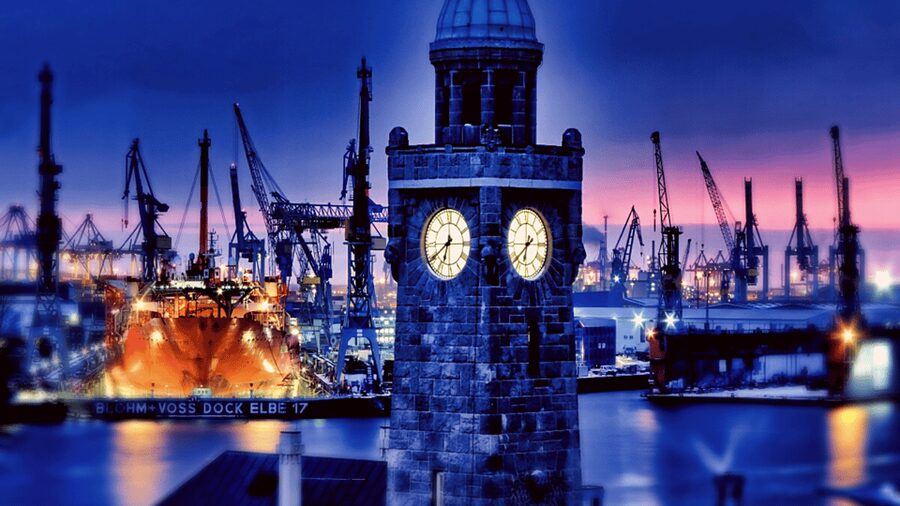
Deichstrasse offers one of the clearest changes in atmosphere along the route. Its historic houses help you picture older Hamburg near the water, before the city’s modern port districts took their present form.
This is where stories about Hamburg’s past can become easier to grasp. You can connect the buildings with the waterways, trade, and risks described earlier. The walk has already introduced fires and floods, so old waterfront architecture carries a little more meaning than it would at the start of the day.
The guide also shares unusual details, including the story of a poodle on a roof. That small touch matters. A city tour made entirely of dates and official buildings can feel heavy. Odd local stories give the city a human scale and help the places stick in your memory.
Entering the brick warehouses of Speicherstadt
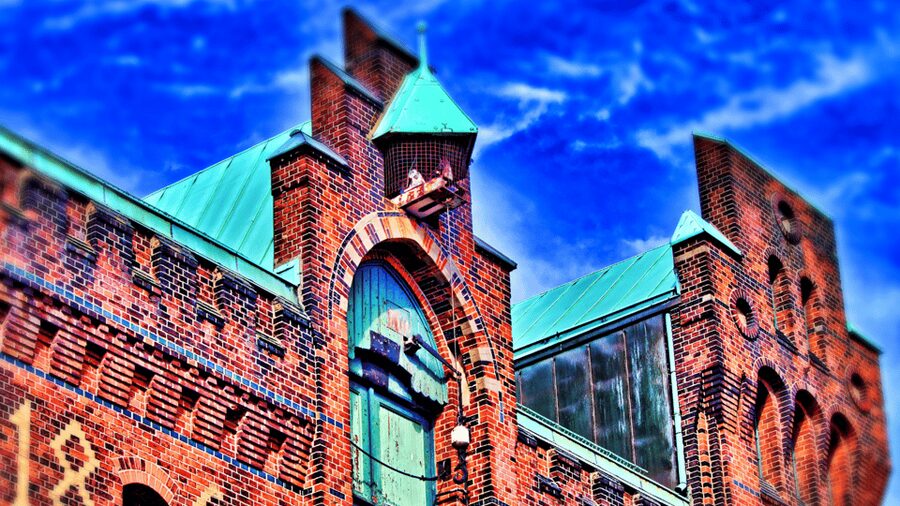
Speicherstadt is the visual centerpiece for many people on this route. The UNESCO World Heritage Site is known for its long brick warehouses, canals, bridges, and carefully planned waterfront setting.
The tour focuses on the history of the brick-built warehouse district in the Elbe area. You learn how this part of Hamburg relates to storage, trade, and the port. The red brick gives the district a unified look, but the guide’s explanation helps you see its working purpose behind the grand appearance.
This section is especially useful if you are seeing Speicherstadt for the first time. A guide can point out how the waterways and warehouses fit together, then connect the district to Hamburg’s wider seafaring story. You will also have strong photo opportunities, although the walk is not designed as a dedicated photography session.
At $18 per person, Speicherstadt alone gives the tour much of its value. Add the Alster, Town Hall, memorial, HafenCity, and Elbphilharmonie, and the price becomes quite reasonable for a live introduction to central Hamburg.
HafenCity and the city’s modern waterfront
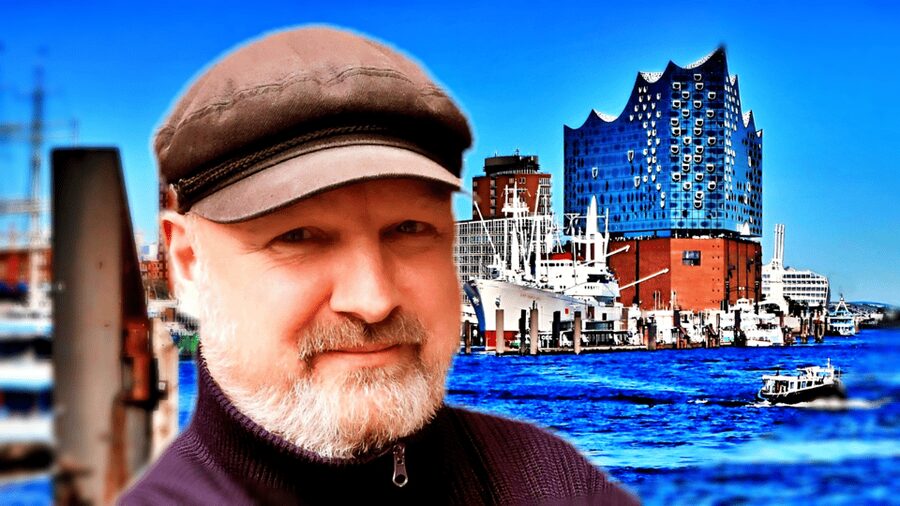
After the older brick warehouses, the route moves into HafenCity. This is where Hamburg’s waterfront story shifts from historic trade to modern redevelopment and new urban design.
The contrast is part of the appeal. You move from older buildings and canals into a newer district with a different architectural language. The tour makes this transition useful rather than confusing, showing how Hamburg continues to reshape its connection with the Elbe.
HafenCity can feel broad and modern compared with the compact older center. A guide helps keep the area tied to the rest of the walk. You are not simply looking at new buildings. You are seeing the next chapter of a city that has repeatedly rebuilt and adapted.
The Elbphilharmonie finale
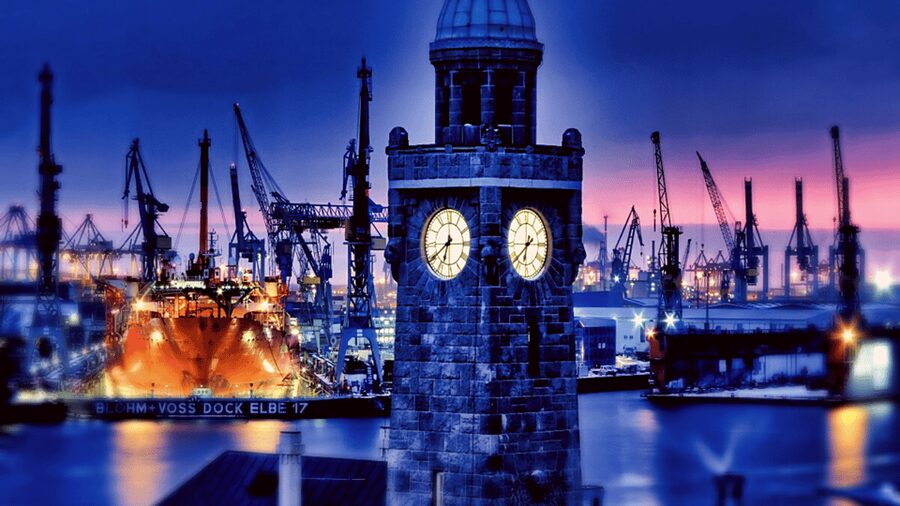
The walk finishes near the Elbphilharmonie, at Am Sandtorkai 68. The concert hall provides the route’s big architectural finale and a clear visual link to Hamburg’s modern cultural identity.
The tour includes information and views of the building, but it does not include a visit inside the Elbphilharmonie. You can visit the Plaza afterward, and the information provided says tickets are available free at the entrance, though larger groups may face an entrance charge. Conditions can change, so treat the Plaza as a separate part of your plans rather than a guaranteed extension of the walk.
This distinction is useful. You pay $18 for the guided city tour, not for a concert hall admission or an interior tour. If the Elbphilharmonie is your main reason for coming, you should plan extra time after the walk and check access when you arrive.
The final view also gives you a satisfying sense of distance covered. You began beside the Alster and end beside the Elbe, passing through Hamburg’s political center, historic commercial quarter, memorial sites, warehouse district, and modern waterfront.
What the guide style adds

The strongest praise for this experience centers on the guide’s manner. Jens Hartmann is described as friendly, funny, detailed, and willing to answer questions. One small group received so much extra conversation that the tour continued well beyond its scheduled two hours.
That can make the experience feel personal rather than mechanical. You are encouraged to ask questions, and a smaller group may give you more room to do so. Group size is not fixed in the supplied information, so you should not assume every departure will be a private-feeling walk.
The German-language format is the biggest practical limit. If you understand German well, the humor and side stories should add a lot. If you do not, this is not the right choice unless you are comfortable following a German-speaking guide. No other language is listed.
The tour is wheelchair accessible, which makes the route more usable for many people. Still, it remains a city walk through several districts, so you may want to confirm current route conditions if you have specific mobility needs.
Timing, price, and who gets the best value
At $18 per person, this is priced as an affordable orientation tour. You receive a live guide, a two-hour route, and access to a wide range of central sights without paying separate admission fees.
The value is strongest on a first day in Hamburg. I would use it to understand the city’s layout before returning to the places that deserve more time. Speicherstadt, the Town Hall area, St. Nikolai Memorial, and the Elbphilharmonie can all become follow-up stops.
It also suits you if you like history delivered through stories rather than a formal lecture. The mix of major disasters, maritime culture, architecture, and small local details keeps the route varied.
I would be more cautious if you want a slow architectural study or long interior visits. The tour covers a lot of ground, and most of its stops are guided outdoor explanations. It is also less suitable if your schedule is tightly fixed, since Hartmann may continue beyond two hours when the group is engaged.
You can cancel up to 24 hours ahead for a full refund, and the reserve-now, pay-later option keeps your plans flexible. The trip to Jungfernstieg is not included, but the central location makes public transport straightforward.
Should you book the Kiez-Kapitän Hamburg tour?
Book this tour if you want a well-priced first look at Hamburg in German, with a guide who adds humor and local stories to the major sights. The route is unusually well balanced: Alster views, civic buildings, old waterfront streets, wartime memory, Speicherstadt, HafenCity, and the Elbphilharmonie all fit into one walk.
I would especially recommend it for first-time visitors, curious history fans, and anyone who wants to understand how Hamburg’s port shaped the city. Allow extra time after the finish if you want to try for the Elbphilharmonie Plaza.
Skip it if you need an English-language tour, a private itinerary, or a slow visit inside the buildings. For everyone else who understands German and can spare two flexible hours, $18 buys a lot of Hamburg.
FAQ
Where does the Hamburg city tour begin?
It begins at Jungfernstieg 58, 20354 Hamburg, directly beside the water at landing stage number 1 for the Alster boats.
Where does the tour finish?
The tour finishes at Am Sandtorkai 68, near the Elbphilharmonie and HafenCity.
How long does the tour last?
The scheduled duration is two hours. The guide may continue longer when the group has additional questions and discussion.
What language is the tour conducted in?
The live tour guide conducts the experience in German.
Is the tour wheelchair accessible?
Yes, the activity is listed as wheelchair accessible.
Does the tour include entry to the Elbphilharmonie?
No. The city tour does not include a visit inside the Elbphilharmonie.
Can I visit the Elbphilharmonie Plaza afterward?
Yes. You can visit the Plaza after the tour, with free tickets available at the entrance. Entrance costs may apply for larger groups.
How much does the tour cost?
The listed price is $18 per person. Your journey to the starting point is not included.
Just added around Hamburg
- Hamburg: Private 1.5-Hour Walking Tour of St. Pauli★ 4.9 · 13 reviews
- Mister X Hamburg 2h city tour, hunting & games for all ages★ 5.0 · 13 reviews
- Yacht Sailing After Work Tour of Hamburg Harbor★ 5.0 · 13 reviews
- Free Tour: Port, Red Light District and Beatles. You decide how much to pay at the end★ 3.9 · 13 reviews
- Private 5-Hour Hamburg Countryside Tour with a former policeman★ 5.0 · 14 reviews
- Hamburg: Guided Walking Tour★ 4.2 · 14 reviews
- Hamburg: After work Millerntor stadium tour with drinks★ 4.8 · 14 reviews
- Hamburg: Tour of Blankenese on the Banks of the Elbe★ 4.5 · 14 reviews
Old Town Walks, compared.

Old Town & Viktualienmarkt City Walk in German
Read our review →


The Night Watchman Old Town Walking Tour in German
Read our review →
Browse the lists this tour appears in